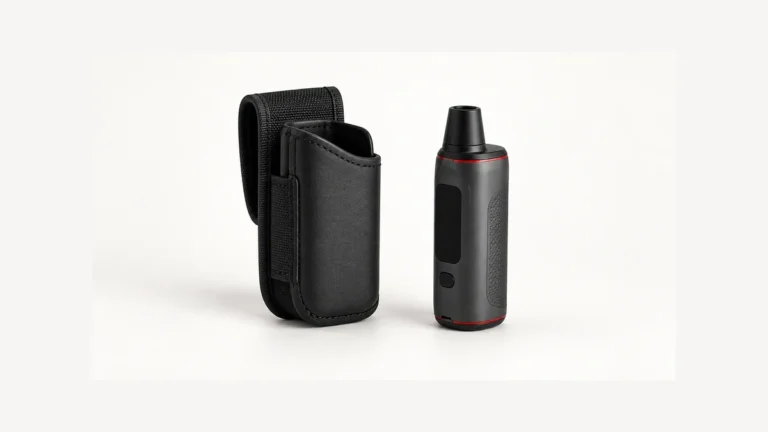
There isn’t one best temperature for dabs that works across every rig, every banger, and every concentrate — and if you’ve ever waited out a color-change coating only to get a harsh, snappy hit anyway, you already know why. The real answer starts with what you’re measuring, where you’re measuring it, and what the residue in your banger tells you after the fact. A repeatable process beats a memorized number every time.
This matters because two people can set the same heater dial, wait the same number of seconds, and still get different surface conditions depending on their banger’s mass, their sensor’s read angle, and how much concentrate they’re vaporizing. Chasing a single “best” number ignores all of that. What you actually want is a calibration habit — one that uses your thermometer’s own documentation, your eyes, and your cleanup routine as feedback, so your setpoint and your result finally match.
🧭 1. Why there is no universal best temperature
Every rig setup is a chain of variables, and the final surface condition of your banger is the sum of all of them, not just the number on a dial or app screen. Quartz thickness and shape change how fast heat moves and how it distributes across the bucket. The brand and design of your nail or banger — bucket-style, flat-top, or something else — changes surface area and how much of that area actually touches your concentrate. Room temperature and airflow around the rig affect how quickly the quartz sheds heat once you pull it off the coil or enail. Even the size of your dab changes the outcome, because more concentrate absorbs more heat and can drop the working surface temperature within seconds of contact.
Because of this, two rigs set to what their owners both call “the best temperature” can produce noticeably different vapor, flavor, and residue. That’s not a contradiction — it’s the expected result of different hardware interacting with the same setpoint in different ways. If you want consistency, you have to control your own variables session to session rather than trying to find a number that erases them. For more background on how nail, banger, and enail designs differ in their heat behavior, see this comparison.
🧩 2. Setpoint is not always the banger surface
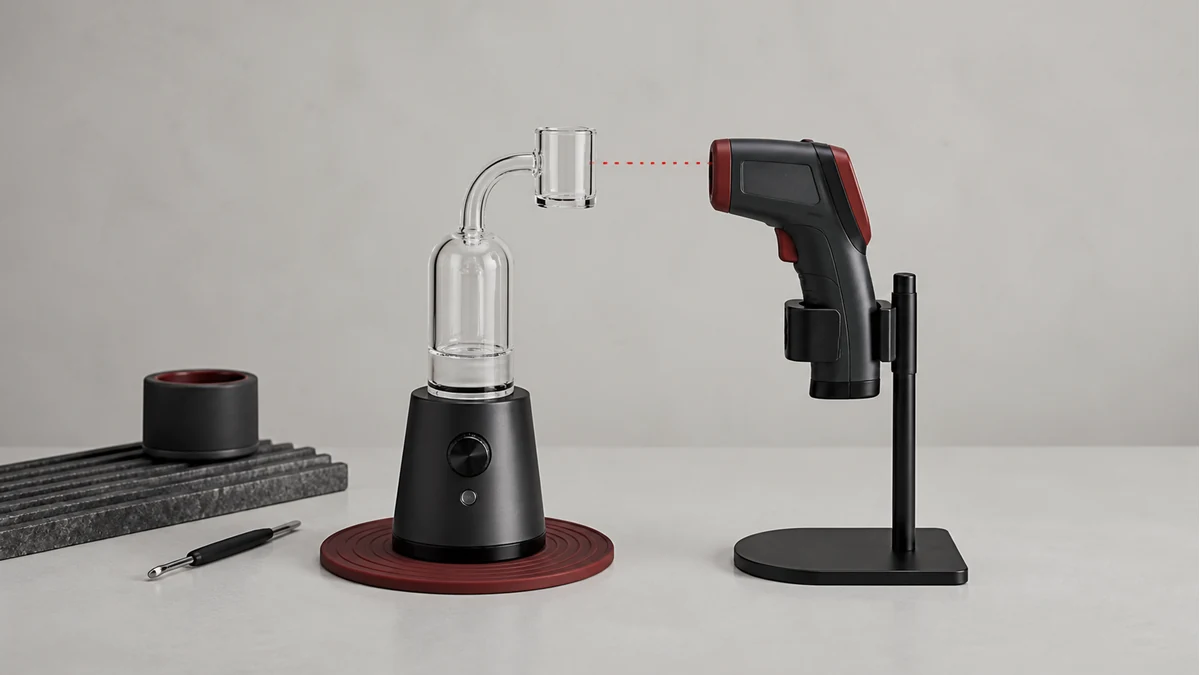
One of the most common mix-ups, and one that shows up constantly in online discussions about dabbing, is treating the heater’s displayed setpoint as if it were the actual temperature of the quartz surface where your concentrate lands. It isn’t. The setpoint is a target for the heating element or coil, based on a sensor embedded in or near that heater. The banger itself is a separate physical object, heated indirectly, and its surface temperature depends on how long it’s had to heat, how thick the quartz is, and how much heat has already been pulled away by ambient air or a previous dab.
This gap between setpoint and surface reading is exactly why external temperature reading tools exist. An infrared thermometer or a dedicated sensor placed near the surface gives you information about the quartz itself, not about what the enail’s internal control chip thinks it’s doing. If you’ve never used one, or you’re not sure how to interpret the number you’re seeing, our guide to dab temperature readers walks through the basics of positioning and reading a sensor correctly.
It’s worth repeating: the exact controls on your enail, the increments it allows, and how its internal sensor is calibrated are all model-specific. Some units let you set in single-degree increments, others jump by five or ten. Some display the coil temperature, others attempt to estimate a surface reading. None of this is universal, and assuming your device works like someone else’s — including something you saw on a forum — is a common source of the confusion people run into when trying to reproduce a result they read about.
🛠️ 3. How IR sensors, distance, and banger type affect readings
If you’re using an infrared thermometer to check your banger’s surface, the read you get depends heavily on distance and angle, not just on the actual temperature of the quartz. Move the sensor closer or farther from the same spot and the number can shift meaningfully, because IR thermometers calculate temperature based on the area they’re measuring, and that measurement area grows as you back away. Point the sensor at an angle instead of straight down and you introduce another source of variation, since you may be picking up a mix of quartz surface, residue, and even reflected heat from the coil below.
Emissivity is another factor that trips people up. Different surfaces — clean quartz, a residue-coated surface, or ceramic — reflect and emit infrared energy differently, and a thermometer calibrated with one emissivity assumption in mind can read differently on a dirty banger than a freshly cleaned one. This is one of the reasons dedicated dab-specific temperature readers document their sensor distance and calibration approach in their user manuals rather than leaving it to guesswork; for example, external documentation like the Dab Rite user guide spells out how their tool expects to be positioned and used for a consistent read.
Banger type matters here too. A flat-top banger presents a different surface geometry to an IR sensor than a bucket-style banger, and quartz behaves differently from ceramic in terms of how it holds and releases heat. If you’re comparing quartz and ceramic nails for your own setup, our quartz vs. ceramic breakdown covers some of those material differences in more depth. The takeaway for temperature checking specifically is that your reading is only meaningful if your sensor distance and angle stay consistent from one check to the next — otherwise you’re comparing apples to oranges every time you test.
🌡️ 4. Start with a documented range and change one variable
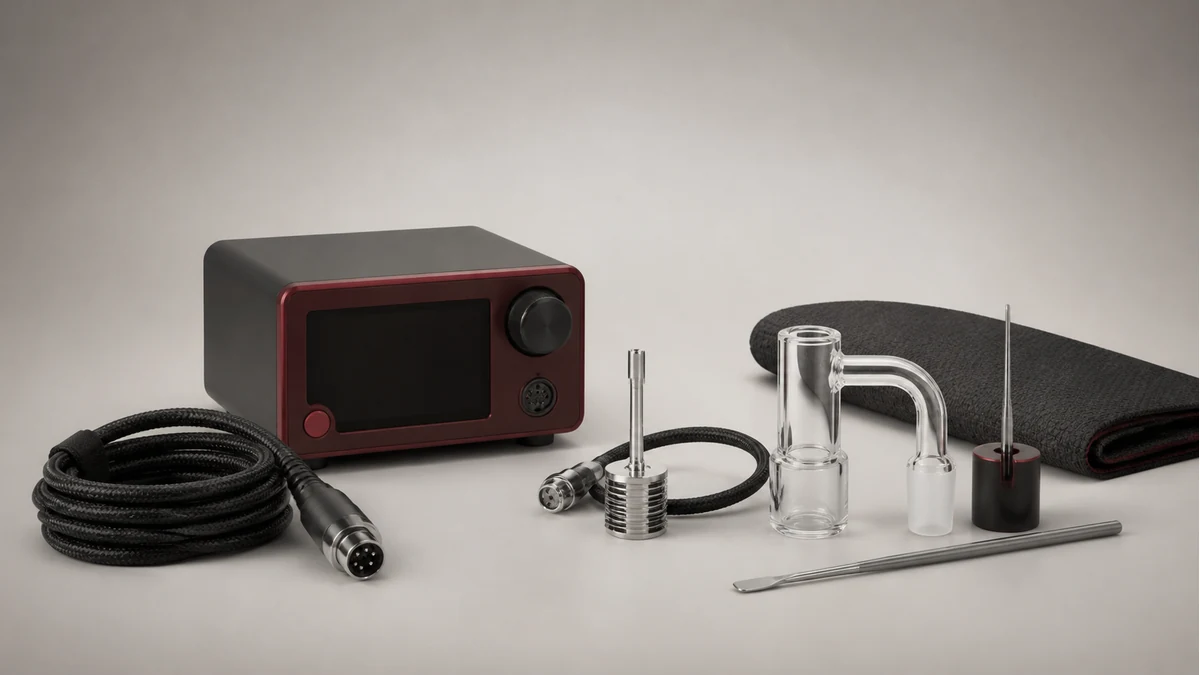
Rather than searching for a single ideal number, a more useful approach is starting from whatever range your thermometer’s own manual or your enail manufacturer’s documentation recommends, then adjusting one variable at a time and observing the result. This is a calibration process, not a one-time setting. It treats your first few sessions as data collection rather than a search for a magic answer.
Practically, that might look like this: pick a starting setpoint from your device’s documentation, keep your dab size and banger consistent, and use your thermometer the same way — same distance, same angle — every time you check. Then change exactly one thing between sessions: the setpoint, the wait time after your rig hits temperature, or the size of the dab. If you change more than one variable at once, you won’t know which change caused the difference in vapor, flavor, or residue you observe afterward.
This slow, single-variable approach might feel unnecessarily careful compared to just picking a number you saw mentioned somewhere and running with it. But it’s the only way to actually learn what your specific hardware combination needs, because — as covered above — your banger’s mass, your sensor’s read behavior, and your room’s ambient conditions are all particular to your setup. A number that worked for someone else’s rig is a starting point at best, not a target to copy exactly.
💨 5. Use residue and cleanup as feedback
Once you’ve settled into a testing routine, the physical evidence left behind in your banger becomes one of the most useful feedback tools you have — arguably more useful day to day than the thermometer reading itself, because it reflects what actually happened during the dab, not just what the surface measured before contact. Excessive dark, tarry residue that’s difficult to remove can be a sign that the surface was hotter than needed for that amount of concentrate. A banger that stays visibly clean with light, easily wiped residue after a session is generally a sign that heat and dab size were reasonably matched.
Cleanup difficulty is a rough gauge, not a precise measurement, and it won’t tell you an exact temperature. But tracked over several sessions alongside your thermometer readings, it helps confirm whether your calibration process is actually converging on something workable for your hardware, or whether you’re still guessing. If residue keeps building up despite lowering your setpoint, that’s a signal to look at other variables — dab size, banger thickness, or how long you’re waiting after your enail or torch indicates it’s reached target heat.
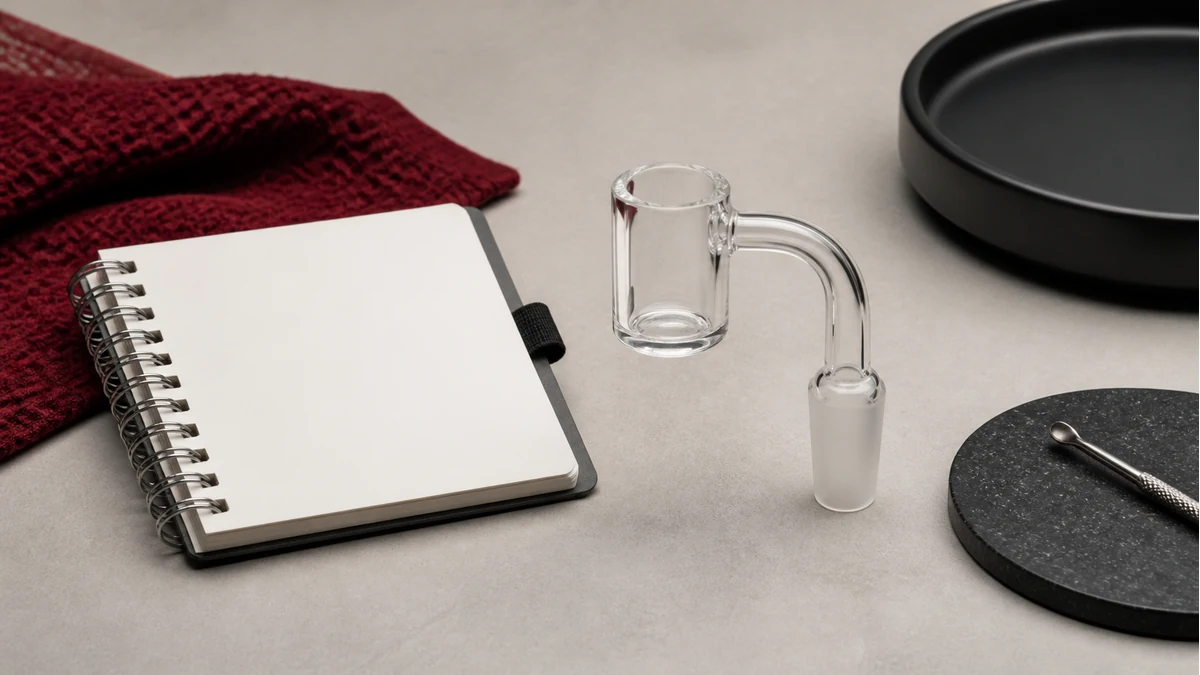
Cleaning solvents, recommended soak times, and water levels for whatever rig or attachment you’re using are all specific to that model and material. Quartz, ceramic, and any coated surfaces can have different cleaning recommendations, and using the wrong solvent or soak time on the wrong material isn’t something to guess at. Check your specific banger or nail manufacturer’s instructions rather than assuming one universal cleaning method applies to every piece of glass or quartz you own.
🧼 6. Cold starts versus measured hot starts
The debate between cold starts and hot starts — heating your concentrate from a cool banger versus dropping it onto a banger that’s already been heated to a checked temperature — comes up constantly, and for good reason: they produce genuinely different experiences, and neither approach is inherently correct for every user or every concentrate. A cold start means placing your dab into an unheated or lightly heated banger and then applying heat from below or around it, letting the concentrate and the quartz warm together. A hot start means heating the banger to a target temperature first, letting it read a specific number on your thermometer, and then applying the dab to that already-hot surface.
What a documented, measured approach adds to either method is the ability to know what “hot” actually meant when you did it. Without a temperature check, a hot start is really just “however hot my torch or enail happened to get it that time,” which varies session to session based on torch technique, ambient cooling, or timing. With a thermometer check in the loop, a hot start becomes something you can actually reproduce, because you’re confirming the surface reading before the dab goes on rather than assuming based on wait time alone.
Cold starts introduce their own timing variable, since the concentrate and the banger are heating together rather than the concentrate hitting an already-stable surface. That makes surface temperature checks less directly applicable mid-process, but starting from a known, cool baseline is still a form of control — it’s just a different one. Neither method eliminates the need for careful, repeatable technique; they just apply that control at different points in the process.
⚖️ 7. What overheating does to quartz and repeatability
Beyond flavor and vapor quality, running a banger consistently too hot has real consequences for the hardware itself and for your ability to get repeatable results going forward. Quartz that’s repeatedly overheated can develop stress fractures, clouding, or surface changes over time that alter how it reads on a thermometer and how it distributes heat during future sessions. A banger that’s been damaged by consistent overheating stops being a stable baseline for your calibration process, because the surface you’re measuring is no longer the same surface you started with.
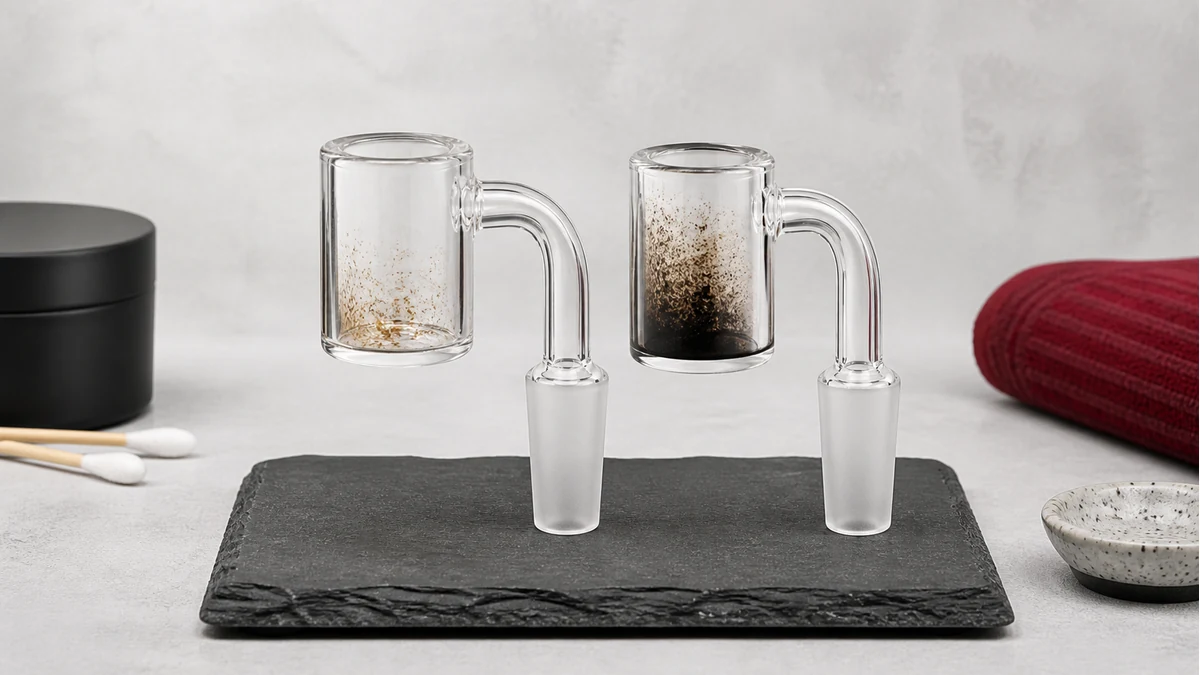
This is part of why staying within a documented range from your equipment’s manufacturer isn’t just about repeatability — it’s about protecting the consistency of the tool you’re trying to calibrate. Manufacturer-stated limits for coil temperature, maximum documented setpoints, or recommended operating ranges exist because pushing hardware past them can shorten its life or change its behavior in ways that make your future readings less trustworthy. Those limits are specific to each device and material, so checking your own enail, torch, or banger’s documentation rather than relying on a general impression from another user’s setup is the more reliable path.
Ultimately, finding what works for your rig is less about locking in a single ideal number and more about building a habit: start from documented ranges, measure with consistent sensor placement, watch the residue your sessions leave behind, and adjust one variable at a time. That process will get you to a setpoint and technique that actually match what your hardware can repeat — which is a far more useful outcome than any single number could ever promise on its own.
📚 8. Sources and Reader Questions Reviewed
Technical guidance was checked against the manufacturer material below where applicable. Reddit discussions were used only to identify reader questions and failure scenarios, not as proof of technical, health, safety, or legal claims.