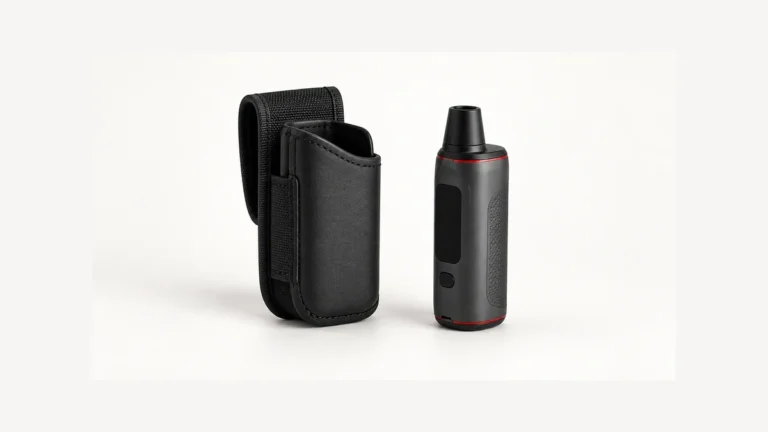
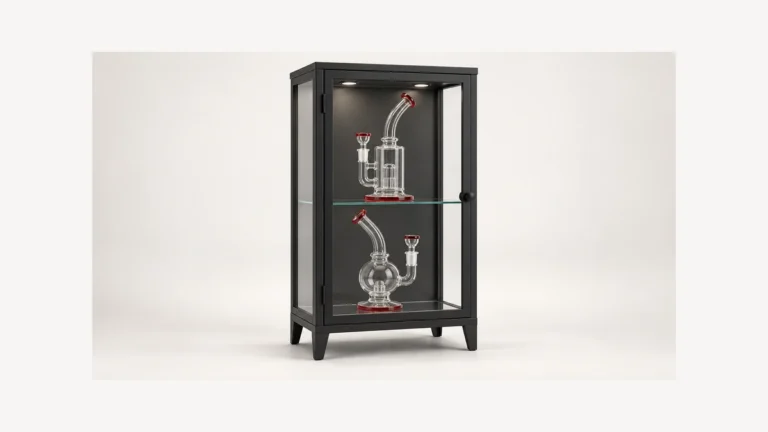
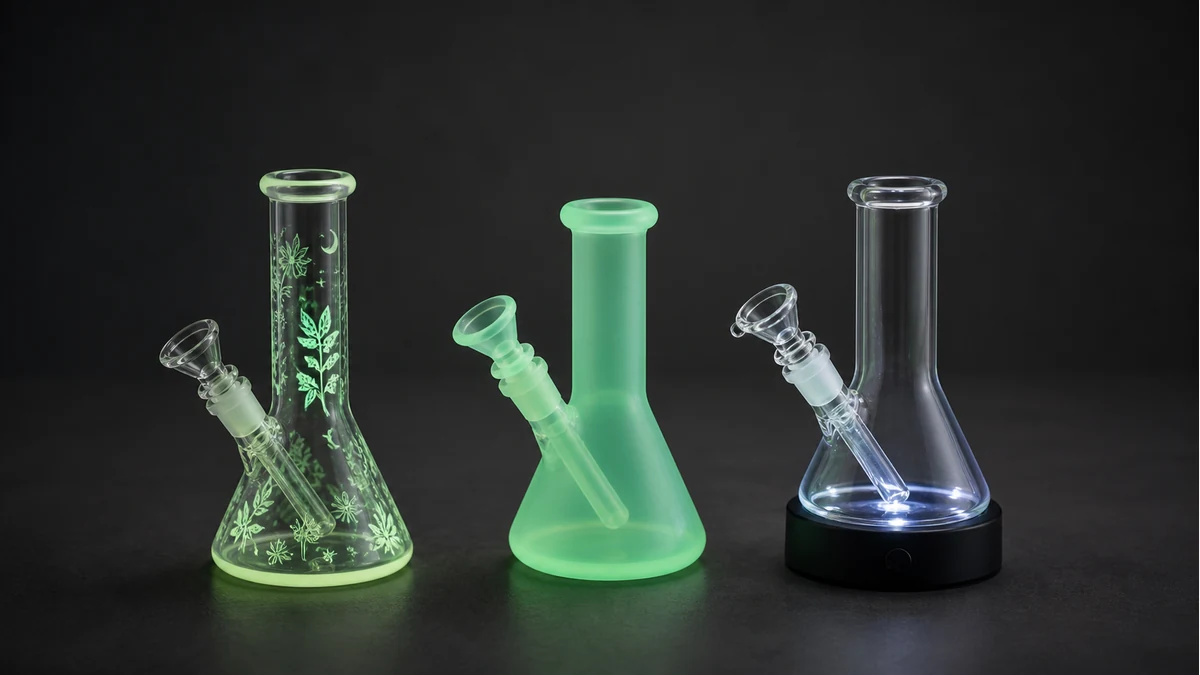
A glow-in-the-dark bong gets its light from one of two very different sources: a photoluminescent pigment mixed into glass or silicone that absorbs light and releases it slowly, or a battery-powered LED built into the base or the stem. Those two approaches use different physics, wear differently over time, and call for different handling —which is why the finish and its placement matter more than the glow effect itself when you’re comparing pieces.
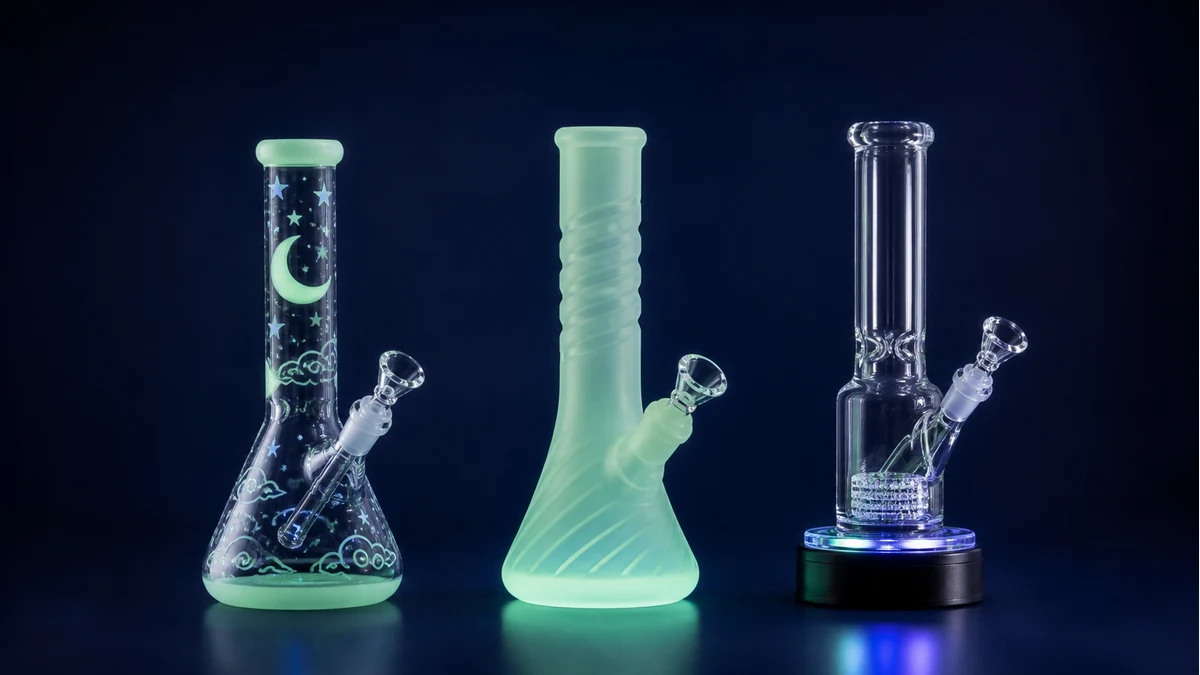
🧭 1. Glow can come from pigment or powered lighting
Photoluminescent pigment is a coating or an additive that absorbs ambient or direct light and re-emits it as a soft glow once the room goes dark. It doesn’t need a battery, a switch, or a charging port —it just needs exposure to light beforehand, and the glow fades gradually until the material is exposed to light again. This pigment can be baked into the glass itself, painted onto an exterior surface, or blended into a silicone body during molding, and each of those placements behaves differently under normal use.
A powered LED works on a completely different principle. It’s an electronic component, usually seated in the base or a section of the stem, that produces light on demand as long as it has a working battery and a closed circuit. LEDs don’t fade the way pigment does, but they add moving parts, a power source, and a seal that has to be checked, none of which apply to a pigment-only piece. Knowing which category a bong falls into —pigment or powered —tells you what questions to ask before you buy it, because the maintenance and durability concerns for each are not interchangeable.
🧩 2. Locate the effect before judging the bong
Before you evaluate anything else about a glow bong, find exactly where the glowing element sits. On glass pieces, pigment can be fused into the base during construction, painted as an exterior accent around the neck or foot, or applied as a surface coating over an already-finished piece. On silicone pieces, the glow is often part of the body material itself rather than a separate layer, since silicone is molded rather than blown or painted.
The location matters because it determines how much of the piece is affected by the decoration and how much remains untouched functional glass or silicone. A small glow accent around the base is a very different product from a piece where the glow coating wraps around the chamber, the joint, or the mouthpiece. Ask where the effect is applied before you ask how bright it is, because the answer changes what you need to inspect next.
🔍 3. Make sure decoration does not hide the working surfaces
Any coating, paint layer, or pigment blend that sits over functional glass has the potential to obscure the surfaces you’d normally check before buying a bong —joint interiors, percolator slits, diffusion holes, and the walls of the chamber. If a glow layer covers those areas, you may not be able to see hairline cracks, uneven glass thickness, or manufacturing flaws that would otherwise be visible on clear glass.
This is especially relevant at the joint, where a clean, unobstructed fit between the downstem and the joint wall affects both airflow and how securely the pieces seat together. If pigment or paint extends into or right up to the joint, ask whether it affects the fit or whether it’s confined to purely external, non-functional areas. The same caution applies to frosted or fully coated exteriors that make it hard to see resin buildup or cloudiness developing inside the chamber over time —a decorative layer that blocks visual inspection is a tradeoff worth weighing against the glow effect itself.
⚙️ 4. Material and finish determine the cleaning routine
How you clean a glow-in-the-dark bong depends far more on the base material and finish than on the fact that it glows. A borosilicate glass piece with a painted or externally applied glow accent may need gentler handling around that specific area than the rest of the glass, since paint and pigment coatings don’t necessarily tolerate the same abrasive scrubbing or prolonged alcohol soaks that bare glass does. If you’re unfamiliar with how soft or borosilicate glass differs in general durability and care, our soft glass bong guide covers those baseline distinctions.
For general cleaning technique on glass pieces —removable parts, soaking approach, and rinse routine —our bong cleaner guide walks through the standard process, though you should still check whether a glow coating changes what’s safe to use on that specific surface. Silicone bongs with glow pigment molded into the body follow a different set of rules entirely, since silicone tolerates different cleaning agents and methods than glass; see our silicone bong cleaning guide for that approach. In every case, if the listing or packaging includes any care disclosure from the maker about the glow coating specifically, follow that over general assumptions, since pigment formulations can vary between products.
🧼 5. Inspect removable electronics and seals
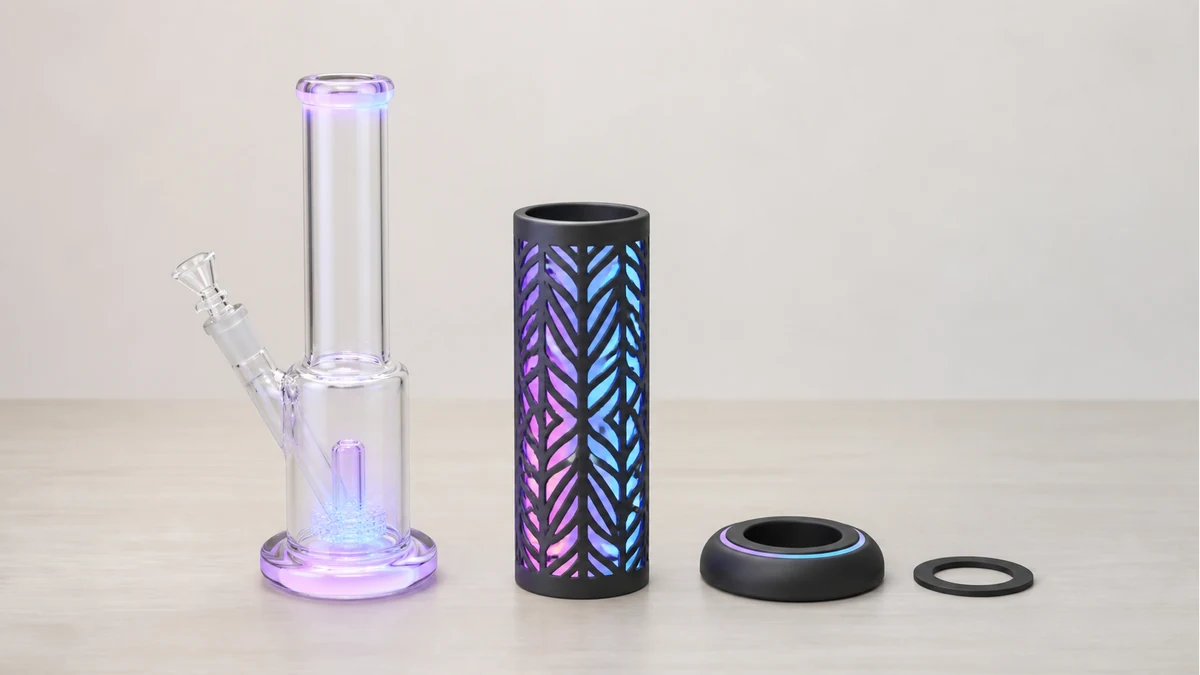
If the piece uses a battery-powered LED rather than pigment, the questions shift toward the electronics rather than the coating. Check where the LED module sits relative to the water chamber —some designs keep the light and battery compartment in a cavity separate from the water path entirely, while others place components closer to areas that could get wet during normal use or cleaning. A design that keeps electronics physically isolated from the water chamber reduces the number of things you have to think about each time you fill or empty the piece.
Also check whether the LED module is meant to be removed before you add water or before you clean the piece, and whether the battery compartment has any kind of seal or cover. Manufacturers vary in how they design this, so don’t assume a seal exists or that a component is fully waterproof unless the maker’s manual or product documentation says so directly. When in doubt, treat the electronics as something to remove or protect during both filling and cleaning, and follow the specific instructions that came with that piece rather than general assumptions about how LED bongs work.
🛠️ 6. Test stability and visibility in normal light
A glow effect only matters some of the time —the rest of the day, the bong needs to function and look the way any other water pipe would. Check the base for a wide, stable footprint the same way you would on a non-illuminated piece, since added weight from an LED module or a thicker pigment-loaded base can shift the balance point in either direction. Set the piece on a flat surface and see how it sits before you factor in the glow at all.
It’s also worth looking at the piece in regular daylight or room light, not just in the dark. A glow coating that looks appealing when lit up might look different —cloudier, more opaque, or visually busy —under normal lighting, and that’s the condition you’ll be viewing the piece in most of the time. General joint sizing, downstem fit, and percolator design follow the same universal hardware principles as any other bong regardless of whether it glows, so those checks still apply in full; the glow feature is additive, not a replacement for evaluating the piece on its own mechanical terms.
📦 6.1. Inspect the finish in ordinary light
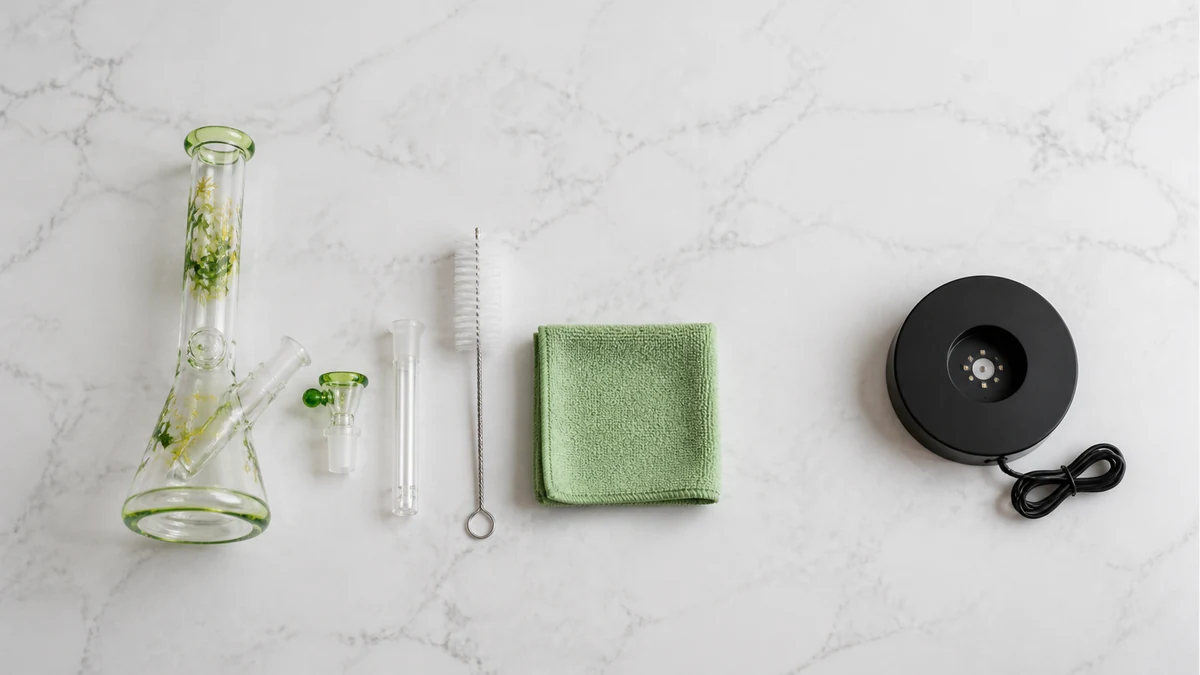
The dark-room effect sells the idea, but normal light reveals whether the bong is practical. Rotate the piece near a window and look through the base, joint, downstem area, and lower chamber. Heavy decoration should not hide chips, trapped residue, a waterline, or a seal that has started to lift. A glow coating that looks smooth from across the room can still have rough edges where a brush or cloth will catch.
Run a clean fingertip around exterior transitions only after confirming the piece is undamaged. You are checking for abrupt ridges, loose decorative sleeves, and adhesive edges—not testing the glass by pressing on it. On silicone designs, flex only as the maker intends and check that the bowl receiver remains supported when the body is moved.
💡 6.2. Plan for the effect to age
Photoluminescent finishes, printed graphics, silicone color, and electronic bases do not age in the same way. Repeated cleaning may dull an exterior treatment even while the glass remains usable. A removable sleeve can be replaced or cleaned separately; a bonded finish cannot. An LED base introduces a battery, charging port, switch, and gasket that may outlast—or fail before—the glass it decorates.
Ask what the bong becomes if the visual feature stops working. A sound glass water pipe with a removable light remains usable without the light. A design that depends on a proprietary powered base for stability is more vulnerable to discontinued parts. That distinction is worth more than a dramatic showroom glow.
🧭 6.3. Use a simple arrival inspection
When the piece arrives, photograph it in ordinary light before use. Check the foot for rocking, confirm the bowl and downstem seat without force, and inspect the decorated areas from both sides. If an electronic base is included, keep the glass empty while confirming that the base sits flat and that its controls remain accessible. Do not assume a removable light module is water resistant simply because it sits beneath a water pipe.
Charge or illuminate photoluminescent decoration only as the maker directs. More intense light is not a reason to leave the piece near excessive heat or direct sun for long periods. The goal is to understand how the effect behaves, not to stress unknown pigments, adhesives, or batteries.
🧩 6.4. Store glow pieces like decorated hardware
Give coated glass enough space that the finish does not rub against metal tools or other glass. Keep bowls and downstems in separate padded pockets, and remove a powered base before the bong goes near a sink. If the design folds or collapses, let every silicone section dry in its open position before compressing it for storage. These small habits protect the visual effect while also making chips, trapped moisture, and residue easier to spot.
One more practical check is visibility at the waterline. Fill the clean piece with plain water, set it on a stable surface, and confirm that the decoration still lets you see the level and any trapped debris. Empty and dry it afterward. A visual effect should not make routine inspection guesswork.
✅ 7. Buy the bong first and the visual effect second
The glow is the reason a piece catches your eye, but it shouldn’t be the reason you decide to buy it. Evaluate the glass or silicone quality, the joint fit, the percolation, and the stability the way you would on any other bong, then treat the glow —pigment or LED —as a secondary feature layered on top of a piece that already holds up on its own. A well-made bong with a modest glow accent will generally serve you better long-term than an elaborately lit piece with compromised joints or obscured working surfaces.
Whichever type you choose, keep the maker’s specific instructions on hand for anything related to charging exposure, LED battery replacement, or coating-specific care, since those details vary by product and manufacturer. The general cleaning and material guidance in the resources above will get you most of the way there, but when the two conflict, the documentation for your specific piece should take priority.