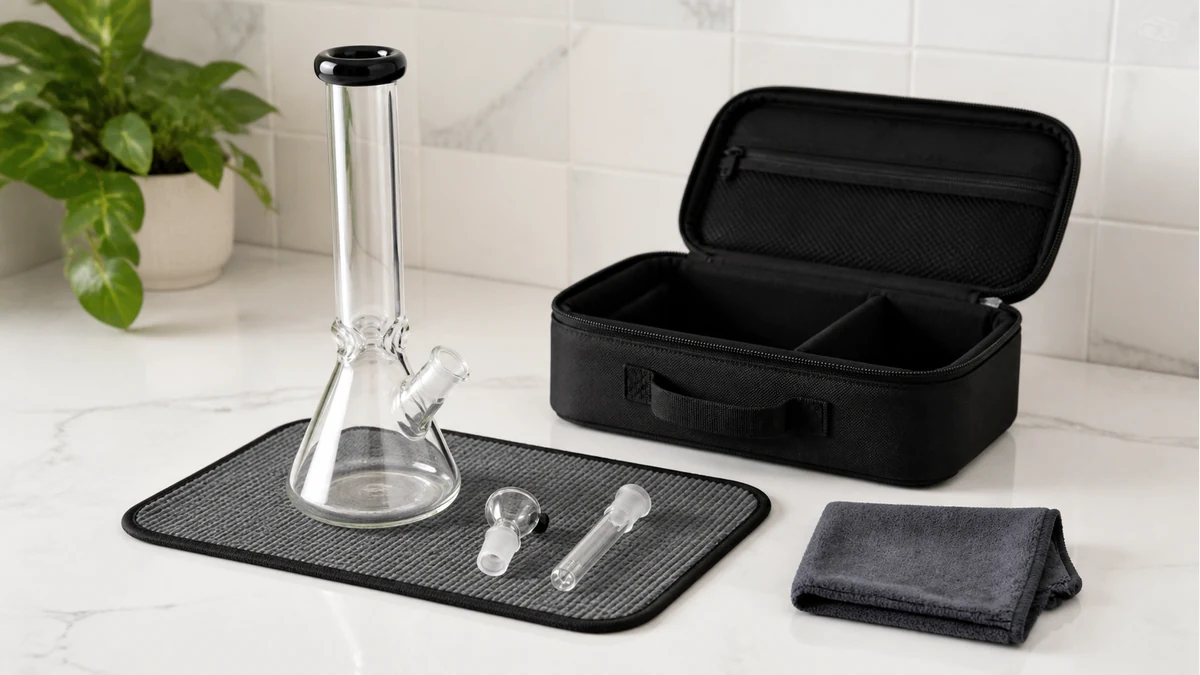
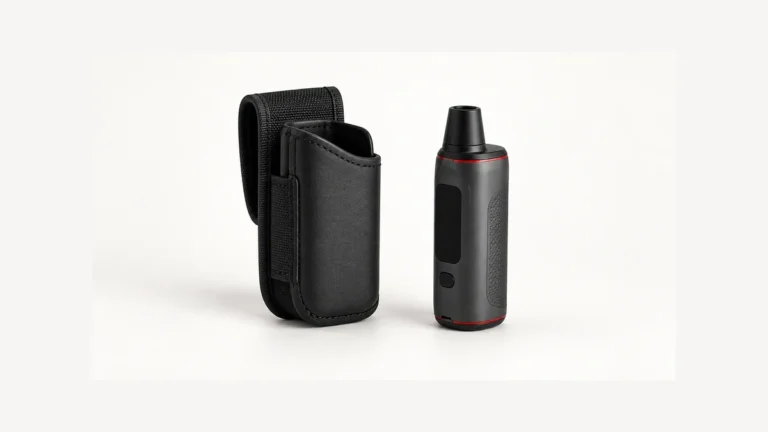
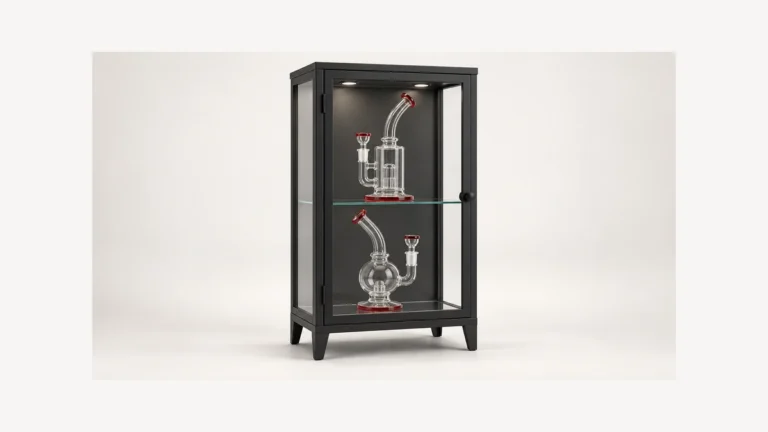
A smell-proof bag for a bong is really a smell-resistant bag: it slows odor from reaching your nose or a nearby space, but it can’t neutralize resin, standing water, or bowl residue sitting inside the piece. If the bong goes into the bag dirty, wet, or with a loaded bowl, odor molecules are still being generated inside a container that’s doing its best to contain them —not eliminate them. The honest goal is to reduce how much smell escapes during storage and transport, not to promise it disappears entirely.
That distinction matters because it changes what you’re actually shopping for. A bag with a good liner and a solid closure can meaningfully cut down on smell drifting into a bag, closet, or car. But no fabric or laminate layer compensates for a bong that wasn’t rinsed out or a bowl that’s still packed. The rest of this guide walks through sizing the bag around the piece, protecting the joints, understanding what the closure and liner actually do, and handling the wet-storage problem separately from the dry one.
🧭 1. A bag manages odor; it does not erase the source
Cannabis odor comes from volatile compounds released by resin, ash, and any residual water in the bong. Those compounds don’t stop being produced just because the piece is zipped into a bag —they keep off-gassing, and a bag either slows their escape or it doesn’t. This is why two bongs that look equally clean from the outside can behave very differently in storage: one was rinsed and dried after the last session, the other has a film of resin on the downstem and bowl that keeps releasing odor for days.
The practical takeaway is that source control comes first. If you rinse the bong, dump standing water, and knock ash out of the bowl before storage, the bag’s job gets much easier —it’s containing a much smaller odor load. If you skip that step, you’re asking a liner and a zipper to do the work that basic cleaning should have done. For a fuller breakdown of what actually causes bong odor and how to reduce it at the source, see why bongs smell and how to reduce it.
🧩 2. Measure the bong in its storage configuration
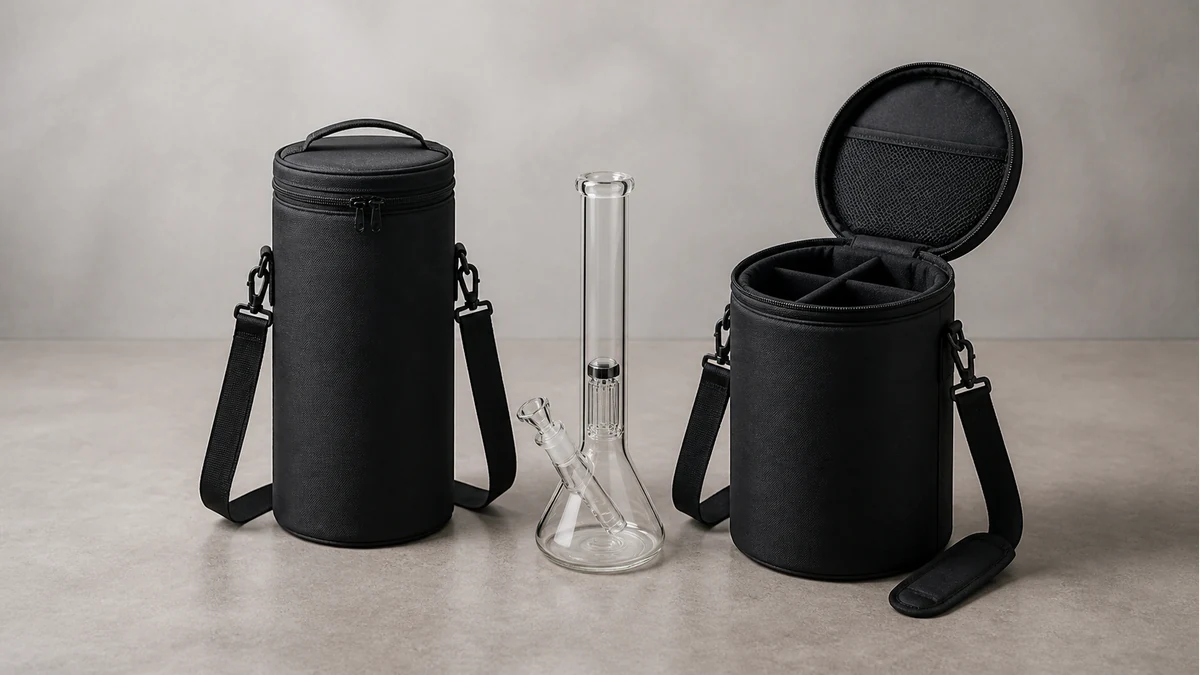
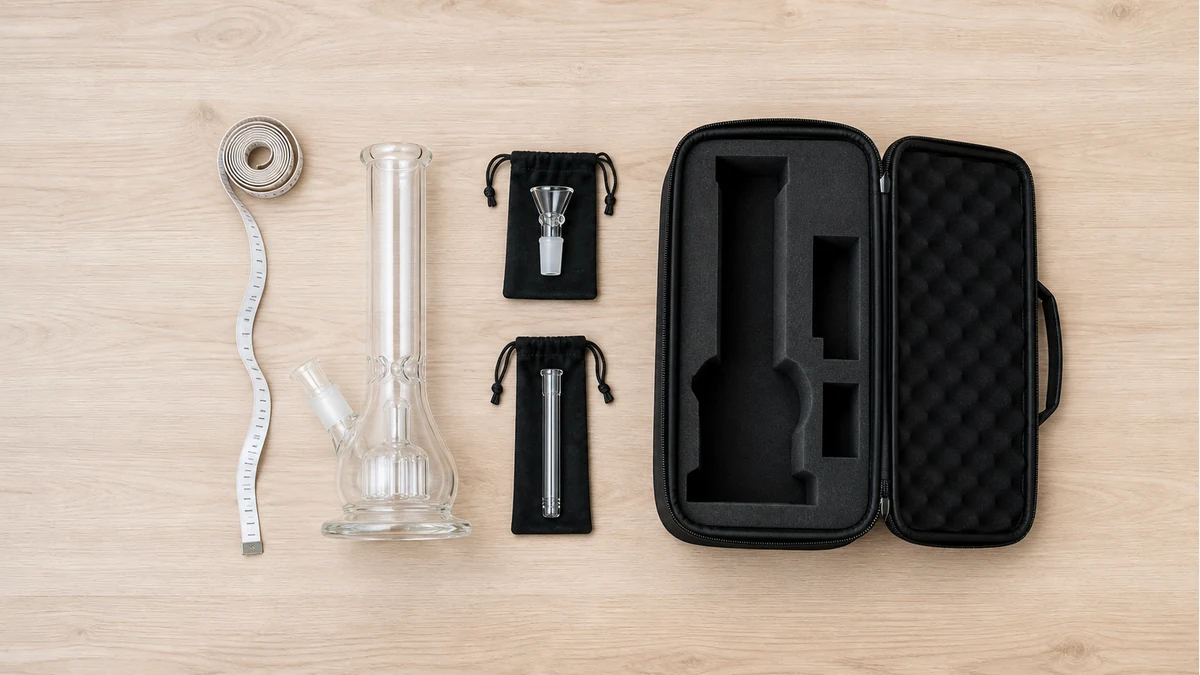
Before comparing bags, decide how you actually store the piece day to day: fully assembled with the bowl and downstem in place, or broken down into separate components. This isn’t a minor detail —it determines the internal dimensions you need and whether you need padding zones for glass-on-glass joints. A bag sized for a disassembled bong will be too short for an assembled one, and a bag sized for the tallest assembled configuration will leave a disassembled piece rattling around loose inside. Measure height, base width, and —if you store it assembled —the extra height the bowl adds above the mouthpiece or the downstem adds below the base. If the bong has a percolator or an angled joint that sticks out, account for that width too; a bag that’s tall enough but too narrow will force the piece in at an angle and put pressure on the glass at the tightest point. Padding thickness inside the bag reduces usable interior space, so don’t just compare a bag’s outer dimensions to your bong’s height. A bag advertised as fitting a certain height range may only fit the shorter end of that range once padding and a liner are accounted for. When in doubt, size up rather than sizing to the exact measurement, since a snug fit increases the chance of the glass contacting a zipper or seam during handling.
🔍 3. Protect joints before adding odor-control layers
Joints —the ground-glass connections where the bowl, downstem, and sometimes an ash catcher meet the main tube —are the most failure-prone part of bong storage, independent of anything related to smell. A bag that’s excellent at odor control but has no internal structure to keep the piece from shifting will still let joints knock against each other or against a hard interior surface during transport. Padded dividers, a snug interior sleeve, or simply removing the bowl and downstem and wrapping them separately are all ways to take pressure off the joints before you think about the odor layer at all. This matters for smell control too, indirectly: a cracked joint means a piece that can’t seal cleanly during storage, and a bong that doesn’t seal is a bong that off-gasses more, not less. For care and handling of the pieces most likely to chip —bowls and downstems —see this bong bowl guide. Follow the manufacturer’s guidance for your specific bong when it comes to joint size, grip tightness, and whether the maker recommends a joint lubricant or grease. Joint diameters and glass thickness vary enough between models that general storage advice can’t substitute for the piece’s own manual or the seller’s care instructions.
⚙️ 4. The closure and liner do most of the work
Two features determine most of a bag’s real-world odor performance: the closure mechanism and the interior liner. The closure —usually a zipper, sometimes a roll-top or a combination of both —is where air exchange happens fastest, since even a well-sealed bag exchanges air at the seams and closure points before it exchanges air through the fabric itself. A zipper with a straight, continuous seal generally performs more consistently than one with awkward corners or gaps where the pull meets the track. The liner is typically a layer of activated carbon or a similar absorbent material sandwiched between the outer fabric and an inner lining. This layer is what actually interacts with odor compounds rather than just blocking airflow. It has a functional lifespan —it can become saturated with odor and moisture over time, at which point it’s doing less absorbing and more passing-through, even if the bag still zips shut normally. Because the closure and liner are doing the real work, a bag with a weak zipper and a strong liner will still underperform, and a bag with a tight seal but no absorbent layer is really just a padded case, not an odor-control bag. It’s worth checking both independently rather than assuming a bag that closes tightly is automatically effective against smell.
🧼 5. Wet storage creates a different problem
A bong that goes into a bag with water still in the base —or with a percolator that’s still damp —is not the same storage problem as a dry bong with resin residue. Wet storage adds moisture into a padded, mostly enclosed space, which can dampen the liner, degrade padding over time, and create a much stronger odor load than a dry piece would, since water that’s been sitting in a bong picks up dissolved resin and ash. If you’re storing or transporting a bong shortly after use, dump the water out first if that’s practical for your situation. A bag with a water-resistant or wipeable exterior liner handles incidental dampness better than a purely absorbent fabric interior, but no bag is built to hold standing liquid, and doing so risks the seams, the zipper’s coating, and the odor layer itself. Think of “smell-resistant” and “spill-resistant” as two different specs —a bag can be good at one without being built for the other, so check what the specific bag is actually designed to handle rather than assuming a padded case tolerates wet glass the same way it tolerates dry glass.
🛠️ 6. Clean the bag without saturating its odor layer
The bag itself accumulates residue over time —resin transfer from the glass, spilled water, general grime on the exterior —and needs its own maintenance separate from cleaning the bong. Wiping down the exterior with a damp cloth handles most surface grime without introducing much moisture to the interior liner. Interior surfaces that are removable or wipeable should be treated that way rather than soaked, since fully saturating a carbon-lined interior with water or cleaning solution can compromise the absorbent layer rather than refresh it. Follow whatever care instructions came with the bag for its specific liner material, since some are machine-washable in a removable liner form and others are not meant to get wet at all. If the bag doesn’t specify, treat the interior as spot-clean-only and reserve deeper cleaning for the exterior fabric. Cleaning the bag is a separate task from cleaning the bong, but they’re connected: a bag that’s regularly holding a rinsed, dry bong stays cleaner and needs less maintenance than one that’s routinely holding a wet or resin-coated piece. If you’re due for a deeper clean on the bong itself —not just the storage bag —a full cleaning kit covers the glass, joints, and bowl in one pass; see this bong cleaning kit guide for what that involves.
📦 6.1. Pack the odor sources separately
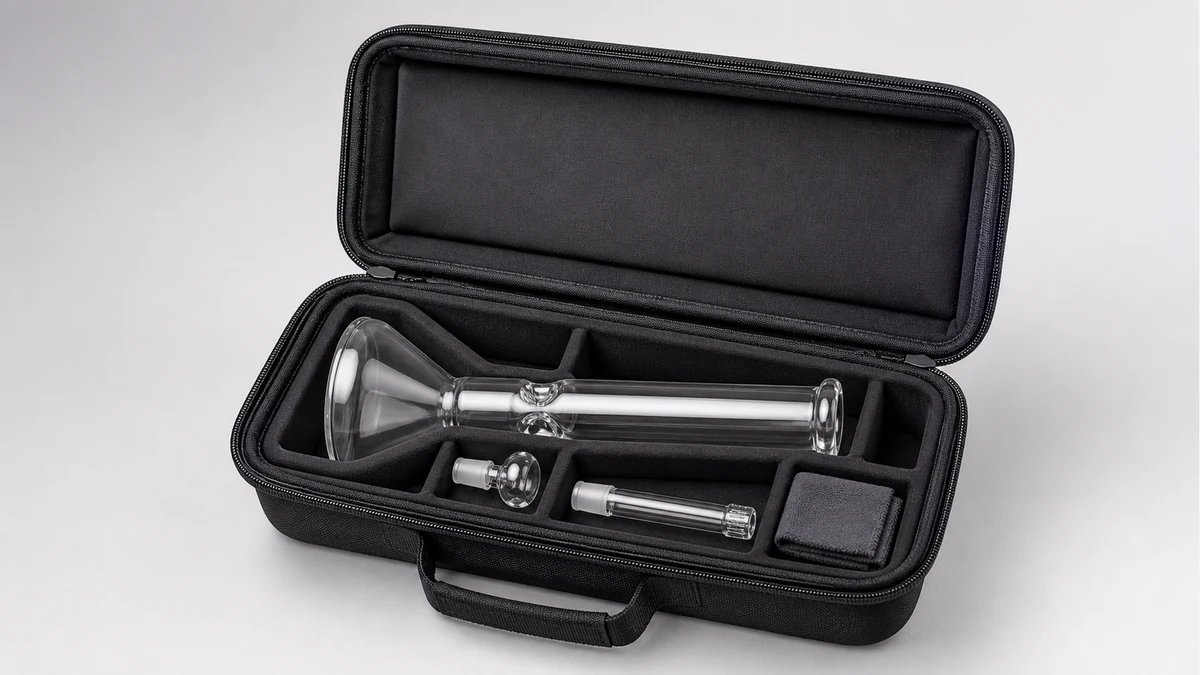
The bong body is rarely the only source in the case. A bowl, removable downstem, cleaning tool, and damp cloth can each transfer residue to the liner. Small washable sleeves keep those parts from rubbing the glass and isolate the pieces handled most often. They also make it easier to remove one dirty item without unpacking the entire case.
Before closing the zipper, touch a dry cloth to the joint and base. If the cloth picks up moisture or visible residue, the bag is being asked to contain a cleaning problem rather than a storage problem. A few minutes spent drying and wiping the hardware protects both the case and the glass.
Try the packed case at home before relying on it. Close it without forcing the zipper, lift it by every supplied handle, and listen for contact between glass parts. A case that fits only when compressed is too small; pressure at the neck or joint can be worse than a little unused space protected by adjustable padding.
Finally, label removable inner sleeves by purpose rather than marking the exterior case. That keeps wet-cleaning cloths, fragile glass parts, and ordinary accessories from being mixed after the next session.
✅ 7. Choose by fit, washable surfaces, and realistic routine
With the mechanics covered, the actual decision comes down to three practical questions. First, does the bag fit your bong in the configuration you actually store it in —assembled or broken down —with enough interior padding to keep joints from contacting hard surfaces or each other? Second, are the surfaces that will realistically get dirty —the interior floor, any exterior pockets —wipeable or otherwise easy to maintain, given that resin and occasional dampness are normal outcomes of storing a used bong? Third, and often overlooked: does the bag match your actual routine, not an idealized one? If you rarely rinse the bong before storing it, a bag with a strong, replaceable-feeling liner and a water-resistant interior floor is a better match than one built primarily around lightweight portability. If you always dump and rinse before storage, you have more flexibility, since the odor load going into the bag is already low and the bag’s job is mostly about that one lingering smell layer on the glass itself rather than standing water or a loaded bowl. There’s no single bag that performs identically across every use pattern, which is why fit and honest self-assessment of your own habits matter more than any single spec on a product listing. A bag sized correctly, with intact padding at the joints and a liner that hasn’t been saturated by wet storage, will do a reasonable job of containing routine odor —but it’s still working alongside basic rinsing and cleaning, not replacing it.