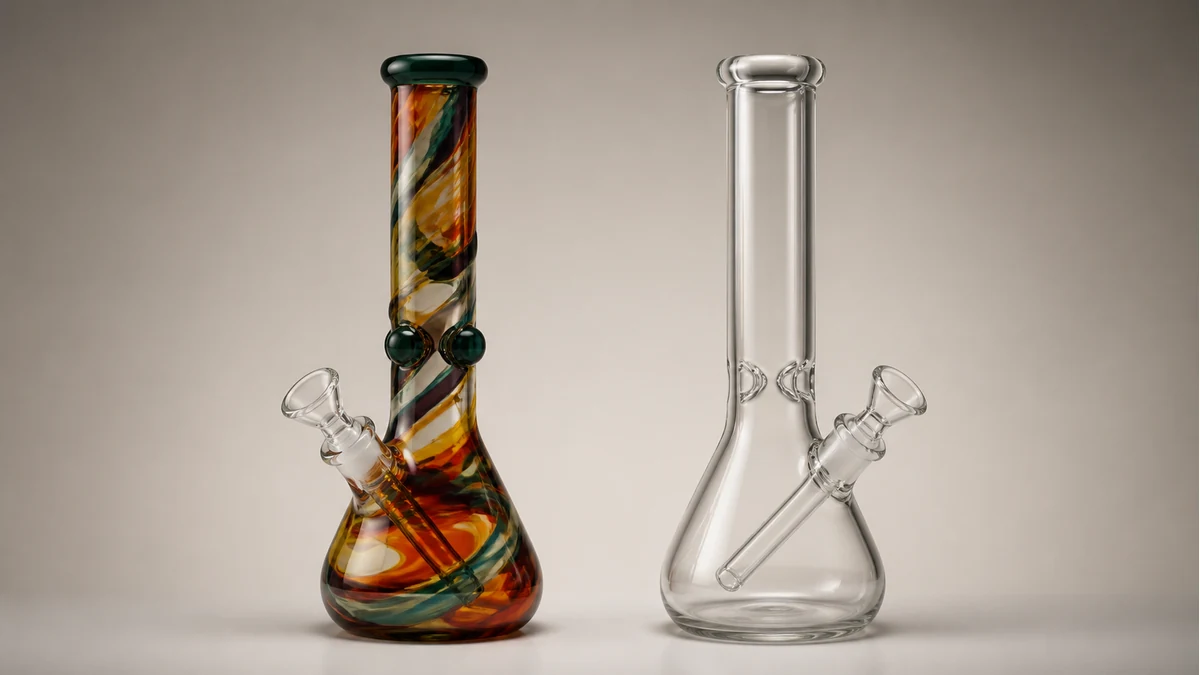
A buyer at a wholesale glass expo picks up two water pipes standing side by side. One is a thick tube dressed in swirled color, heavy in the hand, catching the light like a paperweight. The other is plainer, thinner-walled, almost clinical looking. The price tags don’t match the visual story: the plain piece often costs more. Ask why, and the answer usually starts with two words that get thrown around loosely in this industry: soft glass.
That label causes more confusion than almost any other term in the water pipe trade, because “soft” sounds like it should mean fragile, cheap, or low quality. It doesn’t. Soft glass is a material family, not a grade, and mixing up the two leads buyers to make decisions based on the wrong question. The real question isn’t whether a piece is “hard” or “soft” — it’s what kind of handling, cleaning, and temperature habits each material family actually rewards.
🔍 1. The Name Is a Material Family, Not a Grade
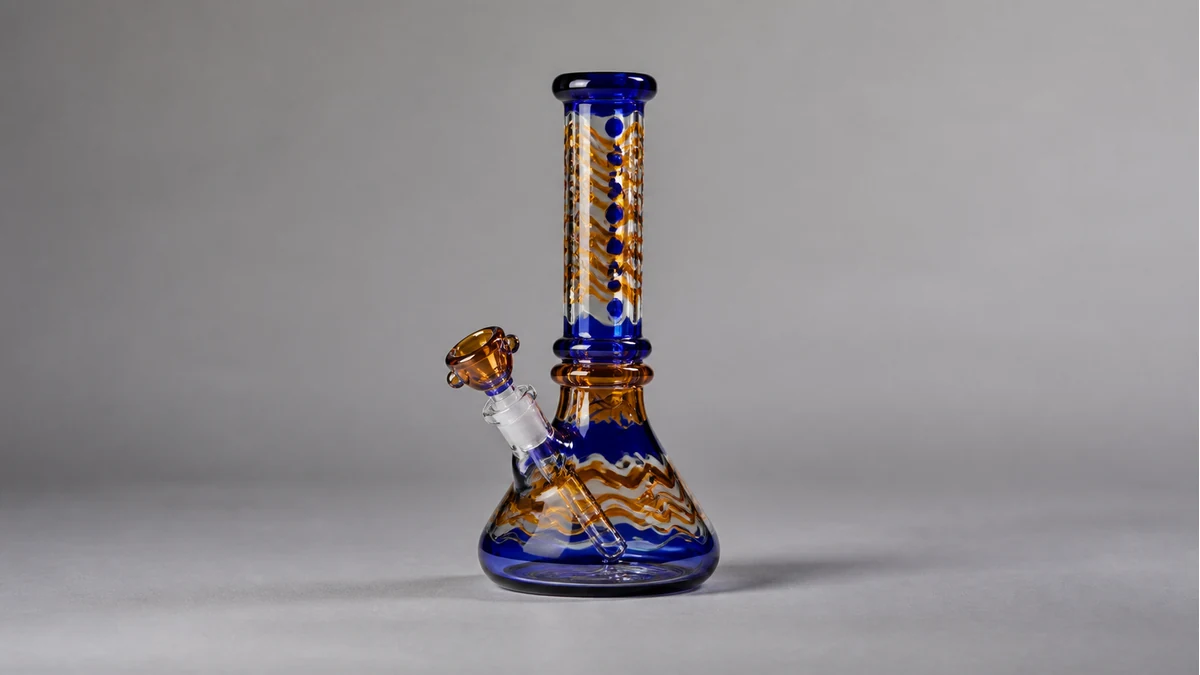
In the pipe and bong trade, “soft glass” is shorthand glassblowers use for the softer-melting glass family that lends itself to intense color work — the wig-wags, fumed interiors, and heavy color coils that make a piece look like it belongs in a display case. “Hard glass,” usually meaning borosilicate, is the other broad family, prized for its resistance to sudden temperature changes and its association with laboratory-grade glassware.
Neither term describes a single formula, a single factory, or a guaranteed thickness. Two soft glass bongs from two different studios can behave differently depending on wall thickness, how evenly the glass was annealed during cooling, and how much decorative work was fused onto the base tube. The label tells a buyer what family the glass belongs to and what kind of working properties the glassblower had available — not how the finished piece will hold up in someone’s hands three months from now.
This is where a lot of online confusion starts. Two buyers can hold what looks like the same piece and get completely different outcomes over months of use, and it’s tempting to blame the material family for that gap. More often the difference comes down to how carefully the individual piece was annealed and shaped, which has nothing to do with which glass family it belongs to. The material family shapes tendencies, not guarantees.
🌡️ 2. Soft Glass vs Borosilicate: What Changes in Daily Handling
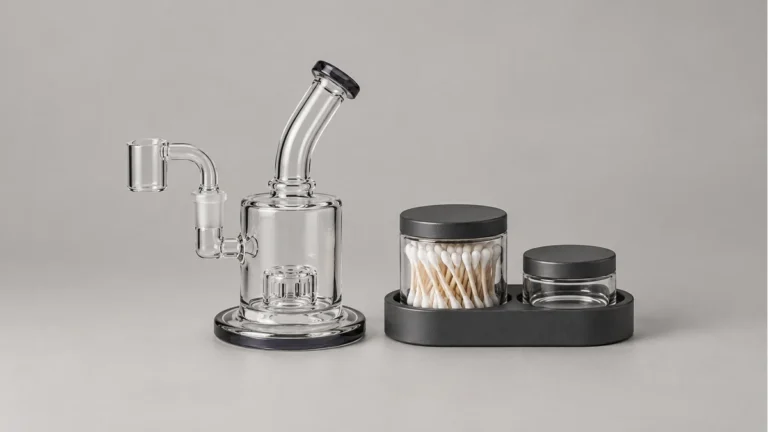
The practical differences between the two families show up mostly in two places: how they respond to fast temperature swings, and how stress moves through their walls when the glass is knocked, twisted, or unevenly heated. Buyers comparing accessory categories run into a version of the same question when they compare a dab rig vs bong setup, since dab rigs regularly deal with heat cycling that a standard water pipe never sees.
🔥 2.1 Thermal shock and temperature swings
Borosilicate glass has a long track record of tolerating rapid temperature changes better than soda-lime type soft glass. That’s part of why lab glassware and dab rig components lean toward it. Soft glass, by contrast, is more prone to stress cracking when it goes from cold to hot — or hot to cold — quickly. Running ice-cold water into a piece that just sat in direct summer sun on a windowsill, or rinsing a warm piece under a blast of cold tap water, is the kind of moment that turns a beautiful soft glass tube into a spiderweb.
This isn’t a claim that soft glass can’t handle normal use. It handles daily cleaning and typical room-temperature conditions fine. The risk shows up specifically at the extremes — fast, uneven temperature jumps — which is exactly the scenario borosilicate is built to shrug off more reliably.
🧱 2.2 Wall shape and how stress travels
Shape matters as much as material family. A smooth, evenly blown tube distributes mechanical stress fairly evenly around its circumference. Add a percolator disc, a sharp internal angle, a fused-on marble, or a thick band of color work, and that spot becomes a stress concentration point — a place where a bump or a temperature swing is more likely to start a crack, regardless of which glass family the piece belongs to.
Soft glass pieces tend to carry more of this kind of decorative complexity, simply because that’s the point of the material — it’s what lets a glassblower build layered color and texture. That decorative richness is also why soft glass pieces show up more often with stress cracks near seams and joints. It’s not that the base glass failed; it’s that the shape gave stress somewhere obvious to go.
⚖️ 3. Why Thick and Heavy Isn’t the Same as Durable
It’s tempting to judge a bong the way you’d judge a cast-iron pan: heavier feels sturdier. Glass doesn’t quite work that way. A thick-walled piece can still fail if the thickness is uneven — thicker in some spots than others because of how the tube was worked during forming — since uneven thickness creates its own stress points when the glass heats or cools even slightly unevenly.
A thinner, evenly blown tube with no sharp internal features can, in practice, tolerate more real-world handling than a heavier piece loaded with add-ons. Weight in the hand tells a buyer about mass, not about how well that mass is distributed or how the piece will behave under a temperature swing or an accidental knock against a sink edge.
Anecdotes about one piece surviving a drop and another shattering from a small bump don’t settle much on their own, either. A single drop depends on the angle of impact, the surface it lands on, and pure chance as much as it depends on the glass itself. The better comparison questions are about wall evenness, joint quality, and how much decorative complexity sits near the base — not raw weight, and not a single story about a piece that survived or didn’t.
🔗 4. Joints, Bowls, and the Parts That Take the Real Wear
Most damage on a well-made water pipe doesn’t happen in the middle of the tube — it happens at the joint, the downstem, or the bowl, because those are the parts that get handled, twisted, lifted, and set down the most often. A ground glass joint that’s slightly out of round, or a bowl that gets forced in at an angle instead of seated straight, puts localized stress exactly where the piece is already thinnest and most complex.
This is true across both glass families, which is part of why bowl selection and joint care deserve more attention than they usually get. A buyer choosing replacement or upgrade bowls should look at fit and seating angle as carefully as they look at the tube itself; the bong bowl guide walks through how joint sizes and bowl styles actually pair up, which avoids a lot of the twisting and forcing that cracks joints in the first place.
🎨 5. Decoration: Where the Beauty Comes From and What It Costs Structurally
The visual appeal that draws people to soft glass in the first place — the color work, the internal marbles, the wig-wag stripes — is built by fusing additional glass onto the base tube during forming. Every fused seam is a place where two pieces of glass became one, and while a skilled glassblower anneals the whole piece evenly to relieve stress, seams remain a slightly different structural situation than a single continuous wall.
None of this is a blanket quality verdict on decorated soft glass. It means a heavily decorated piece is trading some structural simplicity for visual richness, and that trade is worth understanding rather than ignoring. A buyer who wants maximum resistance to temperature swings and minimal stress points will lean toward simpler shapes and thicker, more uniform borosilicate. A buyer who wants a showpiece with color and texture will lean toward soft glass and should plan to handle it with a bit more care around temperature and impact.
🧽 6. Cleaning and Temperature Habits That Actually Reduce Stress
Most avoidable cracks trace back to temperature, not clumsiness. The single biggest habit change that protects any glass piece — soft or borosilicate — is letting it approach room temperature before introducing hot or cold water, and avoiding sudden extremes in either direction.
📋 6.1 A simple pre-clean and post-clean routine
- Let a piece that’s been sitting in a hot car, near a heater, or in direct sun cool to room temperature before rinsing.
- Use lukewarm water rather than very hot or very cold water, especially on the first rinse of a cleaning session.
- Avoid dropping ice directly into a piece that’s currently warm from use.
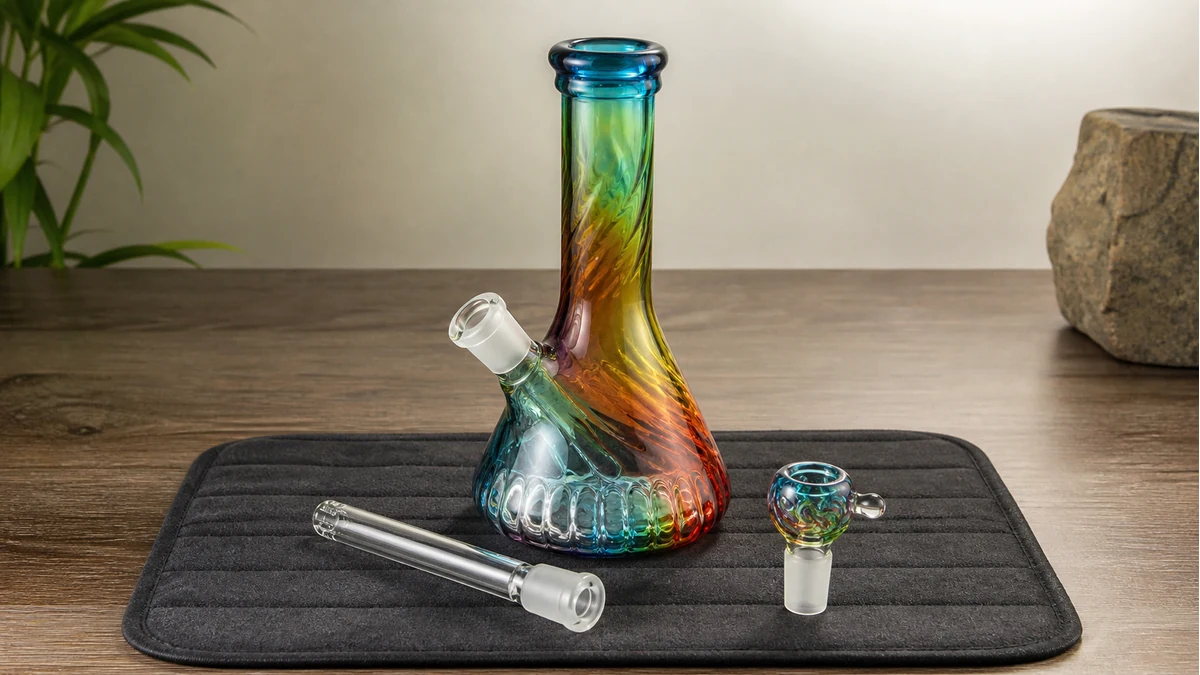
- Set the piece down on a towel or padded surface rather than directly on a hard counter, since a small knock during cleaning is a common failure point.
- Skip the dishwasher; the combination of heat cycling and jostling against other items is a bad match for both glass families.
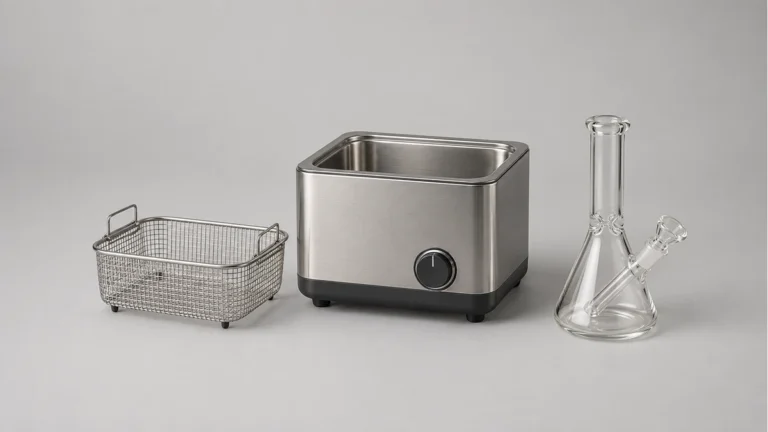
Beyond temperature, the cleaning solution itself matters for keeping percolators, slits, and joints clear without resorting to scrubbing tools that can scratch or chip glass surfaces. The bong cleaner guide covers what actually cuts through residue without relying on abrasive shortcuts that stress the glass or wear down ground joints over time.
🛠️ 7. When Damage Happens: Realistic Repair Expectations
When a crack does start, especially near a joint or a decorative seam, it’s worth being realistic about what repair looks like. Simple borosilicate pieces with clean lines are generally easier for a glassblower to work on, since matching plain, uncolored glass is straightforward. Heavily decorated soft glass pieces are harder to repair invisibly, because matching color work, especially layered or fumed color, is a specialized skill that not every repair shop offers.
For buyers stocking pieces for resale, this is a practical reason to keep decorative soft glass and simpler borosilicate in separate conversations with customers — not because one is better, but because the ownership experience, from daily handling to eventual repair, is genuinely different. Setting that expectation up front avoids disappointed customers who assumed their showpiece bong would be as forgiving as a plain lab-style tube.
❓ 8. Frequently Asked Questions
Is soft glass automatically lower quality than borosilicate?
No. It’s a different material family suited to different goals — decorative color work versus resistance to temperature swings. Quality depends on the specific piece, not the family label alone.
Can a soft glass bong handle daily use?
Yes, under normal room-temperature conditions. The added care mainly applies to avoiding fast, extreme temperature changes and to handling decorative add-ons gently.
Does a thicker soft glass piece solve the durability question?
Not by itself. Even thickness and simple shapes matter more than raw wall thickness or overall weight.
Does storage matter as much as cleaning?
It matters more than people expect. A car trunk in summer, a windowsill in direct sun, or a cabinet near a heating vent all expose a piece to the kind of slow, uneven temperature swings that add up over time. A padded case in a stable-temperature spot does more for a soft glass piece’s lifespan than any single cleaning habit.
The material label on a water pipe is a starting point, not a verdict. Soft glass earns its place in a collection through color and craftsmanship; borosilicate earns its place through thermal tolerance and simplicity. Knowing which one is in a buyer’s hands — and treating it accordingly during cleaning, storage, and handling — matters more than any weight comparison at a trade show table.
📚 9. Sources and Reader Questions Reviewed
Technical statements were checked against the sources below. Reddit discussions were used only to identify reader questions and language, not as proof of technical, health, safety or legal claims.