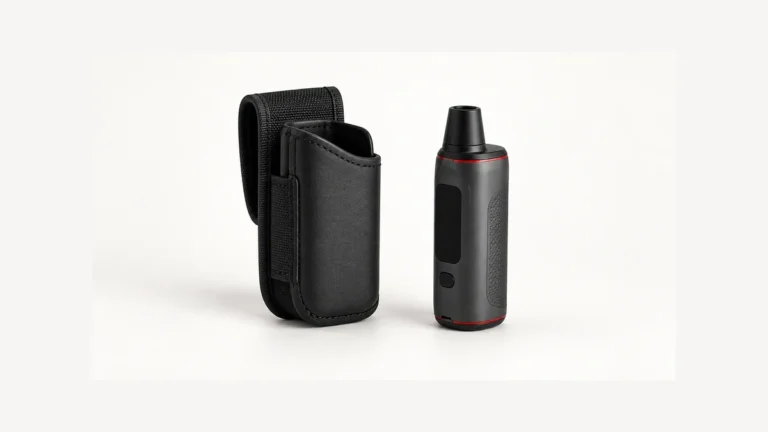
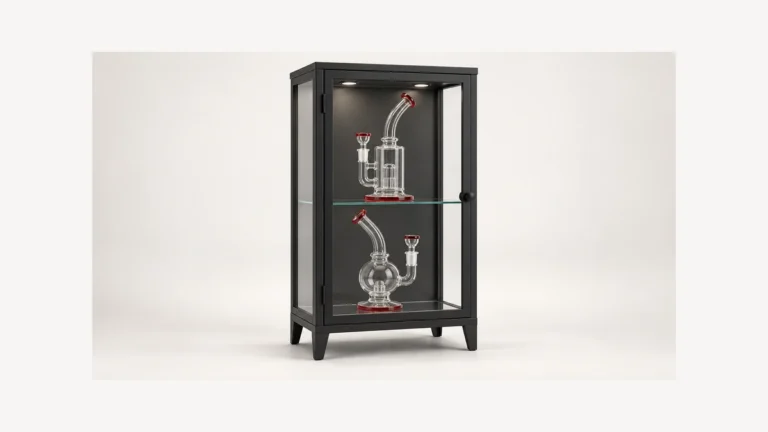
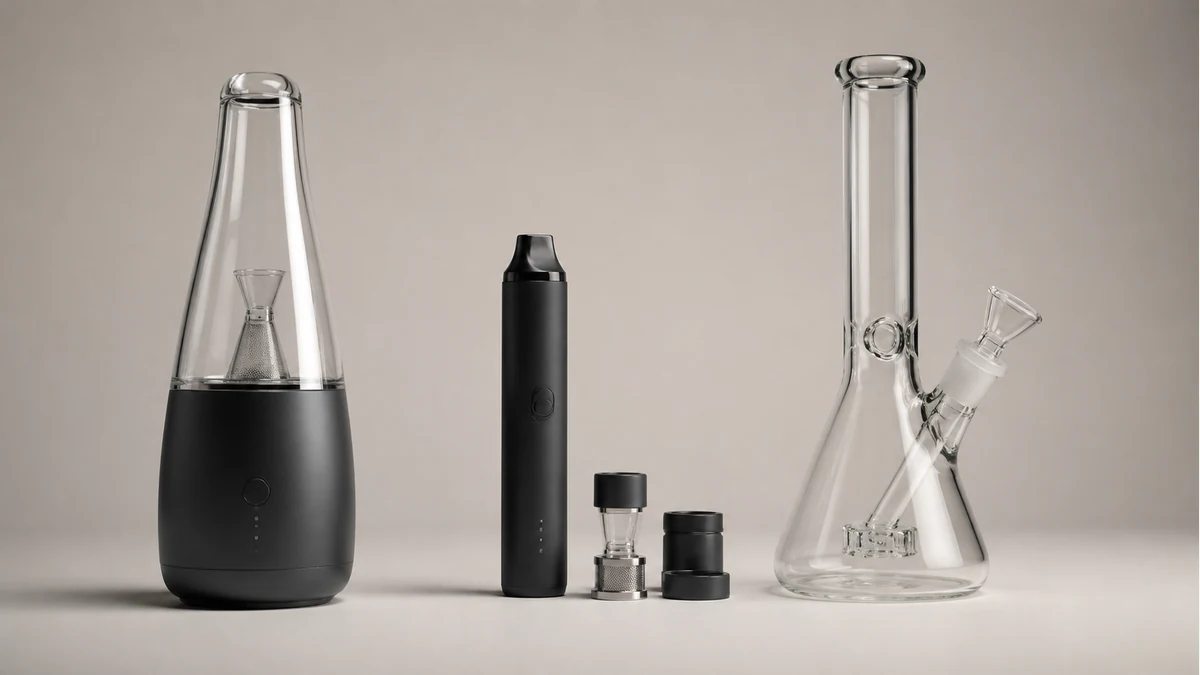
Someone searching for an electric bong for flower is often picturing one machine: a base that holds water, a chamber that heats dry herb, and a single cord that plugs the whole thing in. What they usually find instead is three different products wearing similar marketing language: electric dab rigs built for concentrate, desktop vaporizers with a glass water pipe attachment, and portable dry-herb vaporizers connected to a standard bong through an adapter. Only some of those layouts are actually built to heat ground flower, and the difference comes down to where the heater sits and what it’s designed to touch.
That distinction matters because an electric heater and a water chamber are two separate systems that happen to share a base. The heater decides whether flower is even an appropriate material. The water path decides how the vapor or smoke cools and how much resistance you feel on the draw. Conflating the two —assuming any electric rig with a water chamber is flower-safe, or that any bong with a battery attached counts as an “electric bong” —is where most buying mistakes start.
🧭 1. An electric bong for flower is a heater plus a water path
Strip the marketing away and an electric bong for flower is two components working together: a controlled heat source that extracts from ground dry herb, and a water-filled chamber the vapor or smoke passes through before reaching your mouth. The heater is the part that determines what the device is actually for. Some electric heaters use conduction, where herb sits directly against a heated surface, and others use convection, where heated air passes through the herb chamber —the mechanics of that difference are covered in more detail in how dry-herb vaporizers work, and it’s worth understanding before comparing devices, because conduction and convection heaters behave differently with the same water attachment.
The water path, by contrast, does not care what heated the vapor. Water cools the draw and adds some moisture, but it is a passive downstream stage —it doesn’t change whether the heater upstream was built for flower, concentrate, or both. A device can have an elegant percolator and still be the wrong tool if the heating chamber underneath it was designed for wax or oil rather than ground herb.
🧩 2. Three hardware layouts people mean by the phrase
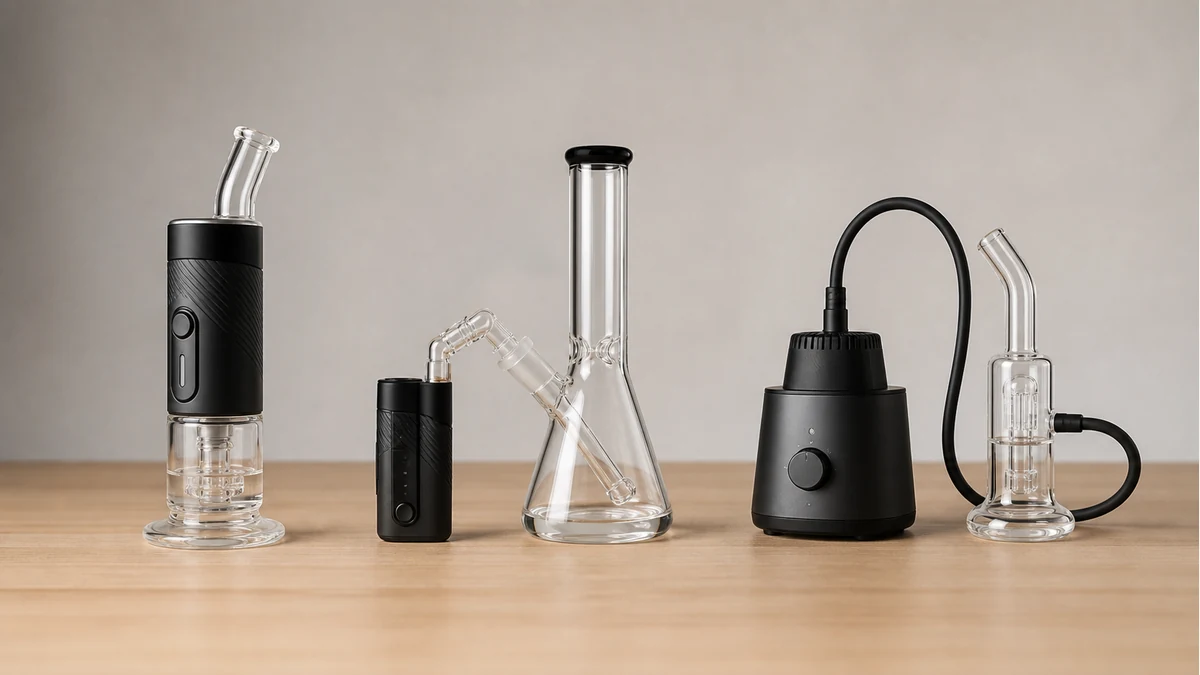
“Electric bong for flower” gets used loosely enough to cover at least three distinct configurations, and they aren’t interchangeable.
📦 2.1. Integrated electric water pipes
These are built as a single unit: a base with a battery or power cord, a dry-herb heating chamber built into or seated on top of the base, and a water chamber the vapor travels through before the mouthpiece. Everything is designed around flower from the start, so the heater’s airflow path and the water chamber’s diffusion are matched to each other by the manufacturer.
💡 2.2. Desktop vaporizers with a glass whip or water pipe attachment
Larger desktop units often separate the heating element from the delivery method entirely. The herb chamber is part of the desktop base, and the vapor is drawn through a whip, a balloon, or a glass water pipe attachment that connects via a hose or a direct glass joint. The heater and the water path are made by the same brand but remain physically separate pieces you assemble each session.
🧭 2.3. Portable dry-herb vaporizers connected to a standard bong
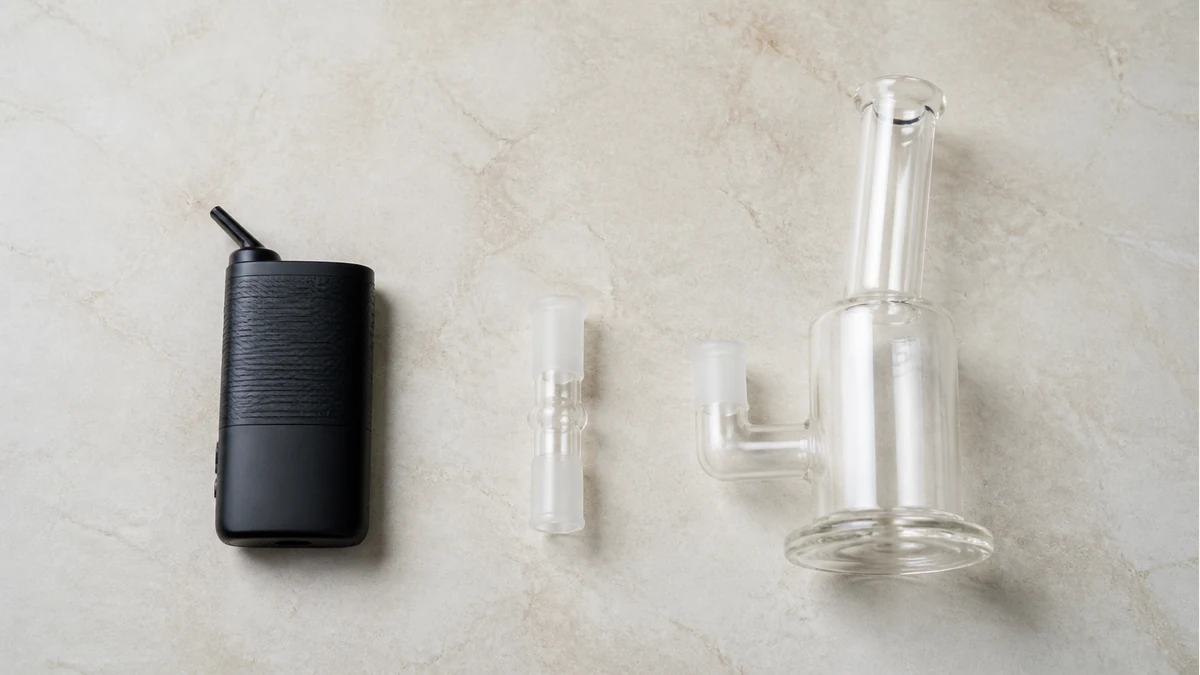
The third layout starts with an ordinary glass bong that has no electronics at all, and adds a battery-powered portable vaporizer through a downstem or joint adapter. The bong contributes only the water chamber; the vaporizer contributes the heater and its own separate battery. This is the setup most people already own the components for, since it repurposes existing glass rather than requiring a new integrated device.
The practical difference between these three is how much control you have over each half. Integrated units are the least fussy but the least flexible —you can’t swap the water chamber for a different percolator design. Desktop-plus-attachment setups and portable-plus-adapter setups both let you upgrade or replace the water side independently, at the cost of a joint connection that has to fit correctly.
🔍 3. Why an e-rig is not automatically a flower device
Electric dab rigs are the most common source of confusion, because they look almost identical to an integrated electric bong for flower: a base, a heating element, a water chamber, a control screen. The heater in a dab rig, though, is built around a nail or a coil designed to vaporize concentrate placed directly on a heated surface —it is not built with a herb chamber, airflow path, or temperature range suited to ground flower. Loading dry herb into a device engineered for concentrate doesn’t give you a working flower vaporizer; it gives you a heater running outside its intended use, with no guarantee the airflow, chamber geometry, or heat profile were ever designed for that material.
The reverse mismatch happens too. A flower-specific heating chamber generally isn’t suited to concentrate, for the same reason in the other direction: the chamber geometry, airflow, and temperature range are calibrated for ground herb, not for oils or waxes. When you’re comparing electric water pipes, the product listing or manual should state plainly whether the chamber is built for dry herb, concentrate, or both —if that isn’t specified, treat it as a question to resolve before buying rather than an assumption to make.
⚙️ 4. Joint fit, draw resistance, and water level interact
In the modular layouts —desktop-plus-attachment or portable-plus-adapter —the connection between the heater and the water chamber is a physical joint, and joint fit changes how the whole device performs. A loose connection pulls in outside air, diluting the draw and sometimes cooling vapor unevenly before it reaches the water. A connection that’s too tight, or an adapter sized wrong for either the vaporizer’s mouthpiece or the bong’s joint, can restrict airflow enough that drawing through the device becomes noticeably harder. Adapter sizing, joint gender, and compatible glass sizes are specific enough to each device pairing that they’re worth working through in a dedicated guide to vape-to-bong adapters rather than guessing based on a product photo.
Water level compounds the same issue. Too much water increases draw resistance on any bong, electric or not, and can pull water back up into the vaporizer’s airpath if the device is tilted or the water line sits too high relative to the joint. Too little water reduces cooling and diffusion without necessarily making the draw easier, since the airflow restriction from the heater and adapter is still there regardless of water volume. Because the right fill level depends on the specific water chamber’s percolator design and downstem depth, general filling principles and troubleshooting are covered in a full water-for-bongs guide; the maker’s manual for your specific vaporizer and bong combination should still be the final word on both water level and adapter fit.
🧼 5. Integrated convenience versus modular repairability
Integrated electric water pipes trade flexibility for simplicity. There’s one device to charge or plug in, one set of controls, and no adapter fit to troubleshoot, which removes an entire category of setup problems. The tradeoff shows up if something fails: if the heating element or the water chamber develops a problem, you’re often dealing with the whole unit rather than a single replaceable part, and the two systems can’t usually be serviced or upgraded independently of each other.
Modular setups —a portable or desktop vaporizer paired with a separate bong through an adapter —invert that tradeoff. If the water chamber breaks, you replace a piece of glass. If the vaporizer’s battery degrades or the heating element wears out, you replace or repair the vaporizer without touching the bong at all. The cost is that you’re managing two separate devices, two charging or heating cycles, and a joint connection that has to be correctly matched every time you use it. Neither approach is strictly better; the right one depends on whether you’d rather minimize setup steps or minimize the blast radius when one component needs attention.
🛠️ 6. Cleaning the herb path and water path separately
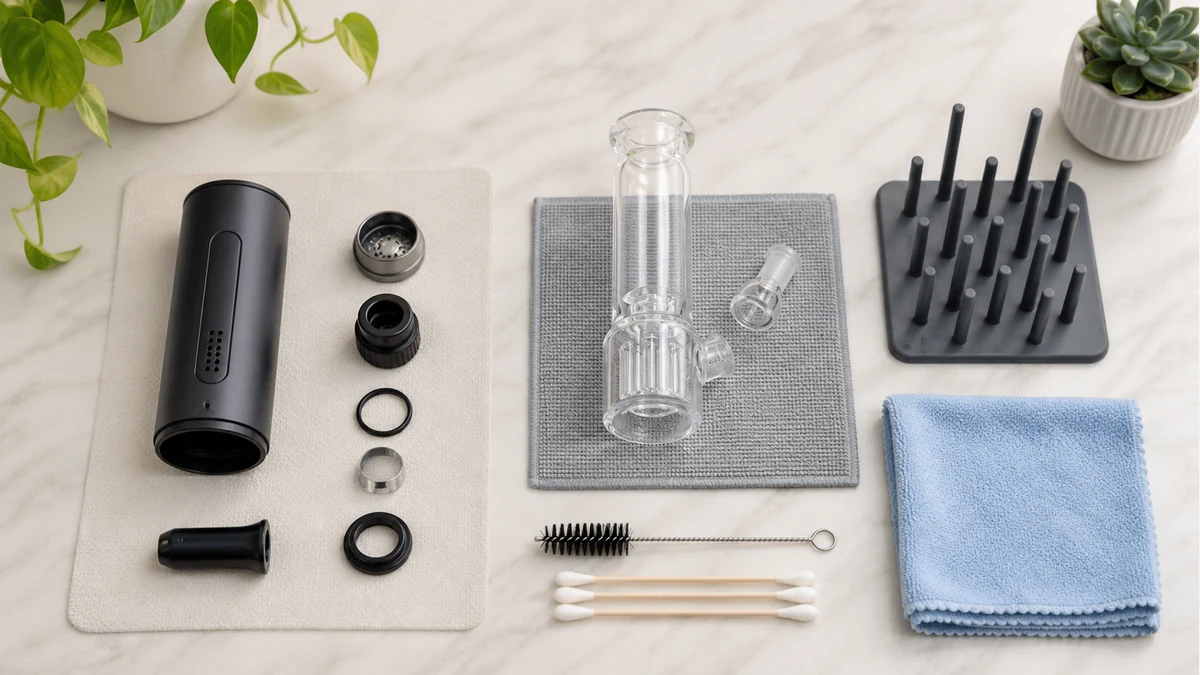
The heater’s chamber and the water chamber accumulate residue differently and need to be treated as separate maintenance tasks. The herb chamber collects plant matter, ash, and resin buildup directly from combustion or heating, and cleaning it typically involves brushing or wiping the chamber itself —methods and frequency vary by heater design, so this is squarely a case for following the manufacturer’s manual rather than a generic routine, since abrasive tools or the wrong solvent can damage a heating element or its coating.
The water chamber accumulates a different kind of residue: waterline buildup, resin that collects at percolator slits, and standing water that needs regular changing. This side of the device generally tolerates standard glass-cleaning approaches, but any electronic base, battery compartment, or heating element near the water chamber needs to stay dry and disconnected during that process. On integrated units especially, check the manual for which parts are described as safe to expose to water or cleaning solution and which parts are not, since the electronics and the water chamber can sit closer together than they do on a modular setup.
🧩 6.1. Dry-fit the airpath before adding water
A modular flower-vape setup is easiest to diagnose when assembled dry first. Seat the adapter without forcing it, support the vaporizer so its weight is not hanging from a glass joint, and draw through the empty water piece. Excess resistance at this stage usually points to a narrow adapter, a pinched whip, or a joint that is not fully seated—not to the heater.
Only then add the minimum water level the glass needs to function and repeat the draw. This two-step check separates mechanical fit from water resistance. It also prevents a common troubleshooting spiral in which users change temperature, packing, and draw speed at the same time even though the real restriction is downstream.
Balance matters, too. A compact vaporizer perched high on an adapter can turn a stable bong into a lever. Keep the glass on a level surface, route whips without tension, and disconnect the vaporizer before moving the assembly. The most elegant adapter is not necessarily the best one if it places fragile glass under constant side load.
✅ 7. Choose by the heater first, not the silhouette
The fastest way to sort through electric bong options for flower is to identify the heater before looking at anything else. Confirm the heating chamber is built for dry herb —not concentrate, not “dual use” without further detail —and understand whether it heats by conduction, convection, or a mix of both, since that affects grind size and how evenly the herb is heated. Once the heater is confirmed, then evaluate the water chamber: whether it’s fixed to the unit or modular, what percolator or diffusion design it uses, and whether the joint size matches your existing glass if you’re going the adapter route.
Judging these devices by silhouette alone —assuming a water chamber plus visible electronics equals a flower vaporizer —is exactly how people end up loading herb into a concentrate-oriented rig or pairing an adapter with the wrong joint size. Working from the heater outward, and treating the water path as a separate system layered on top of it, is a more reliable way to land on a device that actually does what the search term implies.