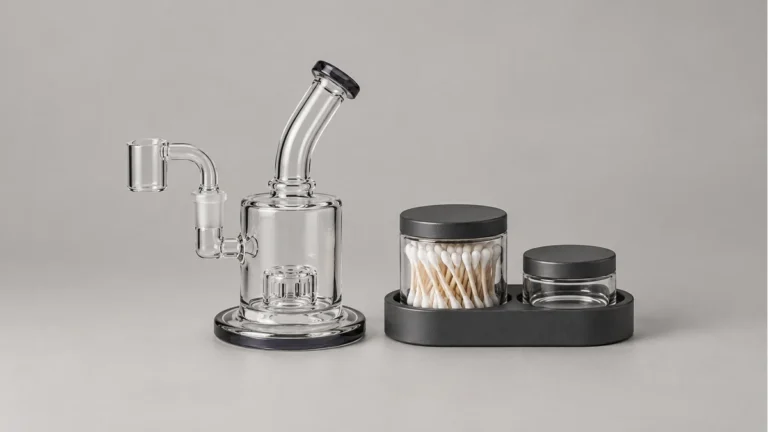
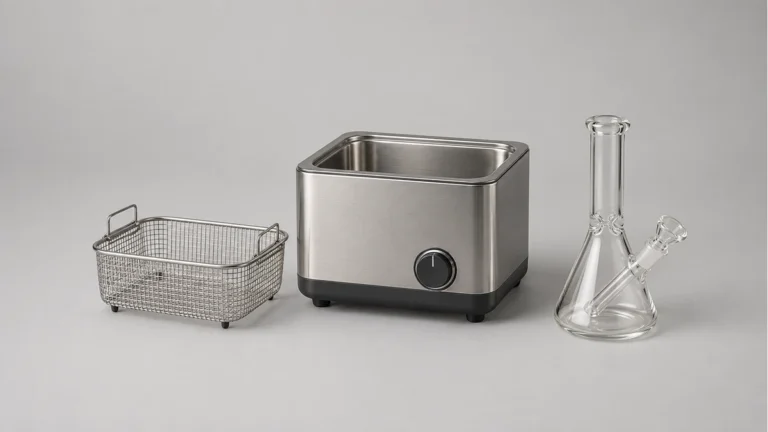
The phrase “gravity bong bowl” gets thrown around a lot, but it names something more specific than most buyers assume. It isn’t just any bowl piece — it’s the small load-bearing component that sits at the top of a moving-water or moving-air system, and its fit, seal, and mounting style determine whether the rest of the assembly actually functions the way it’s supposed to. Because this part is small and often sold separately from the main body, it’s also the piece most likely to get lost, mismatched, or replaced with something that technically fits but doesn’t seal correctly.
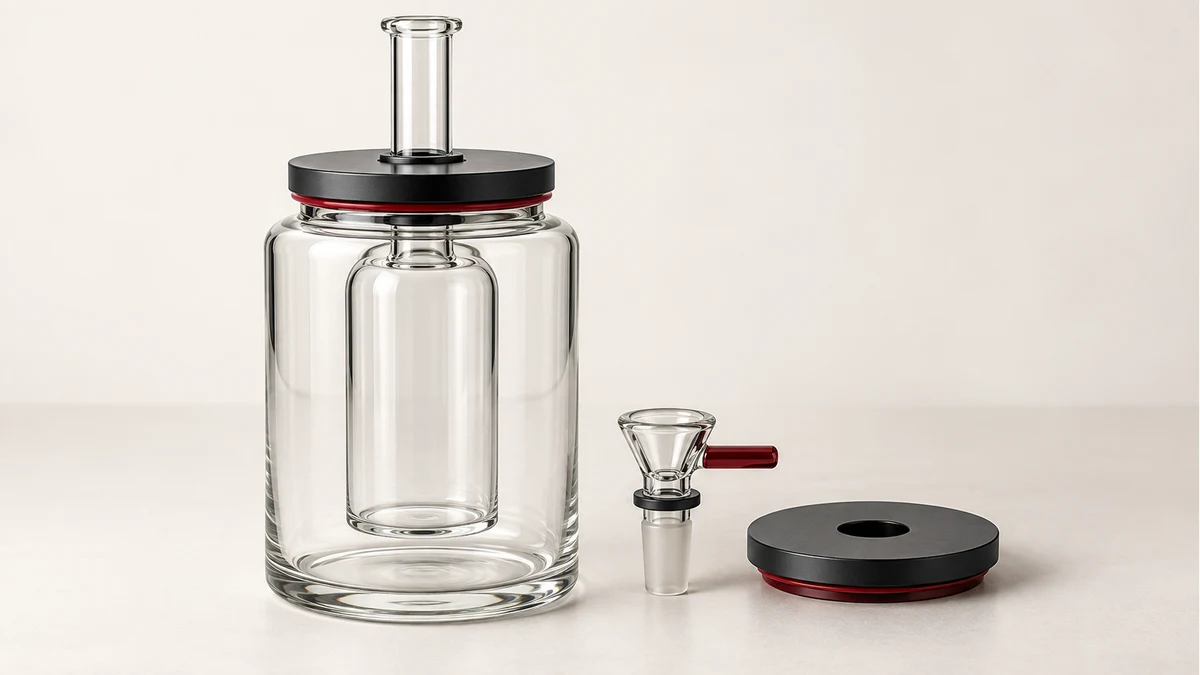
This article is a taxonomy guide, not a build guide. The goal is to help you understand what the term refers to, how it connects to the cap or upper plate it works with, and why a single measurement — joint size — is never the whole story. If you’re trying to identify, replace, or simply understand this part, the distinctions below should clear up most of the confusion.
🧩 1. What “Gravity Bong Bowl” Actually Names
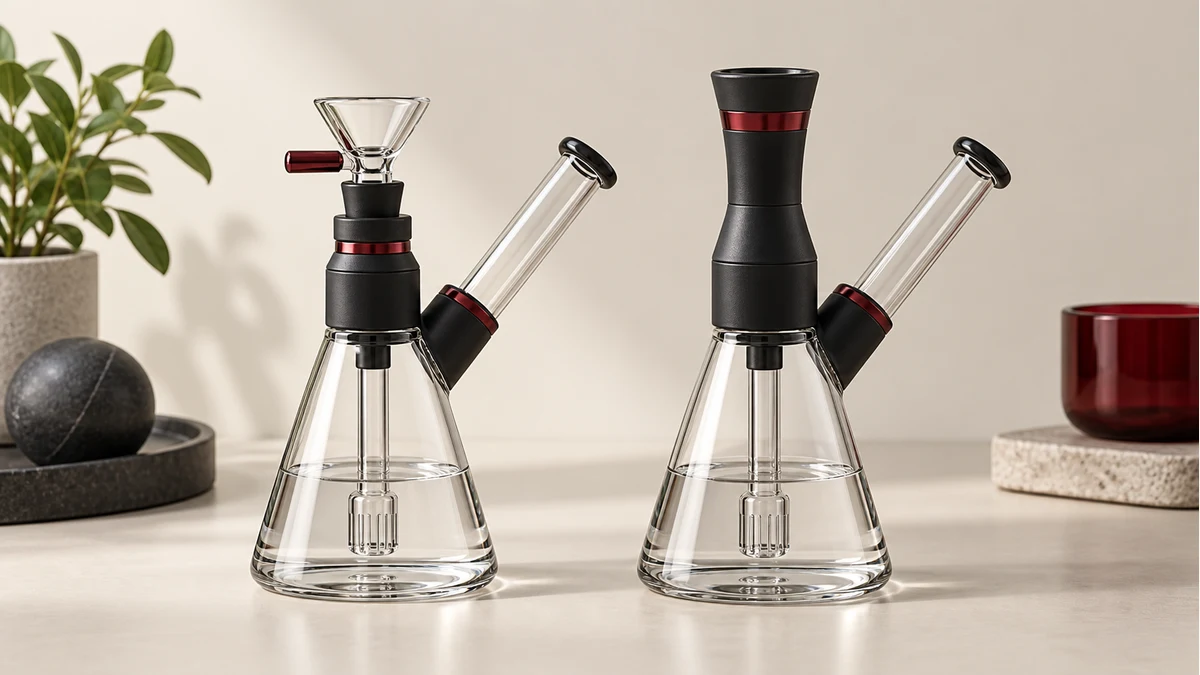
In a moving-water system, there are generally two functional halves: a lower vessel that holds liquid and travels up or down, and an upper component that caps the opening and holds the bowl piece. The “bowl” itself refers specifically to the small cup-shaped fitting that holds material and connects to a downstem, stem, or slide-style joint. It is not the cap, not the plate, and not the tube — it’s the interchangeable accessory that plugs into one of those larger parts.
🔍 1.1 Why the Term Gets Confused With the Whole Assembly
Because the bowl is often the only visible, removable piece on the outside of a gravity-style setup, people sometimes use “bowl” to mean the entire top assembly — cap, stem, and bowl together. That’s understandable, but it creates real confusion when someone is shopping for a replacement part and doesn’t realize the bowl and the cap are sold, sized, and fitted independently. For a broader breakdown of how these upper components relate to each other, the bong bowl guide is a useful reference point, since gravity-style systems borrow most of their joint and fitting logic from standard bong construction.
🧷 1.2 The Bowl as an Interchangeable Accessory
Treating the bowl as its own category — rather than as a fixed part of the cap — is the first step toward understanding replacement and compatibility. Manufacturers generally design bowls to be swapped, upgraded, or replaced without touching the rest of the system, which is exactly why joint standards exist in the first place. But standard joint sizing only solves part of the puzzle, which is where a lot of buyers run into trouble.
🔗 2. How the Bowl Interfaces With a Cap or Upper Plate
Every gravity bong bowl connects to something above it — usually a cap with a stem, or a flat plate with a fitted joint. The bowl’s job is to sit in that joint securely enough to stay in place during use, while still being removable for cleaning or clearing. That dual requirement — secure but removable — is what makes bowl-to-joint fit more nuanced than it looks.
🧱 2.1 Cap-and-Stem Configurations
In a cap-and-stem configuration, the bowl sits at the top of a stem that extends down through the cap and into the vessel below. The bowl attaches to the exposed end of the stem the same way a bowl would attach to any downstem-style joint. The stem’s female or male fitting and the bowl’s matching fitting need to correspond exactly, not just approximately, for the piece to sit flush.
🧷 2.2 Flat-Plate Configurations
Some systems use a flat plate instead of a stem-and-cap combination, with the bowl’s joint built directly into the plate or attached through a short fitting. This design tends to have fewer moving parts, but it also means the bowl and plate are more tightly linked — if the plate’s joint wears down or the fitting angle changes, the bowl’s seal is affected directly rather than through an intermediate stem.
📏 3. Why Joint Size Alone Is Incomplete
Joint size — usually expressed as a diameter in millimeters — tells you whether a bowl will physically fit into a joint. It does not tell you whether the fit will be snug, whether the angle matches, or whether the bowl was designed for that particular style of upper assembly. This is the single most common source of “it fits but it doesn’t work right” complaints.
📐 3.1 Diameter Is Necessary but Not Sufficient
Two bowls with the same stated joint diameter can behave very differently depending on wall thickness, taper angle, and how deep the joint is cut. A bowl can slide into a joint of the correct diameter and still sit loosely, wobble, or fail to create an airtight connection. Diameter is the first filter, not the final answer.
🔧 3.2 Angle and Gender Matter Just as Much
Joints also come in different angles (straight or angled) and genders (male or female), and a bowl matched on diameter but mismatched on angle or gender simply won’t sit correctly, regardless of how precisely the millimeter measurement lines up. This is one of the reasons that shopping by size number alone tends to disappoint buyers who assume standardized measurements guarantee interchangeability.
🌬️ 4. Seal and Clearance Considerations
Beyond fit, a bowl needs to create a seal against the joint it sits in, and it needs enough clearance to be inserted and removed without excessive force or wobble. These two requirements sometimes pull against each other, which is why bowl-and-joint pairing is more of a system-level consideration than a single-spec lookup.
🫧 4.1 What “Seal” Means in This Context
A sealed connection means air isn’t leaking around the edges of the joint where the bowl meets the stem or plate. Ground-glass joints rely on matched taper angles to create this seal without any additional material. A bowl that’s slightly undersized for its joint may sit in place but fail to seal, which is a fit issue rather than a sizing issue in the strict sense.
🧯 4.2 Clearance and Wear Over Time
Clearance refers to how much room exists between the bowl’s joint and the receiving joint before insertion. Over repeated use, joints can wear slightly, which changes clearance even if the original fit was correct. This is a normal part of how ground-glass and friction-fit connections age, and it’s worth keeping in mind when a previously well-fitting bowl starts to feel different.
🔄 5. Removable Versus Integrated Bowls
Not every gravity-style system uses a separate, swappable bowl. Some are built with the bowl fused or permanently attached to the stem or cap, which changes both the repair and replacement calculus considerably.
🧩 5.1 Removable Bowl Systems
Removable bowls attach to a joint the same way a standard bong bowl does, and they can be swapped, upgraded, or replaced independently of the rest of the assembly. This is generally the more flexible arrangement, since a damaged or lost bowl doesn’t require replacing the entire upper unit — only the bowl itself, provided the replacement matches diameter, angle, and gender.
🔗 5.2 Integrated (Fused) Bowl Systems
Integrated systems have the bowl built as one continuous piece with the stem or plate. This tends to simplify manufacturing and reduce the number of connection points that can leak, but it also means that if the bowl portion cracks or wears out, the entire upper piece typically needs replacing rather than just the small component. Readers comparing modular versus fused designs across bong-style products more broadly may find the bong that comes apart guide useful, since it covers the same removable-versus-fused distinction in a related product category.
Below is a comparison of how these two approaches generally differ, based on structural characteristics rather than any specific brand or model.
| Characteristic | Removable Bowl | Integrated (Fused) Bowl |
|---|---|---|
| Replacement scope | Bowl only, if diameter/angle/gender match | Entire stem or plate assembly |
| Number of seal points | One additional joint connection | Fewer connection points overall |
| Flexibility for swapping styles | Higher — different bowl styles can be tried | Lower — bowl style is fixed at manufacture |
| Risk if bowl is damaged | Isolated to the bowl piece | Affects the full upper unit |
| Cleaning access to the bowl | Generally easier, since it detaches | Limited to what the fused shape allows |
🧽 6. Cleaning Access Differences
Cleaning access is a direct consequence of whether a bowl is removable or integrated, and it’s worth understanding as part of the taxonomy rather than as a separate maintenance topic, since it affects how a piece is designed in the first place.
🧴 6.1 Detachable Bowls and Direct Access
A removable bowl can be taken off the stem or plate entirely, which allows direct access to both the bowl’s interior and the joint it sits in. This is generally the more straightforward configuration to keep clear of residue, simply because there are no hidden internal bends between the bowl and the rest of the system.
🪥 6.2 Fused Bowls and Indirect Access
When the bowl is fused to a stem that runs down into a cap or plate, cleaning access depends on the internal geometry of that stem. Narrow or angled internal passages can be harder to reach thoroughly, which is a structural tradeoff of the integrated design rather than a flaw specific to any one product.
🗂️ 7. How to Document Replacement Parts
Because bowls are small, easy to lose, and sold as standalone accessories, keeping a basic record of what you actually have — rather than relying on memory — makes future replacement far more straightforward.
📝 7.1 What to Record
At minimum, it helps to note the joint diameter, the joint angle (straight or angled), and the gender of the joint (male or female) on both the bowl and the piece it connects to. If the bowl or stem came with any packaging or listing information, keeping that reference alongside the physical piece avoids relying on guesswork later. A slide or bowl that looks similar at a glance can still be a mismatch on one of these three specifications, and the bong slide replacement guide walks through the same diameter, angle, and gender considerations in more detail for slide-style pieces, which overlap significantly with bowl fitting logic.
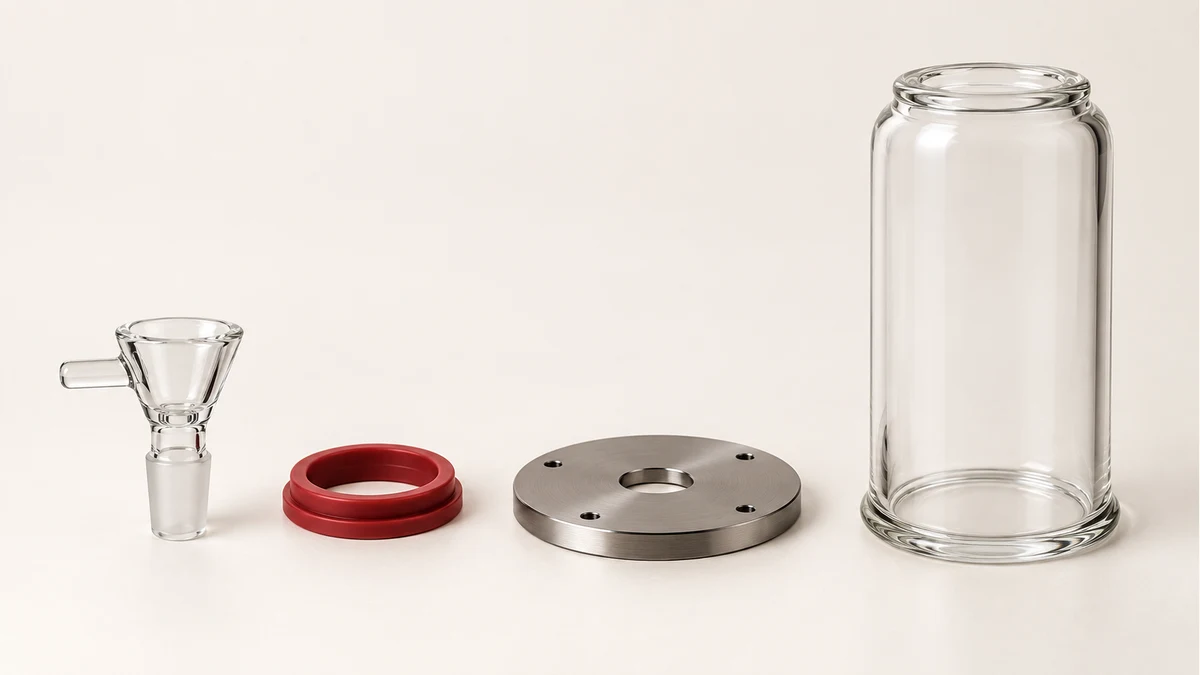
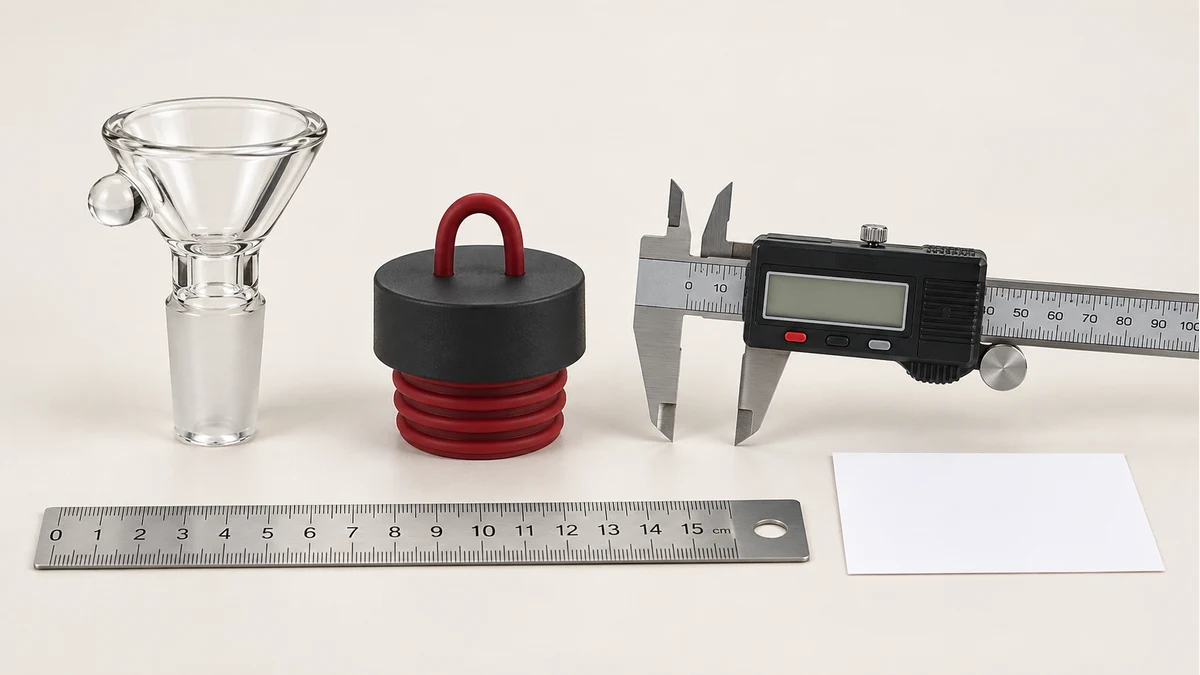
A quick reference photo is most useful when it shows the bowl, cap or plate, seal, and moving vessel as separate components beside a ruler. That prevents a common cataloging mistake: measuring the visible top while overlooking the stem or gasket that actually controls the fit. Photograph each connection face straight on as well as from the side, because perspective can make a tapered joint appear wider or shorter than it is.
📦 7.2 Why This Matters More for Modular Systems
Documentation matters most when a system relies on separate, interchangeable parts, since a mismatched replacement bowl doesn’t just look wrong — it can fail to seal or sit correctly in the joint. For integrated systems, this concern is less pressing, since there’s no separate bowl to source, but it becomes relevant again if the entire upper unit needs replacing and you want to confirm the new piece matches the original joint specifications on the lower vessel.
Understanding the gravity bong bowl as a distinct, interchangeable component — rather than as a vague stand-in for “the top part” — clarifies most of the confusion buyers run into. Joint diameter is a starting filter, not a guarantee of fit, and seal, clearance, angle, and gender all play a role in whether a bowl actually belongs with a given cap, stem, or plate. Whether a system uses a removable or fused bowl changes both cleaning access and how replacement parts should be sourced, and keeping a simple record of the relevant measurements makes that process far less error-prone down the line.