Then match joint gender and nominal diameter, followed by usable length if a downstem is involved. A replacement that looks close can bottom out, sit above the water, or wedge into the joint even when its overall length appears right.
A bong slide replacement has to match the receiving joint, not the dimensions of the broken fragment. First determine whether “slide” means the bowl alone, a bowl-and-stem assembly, or a removable downstem in the listing you are reading. Sellers use the word differently.
🔍 1. First identify what the seller calls the slide
Glass retailers don’t use consistent terminology, and that’s the root of most replacement mistakes. Some listings label a bowl piece “slide,” others reserve that word for a stem with a bowl fused at the top, and a few use it for a flat disc bowl that slides into a joint without a separate downstem at all. Reading the product description rather than the title matters here — the title might say “slide” while the description clarifies it’s a fixed stem-and-bowl combo, or vice versa.
This distinction changes what you’re actually shopping for. If your original piece had a separate bowl and downstem, and only the bowl cracked, you need a replacement bowl piece, not a full stem. If the whole assembly was one fused unit, you need a combo piece sized to the joint, and the downstem length becomes part of the same purchase instead of a separate one. Confirming which category applies before measuring anything saves a return.
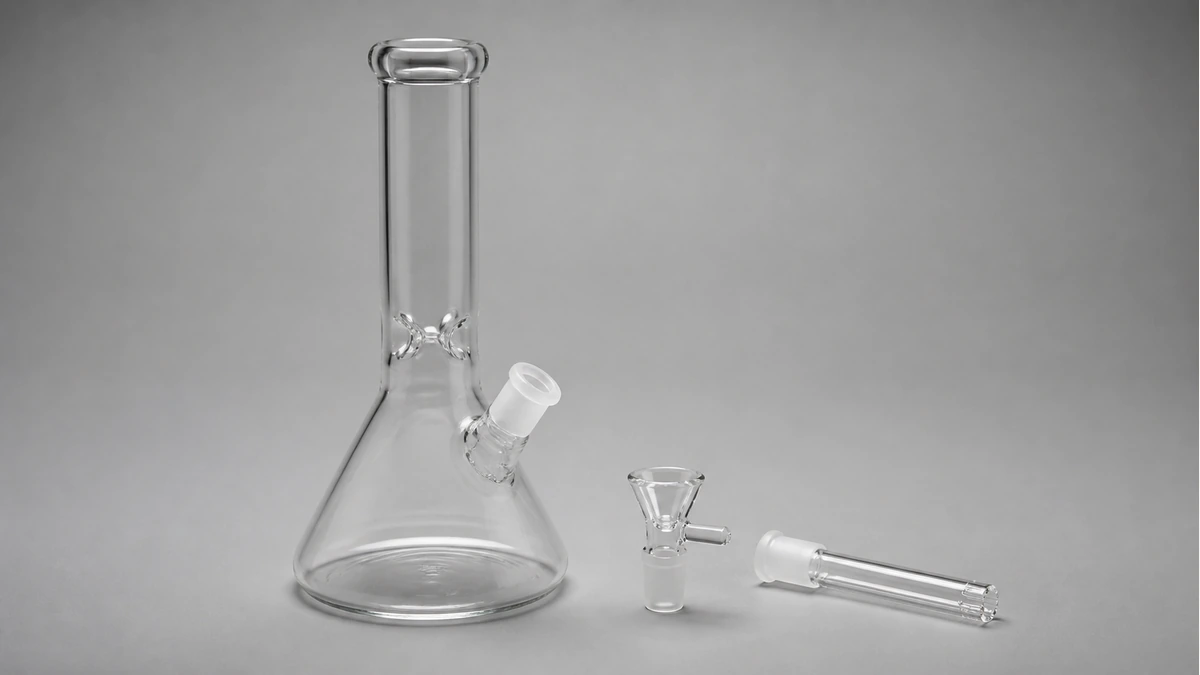
For a closer look at how bowl pieces are categorized and named across listings, the bong bowl piece guide breaks down the terminology differences in more detail.
📏 2. Measure the receiving joint instead of the broken edge
A cracked or snapped slide can’t be measured accurately, because the break itself distorts the diameter near the fracture point. The joint that’s still attached to the pipe — the neck or the angled side arm — is the reference that matters, since that’s the surface the new piece has to seat against.
Joint diameter is measured across the opening in millimeters, not inches, and common sizes cluster around a handful of standard measurements. A joint that measures roughly 14mm across is a different fit family than one closer to 18mm, and the two are not interchangeable without an adapter. If a caliper isn’t available, a snug-fitting household item of known diameter, checked against the joint opening, gives a rough enough estimate to shop by — but an actual caliper reading removes the guesswork.
Frosted or ground glass at the joint’s rim is worth checking too, since that texture is what creates the seal. If the ground section is chipped or worn smooth, even a correctly sized replacement may not seat as tightly as it should, and that’s a separate problem from the slide itself.
🔩 3. Joint gender and diameter must both match
Diameter alone isn’t the whole spec. Every ground-glass joint is either male or female, and the replacement slide has to be the opposite gender from the joint it’s going into. A female joint on the pipe calls for a male-ended slide, and a male joint calls for a female-ended one. Getting the diameter right but the gender wrong means the piece won’t seat at all, no matter how close the size is.
Angle matters in the same way diameter does, even though it’s less often mentioned. Most joints sit at a 90-degree angle relative to the neck, but some pipes use a 45-degree angle instead, and a slide built for one won’t sit level in the other — it’ll lean or point the bowl opening somewhere inconvenient rather than straight up. Checking the angle of the original joint, not just its size, avoids a piece that technically fits but sits crooked.
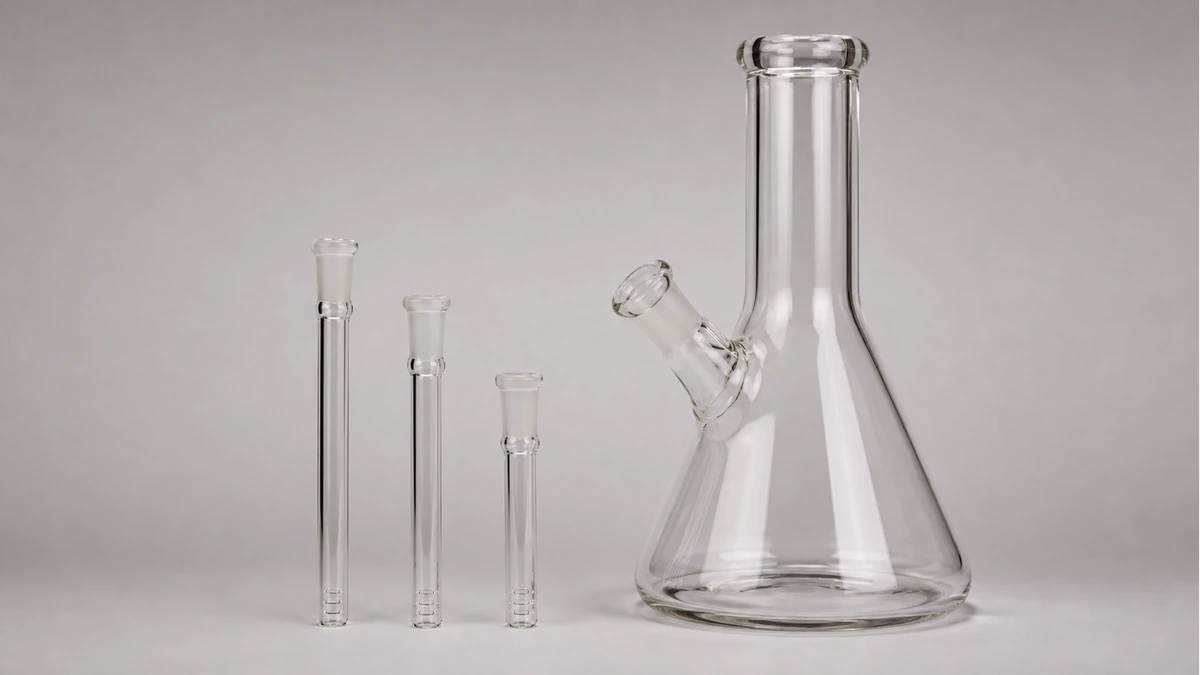
The bong bowl guide covers how joint gender and angle are typically listed on product pages, which is useful when a listing’s specs feel abbreviated or unclear.
📐 4. Downstem length controls submersion and clearance
If the replacement includes or requires a downstem, length is the dimension most likely to get overlooked. A downstem that’s too long will bottom out against the base of the pipe before the slide is fully seated, leaving the joint gap-y and prone to slipping loose. One that’s too short won’t reach water at all, or will sit barely submerged, changing how the piece functions even though it technically fits the joint.
The relevant measurement is the internal depth from the joint opening down to the water level inside the chamber, not the pipe’s overall height. Two pipes of similar height can need very different stem lengths depending on how much of that height is empty neck versus water-holding base. When in doubt, measuring the old downstem — if it broke cleanly rather than shattering — gives a truer number than measuring the pipe from outside.
On pieces where the downstem is a separate component from the bowl, it’s worth checking whether the two are sold together or need to be ordered as matched, independent parts, since some retailers stock them separately by joint size.
🪣 5. Bowl capacity does not determine joint fit
Bowl size — meaning how much the bowl actually holds — is a completely separate spec from joint size, and it’s easy to conflate the two when a listing just says “large bowl” without giving a joint diameter. A wide, deep bowl bulb can be attached to a narrow-diameter joint stem, and a small bowl can sit on a wide joint. Capacity describes the cup at the top; joint size describes the ground-glass connector underneath.
Shopping by capacity alone, because the original bowl “felt big” or “felt small,” skips the measurement that actually determines whether the piece fits the pipe at all. It’s fine to have a preference on bowl size once joint fit is settled, but that preference shouldn’t drive the initial search.
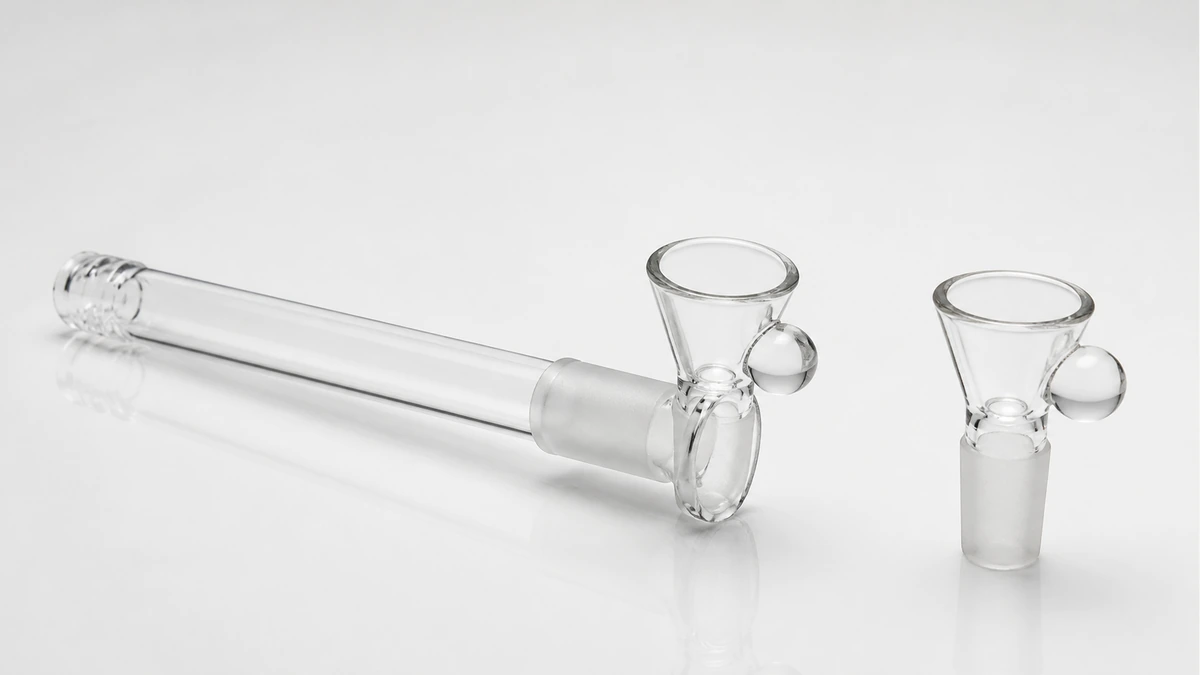
Custom or oversized bowl options exist for people who do want more capacity without changing joint compatibility — the custom bong bowls guide covers how those are sized so the joint spec stays constant even as bowl shape changes.
🧪 6. Cold-test seating and removal
Before treating a new slide as a finished replacement, it’s worth dry-fitting it into the joint without water or use, just to check how it seats. A correctly matched piece slides in with light, even resistance and stops at roughly the same depth the original did — not loose enough to wiggle, not so tight it requires force to remove.
Removal matters as much as insertion. A piece that goes in fine but comes out only with a hard twist or a firm pull is either slightly oversized for the joint or the ground-glass surfaces are gripping more than they should, and that’s worth noticing before it’s been used and is warm, when the glass is more prone to sticking or, in a worst case, cracking under uneven force.
A dry seat check also reveals whether the bowl opening ends up angled toward the user in a comfortable, stable position or pointed off to one side, which is the angle-mismatch problem showing up in practice rather than on paper.
🧼 7. Keep the replacement simple enough to clean and source again
Standard joint sizes exist because they’re easier to replace a second time. A slide sized to a common 14mm or 18mm joint, at a standard gender and angle, can usually be replaced again later without hunting for an unusual match. A piece bought to fit an odd, non-standard joint — or an adapter stacked on an adapter to make an ill-fitting piece work — narrows future options and adds more seams where a joint can wobble or leak.
The same logic applies to cleaning. A separate bowl and downstem, both in common sizes, come apart for cleaning more easily than a single fused combo piece with tight internal geometry. Neither approach is wrong, but it’s worth weighing convenience now against convenience the next time a piece needs replacing.
Ultimately, a bong slide replacement comes down to matching four things at once: the joint’s diameter, its gender, its angle, and — where applicable — the downstem length that reaches the water without bottoming out. Getting the terminology sorted first, measuring the joint rather than the broken piece, and dry-fitting before regular use covers the parts of this process that are easy to get wrong from a listing photo alone.
📏 8. Measure usable length, not just total length
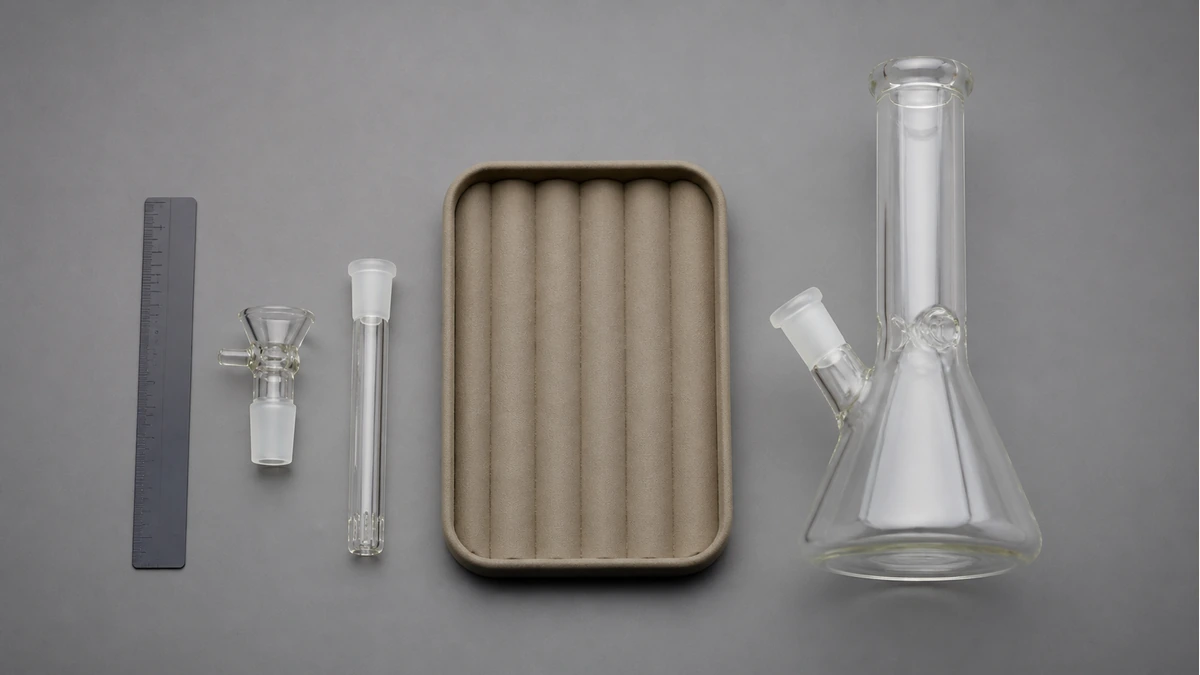
For a removable downstem, the useful measurement normally runs from the point where the ground joint seats to the end of the tube that enters the water chamber. Decorative lips, bowl height, and the portion outside the joint do not tell you whether the diffuser will land at the correct depth.
Use the original specification when it is available. If the old part is intact enough to measure, identify the seating line and measure from there. Do not measure from a jagged broken edge, and do not insert measuring tools into glass in a way that can chip the joint.
🔗 8.1 Check both ends of a two-joint downstem
Some downstems receive a separate bowl. That means the outer joint must fit the bong while the inner joint must fit the bowl. A listing can truthfully say “14mm” while leaving unclear which end the number describes. Ask for both joint sizes, the usable length, and whether the bowl is included.
The end of the diffuser also needs clearance from the base and sidewall. A stem that touches the chamber can transmit bumps into the glass and may restrict bubbles. A stem that stops too high may not remain submerged at a sensible water level.
🧪 8.2 Keep the first fit test cold and dry
Clean both ground surfaces, support the bong at its base, and lower the replacement straight into the joint without twisting hard. It should seat evenly and lift out with controlled pressure. Rocking, a visible taper gap, bottoming out, or resistance before the taper seats are reasons to stop.
After physical fit is confirmed, add water and test the unheated draw. This separates a joint problem from a water-level or airflow problem before any heat enters the setup.
📸 8.3 Photograph the original layout before discarding parts
Take a clear side view of the assembled, cold bong and a close view of each joint before throwing away a broken component. Include a ruler beside the intact seating area, not inside it. That record helps a glass shop understand where the stem used to sit and whether the bowl and downstem were one piece or two.
Keep terminology flexible when asking for help. Say which part enters which opening, provide the measured joint family, and describe where the diffuser must end. That physical description is less ambiguous than insisting on “slide” when a retailer uses the word for another component.
When the replacement arrives, keep its packaging until the cold fit and water test are complete. A clearly labeled package also preserves the specifications for the next replacement, turning a confusing one-time measurement into a repeatable maintenance record.
If the old part broke inside the joint, do not use the new purchase as a tool to push fragments out. Keep the piece dry, isolate it from handling, and have a glass professional assess removal when fragments cannot be safely lifted without scraping the joint. After removal, inspect the receiving joint under bright light before inserting anything new.
Save the final measurements with a photo of the fitted part so the next replacement can be sourced without repeating the identification process.