Metal bong bowls show up in a lot of different setups, and no two look exactly alike. Some screw into a joint, some slide in and out with a removable insert, and some have a built-in screen while others need one added separately. Before worrying about what kind of metal a bowl is made from, it helps to slow down and actually look at how the piece is built. The insert, the joint, and the screen tell you far more about how a bowl functions and fits than the material label ever will.
This matters especially when a bowl needs to be replaced or matched to an existing piece. A lot of frustration during a swap comes from assuming two bowls are interchangeable because they’re both “metal,” when the actual difference is joint angle, opening size, or how the screen sits inside the bowl. For a broader look at how bowls relate to other components, the bong bowl guide is a useful starting point before getting into bowl-specific details.
🔍 1. Why Identification Matters More Than Material
It’s tempting to sort bowls into simple categories — metal, glass, ceramic — and stop there. But two metal bowls can behave completely differently depending on how they’re constructed. One might have a fixed screen stamped into the base, while another relies on a loose screen that can shift or fall through. One might have a smooth, tapered joint that seats snugly, while another has a looser fit that wobbles.
Identification means asking specific questions: How does this bowl attach? Is the screen part of the bowl or separate from it? Can any part of it be removed for cleaning? Does the opening match the size of the piece it’s going into? These are functional questions, and they apply regardless of what the bowl is made from.
🧱 2. Metal vs Glass Bowls: What Actually Differs
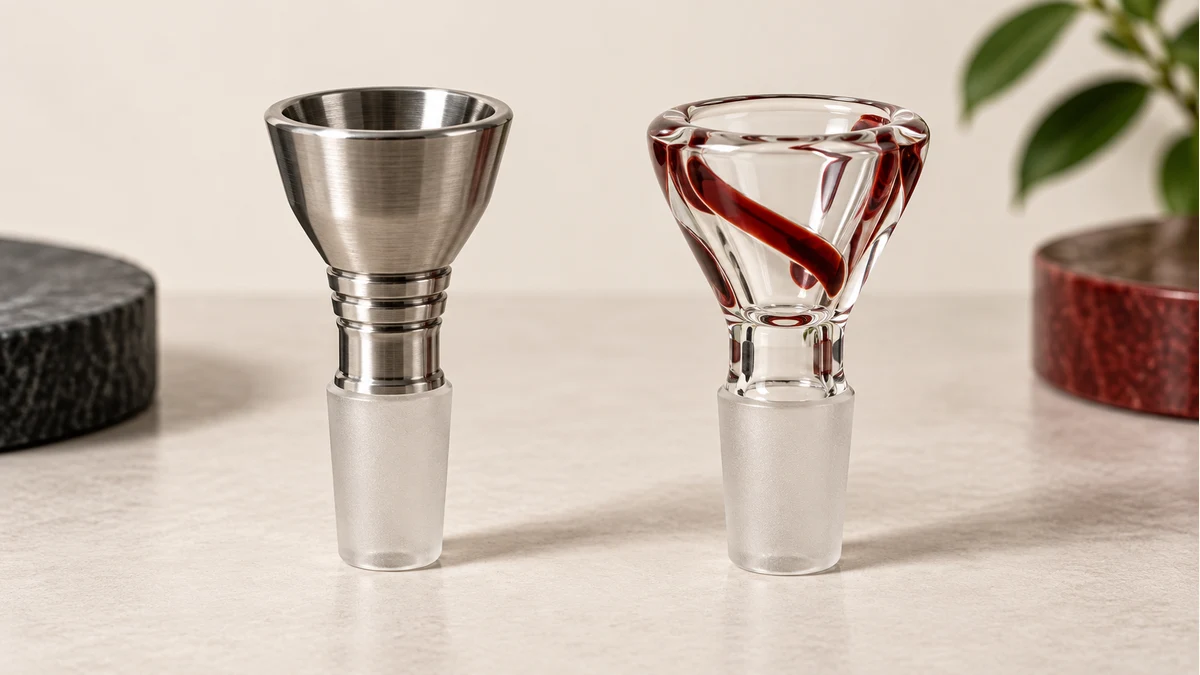
The comparison between metal and glass bowls often gets reduced to durability versus fragility, but that’s an incomplete picture. The real differences show up in weight, how the joint seats, how screens are held in place, and how easy the piece is to inspect visually.
Glass bowls are transparent, so buildup, cracks, and screen position are visible at a glance. Metal bowls require a more deliberate check — a flashlight, a close look at the joint seam, or a test fit — because you can’t simply look through the material to assess condition.
| Feature | Metal Bong Bowl | Glass Bong Bowl | What to Check |
|---|---|---|---|
| Visibility of interior | Opaque; interior not visible without removing screen or looking down the opening | Transparent; buildup and screen position visible from outside | Whether you need a flashlight or tilt-and-look method to inspect condition |
| Screen type | Often a separate mesh or perforated disc, sometimes removable | Frequently a fixed glass pinch or built-in glass screen | Whether the screen lifts out or is molded into the bowl |
| Joint feel | Threaded or friction-fit, sometimes with a slight metallic click | Ground glass taper, smooth friction fit | How the bowl seats and whether it wobbles or spins freely |
| Weight distribution | Often lighter at the joint end, heavier at the bowl head | Weight tends to be more evenly distributed | Whether the bowl tips or leans when set down |
| Insert design | May include a separate insert cup that lifts out | Bowl and joint are usually one continuous piece | Whether the head of the bowl detaches from the stem |
| Cleaning access | Depends on whether the screen and insert are removable | Interior is reachable directly since there’s no opaque barrier | Whether tools need to reach around a fixed screen |
🧷 2.1 Where the Comparison Breaks Down
This table describes tendencies, not rules. Some metal bowls have fully transparent inserts inset into an opaque housing. Some glass bowls include a metal screen. The point of comparing the two isn’t to pick a side — it’s to know which specific traits apply to the bowl actually in front of you, since assumptions based on material alone can be wrong.
🕳️ 3. Bowl Opening Size and What It Tells You
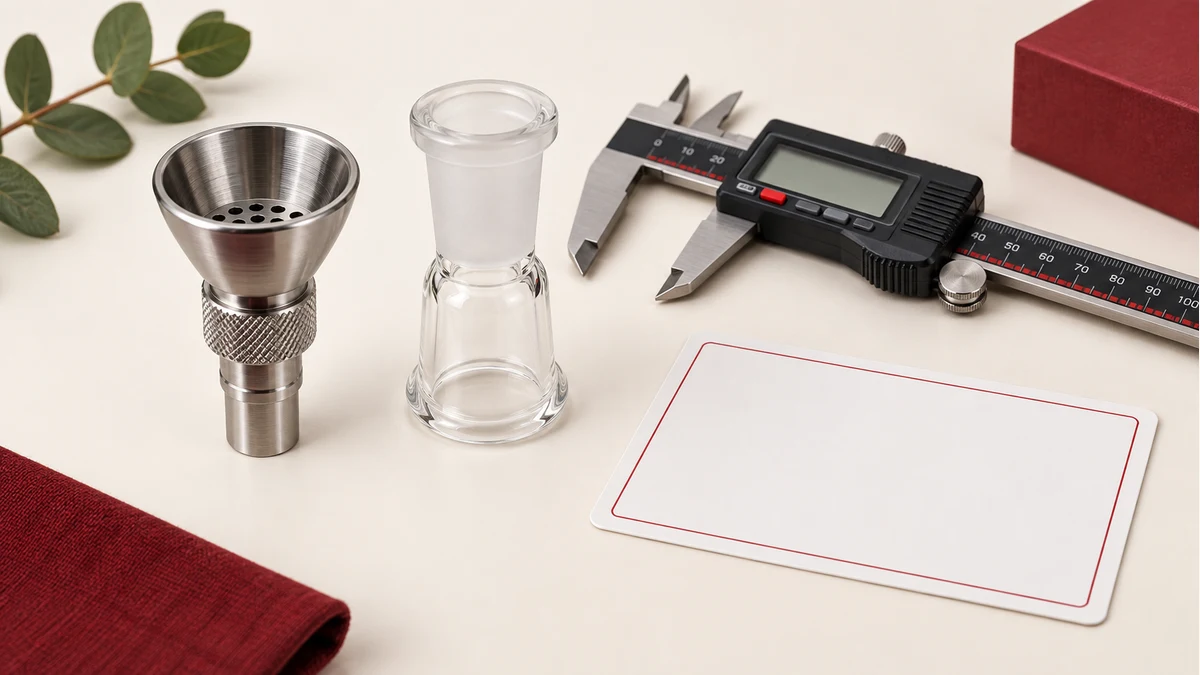
The diameter of the bowl opening is one of the first things worth measuring, because it affects how much surface area the screen needs to cover and how a herb grinder or tool interacts with the bowl. A wide opening generally means a wider screen or a larger insert diameter, while a narrow opening usually pairs with a smaller, tighter screen.
Opening size also hints at the bowl’s depth-to-width ratio. A shallow, wide bowl behaves differently during loading and cleaning than a deep, narrow one, simply because of how material sits inside. When comparing a replacement bowl to an original, matching the opening diameter is often more important than matching the exterior shape, since the opening determines whether a screen or insert from one bowl will actually work in another.
🧵 4. Joint Type and Direction
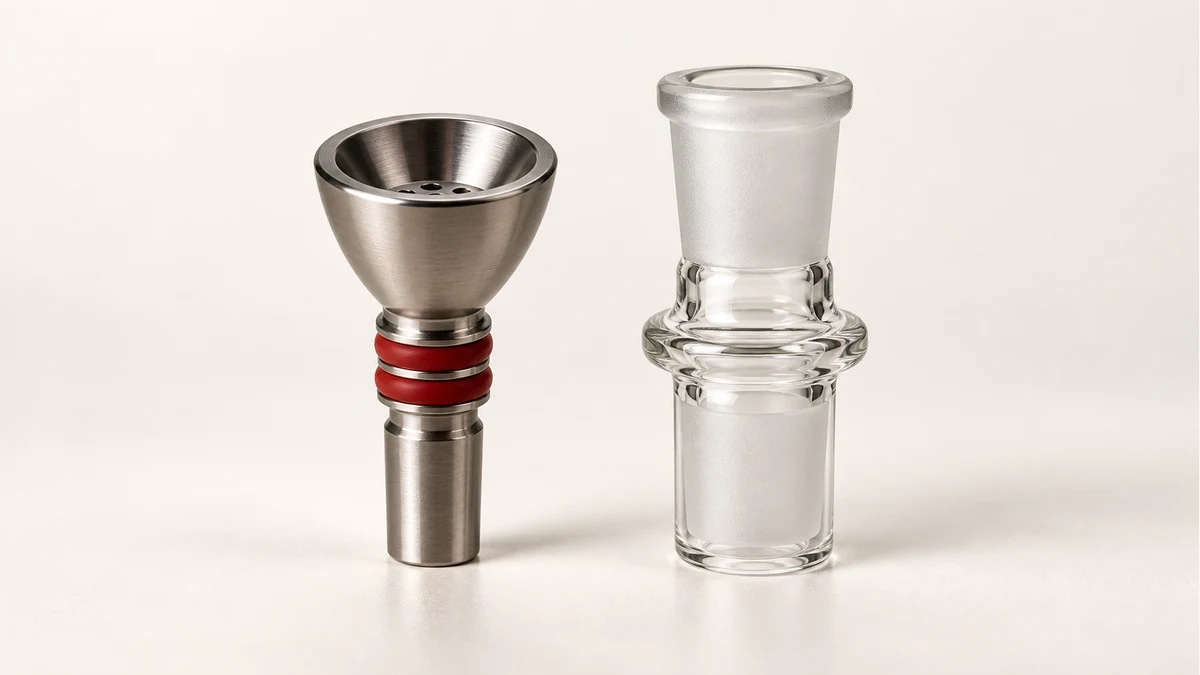
The joint is where a lot of identification confusion happens, because “male” and “female” fittings look similar at a glance but are not interchangeable. A male joint on the bowl fits into a female joint on the receiving piece, and mixing this up is one of the most common reasons a bowl won’t seat correctly.
🔄 4.1 Male vs Female Fit
A male-jointed bowl has a tapered stem that inserts into the piece. A female-jointed bowl has a socket that receives a stem from the piece instead. Looking at the joint under light usually makes this obvious — a protruding taper is male, a recessed opening is female. This distinction matters more than size when checking compatibility, since a correctly sized joint in the wrong direction still won’t fit.
📐 4.2 Joint Angle and Common Sizing
Joints also come at different angles, typically straight or angled relative to the stem. An angled joint changes how the bowl sits relative to the body of the piece, which affects both loading and how the bowl balances when not in use. Standard joint diameters — commonly referenced in ranges like 10mm, 14mm, and 18mm — are worth checking against the receiving joint, but the manufacturer’s own listed size is the only reliable source for an exact number rather than estimating by eye.
For a closer look at how joint fit interacts with the rest of the piece, the bong slide replacement guide covers matching considerations in more depth, including how joint direction and angle affect whether a replacement slide seats correctly.
🕸️ 5. Screens: Built-in vs Removable
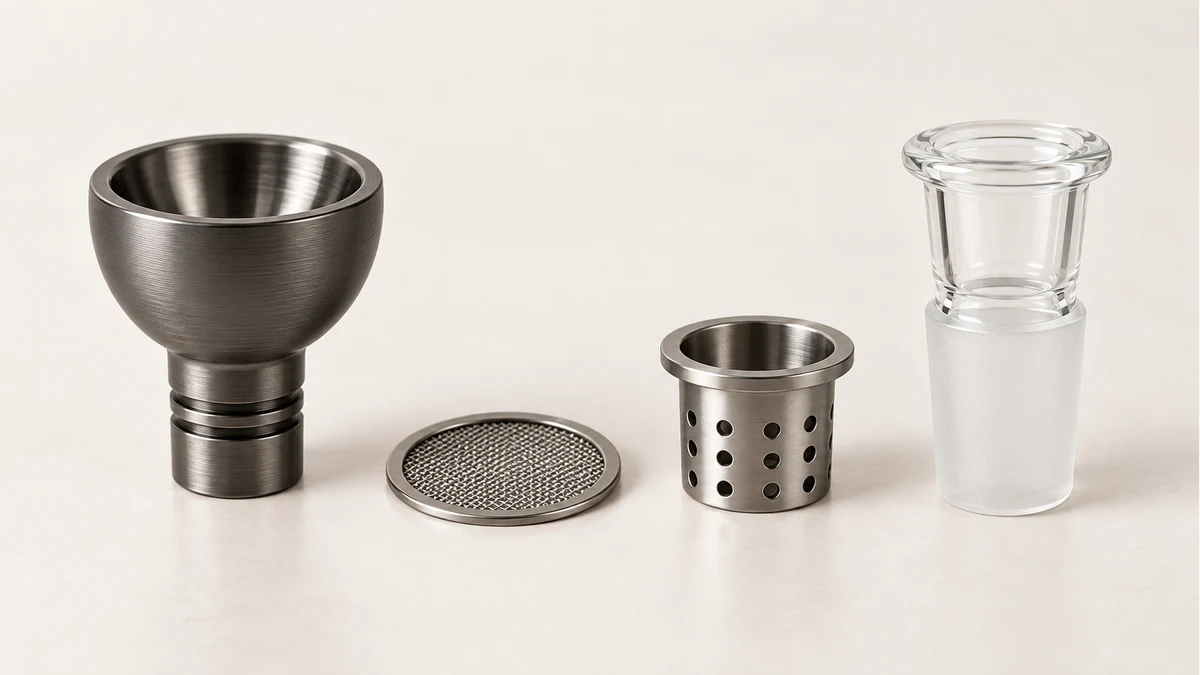
Screens fall into two broad categories: built directly into the bowl during manufacturing, or inserted as a separate loose piece. A built-in screen is usually a perforated section of the metal itself, pressed or stamped as part of the bowl’s structure. It doesn’t come out, which means cleaning happens around it rather than by removing it.
A removable screen sits inside the bowl as its own piece, often a small mesh disc or wire form. These can be lifted out for cleaning or replacement, but they can also shift out of place or need occasional repositioning. Identifying which type is in front of you is a matter of gently checking whether the screen moves when nudged from underneath — a built-in screen won’t budge, while a removable one usually will.
🧩 6. Removable Inserts and Why They Matter
Some metal bowls are built with a two-part design: an outer housing that connects to the joint, and an inner insert cup that holds material and lifts out separately. This insert-style design is different from a fixed bowl where the head and stem are one continuous piece.
Removable inserts matter for a few practical reasons. They allow the cup portion to be cleaned or swapped without affecting the joint fitting. They can also make it easier to see whether the screen sits inside the insert itself or inside the outer housing, which affects how the two pieces need to be cleaned separately. Checking whether a bowl has this two-part structure is usually as simple as trying to twist or lift the inner cup gently to see if it separates from the base.
Because inserts and holders can look similar at first glance, it’s worth checking how the bowl seats into its holder or stem, which is covered in more detail in the bong bowl piece guide.
🔥 7. Heat-Zone Boundaries: What You Can and Can’t Tell Visually
Every bowl has a region where combustion happens and a region that stays cooler, but the exact boundary between these zones isn’t something that can be reliably determined just by looking at a piece. Discoloration, if present, can sometimes hint at where heat concentrates over repeated use, but this varies by design and doesn’t tell you anything definitive about material composition or safe operating limits.
Because heat behavior depends on factors like wall thickness, coating, and overall design — none of which are usually visible from the outside — this is an area where guessing is unreliable. The manufacturer’s own material disclosure is the only dependable source for understanding what a specific bowl is made from and how it’s intended to be used. Visual inspection can identify structural features like joints, screens, and inserts, but it can’t substitute for documented material information when it comes to how a piece handles heat.
🧽 8. Cleaning Access Points to Check
Cleaning access is largely determined by how many separable parts a bowl has. A single-piece metal bowl with a built-in screen has one continuous interior, which means cleaning tools need to reach the entire depth without interference from a loose screen. A two-part bowl with a removable insert offers more access, since the insert can be cleaned independently from the outer housing.
A few practical points to check on any metal bowl:
- Whether the screen lifts out, and if so, how it’s held in place (friction, a small lip, or a pinched edge).
- Whether the insert cup separates from the outer housing, and how far it can be pulled or twisted.
- Whether the joint itself has a threading pattern that could trap residue in the grooves.
- Whether there’s a narrow neck between the bowl head and the stem that could restrict a cleaning tool’s reach.
None of these checks require disassembling anything beyond what the bowl is designed to allow — forcing a fixed screen or insert that isn’t meant to separate risks damaging the piece rather than revealing useful information.
📄 9. Replacement Documentation: What to Look For
When a metal bowl needs to be replaced or matched to an existing piece, documentation from the manufacturer is the most reliable source of specific information — far more reliable than measuring by eye or comparing photos. Useful documentation typically includes the joint diameter, joint gender, joint angle, and the material disclosure for the bowl itself.
If that documentation isn’t available or the bowl came without any accompanying information, the identification steps covered above — joint direction, opening size, screen type, and insert structure — are the next best way to describe the piece accurately, whether that’s for finding a replacement or simply understanding what’s currently in use. Avoid relying on visual material guesses, since surface appearance alone doesn’t reliably indicate what an item is made from.
✅ 10. A Practical Identification Checklist
Bringing all of this together, a quick walkthrough of any metal bowl can answer most of the functional questions that matter:
- Joint direction: Does the bowl have a protruding male stem or a recessed female socket?
- Joint angle: Is the stem straight or angled relative to the bowl head?
- Opening size: How wide is the bowl opening compared to the piece it connects to?
- Screen type: Is the screen built into the bowl or a separate, removable piece?
- Insert structure: Does the bowl separate into an outer housing and inner cup, or is it one continuous piece?
- Cleaning access: Which parts can be reached directly, and which require working around a fixed screen?
- Documentation: Is there manufacturer information available for joint size and material, or does identification rely entirely on physical inspection?
Working through these points in order — starting with structure and ending with documentation — gives a much clearer picture of a metal bong bowl than starting from material alone. The insert, the joint, and the screen are what actually determine fit and function, and identifying them correctly makes any comparison, replacement, or cleaning decision more accurate than guessing based on appearance.
For the separate care questions of an opaque main body, see our steel water-pipe guide.