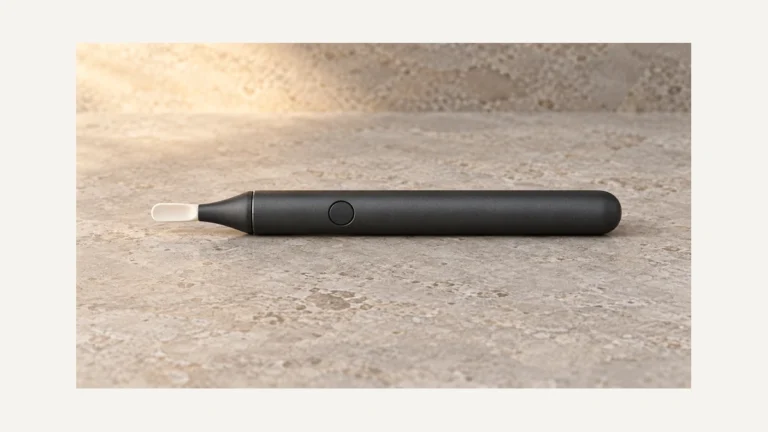
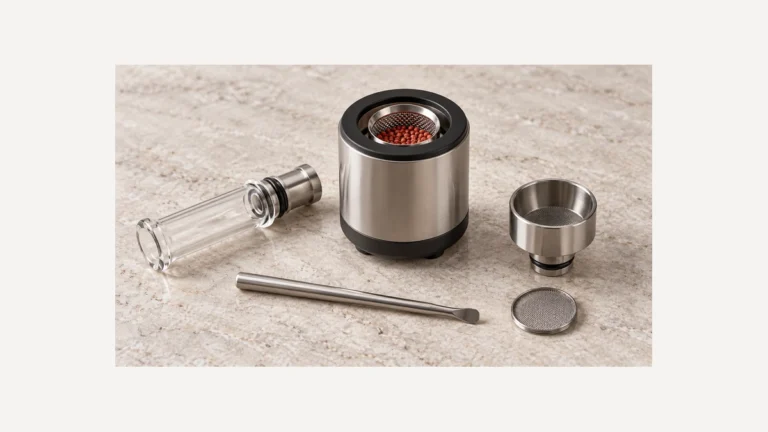
The phrase “honey bucket for dabs” shows up often in older forum threads and secondhand gear listings, but it rarely refers to one single, standardized product. Instead, it’s a catch-all name that collectors and long-time dabbers use for a specific style of concentrate accessory built around a swing-arm and a removable heating cup, sometimes paired with parts that look similar to more modern dome-and-nail setups. Understanding what the term actually describes — and where the confusion comes from — helps make sense of old hardware that shows up in used glass collections today.
🍯 1. What People Mean by a “Honey Bucket” for Dabs
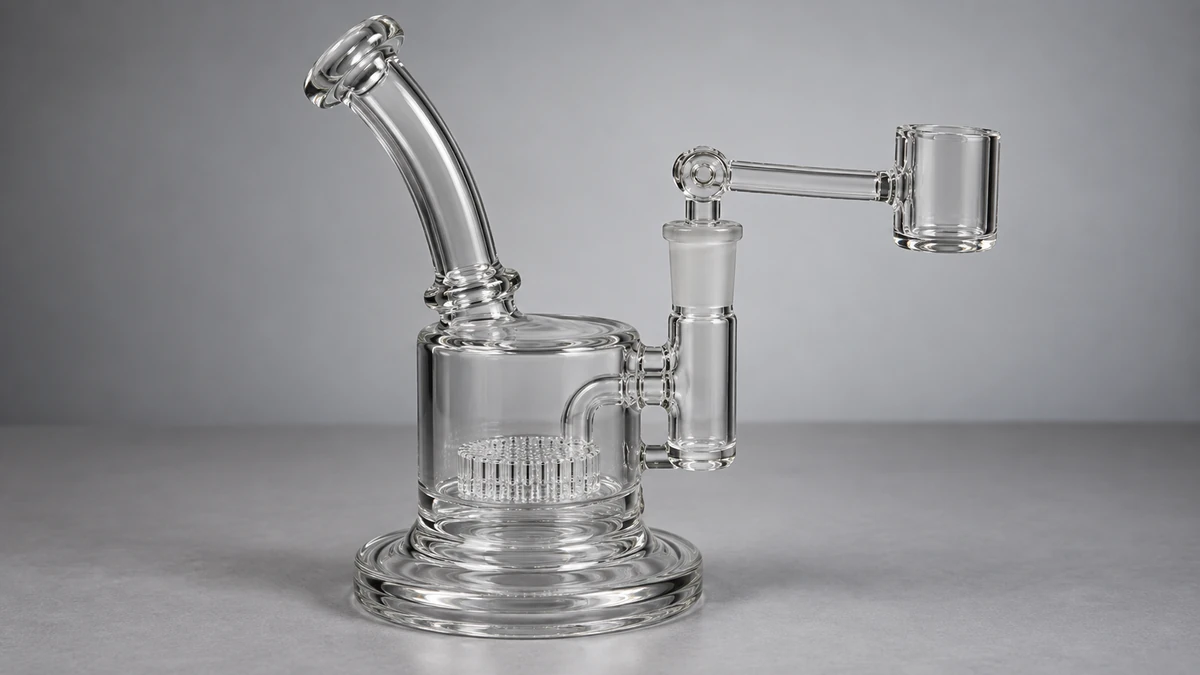
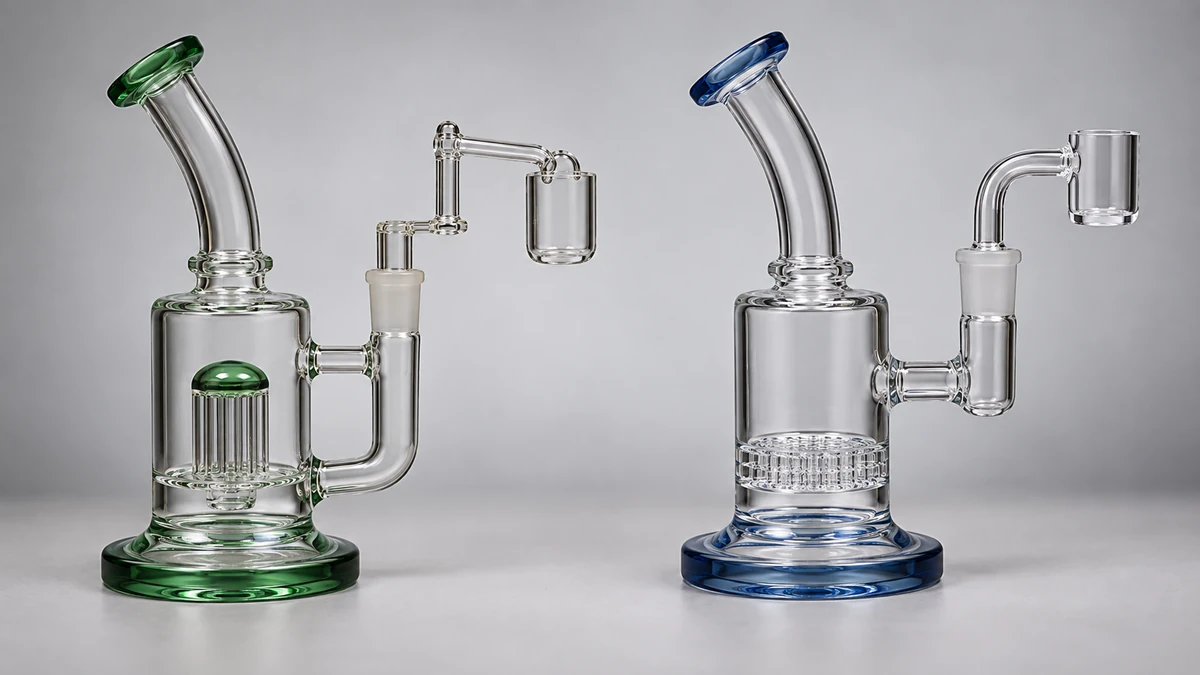
In most usage, a honey bucket refers to an older-style swing-arm assembly where a small, cup-shaped nail (the “bucket”) sits at the end of a metal arm that pivots away from the rig’s joint. The name likely comes from the shape of the cup itself, which resembles a small bucket more than the flat-topped nails or bucket-style bangers seen in later designs.
🔍 1.1 The Swing-Arm Bucket and Nail Assembly
The core components of this setup are fairly simple:
- A metal arm, usually stainless steel or titanium, attached to a joint fitting
- A pivot point that allows the arm to swing away from the rig
- A cup-shaped nail (the bucket) fixed or threaded onto the end of the arm
This design predates a lot of the quartz banger and carb cap systems common today. It was originally built so the nail could be moved away from the rig body for easier access, rather than needing a separate dome placed over a stationary nail.
🧩 1.2 Why the Name Gets Confused with Domes and Nails
Because swing-arm buckets and traditional dome-and-nail setups both existed around the same era, and because both involve a small metal or quartz cup, the terms often get mixed up in casual conversation. Someone describing a “honey bucket” might actually be holding a standard nail meant for use with a separate glass dome, not a true swing-arm bucket at all. For a clearer breakdown of how nails, bangers, and e-nails differ structurally, the comparison in this guide on dab nails vs. bangers vs. e-nails is a useful reference point when trying to sort out which category an old piece actually belongs to.
🔧 2. Joint Fit and Physical Fit Basics
Before evaluating any older bucket or nail piece, joint compatibility is the first practical checkpoint. Fit issues are one of the most common reasons secondhand accessories end up unused in a drawer.
📐 2.1 Female and Male Joint Compatibility
Like most dab rig accessories, swing-arm buckets are built around a specific joint gender and size. A male joint on the arm’s base needs a matching female joint on the rig, or vice versa. Mixing genders without an adapter simply won’t seat correctly, and forcing a mismatched fit can crack glass or bend metal components. Standard sizes historically include 10mm, 14mm, and 18mm, though older or handmade pieces sometimes fall outside these norms entirely, which is part of why measuring before assuming compatibility matters.
⚙️ 2.2 Pivot Clearance on Swing-Arm Rigs
Because the bucket assembly pivots on an arm, clearance is a second consideration beyond joint size alone. The arm needs enough room to swing without hitting the rig’s body, other attached accessories, or a nearby carb cap holder. Rigs designed with wide bases or low-profile joints sometimes weren’t built with pivoting arms in mind, which can make an old honey bucket physically awkward to mount even when the joint size technically matches.
Anyone assembling a full rig setup from separate secondhand parts may also want to review a general parts breakdown, since joint fit and pivot clearance are just two pieces of a larger compatibility picture. The dab rig parts guide covers how these individual components typically relate to one another.
⚖️ 3. Bucket Depth and Center of Gravity
Depth and balance are two physical traits that vary a lot between individual honey bucket pieces, and they matter more than they might seem at first glance.
🧭 3.1 How Bucket Depth Changes Balance
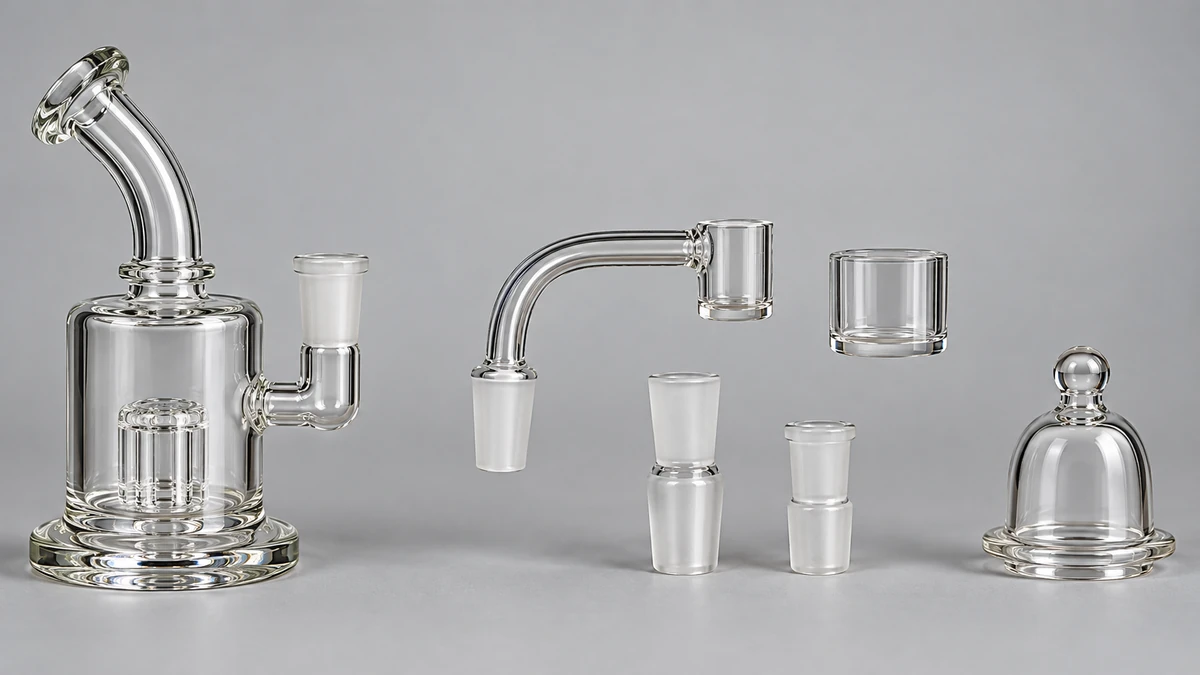
A deeper bucket cup sits further from the pivot point and adds more weight to the end of the swing arm. This shifts the rig’s center of gravity outward, especially on lighter or thinner glass pieces. Shallow buckets, by contrast, keep more weight close to the joint, which tends to make the whole assembly feel more stable when the arm is extended.
This is one reason older honey bucket rigs sometimes look top-heavy or unbalanced compared to modern dab rigs built around a single fixed banger. The swing-arm design inherently introduces more moving weight than a stationary nail setup.
💧 3.2 Removable Parts and Stability
Many swing-arm assemblies include removable components: the bucket itself, sometimes a set screw or threaded connector, and occasionally a separate cap or cover. Each removable part is a potential point of wear, and missing pieces are common in older, secondhand units. Before assuming a bucket is a complete set, it helps to check whether:
- The bucket detaches from the arm, or is permanently fixed
- Any screws, pins, or threaded fittings are present and undamaged
- The pivot joint still moves freely without excessive wobble
A loose pivot or missing screw doesn’t just affect function — it also affects how stable the whole rig feels when the arm is repositioned.
💧 4. Reclaim Routes and Cleaning
Reclaim collection is another area where honey bucket setups differ from more common banger-and-carb-cap configurations, mostly because of the pivoting arm and cup shape.
🧼 4.1 Where Reclaim Collects in a Bucket Setup
In a swing-arm bucket, residual concentrate tends to pool inside the cup itself rather than traveling down into the rig’s chamber the way it might with some other joint configurations. Because the arm swings outward, the bucket is somewhat isolated from the rig body, which changes how reclaim behaves compared to a fixed banger sitting directly on the joint.
Some users pair swing-arm setups with separate reclaim catchers that sit between the joint and the arm assembly, though this isn’t universal, and plenty of older setups were built and used without one at all.
📦 4.2 Cleaning Removable Components
Because the bucket and arm are often separable, cleaning tends to happen piece by piece rather than treating the whole assembly as one unit. General maintenance points worth knowing:
- Metal buckets and arms often tolerate different cleaning approaches than quartz or glass pieces
- Pivot joints can trap residue in the hinge area, which is easy to overlook
- Threaded connections should be checked for buildup that could make disassembly difficult later
Cleaning frequency and method aren’t standardized across these older pieces, partly because materials and construction varied so much between manufacturers at the time.
🧵 5. Terminology Confusion in the Community
A lot of the ongoing confusion around “honey bucket” terminology plays out in online forums, where people often post photos of unfamiliar glass or metal parts asking what they actually are.
✅ 5.1 Misidentifying Old Components
On Reddit, it’s common to see posts where someone describes finding an old piece in a collection or at a thrift store and asking the community to identify it. Responses frequently disagree, with some commenters calling a piece a honey bucket, others identifying the same part as a standard nail, and still others suggesting it’s a specialty piece from a smaller, now-defunct manufacturer. This kind of anecdotal back-and-forth reflects how inconsistent the terminology has been across different eras and regions rather than pointing to one universally agreed-upon definition.
🔍 5.2 Reclaim Catchers — Necessary or Not?
Another recurring question in these discussions is whether a reclaim catcher is actually necessary for a swing-arm bucket setup at all. Opinions online tend to split: some users argue a catcher is essential for keeping reclaim contained and manageable, while others point out that many original honey bucket rigs were designed and sold without one, suggesting it was always an optional add-on rather than a core part of the assembly. There isn’t a single correct answer here, since it depends heavily on the specific piece and how the arm and joint are configured.
🧩 5.3 Comparing Bucket Shapes to Modern Quartz Bangers
A third common thread involves comparing old honey bucket cups to more expensive quartz bucket-style bangers sold today. Forum users often note that while the two share a similar cup shape, they’re built from different materials, use different joint systems, and generally aren’t interchangeable without adapters. Some posters compare pricing between vintage metal buckets and premium quartz banger sets, observing that the quartz versions tend to sell at a noticeably higher price point, likely due to material costs and current market demand for quartz pieces specifically. These comparisons are useful context but remain anecdotal rather than a technical specification anyone should rely on directly.
For anyone trying to figure out what accessories pair well with an older bucket-style nail, or how carb caps factor into airflow around a cup-shaped nail, a broader look at how carb caps relate to different nail and banger shapes can help clarify which modern accessories are actually compatible with older hardware, and which aren’t.
Ultimately, “honey bucket for dabs” isn’t a fixed product category so much as a term shaped by decades of informal naming, regional habits, and gradual shifts in what dab accessories typically look like. Recognizing the swing-arm and cup design, checking joint fit and pivot clearance, and understanding how reclaim and cleaning differ from newer setups all help make sense of a piece that might otherwise just get lumped in with a dozen other old dab nails sitting in a drawer.
🧭 6. Build a Parts Checklist Before Shopping
Start with the rig rather than the bucket. Record the joint diameter, joint gender, and the angle at which the connection leaves the body. Then measure the open space around that joint. A swing arm needs a clear arc, and the bucket needs room to move without touching the neck, base, or tabletop. That clearance requirement is easy to miss in a straight-on product photo.
📐 6.1 Confirm the Swing Path, Not Just the Joint
Two pieces can share a nominal joint size and still be a poor physical match. The pivot may sit too close to the rig, the arm may extend too far, or the cup may hang off-center. Ask for an assembled side view and a measurement from the pivot to the center of the bucket. Those details describe the moving geometry that a joint label cannot.
🧩 6.2 Check Which Pieces Are Actually Included
Listings use “honey bucket” for a full assembly, a replacement cup, or occasionally a different style of attachment. Verify whether the package includes the bucket, swing arm, pivot or joint adapter, and any retaining hardware. A low price may reflect a single replacement component rather than a complete working set.
📦 7. Decide Whether an Older Format Fits the Routine
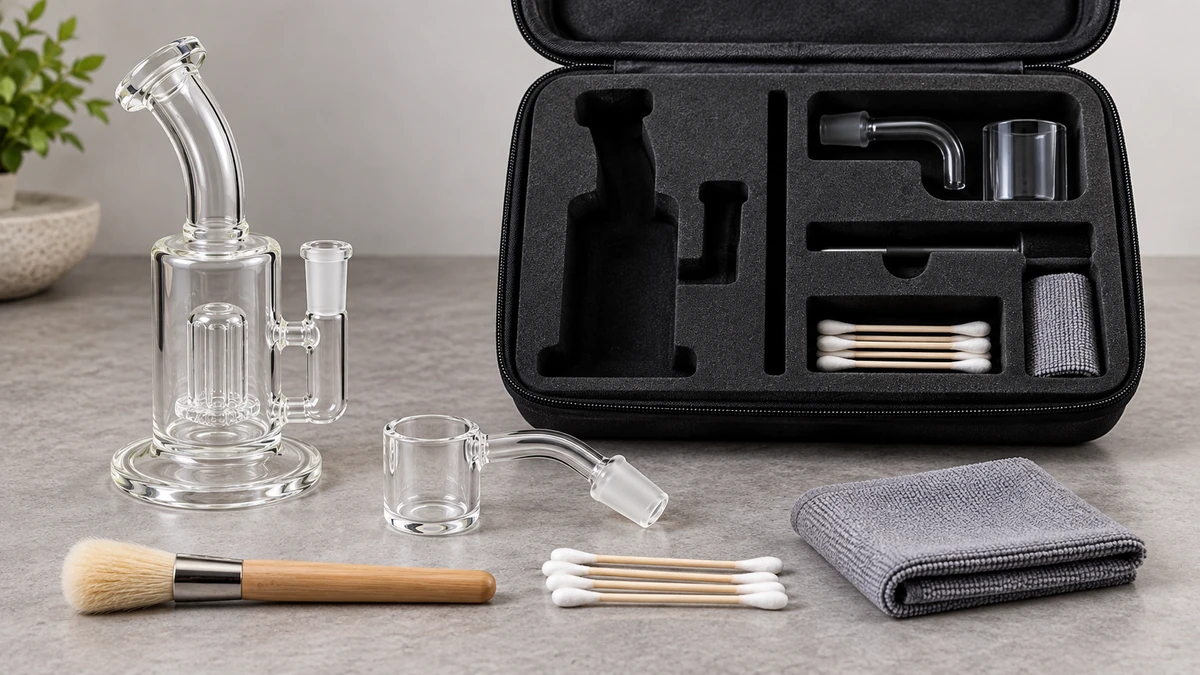
The appeal of a honey bucket is partly its visible mechanical motion and partly its place in earlier glass design. That does not make it interchangeable with a modern banger. More separate parts mean more surfaces to inspect, more opportunities for a loose fit, and a storage case that must keep the arm and cup from striking the rig.
For a display collection or a restoration project, those traits may be exactly the point. For a compact everyday setup, a fixed banger may create a simpler outline. The useful decision is not old versus new in the abstract; it is whether the joint geometry, moving clearance, replacement-part supply, and cleaning routine fit the specific rig. Photograph the assembled layout before separating it, so each removable piece has a clear reference position during later setup and storage.