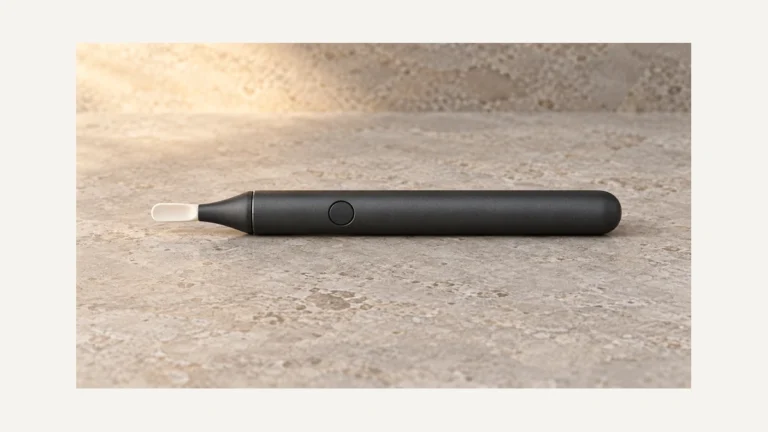
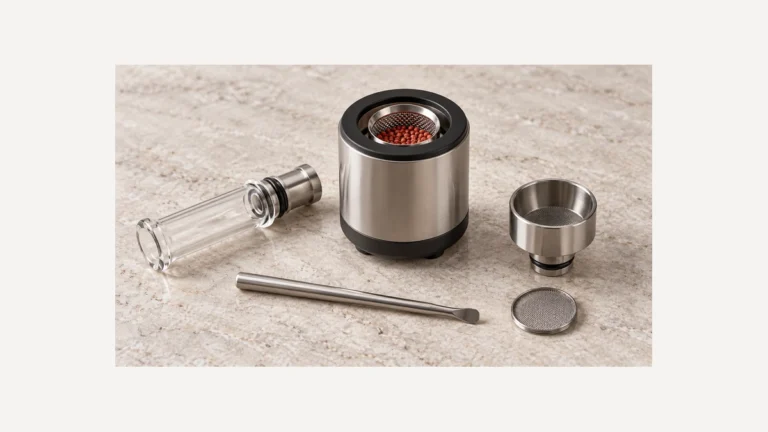
A honeycomb dab rig gets its name from the flat, perforated disc percolator inside the water chamber, patterned after a honeycomb with rows of small holes rather than a single large opening. This style is one of many percolator designs used across different rig types, and it behaves a bit differently from other percolators depending on how it’s set up. Below is a closer look at how the honeycomb disc functions mechanically, along with some of the practical questions people run into when using one.
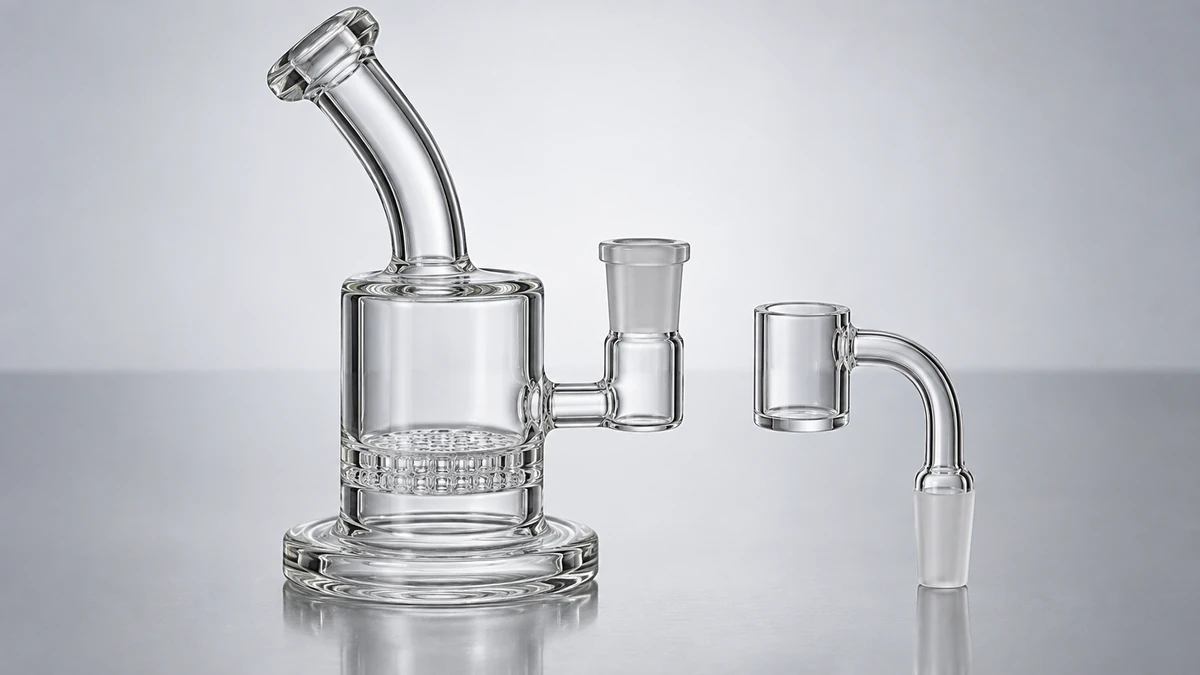
🍯 1. Understanding the Honeycomb Percolator in a Dab Rig
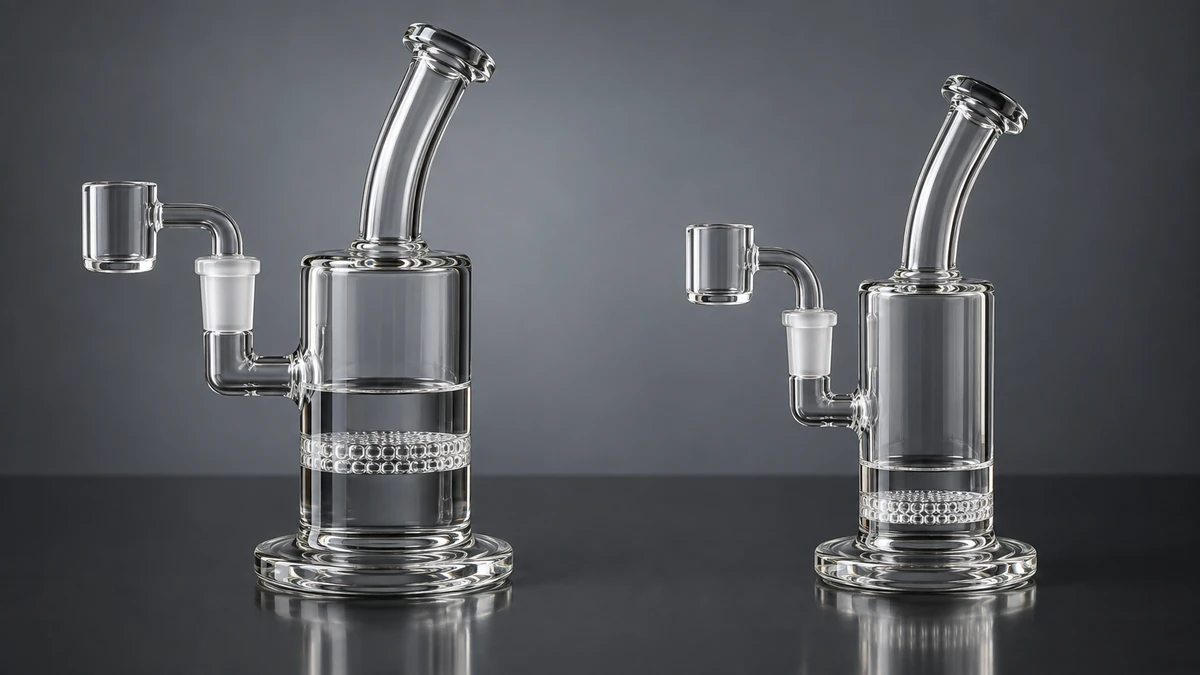
A honeycomb percolator is a flat disc, usually made of glass, that sits horizontally inside the water chamber of a rig. Instead of one large opening for vapor to pass through, the disc is drilled with dozens of small, evenly spaced holes. As vapor travels down through the neck and hits the water below the disc, it’s forced up through those holes rather than escaping in one concentrated stream.
This design is part of a broader category of percolators used in dab rigs and bubblers, each with its own approach to splitting up airflow. If you’re comparing different percolator styles, the overview at types of dab rigs breaks down how honeycomb discs relate to tree percs, showerhead percs, and other common configurations.
🍯 1.1 What Makes It “Honeycomb”
The defining feature is the hole pattern itself. A honeycomb disc typically has anywhere from a dozen to over a hundred small holes arranged in a grid or hexagonal layout, though exact hole count varies quite a bit between manufacturers and even between individual pieces from the same brand. There’s no fixed standard for how many holes make something “honeycomb” versus another perc style, which is part of why hole count alone doesn’t tell you much about how a piece will actually perform.
🍯 1.2 How It Fits Into the Broader Rig Design
The honeycomb disc doesn’t work in isolation. It sits within a chamber that has its own volume, connects to a joint at a specific angle, and often works alongside other design elements like a downstem or additional percs stacked above or below it. How well the disc functions in practice depends heavily on these surrounding elements, not just the disc itself.
💧 2. Waterline, Draw Resistance, and Bubble Behavior
One of the most common points of confusion with honeycomb percs is figuring out how much water to add. Because the disc is flat and horizontal, water level plays a bigger role here than it does with some other percolator shapes.
💧 2.1 Finding a Waterline That Activates Without Splashing
On several cannabis and smoking accessory forums, including threads on Reddit, a recurring question is how to set the waterline high enough to fully submerge and activate the honeycomb disc without causing water to splash up into the neck or mouthpiece during a pull. This is a genuinely tricky balance with flat percs. If the water level sits too low, only part of the disc contacts water, so some holes bubble while others stay dry, which can make the perc feel inconsistent. If the water level sits too high, the increased volume above the disc gives splashing water more room to travel upward, especially on a stronger pull.
People generally find their own sweet spot through trial and error rather than following a fixed measurement, since chamber shape, disc placement, and joint angle all affect where that balance point lands. A small amount of water added or removed can noticeably change how the disc behaves, so incremental adjustments tend to work better than large ones.
💧 2.2 Draw Resistance and Airflow
Draw resistance refers to how much effort it takes to pull vapor through the rig. Because a honeycomb disc splits airflow across many small holes, forcing air through it can feel noticeably tighter compared to a rig with a wide-open chamber and no percolator at all. This isn’t unique to honeycomb discs, but the number and size of the holes does influence how much resistance a person feels, along with water level and how many other percs are in the piece.
Resistance is subjective and varies from person to person, so what feels tight to one user might feel normal to another. It’s worth noting as a factor rather than treating it as a fixed characteristic of the disc itself.
💧 2.3 Slow Pulls vs Harder Pulls
Another point that comes up in user discussions is that honeycomb percs can behave differently depending on how hard someone pulls. A slower, gentler pull tends to let vapor pass through the disc’s holes more evenly, since there’s less pressure pushing water around inside the chamber. A harder, faster pull increases the pressure differential, which can push more water through the holes at once and is more likely to cause splashing or an uneven bubble pattern.
This dynamic means the same rig, filled to the same waterline, can feel and behave differently depending on draw technique. It’s a reasonable thing to experiment with rather than assume there’s one universal “correct” way to pull.
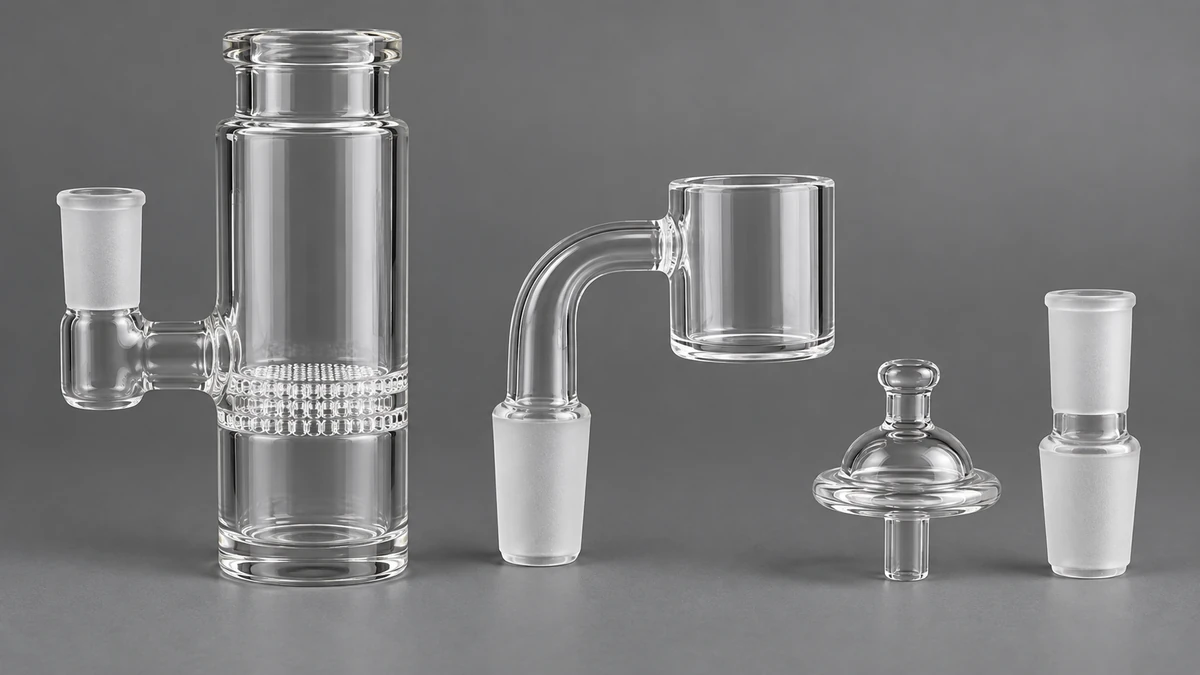
🌊 3. Chamber Volume and Splash Considerations
The space above and around the honeycomb disc, generally referred to as chamber volume, plays a direct role in both bubble distribution and splash control.
🌊 3.1 Bubble Distribution Across the Disc
Ideally, vapor pushes up through all of the disc’s holes at roughly the same time, creating an even field of bubbles across the surface. In practice, this depends on how level the disc sits, how evenly water covers it, and how forceful the draw is. Uneven bubble distribution isn’t necessarily a defect; it’s often just a byproduct of the flat disc shape combined with variables like tilt, water level, or how the piece was blown.
🌊 3.2 Chamber Volume Trade-offs
A larger chamber above the disc generally gives splashing water more distance to settle before it reaches the mouthpiece, which some users find helps reduce the chance of water traveling up the neck. On the other hand, a larger chamber also means more total water volume needed to reach a workable waterline, and more airspace for vapor to travel through before reaching the person using the rig. A smaller chamber can feel more responsive but may leave less margin for error if the waterline runs slightly high. Neither approach is inherently better; they’re trade-offs tied to the specific rig’s proportions.
⚖️ 4. Base Stability and Joint Geometry
Beyond the percolator itself, the rig’s overall structure affects how practical it is to use day to day.
⚖️ 4.1 Why Base Shape Matters
Because honeycomb dab rigs often have a chamber sitting above a base, the shape and width of that base has a real impact on stability. A wider, flatter base generally sits more securely than a narrow or rounded one, particularly once water is added and the piece’s center of gravity shifts. This matters more with taller rigs or ones with additional glass features that add weight higher up.
⚖️ 4.2 Joint Angles and Percolator Placement
The angle of the joint, whether it’s angled or vertical, affects how the downstem delivers vapor to the honeycomb disc below. An angled joint changes the path vapor takes before it reaches the disc and can influence where bubbles form across its surface. Joint size and compatibility with other components are also worth understanding if you plan to swap parts or add accessories. The dab rig parts guide covers how joints, downstems, and percs relate to each other mechanically, which is useful context if you’re trying to understand why one rig’s honeycomb perc behaves differently from another’s.
🧽 5. Cleaning Access and Clogging Pathways
Percolators with lots of small holes are generally harder to keep clean than those with fewer, larger openings, and honeycomb discs are a common example of this trade-off.
🧽 5.1 Why Honeycomb Discs Can Be Harder to Clean
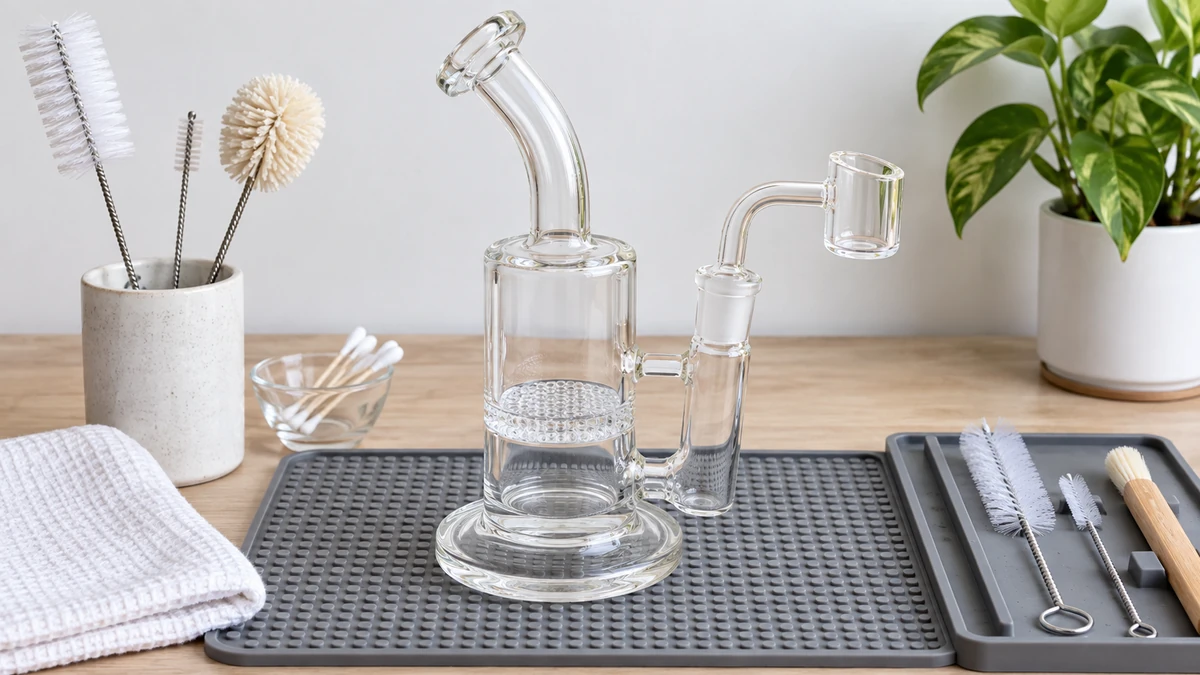
Each hole in a honeycomb disc is a potential spot for residue to build up over time. Because the holes are small and numerous, it’s harder to see or reach every one during cleaning compared to a perc with just a few larger holes. Standard cleaning approaches, like using isopropyl alcohol and coarse salt with agitation, still apply, but it may take more soaking time or repeated passes to clear buildup from every hole on a dense honeycomb pattern.
🧽 5.2 Reclaim Buildup and Flow Restriction
Reclaim, the residue that condenses inside the rig during use, tends to collect in low points and narrow passages. On a honeycomb disc, this often means reclaim gathers at the base of the disc or partially blocks individual holes. When enough holes get restricted, airflow becomes less even across the disc, which can change draw resistance and bubble patterns even if the rig hasn’t been used differently. Regular cleaning helps manage this, but it’s worth knowing that a honeycomb perc’s performance can shift gradually as reclaim accumulates, not just as a sudden clog.
🔎 6. What First-Time Buyers Often Overlook
People shopping for their first dab rig often gravitate toward specs that are easy to compare, like how many holes a percolator has, without necessarily knowing how those numbers translate to real use.
🔎 6.1 Perc Count Isn’t Everything
A frequent pattern in buyer questions, including ones seen on forums like Reddit, is a focus on percolator hole count as the main factor in choosing a rig. In reality, hole count is just one variable among several, including chamber shape, joint angle, base stability, and how easy the piece is to clean. A honeycomb disc with 100 holes isn’t automatically better suited to someone’s habits than one with 40, since factors like waterline sensitivity and draw resistance depend on the whole system, not the disc in isolation.
🔎 6.2 Matching the Rig to Personal Habits
Someone who prefers slower, gentler pulls may have a very different experience with a given honeycomb rig than someone who typically draws harder, as covered earlier. Similarly, someone who wants a rig that’s straightforward to clean might prioritize a simpler perc design over a dense honeycomb pattern, even if the honeycomb version has more holes on paper. For people weighing a dab rig against other water pipe styles, the comparison in the bubbler for dabs guide lays out some of the practical differences in size, portability, and percolation style that can help narrow down what actually fits someone’s routine, rather than focusing on a single spec like hole count.
Ultimately, a honeycomb disc is one piece of a larger mechanical puzzle. Waterline, draw style, chamber volume, joint geometry, and cleaning habits all interact with the disc to determine how a given rig actually performs, which is why two honeycomb rigs with similar-looking percs can feel quite different in practice.
🧭 7. A Practical Way to Compare Two Honeycomb Rigs
Put the photographs side by side and trace one continuous route: joint to chamber, chamber to disc, disc to waterline, then waterline to mouthpiece. This simple exercise reveals more than counting holes. A disc that sits very low may allow a shallow water level, while a high disc can demand more water before every opening participates. Neither arrangement is automatically better; the chamber above the disc must still leave room for the moving water.
📏 7.1 Ask for Measurements That Affect the Whole Setup
Useful dimensions include joint size, joint angle, overall height, base width, and the distance between the disc and the upper chamber. These numbers help explain whether an existing accessory clears the body and whether the rig will feel top-heavy. A listing that gives only total height leaves several fit questions unanswered.
🧩 7.2 Treat the Perc as One Part of a System
Honeycomb geometry matters, but so do the inlet restriction, neck diameter, splash guard, and cleaning access. When those pieces work together, the disc can distribute airflow without turning the piece into a maintenance puzzle. When they do not, a dramatic bubble pattern may hide awkward daily handling.