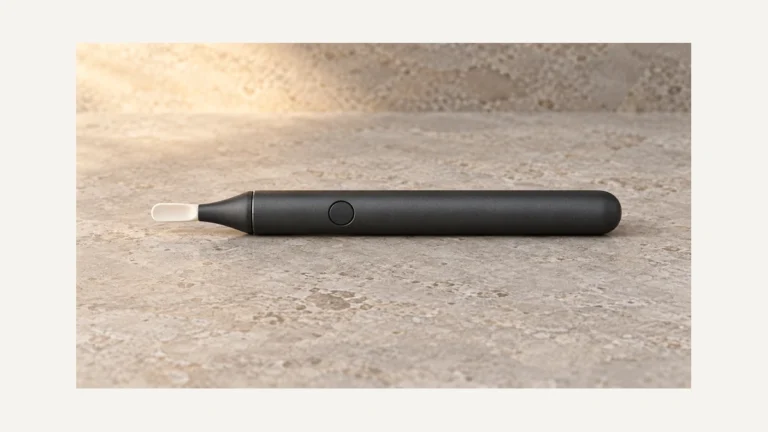
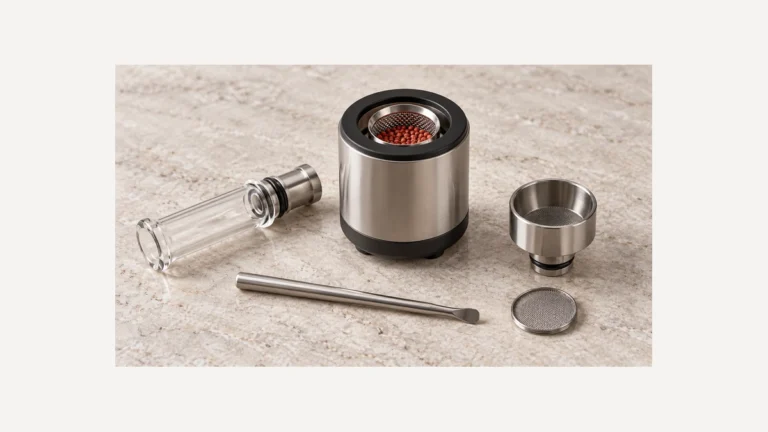
Concentrate users often assume that any silicone tool near their dab station is safe to use however they like. That assumption gets tested the moment someone grabs a soft jar scraper and pushes it against a hot nail, or wonders why a flexible tip has scorch marks and a strange smell. Silicone dab tools are not one category with one job. They range from soft, flexible scrapers meant only for cool surfaces to rigid metal dabbers built to touch heated glass or titanium. Understanding which is which matters more than picking a color or a shape.
This article breaks down the common types of silicone-adjacent dab tools, where their soft properties genuinely help, and where softness becomes a liability. For a broader overview of dabber shapes and materials, the general dab tools guide is a useful starting reference before diving into the silicone-specific questions below.
🥄 1. What “Silicone Dab Tool” Actually Covers
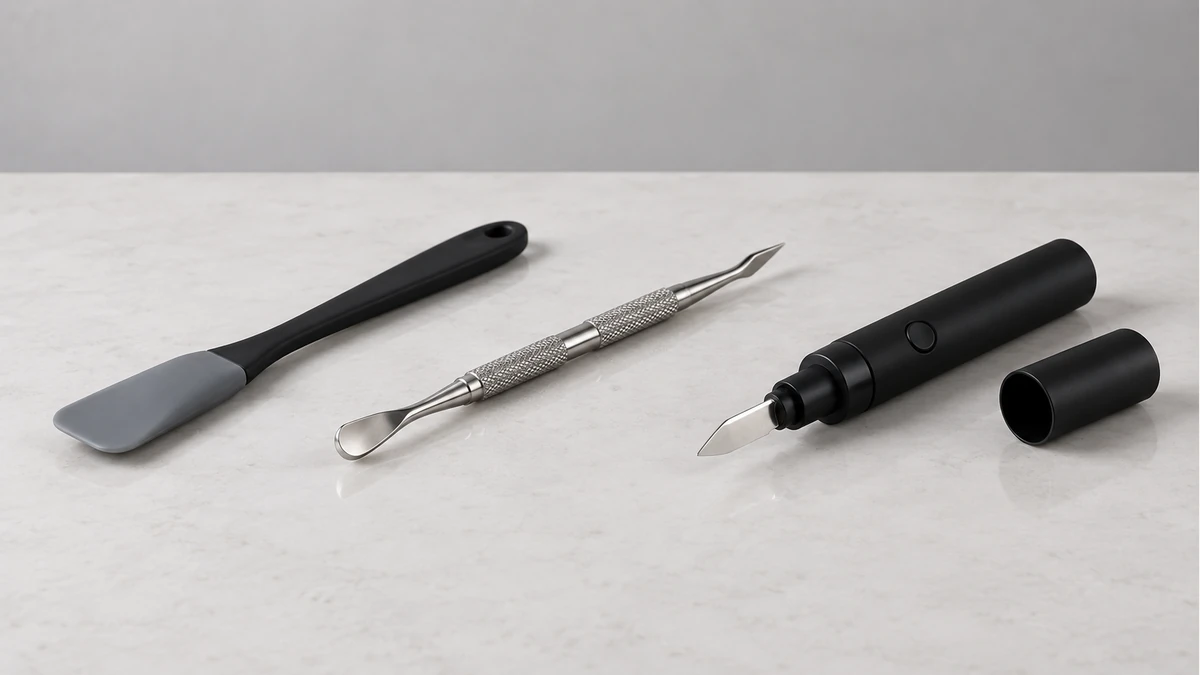
The phrase gets used loosely online, which is part of why confusion happens. On forums and in comment threads, people describe three fairly different objects as “silicone dab tools,” and treating them as interchangeable is where mistakes start.
🧴 1.1 One-Piece Silicone Spatulas
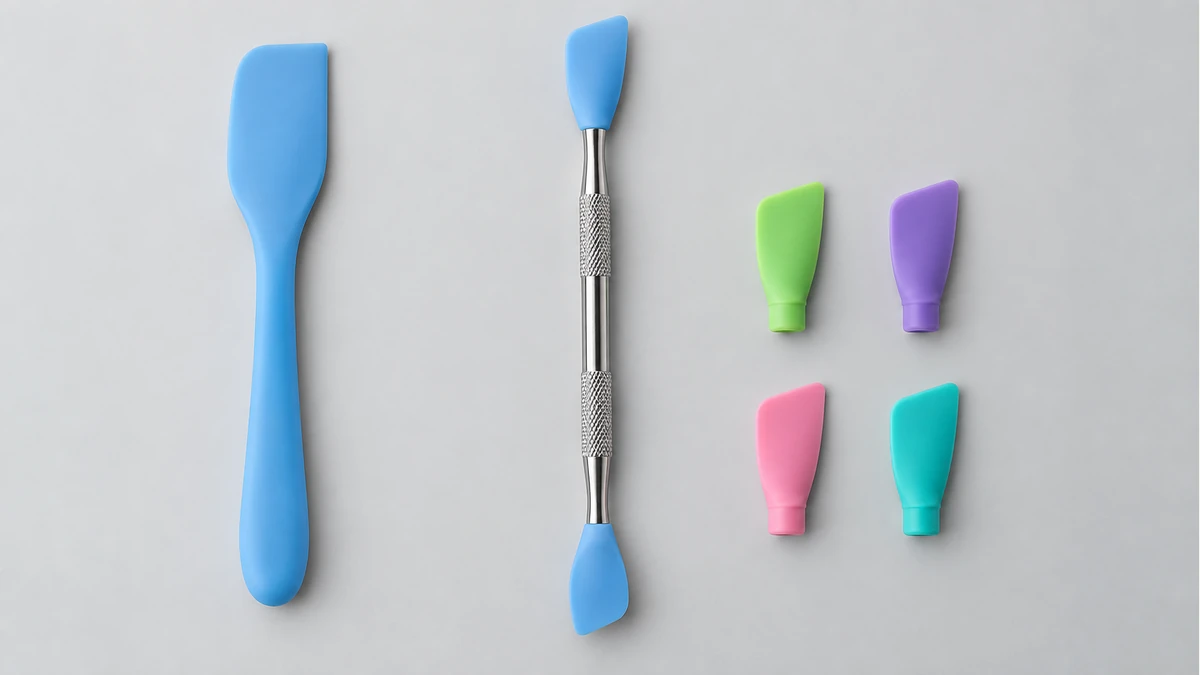
These are fully molded from silicone, often flexible along their whole length, sometimes with a slightly stiffer paddle end and a thinner scraping edge. They are designed for room-temperature or barely-warm tasks: scraping the inside of a jar, moving concentrate from a parchment sheet to a container, or pushing sticky material off a mixing surface. Their flexibility is the entire point. A rigid tool would gouge soft jar walls or crack under torque in tight corners; a pliable silicone edge conforms to the surface instead.
🔩 1.2 Silicone-Tipped Metal Handles
Here the core is metal — usually a rod or shaft — with a silicone sleeve or grip somewhere along the handle, sometimes extending partway down the working end. The metal core is what does the heat-tolerant work, if it’s rated for that at all; the silicone portion exists for grip comfort or to cushion a resting surface. It’s easy to mistake this hybrid design as meaning “the whole tool is heat-safe,” when in fact only the metal segment may be rated for any contact with warm surfaces, and even then only within limits the maker specifies.
⚙️ 1.3 Rigid Metal Dabbers
These have no silicone at all in the working tip — they’re solid titanium, stainless steel, or quartz-tipped tools built specifically to handle contact with heated nails or bangers. They show up in this conversation only because people sometimes reach for a silicone-tipped or silicone-bodied tool when they mean to grab one of these instead, usually because both were sitting in the same tray.
🫙 2. Jar Scraping Versus Loading a Dish
These are two different physical tasks, and the tool that’s good at one is often mediocre at the other. Scraping a jar means working against a rigid container wall to move soft or semi-firm material without gouging the container or leaving material trapped in corners. A flexible silicone edge flexes against the curve of the jar, which is why it’s the preferred shape for that job.
Loading a dish or nail, by contrast, means picking up a small dose of concentrate and placing it precisely onto a heated or about-to-be-heated surface. This task often benefits from a stiffer point — something that holds its shape so the dose lands where intended instead of the tool itself deforming under the material’s stickiness. A tool that’s excellent at jar scraping (soft, wide, flexible) can be clumsy for loading (imprecise, prone to picking up too much, and — if it happens to be resting near a hot surface — at risk of unintended contact.
Reddit threads on this topic tend to describe the same mix-up: someone uses their jar scraper to also nudge material onto a hot nail, and the tip either smokes, deforms, or picks up an odor. That’s not a defect in the tool. It’s a tool being used for a job it was never built for.
🔪 3. Why Edge Stiffness Matters
Edge stiffness is really about matching hardness to task, in both directions. A rigid metal edge dragged across a soft silicone dish or silicone-lined jar can cut, nick, or gouge the silicone surface — small cuts that then trap material and become permanent grime pockets. This is a real, commonly cited concern among people who make or sell silicone containers: metal tools with sharp edges are hard on silicone surfaces, and the damage isn’t cosmetic — a torn silicone surface is harder to clean and can shed tiny bits of material over time.
Going the other direction, using a soft silicone edge where a rigid dabber is needed causes a different problem. A flexible tip can’t apply consistent pressure, tends to bend away from resistance instead of scraping cleanly, and — critically — is generally not built to tolerate contact with a heated nail or banger. Manufacturers who make silicone-tipped or silicone-handled tools are explicit that the silicone portions are meant for handling, grip, or cool-surface tasks, not for touching anything hot, because most silicone formulations used in consumer accessories aren’t validated for that kind of direct thermal contact.
The practical rule that follows from this: match the tool’s stiffness to the surface it’s touching. Soft silicone against soft or rigid-but-cool surfaces (jars, dishes, packaging). Rigid metal against hot surfaces the manufacturer has explicitly rated for that contact.
🧵 4. Seams, Trapped Residue, and Why They’re Hard to Clean
Molded silicone tools, especially ones assembled from more than one piece, often have a seam line where the mold halves met, or a junction where a silicone sleeve meets a metal core. These seams are one of the more overlooked maintenance issues with silicone dab tools. Residue works its way into the seam line and is much harder to fully remove than residue sitting on a smooth, single-surface silicone spatula.
A few things follow from this:
- Tools with visible seams need more deliberate cleaning attention along that specific line, not just a general wipe-down.
- Old residue trapped in a seam can carbonize or discolor over repeated warm exposure, even if the tool is never directly heated, simply from ambient warmth near a dab station.
- A seam that starts to separate or gap over time is a sign the tool is aging out and should be inspected more closely, since a widening seam traps more material and is harder to clean each cycle.
One-piece molded spatulas avoid this problem almost entirely, which is part of why they remain the more practical option for repeated jar-scraping duty — fewer joints, less trapped material, easier full-surface cleaning.
🧪 5. Material Traceability: Color and Feel Don’t Prove Grade
A soft, flexible feel and a food-safe-looking color tell you very little about what grade of silicone you’re actually holding, or what temperature range it’s rated for. Silicone formulations vary widely — some are compounded for flexibility and low cost with no thermal rating claimed at all, others are compounded and tested specifically for higher-temperature handling. Nothing about touch or appearance distinguishes these reliably.
This is why relying on generic cues — “it feels food-grade,” “it’s the same color as my other tool,” “it doesn’t smell like anything” — isn’t a substitute for checking what the specific manufacturer has actually stated about that specific product. Traceability means being able to point to a maker’s stated specification for the piece in your hand, not inferring one from a similar-looking piece bought somewhere else. Two silicone tools can look and feel nearly identical while being made from formulations with very different tolerances.
Practically, this means treating every new silicone tool as an unknown until you’ve confirmed what its maker says about it, rather than assuming it inherits the rating of a previous tool that happened to look similar.
🔥 6. Direct Hot-Surface Contact: Assume No, Unless the Maker Says Yes
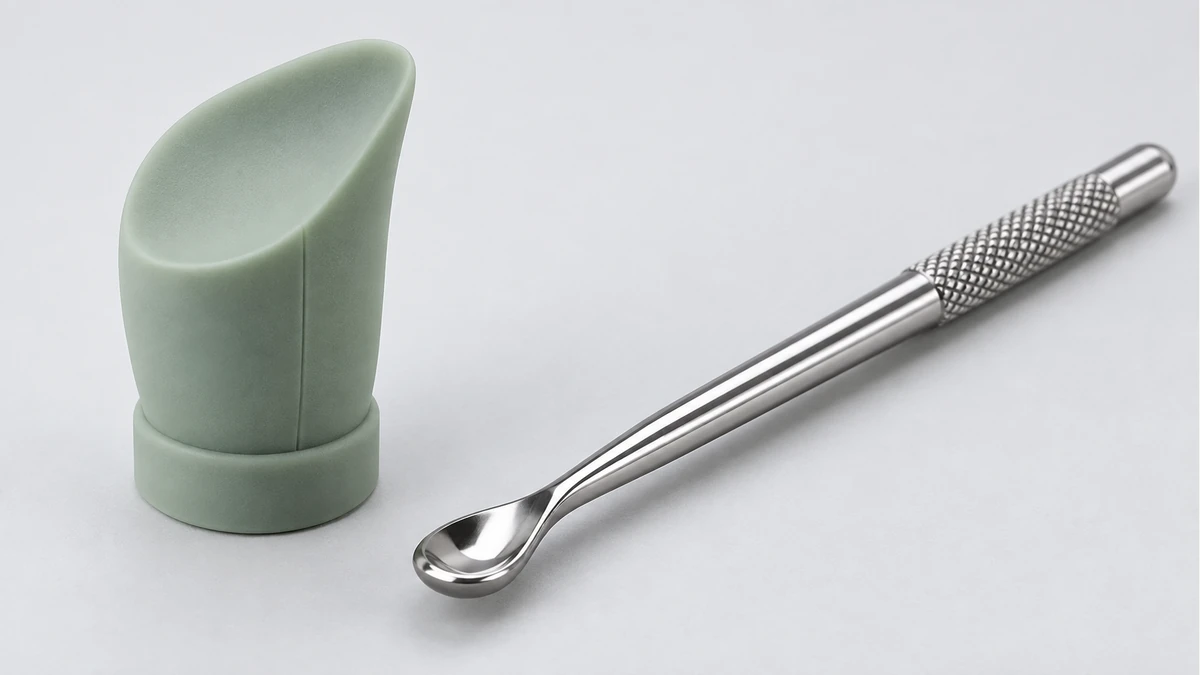
The single most consequential mistake in this whole category is assuming a silicone tip can safely touch a heated nail or banger just because it’s marketed as a “dab tool.” Most silicone-tipped tools on the market are rated for handling and cool-touch tasks, not for direct contact with a hot surface. Doing so anyway risks degrading the silicone — softening, scorching, or off-gassing an odor — and risks depositing that degraded material onto the surface you’re about to use.
The only tools designed for genuine hot-surface contact are ones the manufacturer explicitly states are rated for that use, and those are typically rigid metal, not silicone. If a silicone-adjacent tool doesn’t carry an explicit statement from its maker about heat tolerance, the safer default is to treat it as a cool-surface-only tool. For a closer look at tools specifically designed around heated-surface contact and how their design differs from cool-touch accessories, see the hot knife dab tool guide.
📦 7. Tool Rests and Storage Between Uses
A recurring theme in user discussions is the lack of a clean, dedicated place to set a dab tool down between uses. Without one, tools end up resting directly on countertops, torch bodies, or whatever surface is nearby — all of which can transfer dust, residue, or unwanted heat exposure back onto the tool.
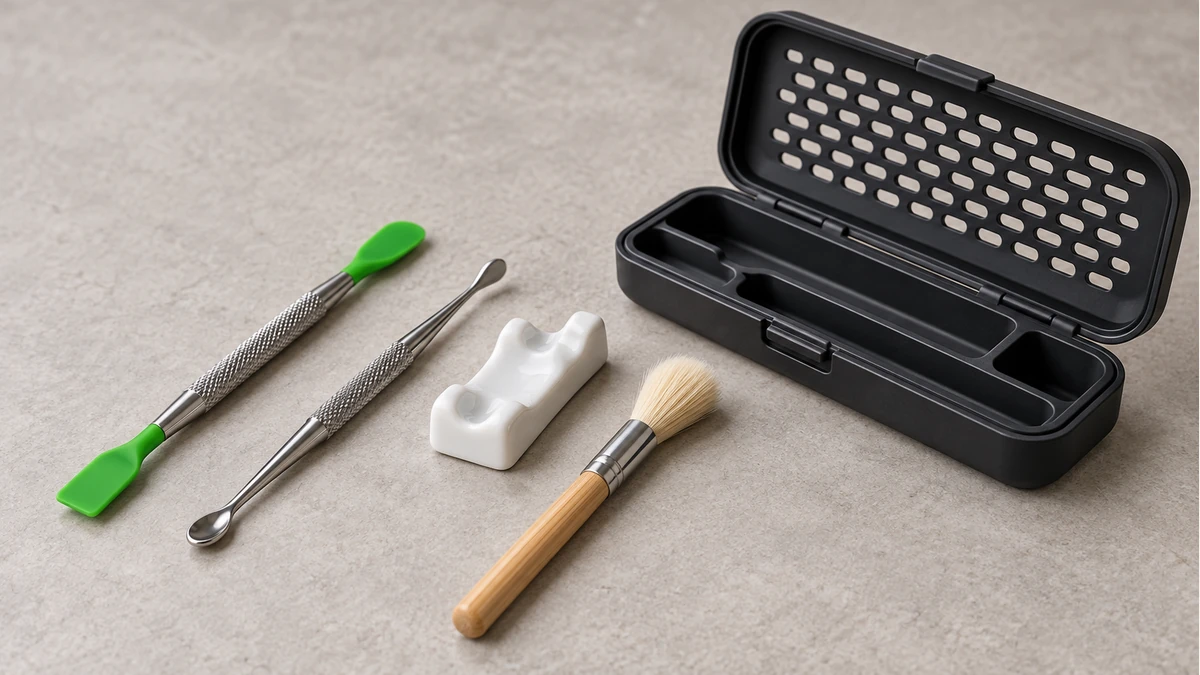
A clean tool rest solves a few problems at once: it keeps the working end off surfaces that could contaminate it, it keeps different tools separated so a soft silicone spatula doesn’t end up resting against something still warm, and it makes it easier to visually check a tool’s condition at a glance since it’s sitting in a consistent, visible spot rather than buried in a drawer. For more detail on how dedicated holders are designed to serve this separation-and-visibility role, the dab tool holder guide covers the reasoning in more depth.
Storage habits also affect the silicone itself over time. Silicone left balled up, folded tightly, or wedged into a small container can develop permanent creases or stress marks. Laying flexible tools flat, or storing them in a way that doesn’t force a tight bend, helps preserve their shape and reduces the chance of a crease turning into a crack later.
🔍 8. Inspecting and Retiring a Silicone Tool
Silicone doesn’t fail the way metal does — it doesn’t rust or visibly corrode — but it does degrade, and the signs are worth checking for periodically rather than waiting for an obvious failure.
| Sign | What it suggests |
|---|---|
| Small cuts or nicks in the surface | Likely from contact with a rigid or sharp-edged tool; these trap residue and don’t smooth back out |
| Swelling, tackiness, or a soft “melted” feel | Possible exposure to heat or solvents beyond what the material was rated for |
| A persistent chemical or burnt odor after cleaning | Sign of thermal degradation that cleaning alone won’t reverse |
| Discoloration concentrated at one spot | Often marks a point of repeated hot-surface contact, even if brief |
| Widening seam or separation at a joint | Aging seam that will keep trapping more material over time |
Any of these is a reasonable trigger to retire the tool rather than keep using it, since none of them reverse with additional cleaning. A quick visual check every so often — especially after any accidental proximity to heat — costs little and catches most of these issues before they become a recurring source of trapped residue or odor.
Silicone dab tools earn their place for a specific set of tasks: scraping jars cleanly, cushioning a grip, resting gently against surfaces that shouldn’t be scratched. They are not a universal substitute for a rigid, heat-rated dabber, and treating them as one is the most common way people end up with a damaged tool or an unwanted surprise mid-session. Matching the tool to the task — and checking what its specific maker actually says about it — does most of the work of avoiding that mix-up in the first place.