You pull on a vape cartridge and get almost nothing back — maybe a faint wisp of vapor, maybe nothing at all, even though the battery light still comes on fine. That restricted or fully blocked draw is usually condensed oil pooling somewhere along the airpath: at the mouthpiece opening, around the center post, or near the seam where the cartridge threads onto the battery. Oil thickens as it cools, especially after a cartridge has sat upright, ridden in a cold bag, or gone unused for a while, and that thicker oil narrows or seals the channel vapor is supposed to travel through. Not every weak hit is a clog, though, and treating a battery or contact problem like a clog can make things worse instead of better.
🧭 1. Confirm the cartridge is actually clogged
Before reaching for a fix, it helps to separate a true airflow blockage from the other common reasons a cartridge stops performing. A clog almost always shows up as physical resistance: you draw and feel the air itself struggling to move, or you feel nothing pull through at all. That’s different from a cartridge that draws air normally but produces little or no vapor, which usually points to a battery, connection, or heating element issue rather than a blocked path.
A quick way to tell them apart is to draw without activating the battery, if your device allows it, and pay attention to whether air moves freely. If air passes through with no resistance but you still aren’t getting vapor when the battery fires, the airpath probably isn’t the problem. For that scenario, our guide on carts that have airflow but aren’t hitting walks through contact and battery troubleshooting instead. It’s also worth ruling out a nearly empty cartridge, since the last bit of oil can produce a similar thin, weak, or gurgling draw that gets mistaken for a clog.
🧩 2. Start with room temperature and the mouthpiece
The simplest and lowest-risk step is also the most effective for most partial clogs: let the cartridge sit at room temperature for a few minutes before doing anything else. Cartridges pulled from a cold pocket, a car, or a refrigerator are more likely to have thickened oil sitting right at the mouthpiece opening, and that oil often loosens on its own once it warms slightly.
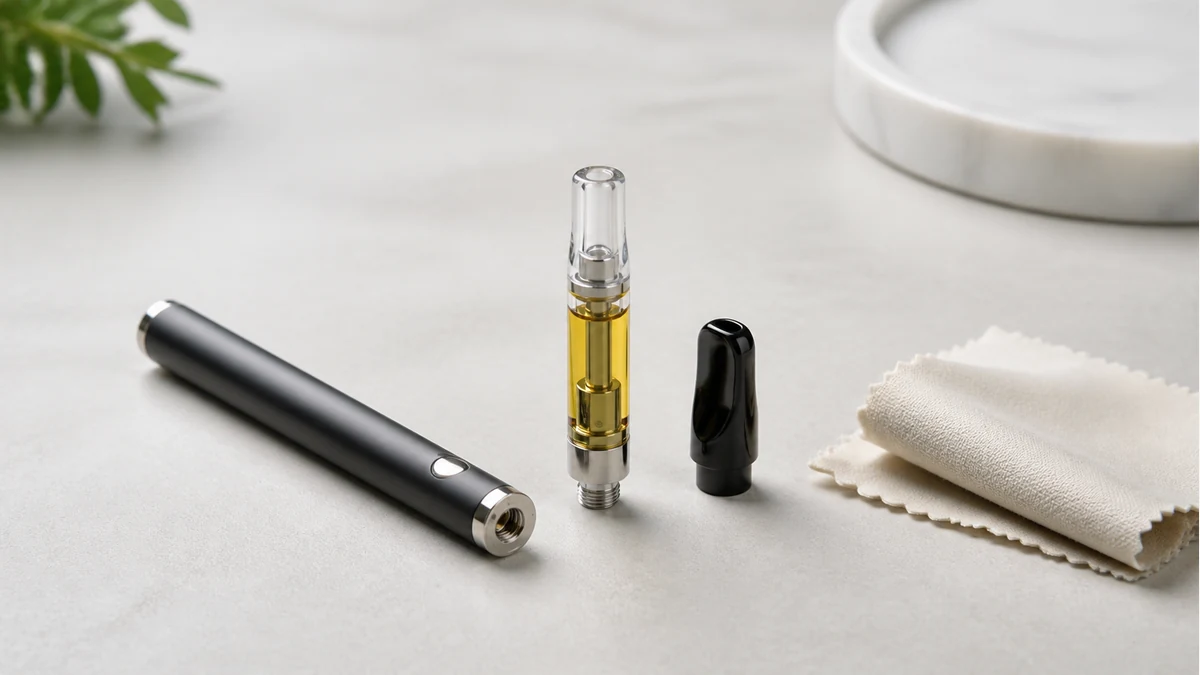
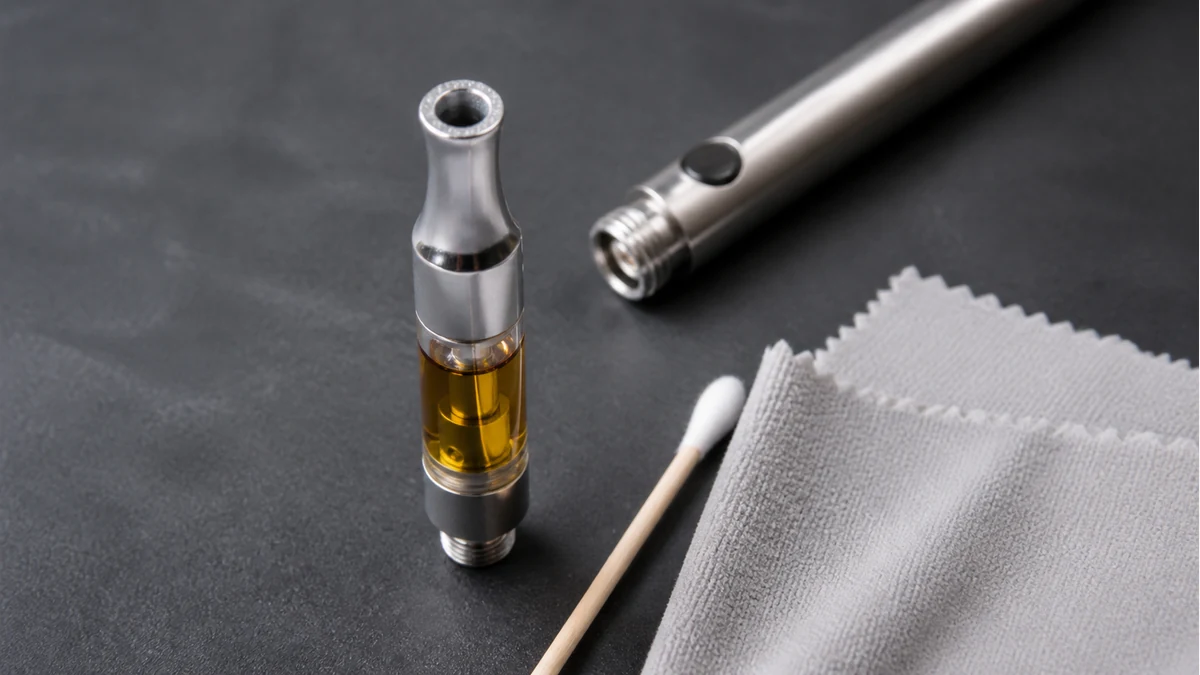
Once the cartridge has warmed, look directly into the mouthpiece opening with good light. If you can see a visible bead or film of oil sitting across the opening, a soft cloth, a cotton swab, or a rolled piece of paper can lift that surface residue without touching anything below it. The goal is to clear what’s visible at the opening, not to reach further inside. While you’re at it, double-check that the cartridge is threaded on straight and fully seated against the battery — a slightly crooked connection can mimic clog symptoms by restricting airflow at the seam rather than inside the cartridge itself.
🔍 3. Use preheat only when the device maker supports it
Some batteries include a preheat function, usually triggered by holding or rapidly clicking the power button before drawing, that applies a brief, low burst of heat to loosen thickened oil ahead of the actual hit. If your device includes this feature and the cartridge manufacturer’s instructions don’t advise against it, a short preheat cycle can be a reasonable next step for a mild clog. If you’re not sure what the button on your battery actually does or whether it’s safe to use with your cartridge, our explainer on what preheating a cart does covers how the function works and its limits.
What matters here is restraint. Preheat is meant to be a brief warming pulse, not a way to force a stubborn clog open through repeated or extended heat. If a device doesn’t offer a built-in preheat function, don’t improvise one with an external heat source — a lighter, hair dryer, or stovetop can warp the cartridge body, damage internal seals, or overheat the oil well beyond what the hardware was designed to handle. When in doubt, the cartridge or battery manufacturer’s manual is the final word on whether preheating is supported at all.
⚙️ 4. Do not push residue deeper into the center tube
It’s tempting to reach for a pin, paperclip, or needle and push it straight down the center post to clear whatever’s blocking the draw. Resist that instinct. The center tube usually sits directly above the wick and coil, and anything pushed into it risks piercing the wick, dislodging the coil, or forcing oil into a part of the cartridge that was never meant to hold it. Rather than fixing the clog, a sharp tool jammed into the center post can turn a restricted cartridge into one that leaks, tastes burnt, or stops producing vapor altogether.
If gentle mouthpiece cleaning and room-temperature warming haven’t resolved the restriction, that’s usually a sign the blockage sits deeper in the airpath than a surface wipe can reach — not a signal to dig further into the cartridge with a makeshift tool. At that point, the safer move is to treat the cartridge as a candidate for retirement rather than continuing to work on it.
🧼 5. Repeated clogs point to storage, draw, or hardware
A single clogged cartridge is usually just condensed oil in the wrong place. A pattern of clogs across multiple cartridges is different — it usually points to a habit or an environment rather than one unlucky cartridge. Storage orientation matters more than people expect: some cartridges are designed to be stored upright, while others do better stored horizontally, and getting this backward can let oil settle against the mouthpiece or center post between uses. Since orientation guidance varies by cartridge design, it’s worth checking the maker’s instructions rather than assuming one rule applies to every cartridge you own.
Temperature swings play a similar role. Cartridges that move repeatedly between cold outdoor air and a warm pocket or bag tend to clog more often, since that cycle of cooling and rewarming encourages oil to pool and thicken unevenly. Draw style matters too — very slow, gentle draws don’t always generate enough airflow to keep oil moving smoothly through the path, while draws that are too hard or too long can pull oil further than intended. If you’re using a refillable cartridge, fill level and how the cartridge was filled can also affect how air moves through it; our refillable vape cartridge guide goes into how fill technique and air gaps interact with everyday performance. And if clogs keep happening across cartridges from different sources, it’s worth considering that the battery or connection itself may be inconsistent, which can indirectly affect how oil flows during a draw.
🛠️ 6. Retire leaking, cracked, or heat-damaged cartridges
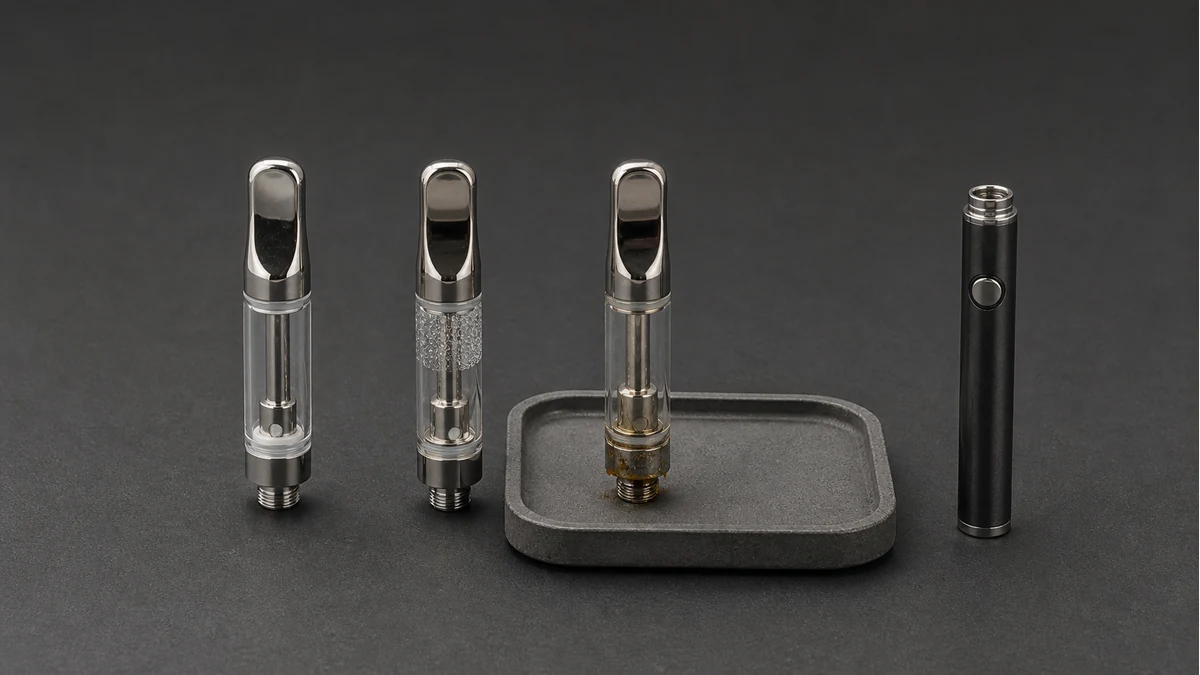
Not every clog is worth chasing. If a cartridge shows oil seeping out around the threading, visible cracks in the plastic or glass body, or discoloration that suggests it’s been exposed to more heat than it was built for, continuing to try to clear it isn’t the best use of time or effort. These are physical signs of damage rather than a simple blockage, and clearing the airpath on a compromised cartridge doesn’t undo whatever caused the leak or crack in the first place.
A cartridge that’s been aggressively heated in an attempt to fix a clog is a common way this damage shows up after the fact — the airpath might clear temporarily, but the seals or plastic housing can be weakened in ways that aren’t obvious until the cartridge starts leaking later. If a cartridge needed more than gentle warming and a light surface cleaning to work again, that’s usually a reasonable point to stop troubleshooting it.
✅ 6.1 Read the residue pattern at the mouthpiece
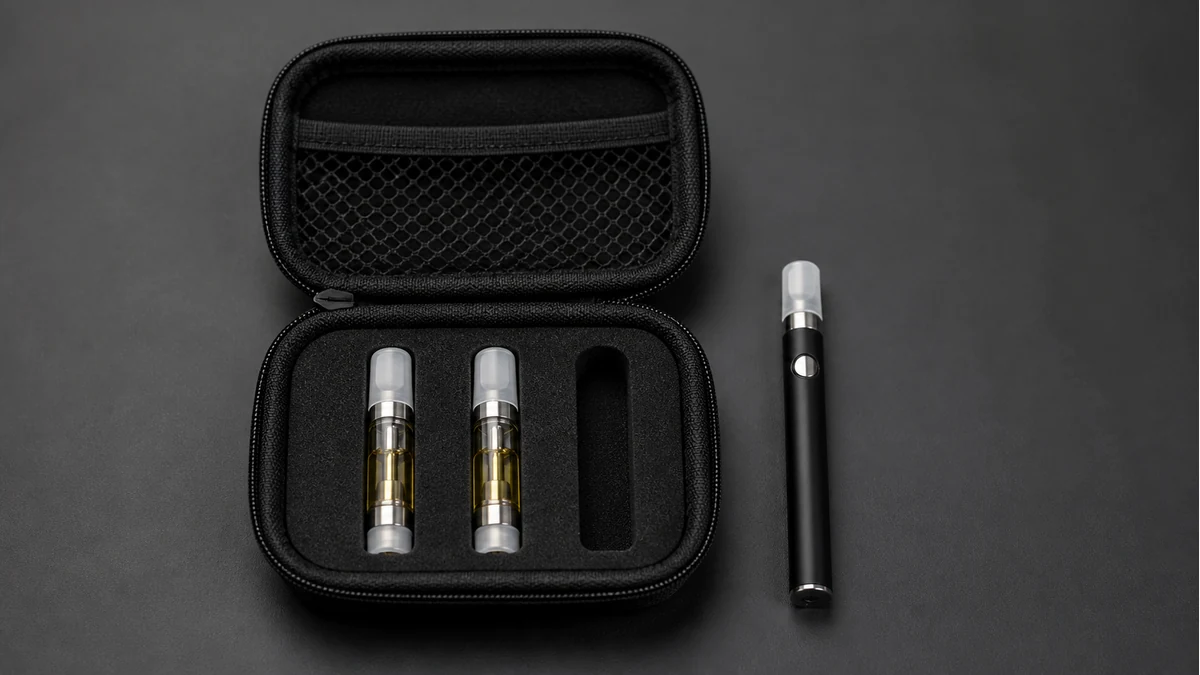
A small ring of condensed material at the upper airpath points to a different problem than oil covering the battery contact. Mouthpiece residue can narrow the passage after repeated cool draws, while material at the connector suggests flooding, leakage, or a damaged seal. Keep the cartridge upright, remove it from the battery, and inspect both ends in good light before choosing a response.
If the accessible mouthpiece insert is removable under the product instructions, clean only that removable area. Do not drive a pin down the center tube: it can push a plug toward the heater, scratch an internal seal, or leave metal where it does not belong. When the airpath will not clear with the maker-approved routine, replacement is safer than escalating force or heat.
📦 6.2 Prevention starts after the draw
Repeated hard pulls can draw more material toward the center tube than the heater can process. Let the device operate in its intended orientation, use a gentle steady draw, and give the cartridge time to return to room temperature before putting it in a pocket or case. Store it as directed, away from high heat, and keep the mouthpiece capped if a clean cap was supplied.
Preheat is not a universal unclog button. It belongs only on devices whose manufacturer provides that function and instructions for the installed cartridge. Repeated cycles can thin the contents enough to move the blockage into the connector, turning restricted airflow into a leak.
🧭 6.3 Do not confuse airflow with electrical output
A cartridge can pass air while producing no vapor, and it can heat while the mouthpiece remains blocked. Test those functions separately. With the cartridge removed and cool, check whether air moves through the intended inlet and mouthpiece without forcing it. Then inspect the battery contact for residue and follow the device’s connection checks. A clear tube will not fix a dead heater; a charged battery will not open a condensed plug.
Stop immediately if the cartridge is cracked, the mouthpiece has separated, oil has reached the battery interior, or the battery becomes unusually warm. Wiping the outside does not make a damaged sealed cartridge repairable. Place leaking hardware upright on a nonabsorbent surface away from heat while following the seller or manufacturer’s disposal instructions.
🧩 6.4 Use temperature as a diagnostic clue, not a shortcut
Cold, thick contents may move slowly, but uncontrolled heating can deform seals and accelerate leakage. Bring a cartridge gradually to normal room temperature. Do not use an open flame, boiling water, microwave, hair dryer at close range, or a hot vehicle dashboard. If the manufacturer permits a short preheat, use only that built-in cycle and reassess after the hardware cools.
After clearing an accessible restriction, reassemble the cartridge without overtightening and take one gentle test draw. If airflow closes again immediately, stop repeating the cycle. A recurring plug usually means the material is continuing to enter the center tube or the cartridge geometry is failing, neither of which is solved by progressively stronger suction.
✅ 7. A clear airpath should not require force
Most clogs respond to the least aggressive steps: confirming it’s actually a blockage rather than a battery issue, letting the cartridge return to room temperature, clearing visible residue at the mouthpiece, and using preheat only when the device is built for it. None of that requires force, sharp tools, or extended heat, and if you find yourself reaching for either, it’s worth stepping back and reconsidering the approach rather than pushing harder.
When a cartridge keeps clogging despite reasonable storage and draw habits, or when it shows signs of physical damage, the more useful question shifts from “how do I clear this” to “is this cartridge still in good working condition.” Manufacturer manuals differ on storage orientation, preheat support, and cartridge construction, so they remain the most reliable source for anything specific to the hardware you’re actually using.