The best dab torch is the one that gives you a small, steady, blue flame you can hold in exactly the same spot for as long as you need, not the one that throws the biggest fireball in the store aisle. A torch that roars and flickers unpredictably makes it harder to judge when a banger has reached a consistent temperature, and it raises the odds of a flare-up right as you’re leaning over the rig. Picking the right torch means comparing flame behavior, ignition reliability, and how the unit sits and refills — not just how tall the flame gets.
Most people shopping for a dab torch start by comparing flame height or overall size, the same way they’d compare a kitchen torch or a lighter. That instinct makes sense for lighting a candle, but it works against you here. A banger needs even, directed heat applied from a consistent angle, and a torch that can’t hold a narrow, stable flame at a moderate setting is harder to control than one with a smaller maximum output and a wider adjustment range. This guide walks through the torch qualities that actually affect daily use: flame stability, adjustability, ignition, base stability, refill behavior, reach, and knowing when a torch is telling you to stop and address it.
🧭 1. The best dab torch produces a stable, controllable flame
Flame stability is the single most important quality in a dab torch, and it’s also the one that’s hardest to judge from a photo or a spec sheet. A stable flame holds its shape and length at a given fuel setting whether the torch is held upright, tilted toward a banger, or moved slightly during use. An unstable flame does the opposite — it lengthens, shortens, or bends on its own even though your hand and the fuel valve haven’t moved. That kind of drift makes it nearly impossible to apply heat consistently, because the same setting can behave differently from one pass to the next.
Torch flames run on a mix of butane and air pulled in through intake ports near the nozzle. When that air-to-fuel ratio is right, the flame burns with a clean, mostly blue cone. When it’s off — because of a partial fuel fill, a clogged intake, or a design that doesn’t mix air well — the flame can turn yellow at the tip, hiss unevenly, or pulse in size. None of that is something you can fix by cranking the fuel valve higher; it usually means the torch needs to be refilled properly, purged of residual air, or given a few seconds to settle after ignition before you start using it.
🧩 2. Flame width and adjustment range matter more than spectacle
A wide adjustment range is more useful in daily use than a high maximum flame length. Torches with a narrow usable range often only behave predictably near one end of the dial — either barely lit or nearly maxed out — with an unstable middle zone in between. That’s a problem because the flame width and intensity you want for warming an already-hot banger is often different from what you’d use to bring a cold one up to temperature, and a torch that can only do one of those jobs well forces you to compensate with distance and timing instead of the flame control valve itself.
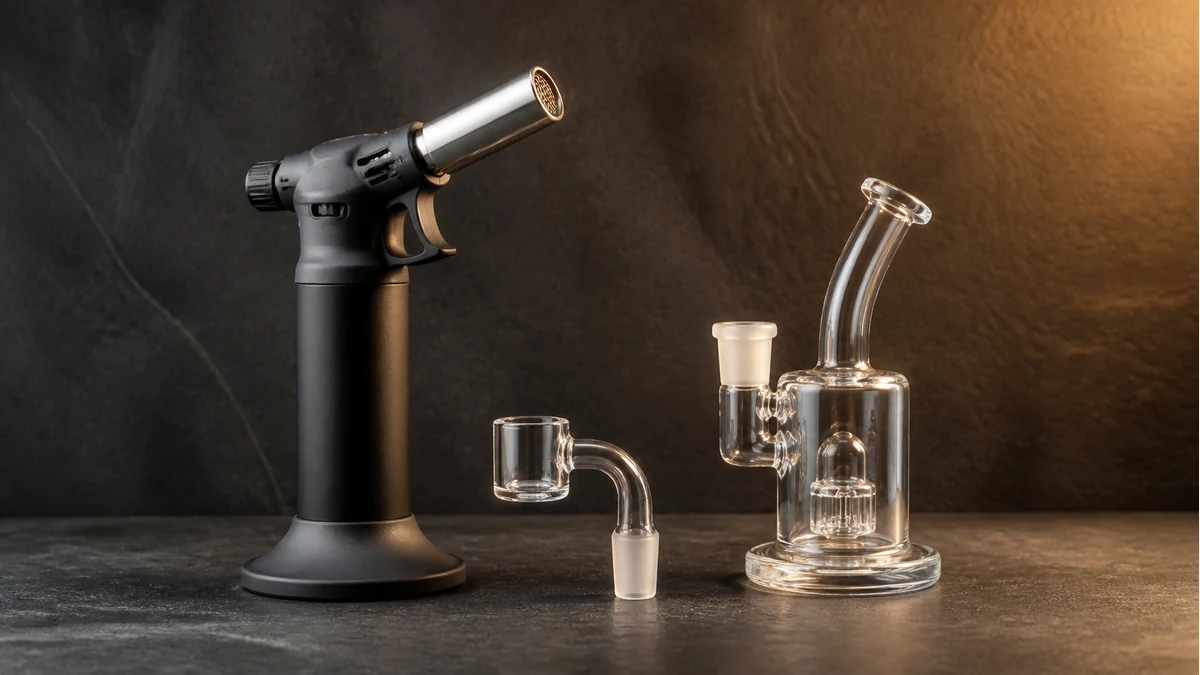
Flame width is a separate variable from length, and it’s shaped by the nozzle design as much as the fuel valve. A narrower, more focused flame lets you direct heat at a specific part of the banger — the floor versus the walls — without spreading warmth across the whole joint and surrounding glass. A wider, more diffuse flame is harder to aim precisely, which matters more on smaller rigs and quartz pieces where nearby glass and joints are close to the heating zone. When comparing torches, it’s worth thinking about which flame profile suits the size of banger you actually use rather than assuming a bigger flame is simply better in every case. For more on how flame application connects to actual dab temperature, see this guide on finding the right temperature for dabs.
🔍 3. Ignition and base stability shape the daily routine
Ignition reliability is easy to overlook when comparing torches on a shelf but becomes obvious the moment a torch won’t light on the first or second try. Piezo ignition systems — the push-button spark igniters built into many torches — are convenient but can wear out or become unreliable over time, especially with heavy daily use. Flint-and-wheel systems, similar to a standard lighter, tend to be more mechanically simple and easier to understand when something goes wrong, though they require a manual spark each time rather than a single button press. Neither approach is universally better; the practical difference shows up in how the specific torch model holds up with repeated use, which is a question for the manufacturer’s documentation and your own experience with that unit.
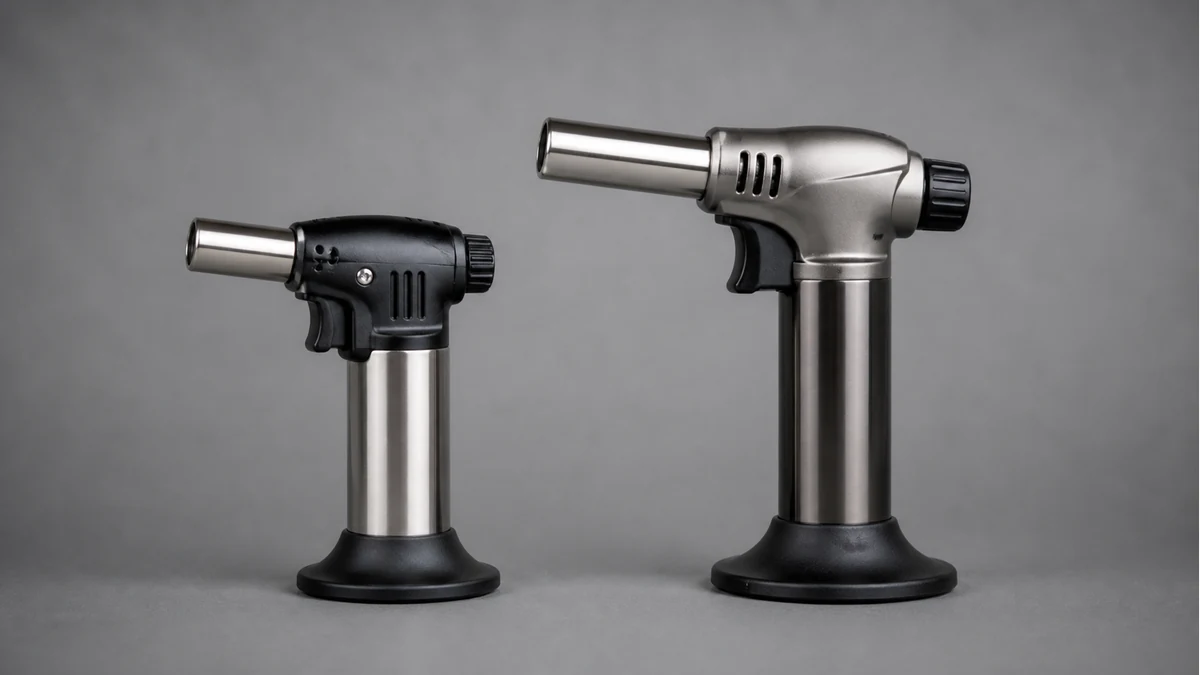
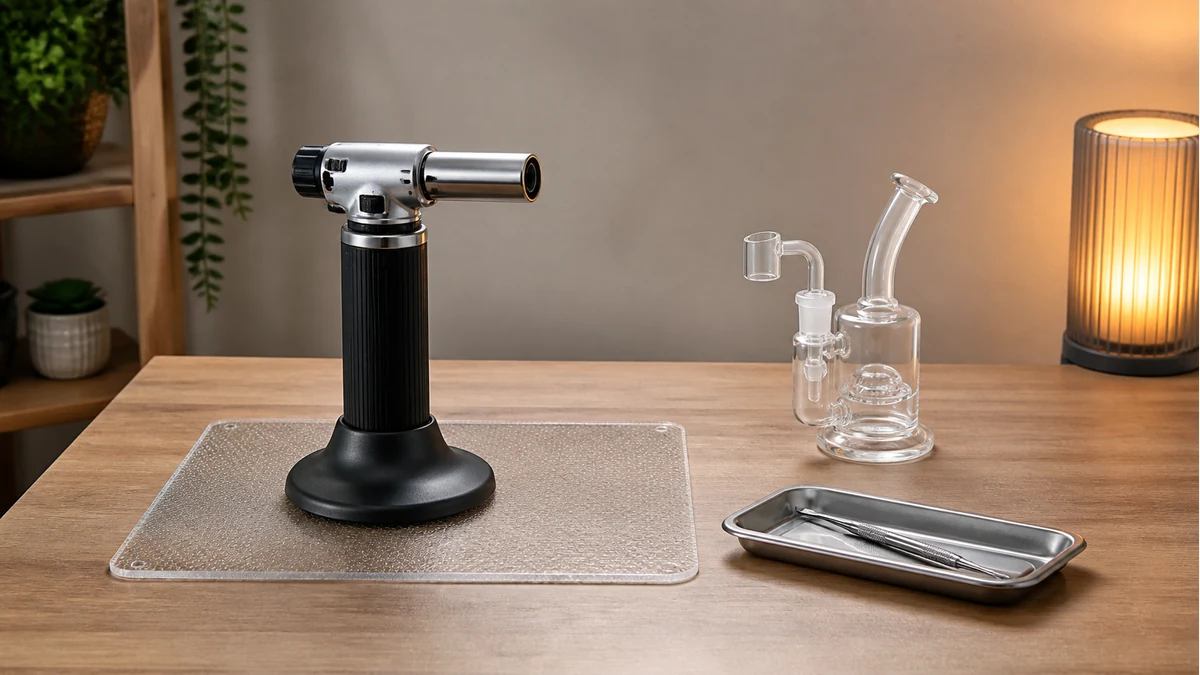
Base stability is just as relevant to the daily routine as ignition, even though it gets less attention in torch marketing. A torch with a narrow or lightweight base is easier to knock over on a crowded table, and a torch that tips while lit is a genuinely bad situation near glass, fuel, and lit material. A wider base, a lower center of gravity, or a design meant to stand upright even when nudged all reduce that risk. If your dabbing setup involves a rig, a torch, a carb cap, and tools all within reach on the same surface, the torch’s footprint and stability matter as much as its flame output — see this rundown on choosing a carb cap for a dab rig for how crowded that work surface can get.
⚙️ 4. Refill behavior exposes worn valves and poor seals
Refilling is where torch problems tend to surface first, because a refill valve has to seal tightly against butane under pressure, and any wear or debris in that seal shows up immediately as leaking, hissing, or a torch that won’t hold fuel. A properly sealed refill valve should accept fuel cleanly with the flame off and the torch in the orientation specified by the manufacturer, without a strong ongoing hiss of escaping gas after the fill nozzle is removed. A valve that leaks, whistles constantly, or requires unusual pressure to seat the fuel canister is signaling wear that will likely continue and possibly worsen with each refill.
Run time — how long a torch stays reliably lit on a full fill — is also affected by refill quality, since an incomplete or poorly purged fill leaves air pockets that shorten usable time and destabilize the flame early. This is one of the most common frustrations people report with lower-quality torches: not that the flame is bad when it’s fresh, but that it degrades noticeably within a single session as fuel and trapped air run out unevenly. Following the specific refill instructions for your torch model — including any recommended waiting period after filling before ignition — does more to solve this than switching fuel brands or overfilling the tank.
🧼 5. Match torch reach to the banger and work surface
Reach refers to how far the flame extends from the nozzle at a usable, stable setting, and it needs to match the size of banger and the layout of the rig it’s used with. A torch with too little reach forces you to hold it uncomfortably close to the joint and surrounding glass, increasing the chance of overheating a small area or scorching nearby components. A torch with more reach than the setup calls for often ends up run at a low, less stable setting just to avoid overheating, which puts you back in the unstable-flame problem described earlier instead of solving it.
The practical way to think about reach is in terms of the specific banger and rig, not a universal torch size. A larger quartz or titanium banger generally benefits from a torch that can maintain a stable flame at a slightly longer reach, since more surface area needs even heat. A smaller banger on a compact rig is usually better served by a torch that stays controllable at a shorter distance, where precision matters more than coverage. If you’re still working out how banger size and heating approach fit together, this guide on using a dab rig covers the setup fundamentals that reach decisions build on.
🛠️ 6. Know when sputtering or flare-ups mean stop
A torch that sputters — where the flame briefly shrinks, surges, or cuts out and relights on its own — is not a quirk to work around; it’s a signal to stop using the torch until the cause is addressed. Sputtering usually points to a fuel or air problem inside the torch: low fuel, a bad mix from an improper fill, or debris in the nozzle disrupting flow. Continuing to use a sputtering torch means working with a flame you can’t predict from one moment to the next, which defeats the entire purpose of using a torch with adjustable control in the first place.
A sudden, unexpectedly large flame — one that flares well beyond the size you set on the fuel valve — is a more urgent stop-use signal than sputtering. This can happen when trapped air ignites unevenly after a fill, when a valve malfunctions, or when a torch is used immediately after refilling without allowing recommended settling time. If a torch ever produces a flame noticeably larger or more erratic than what the fuel setting should produce, the right response is to extinguish it, let it sit, and inspect it — not to keep dabbing and hope the next attempt behaves better. Torches, like any pressurized fuel device, should be inspected and possibly replaced if this kind of behavior repeats.
✅ 6.1 Test the controls before filling the torch
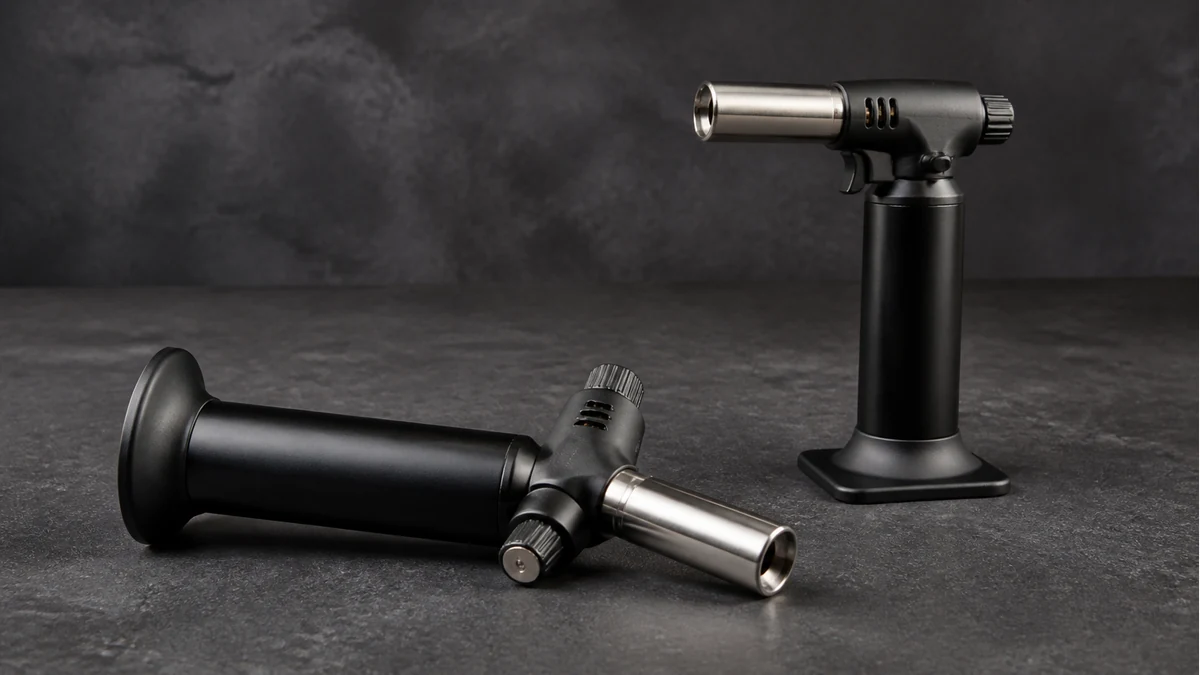
Work through the ignition lock, trigger, flame adjustment, and base stability while the torch is empty and cool. The controls should move deliberately without binding, and the torch should stand on the intended surface without rocking. A flame-lock feature is useful only when it cannot be engaged accidentally while the torch is being picked up or stored.
After filling strictly according to the torch maker’s instructions, allow the specified settling time and perform the first ignition away from the rig. A flame that pulses, lifts away from the nozzle, continues after the control is released, or appears around the valve is a stop-use signal. Do not diagnose a suspected valve leak with another flame.
✅ 7. Choose predictable control over maximum flame
When it comes down to a final decision, predictability is the quality that separates a good dab torch from a frustrating one. A torch that consistently produces the same flame at the same setting, ignites reliably, sits stably on the table, refills cleanly, and reaches your banger comfortably will serve better day to day than one that simply advertises a taller flame or a larger fuel tank. Raw size and flame height are the easiest specs to compare while shopping, but they say almost nothing about how the torch will actually behave once it’s in regular use next to a rig.
The qualities covered here — flame stability, adjustment range, ignition, base stability, refill behavior, and reach — are the ones that show up every single session, long after the initial impression of a torch’s size or appearance has worn off. Comparing torches on these terms, and paying attention to the manufacturer’s specific instructions for fueling and use, gives a clearer picture of which torch will actually hold up as a daily tool rather than which one looks most impressive unlit on a shelf.