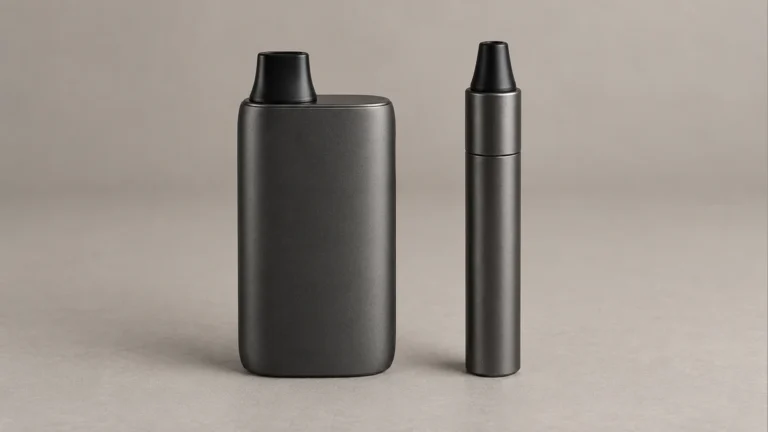
A dab pen is really three simple systems working together: an air path, a heat path, and a cleaning routine that keeps the first two working. Almost every accessory sold for these devices, from the mouthpiece down to the cable that charges the battery, belongs to one of those three jobs. Once you can place a part in its category, it gets a lot easier to figure out why a hit feels weak, why a chamber tastes burnt, or why a pen won’t charge.
Keep an accessory inventory with the exact device family it serves. Small chambers, adapters and seals often look interchangeable in a drawer even when their contact depth, bore or material differs. A labeled bag or fitted slot prevents a future replacement decision from relying on appearance alone. Photographing the original arrangement can also show where each part belongs without creating a new technical claim.
When troubleshooting, return the pen to the smallest complete configuration: documented battery, chamber, seal and mouthpiece. Add optional accessories one at a time. If the symptom appears only after one adapter, glass piece or extension is installed, the interface around that part deserves inspection before the battery or heater is replaced.
This guide walks through the main accessory groups by function rather than by brand, so you can look at any part you already own — or any part on a shelf — and know what it’s actually doing.
🧭 1. The Airflow Path
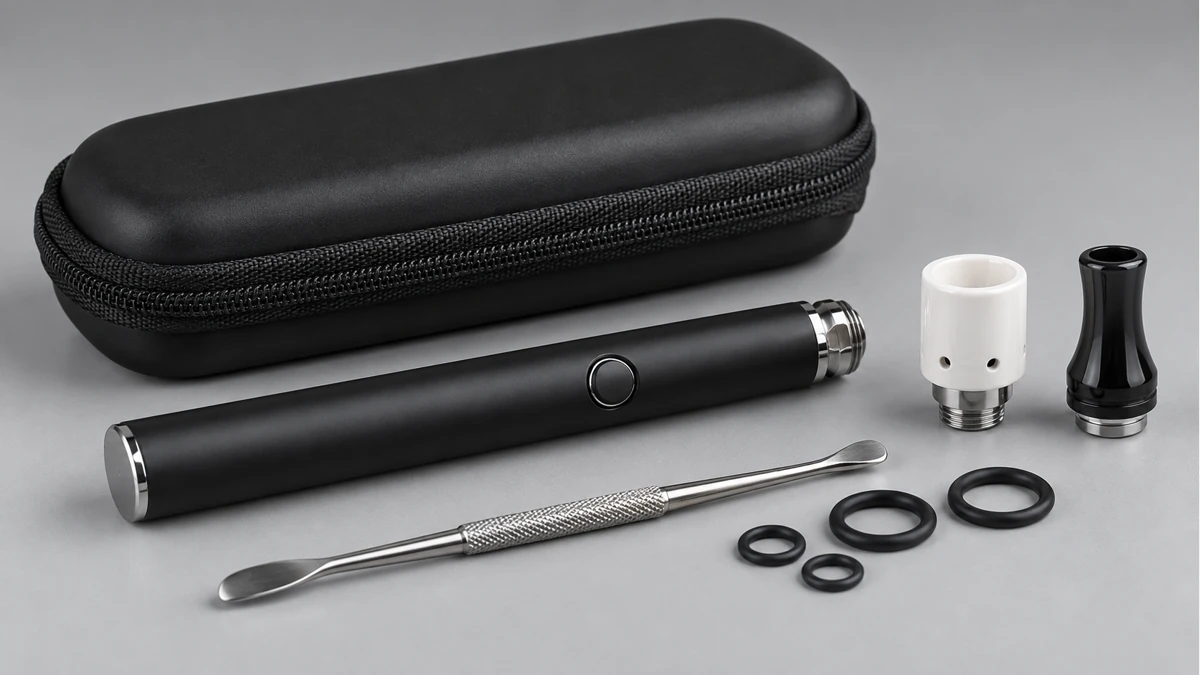
The airflow path is everything the vapor touches on its way from the heated material to your mouth. If any part of that path is loose, cracked, or blocked, the draw changes even if the heating element is working perfectly.
🔎 1.1 Mouthpieces
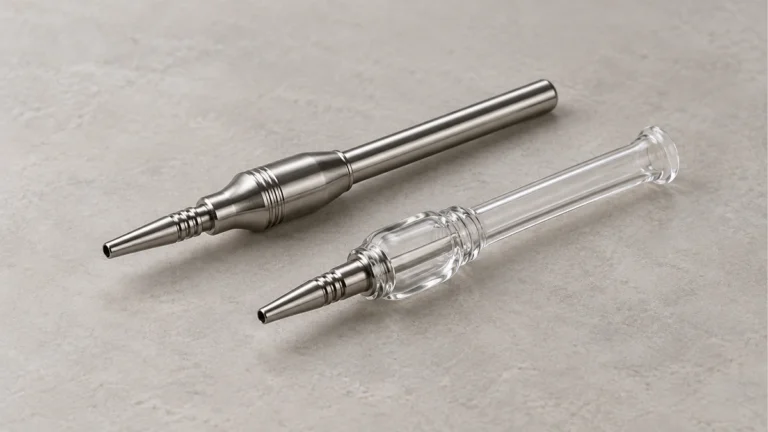
The mouthpiece is the last stop before vapor reaches you, and its material changes how the hit feels more than most people expect. Glass mouthpieces sit farther from the chamber’s heat and stay cooler to the touch, which is why many people describe them as smoother on the lips. Metal or plastic mouthpieces that screw directly onto the chamber pick up more radiant heat, so the first few draws right after heating can feel noticeably warmer.
Bore width matters too. A narrow-bore mouthpiece adds draw resistance, which concentrates the airflow and can make vapor feel thicker per pull. A wide-bore mouthpiece pulls more room air alongside the vapor, cooling it faster but also diluting it, which some people read as “weaker” clouds even when the chamber is heating normally.
📏 1.2 O-Rings and Seals
O-rings sit at the joints — between the mouthpiece and chamber, and often around the chamber’s base where it meets the battery or housing. Their only job is to force air to travel through the intended path instead of sneaking around it.
When an o-ring dries out, shrinks, or goes missing, air finds the gap instead of pulling through the chamber. The result is a thin, cool draw that doesn’t match how hot the coil actually got, plus a common complaint: a faint burning smell or a bit of oil seeping out at the seam. That leak isn’t a heating problem at all — it’s an airflow leak with a heat symptom.
⚙️ 2. The Heat Path
The heat path covers anything that converts electrical energy into the heat that turns concentrate into vapor. This starts at the battery and ends at the coil or ceramic surface touching the material.
🔎 2.1 Chambers and Coils
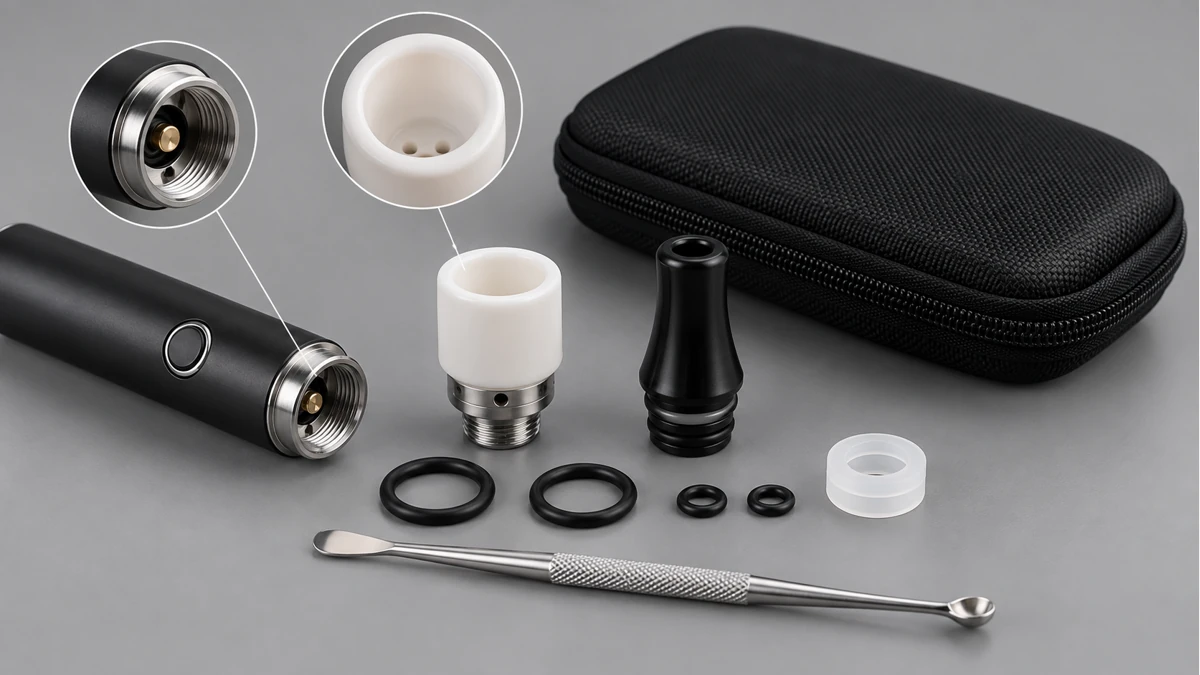
Chambers come in a few common heating layouts, and each one changes how evenly material vaporizes:
- Coil-wrapped wick or mesh: a resistance wire wraps around a wick or mesh screen, heating only where the wire makes contact, which can leave unheated pockets if material isn’t spread evenly.
- Ceramic donut or dish: the coil is embedded in a ring or shallow dish shape, giving material more open surface area and generally more even contact with the heat source.
- Ceramic rod: heat radiates from a central post, which works well for smaller loads but can leave material at the outer edges of the chamber cooler than material touching the rod directly.
Chamber design directly explains residue buildup patterns. A design with more surface area in direct contact with the coil vaporizes material more completely, leaving less behind as gunk on the walls. A design with cooler edges tends to leave a ring of unvaporized residue that has to be cleaned out or it insulates the next load from proper heat.
📏 2.2 Batteries and Charging Cables
The battery sets the ceiling on how hot the coil can get and how fast it gets there. On pens with variable voltage or wattage settings, raising the setting sends more current to the coil, heating it faster and to a higher temperature — which is why the same chamber can produce a gentle warm vapor on a low setting and a much thicker, hotter draw on a high one.
The charging cable matters more than people assume. A cable rated for lower amperage than the battery expects will still charge it, just more slowly, and some batteries respond to an underpowered connection with blinking lights or a charge that stalls before reaching full. A cable or adapter that matches the battery’s rated input charges at the expected speed and avoids that intermittent-connection behavior that gets mistaken for a broken battery.
this related AOVAPE hardware guide
🧩 3. The Handling Path
Handling accessories don’t touch the airflow or heat directly, but they control how material and dirt get introduced into those systems in the first place.
🔎 3.1 Loading Tools
A dab tool or loading pick exists mainly to keep concentrate off your fingers and off the coil’s non-stick or ceramic surface. Metal tips resist sticking to sticky concentrates, which makes it easier to place a consistent, controlled amount into the chamber instead of overloading it. Overloading the chamber is one of the more common causes of a harsh-tasting hit, since excess material sits away from the direct heat source and only partially vaporizes before cooling back down.
Ceramic or silicone-tipped tools are gentler on coil surfaces than sharp metal points, which matters most on chambers with a thin ceramic coating that can scratch and wear unevenly if scraped with a hard edge.
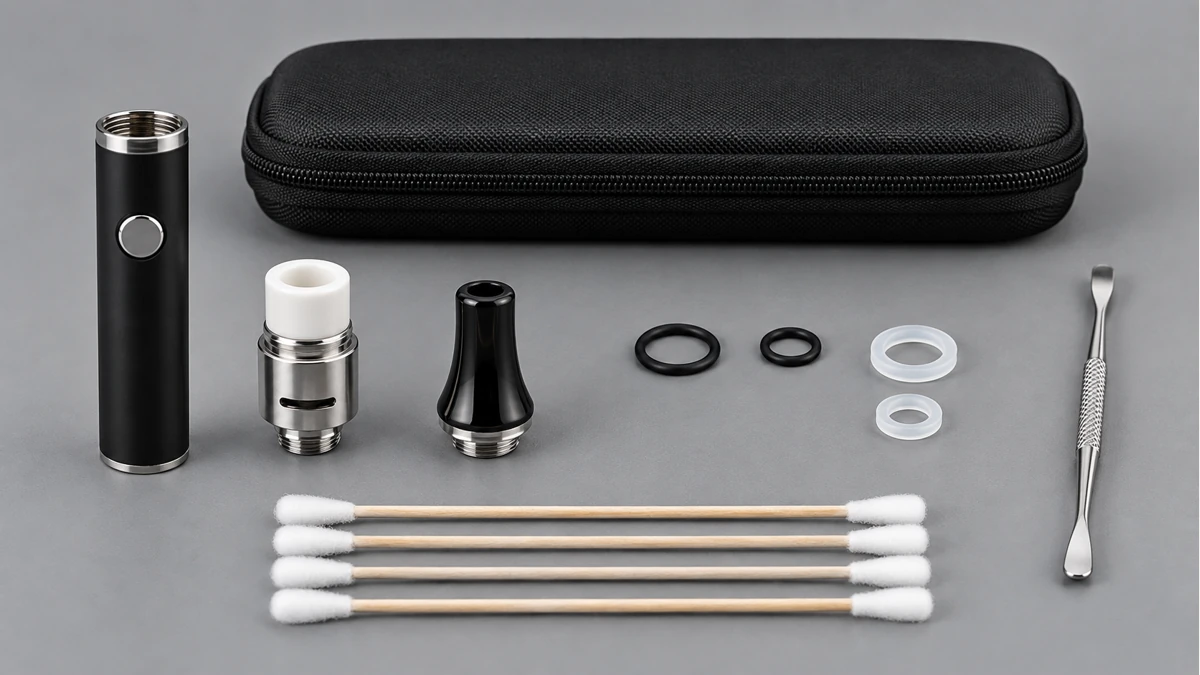
📏 3.2 Cases and Travel Tools
A carrying case protects the pen from drops and from pocket lint working its way into open ports, but the more functionally useful piece is often a small magnetic or silicone cap over the mouthpiece. Left uncovered, an open mouthpiece is a direct entry point for lint and dust into the airflow path, and that debris eventually settles in the chamber or clogs the narrower parts of the airway. A cap that closes off that opening when the pen isn’t in use keeps the air path clear between sessions.
🔬 4. Organize Dab Pen Accessories by the Part They Serve
An accessory is useful only when it matches a real interface. A mouthpiece serves the airflow path. A seal joins surfaces. A chamber belongs to the heating system. A cable belongs to the battery input. A tool handles material away from the electronics. Sorting parts this way prevents a similar-looking item from being treated as universally compatible.
🔎 4.1 Mouthpieces and Seals Shape Airflow
Compare the bore, seating surface and gasket position before replacing a mouthpiece. A part can attach securely yet narrow an inlet or leave a leak around the chamber. Inspect seals for cuts, flattening and residue, and replace them only with the documented size and material. Improvised rings can shift the mouthpiece or place stress on glass.
📏 4.2 Chambers Need Electrical and Mechanical Compatibility
A replacement chamber must match the connector, contact depth, airflow path and battery output range. Exterior diameter alone is weak evidence. Keep the original part number or compatibility list with the kit. If a new chamber changes indicator behavior, test the original known-good chamber before adjusting battery settings.
🧪 4.3 Loading Tools Should Not Become Scrapers
Choose a tip shape that can reach the chamber without levering against a heater, screen or seal. A metal tool that fits the opening can still damage a delicate surface when used as a pry bar. Let parts cool, follow the chamber maker’s handling instructions and keep heated or used tools away from cables and mouthpieces in storage.
🔋 4.4 Cleaning Accessories Need Boundaries
Dry swabs, small brushes and lint-free cloths handle different surfaces. None of them makes the powered body washable. Remove detachable pieces only as documented, clean glass or service parts separately, and let them dry completely before reassembly. Store used swabs in a disposable pocket rather than beside clean seals.
🌬️ 4.5 Cases Should Restrain, Not Compress
A fitted case protects the battery, chamber and glass from striking one another. Support durable metal bases while leaving clearance around glass and mouthpieces. Avoid lid pressure that bends an assembled pen. If the device includes a lock or power-off sequence, use it before storage and keep loose conductive objects out of the battery compartment.
🧼 5. The Cleaning Path
Cleaning accessories exist because both the airflow and heat paths accumulate residue over time, and that residue changes performance long before any part actually fails.
🔎 5.1 Cleaning Tools
The standard cleaning kit is simple: cotton swabs, small brushes, and isopropyl alcohol wipes or a small container of alcohol. Swabs reach into the mouthpiece interior and the threading where the mouthpiece meets the chamber, both areas where condensation collects. Brushes handle the wider chamber walls without pushing residue deeper into corners.
The cause-and-effect here is direct: residue that hardens on the coil or chamber wall acts as insulation, slowing how fast heat transfers into fresh material. That’s a common explanation behind a pen that used to heat quickly and now feels sluggish, or one that started producing a burnt taste before the material itself is even fully vaporized — the burnt taste is coming from old residue re-heating, not the fresh load.
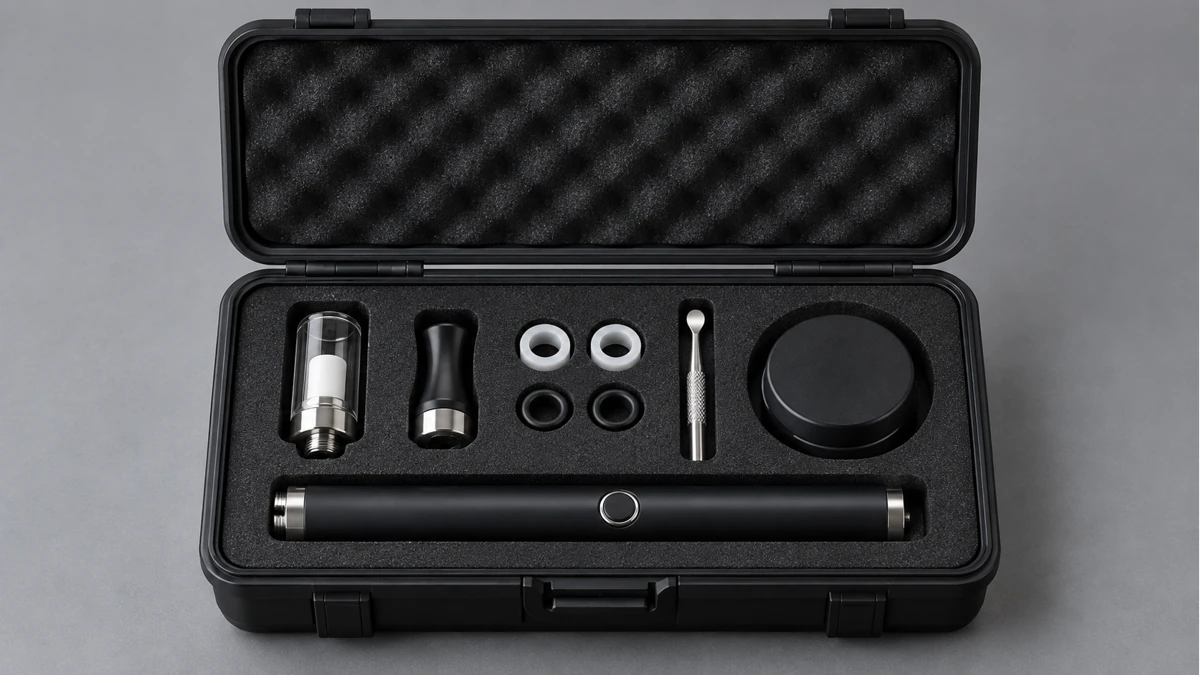
📏 5.2 Spare Parts and Replacement Timing
Some parts wear out no matter how well they’re cleaned. Coils lose resistance accuracy as the wire goes through repeated heat cycles, and ceramic elements can develop hairline cracks from rapid temperature swings, especially if the chamber is heated empty. O-rings lose elasticity with repeated heat exposure, going from a snug seal to a slightly shrunken one that no longer closes the gap completely.
Rather than replacing parts on a fixed schedule, it makes more sense to watch for visible signs: a coil that’s changed color unevenly, a chamber with a visible crack, or an o-ring that’s gone stiff or brittle instead of staying flexible. Any of those signs points to a part that’s about to stop doing its one job — sealing air or transferring heat — properly.
this related AOVAPE hardware guide
None of these parts work in isolation. A fresh coil paired with a leaking o-ring will still produce a weak, cool draw, because the airflow problem masks the heat path doing its job correctly. A clean chamber paired with a worn battery cable will charge slowly no matter how well-maintained the rest of the pen is. Thinking in terms of which path a part belongs to — air, heat, or cleaning — makes it much easier to diagnose which piece actually needs attention instead of guessing at the whole device.
this related AOVAPE hardware guide
Accessory care also benefits from a simple separation rule: clean parts stay apart from used tools and residue-bearing components. Keep spare seals in a closed labeled container, protect glass from metal tools, and store charging cables without sharp bends. That organization makes compatibility checks faster and reduces the chance that a contaminated or damaged spare is mistaken for a ready replacement.