A common point of confusion when someone is shopping for a first metal rolling tray is whether the material actually changes how the tray behaves, or whether it is a purely cosmetic choice. The confusion usually starts with a simple mismatch: two trays look nearly identical in photos, but one is noticeably heavier and colder to the touch than the other. That weight and temperature difference is the first real clue to what is happening underneath the finish, and tracing it back to the base metal explains most of the practical differences people notice later — in fit, sound, static, and cleanup.
🧭 1. Material Basics: Stainless Steel vs Coated Aluminum
Metal trays are almost never a single uniform material once you account for the finish layer. What you feel on the surface and what makes up the structural body of the tray are often two different things, and mixing those two up is where most fit and durability confusion starts.
🧩 1.1. Why Stainless Steel Feels Different in the Hand
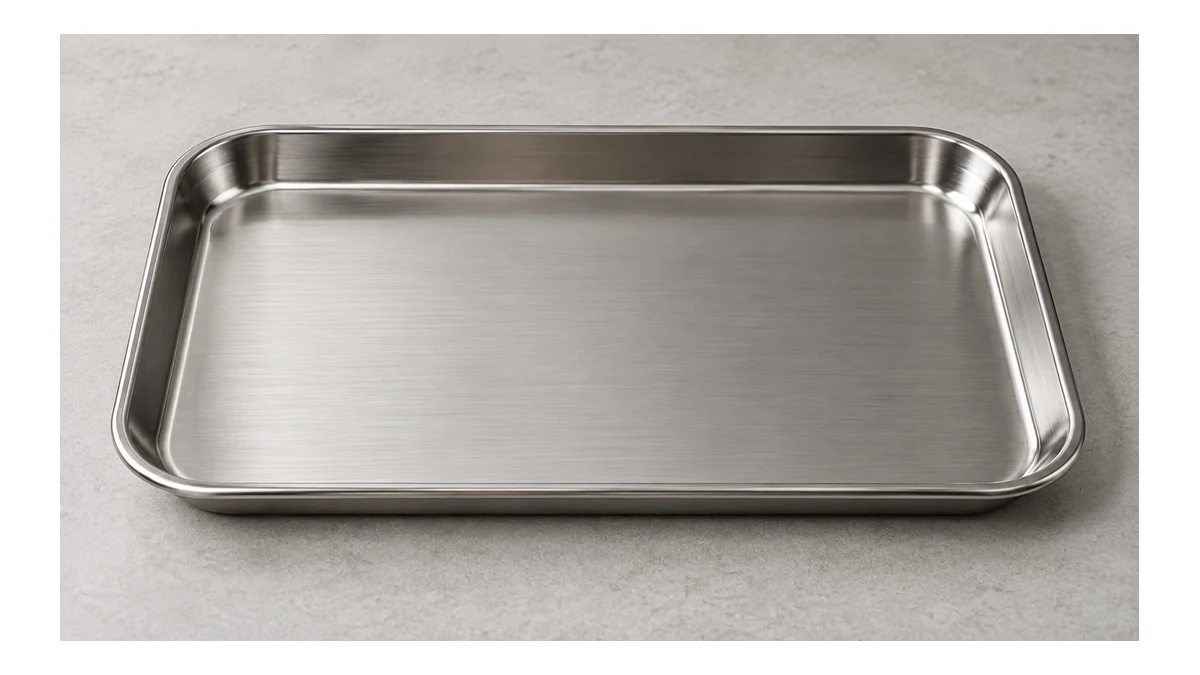
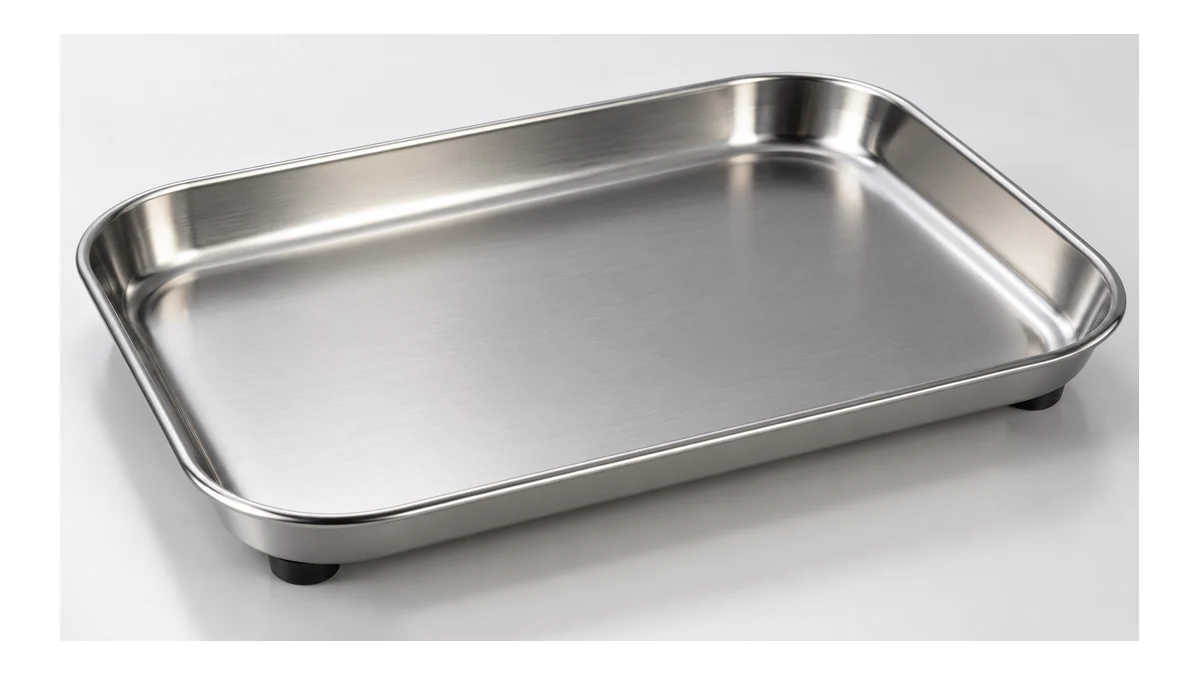
Stainless steel trays are denser than aluminum ones of the same size, which is why they feel heavier and colder when picked up. Stainless steel is an alloy of iron, chromium, and often nickel, and the exact mix determines how the metal responds to a magnet, how it resists corrosion, and how rigid the tray body feels when pressed at the center. Trays made from austenitic grades (the family that includes common 300-series stainless) tend to be non-magnetic or only weakly magnetic, while trays made from ferritic grades (the 400-series family) are more strongly magnetic. Neither is inherently better for a tray; the difference mostly shows up in magnetic accessory compatibility and slight variations in corrosion resistance.
📏 1.2. What Coated Aluminum Is Actually Made Of
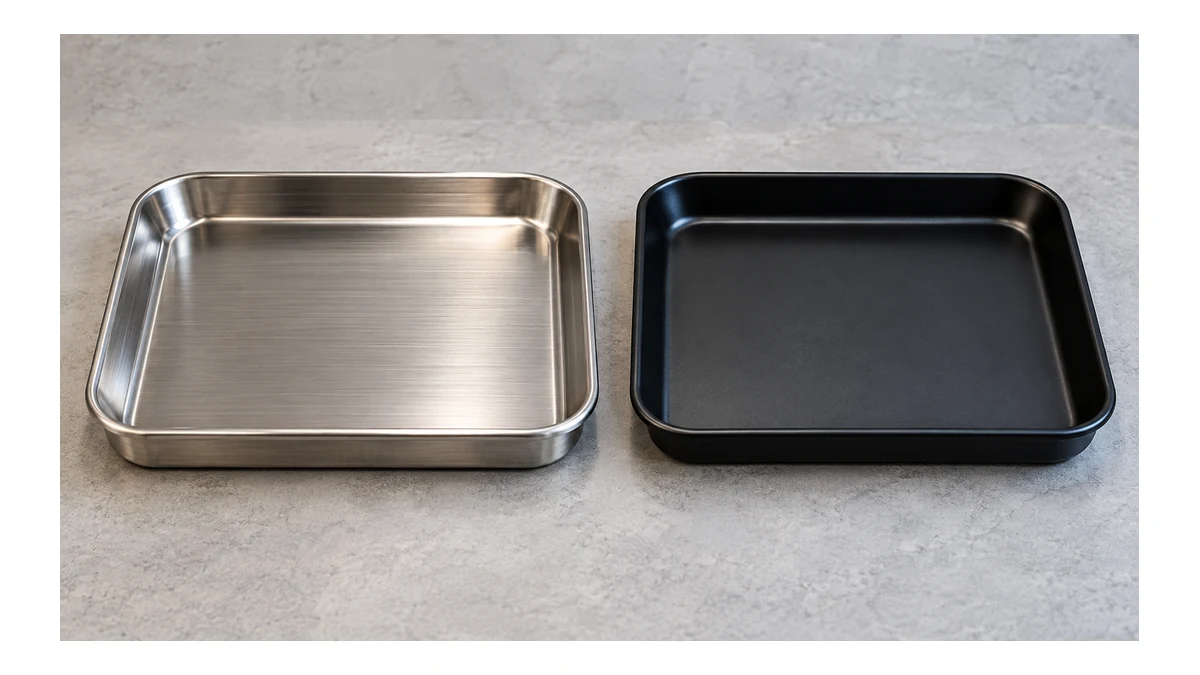
Coated aluminum trays use a lightweight aluminum core, then apply a powder coat, paint layer, or anodized finish on top for color and scratch resistance. Aluminum is never magnetic, so a coated aluminum tray will not attract a magnet regardless of how thick or glossy the coating looks. The core is also softer than stainless steel, which is part of why aluminum trays are more prone to dents and gentle warping over time, even though the coating itself may look undamaged. rolling tray design guide For anyone trying to identify what a tray is actually made of before relying on visual cues alone, weight and magnetic response are far more reliable indicators than the printed finish.
| Property | Stainless Steel | Coated Aluminum |
|---|---|---|
| Relative weight | Noticeably heavier | Noticeably lighter |
| Magnetic response | Weak to moderate, grade-dependent | None |
| Core rigidity | Higher, resists flexing | Lower, flexes more under pressure |
| Surface layer | Often bare or brushed metal | Powder coat, paint, or anodized finish |
🧩 2. Edge Height, Corner Radius, and Seam Construction
Beyond the material itself, the way the tray is shaped has a direct effect on how well it actually contains loose material and how long the structure holds up to daily handling.
📏 2.1. Edge Height and What It Actually Contains
Edge height is the vertical distance from the flat floor of the tray up to the top of the rim. A shallow edge, often only a few millimeters, is enough to stop light material from sliding off during normal handling but does little once the tray is tilted or bumped. Taller edges, sometimes combined with a slight inward curl at the very top, do a better job of containing contents when the tray is lifted or carried, because the curl acts as a small barrier that redirects material back down rather than letting it slide straight out over the lip.
🌬️ 2.2. Corner Radius, Seams, and Why Trays Warp
Corner radius refers to how rounded or sharp the tray’s corners are. Sharp, near-90-degree corners concentrate stress at a single point, which makes that spot more likely to crack a coating or eventually deform under repeated pressure. Rounded corners spread that same stress across a wider area of metal, which is a basic principle of sheet metal fabrication and the reason rounded corners are common on trays meant for repeated handling. Seams matter for a similar reason. A one-piece stamped tray has no seam at all, while a folded or welded tray has a visible line where two edges meet. That seam line is usually the first place a tray starts to separate, catch on fabric, or trap residue, because it is a physical joint rather than a continuous sheet of metal.
📏 3. Coatings, Static Behavior, and Magnetic Accessories
The finish layer on a tray is not just decorative. It changes the surface feel, how material behaves when tipped or poured, and what accessories will actually stick to the tray.
🌬️ 3.1. Coating Types and What They Change
Powder coating is a dry finish baked onto the metal, producing a thicker, textured surface that resists scratching reasonably well but can chip if struck hard enough to expose bare metal underneath. Anodizing, used mainly on aluminum, is an electrochemical process that thickens the metal’s natural oxide layer rather than adding a separate coating on top, which is why anodized surfaces tend to wear more evenly over time instead of chipping in flakes. A bare brushed or polished stainless surface has no added coating at all, so its texture comes directly from how the metal itself was finished at the factory.
⚖️ 3.2. Why Metal Trays Build Static
Static buildup happens when two different surfaces separate after contact and one ends up with a slight electron imbalance relative to the other. Smooth, dry surfaces are generally more prone to this than rough or slightly textured ones, which is part of why a glossy coated tray can feel more prone to light material clinging to it than a matte or brushed one. Ambient humidity also plays a large role in static generally — dry indoor air conducts less of that charge away, so static effects are more noticeable in low-humidity conditions regardless of what the tray is made of.
Store the tray dry and flat so its finish and rim remain easy to inspect. That also makes dents, loose pads, coating wear, and trapped residue visible before the next cleanup.
🧼 3.3. Magnetic Accessories: Rolling Papers, Grinders, and Clips
Magnetic tray accessories, such as small clips or attachment points on certain rolling paper packs, only work if the tray itself has enough ferrous content to respond to a magnet. This is where the earlier material distinction becomes practical: a 400-series stainless tray will generally hold a magnet, a 300-series stainless tray may hold one weakly or not at all, and an aluminum tray — coated or not — will never hold a magnet under any circumstances. glass rolling tray guide Checking with a small magnet before assuming an accessory will attach is a quick way to avoid buying a magnetic add-on that simply will not stick.
🌬️ 4. Denting, Sound, and Cleanup
The last set of practical differences shows up over time, through how the tray holds its shape, what it sounds like in use, and how it responds to regular cleaning.
⚖️ 4.1. Denting and Gauge Thickness
Gauge refers to the thickness of the sheet metal used to form the tray, and thinner gauge metal flexes and dents more easily than thicker gauge metal of the same material. A thin aluminum tray will dent from a firm fingertip press in a way a thicker stainless tray simply will not, because aluminum is a softer metal to begin with and thin gauges make that softness more noticeable. This is also why very thin metal trays sometimes develop a slight bowed or “oil-canning” look across the flat floor after repeated handling — the sheet is thin enough to flex slightly out of plane under pressure and not fully spring back.
🧼 4.2. The Sound Difference Between Trays
Thinner, lighter trays tend to produce a higher-pitched, more resonant ring when tapped or when small objects are set down on them, similar to the difference between tapping a thin baking sheet versus a heavy cast pan. Thicker stainless trays generally produce a duller, shorter sound because there is more mass to absorb the vibration. Rubber feet or a rubberized underside, when present, dampen this ringing regardless of the base metal, which is a separate design choice from the tray material itself.
🔍 4.3. Cleanup Without Damaging the Finish
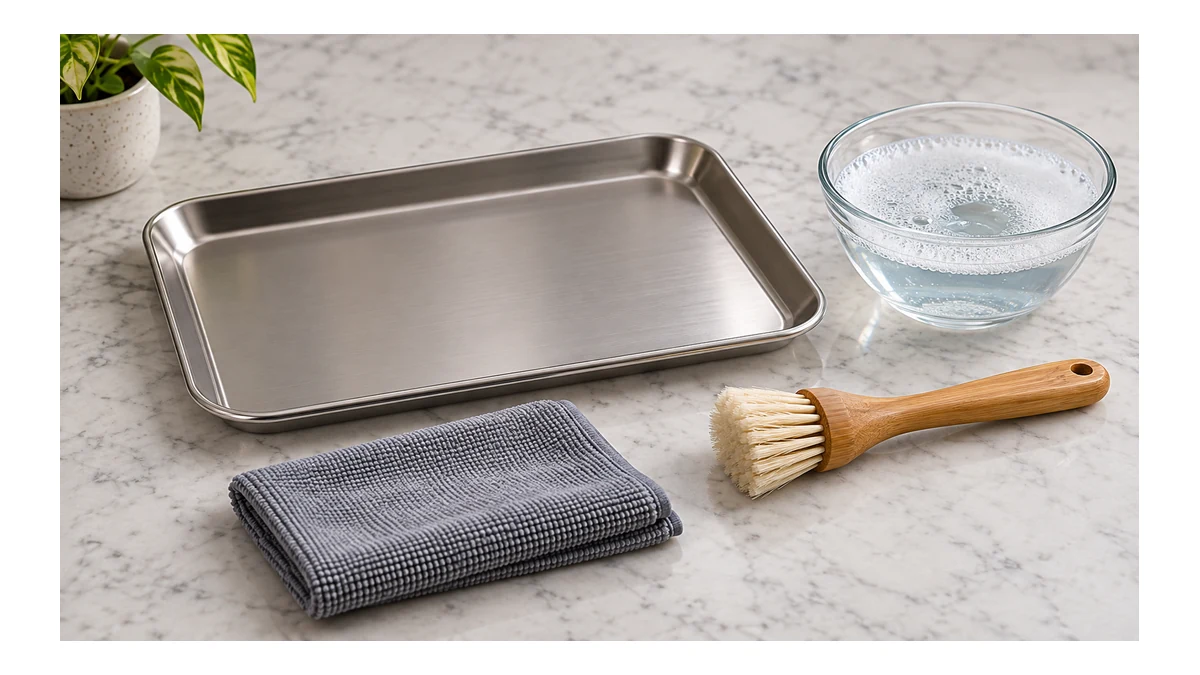
Cleanup approach should match the surface, not just the tray’s overall category. Coated surfaces — powder coat, paint, or anodized — are best cleaned with a soft cloth and mild soap, since abrasive pads or scouring powders can scratch through the coating and expose bare metal underneath, which then becomes a starting point for corrosion. Bare stainless or aluminum can tolerate slightly more scrubbing, but soaking raw steel for extended periods and leaving it wet is still worth avoiding, since standing moisture is one of the more common ways corrosion starts on metal that isn’t fully stainless-grade. foldable rolling tray guide Drying the tray promptly after washing, rather than air-drying with water left pooled in the corners or along the seam, avoids leaving behind the mineral spotting or early rust that shows up first at exactly those low points.
For anyone trying to identify what kind of tray they actually have on hand, a few quick checks cover most of what matters: a small magnet reveals whether the tray is stainless, and roughly what grade; comparing weight against a tray of known material narrows down steel versus aluminum; running a finger along the rim and any visible seam shows whether the tray is one-piece stamped or folded and joined; and a light press on the floor of the tray indicates gauge thickness by how much, if at all, it flexes. Together, these four checks are enough to identify the core material and construction of almost any metal tray without needing a manufacturer’s spec sheet.
⚖️ 5. 🧲 Metal Type and Surface Finish Are Different Questions
Stainless steel, bare aluminum, painted steel, and coated aluminum can all be sold as metal trays. The base metal influences weight, stiffness, magnet response, and dent behavior. The finish determines what touches the contents and how easily the surface releases residue. A glossy coating may wipe clean but show scratches; brushed stainless can hide marks while making fine debris more visible.
Inspect seams and rolled edges because those are where coatings, moisture, and debris tend to collect. A one-piece stamped tray usually has fewer joints than a folded box construction. If magnets are part of the layout, verify the actual metal response rather than assuming every metal tray is magnetic.
🧼 5.1. 📏 Edge Geometry Controls Recovery
Raised edges prevent material from sliding away, but square internal corners can trap fine particles. Broad radiused corners guide a card or brush smoothly. Very shallow trays are easy to reach across yet spill more easily when moved, while high walls can interfere with long tools. The useful height depends on how the tray is carried and cleared.
🔍 5.2. 🔊 Weight Changes the Everyday Experience
Thin metal can flex, ring loudly, and skate across a hard table. Added thickness or a non-slip base reduces movement, but attached pads create another cleaning boundary. A tray that feels substantial is not automatically more durable if the coating chips at a dent. Examine the complete construction, not weight alone.
🧲 5.3. 🧼 Cleaning Should Protect the Finish
Begin with the manufacturer’s finish guidance. Soft cloths and mild cleaning methods are less likely to scratch a coating than abrasive pads. Dry seams and rolled edges completely. If the surface develops flaking, sharp burrs, or exposed corrosion, appearance has become a material-condition problem rather than ordinary wear.