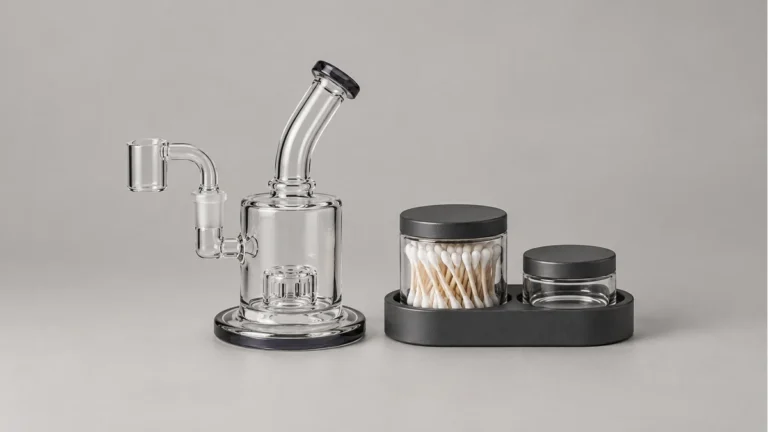
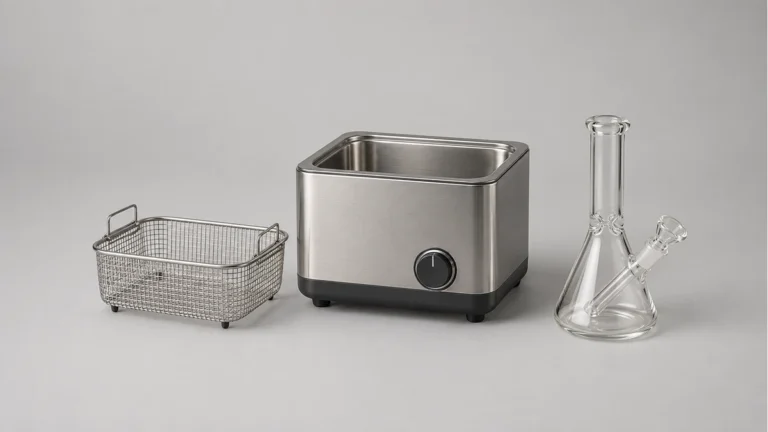
You’re at a friend’s place, borrowing their rig for a quick dab, and the water splashes up through the mouthpiece the second you pull too hard. Or maybe it’s the opposite: you bought a compact water nectar collector because someone online said water “smooths everything out,” and now you’re standing at the sink every single time, tipping out cloudy liquid and trying to get a pipe cleaner down a chamber that’s shaped like nothing you’ve ever cleaned before. Neither experience means water filtration is a bad idea. It means the chamber design, the fill level, and your actual routine matter more than the marketing copy ever suggested.
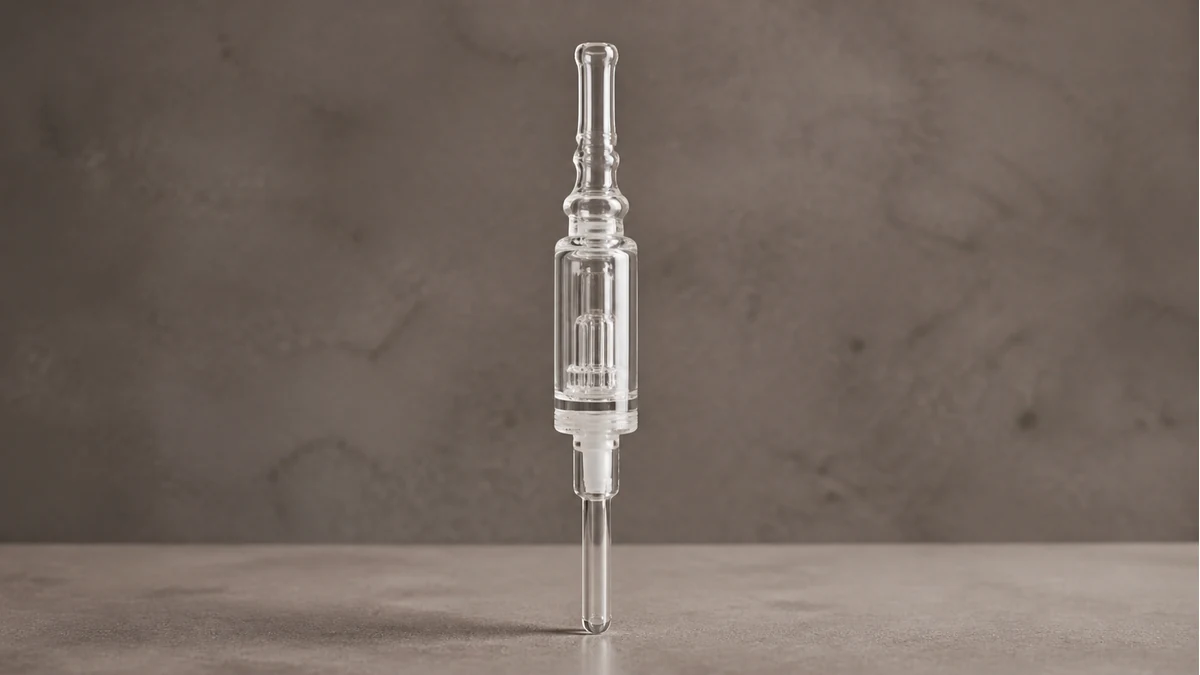
A water nectar collector isn’t a mysterious category. It’s a dab straw with a water-filled chamber built into the body, sitting between the heated tip and the mouthpiece. The water is there to cool and diffuse vapor before it reaches your mouth, the same job it does in a bubbler or a bong, just miniaturized into a handheld tube. That miniaturization is where the tradeoffs start.
💧 1. What Changes When You Add Water to a Nectar Collector
In a dry collector, vapor travels a short, straight path from the heated tip to your mouth. There’s nothing to cool it and nothing to filter it, which is exactly why dry collectors tend to hit hot and harsh compared to a full-size rig. Add a water chamber and vapor has to bubble through liquid before it continues up the tube. That contact drops the temperature and knocks out some of the harshness, which is the entire appeal.
The catch is that a nectar collector is small by definition. A water pipe can afford a wide chamber and a long neck because it sits on a table. A handheld collector has maybe two or three inches of body to work with, so the water chamber is compact, the air path is tight, and there’s very little room for vapor to expand and cool the way it would in a bigger piece. You get some of the benefit of filtration, but not the full effect people associate with rig hits.
💧 1.1 Diffusion Is Limited by Size, Not Just Water
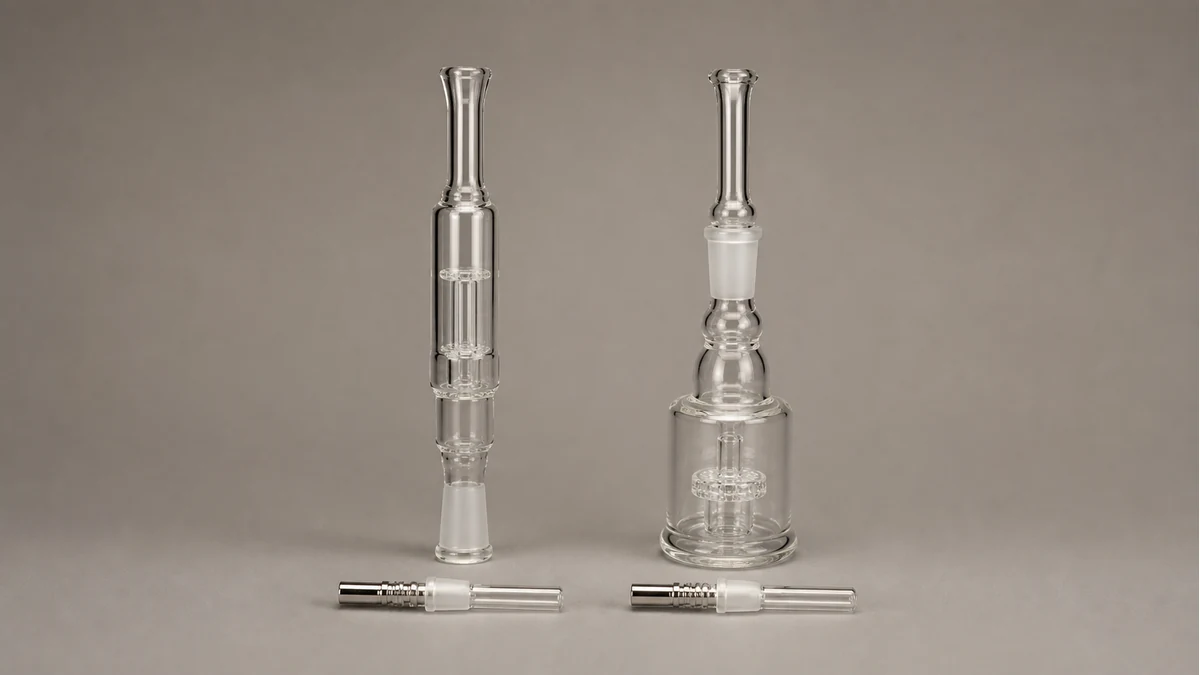
Some water nectar collectors add a percolator disc or a slitted downstem inside that small chamber to break vapor into smaller bubbles, which does more filtering per pass. It also adds another surface for resin and water residue to collect on, and another shape to scrub out by hand since these chambers are too narrow for most brush handles. The added filtration is real, but so is the added maintenance, and the two scale together.
⚖️ 2. Chamber Volume and Fill Level
Water volume in these devices isn’t a “more is better” situation. Underfill it and there’s no meaningful contact between vapor and water, so you’re basically running a dry collector with extra glass to clean. Overfill it and the water reaches the vapor path where it shouldn’t, and the first hard pull sends a mouthful of water straight up the tube.
Most chambers have a narrow window between those two states, and that window shrinks further once you tilt the collector even slightly, which happens constantly in normal use because you’re holding a lit torch in one hand and maneuvering the tip toward a dab in the other. A rig sitting flat on a table keeps its water level constant. A handheld tool doesn’t, and the water moves with every angle change.
⚖️ 2.1 Overfilling and Splashback
Splashback is the single most common complaint people run into with these devices, and it’s almost always a fill-level problem rather than a design flaw. The fix people land on eventually is filling to a mark well below what feels intuitive, then testing the draw before applying heat, since a wet pull with no vapor to disguise the water taste makes overfilling obvious immediately.
🚗 3. Spill Orientation and Travel Handling
A dry collector goes in a bag standing up, lying down, or upside down and nothing happens. A water-filled one is a small open container of liquid the moment you cap the tip, and most people learn this the hard way — a bag, a car cupholder, or a jacket pocket that ends up smelling like standing water. Some models include a silicone cap for the tip specifically to reduce this risk, but a cap on one end doesn’t seal a chamber that’s still open at the mouthpiece.
🚗 3.1 Setting It Down Between Hits
Even at home, a water nectar collector needs to be set down carefully between draws, kept upright, and not left on an uneven table. That’s a small habit to build, but it’s a real difference from a dry collector, which you can toss in a bag or a drawer without thinking about orientation at all. If portability and casual handling matter more to you than filtration, this is the tradeoff worth sitting with before you buy. Our silicone nectar collector guide covers builds designed around exactly this kind of rough handling, where a drop or a sideways bag doesn’t mean a cracked chamber.
🌬️ 4. Draw Resistance and Tip Clogging
Pulling vapor through water takes more effort than pulling it through open air, full stop. That resistance is part of why water nectar collectors feel different to draw on than dry ones — some people read it as a smoother, more deliberate hit, others read it as work. If you’ve ever struggled to get consistent airflow through a bubbler with too little draw, the same sensation shows up here in miniature, and it’s more noticeable on chambers with a diffuser or percolator adding restriction.
Clogging is a separate but related issue. Concentrate residue that would normally just sit in a dry tip has somewhere to go in a water chamber — down toward the water, into the downstem slits, or coating the inside of a narrow neck. Over repeated use that buildup narrows the air path further, which compounds the draw resistance you’re already dealing with. A quick water change and tip wipe after each session keeps this from accumulating, but it does mean the collector needs that attention regularly, not just when it’s visibly dirty.
🧽 5. Reclaim, Residue, and Cleaning Access
Every dab that goes through a water chamber leaves some concentrate behind in the liquid — this is functionally reclaim, the same leftover material collectors save from a rig’s chamber after repeated sessions. In a nectar collector, that reclaim mixes into water you’re dumping down the sink after one or two uses, whereas a dedicated rig setup often includes a reclaim catcher precisely so that material can be saved and reused rather than discarded. If you’re the kind of user who cares about not wasting concentrate, this is a real difference in favor of a bigger rig.
Cleaning access is the other half of the equation. A straight-tube dry collector cleans in one pass with a cotton swab or a splash of alcohol. A water chamber has curves, a downstem, sometimes a percolator, and all of it needs to be rinsed, then dried, then rinsed again if you’re using isopropyl alcohol and salt the way people clean glass pieces generally. None of this is difficult on its own, but it’s an added step that a dry collector simply doesn’t require, and skipping it for a few sessions is how residue turns into a stubborn ring that no longer comes out with a quick rinse.
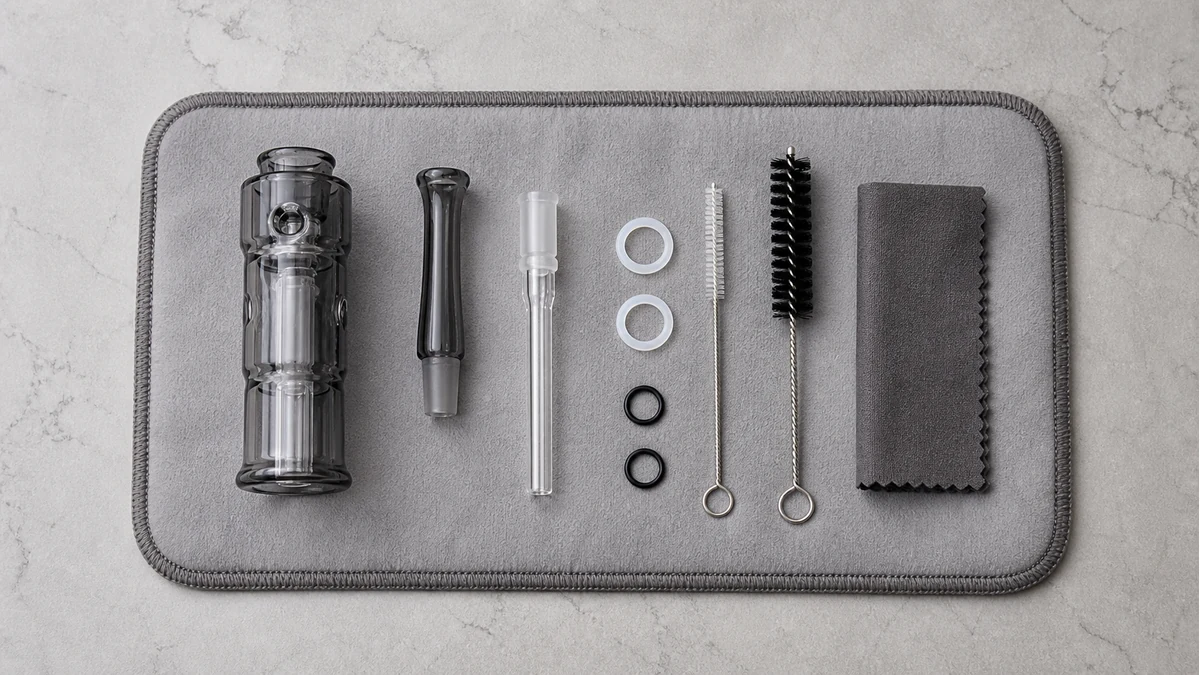
If you’re deciding what to buy in the first place, it’s worth reading through a full nectar collector kit guide before settling on water versus dry, since the kit contents — torch, tip material, included cleaning brush — affect how much upkeep you’re signing up for regardless of chamber type.
🔀 6. Dry Collector, Water Collector, or Small Rig
None of these three options is universally correct. They serve different habits, and it’s worth being honest about which habit actually describes you.
| Setup | Best for | Main tradeoff |
|---|---|---|
| Dry nectar collector | Quick, casual dabs; travel; minimal cleanup | Hotter, harsher hits with no filtration |
| Water nectar collector | Smoother hits without setting up a full rig | Fill-level fussiness, spill risk, more cleaning |
| Small rig with reclaim catcher | Home sessions where smoothness and saved reclaim matter | Not portable, more glass to manage overall |
If you’re mostly dabbing on the move, at a friend’s house, or in short sessions where setup time matters, the fill-level and spill issues of a water collector tend to outweigh the smoothness gain, and a dry collector or a well-chosen electric option makes more sense. Our comparison of an electric nectar collector versus a wax pen is a useful next read if portability is really the deciding factor rather than filtration.
If you’re dabbing at home regularly and already own a torch and a small collection of glass, a proper rig with a reclaim catcher will out-filter and out-clean a handheld water chamber every time, simply because it has the size to do the job properly. The water nectar collector sits in the middle: better than dry for smoothness, more demanding than dry for upkeep, and worth it mainly for people who want that middle ground specifically rather than either extreme.
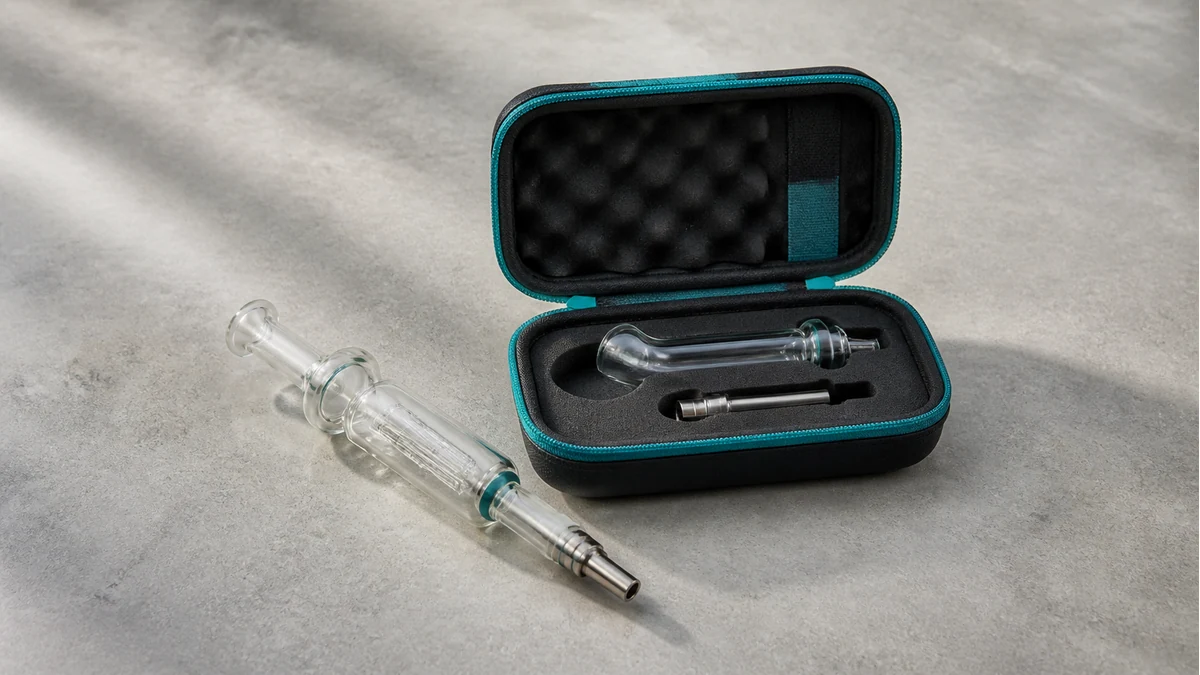
The draw test is the simplest way to separate useful filtration from needless resistance. With the collector cool and empty of material, add a small amount of water, keep the unit upright, and take a gentle test draw. You should hear water movement without pulling droplets toward the mouthpiece. If the draw feels heavy, remove a little water before assuming the airway is poorly designed. If it feels unrestricted but no bubbling occurs, confirm that the water actually covers the intended inlet. Exact levels vary by design, so the maker’s instructions remain the reference.
That small test also tells you something about ownership. A chamber that reaches its working level with little water is quick to empty, while a chamber with hidden corners may hold droplets after the visible water is gone. Before travel or storage, rotate the cooled, empty collector over a sink, allow trapped water to drain, and leave the separated parts to air-dry. Filtration is worthwhile when the added chamber improves the experience enough to justify those extra fill, rinse and drying steps.
❓ 7. Quick Questions
Does more water mean better filtration?
No. Past a certain fill level you’re just increasing splashback risk without adding meaningful cooling, since the chamber is too small to benefit from extra volume the way a full-size piece would.
Can I travel with a water nectar collector filled?
You can, but expect to manage orientation carefully and accept some risk of leakage. Emptying it before transport and refilling on arrival is the safer habit.
Is a water chamber worth it if I already have a dab rig at home?
Usually not for home use — the rig will filter better and clean easier. A water nectar collector earns its place when you want better-than-dry hits somewhere a full rig isn’t practical.
Water doesn’t automatically make a nectar collector better. It makes it smoother in exchange for more attention to fill level, orientation, and cleaning — a trade that’s worth making for some routines and not others. Know which one describes you before you buy, and the chamber design stops being a surprise and starts being a tool that actually fits how you dab.
📚 8. Sources and Reader Questions Reviewed
Technical statements were checked against the sources below. Reddit discussions were used only to identify reader questions and language, not as proof of technical, health, safety or legal claims.