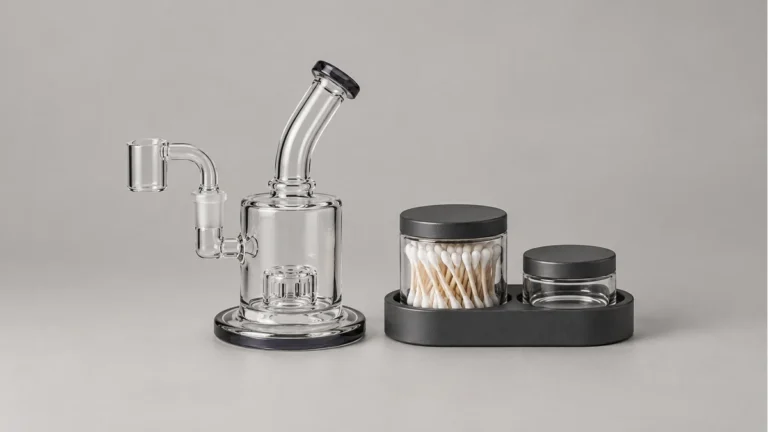
The phrase “one hitter dab pipe” shows up constantly in search queries, but it does not point to a single, agreed-upon product. Depending on where a shopper encounters it — a head shop display case, a marketplace listing, or a forum thread — the same three words can describe a small dry-herb pipe, a miniature concentrate hand pipe, a dab straw (sometimes called a nectar collector), or a battery-powered vaporizer built around a small chamber. This article is a hardware guide, not a shopping guide. It walks through what physically separates these devices — chamber design, heat source, material path, airway, mouthpiece, connector, and available documentation — so that the ambiguity in the name stops being confusing and starts being useful information about what to look for before buying or using anything.
🔍 1. Why “One-Hitter Dab Pipe” Describes Multiple Devices
“One-hitter” originally referred to a narrow dry-herb pipe sized for a single small load, meant to be consumed in one or two draws before the chamber is empty. “Dab” refers to concentrate consumption, historically tied to a heated surface (a “rig” or nail) rather than a bowl. When these two words are combined in a listing title, sellers are usually signaling small size and single-session capacity, not a specific mechanism. That is where the ambiguity comes from: the term borrows “one-hitter” for its size connotation and “dab” for its concentrate connotation, and different manufacturers apply that combined label to genuinely different hardware categories.
🧩 1.1 The Naming Overlap Between Categories
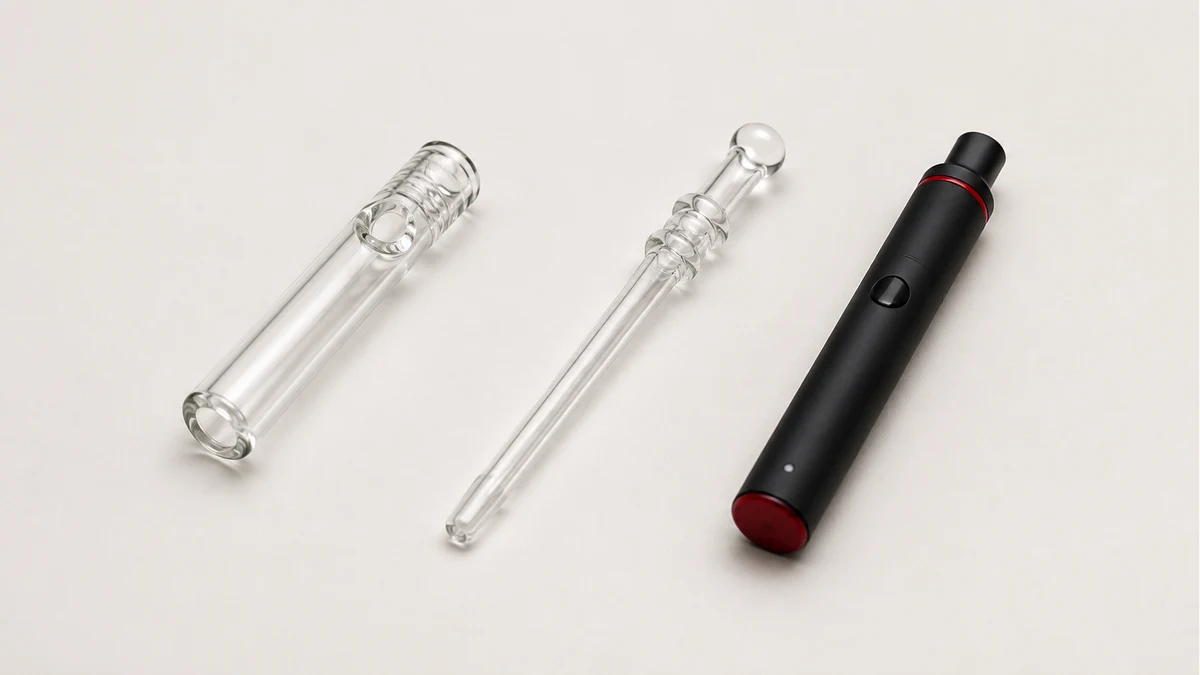
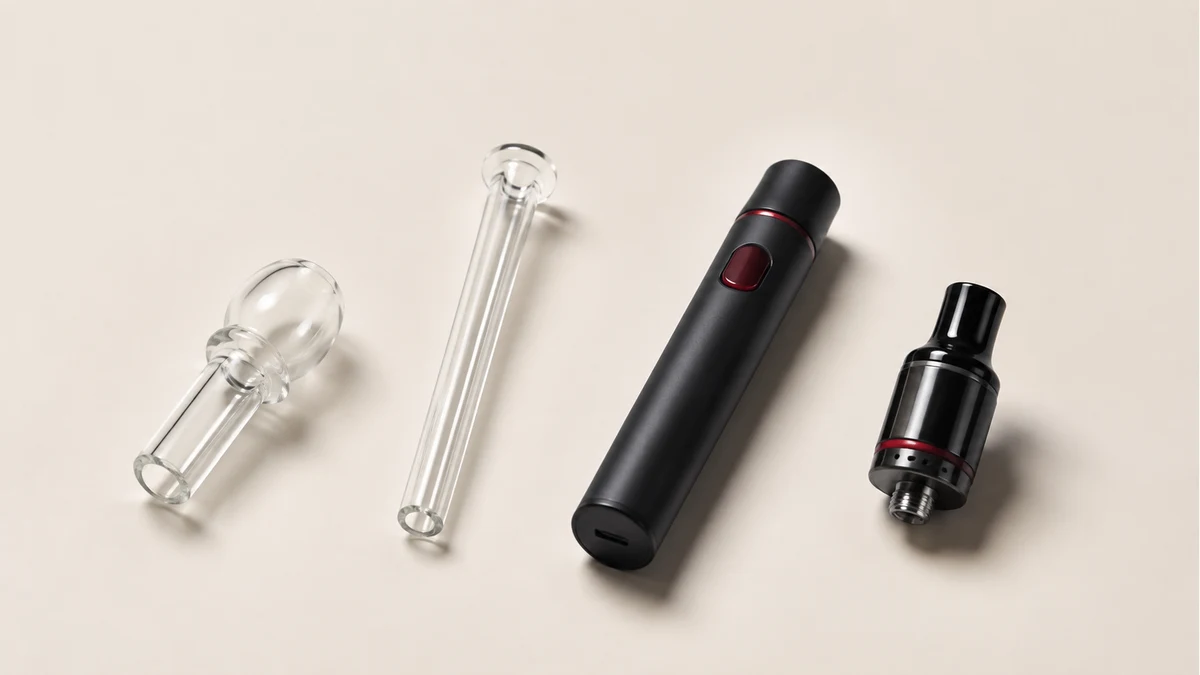
Four hardware families commonly get marketed under this phrase or a close variant:
- Small dry-herb one-hitters that were never designed for concentrates at all, but appear in “dab pipe” search results because of keyword overlap.
- Miniature concentrate hand pipes — small glass or metal pipes with a shallow bowl meant for a small amount of concentrate rather than flower.
- Dab straws and nectar collectors, which use a tip that contacts the concentrate directly rather than a bowl that holds it.
- One-hitter-style vaporizers, which replace an open flame with a battery-driven heating element inside a small housing.
None of these categories is more “correct” than the others; the label is simply imprecise. The rest of this guide treats each one as a distinct piece of hardware and compares them on physical terms.
🌿 2. The Flower One-Hitter: A Dry Herb Chamber
A traditional one-hitter is a narrow tube, typically glass, wood, or metal, with a small bowl-shaped chamber at one end sized for a pinch of dry material. It has no battery, no coil, and no connector for a separate attachment — the chamber, airway, and mouthpiece are usually one continuous piece.
🌱 2.1 Chamber and Airway Design
The chamber in a flower one-hitter is shallow and narrow by design, which is what gives the category its name — it holds roughly a single small load. The airway runs the length of the tube as a single channel, with no baffles, percolation, or filtration in most designs. Airflow resistance depends mostly on the tube’s internal diameter and length, both of which vary by manufacturer with no industry-wide standard.
🔥 2.2 Heat Source and Material Path
Flower one-hitters rely on an external flame applied directly to the packed chamber. The material path is short and direct: flame to chamber to airway to mouthpiece. There is no separate heating element built into the device, which is the clearest distinguishing feature versus the vaporizer category discussed later. Because the chamber material contacts an open flame, the pipe material itself (borosilicate glass, certain metals, or hardwoods) has to tolerate direct heat, which is a basic materials consideration independent of what is being smoked.
💎 3. Small Concentrate Pipes Sold Under the Same Name
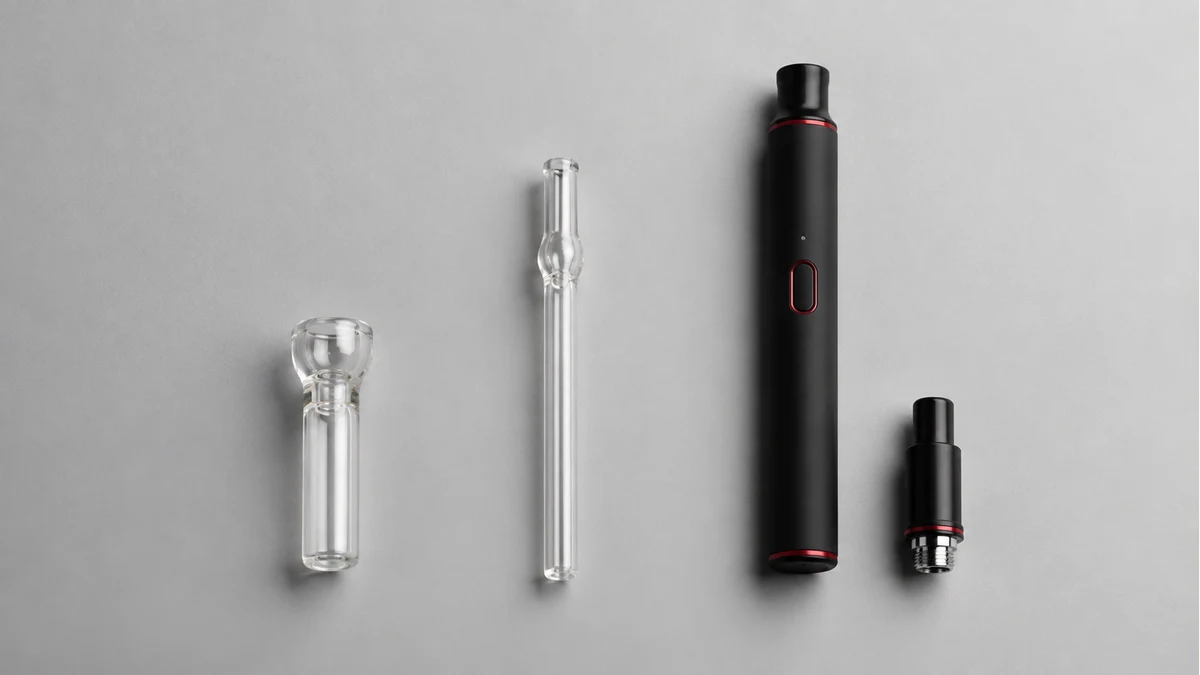
A second category, often marketed interchangeably with the flower one-hitter, is a scaled-down concentrate hand pipe. These look similar in silhouette — small, tube-like, portable — but the bowl geometry and material path differ enough that using one for the other’s intended material is not simply a matter of preference; it is a design mismatch.
🔬 3.1 Chamber Differences From Flower Pipes
Concentrate hand pipes typically have a shallower, flatter bowl or a small recessed surface rather than a deep bowl meant to hold loose plant material. Some include a small screen or dish insert. Because concentrates behave differently than ground flower under heat — they liquefy rather than combust as particulate — the chamber geometry is generally shallower to keep material centered on a smaller heated surface area.
📄 3.2 Material Path and Documentation Gaps
This is where labeling ambiguity creates real practical confusion. Listings frequently do not specify whether the bowl is intended for flower, concentrate, or both, and manufacturer documentation for inexpensive glass or metal pipes is often minimal or nonexistent. When a product page does not clearly state chamber intent, that absence of documentation is itself useful information — it means the buyer is relying on the seller’s photos and description rather than a manufacturer specification, and any assumption about intended material should be treated as unconfirmed.
🥤 4. Dab Straws and Nectar Collectors
The dab straw, more formally known as a nectar collector, is mechanically distinct from both categories above. Instead of a bowl that holds material while a flame is applied from outside, a nectar collector has a tip designed to be heated directly and then brought into contact with the concentrate, which is drawn up through the straw as vapor.
🌀 4.1 Airway and Connector Differences
A nectar collector’s airway runs through a straight or angled tube, usually with a water chamber or air-intake hole partway down the body to control draw. The connector at the working end is typically a removable tip, often threaded or friction-fit, which is the component that actually contacts the concentrate. This modularity — a replaceable tip attached to a fixed body — is a structural difference from the fixed, one-piece chamber of a flower one-hitter. For a step-by-step look at how this style of tool is generally used, see this nectar collector usage guide, and for a broader comparison of dabbing without a full rig setup, see this overview of taking a dab without a rig.
🔥 4.2 Heat Source Placement
The heat source in a traditional nectar collector is external — a torch or similar flame source applied to the tip before use — which places it closer to the flower one-hitter in terms of heat mechanism, even though the material path (tip-to-material contact rather than material-in-bowl) is completely different. Some newer nectar collector designs replace the torch-heated tip with a battery-powered heating element, which moves that specific product into the vaporizer category described next. This is a case where the product name (“nectar collector”) stays the same across two different heat mechanisms, so the heat source has to be checked independently of the name.
🔋 5. One-Hitter-Style Vaporizers
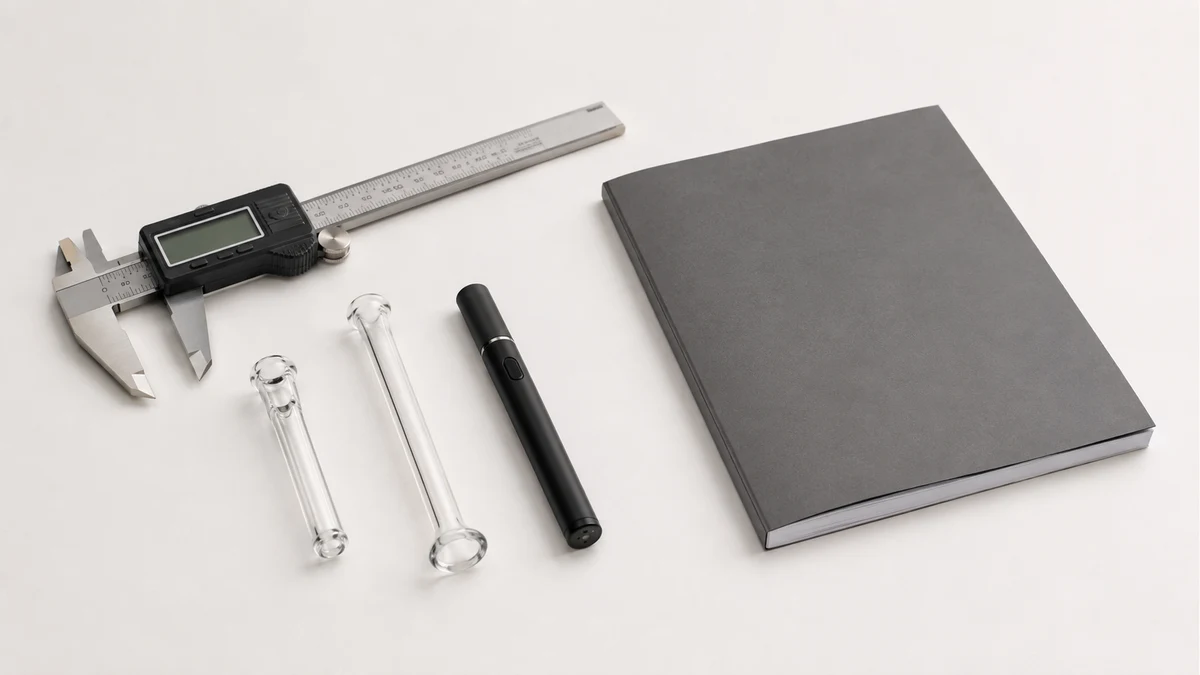
The fourth category replaces the open flame entirely with an internal heating element powered by a battery. These devices are sometimes marketed as “one-hitter vaporizers” or “dab pens” and can resemble the size and shape of a traditional one-hitter closely enough that the distinction is easy to miss from a photo alone.
⚡ 5.1 Heating Element vs Open Flame
The defining hardware difference is the heat source itself: a coil, ceramic element, or similar resistive heater inside the chamber, activated by a button or draw sensor, rather than an external flame. This changes several downstream design choices — the chamber has to accommodate wiring or a heating coil, the body needs room for a battery, and there is typically a charging port or replaceable battery compartment that has no equivalent in a flame-based pipe.
🧷 5.2 Mouthpiece and Chamber Sealing
Because a vaporizer chamber is enclosed around an electrical component, the mouthpiece and chamber seal are usually more deliberately engineered than an open-ended glass tube — often with a removable mouthpiece, a gasket or O-ring, and a chamber that is meant to be closed during heating rather than open to ambient air throughout use. Buyers trying to distinguish this category from a simple hand pipe can look for exactly these features: a battery compartment, a charging port, and a sealed rather than fully open chamber. For a broader breakdown of vaporizer components and terminology, the parts of a vape guide covers naming conventions for chambers, mouthpieces, and connectors in more detail than is practical here.
📋 6. Comparing Chamber, Heat Source, and Airway Across Types
The table below summarizes the structural differences discussed above. Dimensions and materials are not standardized across manufacturers, so this is a comparison of general design patterns rather than fixed specifications.
| Device Type | Chamber | Heat Source | Material Path | Mouthpiece / Connector |
|---|---|---|---|---|
| Flower one-hitter | Small open bowl, fixed | External flame | Direct: flame to bowl to airway | Integrated, single-piece tube |
| Small concentrate pipe | Shallow bowl or dish, fixed | External flame | Direct: flame to shallow surface to airway | Integrated, single-piece tube |
| Dab straw / nectar collector | No bowl; tip contacts material externally | External flame (traditional) or internal element (some newer designs) | Tip draws vapor upward through straw body | Removable/threaded tip, straw mouthpiece |
| One-hitter-style vaporizer | Small enclosed chamber | Internal battery-powered heating element | Chamber to internal airway to mouthpiece | Removable mouthpiece, sealed chamber, charging port |
❓ 7. Common Questions About Small Chamber Hardware
Search and forum activity around this keyword tends to cluster around a few recurring questions. The patterns below reflect what people commonly ask about, without treating any single anecdote as a technical standard.
💬 7.1 Confusion Between Smoking and Vaporizing Terminology
A frequent point of confusion is that “pipe” and “vaporizer” get used loosely, even by sellers, so a listing titled “dab pipe” may in fact describe a battery-powered device with no flame involved at all. The only reliable way to resolve this is to check for the presence of a battery compartment, charging port, or button — features that are absent from every flame-based design regardless of size. If a listing does not show or mention any of these, it is reasonable to assume the device is flame-based, though that assumption should be confirmed against the actual product description rather than the title alone.
🧳 7.2 Pocketable Form and Improvised Assemblies
Because all four categories above are marketed on their small, pocketable size, another common question is whether a compact pipe and a small vaporizer are functionally interchangeable, or whether components from one type can be adapted to work with another. This article does not provide guidance on modifying, combining, or improvising hardware assemblies — that falls outside what can be verified as safe or accurate without manufacturer documentation, and compatibility between parts from different product lines is not something that can be generalized. Anyone considering combining components from different devices should refer to the specific manufacturer’s documentation for that hardware rather than general assumptions based on visual similarity.
🗂️ 8. Reading Documentation Before Assuming a Device’s Category
The throughline across every section above is that the name on a listing is not a reliable guide to the hardware inside the box. A “one hitter dab pipe” could be a flame-heated glass tube, a small concentrate bowl, a straw-style collector, or a battery-powered vaporizer, and each of those has a different chamber shape, heat source, material path, and connector. Where manufacturer documentation is available — spec sheets, listed battery capacity, stated chamber material, or explicit statements about intended material — that documentation should take priority over the product name or category label. Where documentation is missing, as is common with inexpensive glass and metal pipes, that absence is worth noting explicitly rather than filled in with assumptions.
Practically, this means the most useful question to ask about any device carrying this label is not “what is it called,” but “what does the chamber look like, what heats it, and is there a battery.” Those three questions alone are usually enough to sort a given product into one of the four categories described here, independent of how it happens to be marketed.