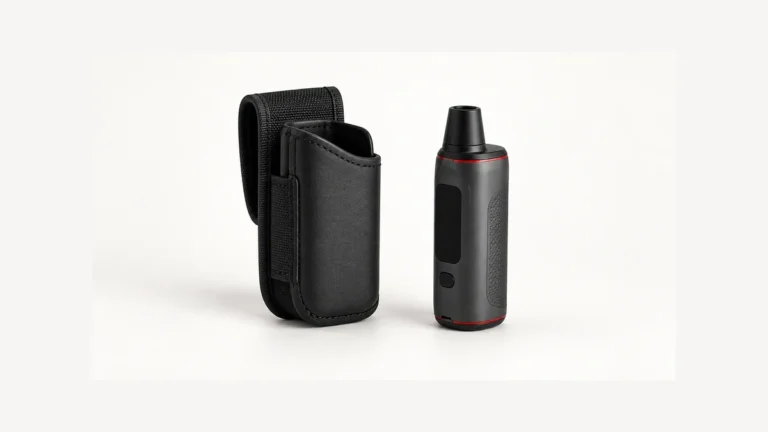
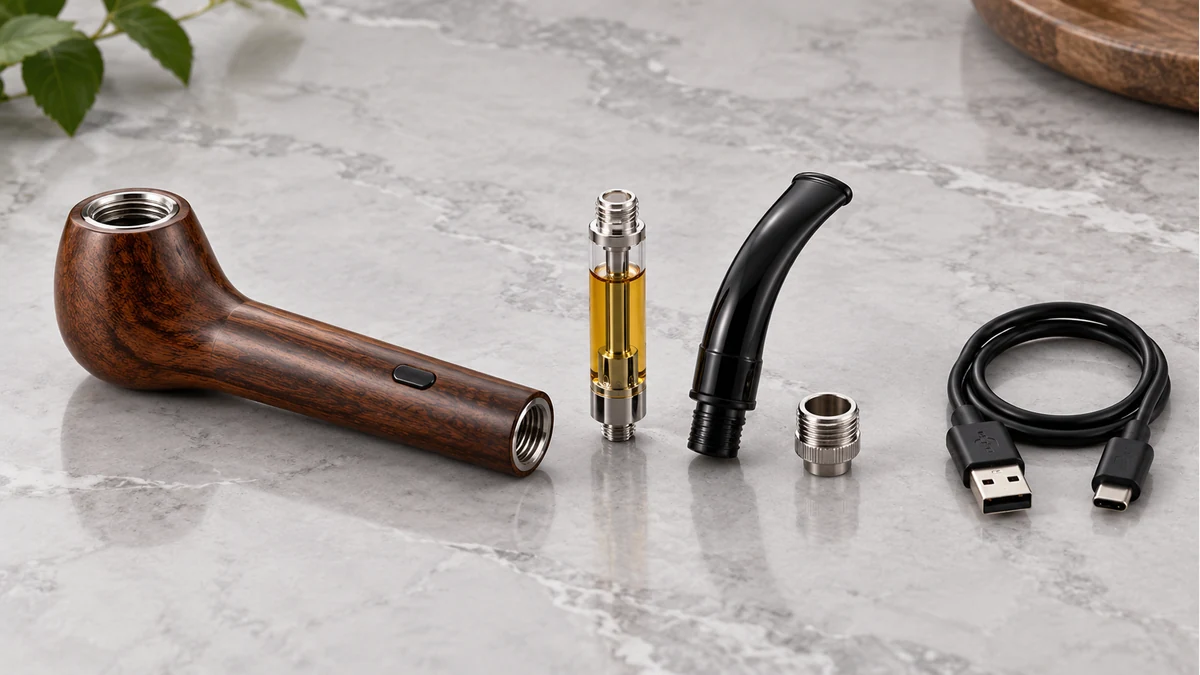
Scroll through enough 510 battery discussions and you’ll hit the same confusion more than once: someone finds a bowl-shaped device marketed as a “Sherlock” or pipe-style battery, and they genuinely can’t tell whether it’s a cartridge battery that happens to look like a pipe, or a pipe that happens to use a 510 cartridge, or something else entirely with no cartridge compatibility at all. The confusion is reasonable. A straight pen-style 510 battery telegraphs its own function — tube, button, threaded top, done. A pipe-shaped body hides the same parts inside a silhouette borrowed from a completely different object category, and that visual borrowing is exactly where the questions start.
The short answer is that “pipe-shaped” describes the housing, not the heating method. A pipe-style 510 battery is still a 510 battery: same threaded connector, same cartridge compatibility, same basic electronics. What changes is how those parts are arranged inside a bowl-and-stem shape instead of a straight tube, and that rearrangement has real, physical consequences for grip, balance, connector angle, airflow, and how you access the cartridge for service. None of that changes what’s heating the material — it changes how the device feels and behaves in your hand.

🧭 1. Why the Pipe Silhouette Changes How the Battery Sits in Your Hand
📐 1.1. Bowl Weight and Palm Contact
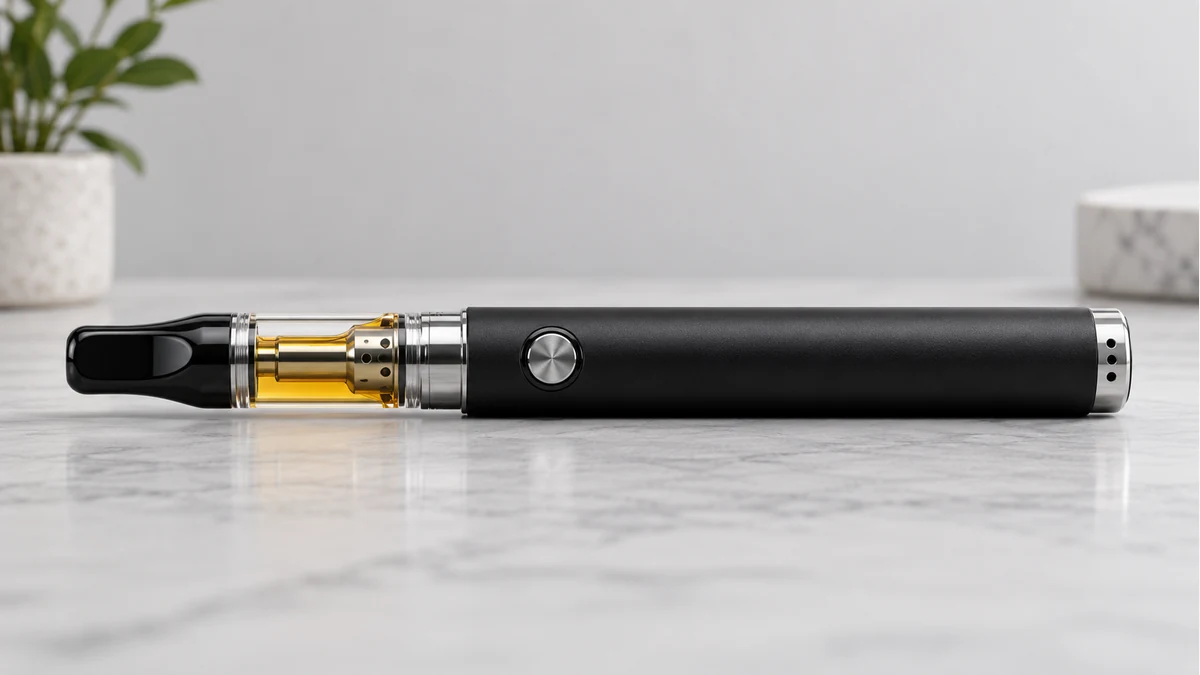
A standard pen battery distributes its mass evenly along a cylinder you grip like a pen or a small flashlight. A pipe-style body concentrates most of its mass in the bowl — the rounded bulb where the cartridge and connector sit — while the stem and mouthpiece extend outward with comparatively little weight. That shifts the center of mass away from your fingers and toward your palm or the base of your hand, depending on how you cradle it.
This is why people who are used to pen batteries sometimes describe pipe-style devices as feeling “front-heavy” or “top-heavy” even when the actual battery cell inside is small. The sensation isn’t about total weight; it’s about where that weight sits relative to your grip point.
🔍 1.2. Stem Angle and Wrist Position
Pen batteries are drawn on in roughly the same line as the hand holding them — wrist neutral, mouthpiece pointed away from the face at a shallow angle. A pipe shape introduces a bend between the bowl and the mouthpiece, which means the hand holding the bowl and the mouth receiving the draw are no longer on the same axis. Depending on the curve, the wrist has to rotate or the elbow has to lift slightly to bring the mouthpiece to a comfortable angle. This is a direct, mechanical consequence of the bent stem, not a quirk of any particular product.
🧩 2. Connector Orientation Inside a Bent Body
⚙️ 2.1. Threading Angle vs. a Straight Pull
On a pen battery, the 510 connector sits at the very top of a straight tube, and the cartridge threads on in a direct line with the body below it. Pulling the cartridge off is a straight, axial motion — unscrew, lift, done. In a pipe-style housing, the connector is usually recessed into the bowl, and the bowl itself may sit at an angle relative to the stem. The threading motion is still rotational, but the clearance around the connector is shaped by the bowl’s curve, which can make the first few turns feel tighter or looser than people expect coming from a straight device.
This is the root of a lot of the “will a standard cartridge even fit in this thing” questions that show up in hardware discussions. The thread pitch and connector spec haven’t changed — it’s the surrounding housing geometry that makes insertion feel different.
For related context, see the 510 box-mod cartridge guide.
🔩 2.2. Connector Wear Patterns Unique to the Shape
Because the bowl concentrates handling stress at one end rather than distributing it along a tube, the connector threads on a pipe-style device tend to see more off-axis torque over time — small sideways twists from gripping the bowl while turning a cartridge, rather than a clean straight-on rotation. That’s a reasonable argument for threading cartridges on and off gently and checking the connector periodically for debris or residue, the same basic maintenance any 510 threading benefits from, just slightly more relevant given the geometry.
🌬️ 3. Where the Electronics Actually Live
🔋 3.1. Button, Chip, and LED Placement
A pen battery has one obvious place to put a button: the side of the tube, within thumb reach while gripping. A pipe-style bowl doesn’t have that same long, flat surface, so manufacturers place the button wherever the bowl’s curvature allows a comfortable thumb reach — often lower on the bowl, sometimes on a flattened panel built into an otherwise round shape. The chip and any status LED follow the button, since they’re wired together as a unit. None of this changes what the chip does; it just changes where your thumb has to travel to reach it, which is worth noting the first time you pick one up so you’re not hunting for a control that’s in an unfamiliar spot.
🔌 3.2. Charging Port Position
Charging ports on pipe-style batteries are usually placed on the base of the bowl, mirroring where a pen battery would put its port at the bottom of the tube. The difference is that the bowl’s rounded base means the device may not sit flat on its own while charging, so some people prop it against something or lay it on its side. That’s a practical consequence of the shape, not a defect — a round-bottomed bowl was never going to stand upright like a flat-bottomed tube.
🧼 4. Airflow Through a Bent Path
Airflow in a pen battery travels in a straight line from the cartridge’s base, through the connector, up the tube, and out the mouthpiece. A pipe shape bends that path at least once, and sometimes twice, depending on how the stem curves between the bowl and the mouthpiece. A bent air path doesn’t add resistance in the way a kinked straw might, since the internal channel is still a fixed, smooth bore — but it does mean the draw can feel different in terms of how airflow interacts with condensation or residue that collects at the bend, since gravity and airflow aren’t working along the same straight line anymore.
This is also why some pipe-style devices feel like they need a firmer draw than an equivalent pen battery: the curve itself doesn’t restrict airflow by design, but any buildup at the bend narrows the effective channel faster than it would along a straight tube, which is a maintenance point worth knowing rather than a flaw in the shape.
🧪 5. Service Access: Getting the Cartridge In and Out
📏 5.1. Opening the Bowl
On a pen battery, the cartridge is right there at the top — nothing to open, nothing to unscrew except the cartridge itself. Many pipe-style designs enclose the connector inside the bowl, which means swapping a cartridge involves accessing a chamber rather than just spinning something off the top of a tube. Depending on the specific design, that chamber might be a snap-open bowl cap, a magnetic cover, or a cartridge well you drop the cartridge straight into before closing the bowl around it. The practical takeaway is to actually look at how your specific bowl opens before forcing anything, since the mechanism isn’t always obvious just from the outside shape.
🛠️ 5.2. Cleaning a Curved Channel
Straight tubes are easy to clean with a swab run straight through. A bent stem resists that kind of straight-line cleaning, since a rigid swab can’t follow a curve. People handling pipe-style hardware generally need a flexible cleaning tool, or need to clean from both ends of the bend toward the middle, to reach the areas where residue is most likely to collect. This is a direct consequence of the bent air path discussed above, and it’s the main maintenance difference between pipe-style and pen-style 510 hardware.
For related context, see the side-by-side 510 battery guide.
📋 6. Pen-Style vs. Pipe-Style: What Actually Changes
It helps to separate what the shape changes from what it leaves untouched. The table below lines up the two silhouettes on the points that actually differ in practice.
| Feature | Pen-Style 510 Battery | Pipe-Style 510 Battery |
|---|---|---|
| Connector type | Standard 510 thread | Standard 510 thread |
| Weight distribution | Even along the tube | Concentrated in the bowl |
| Draw axis | In line with the grip | Offset by the stem bend |
| Airflow path | Straight | Curved, one or more bends |
| Cartridge access | Direct, top of tube | Through a bowl chamber or cap |
| Cleaning method | Straight swab | Flexible tool, cleaned from both ends |
| Charging port orientation | Flat base, stands upright | Rounded base, may need support |
✅ 7. Shape Is Not a Heating Category
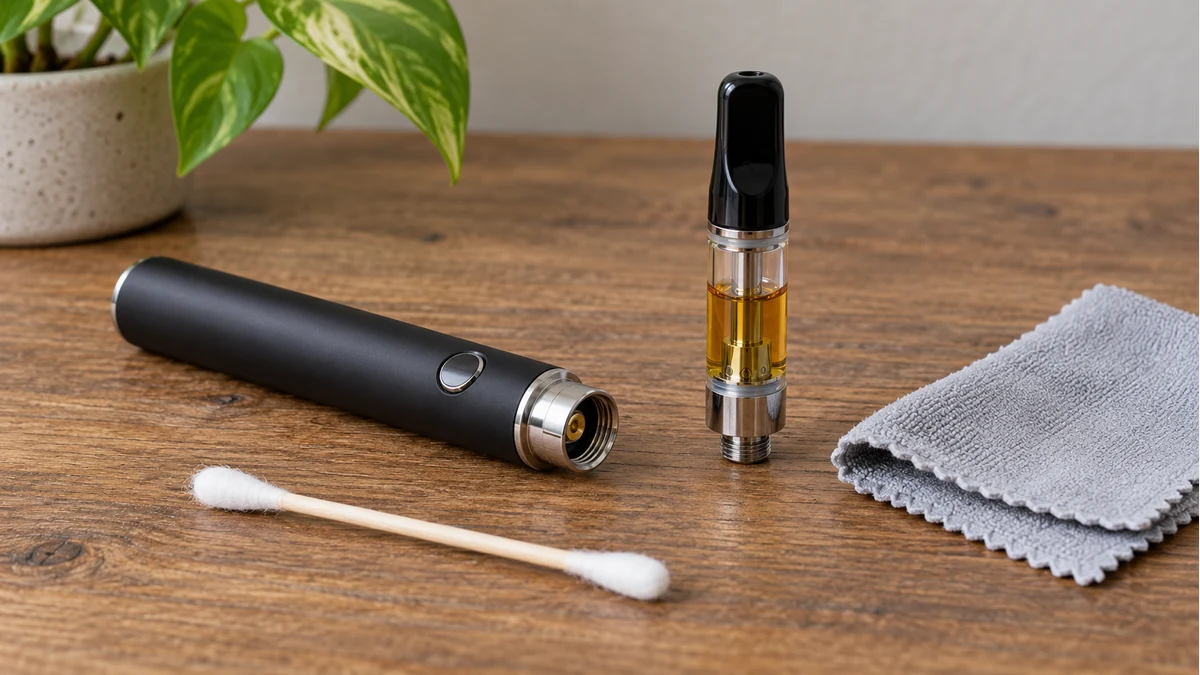
One thread of confusion that comes up in hardware discussions involves mechanical mods built into a pipe shape — devices with no chip, no regulated output, and no button in the usual sense, just a direct mechanical connection between the battery and the connector. The existence of mechanical pipe-shaped devices sometimes leads people to assume that “pipe-shaped” implies “mechanical” or implies some particular style of atomizer. It doesn’t. The bowl-and-stem silhouette is a housing choice that can wrap around a simple mechanical circuit or a fully regulated chip with a screen and button, exactly the way a pen-style tube can house either kind of internals.
The same logic applies to cartridge compatibility. A pipe shape doesn’t predict whether the connector underneath is a standard 510 thread or something proprietary — that’s determined by the connector spec, not the housing silhouette. The only reliable way to know what you’re dealing with is to look directly at the connector and any printed specs on the device itself, rather than inferring function from shape.
For related context, see the flip 510 battery guide.
If you’re trying to identify a piece of pipe-shaped hardware, work from the connector outward rather than the silhouette inward: confirm the thread type at the cartridge interface first, then check whether there’s a button and LED (regulated) or a bare metal contact with no electronics (mechanical), then note where the charging port and bowl-opening mechanism are located. Those four checks tell you everything the shape itself can’t — and they’re the same checks that apply whether the device in front of you looks like a pipe, a pen, or anything in between.
💡 8. Documentation Beats Visual Similarity
Product photographs can establish the broad hardware category, but they cannot confirm dimensions, electrical limits, or internal construction. A reliable comparison uses the model manual, a dimensional drawing, and the maker’s stated compatibility list. The 510 label describes a common connection pattern; it does not guarantee identical depth, airflow, contact travel, or load requirements.
🧲 8.1. Record the Physical Interface
Before changing parts, note the connector condition, exposed cartridge diameter, installed height, control state, and charging-port type. These observations separate a fit problem from a power or maintenance problem. They also make support conversations specific instead of relying on a generic product name.
⚖️ 8.2. Keep Claims Within What the Hardware Shows
A material name, indicator light, or familiar silhouette is only one clue. It should not be expanded into an unsupported claim about performance, purity, battery health, or service life. When documentation is missing, state the uncertainty and compare only observable construction.
🔎 9. A Practical Inspection Sequence
Start with the device powered off and disconnected from charging. Inspect the threads and center contact for debris, check that the cartridge or atomizer seats without force, and confirm that air openings remain unobstructed. Reassemble finger-tight rather than using the battery body as a lever.
Next, use the documented controls and indicator meanings for that exact model. If the observed light or screen behavior conflicts with the manual, stop and verify the cartridge and cable separately instead of repeatedly activating the device. A repeatable sequence preserves the evidence needed to identify which interface is actually involved.