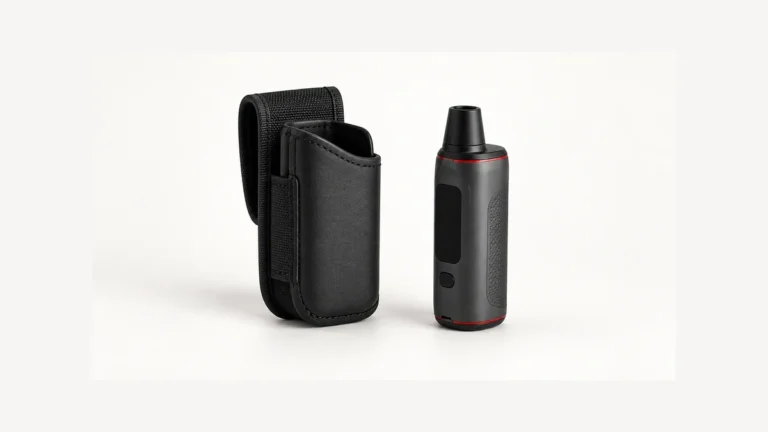
Someone shopping for a replacement atomizer head often types “sand quartz atomizer” into a search bar expecting one specific, recognizable product. What comes back instead is a mix of coil-wrapped rods, open dishes, deep cups, and hybrid ceramic-and-quartz assemblies, all tagged with some version of the same two words. That mismatch is the first clue that “sand quartz” is not a complete technical specification. It describes a raw material family, not a shape, a coil count, or a wiring layout.
The confusion becomes obvious the moment two pens are compared side by side. One might use a coil tucked inside an enclosed chamber; another might use an open heating surface visible from above. Both can be marketed with nearly identical material language, even though how the coil contacts the material, how much surface area is exposed, and how heat reaches the airflow path are separate design decisions layered on top of the material choice. None of that is visible from a listing title.
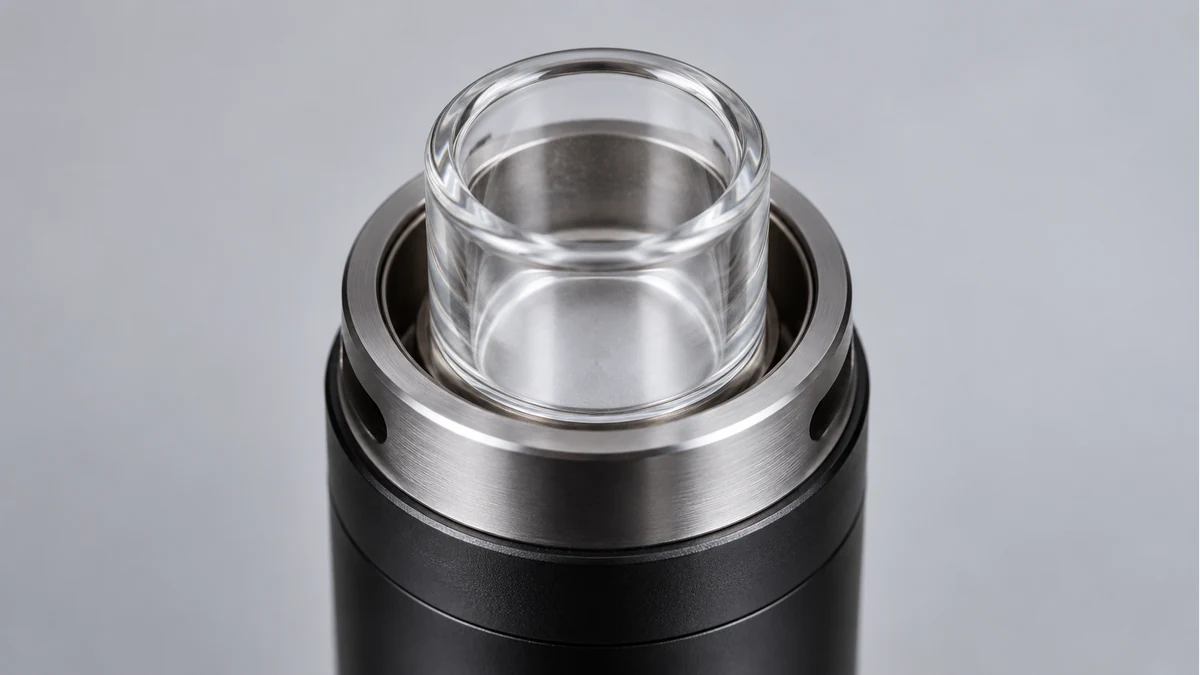
This guide treats “sand quartz” as a starting point rather than an answer. Below is a walk-through of the hardware decisions that actually determine how an atomizer heats, how it fits a device, and how it ages — the details that matter when identifying a replacement part or understanding why two “quartz” atomizers can behave very differently.
🧭 1. Quartz Surfaces, Cups, and Rods Are Three Different Builds
The word “quartz” in a product description can refer to at least three structurally different components, and mixing them up is a common source of fit problems when ordering a replacement part.
📐 1.1. Surface Quartz: A Thin Layer Around a Coil
In many wax pen atomizers, the quartz is a thin tube or sleeve that a wire coil is wrapped around. Here, the material’s job is mostly structural — it holds the coil’s shape and gives it something stable to sit on inside the chamber. The coil itself, not the surrounding quartz, is doing most of the direct heating. Someone comparing two “quad coil” style heads is usually comparing coil geometry and wire placement far more than they are comparing the quartz wrap itself, even though the listing may lead with the material name.
🔍 1.2. Quartz Cups and Buckets
A second common build uses a quartz cup or bucket shape, where the coil sits at the bottom or along the inner wall of a small open or semi-open vessel. This geometry exposes more of the heating surface directly, which changes how material sitting inside the cup makes contact with the heated element compared to a wrapped-rod design. Cup-style atomizers tend to look visually distinct from rod designs even when both are described with the same “quartz” language, which is part of why listing photos matter more than listing text.
🧩 1.3. Quartz Rods and Dual-Rod Configurations
A third build uses one or two solid quartz rods positioned close together, sometimes with a coil wrapped around each rod separately. Dual-rod setups are often marketed as a distinct tier from single-coil or cup designs, but the underlying material is still the same category of quartz. The functional difference comes from how many separate heating zones exist and how they’re spaced, not from a different grade of material.
| Build type | What quartz does here | Visual cue |
|---|---|---|
| Surface/wrap quartz | Structural support for the coil | Enclosed tube, coil visible through or around it |
| Cup/bucket quartz | Open or semi-open heating chamber | Bowl-like recess, coil at base or wall |
| Rod quartz | Separate heating zone per rod | One or two cylindrical posts, coil wrapped per rod |
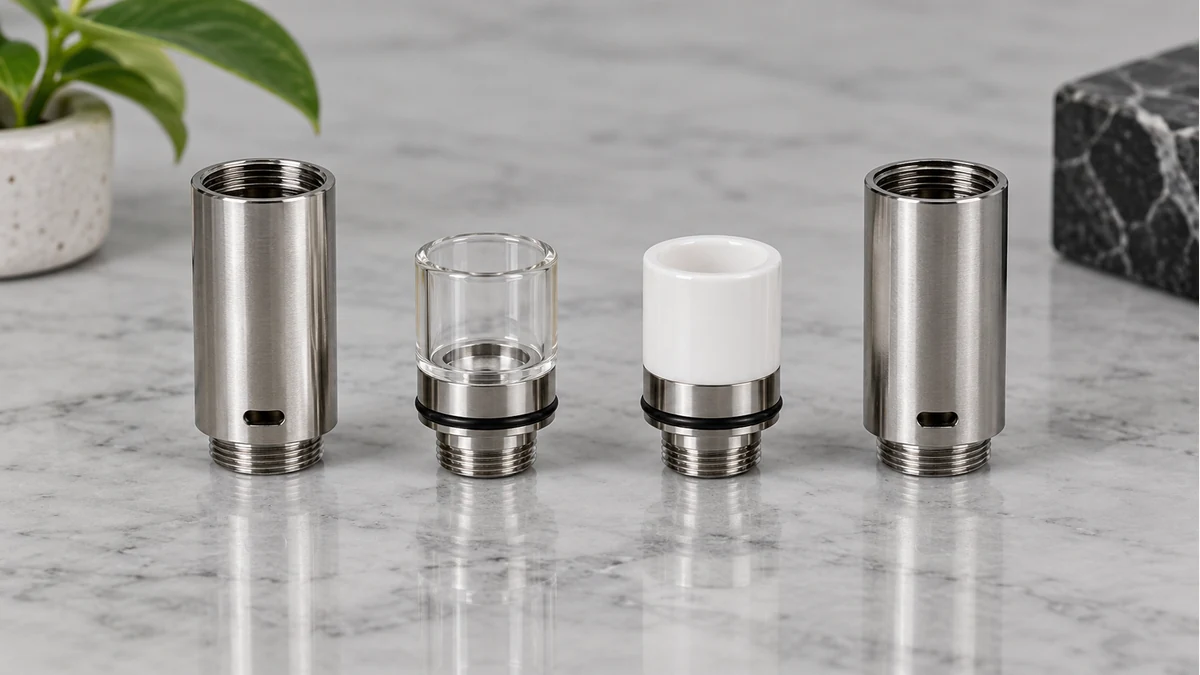
⚙️ 2. Coil Placement, Electrical Load, and Why “Quad Coil” Confuses People
Coil count is often the part of a listing that gets the most attention, but it’s a separate variable from the quartz itself. A quad coil design places four separate coil windings around or through a heating element instead of one or two. The appeal is usually faster heat-up and more even contact across the surface, since four smaller coils can be distributed more widely than a single larger one.
The tradeoff is that more coils sharing a chamber means the electrical load is split differently, and the device’s battery and chipset need to be matched to that load. A battery designed around a single-coil atomizer isn’t necessarily built to drive a quad-coil head the same way, which is one reason some pen-and-atomizer combinations feel underpowered even though both pieces are technically compatible by thread and voltage range. Mismatched expectations about heat-up speed or output often trace back to this coil-count and load relationship rather than to the quartz material itself.
This is also where confusion about “better” hardware tends to start. More coils is not automatically an upgrade — it changes the heating pattern and the electrical demand, and whether that suits a given device or chamber size depends on the rest of the build, not on the coil count in isolation.
🔩 3. Airflow Paths and Why Two Quartz Atomizers Can Hit Differently
Airflow is the part of the design that’s easiest to overlook because it’s rarely mentioned in a product title at all. The path air takes from the mouthpiece, through or around the heating chamber, and out through the base determines how much of the vapor produced actually reaches the user versus condensing inside the chamber.
An open cup design draws air differently than an enclosed rod design wrapped in a sealed tube, even if both use quartz and even if both use a similar coil count. A narrow airflow channel paired with a cup-style chamber can feel noticeably different in draw resistance than a wider channel paired with an enclosed rod — and that difference has nothing to do with the material grade, only with the geometry around it.
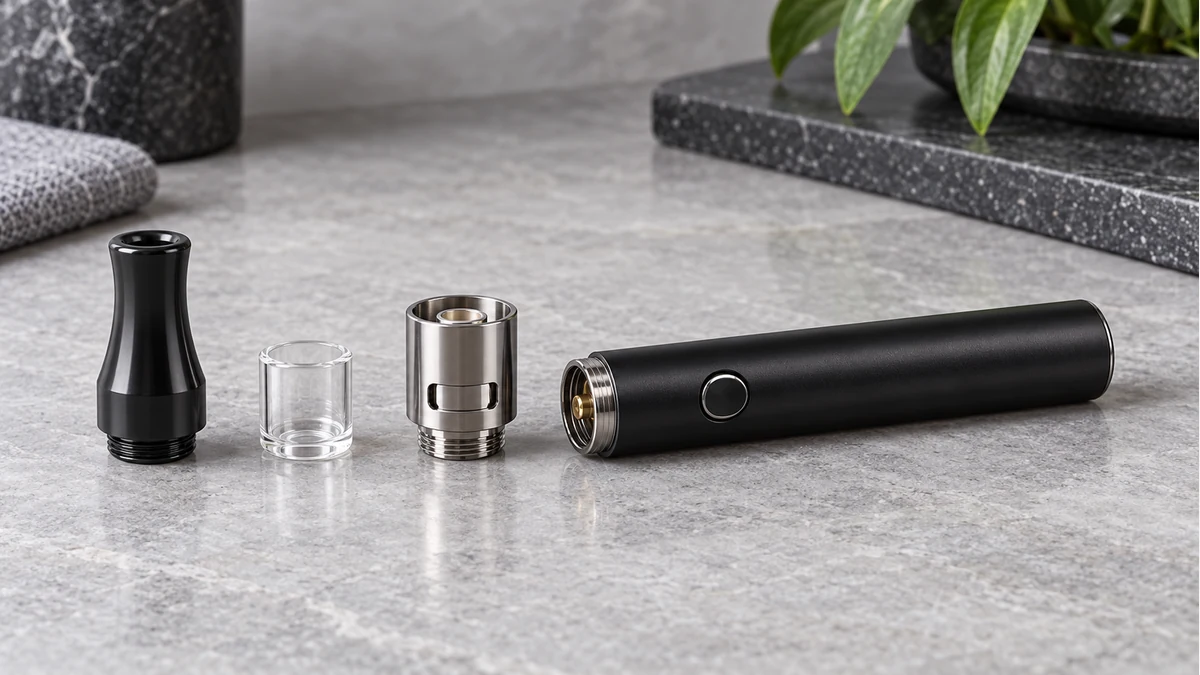
This is also where compact, refillable pen-style devices and larger dab-style devices diverge the most. A compact pen with a narrow bore and small chamber is optimized for portability and controlled draw, while a larger device with a wide-open chamber is optimized for airflow volume. Describing either one primarily by its quartz content skips over the variable that most directly shapes the actual experience of using it.
For readers comparing airflow-related terminology across device categories, a broader breakdown of chamber and mouthpiece design is covered in
For related context, see the quartz coil and ceramic comparison.
.
🌬️ 4. Residue, Discoloration, and What It Does (and Doesn’t) Tell You
Quartz is valued partly because it’s easy to see through, which means buildup and discoloration are visible in a way they aren’t with opaque materials. Over repeated use, a coil or cup can pick up residue that darkens the surface or leaves a visible film. It’s tempting to read that discoloration as a sign of quality or a sign of damage, but on its own it mostly indicates accumulated use, not a defect.
Where it does matter is in diagnosing a real performance change. If heating feels noticeably slower or less even than when the part was new, and the surface is visibly coated, buildup is a reasonable first thing to rule out before assuming the coil itself has failed. Cleaning practices and their limits are outside the scope of a hardware-identification guide, but the key distinction is: discoloration is cosmetic evidence of use, while an actual change in heat-up time or draw resistance is functional evidence worth investigating further.
It’s also worth separating residue from structural wear. A coil that has genuinely degraded — thinning wire, a loose wrap, a cracked quartz rod — is a different problem from a surface that’s simply discolored. Visual inspection under light, rotating the part to check for cracks along the rod or cup wall, is a more reliable check than color alone.
🔋 5. Replacement-Part Fit: Threading, Diameter, and Lead Length
Once the build type (surface, cup, or rod) and coil count are identified, the remaining variable for a successful replacement is physical fit. Three measurements matter most, and none of them are implied by the word “quartz”:
- Thread type and diameter — the connection point between the atomizer and the battery or mod housing. A part can be the correct material and coil style and still fail to seat if the threading doesn’t match.
- Overall height and chamber depth — relevant when the atomizer sits inside a surrounding housing or cap, since a part that’s too tall or too short can affect how the mouthpiece seals.
- Wire lead length and placement — how the coil’s leads connect to the contact points at the base. Mismatched lead length is a common reason a visually correct replacement doesn’t make a clean electrical connection.
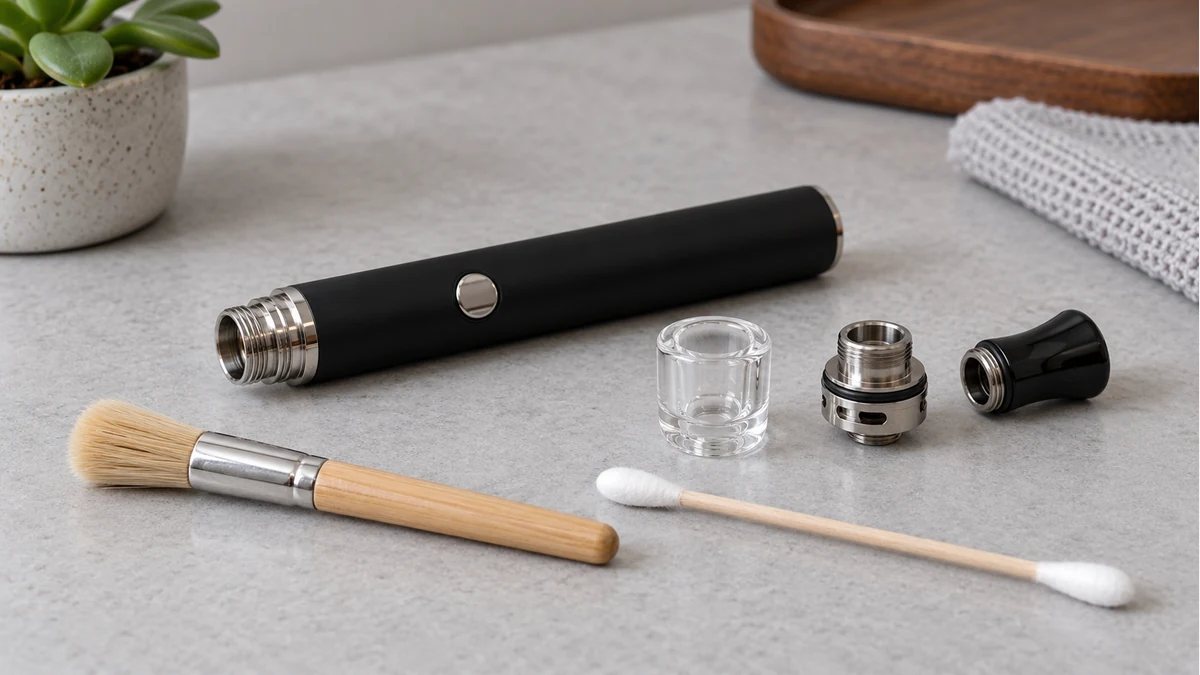
Cross-referencing these three measurements against the original part — rather than relying on the material description alone — is the most reliable way to confirm a replacement will actually fit. A more detailed comparison of thread standards across common device families is available in
For related context, see the 510 wax atomizer guide.
.
🔌 6. A Practical Way to Read a Listing Before Buying
Given everything above, a listing that simply says “sand quartz atomizer” is giving one data point out of several needed ones. A more useful way to evaluate a listing is to check it against this short list:
- Does it specify build type — wrapped surface, cup, or rod?
- Does it specify coil count, and does that match the device’s expected electrical load?
- Are chamber and mouthpiece photos available to judge airflow path, not just the material close-up?
- Are thread type, height, and lead length listed or shown clearly enough to compare against the original part?
A listing that answers these four questions is giving genuinely comparable information. One that only repeats “quartz” in different phrasings is leaving the buyer to guess at the parts of the design that actually determine fit and performance. For a side-by-side look at how these same build types appear across different device categories, see
For related context, see the ceramic cartridge guide.
.
The practical takeaway: identify the hardware by its build type, coil configuration, airflow path, and physical fit measurements first, and treat “sand quartz” as confirmation of material family only — not as a stand-in for any of the specifications that actually determine whether a replacement part will work.
🧼 7. Documentation Beats Visual Similarity
Product photographs can establish the broad hardware category, but they cannot confirm dimensions, electrical limits, or internal construction. A reliable comparison uses the model manual, a dimensional drawing, and the maker’s stated compatibility list. The 510 label describes a common connection pattern; it does not guarantee identical depth, airflow, contact travel, or load requirements.
🧪 7.1. Record the Physical Interface
Before changing parts, note the connector condition, exposed cartridge diameter, installed height, control state, and charging-port type. These observations separate a fit problem from a power or maintenance problem. They also make support conversations specific instead of relying on a generic product name.
📏 7.2. Keep Claims Within What the Hardware Shows
A material name, indicator light, or familiar silhouette is only one clue. It should not be expanded into an unsupported claim about performance, purity, battery health, or service life. When documentation is missing, state the uncertainty and compare only observable construction.
🛠️ 8. A Practical Inspection Sequence
Start with the device powered off and disconnected from charging. Inspect the threads and center contact for debris, check that the cartridge or atomizer seats without force, and confirm that air openings remain unobstructed. Reassemble finger-tight rather than using the battery body as a lever.
Next, use the documented controls and indicator meanings for that exact model. If the observed light or screen behavior conflicts with the manual, stop and verify the cartridge and cable separately instead of repeatedly activating the device. A repeatable sequence preserves the evidence needed to identify which interface is actually involved.