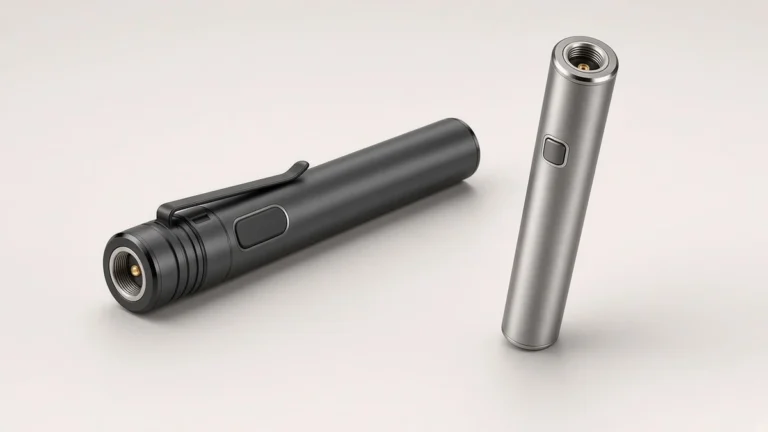
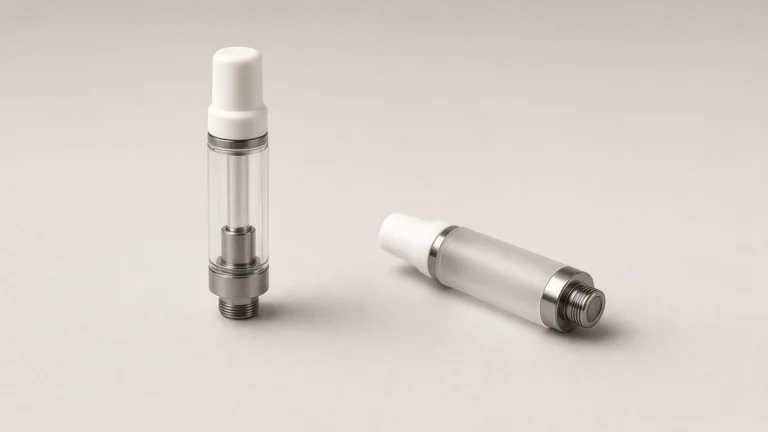
A 510 battery listing often leads with “portable,” “pocket-friendly,” “slim pen,” or “clip included,” as if those phrases all described the same carry arrangement. They do not. One question is the shape of the body. A different question is whether that body has a specified pocket clip, or whether it is a bare barrel that is carried some other way. A slim pen can be supplied with a clip or without one. A box-style battery can also be specified with a clip, a sleeve, or no clip at all. The clip, if it exists, is its own specification line.
That distinction is not the same as naming the body shape, and it is not the same as attaching a lanyard or concealing the cartridge in a housing. Pen Body or a Box Battery: How a 510 Battery Is Shaped already treats the outline of the battery. Vape Pen Lanyard: Fit, Balance and Everyday Carry already treats strap and holder attachments. Discreet Cart Battery: Concealed 510 Battery Guide (2026) already treats housings that hide a cart. This guide does not retell those subjects. It stays on two carry arrangements that still have to be named on their own: a pocket clip, a bare barrel, and what a listing photograph cannot prove.
🔎 1. The Pocket Clip and the Bare Barrel Are Not the Same Carry Arrangement
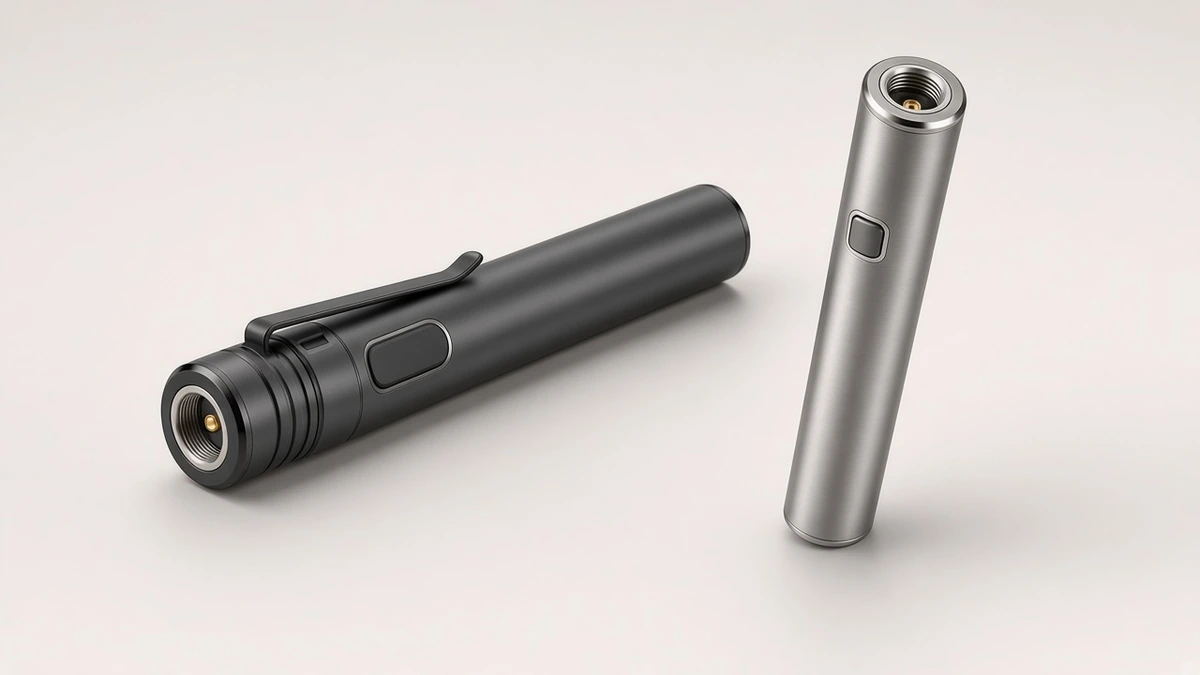
The first cut is simple. A pocket clip is a specified clip on the barrel, end cap, or another documented location, intended to retain the battery on a pocket edge or similar surface. A bare barrel is a body that has no such clip as part of the specified hardware. One names a carry feature on the device. The other names the absence of that feature. They can both appear in the same product family, and they can be omitted or substituted independently.
A “portable” or “pocket-friendly” label does not identify a clip. A “pen battery” label does not identify a bare barrel. A photograph of a slim cylinder does not prove either arrangement. Two batteries can share a similar outline and still differ on whether a clip is present, whether the clip is integral or removable, and where the clip is attached. Do not assign a clip from a portability phrase, and do not assume that a pen-shaped body arrives without one.
A lanyard attachment is a third identification again. Vape Pen Lanyard: Fit, Balance and Everyday Carry already treats eyelets, rings, sleeves, and straps as carry accessories. A pocket clip is not a lanyard, and a lanyard point is not a pocket clip. This guide does not retell that subject. It only asks the buyer to write the clip, or the lack of a clip, as its own line, including whether the drawing actually names that feature.
🏷️ 2. A “Portable” or “Pocket-Friendly” Label Is Not a Complete Carry-Feature Specification
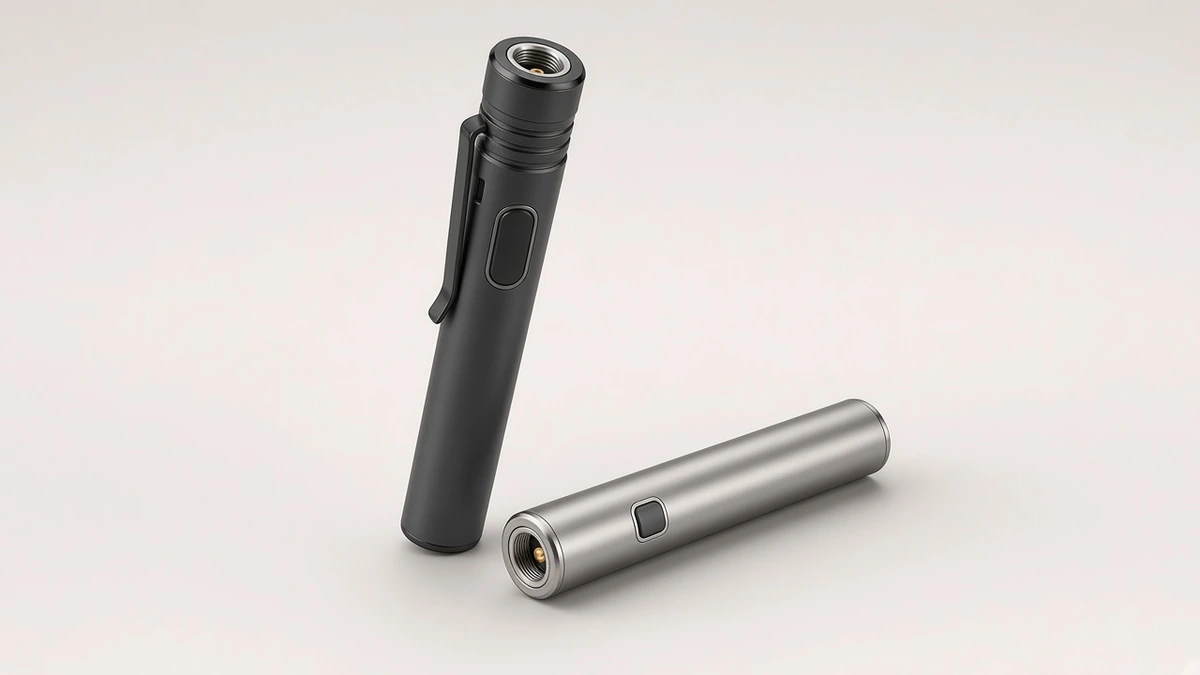
“Portable,” “pocket-friendly,” “slim,” “clip included,” and “everyday carry” are starting labels, not finished carry-feature specifications. A portability claim tells you that someone is talking about how the battery is meant to be carried or stored. It does not tell you whether a clip is part of the hardware, whether that clip is fixed or removable, or where it sits on the body. A “clip included” claim tells you that someone is talking about a clip. It does not tell you whether the clip is integral to the barrel, attached to an end cap, supplied as a loose accessory, or clear of the fire button and the charge port.
A clip does not become a body shape on its own, and a body shape does not become a clip on its own. Pen Body or a Box Battery: How a 510 Battery Is Shaped already treats pen and box outlines. This guide does not retell that distinction. It only asks the buyer not to treat a pen-shaped listing as a clip specification, and not to treat a clip as proof of a particular body family. If a project needs both facts, write the body shape from the drawing or the confirmed sample, and write the clip arrangement as its own line.
End Button or a Side Button: Where a 510 Battery Is Fired already treats fire-control location. A clip that sits near an end cap or along the barrel can crowd, cover, or be mistaken for a control, but the clip is still not the firing method. If a version uses a clip as a documented control, that function has to be named separately; a “pocket clip” label is not a firing-control specification. If the listing says only “portable pen” or only “with clip,” write that wording down and ask whether a clip is part of the hardware, how it attaches, and which revision the drawing names.
🧩 3. Identifying the Pocket Clip on a Sample and a Drawing
The version drawing is the right place to look for a pocket-clip callout. The drawing may name a clip on the barrel, on an end cap, or as a removable part. Record the exact wording, the attachment, and the revision. If the drawing shows the clip’s location relative to the fire button, the charge port, and the 510 well, write those clearances down. Do not replace them with a “portable” phrase from the catalog title.
A sample can support that identification, but it cannot invent the specification. Look at the cold battery in the hand and find whether a clip is actually present, whether it is fixed or specified as removable, and whether it clears the controls and openings that the version uses. Record what you can actually see. Do not treat a studio photograph of a clipped sample as proof that every colorway or later revision includes the same clip.
If you only have a listing image and no sample, you may be able to see a clip in one beauty shot and still not know whether it is integral, optional, or borrowed from another accessory kit. Record that limit. Ask for the drawing and the named clip arrangement before a “clip included” line is written into a brief.
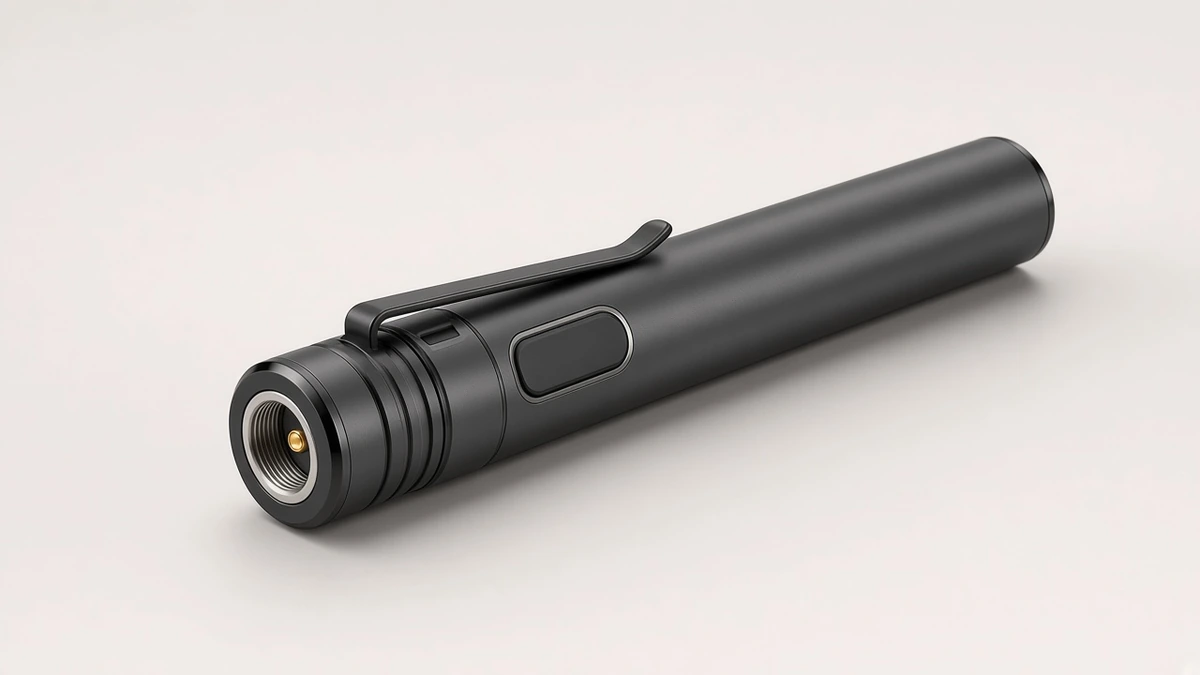
📐 4. The Bare Barrel Still Has to Be Named as Its Own Carry Arrangement
Once a pocket clip is recorded, or recorded as absent, a bare barrel still has to be named as its own carry arrangement, or recorded as not specified. A bare barrel is a statement that the specified hardware does not include a pocket clip. It is not a body-shape name. It is not proved by a cropped photograph, and it is not proved by a “slim” or “minimal” label on its own.
If the catalog says “clip included” and the drawing shows a smooth barrel with no clip, those are still two facts in conflict. Stop and confirm the revision before either arrangement is treated as approved. If only a portability label is present, write it as a marketing claim and ask whether a clip is part of the hardware. If the sample is bare, write that as the observed arrangement and ask whether a clip is optional, omitted, or specified on a different revision.
Do not settle the carry method by substituting another accessory. A lanyard, a sleeve, a case, or a concealed housing can exist on a battery that also has a clip, or on a battery that has none. Vape Pen Lanyard: Fit, Balance and Everyday Carry and Discreet Cart Battery: Concealed 510 Battery Guide (2026) already treat those other arrangements. This guide does not retell them. It only asks the buyer not to treat a strap point or a hidden cart bay as a pocket clip, and not to treat a bare barrel as a complete everyday-carry plan.
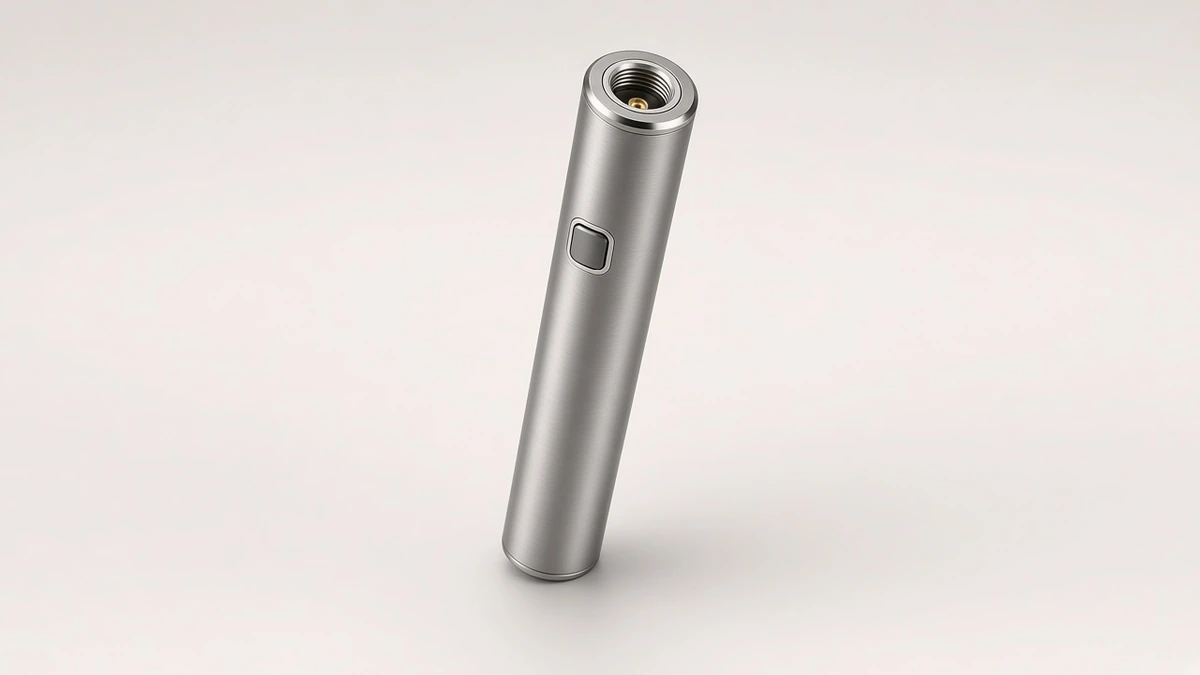
📷 5. What a Listing Photograph Can Hide
A listing photograph is a poor place to finish a carry-feature specification. A clip can be photographed on one sample and omitted from the production revision. A bare barrel can be shown in a holder, a sleeve, or a pocket mock-up that is not part of the hardware. A close crop can hide a clip at the end cap, or it can hide the fact that no clip is present. A dark or low-contrast body can also make a slim clip disappear against the barrel.
The photograph is also the wrong place to decide clearance. A clip that looks clear of a button in a three-quarter beauty shot may sit over a side control, a charge port, or an indicator on the actual part. Those assignments come from the drawing and a sample of the exact version. If the listing says only “pocket-friendly” and shows a slim pen, write the clip question down and request the documented carry feature, including whether the clip is integral, removable, or not supplied.
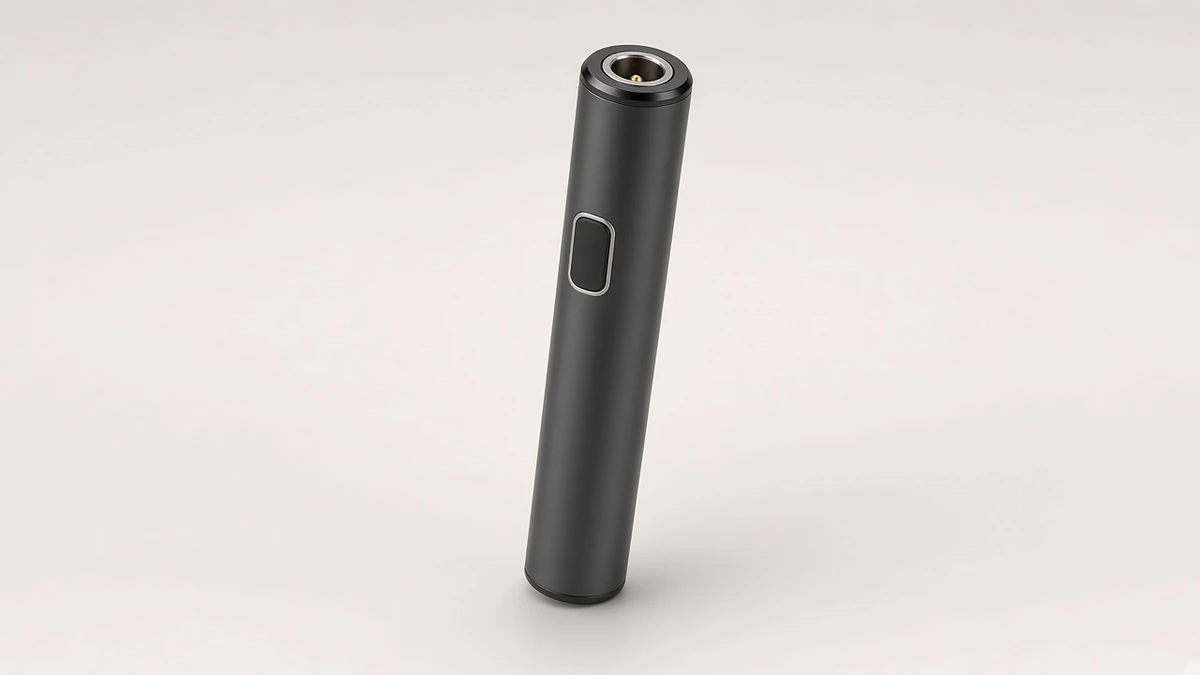
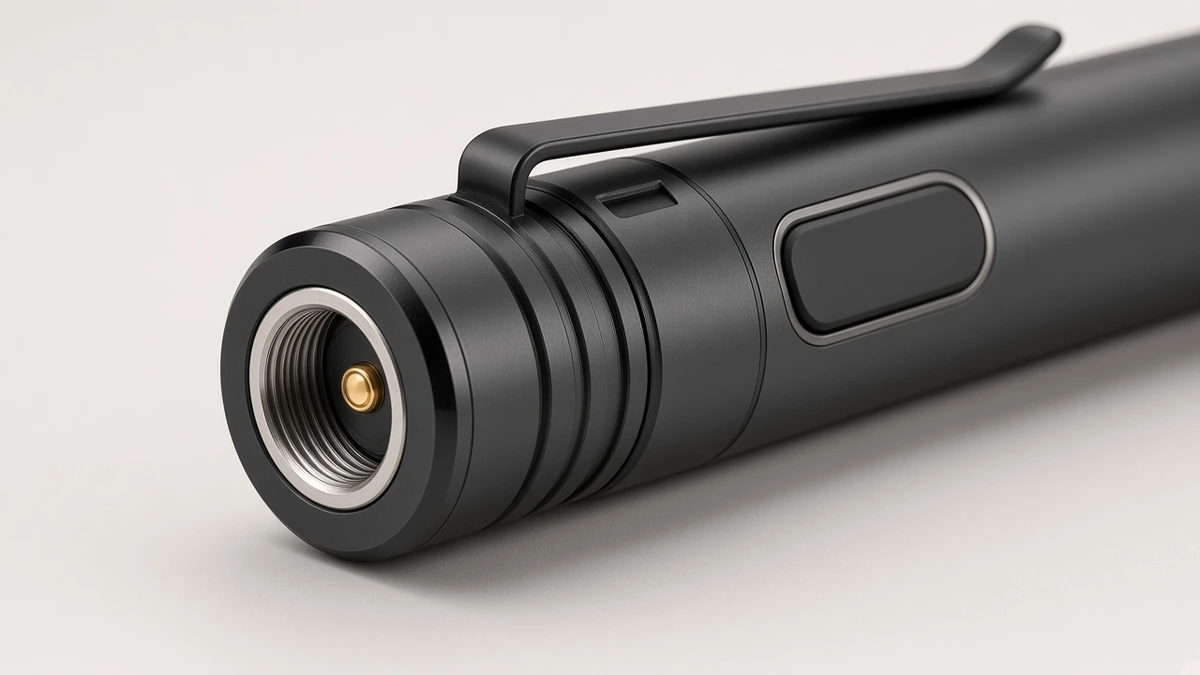
✅ 6. What to Check on a Sample, a Drawing, and a Brief
A one-line description a team can reuse should name the carry arrangement and should keep it apart from body shape, lanyard attachments, and concealment. Example: “510-thread battery; pocket clip present or absent as named on the version drawing, including whether the clip is integral or removable; body shape, lanyard attachment, and cart concealment are documented separately.”
On the sample:
- Look at the barrel and the end caps and record whether a clip is actually present.
- Record whether the clip is fixed or specified as removable, and where it attaches.
- Check that the clip, if present, clears the fire control, the charge port, the indicator, and the 510 well.
- Do not treat a holder, sleeve, or lanyard in the same kit as proof that a pocket clip is part of the battery.
On the drawing and the current brief for that exact version:
- Record the clip arrangement, if one is named, including location and whether the clip is integral or removable, and record the revision.
- If no clip is specified, record a bare barrel as the documented arrangement rather than inferring a clip from a “portable” label.
- Record body shape as its own line, not as a renamed clip feature.
- If the drawing and the catalog disagree, stop and confirm the revision before writing a carry-feature specification.
On the listing:
- Treat “portable,” “pocket-friendly,” “slim,” and “clip included” as labels to reconcile with the presence or absence of a clip.
- A clip shown on a named catalog example is that page’s documentation, not a default for the next battery in the same photograph style.
Questions worth sending with a sample request:
- Does this exact version include a pocket clip, and is that clip integral or removable?
- Where does the clip attach, and does the drawing show clearance for the fire control, the charge port, and the 510 well?
- If the listing says only “portable” or “pocket-friendly,” is a clip actually specified?
- Is a lanyard point, sleeve, or concealed housing specified in addition to, or instead of, a pocket clip?
- Do the quotation, the drawing, and the sample all use the same carry arrangement?
❓ 7. Short Answers a Brief Can Reuse
❓ 7.1 Identification Questions
What is a pocket clip on a 510 battery?
It is a specified clip on the barrel, end cap, or another documented location, intended to retain the battery on a pocket edge or similar surface. It names a carry feature on the device, not the body shape.
Is a bare barrel the same fact as a pen-style battery?
No. A bare barrel is a carry arrangement: the specified hardware has no pocket clip. A pen-style body is a shape. A pen can be specified with a clip or without one, and a box-style body can also be specified either way.
Does a “portable” or “pocket-friendly” label complete the carry-feature specification?
No. Those phrases are starting labels. They do not, by themselves, say whether a clip is part of the hardware, whether it is removable, or where it sits relative to the controls and openings.
Is a pocket clip the same thing as a lanyard?
No. A lanyard is a strap or holder attachment, often using an eyelet, ring, or sleeve. A pocket clip is a clip on the battery itself. They can both be present, or either can be absent, and each has to be named separately.
Can a listing photograph prove that a clip is included?
It can support an identification if the named clip matches the drawing and the sample is the same revision. It often crops the end cap, borrows a clipped accessory, or hides a slim clip against a dark barrel.
If a clip sits near a button, is the clip a firing control?
Not unless the version documentation names that function. Fire-control location is a separate fact. A clip that crowds a button still has to be identified as a carry feature, and any control function has to be written on its own line.