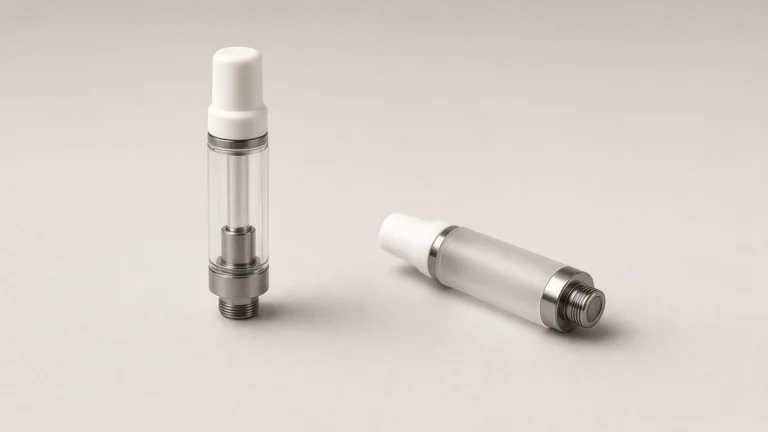
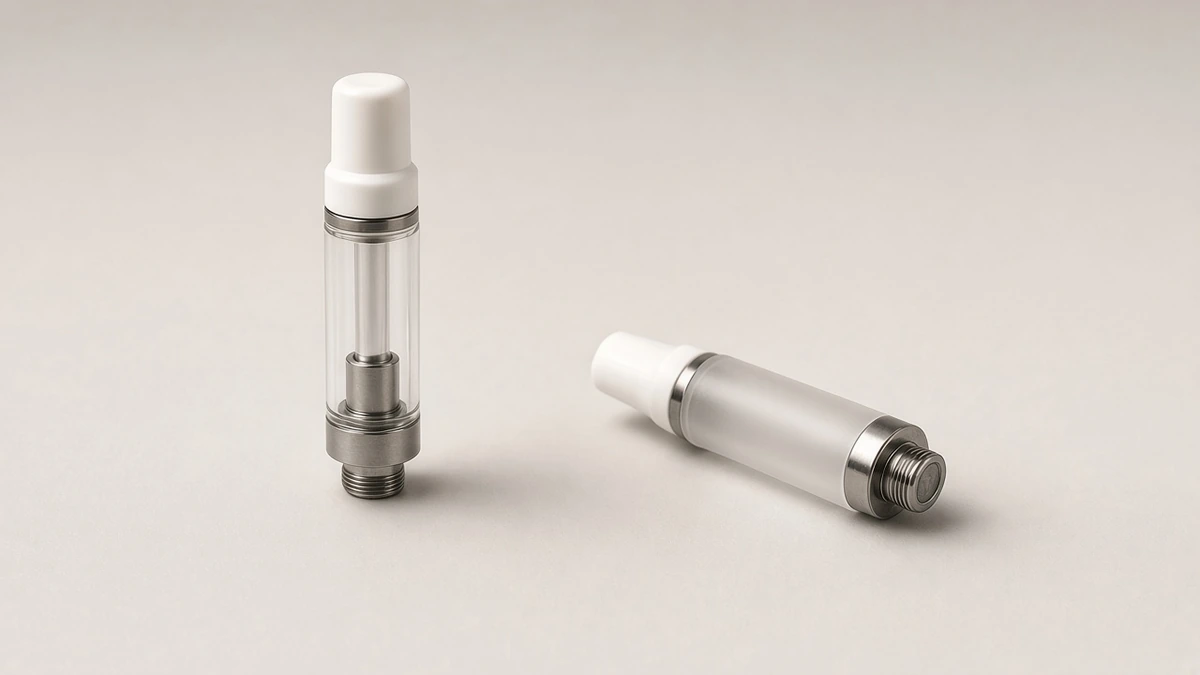
A 510 cartridge listing often describes the tank as “glass,” “PCTG,” “ceramic,” “frosted,” or “clear,” as if those words all answered the same question. They do not. One question is what the reservoir wall is made of. A different question is whether that wall, or a window in it, lets you see the oil. A tank can be glass and still be frosted or tinted enough that the fill is hard to read. A PCTG tank can be clear. An otherwise opaque body can still have a documented viewing window. Visibility is its own specification line.
That distinction is not the same as naming the reservoir material, and it is not the same as reading a fill line once oil is in the tank. Glass Cart or PCTG Tank: How to Identify the Reservoir Material already treats the wall material. Fill Line or Headspace: What a 510 Cart Leaves Empty After Filling already treats the intended fill height and the remaining empty volume. Gram Label or a Milliliter Volume: What a 510 Cart Capacity Figure Means already treats capacity figures. This guide does not retell those subjects. It stays on two visibility conditions that still have to be named on their own: a clear window, an opaque tank, and what a listing photograph cannot prove.
🔎 1. The Clear Window and the Opaque Tank Are Not the Same Visibility
The first cut is simple. A clear window is a see-through portion of the reservoir, or a fully transparent tank, that the version treats as the place where oil can be observed. An opaque tank is a reservoir wall that does not provide that view: it may be frosted, smoked, coated, sleeved, or otherwise documented as hiding the oil. One names a viewing path. The other names the absence of that path, or a different visibility condition. They can both appear in the same catalog family, and they can be omitted or substituted independently.
A “glass cart” label does not identify a clear window. A “PCTG tank” or “ceramic cart” label does not identify an opaque wall. A photograph of a shiny reservoir does not prove either condition under ordinary handling light. Two carts can share a similar outline and still differ on whether the oil is meant to be visible, whether only a strip or window is clear, or whether the tank is specified as opaque. Do not assign both visibility conditions from one material phrase.
A fill line is a third identification again. Fill Line or Headspace: What a 510 Cart Leaves Empty After Filling already treats how high the oil is supposed to sit, and how much empty volume is supposed to remain. Seeing oil, or not seeing it, is not a fill-line specification. This guide does not retell that subject. It only asks the buyer to write the visibility condition as its own line, including whether the drawing actually names a clear tank, a viewing window, or an opaque wall.
🏷️ 2. A “Glass Cart” or “PCTG Tank” Label Is Not a Complete Visibility Specification
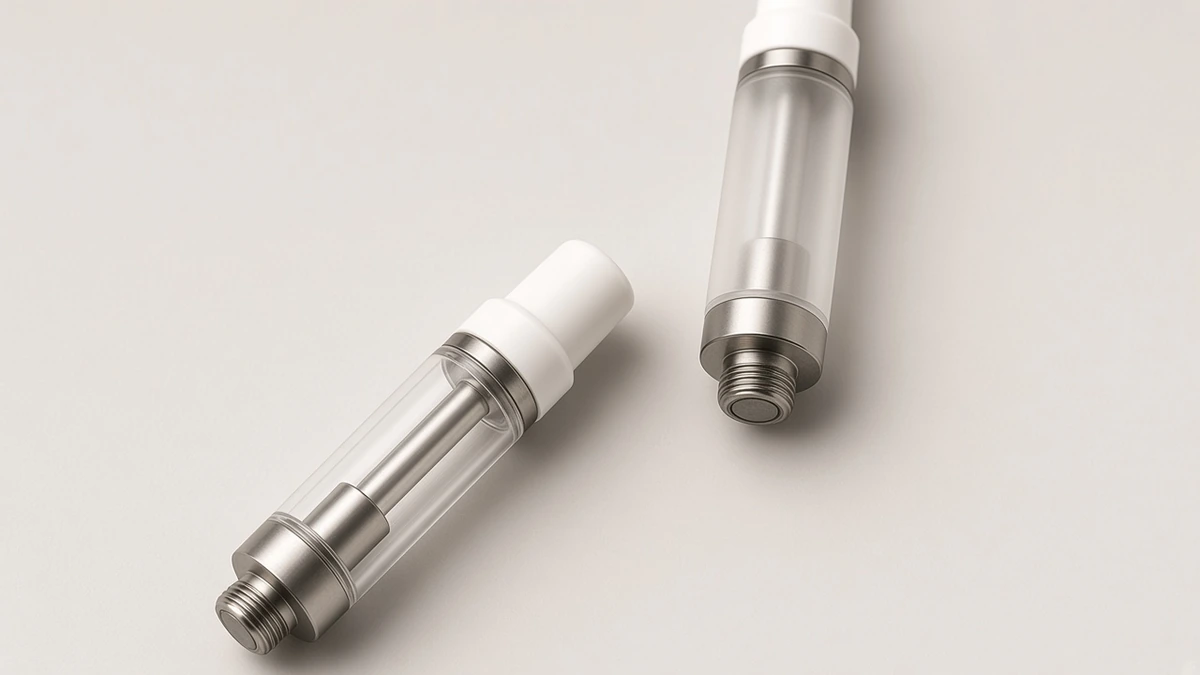
“Glass,” “PCTG,” “ceramic,” “frosted,” and “clear” are starting labels, not finished visibility specifications. A material claim tells you that someone is talking about what the wall is made of. It does not tell you whether that wall is transparent, translucent, tinted, or opaque, or whether a separate window is the only clear part. A “clear” claim tells you that someone is talking about visibility. It does not tell you whether the whole tank is clear, whether only a window is clear, or what material that wall is. Two carts can share a “glass” label and still differ on whether the oil can actually be seen.
Visibility does not become material on its own, and material does not become visibility on its own. Glass Cart or PCTG Tank: How to Identify the Reservoir Material already treats how to identify the reservoir wall. This guide does not retell that method. It only asks the buyer not to treat a material name as a viewing specification, and not to treat a beauty-shot “clear tank” as a material identification. If a project needs both facts, write the material from the drawing or the confirmed sample, and write the visibility condition as its own line.
Postless or Center-Post Cart: What the Center Channel Actually Is already notes that both architectures can present a clear or frosted reservoir as a shared outline. That outline is not the visibility specification for a later revision. Empty 510 Thread Cartridges: Match the Oil Path Before Filling already treats reservoir design and usable geometry. An empty clear tank can support a visual inspection of the core; an opaque tank can hide that view. Neither condition invents a capacity figure. If the listing says only “glass cart” or only “frosted tank,” write that wording down and ask what is actually visible, whether a window is documented, and which revision the drawing names.
🧩 3. Identifying a Clear Window on a Sample and a Drawing
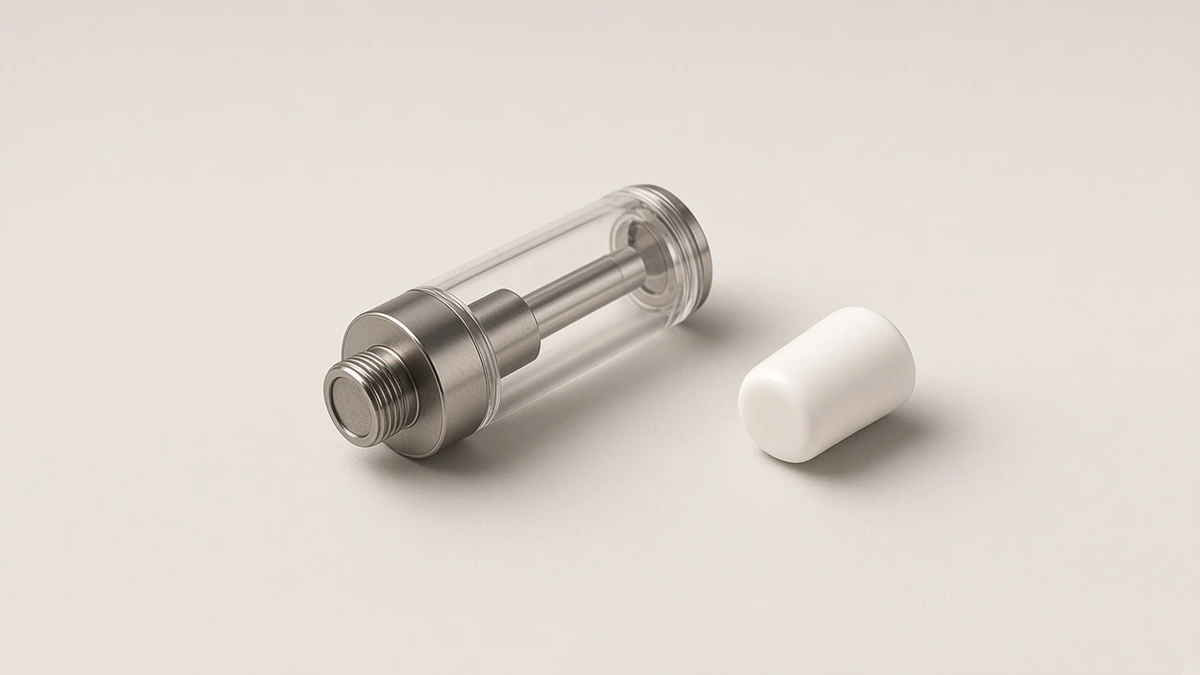
The version drawing is the right place to look for a clear-window or clear-tank callout. The drawing may name a transparent reservoir, a viewing window, or a limited clear band. Record the exact wording and the revision. If the drawing shows a see-through wall, or a window set into an otherwise opaque body, write that feature down as visibility, not as a material substitute. Do not replace it with a “glass” or “PCTG” phrase from the catalog title.
An empty sample can support that identification, but it cannot invent the specification. Hold the cold, unfilled cartridge to ordinary light and look at the tank wall, not only at a glossy highlight. A clear tank typically lets you see the center post or the open chamber and the far wall. A documented window typically shows a limited clear area, with the rest of the body remaining opaque. Record what you can actually see, and compare it with the drawing. Do not treat a bright studio photograph as proof that the tank in hand stays readable in ordinary light.
If you only have a finished, filled retail cart, you may be able to see oil in a clear tank and still not know whether the version is specified as a fully clear reservoir or as a window in a darker body. Record that limit. Ask for the drawing and the named visibility condition before a “clear tank” line is written into a brief.
📐 4. The Opaque Tank Still Has to Be Named as Its Own Visibility Condition
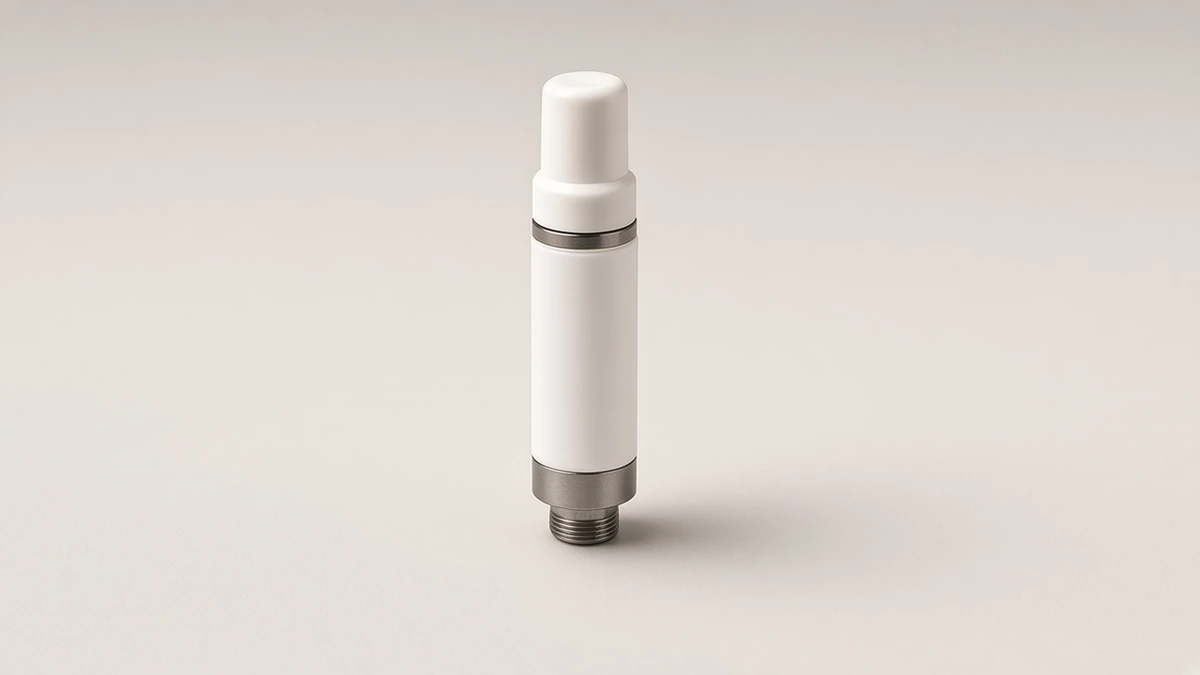
Once a clear window is recorded, or recorded as absent, an opaque tank still has to be named as its own visibility condition, or recorded as not specified. An opaque tank is a statement about the reservoir wall not providing a view of the oil, or providing only a limited, documented view. It is not a material name. It is not proved by a dark photograph, and it is not proved by a “ceramic cart” or “PCTG” label on its own.
If the catalog says “frosted” and the drawing says “PCTG,” those are still two facts. They may be used together on the same project, but one does not replace the other. If only a material label is present, write it as a material claim and ask whether the tank is clear, windowed, or opaque. If only a visibility label is present, write it as a visibility claim and ask what the wall is made of.
Do not settle opacity by assuming a purpose. A frosted, smoked, or coated tank may be chosen for appearance, for branding, or for another documented reason. This guide does not assign a protective function, a UV rating, or a preferred retail look to either condition. If the drawing and the catalog disagree—if one says clear tank and the other shows a fully opaque body without naming a window—stop and confirm the revision before either condition is treated as approved.
📷 5. What a Listing Photograph Can Hide
A listing photograph is a poor place to finish a visibility specification. A back-lit tank can look clear when the production part is frosted or tinted. An opaque tank can be photographed with a cutaway or a ghosted overlay that is not part of the hardware. A narrow window can be cropped out, or it can be lit so that it looks like a fully clear wall. A sleeve, label, or ceramic-looking coating can also hide whether any oil would be visible once the cart is filled.
The photograph is also the wrong place to borrow a material conclusion. A marketing image that looks like glass does not prove the wall material, and a white or frosted image does not prove that the tank is ceramic or opaque in the revision you will receive. Those assignments come from the drawing and a sample of the exact version. If the listing says only “glass cart” and shows a bright tank, write both the material question and the visibility question down and request the documented wall material and the documented viewing condition.
✅ 6. What to Check on a Sample, a Drawing, and a Brief
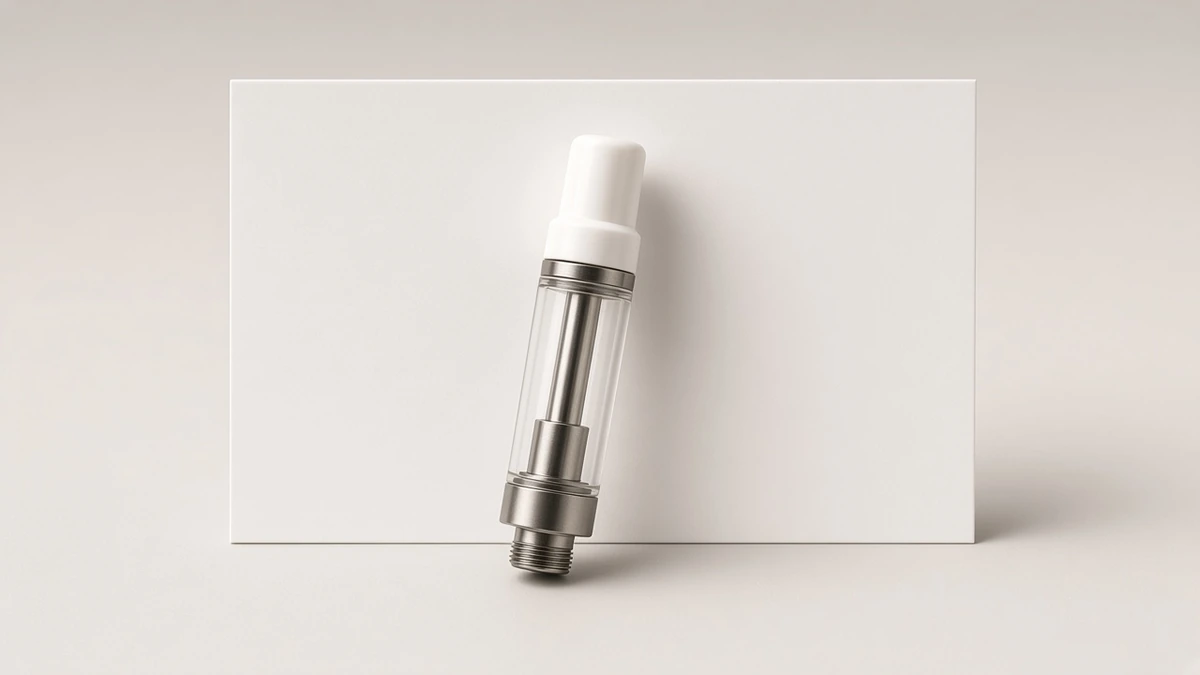
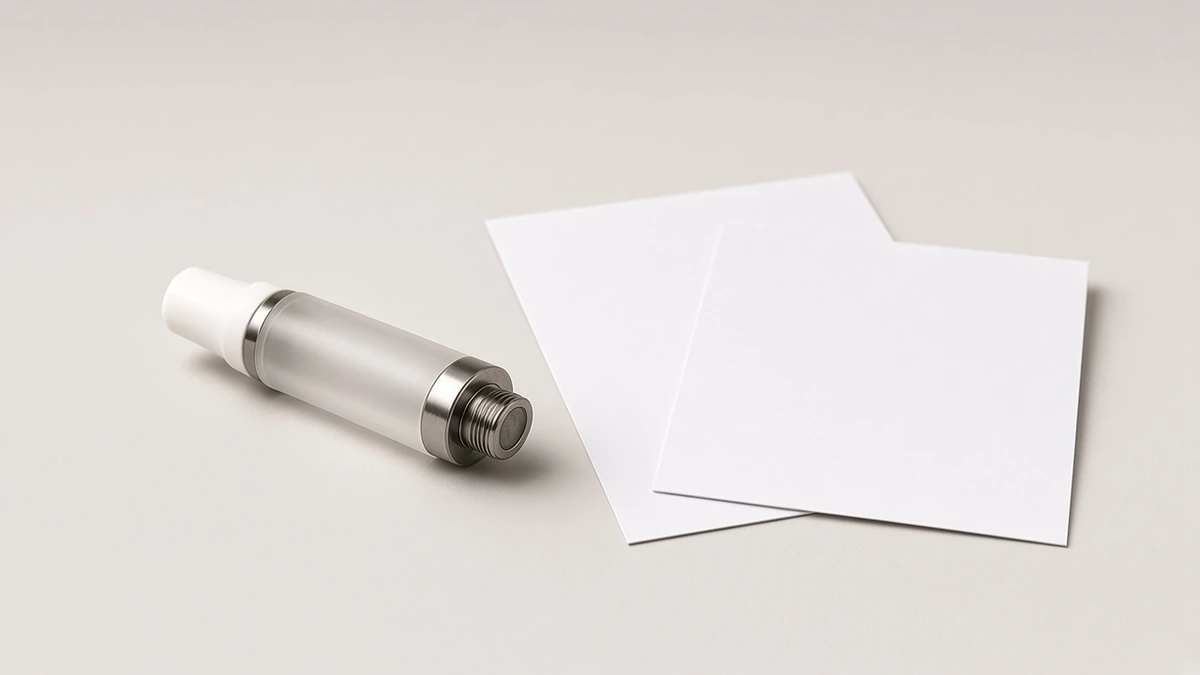
A one-line description a team can reuse should name the visibility condition and should keep it apart from wall material, fill line, and capacity. Example: “510-thread cartridge; tank visibility as a clear reservoir, a documented viewing window, or an opaque wall, as named on the version drawing; reservoir material, fill line, and capacity figures are documented separately.”
On the sample:
- Look at the tank in ordinary light, empty if possible, and record whether the oil path or the far wall is actually visible.
- Record whether the clear area is the whole tank or only a window, band, or strip.
- Do not treat a glossy highlight, a studio back-light, or a “glass look” as proof of a clear window.
- Compare the sample with the drawing when you need to confirm that the tank in hand is the revision the visibility callout belongs to.
On the drawing and the current brief for that exact version:
- Record the visibility condition, if one is named, including whether it is a clear tank, a viewing window, or an opaque or frosted wall, and record the revision.
- Record the reservoir material as its own line, not as a renamed visibility condition.
- Do not infer a protective function or a fill-level method from opacity or clarity alone.
- If the drawing and the catalog disagree, stop and confirm the revision before writing a visibility specification.
On the listing:
- Treat “glass,” “PCTG,” “ceramic,” “frosted,” and “clear” as labels to reconcile with material and visibility as two questions.
- A tank shown as clear or opaque for a named catalog example is that page’s documentation, not a default for the next cart in the same photograph style.
Questions worth sending with a sample request:
- Is this exact version specified as a clear tank, as a viewing window in an otherwise opaque body, or as an opaque or frosted tank?
- What reservoir material does the drawing name for that same version?
- If the listing says only “glass cart” or only “frosted tank,” is the other fact—visibility or material—also documented?
- Will a filled sample still allow the oil level to be observed, or is fill level meant to be checked another documented way?
- Do the quotation, the drawing, and the sample all use the same visibility condition?
❓ 7. Short Answers a Brief Can Reuse
❓ 7.1 Identification Questions
What is a clear window on a 510 cart?
It is a see-through portion of the reservoir, or a fully transparent tank, that the version treats as the place where oil can be observed. It names a viewing path, not the wall material.
Is an opaque tank the same fact as a PCTG or ceramic cart?
No. An opaque tank is a visibility condition: the wall does not provide a view of the oil, or it provides only a limited, documented view. PCTG and ceramic are material or construction labels. They have to be identified separately.
Does a “glass cart” label complete the visibility specification?
No. Glass is a material starting label. A glass tank may be clear, frosted, or tinted, and a clear tank may be made of another documented material. The drawing still has to name the visibility condition.
Can a listing photograph prove that the oil will be visible?
It can support an identification if the named visibility matches the drawing and the sample is the same revision. It often uses lighting, cutaways, or cropping that hide whether the production tank is clear, windowed, or opaque.
Is seeing the oil the same thing as a fill line?
No. A fill line is how high the oil is supposed to sit after filling. Headspace is the empty volume that remains. A clear window may make those observations easier; it does not replace them, and an opaque tank does not invent a different fill-line rule.
Do material and visibility have to be written as separate lines?
Yes, if the project needs both facts. Write the reservoir material from the drawing or the confirmed sample, and write the visibility condition—clear tank, viewing window, or opaque wall—as its own line.