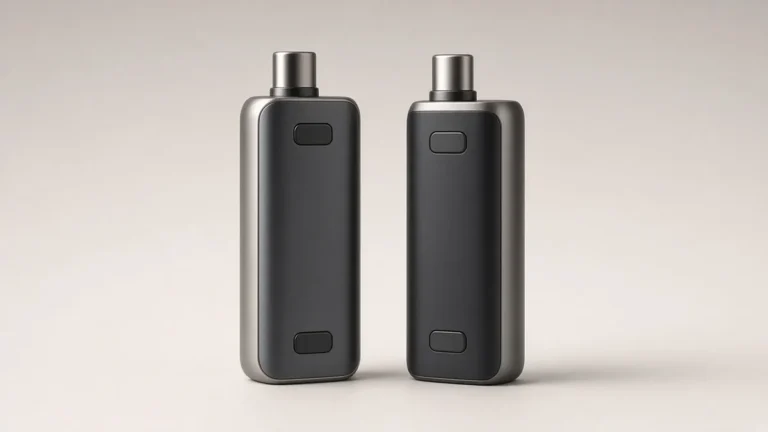
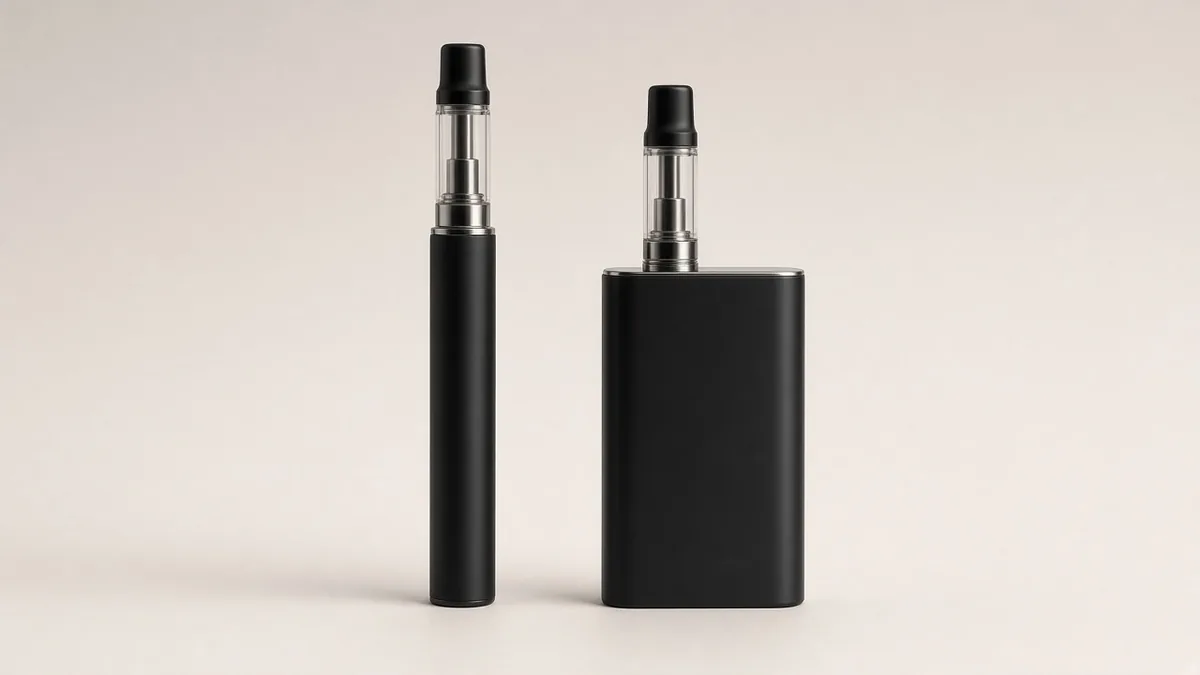
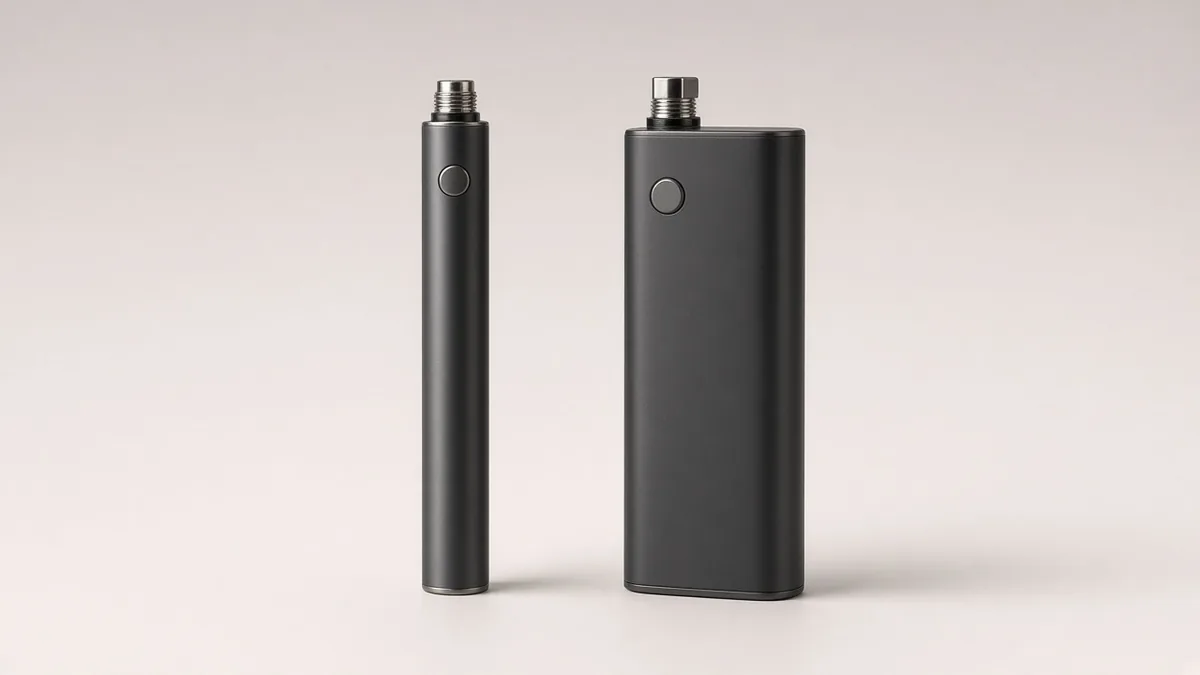
A 510 battery has a body shape as well as a threaded connection, a cell, and a way of being controlled. Those facts are easy to collapse into one catalog word such as “pen battery” or “box mod.” They should not be. A pen-style body is a slim, roughly cylindrical shell, with the cartridge usually sitting in line with the battery. A box-style body is a wider, often flatter or rectangular shell. The cartridge may sit on an exposed post, in a recessed bay, or in another meeting architecture that has to be identified on its own.
That shape is not a capacity rating, and it is not a control layout. What Does mAh Mean on Batteries? Runtime Explained already treats the capacity label. One Button or Separate Voltage Keys: How a 510 Battery Is Controlled already identifies the control layout. Drop-In Bay or an Exposed 510 Post: How a Cartridge Meets the Battery already identifies how the cart meets the battery. This guide stays on the shell itself: how the body is shaped, what a “pen” or “box” label does not prove, and what a listing photograph can hide.
🔎 1. Body Shape Is Not Capacity, Control, or a Bay
The first cut is simple. Body shape is the exterior form of the battery shell: a slim pen-style outline, a wider box-style outline, or another documented form. Capacity is a cell or pack rating that has to be read from the version documentation. The control layout is how power, voltage, preheat, and lock are presented to the user. The meeting architecture is how the cartridge is received—on an exposed 510 post, in a drop-in bay, or another way. Those identifications can live on the same battery, but they are not interchangeable.
A slim body can still have a screen, a multi-button layout, or a recessed bay. A wider body can still have a single button and an exposed post. Do not infer those features from the silhouette. Digital 510 Thread Batteries: Screen Guide and 510 Thread Battery With Display: Screen and Fit Guide already treat displays. This guide does not retell them. It only asks the buyer to name the body shape, and to keep that name apart from the cell, the controls, and the cart interface.
A concealed or hidden-cartridge design is a different identification again. Discreet Cart Battery: Concealed 510 Battery Guide already treats batteries that hide the cart in the body. A pen-style outline is not, by itself, a concealed-cart architecture, and a box-style outline is not automatically an exposed-cart design.
🏷️ 2. “Pen” and “Box” Are Starting Labels
“Pen,” “stick,” “box,” and “mod” are useful starting labels, not finished specifications. Two batteries can share a “pen” label and still differ in diameter, length, button placement, charge-port location, and how the cartridge sits. Two batteries can share a “box” label and still differ in thickness, bay width, and whether the cart is recessed.
If the listing says only “510 pen battery” or “box battery,” write that wording down and ask what the drawing and the sample actually show: the outline of the shell, the overall length and width, and where the 510 connection is presented. Do not treat “pen” as a proof of simplicity, and do not treat “box” as a proof of longer runtime or finer voltage control. Those claims have to be documented on the exact version.
510 Cartridge or All-in-One: What Stays With the Battery When the Oil Is Gone already treats a reusable battery-and-cart system versus an all-in-one body. Body shape does not settle that platform question. A pen-style shell can be either a 510 battery or part of an all-in-one device, and a box-style shell can be either as well.
🧩 3. Pen-Style Bodies: What to Record on the Sample
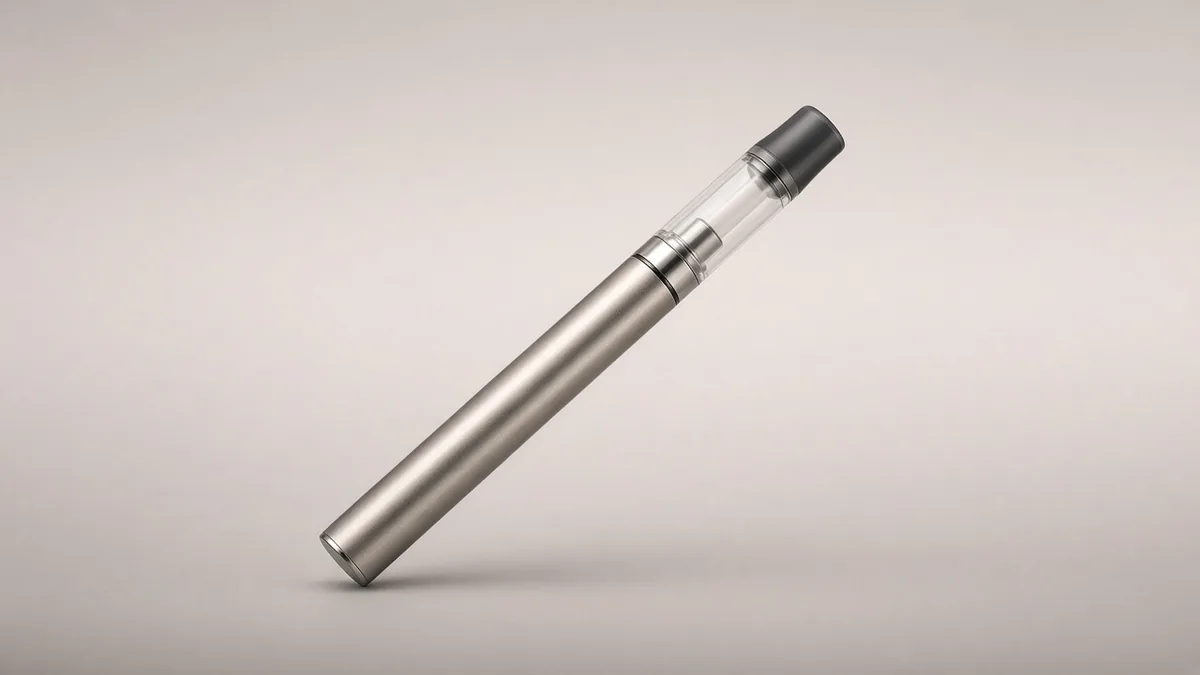
A pen-style body is identified by its slim, roughly cylindrical shell and by the way the cartridge usually continues that line. On the sample, record the outline, the length of the battery body without a cart, and the diameter or width at the widest point that will matter for a sleeve, a package, or a pocket clip, if a clip is present. Record where the fire control sits—on the side of the barrel, on an end, or elsewhere—without turning that note into a control-layout guide.
The 510 connection still has to be named separately. An exposed post at the top of a pen-style battery is a common arrangement, but it is not the only one, and it is not proved by the cylindrical outline. If a sleeve, a ring, or another accessory is included, record it as an accessory, not as a change of body family.
USB-C 510 Battery Guide: Ports, Cables and Charging and Bottom Port, Side Port, or Under-Cap Port: Where a 510 Battery Accepts a Cable already treat the charging connector and its location. A pen-style body does not tell you which connector is used, or where it sits. Record the port as its own line in the brief.
🧱 4. Box-Style Bodies: What to Record on the Sample
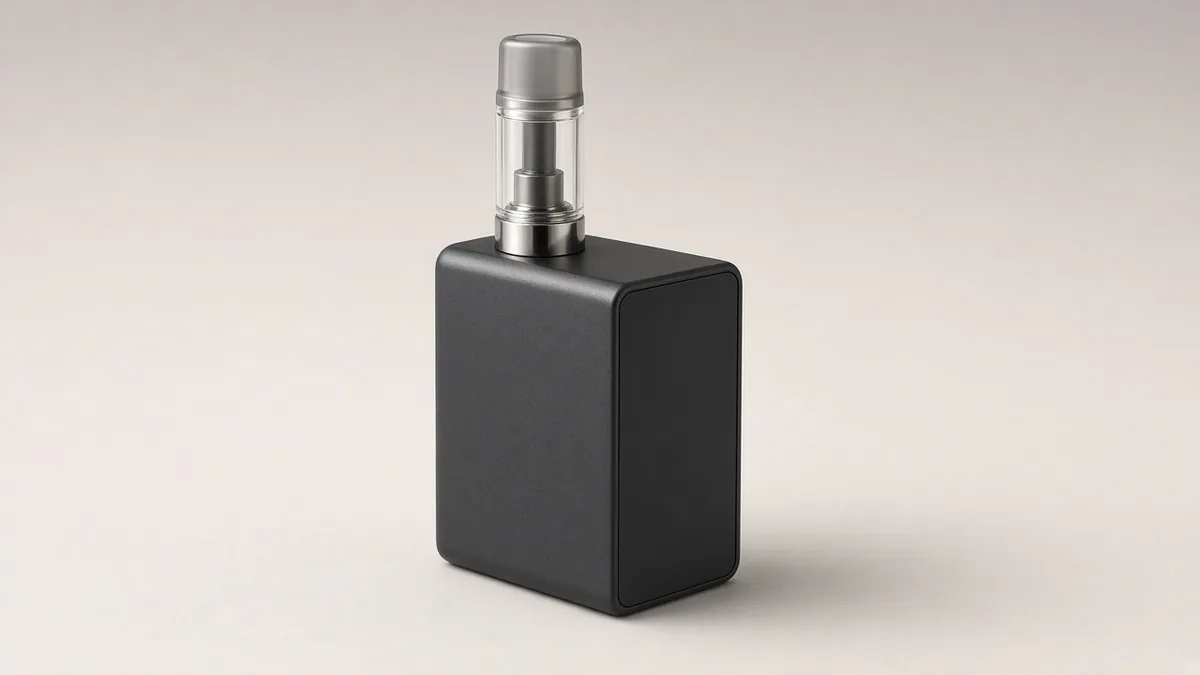
A box-style body is identified by a wider, often flatter or rectangular shell. On the sample, record the outline, the thickness, and the width and height that will matter for a bay, a lid, or a package. Record where the cartridge is presented: on a post at the top, in a recessed bay, at the side, or in another documented position. That meeting architecture is still a separate identification, but it has to be visible on the sample before a “box battery” line is written.
A wider shell is often assumed to contain a larger cell, a screen, or finer voltage steps. None of those assumptions complete the brief. Capacity, display, and voltage control have to be read from the version documentation and confirmed on the sample. A box-style battery can have a simple one-button layout and no screen. A listing that shows a wide body and a lighted panel is still only a photograph.
If the sample has a lid, a door, or a magnetically retained cover over the cartridge, record that cover as part of the meeting architecture, not as proof of body family. The cover can be present or absent on batteries that share a similar box outline.
📷 5. What a Listing Photograph Can Hide
A listing photograph can support a body-shape identification if the shell is fully visible, the cartridge position is clear, and the sample matches the outline in the picture. Often it is not. A cropped beauty shot can hide the thickness of a box-style body, or the true diameter of a pen-style body once a cart is attached. A hand-held lifestyle image can make two different shells look the same size. A rendering may show a bay or a lid that is not on the quoted revision.
The photograph is also the wrong place to borrow a performance claim. A wide body in a picture does not identify capacity. A slim body in a picture does not identify runtime, concealment, or a one-button layout. Those assignments come from the drawing, the version documentation, and a sample of the exact version. If the listing says “box battery” and shows only a front face, write that wording down and request overall dimensions, a side view, and a clear view of how the cartridge sits.
✅ 6. What to Check on a Sample, a Drawing, and a Brief
A one-line description a team can reuse should name the body shape and keep it apart from capacity, controls, and the cart interface. Example: “510-thread battery; pen-style cylindrical body; cartridge meeting architecture and capacity as named on the version documentation; control layout documented separately.”
On the sample:
- Identify the shell outline as pen-style, box-style, or another documented form.
- Record overall length, width, and thickness without treating those measurements as a capacity rating.
- Record where the 510 connection is presented, but do not let that meeting architecture stand in for the body family.
- Record visible controls and ports only as features to be confirmed in the manual, not as proof of shape.
On the drawing and the current brief for that exact version:
- Record the body-shape identification and the overall dimensions that belong in the brief.
- Record capacity, charging connector, control layout, and cart-meeting architecture on separate lines.
- If the drawing and the sample disagree, stop and confirm the revision before writing a purchasing line.
On the listing:
- Treat “pen,” “stick,” “box,” and “mod” as labels to reconcile with the sample and the drawing.
- A dimension or feature stated for a named catalog example is that page’s documentation, not a default for the next battery in the same photograph style.
Questions worth sending with a sample request:
- Is this exact version a pen-style body, a box-style body, or another documented form?
- What overall dimensions should be written in the brief, with and without a seated cartridge?
- How is the cartridge presented on this version, and is that meeting architecture documented separately from the shell shape?
- What capacity, charging connector, and control layout belong to this version, as documented, rather than inferred from the silhouette?
- If the listing uses the word “mod” or “pen,” which of those words refers to body shape and which refers to something else?
❓ 7. Short Answers a Brief Can Reuse
❓ 7.1 Identification Questions
What is a pen-style 510 battery body? It is a slim, roughly cylindrical shell, usually with the cartridge sitting in line with the battery. The outline is a shape identification, not a complete product specification.
What is a box-style 510 battery body? It is a wider, often flatter or rectangular shell. The cartridge may sit on a post, in a bay, or in another documented position that has to be named separately.
Does a “pen” or “box” label identify capacity? No. Capacity is a documented cell or pack rating. Shape does not prove runtime.
Does a wider body prove that the battery has a screen or adjustable voltage? No. Display and voltage control are separate identifications. Confirm them in the version manual and on the sample.
Is a pen-style body the same thing as a concealed-cartridge battery? No. A hidden-cart design is a different architecture. A slim outline does not, by itself, hide the cartridge.
Can a listing photograph settle the body shape? It can support an identification if the full shell is visible and matches the sample. It often hides thickness, true length with a cart seated, and the meeting architecture. Confirm the outline on a sample and in the version drawing.