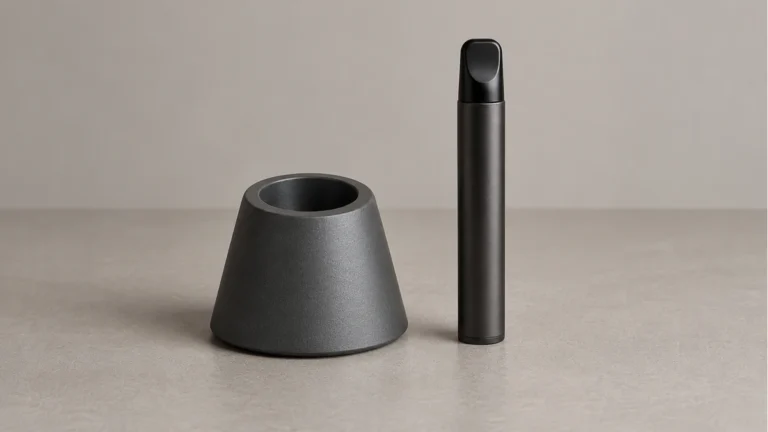
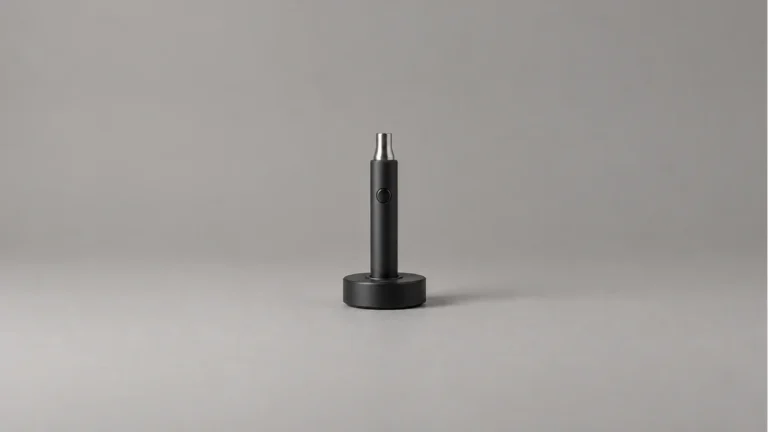
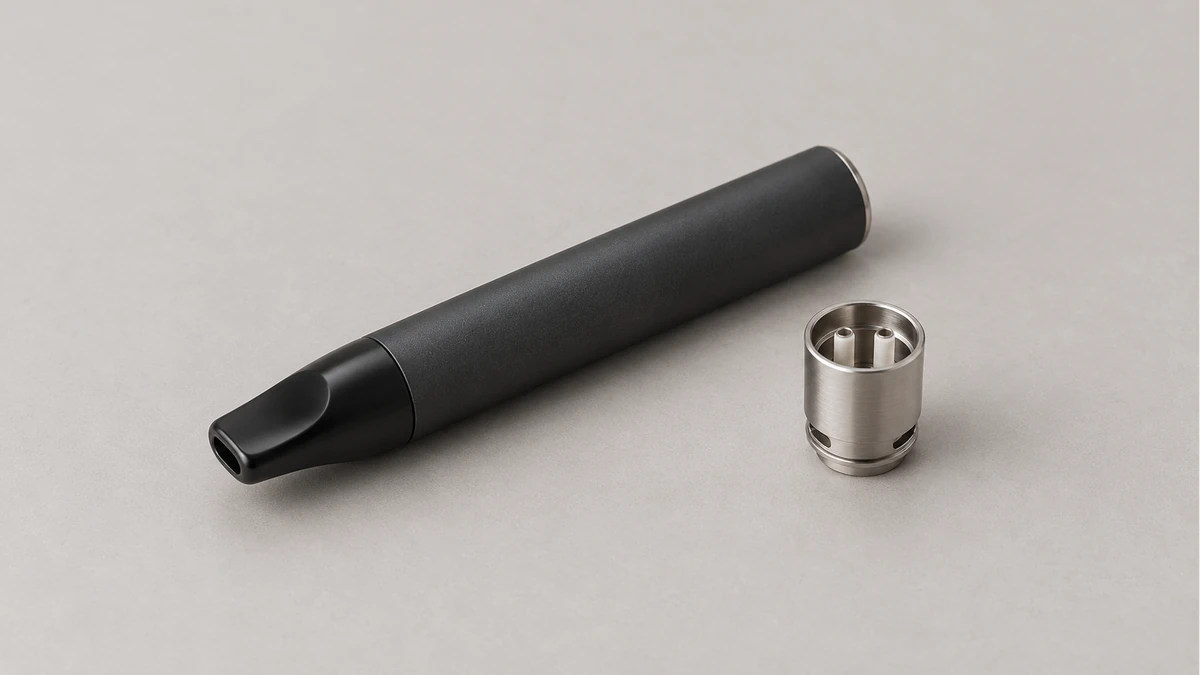
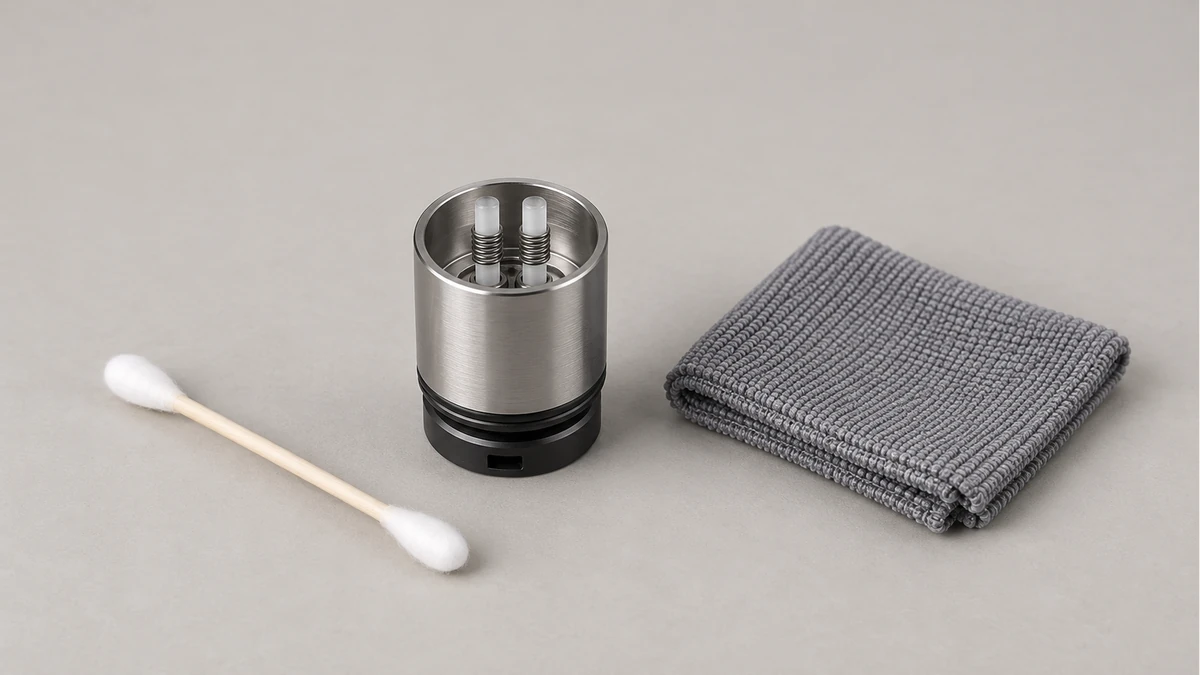
A quartz coil in a wax pen can mean a replaceable chamber containing quartz rods and visible metal windings, rather than a smooth cup. That changes the care task: an opening between wire turns is not a place to push a swab or pick. It also changes what replacement means. Identify the complete assembly specified for the device rather than assuming a different ceramic chamber drops in. The practical starting point is the shape in front of you: exposed wrapped rods, a smooth bowl or another documented design.
🧩 1. Understanding a Quartz Coil Before Cleaning It
The word coil can name the actual winding or the larger accessory sold as a replacement. In a discussion comparing quartz and ceramic versions, someone asks whether the wire size is the same, and another asks about cleaning. These are useful questions precisely because the material label does not answer them. A reply about one device does not specify the wire alloy, gauge or permitted cleaning method in another. A photograph of the complete replacement part and its model identification is a better starting point than treating every listing using the word coil as the same construction.
🔧 2. Rod, Wire, and What’s Actually Energized
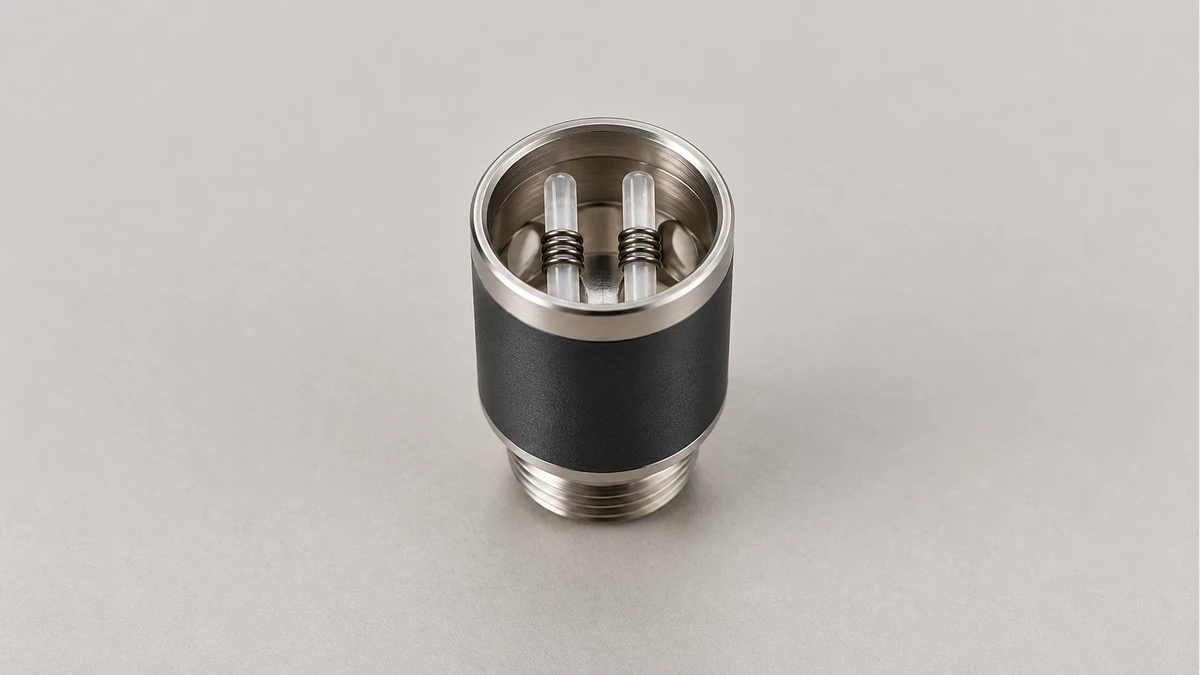
On a quartz-rod coil, the rod itself functions as a support and a heat-transfer surface. On its own, it is not what carries current. The wire wound around it is the resistive element; when the device is activated, current passes through that wire, and the rod heats secondarily as a result of close contact with it. This distinction matters for anything involving pressure or contact near the coil: wiping the rod’s exposed surface is a different action, both physically and electrically, from touching, pressing on, or shifting the wire itself.
Resistance wire formed into straight or helical shapes is a documented approach in heating-element design broadly. An industrial reference on resistance heating elements (mx.omega.com/Temperature/pdf/NI80.pdf) describes coiled and straight wire configurations used to generate heat through electrical resistance. That source speaks only to the general existence of helical wire heating elements as a category; it says nothing about the specific alloy, gauge, or electrical rating used in any particular wax-pen coil, and neither should be assumed from it.
🧩 2.1 A Rod and a Smooth Bucket Are Different Shapes
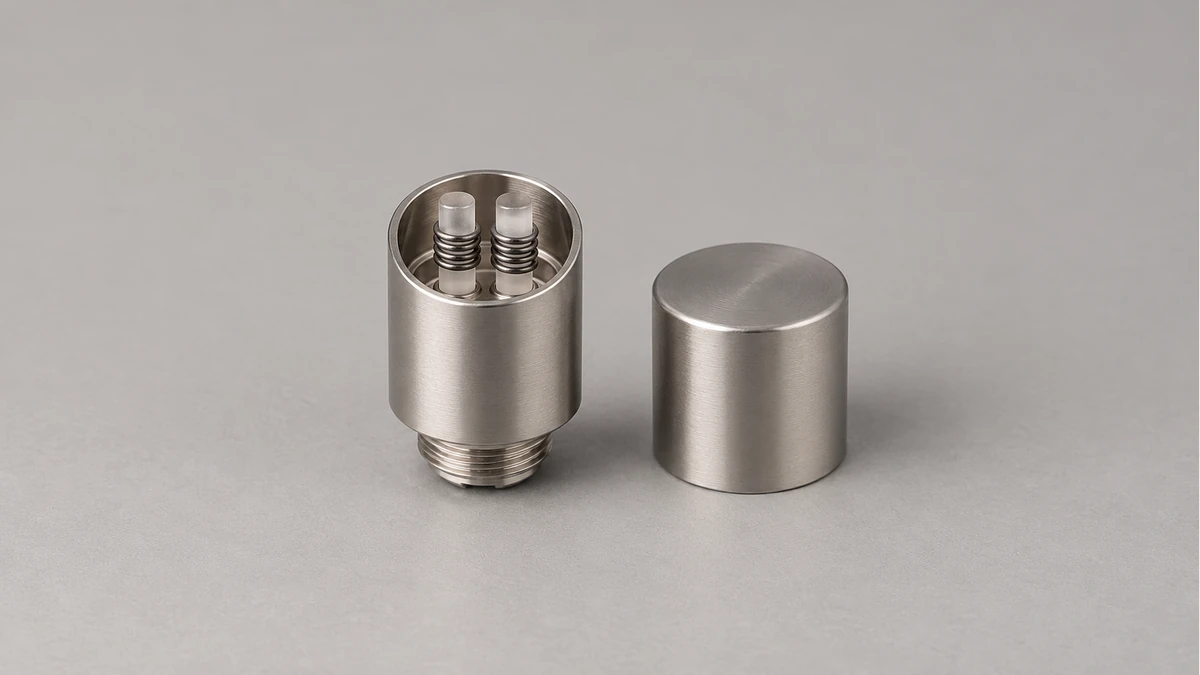
One narrow documented example appears in Yocan’s Evolve atomizer listing, which separately names quartz dual rods, titanium coils and coil caps. This identifies several components rather than one all-quartz part. It is an example for that named assembly, not a specification for every quartz coil. In particular, its material description does not establish the alloy in an unmarked spare chamber.
The visible difference helps explain why a care routine cannot be transferred by material name alone. A smooth bucket gives a continuous inner surface; a wrapped rod exposes a different arrangement of surfaces and edges. Neither shape makes a universal promise about cleaning access. Locate the part in its instructions before assuming a tool used on one interior can pass over the other. Quartz describes a material in the assembly, while the shape tells you which physical feature you are looking at.
🧱 3. Top Cap vs Complete Screw-In Chamber
Where a rod-style coil is supplied with a detachable cap and threaded base, identify those as separate connections. The cap might be loose while the complete chamber remains seated in its housing, or the reverse. Neither observation establishes that a wire has moved or a heater has failed. The instructions should name which cover can be removed and how the complete accessory detaches. A cap illustrated beside a replacement chamber does not mean every pen uses that arrangement, or that every seam is intended for owner disassembly.
🧱 3.1 What the Cap Covers, and What It Doesn’t
A cap or cover belongs to the surrounding chamber arrangement, while a wire winding belongs to the heater. Do not infer an electrical role from a metal finish or decide an air route from the cover’s silhouette. A deposit on the underside of a detached cap describes that surface; it does not establish the condition of a winding below it. The broader coil-less atomizer explanation separates the accessory name from the hidden heating mechanism. Here, the immediate question is which named surface you are actually looking at.
🌀 4. Open Winding Geometry and the Gaps You Can’t Reach
An exposed winding has edges and spaces that a smooth cup does not. Treat those spaces as part of the assembled heater, rather than as slots for a cleaning tool. Pushing between wraps or trying to pull a strand out from beneath a wire can disturb the component while you are attempting to clean it. Leave bending, lifting and rewiring outside ordinary surface care. If a deposit cannot be reached using the documented method, identify the replacement assembly or ask the maker about that exact location instead of forcing access.
A smooth bucket and an exposed winding present different shapes to a care tool. A continuous inner surface does not have the same spaces as wire turns; the actual permitted cleaning method still comes from the instructions for that part. A thread describing a switch from a dual-quartz setup to a ceramic one, and asking whether a compatible donut shape existed for the new chamber (reddit.com/r/Waxpen/comments/p6u21b), reflects the same underlying uncertainty from a different angle: these are different physical forms, and moving between them isn’t something to assume works just because both get called “coils” in a parts listing.
🔍 5. Visible Deposit vs a Displaced or Broken Part
A dark patch, visible particle and displaced wire turn are different observations. Discoloration alone does not prove that removable residue is sitting on an otherwise intact part. A visible crack or missing piece raises a different question again. Describe the location before naming a cause: on the rod, between visible windings, under the cap or around the outer connector. Ordinary lighting and an unobstructed view of the cool permitted opening can help show that location. They still cannot establish the condition of a hidden connection or what an unknown deposit contains.
Do not use an empty firing test to decide whether an uncertain mark or component is acceptable. Heat, an indicator light or an error message does not establish the physical condition of the whole chamber. Record any message the manual identifies, but keep that observation separate from a diagnosis. A visibly displaced component or unresolved crack calls for assessment of the actual part, rather than an improvised powered test.
🧽 6. Keep Cleaning Instructions Attached to the Named Part
Manufacturer instructions, where they exist for a given device, tend to be specific about what surface care is approved and exactly where that approval stops. As one narrow, model-specific example, the published manual for the Yocan Iris documents a replaceable quartz coil and, in a separate instruction, directs users to wipe the device’s exterior body dry (yocanvaporizer.com/pages/yocan-iris-wax-vaporizer-manual). That’s a documented step for one device’s exterior housing, not a general cleaning procedure for coils across wax pens as a category, and it shouldn’t be read as extending to the internal wire of any other model.
An instruction applies to the named part and method. It does not become permission to soak another assembly, scrape a winding or introduce liquid into a powered housing. Read the actual model’s care limits, including its cap, seals and connector, rather than extending an exterior-body wipe into an internal procedure. Our dab pen cleaning guide covers the broader separation of removable components and powered body. If its general discussion and the device’s instructions differ, keep the specific manufacturer’s limits attached to that device.
📦 6.1 Keep Cleaned Components Identifiable
Use a clear parts area for the cool components the manual permits you to remove. Keep a cap, mouthpiece, seal and complete coil assembly identified separately, rather than gathering them into an unnamed pile. If a small seal remains in a cover, identify it before assuming it belongs to a different spare chamber. Retaining the original order and part information makes reassembly a matter of matching known pieces, not guessing which similar cylinder came from which device.
Follow the stated drying instructions before reconnecting anything. A dry exterior does not establish that liquid introduced into an inaccessible space has evaporated. Keep unused or cleaned spares apart from used swabs and removed deposits, and protect their exposed threads from pressure by loose tools. This organization does not solve an electrical fault. It does prevent a surface-cleaning task from leaving you with an additional uncertainty about which part is being put back.
🔄 7. Rod, Donut, and Bucket: Three Shapes, Not a Hierarchy
A quartz rod with wire wrapped directly around it, a ceramic donut sitting as a ring inside a chamber, and a ceramic bucket with a smooth interior wall are three different physical arrangements for housing a heating element in a wax pen. They differ in geometry, in how each one is reasonably cleaned, and in how each one fits a given chamber housing — not in any confirmed ranking of which one performs better than another. Coil listings that use “quartz” and “ceramic” as category names are describing shape and material, not a tier of quality.
A supplier coil guide distinguishing QDC and QTC naming as separate assembly types (yocan.com/yocan-coils-suitable-for-yocan-devices) is useful for exactly that narrow point: these are named as different assemblies, not as interchangeable options under one label, and the naming itself doesn’t amount to a claim that any single coil fits every device it’s listed alongside. Matching a replacement to the geometry already in hand, before anything else, matters more than matching a category label on a page.
📋 8. Locate the Affected Part Before Calling It Coil Failure
These ordinary situations help separate the affected component from an assumed heater fault. They are examples of different observations, not a claim about how often coils fail or how many replacements are unnecessary.
📋 8.1 Cap Residue Mistaken for Coil Failure
A deposit on the underside of a removable cap is located on the cap. Inspect and care for that identified surface as its instructions permit. A cleaner-looking cover does not establish that the winding beneath it has been cleaned or that the device is repaired.
📋 8.2 Loose Cap vs Loose Chamber
A cap that wiggles under a fingertip doesn’t mean the whole chamber is unseated in its housing, and a snug, well-fitted cap doesn’t guarantee the chamber beneath it is seated correctly either. These are two separate mechanical fits that happen to sit directly next to each other.
📋 8.3 A Clean Connector, a Dark Wire
Cleaning the outer 510 connector — the threaded part that actually gets handled and screwed into the battery — doesn’t touch the wire sitting inside the chamber above it. Finishing one task doesn’t resolve the other, even though both happen to be part of the same physical assembly.
📋 8.4 Old and New Parts Stored Together
Packaging helps distinguish similar-looking replacement versions after they leave the drawer. Keep the part identification with the complete accessory, and keep cleaned spares separate from used parts. Appearance can show an obvious deposit or damaged edge without establishing the exact revision or electrical requirements. If the original identification is lost, ask about the actual part rather than testing several similar pieces to see which one activates.
🔌 9. Generic 510 Fit Isn’t the Same as Electrical Compatibility
A replacement chamber threading smoothly into a 510 connector confirms a mechanical fit, nothing more. It doesn’t confirm that the chamber’s electrical draw matches what the original device expects, which is a separate question entirely from whether the threads line up. That broader compatibility topic is covered on its own elsewhere rather than restated here (AOVAPE’s overview of 510 wax atomizers).
Use the documented model and replacement part identification to establish the intended assembly, including any matching cap and surrounding attachments. A discussion about coils that would not come clean contains conflicting suggestions, including heating and solvent tricks. The thread establishes the reader’s difficulty, not permission to use those treatments. If the permitted care method has reached its limit, the next useful step is a question about that identified chamber: whether the observed condition requires replacement or support assessment. The next step is not another treatment copied from a comment.