Practical weed grinder alternatives include hand separation, dedicated scissors and a purpose-built grinder card. The main tradeoff is containment: these methods separate material without enclosing the task in a round grinder’s chamber. A clean, stable catch surface and a place to put the tool afterward matter as much as the cutting edge. If a grinder breaks, think through the whole job before reaching for a household substitute. A tool that can make smaller pieces may still leave collection, cleanup and storage unresolved.
🖐️ 1. Hand Separation: The Zero-Tool Option
Hand separation is the zero-tool option. It pulls material apart without a blade, toothed chamber or screen. That does not give it a built-in way to grade the resulting pieces or catch what falls. The work surface therefore matters even when no tool is involved. Keep the catch area clear and choose a surface that can be cleaned using its own instructions, rather than assuming anything within reach is a suitable tray. A small quantity of loose material can disappear into a textured desk mat or bag lining just as easily as a large one. In a discussion prompted by a broken grinder, commenters suggest hands alongside scissors, cards and various improvised household objects. Those replies identify the immediate problem and possible tool categories; they do not demonstrate equivalent texture or establish that every proposed substitute is suitable.
🔎 1.1 Is the Grinder Missing, Stuck or Visibly Broken?
A lost grinder and a grinder that will not turn leave you looking for an alternative for different reasons. In the first case, the original tool is simply unavailable. In the second, there is an unresolved condition to identify. A sticky joint, a part sitting at an angle and an obviously missing tooth should not all be described as the same jam. Do not force the halves together or use another tool as a lever to prove the old grinder still works.
Set a visibly damaged grinder apart from the replacement working area. If a piece appears missing, keep the account factual rather than assuming where it went. A new tool does not explain the condition of material or accessories already associated with the old one. Photograph the complete damaged part and ask its maker about the documented next step. Choosing a temporary alternative can be a separate decision while that question remains open; it does not require repairing or testing the original grinder first.
✂️ 2. Dedicated Scissors: A Cutting Tool Without a Collection Chamber
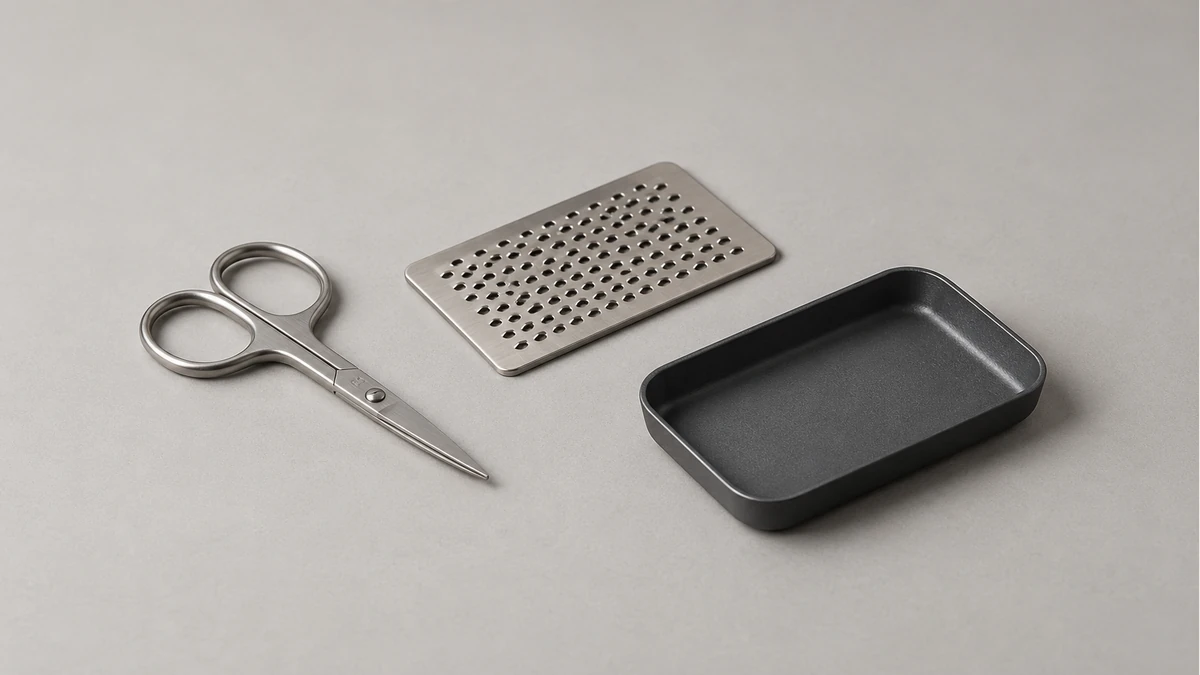
Scissors cut with two blades; a toothed grinder uses a patterned interior and relative rotation between its parts. Neither name, by itself, guarantees a particular particle-size distribution. A pair of scissors also lacks an enclosed collecting space, so the cutting tool and the surface underneath are two separate items to organize. In an older discussion of going without a grinder, replies mention scissors and a glass, hand separation and grinder cards. Another commenter describes a grater becoming sticky. These are individual reports about handling and cleanup. They do not establish which method is fastest or produces the most even result. The useful distinction is mechanical: a blade pair, a perforated surface and a closed toothed chamber do not organize the work in the same way.
✂️ 2.1 Cleanup and Jams
A narrow manufacturer description helps explain the cleaning question. Tahoe Grinder Company’s comparison distinguishes scissor blades from grinder teeth and discusses residue around the blades and pivot. Its broader superiority claims are not treated here as test results. For practical care, inspect the actual accessible surfaces and follow the scissors maker’s instructions. A sticky movement can prompt a cleaning question without establishing that the blade needs sharpening. Stop at an unresolved bind rather than forcing the handles or adjusting the pivot by guesswork. Cleaning, sharpening and mechanical adjustment are separate jobs, and permission to do one does not establish the method for another.
📇 3. Grinder Card: Built for Cutting, Not for Catching
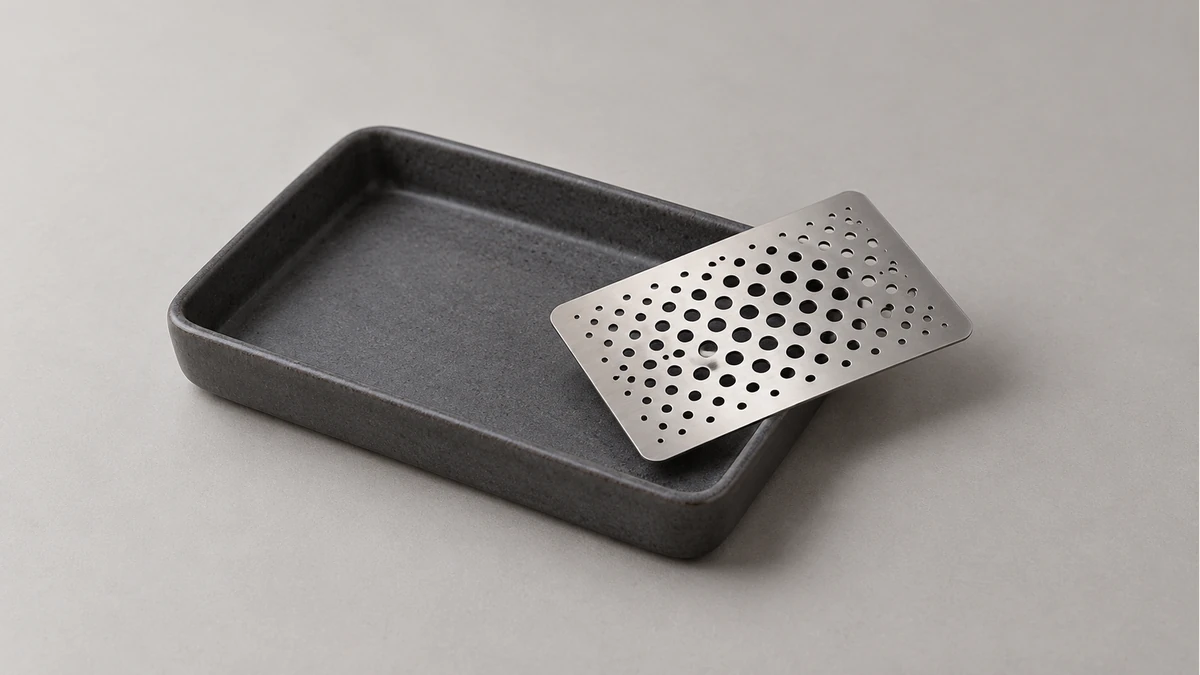
A purpose-built grinder card is a flat tool with a working pattern of openings or raised edges. Its compact shape is easy to recognize once you know what it is, but it does not include a surrounding collection chamber. Pairing the card with a stable catch surface is therefore part of the equipment decision. A tray’s rim can help define the collection area without turning the card itself into a closed grinder. In a discussion about preferring a card grinder, readers ask what the card is and disagree about its convenience. Some mention keeping one in a pouch or wallet, while others prefer a round grinder. These preferences do not establish a universal winner. The visible difference is enough to explain the tradeoff: a flat working surface packs differently from an enclosed round body, and it still needs somewhere for loose pieces to go.
🧹 4. Cleanup Is Different for Each Tool, Not Just More or Less of It
Cleanup changes location with the tool. With scissors, inspect the blades and pivot as the maker directs. With a card, identify the working surface, frame and any coating before choosing a cleaning method. A visible mark does not prove a removable deposit, and a bent edge or missing piece is a different observation from discoloration. Do not treat polishing a mark away as the only acceptable endpoint. The tool’s condition and the permitted care procedure matter more than whether it looks new. Keep a tool with unresolved damage aside for assessment. Also keep the catch tray in the account: a clean card laid into a dirty tray has not completed the whole cleanup task. There is no reason to assume one liquid or abrasive is approved for every blade, finish and tray material merely because they were used together.
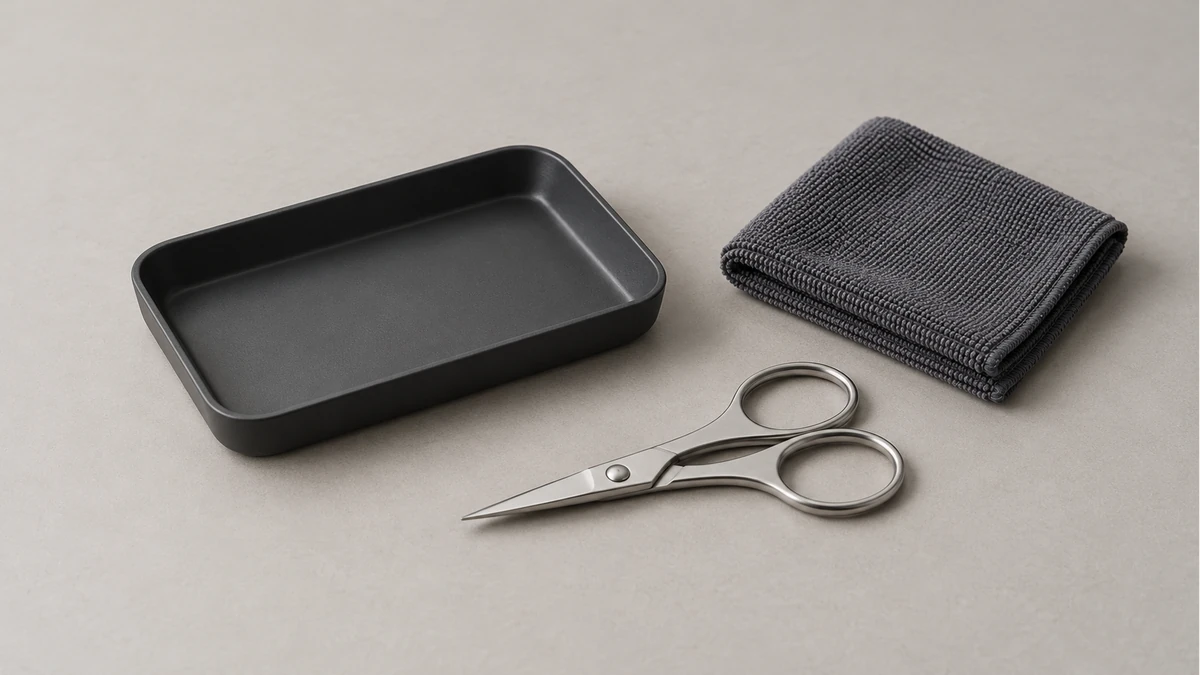
🚫 5. Household Objects Come With Different Instructions
Forum lists often include coins, medicine bottles, kitchen knives and powered food appliances. A comment showing that someone tried an object is not a manufacturer instruction for repurposing it. A coin and bottle do not identify a purpose-built cutting assembly or the condition of the surfaces involved. A knife adds a separate blade and work-surface arrangement, rather than becoming equivalent to scissors because both have edges. A powered coffee grinder or food processor brings its own intended materials, access limits and cleaning instructions. The presence of a motor and blades does not answer whether its manual permits this task. Instead of expanding a list of emergency tricks, identify a dedicated tool whose purpose, accessible surfaces and care method you actually know. An object being close at hand does not resolve those questions.
📦 6. Keep the Whole Set Organized
Think beyond the preparation tool: the catch surface, collection, cleanup and covered storage are separate parts of the job. An open tool does not organize them automatically. A closed grinder provides an enclosure during its intended operation, but that is not a guarantee of an airtight seal or immunity from dust and residue. Likewise, putting a card in a drawer does not identify whether its working edges are protected. Follow the tool’s storage instructions, including any supplied cover or guard, and keep it separated from items that can press against exposed edges. The practical check is whether the entire set can be put away clean and identifiable. Simply finding a container large enough to hold everything does not establish that the arrangement protects each component.
🧳 7. Desk, Bag, and the Tray You Actually Have
A desk and a bag present different organization questions. At a clear table, you may already have room for a separate tray and a place to set down a tool. A card’s flatness can make it compact to store, but it does not create a working surface inside a bag. Scissors need a storage arrangement appropriate to their edges and shape; they are not automatically the least practical option for every person or case. Compare the complete packed set rather than only the size of the cutting tool. The rolling tray guide explains how a tray’s edge, surface and usable space affect organization. A large tray can still be inconvenient if another object occupies the area where the tool needs to rest. These are workspace questions, not measured claims that one alternative will scatter more material than another.
🧳 7.1 Pack the Tool and Catch Surface as Separate Items
A thin card and a shallow tray can fit in different compartments, but they still need to be accounted for as a set. Before packing, identify the surfaces that touch each other. A working edge pressed against a loose cloth or an unprotected pair of scissors beside a soft case lining creates a different storage problem from the original cutting task. Use the supplied guard or documented storage arrangement rather than relying on the bag’s outer zipper to protect every exposed feature inside it.
Keep used tools apart from the surfaces already cleaned. If the kit has several small parts, a clear arrangement makes it easier to notice what is missing before leaving the workspace. A card stored in a sleeve, for instance, can be accounted for separately from the tray and cloth. A second tool does not need to be added just because there is an empty pocket. Extra pieces are useful only if their purpose and cleanup are understood.
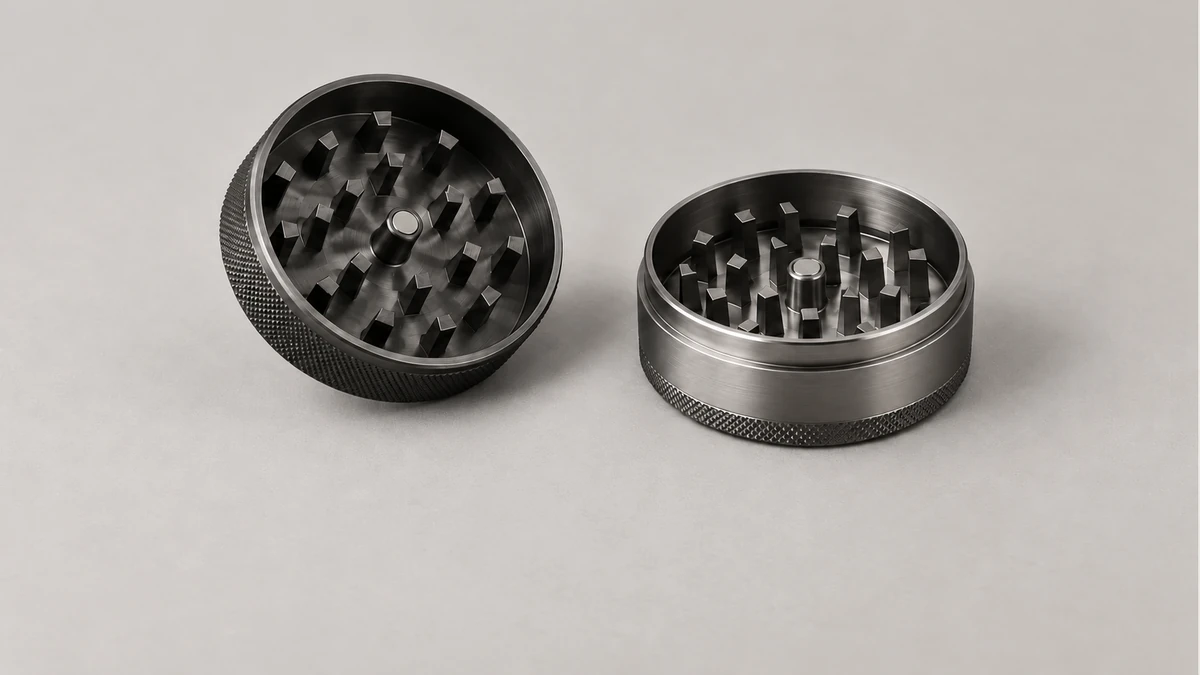
🔁 8. Closed Two-Piece Design Versus Open Alternatives
A two-piece grinder combines a cutting space and enclosure when assembled. That feature is useful to compare with an open card or scissors, while keeping the limits clear: an ordinary lid is not automatically a smell-proof seal, and no shape guarantees that nothing can escape. Our two-piece grinder guide covers the simpler round arrangement. Open alternatives leave more of the containment task to a separate surface or container. Replacing a twisting motion with a cutting or tearing motion therefore changes the distribution of work rather than proving the whole process takes less effort. The motion, setup, collection and care all belong in the comparison. Individual preferences in a discussion can differ without either person describing their own experience incorrectly.
🔁 8.1 Keep Texture Separate From Portability
If the main requirement is a particular texture, identify that requirement separately from whether the tool is convenient to store. Neither scissors nor a card comes with a universal texture limit, and a round grinder does not guarantee uniform pieces merely because it has teeth. The fine-grind guide discusses the role of geometry in that separate question. A generic tool comparison cannot supply a measured particle size or promise that one method duplicates another. Look at the outcome relevant to the actual chamber’s documented requirements rather than assuming the finest-looking result is always preferable.
🧭 9. Matching the Tool to the Situation, Not the Other Way Around
Choose an alternative by the part of the job you can support. Hand separation avoids a separate cutting tool but still needs a clear catch area. Dedicated scissors require care for blades and a pivot. A flat card needs a separate collection and storage arrangement. If the required setup is unavailable, choosing a different tool is more useful than improvising around it. Keep the whole set in view: an identifiable preparation tool, a stable surface, permitted cleanup and protected storage. That turns a broken-grinder problem into a manageable equipment decision without promising identical results or promoting the next household trick.