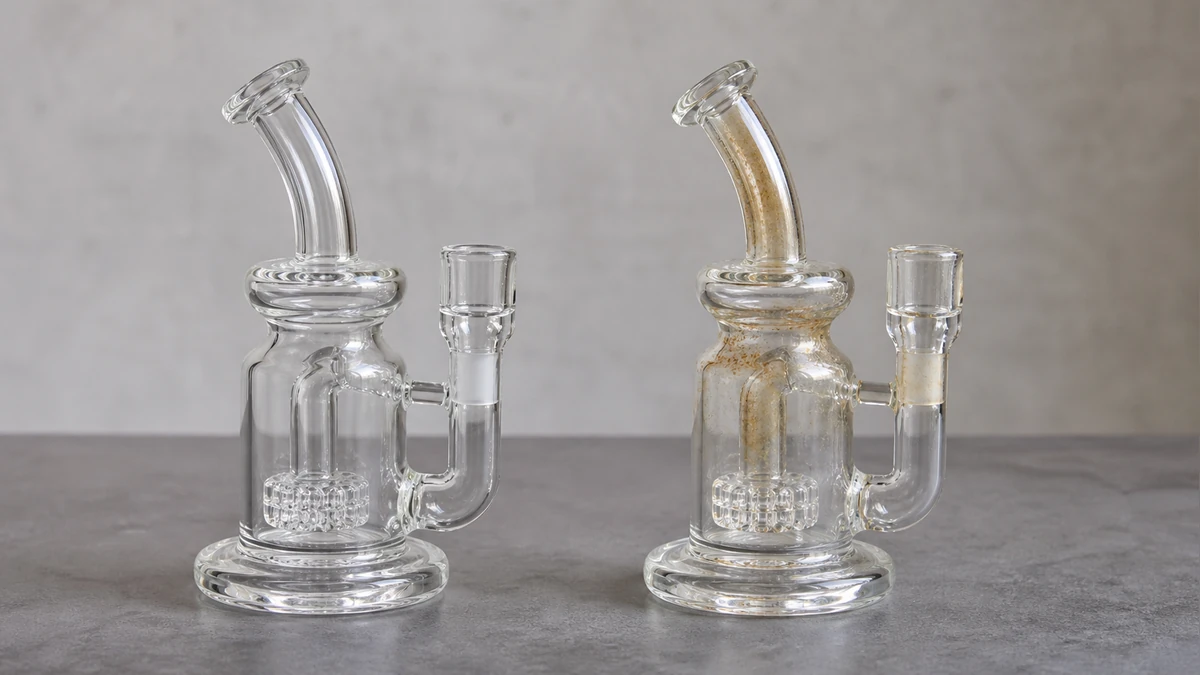
Set two dab rigs on the same table and the difference is obvious before either owner says a word. One rig has a downstem the color of weak tea, glassy and almost clear at the joint. The other looks like it’s been dipped in tar—dark, opaque, thick enough that you can’t see through the chamber walls anymore. Ask both owners how often they use their rigs and you might get similar answers: a few sessions a day, roughly the same habits, nothing unusual. So why does one look clean and the other look neglected?
This is the question that trips up a lot of concentrate-device owners. Reclaim—the sticky residue that condenses inside a rig or chamber after use—gets treated like a report card. Dark and heavy means dirty or careless. Light and clear means diligent and careful. It’s an intuitive read, and it’s also incomplete. Color tells you something real about a rig’s history, but it doesn’t tell you everything, and leaning on it as the only signal can lead to the wrong conclusions about what a rig actually needs.
🔍 1. Where Reclaim Actually Forms
Reclaim isn’t random buildup. It follows the path that vapor takes on its way from the heated chamber to the mouthpiece, and it collects wherever that vapor cools down enough to condense.
🧩 1.1 The Path Vapor Travels
Vapor leaves the heated surface hot and mostly gaseous. As it moves through the joint, down the stem, and through any water or percolator section, it loses heat. Cooler surfaces cause dissolved compounds to condense out of the vapor stream and stick to whatever they touch first—glass walls, joint connections, screens, or the internal chamber of an electric device. That’s reclaim. It’s not contamination introduced from outside; it’s simply material that didn’t make it all the way to the mouthpiece as vapor and instead settled out along the way.
🧩 1.2 Why It Collects Where It Does
Geometry matters as much as usage. A rig with a long, narrow downstem gives vapor more surface area and more time to cool before it reaches open air, so more material tends to collect there. A wider, more direct airpath gives vapor less opportunity to shed heat before it exits, so residue may show up thinner and more spread out, rather than concentrated in one visible spot. Two rigs used identically can still end up looking different simply because the internal path the vapor follows isn’t the same shape.
🧩 2. What Color Actually Reflects
Color is a real signal—it’s just not a single-variable one. Several independent factors shape how reclaim looks, and they compound rather than cancel out.
🧩 2.1 Heat History
Material that’s been exposed to higher or more prolonged heat tends to darken faster than material deposited under gentler conditions. A rig or chamber that regularly runs hotter, or holds heat longer between sessions, will often show darker residue sooner than one that runs cooler, even with similar cleaning habits. This is a byproduct of heat exposure, not a measure of how “used up” or unsafe the device is.
🧩 2.2 Cooling Path and Airflow
How much a rig cools vapor before it reaches the mouthpiece changes both how much reclaim forms and where it forms. A rig with extensive percolation or a long cooling path will often pull more material out of the vapor stream before it ever reaches you, which can mean more visible residue in the water or lower chamber and less further up. A more direct, minimally filtered path leaves more material airborne longer, which can shift where and how buildup appears.
🧩 2.3 Material of the Rig or Chamber
Glass, quartz, and the internal chambers used in electric concentrate devices don’t all interact with residue the same way. Some surfaces show discoloration quickly even with a thin film of material; others stay visually cleaner-looking with a similar amount of buildup simply because the surface doesn’t stain the same way. This is a property of the material, not a claim about which surface is easier or harder to keep genuinely clean.
🧩 2.4 Cleaning Interval
This is the variable most people assume is the whole story, and it is a real factor—but it’s one factor among several, not the explanation on its own. A rig cleaned every few sessions will generally show lighter, thinner residue than one left for weeks. But because heat history, cooling path, and material all interact with how residue looks, two rigs on the same cleaning schedule can still look noticeably different from each other.
🌊 3. What Color Cannot Tell You
Because so many variables feed into how reclaim looks, color alone can’t reliably answer the questions people most want answered by looking at it.
It can’t tell you what a concentrate’s original composition was, since heat and time change the appearance of material regardless of where it started. It can’t tell you whether a rig is functioning correctly—airflow restriction, seal integrity, and electric-device performance depend on internal factors that aren’t visible from the outside, however clear or dark the glass looks. And it can’t stand in for an actual inspection of hard-to-see areas: a downstem can look reasonably clear at the joint while carrying a heavier buildup further down where the eye doesn’t naturally look, or an electric chamber can appear fine at the mouthpiece opening while material has settled in the heating zone itself, out of view.
In short, color is a symptom you can observe, not a diagnosis you can run. Treating a dark rig as automatically “worse” than a lighter one—or a light rig as automatically clean—skips the step that actually matters, which is looking closely at where residue has accumulated and how much airflow or clearance it’s affecting.
🧼 4. Reading Residue as a Maintenance Signal, Not a Verdict
The more useful way to look at reclaim is as a maintenance indicator rather than a judgment. What matters isn’t the shade of the residue but what it’s doing: is it building up in a way that narrows the airpath, coats a screen, or collects near a joint seal? Those are mechanical concerns, and they’re visible if you look for them directly rather than reading color from a distance.
This is also where a lot of owner disagreement about cleaning frequency comes from. Two people with genuinely different usage patterns and different rig geometry can both be maintaining their equipment responsibly while following completely different schedules. Someone using a rig with a long percolated cooling path several times a day will see buildup accumulate differently than someone using a simpler, more direct setup a few times a week. Neither pattern is inherently wrong—the right interval is the one that matches how the specific rig accumulates residue, not a fixed number of days copied from someone else’s setup.
🔄 5. Building a Cleaning Rhythm That Matches Your Rig
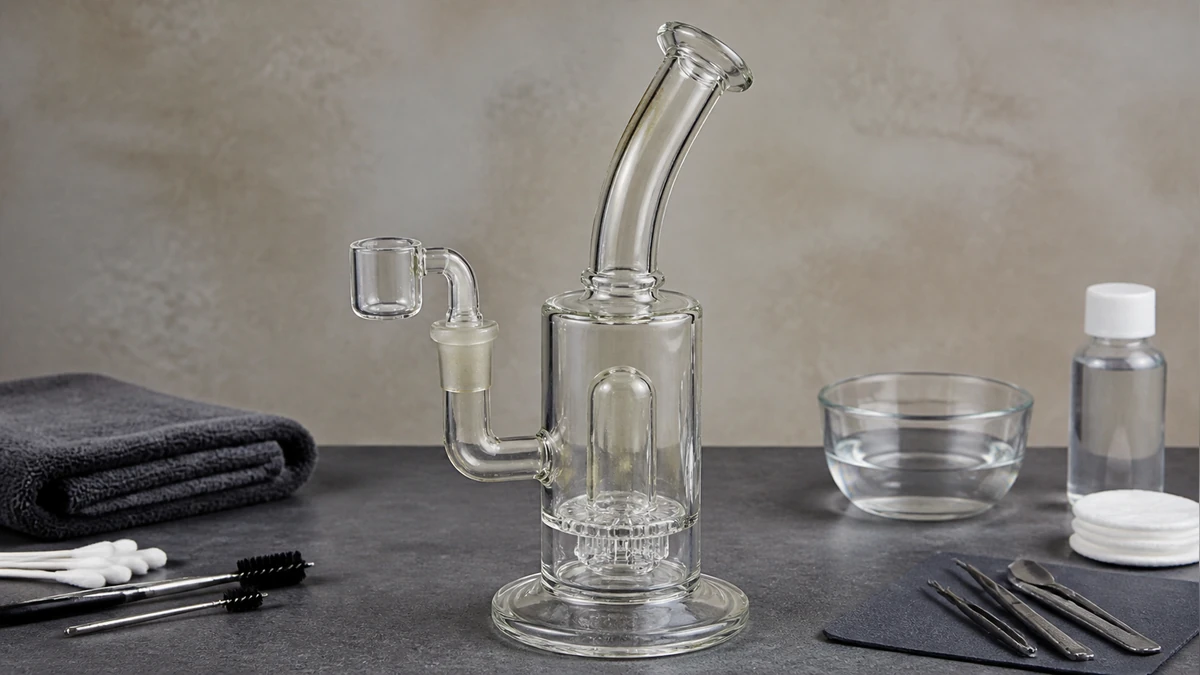
Because geometry and usage vary so much, the most reliable approach is to build a cleaning rhythm around direct inspection rather than a calendar. Checking the joint, downstem, and lower chamber every few sessions gives a much clearer picture than waiting for visible thickness to force the issue. A step-by-step look at a standard glass setup is covered in AOVAPE’s guide on how to clean a dab rig, which walks through the areas that tend to accumulate residue first.
Electric concentrate devices add a wrinkle, since some internal chambers and heating zones aren’t accessible the same way a glass downstem is, and cleaning methods that work fine on glass can damage electronic components or heating elements if used carelessly. AOVAPE’s guide to cleaning an electric dab rig covers the differences in approach for devices with sealed or semi-sealed chambers, including which areas are safe to access directly and which should be handled more conservatively.
Whichever type of device is in question, the underlying principle is the same: inspect before you judge, and let what you actually see—rather than the general color impression—decide whether it’s time to clean.

✅ 6. When Reclaim Signals a Bigger Maintenance Issue
Most reclaim buildup is routine and expected—it’s a normal byproduct of how these devices work, not a sign that something has gone wrong. But there are a few patterns worth paying attention to beyond simple color. If buildup keeps accumulating unusually fast even on a consistent cleaning schedule, if airflow feels noticeably more restricted than it used to, or if residue is collecting in a spot that makes a joint or seal harder to seat properly, those are mechanical signals worth addressing directly rather than assuming they’ll resolve with the next cleaning pass.
For owners weighing whether their current rig or device setup is still the right fit—whether a geometry that accumulates heavy reclaim quickly is simply a mismatch for how they actually use it—AOVAPE’s broader concentrate vaporizer guide is a useful reference point for understanding how different device types and airpaths behave in practice.

Cracks, loose joints, damaged seals, persistent electrical behavior, or residue that cannot be reached using the manufacturer’s approved method are not invitations to improvise. Retire damaged glass and follow the device manual for replacement parts. Reclaim can explain a maintenance pattern; it cannot certify that compromised hardware is safe to keep using.
🧩 6.1 Know When Cleaning Is No Longer the Question
After a full clean, photograph the assembled rig under the same neutral light. A second photo after a typical week or month of use gives you a personal baseline without turning appearance into a laboratory measurement. Compare the same sections of the path and note whether the draw has changed. This is especially useful for complicated glass where the first restriction hides behind a chamber.
🧩 6.2 A Simple Photo Makes Maintenance Less Subjective
This location-first reading prevents two opposite mistakes. One is treating every amber mark as an emergency and cleaning fragile parts more aggressively than necessary. The other is waiting until the entire path is dark even though one small restriction has already changed the draw. The practical trigger is a change in airflow, seating, visibility, or normal cleanup—not a color chart.
Where residue appears is often more useful than its shade. A light film at the first cool bend is expected because that is where vapor loses heat quickly. A thick patch at a narrow joint or removable connector matters sooner because it can interfere with fit, airflow, or inspection. Residue around a seal on an electric device deserves a different response from residue inside removable glass: stop, separate only the parts the manual identifies as removable, and keep liquids away from the powered base.
🧭 7. Use Location, Not Color Alone, to Plan the Next Cleaning
📚 8. Conclusion
Reclaim color tells a real but partial story. It reflects heat history, cooling path, material, and cleaning interval all at once, which is exactly why two rigs used in similar ways can look so different from each other. What color can’t do is stand in for an actual inspection—it can’t confirm airflow, seal integrity, or what’s happening in areas you can’t see at a glance. The more reliable habit is checking the parts that matter directly and cleaning based on what’s actually accumulating, rather than reading a verdict into how dark or light the glass looks from across the table.
📚 9. Sources
- AOVAPE, “How to Clean a Dab Rig” — https://aovape.com/how-to-clean-dab-rig/
- AOVAPE, “How to Clean an Electric Dab Rig” — https://aovape.com/clean-electric-dab-rig/
- AOVAPE, “Concentrate Vaporizer Guide” — https://aovape.com/concentrate-vaporizer-guide/