The biggest daily differences are visibility and odor control. You cannot watch the water line or residue through an opaque wall, and silicone can retain odor if its maker-approved cleaning routine is neglected.
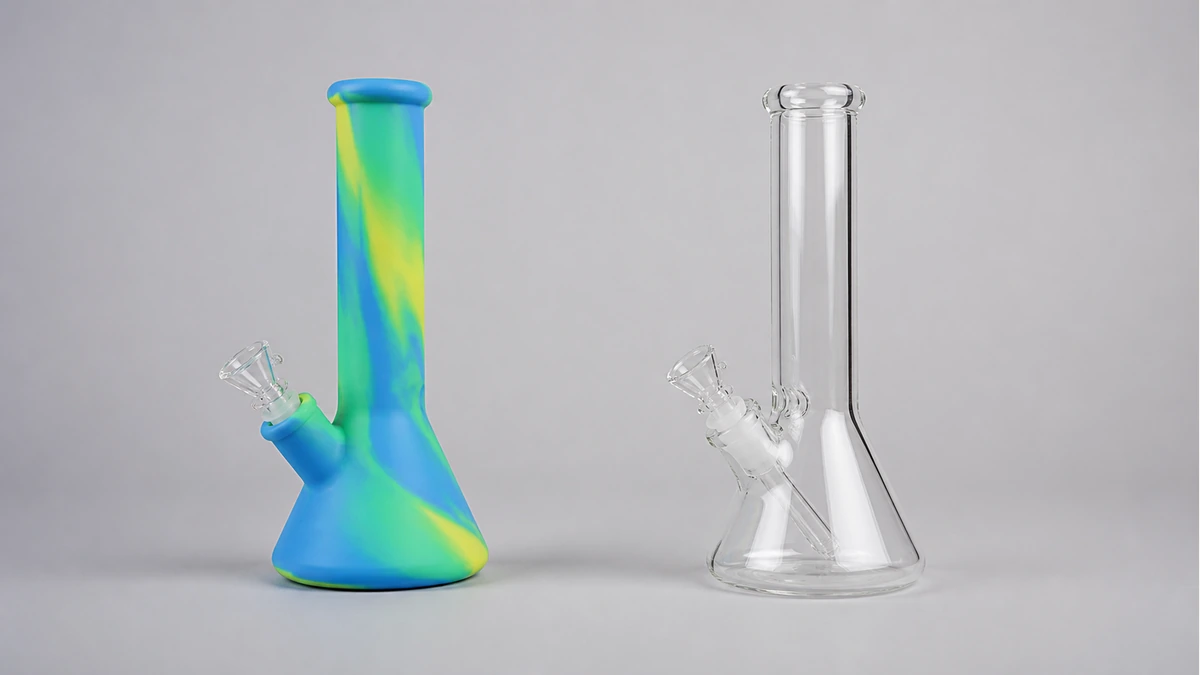
A silicone beaker bong trades the transparency and rigid feel of glass for a body that is much harder to shatter in an ordinary drop. The bowl, downstem, and other hot-path components may still be glass or metal, so “silicone” does not make the entire assembly flexible or impact-proof.
🧱 1. A silicone body changes breakage risk, not every component
The outer wall of a silicone beaker bong is usually a platinum-cure silicone that absorbs impact by deforming rather than fracturing. Drop it on a tile floor and the base compresses and springs back instead of shattering into shards. That’s the entire appeal for anyone who’s broken a beaker base on a bathroom tile or a car floor mat.
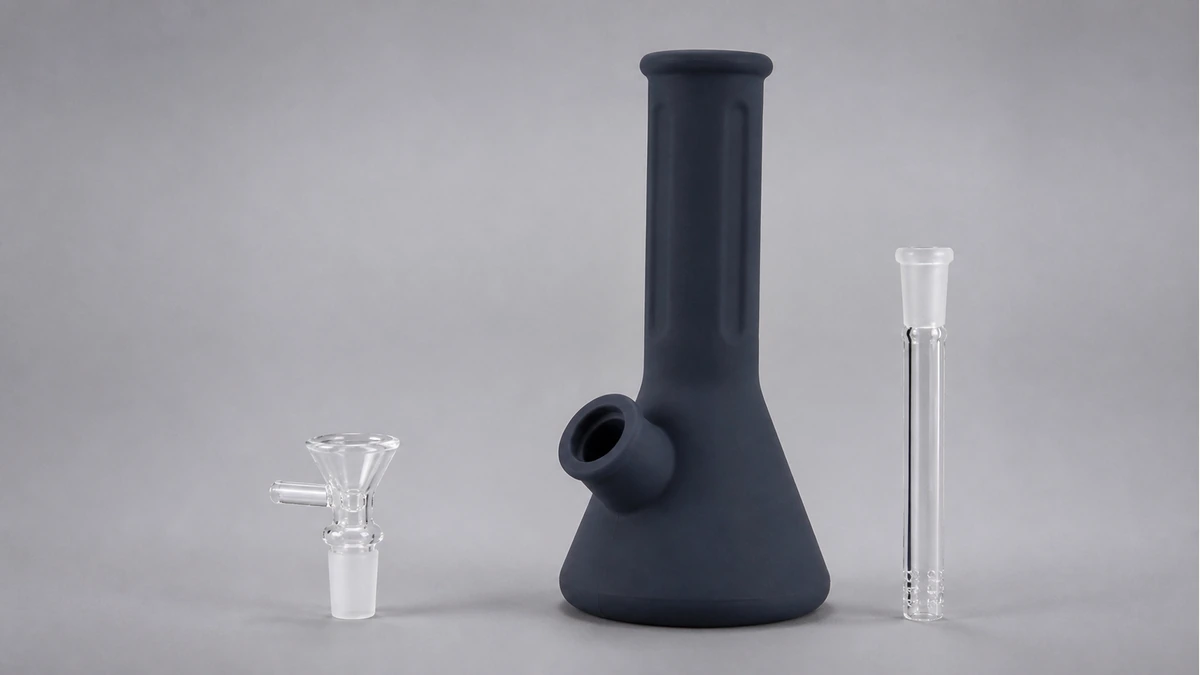
But the bowl and downstem almost always stay glass, and sometimes the joint does too. Silicone can’t hold a flame directly against it without degrading, so the parts that touch heat — the bowl where the herb or concentrate sits, and often the downstem that channels smoke into the water — are made from materials that tolerate that heat cycle. That means the drop-resistance benefit applies mainly to the chamber you’re holding, not to the small glass pieces that still chip or crack if you drop them separately while cleaning or swapping bowls. For a broader look at how silicone and glass trade off across an entire rig rather than just a beaker body, the comparison in silicone dab rig vs. glass covers similar ground for dab setups.
⚖️ 2. The beaker shape still controls stability and water volume
The beaker shape — a wide base tapering to a narrower neck — is a geometry choice, not a material one. That shape lowers the center of gravity so the piece is harder to tip over, and it gives the water chamber more volume than a straight-tube design of the same height. None of that changes when the body is silicone instead of glass.
What does change is how you gauge that volume. In glass, you fill until the water sits a certain distance above the downstem slits, watching it directly. In silicone, the shape still governs how much water the chamber can hold and how stable the base is, but you’re working from feel and habit rather than a clear view of the waterline, which is the next tradeoff worth understanding before you fill one.
👁️ 3. Opaque walls make water level and residue harder to see
Most silicone beaker bongs are opaque, so you can’t look through the wall and see where the water sits or how much residue has built up along the inside. With glass, both of those things are visible at a glance — you know it’s time to dump and refill the water, and you can see film forming before it becomes a real cleaning job. With an opaque silicone body, you lose that visual cue entirely.
Some pieces address this with a clear silicone formulation or a small transparent viewing strip built into the base, which restores some visibility without giving up the flex. Where that feature isn’t present, the practical workaround is routine: fill to a marked or remembered level each time rather than eyeballing it, and dump and rinse on a schedule instead of waiting for visible cues you won’t get. The same logic applies to knowing when the piece actually needs a deeper clean, not just a rinse — a decision covered in more depth in the bong cleaner guide.
🔧 4. Removable glass and metal parts need separate care
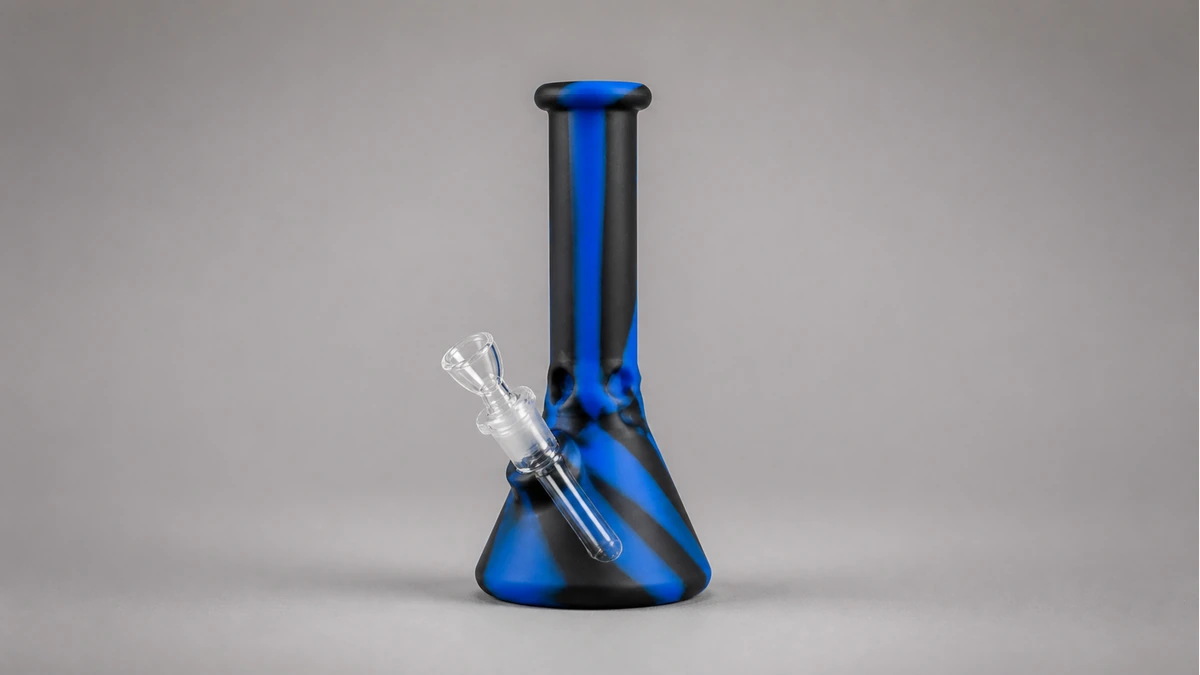
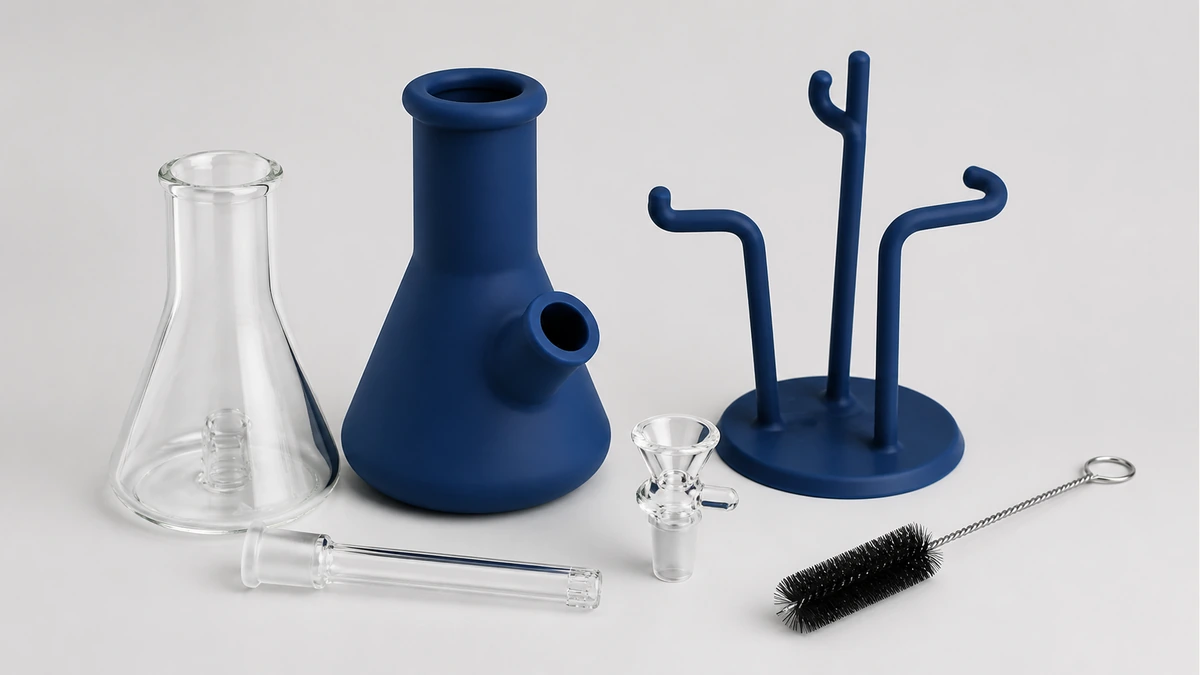
A silicone beaker bong is rarely one uniform material end to end. The chamber is silicone, but the bowl is usually glass or metal, the downstem is usually glass, and some models add a metal poker or a metal joint reinforcement. Each of those materials has its own failure mode and its own care needs, and treating the whole piece as “the silicone one” glosses over that.
Glass parts are brittle and chip on contact with hard surfaces, so they need the same handling as any glass piece — set down gently, stored where they won’t roll or get knocked. That’s the same principle covered for glass-bodied pieces in the soft glass bong guide, and it applies just as much to the glass bowl and downstem sitting inside a silicone shell. Metal parts don’t chip the same way, but they can pit or discolor with certain cleaning solutions over time. The silicone body itself tolerates impact well but has its own heat ceiling — direct flame contact or prolonged high heat can degrade it even though a quick pass near a lighter for the bowl usually isn’t an issue. Keeping these three materials straight in your head is the difference between caring for the piece correctly and applying one cleaning method to all of it and hoping for the best.
👃 5. Odor retention is the central maintenance tradeoff
This is the tradeoff people notice fastest once they’ve owned a silicone piece for a while: it holds onto odor in a way glass doesn’t. Glass is essentially nonporous, so resin sits on the surface and rinses or wipes off cleanly. Silicone has a slightly textured, flexible surface, especially at seams and folds near the base, and resin and other residue can work into that texture rather than staying on top of it.
The result is that a silicone beaker bong that goes a while between cleanings tends to hold a stronger smell than a glass piece left the same amount of time, even after a rinse. It’s not that the silicone is “dirtier” in an absolute sense — it’s that the residue has more surface texture to cling to, so a quick rinse removes less of it. Staying ahead of buildup with more frequent cleaning matters more here than it does with glass, precisely because you can’t see the buildup coming and the material holds onto it more stubbornly once it’s there.
🧼 6. Use only maker-approved cleaning methods
The alcohol-and-salt routine often used for glass is not automatically appropriate for a silicone body. Solvents, heat, abrasives, and dishwasher cycles can affect formulations differently, so the safe method must come from the instructions for the exact product rather than a general material claim.
Remove glass and metal components before cleaning whenever the maker describes them as removable. Wash each material according to its own care limits, rinse thoroughly, and inspect the sealing openings before reassembly. General cadence and technique are covered in the bong cleaner guide, but product-specific solvent and temperature limits still take priority.
✅ 7. Choose silicone when durability outweighs visibility and feel
The decision comes down to which tradeoff bothers you less. A silicone beaker bong makes sense if you’re prioritizing impact resistance — travel, outdoor sessions, a house with kids or pets, or just a track record of dropping things — and you’re willing to lose the ability to see water level and residue at a glance, and to accept that odor builds up faster without regular cleaning.
Glass makes more sense if you want to monitor water level and buildup visually, prefer the feel and rigidity of a traditional piece, and you’re either careful with it or accept the occasional chip or crack as part of owning glass. Neither choice is a strict upgrade over the other; they’re optimized for different failure points. Knowing which failure — a cracked base or an unnoticed smell — you’d rather deal with is really what decides it.
🔍 8. Run a material-by-material maintenance check
Disassemble only the parts the manufacturer describes as removable. Place the glass bowl and downstem where they cannot roll, then inspect the silicone body for tears around openings, distorted sealing surfaces, persistent tackiness, or odor that remains after approved cleaning. Flexible does not mean indefinitely reusable.
Do not assume the method used on glass is appropriate for silicone. Solvents, heat, dishwashers, abrasives, and prolonged soaking can affect formulations differently. Use the maker’s care instructions for the exact product, and wash glass or metal inserts according to their own guidance.
📅 8.1 Visibility requires a schedule
Clear glass shows a darkening water line and film early. An opaque silicone beaker hides both, so maintenance has to follow time and use rather than appearance alone. Empty the water after use, inspect removable components, and choose a cleaning interval that prevents buildup instead of waiting for odor to become the reminder.
Water level needs the same deliberate check. Begin with the diffuser openings just submerged, take an unheated draw, and adjust in small steps. If the body has a molded fill indicator, verify that it applies to the installed downstem because a replacement stem may sit at another depth.
🛡️ 8.2 Durability has boundaries
A flexible base can survive bumps that would chip ordinary glass, but the installed bowl, downstem, and adapters remain breakable. The beaker may also tip if a heavy accessory shifts its center of gravity. Set it on a broad dry surface and support the base while removing tight components.
Choose silicone when drops and transport are the dominant risk and you accept the visibility, feel, and cleaning tradeoffs. Choose glass when seeing water and residue, minimizing retained odor, and inspecting every internal surface matter more.
🧩 8.3 Make the mixed-material design visible in your routine
Use a small tray when disassembling the bong so the glass bowl and downstem cannot roll off the counter while attention is on the flexible body. Inspect the ground joints for chips before reinstalling them. A soft exterior can make the entire object feel casual to handle, but one damaged glass insert is enough to make the assembled piece unsuitable for use.
When comparing products, look for an exploded view that names each material and shows which sections are replaceable. A generic “food-grade silicone” claim does not explain the bowl, grommet, downstem, screen, or connection closest to heat. Clear parts documentation is more useful than a durability demonstration that focuses only on dropping the empty body.
Think about drying before buying. A removable base or wide opening can expose the interior to air and a soft brush, while a molded one-piece chamber may hold droplets beyond view. If the manufacturer offers no way to inspect or fully dry the internal path, the maintenance advantage of a simple beaker silhouette is partly lost.
Finally, treat persistent change as information. A body that remains tacky, deformed, cracked at a port, or strongly odorous after correct cleaning has changed from its original condition. Do not mask the smell or continue adding harsher cleaning methods. Follow the maker’s replacement guidance and retire a component that no longer returns to a clean, intact state. Keep spare glass inserts labeled so a wrong diameter is never forced into a flexible opening. Store every insert dry and protected from the heavier body.
Label removable inserts by diameter and keep them dry, padded, and separate so the flexible body never becomes an excuse to handle fragile glass casually. Before storage, smell and inspect the empty body in good light, flex the ports gently without stretching them, and confirm every glass edge is smooth. Keep the bowl and downstem in their own padded slots rather than loose inside the chamber. On the next setup, repeat the water-only draw test after assembly; it is the quickest way to notice a shifted grommet, an incorrect insert, or a seal that no longer sits evenly.