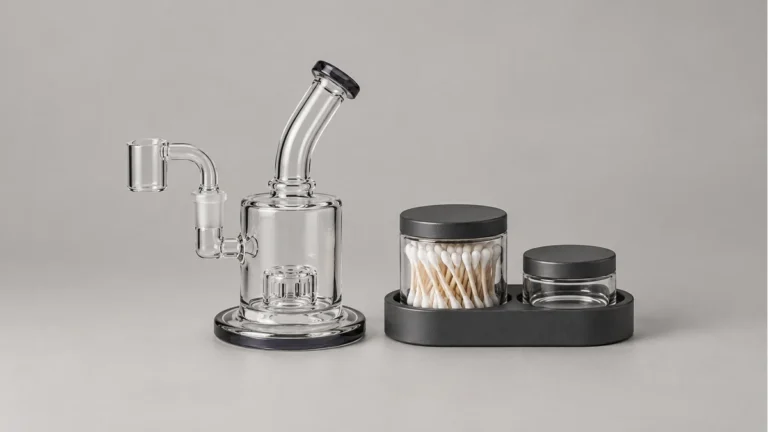
Somewhere between the third festival and the second cross-country flight, most dab rig owners have the same realization: glass and duffel bags don’t mix. A rig that survives a nightstand doesn’t survive a backpack getting kicked under a bus seat, and that’s the exact moment silicone rigs earn their keep. But the same flexible body that shrugs off a drop also changes how the piece smells, how it cleans, and how much you can actually see of what’s happening inside it. None of that makes silicone rigs a lesser choice — it makes them a different tool with a different set of tradeoffs, and those tradeoffs are worth understanding before you buy one.
🔍 1. Why Silicone Survives What Glass Doesn’t
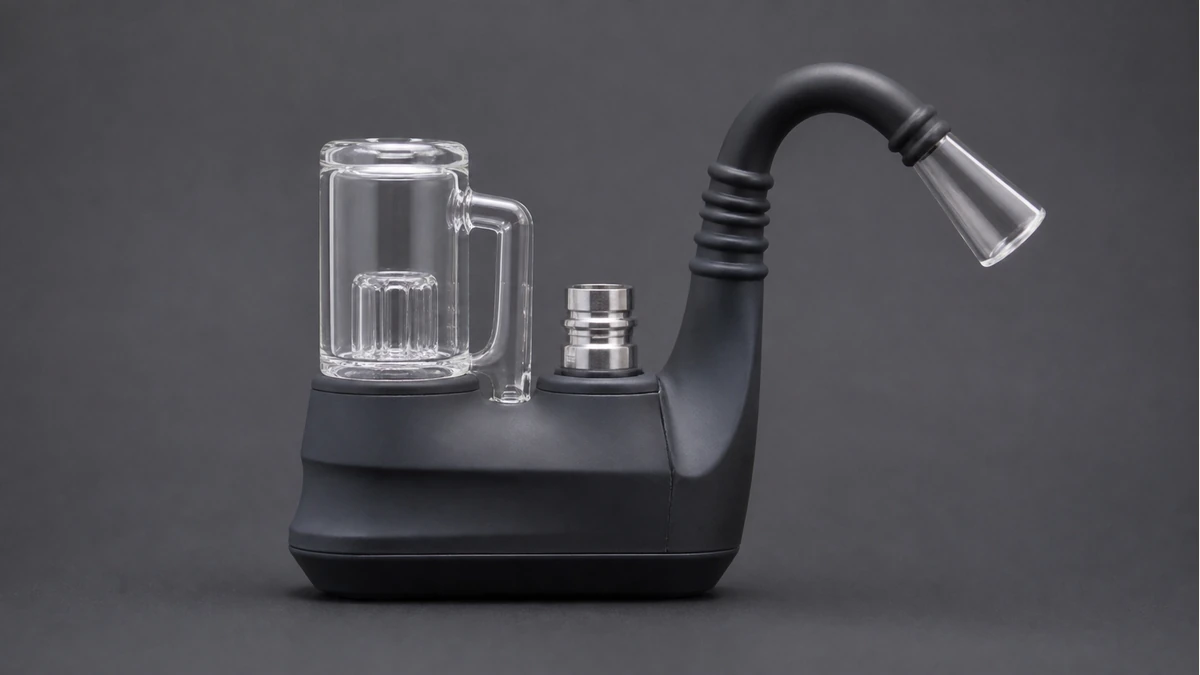
The appeal starts with the obvious thing: a flexible silicone body can absorb ordinary bumps that would send impact directly through a rigid glass wall. Material grade still has to be documented by the manufacturer rather than assumed from appearance. Drop a glass rig on a tile floor and the energy has nowhere to go — it concentrates at the thinnest point, usually the joint or the base, and that’s where it cracks. Drop a silicone rig and the body deforms, absorbs the shock, and springs back. That single property is why silicone shows up so often in gear built for travel, festivals, shared houses, and any setting where a rig gets passed around, tossed in a bag, or set down on an uneven surface without much thought.
It also matters for people who are simply less careful by nature or circumstance — someone dabbing while cooking, someone with pets or kids moving through the same room, someone who just doesn’t want to think about where they set a piece down. Silicone lowers the stakes of ordinary carelessness. For a broader look at how portability changes rig design beyond just the shell material, the portable dab rig guide is a useful reference point, since travel-friendly rigs tend to bundle several compromises — smaller chambers, collapsible bodies, simplified percolation — and silicone construction is usually one piece of that larger picture rather than the whole story.
Weight is the other underrated factor. A silicone rig is noticeably lighter than an equivalent glass piece, which matters less at home and more when it’s one more thing in a bag that already has too much in it. Buyers comparing rigs for actual travel use, not just occasional home use, tend to weigh silicone bodies favorably for exactly this reason.
🧩 2. What Should Never Be Silicone
Here’s where the enthusiasm needs a correction. Silicone is not heat-resistant enough to sit anywhere near direct flame or a hot nail, and no reputable rig design asks it to. The parts that make contact with concentrated heat — the nail or banger, and often the downstem or the joint collar closest to it — are glass, quartz, or titanium on every silicone rig worth buying. The silicone body exists to protect the rig structurally; it is not, and should never be marketed as, a heat-management material.
This is the detail that separates a well-designed hybrid rig from a gimmick. A properly built silicone rig keeps the hot components isolated in a dedicated glass or quartz section, usually a removable joint or a bell-shaped glass insert that sits in a reinforced silicone collar. The heat stays where it’s supposed to, the silicone stays cool enough to handle, and the two materials never fight each other. If a rig’s marketing suggests the silicone itself tolerates direct torch heat, that’s a claim worth being skeptical of — it’s not how the material behaves, and no manufacturer should be implying otherwise.
What this means practically for buyers is that “silicone rig” is a bit of a misnomer. Almost every rig worth considering is a hybrid: a silicone body doing the structural and protective work, paired with glass or quartz doing the heat-contact work. The real product category isn’t silicone-versus-glass — it’s how intelligently a given rig separates the two jobs.

⚙️ 3. Odor Retention and the Limits of Visual Inspection
Two things change the moment silicone enters the picture, and both come up constantly in owner conversations: smell and visibility.
Glass is nonporous and essentially inert. Residue sits on the surface, and once it’s rinsed off, it’s gone — no smell left behind, no residue trapped in the material itself. Silicone, even food-grade silicone, has a slightly porous, slightly more absorbent surface at a microscopic level, and over repeated use it can pick up and hold odor in a way glass doesn’t. This isn’t a defect; it’s simply a property of the material. A well-maintained silicone rig, cleaned promptly and regularly, won’t become an odor problem — but a neglected one will hold onto smell longer than a neglected glass piece would, and that difference becomes noticeable the longer a rig goes between cleanings.
The second difference is visibility. Part of how experienced users judge a rig’s condition — and judge when it needs cleaning — is by looking through it. Glass makes buildup, discoloration, and water clarity immediately obvious. An opaque or colored silicone body hides that information. You can’t glance at a silicone rig and see residue accumulating on an interior wall the way you can with glass, which means the cleaning schedule has to be based on habit and use frequency rather than visual cues. This is one of the more common points of confusion for people switching from glass to silicone for the first time — they simply can’t inspect the piece the way they’re used to, and it takes a deliberate routine to compensate.
Some hybrid designs address this directly by using clear or translucent silicone for the main chamber, or by keeping the water chamber itself in glass while the rest of the body is silicone. If visual inspection matters to you — and for anyone who cleans by sight rather than by schedule, it usually does — that design detail is worth checking before buying rather than after.
🧼 4. Cleaning Silicone Versus Glass
Cleaning approach is where the two materials diverge most in daily practice, and it’s worth being specific rather than hand-wavy about it.
- Glass and quartz components — the banger, nail, or any removable glass section — get the standard treatment: isopropyl alcohol and coarse salt, agitated, then rinsed clean. Removable glass sections should be cleaned only according to the maker’s instructions and allowed to return to room temperature before reassembly.
- Silicone bodies generally should not soak in isopropyl alcohol for extended periods, since prolonged solvent exposure isn’t ideal for the material long-term. Warm water with a mild dish soap, combined with a soft brush for interior surfaces, is the more appropriate everyday method.
- Do not assume a silicone part belongs in a dishwasher. Detergent, heat and the geometry of embedded or bonded components vary, so the product instructions should control the cleaning method.
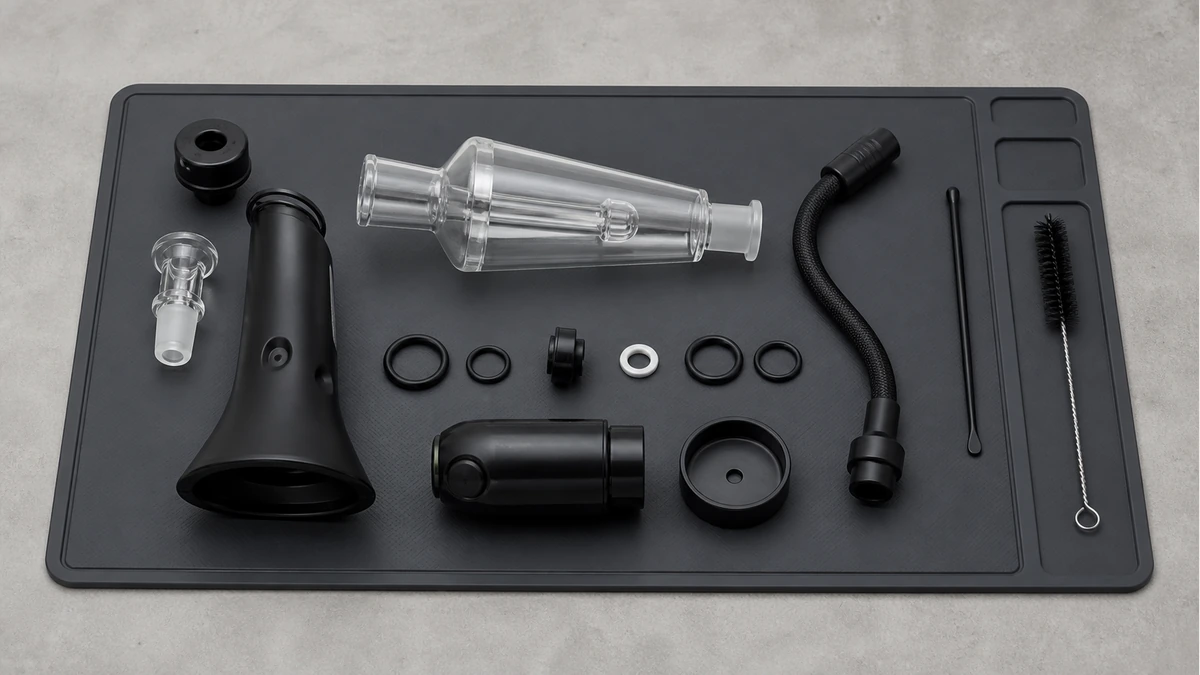
- Separate the glass and silicone components before cleaning whenever the design allows it. Cleaning them independently, with the method appropriate to each material, gets better results than treating the whole rig as one object.
For anyone who wants the full breakdown — frequency, drying, what to avoid soaking, and how residue behaves differently across materials — the guide to cleaning a dab rig covers the process in more detail than fits here. The short version for silicone owners specifically: clean more often, soak less aggressively, and take the pieces apart rather than washing the rig as a single unit.
📏 5. Joint Design, Visibility, and Replaceable Glass
Joint quality is where a lot of the actual difference between a good hybrid rig and a mediocre one shows up. Because the joint is usually the interface between the silicone body and a glass or quartz component, it has to do double duty: hold a secure, wobble-free seal, and survive repeated removal for cleaning or for swapping in a replacement piece if the glass section ever cracks or a nail wears out.
That replaceability is actually one of silicone’s underrated advantages. Because the glass or quartz section is often a standard-sized removable piece rather than fused permanently to the body, it can typically be replaced on its own without retiring the whole rig — something that isn’t possible with a one-piece glass rig, where a crack anywhere usually means the rig is done. Buyers who expect to use a rig hard, for years, sometimes value that repairability more than they value the initial break resistance.
The tradeoff is fit. A loose or poorly molded silicone joint can wobble, leak slightly, or let a glass insert sit at a slight angle — problems a fused glass joint never has. It’s worth checking, ideally in hand or through detailed photos, that the joint has enough grip and a snug enough tolerance that the glass section seats securely and doesn’t shift during use.
🔄 6. Hybrid or All-Silicone: Matching the Rig to the Owner
Nobody actually buys a truly all-silicone rig with a silicone nail — that’s not a serious product category. The real decision is how much of the rig is silicone versus glass, and that decision should track how the piece will actually be used.
| Owner situation | Better fit | Why |
|---|---|---|
| Frequent travel, festivals, outdoor use | Mostly silicone body, glass/quartz joint and nail only | Maximum drop protection, minimal glass surface area exposed |
| Home use, values easy visual inspection | Hybrid with clear silicone or glass chamber | Keeps the ability to see buildup and water clarity |
| Shared household, kids or pets nearby | Mostly silicone, reinforced joint | Reduces breakage risk from incidental contact |
| Prioritizes vapor path taste and clarity above all | Full glass, or glass-dominant hybrid | Nonporous glass path minimizes any material-related flavor interference |
For anyone still weighing the category broadly, it helps to look at the full range of options rather than deciding in the abstract — the dab rigs lineup is a reasonable place to compare how much glass versus silicone different builds use, since that ratio, not the “silicone rig” label itself, is really what determines how a given piece will hold up and feel in daily use.
🧰 7. Frequently Asked Questions
Is a silicone rig automatically less durable in terms of vapor quality?
Not automatically — the glass or quartz section that touches heat and vapor is what determines flavor and airflow. A well-designed hybrid rig with a properly sized glass or quartz path performs comparably to a similarly sized all-glass rig in that respect.
Can silicone rigs go in a dishwasher?
Many silicone bodies and removable silicone parts can, typically on a top rack away from heating elements, but this depends on the specific piece — check the manufacturer’s guidance rather than assuming.
Do silicone rigs need to be cleaned more often than glass?
Effectively yes, since silicone’s slightly porous surface holds odor and residue more readily than nonporous glass, and the opacity of many silicone bodies removes the visual cue that normally prompts cleaning.
Should the nail or banger ever be silicone?
No. The heat-contact component should always be glass, quartz, or titanium. Silicone isn’t built to tolerate direct torch heat.
📦 8. The Bottom Line
Silicone rigs solve a real problem — breakage from ordinary drops and rough handling — and they solve it well. What they don’t solve, and shouldn’t be expected to solve, is heat contact, which is why every credible silicone rig keeps its nail and banger in glass or quartz. The rest comes down to matching the ratio of silicone to glass with how the rig will actually be used: more silicone for travel and rough handling, more glass or a clear chamber for anyone who wants to inspect the piece by eye and keep odor retention to a minimum. Neither approach is universally better. The right rig is the one whose material split matches the life it’s actually going to live.