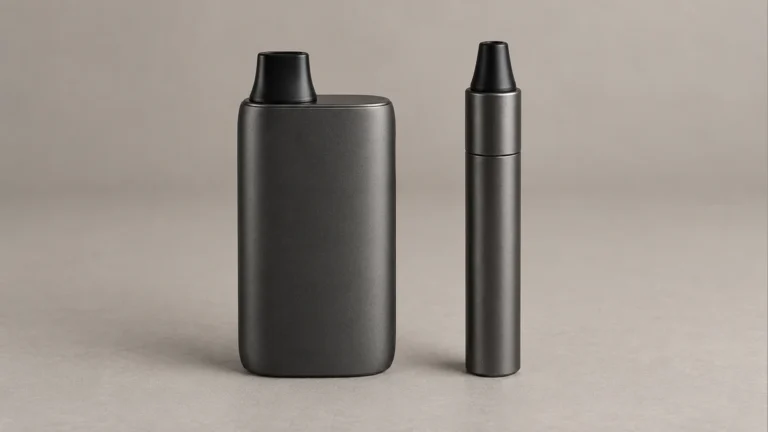
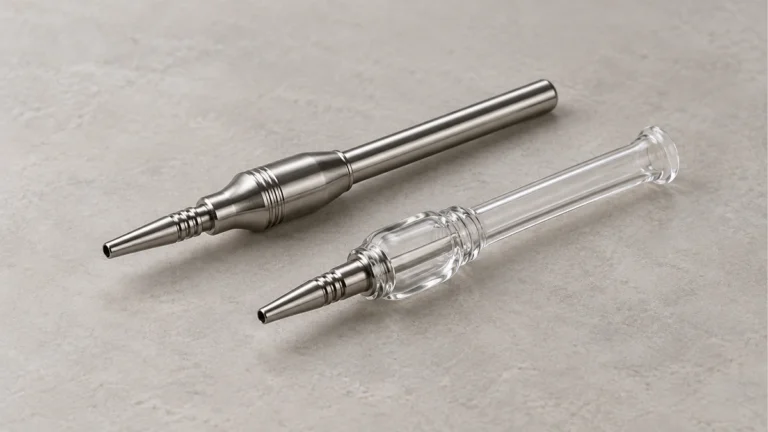
Type “portable dab rig” into a search bar and you’ll get a wall of small glass pieces that all look roughly the same: short necks, tiny percolators, maybe a rubber base. Most of them are genuinely small. Very few of them are actually built to survive a backpack, a rideshare, or a weekend at a festival where your bag gets tossed around more than you’d like to admit. Pocketable and travel-friendly are two different promises, and the gap between them is where most buyers get burned — sometimes literally, when a hot piece gets shoved into a bag before it’s cooled.
The difference usually comes down to details that never make it into a product photo: how the glass is protected, whether water stays where it belongs, what happens to the parts that were just glowing hot, and how you charge or clean the thing when you’re nowhere near your kitchen sink. This guide walks through what actually separates a rig you can travel with from one that just happens to be small.
🔍 1. Pocketable Isn’t the Same as Travel-Ready
A four-inch piece of glass is technically pocketable. Whether it’s travel-ready depends on what happens to it between uses. Reddit threads on portable dabbing are full of people describing rigs that fit in a bag but arrive home with a hairline crack, a lost cap, or a puddle of water-and-resin in the bottom of a pouch — not because the rig was poorly made, but because it was never designed with transport in mind. It was designed to be small, which is a different engineering problem.
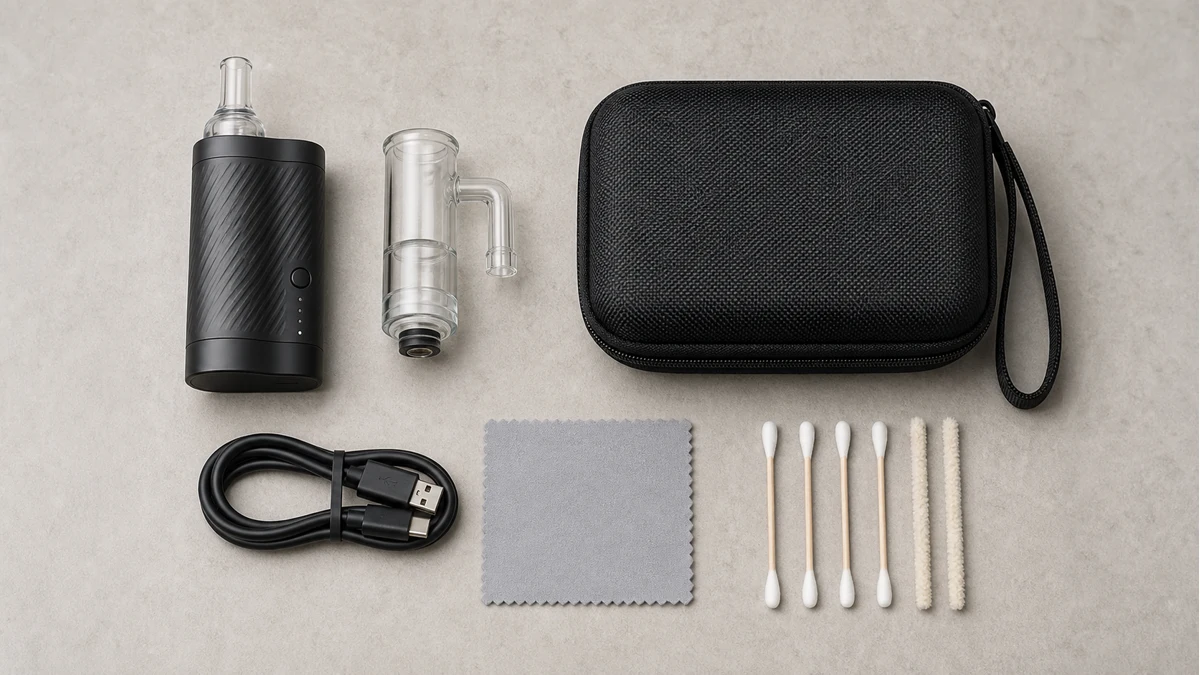
Genuinely travel-friendly setups tend to share a handful of traits: reinforced or recessed joints instead of exposed ones, a way to seal water inside during transport, a dedicated spot for the atomizer or nail once it’s hot, and a charging or heating system that doesn’t require carrying a butane torch through airport security or across state lines. None of that shows up in a thumbnail image, which is exactly why it’s worth checking before you buy rather than after you’ve already packed for a trip.
If you’re still comparing formats broadly — electric versus torch, glass versus silicone-hybrid — AOVAPE’s overview of types of dab rigs is a useful starting point before you narrow down to travel-specific features.
⚙️ 2. Glass Protection: The Part That Breaks First
Glass is the component most likely to end a trip early, and it breaks in predictable places: thin necks, exposed percolator arms, and joints that stick out past the silhouette of the base. A rig that looks compact in a store display can still have a percolator arm jutting out at an angle that catches on the corner of a bag every time you reach for something else.
🧩 2.1 Percolators and Extra Joints Add Fragility
More percolation generally means smoother hits, but it also means more glass surface area and more joints, each one a potential failure point. For a rig that’s going to live in a backpack rather than sit on a shelf, a simpler chamber with fewer protruding parts is often the more durable choice, even if it trades away a bit of filtration.
🧩 2.2 Cases That Actually Cradle the Glass
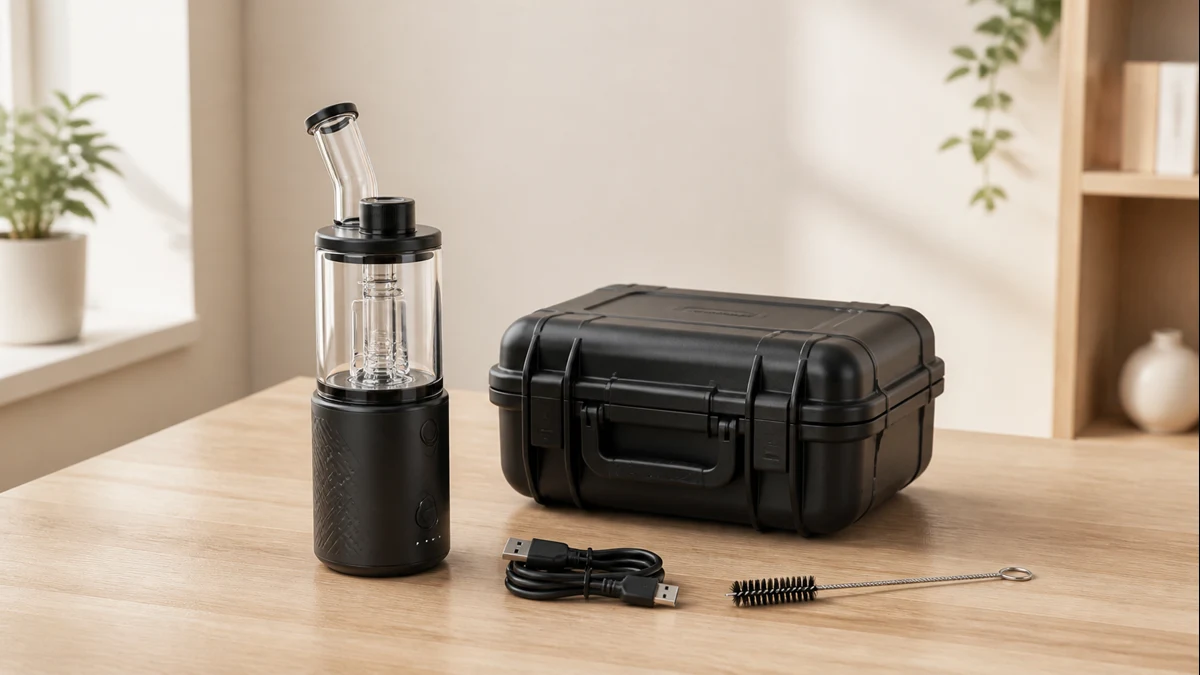
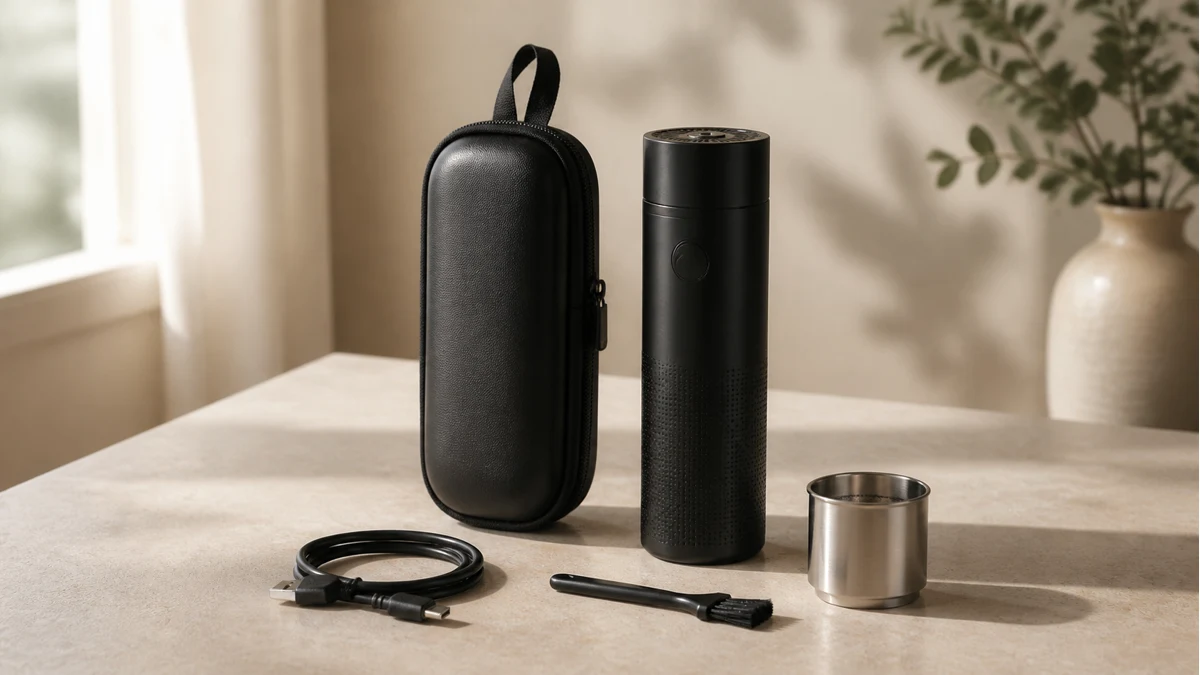
A soft pouch is better than nothing, but it doesn’t stop glass from knocking against a laptop or a water bottle inside the same bag. Look for a case with a molded or foam-lined interior that holds the piece in a fixed position rather than letting it slide. If a rig ships with only a thin drawstring bag, budget for a hard case separately — AOVAPE’s dab rig accessories guide covers the kind of protective and storage add-ons worth considering.
🧩 3. Water Handling So It Doesn’t Leak in Your Bag
Water filtration is one of the main reasons people choose a rig over a simpler vaporizer or wax pen in the first place, but water and travel don’t naturally get along. A percolator that’s perfectly fine sitting upright on a table can slosh and leak the moment a bag tips sideways in a car seat or gets set down at an angle.
🧩 3.1 Caps, Plugs, and Travel Mode
The rigs that handle this well usually include a cap or plug for the mouthpiece and sometimes a separate seal for the water chamber itself, letting you carry it half-full without it dripping onto everything else in the bag. If a rig doesn’t come with any kind of travel seal, the safest habit is to empty the water chamber before you move it and refill once you’ve arrived — not elegant, but it beats discovering a wet bag later. Some accessory kits sell universal caps sized for common joint diameters, which is another reason it’s worth browsing dab rig accessories rather than assuming the stock parts are all you’ll ever need.
🧰 4. Where the Hot Parts Go When You’re Not Dabbing
This is the step people skip when they’re in a hurry, and it’s the one with real safety consequences. A quartz banger, ceramic nail, or coil-heated atomizer can stay hot well after the last hit, and packing it away too soon means a heated surface pressed against fabric, plastic, or skin.
🧩 4.1 Tools for Handling a Hot Nail or Coil
Some manufacturers build dedicated tools for exactly this problem. Puffco, for example, publishes guidance on using its Hot Knife accessory specifically to handle a heated nail without touching it directly, which reflects a broader point: a rig designed for travel should give you some way to manage a hot component besides waiting around and hoping it cools fast enough. A silicone-tipped tool, a heat-resistant carb cap with a handle, or a case with a separate insulated compartment for the nail all solve the same problem in different ways. If the rig you’re considering doesn’t offer any of these, ask how the manufacturer expects you to handle that part once it’s done its job.
⚡ 5. Charging and Battery Considerations on the Road
Electric and coil-based portable rigs trade a butane torch for a battery, which is generally the more travel-practical choice — no flame source to carry through security, no fuel canister rattling around in a bag. But a battery introduces its own set of things to plan for.
🧩 5.1 Ports, Cables, and Passthrough Habits
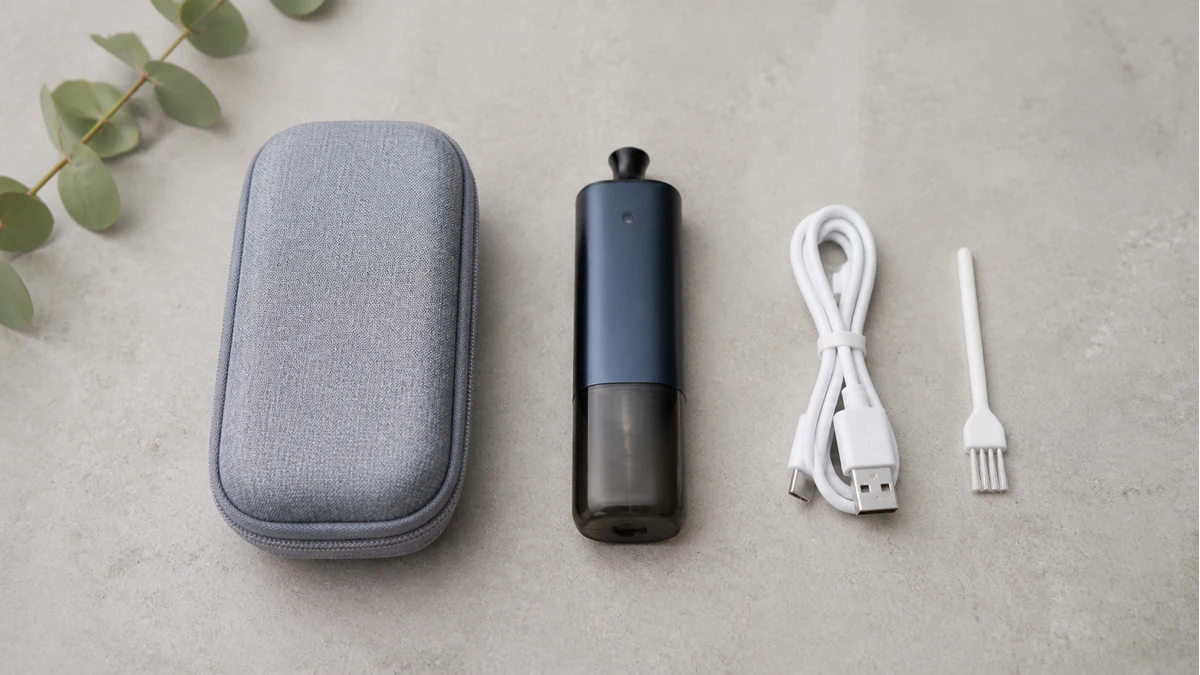
Check what charging cable the device actually uses; a proprietary cable is one more thing to lose on a trip, while a common USB-C connection means you can likely borrow a cable if yours goes missing. Some batteries, like CCELL’s M3B Plus, support pass-through charging so the device can be used while plugged in — a feature worth checking for if you don’t want downtime waiting for a full charge. For general battery safety on the road, the U.S. Consumer Product Safety Commission’s guidance on high-energy batteries is a reasonable baseline: avoid charging unattended, keep batteries away from extreme heat, and don’t charge a device that shows signs of physical damage. None of that is dab-rig-specific, but it applies just as much to a rechargeable rig as it does to any other lithium-battery device you’d throw in a bag. AOVAPE’s vape battery charger guide goes deeper on charging habits if you want more detail.
🧼 6. Cleaning Access and Replaceable Atomizers
Every dab rig needs cleaning, but a travel rig needs to be cleanable without a full kitchen setup — no soaking overnight in isopropyl alcohol at a friend’s place, no disassembling six pieces on a hotel bathroom counter. Wide-mouth joints, removable mouthpieces, and fewer fused parts all make quick cleanups more realistic.
🧩 6.1 Coils vs Quartz: What’s Easier to Service Away From Home
For coil-based portable rigs, a replaceable atomizer matters more once you’re traveling than it does at home, simply because a burnt-out coil is harder to deal with when you’re not near your usual supplier. CCELL’s own product pages describe how the coil and wick assembly inside a cartridge is the part that wears out fastest with use — the same basic principle applies to atomizer heads in portable rigs, where the heating element is a wear item, not a permanent fixture. Before buying, check whether replacement atomizers are sold separately and whether swapping one out requires tools or just unscrews by hand. AOVAPE’s comparisons of quartz vs. ceramic coils and the general explainer on how an atomizer works are both useful if you’re unfamiliar with how these heating elements age and fail. For rigs with more traditional glass attachments, AOVAPE’s how to clean a dab rig guide and the comparison of nails, bangers, and e-nails cover maintenance for those formats specifically.
🔍 7. A Pre-Purchase Checklist Before You Swipe Your Card
Before adding a “portable” rig to your cart, it helps to separate what actually affects travel durability from what’s just marketing language. The table below isn’t exhaustive, but it captures the questions that tend to matter most once a rig leaves the house.
| What to check | Why it matters for travel |
|---|---|
| Joint and percolator design | Fewer exposed protrusions means fewer breakage points in a bag |
| Included case or pouch | A molded, fitted case protects far better than a loose drawstring bag |
| Water seal or travel cap | Prevents leaks when the rig is carried at an angle or on its side |
| Hot-part storage solution | Reduces the risk of a heated nail or coil touching skin or fabric |
| Charging cable type | A standard USB-C cable is easier to replace on the road than a proprietary one |
| Replaceable atomizer availability | Lets you keep using the rig if a coil wears out away from home |
If a listing doesn’t answer most of these questions, that’s usually a sign the rig was designed to look small in photos rather than to actually travel well. It’s also worth glancing at how a brand approaches manufacturing more broadly — AOVAPE’s page on OEM/ODM production is a useful reference if you’re curious how these components come together before they reach a store shelf.
❓ 8. Frequently Asked Questions
Is a coil-based portable rig easier to travel with than a torch-and-glass setup?
Generally, yes, mainly because it removes the need to carry a butane torch, which can be inconvenient or restricted in certain transit situations. That said, a coil-based rig still has a battery and an atomizer to manage, so “easier” doesn’t mean “maintenance-free.”
Can I carry a dab rig with water still in it?
You can, but only if the piece has a proper seal or travel cap. Without one, tipping or shifting during transport is likely to cause a leak, so emptying the chamber beforehand is the more reliable habit.
How do I know if an atomizer is actually replaceable before I buy?
Look for the manufacturer explicitly selling replacement coils or heads as a separate item, and check whether the listing or manual describes how the atomizer connects — screw-in threads are a good sign, while a sealed or glued assembly usually means the whole unit gets replaced instead.
Do all portable rigs need a hard case?
Not strictly, but anything without one should be treated as fragile. A soft pouch might be fine for a short trip across town; it’s not enough for checked luggage or a backpack full of other gear.
✅ 9. Making the Call
If you’re choosing between two rigs that look similarly “portable,” let the details decide it: the one with a fitted case, a sealed water chamber, a clear place to stash a hot nail, a standard charging cable, and an atomizer you can replace on your own is the one that will still be working the same way six months from now. The one that’s just small will probably get you through a trip or two before something cracks, leaks, or burns a hole in a bag pocket. Buy for the second trip, not just the first photo.
📚 10. Sources
- U.S. Consumer Product Safety Commission — High-Energy Batteries safety guidance
- CCELL — Cartridge design overview
- CCELL — M3B Plus battery product page
- Puffco — How to use the Puffco Hot Knife