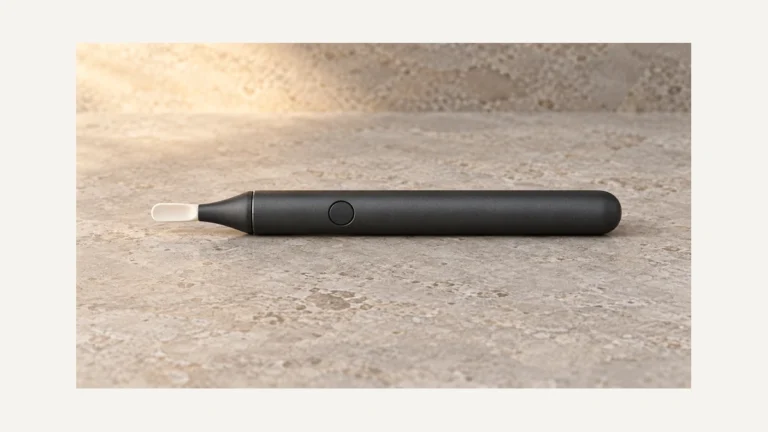
A small vape mod isn’t defined by a marketing label; it’s defined by how much of the device’s volume goes toward the battery and how much goes toward everything else — the tank, the button, the screen, the airflow. Put a compact tube mod next to a boxy dual-cell device and the difference isn’t just outer dimensions. It’s where the compromises land: shorter body means less room for a large cell, a thick tank overhangs the chassis more visibly, and heat from the coil sits closer to your hand. None of that makes a small mod worse — it just means the tradeoffs move from the outside of the box to the inside of how the device behaves in daily use.
Shoppers comparing compact regulated mods to larger single- or dual-cell devices are usually trying to answer one practical question: can something this small still work as a daily device, or does the smaller footprint force a compromise that shows up every time you vape? The honest answer is that it depends on which corner gets cut — cell capacity, power ceiling, tank compatibility, or serviceability — and every small mod cuts a different one.
🧭 1. Small mods save volume by moving the compromises inward
Every cubic centimeter removed from a mod’s housing has to come from somewhere. Manufacturers typically shrink one of three things: the battery compartment, the internal circuit board and its heat-dissipation space, or the wall thickness of the chassis itself. A mod that looks compact from the outside might still house a full-size cell with almost no clearance around it, which changes how the device manages heat during use compared to a larger body with more internal airflow.
This is why two mods with similar exterior measurements can behave very differently. One might use a smaller cell to leave breathing room around the circuitry, favoring longevity and stable output over raw capacity. Another might squeeze in a larger cell and rely on a tighter thermal budget, favoring runtime over comfortable handling during sustained use. Neither approach is inherently better — but a buyer comparing two similarly sized mods is really comparing which internal tradeoff each manufacturer chose, not comparing size for size.
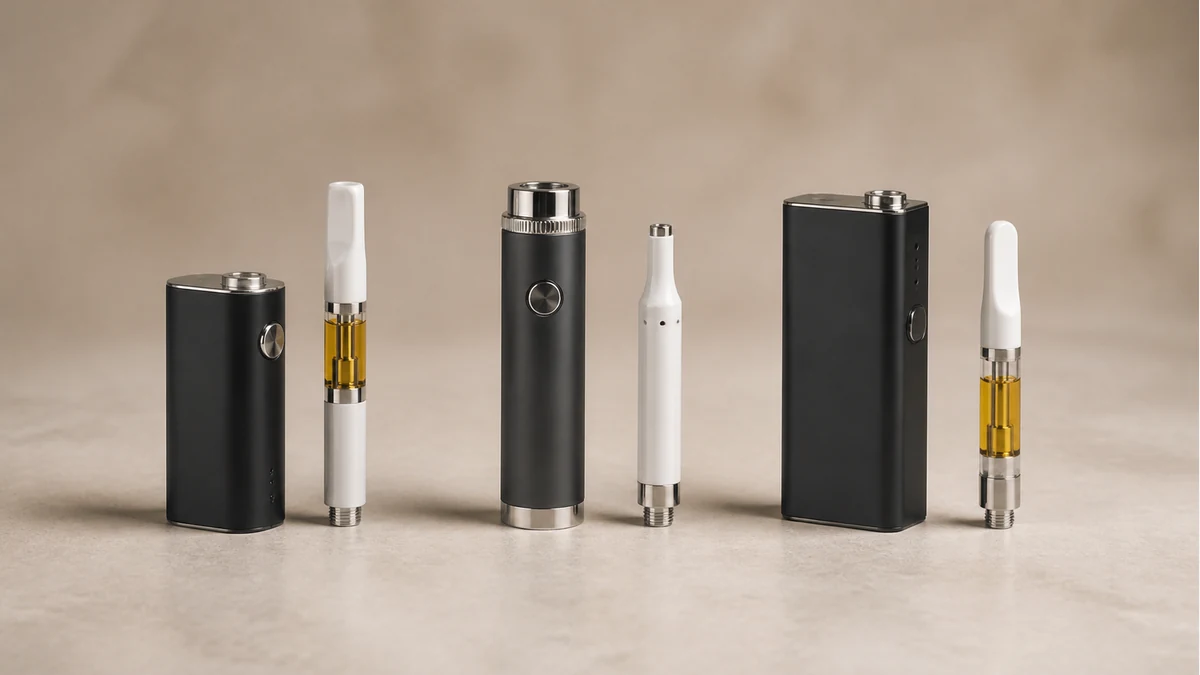
Because these decisions happen inside the housing, the only reliable way to understand what you’re getting is to look past the outer shell and into the specification sheet: cell type, maximum continuous wattage, and any thermal cutoff or duty-cycle behavior the maker documents. Our guide to vape mod controls and safety features walks through how to read those specifications and what the safety circuitry is actually doing when a device throttles output.
🧩 2. Cell format sets the first boundary
The single biggest driver of a mod’s minimum possible size is its cell format. A device built around one 18650 or 20700 cell can be meaningfully shorter and narrower than a device built around two cells side by side, simply because there’s less battery volume to enclose. This is the first and most rigid boundary compact-mod shoppers run into: you can’t have the power ceiling of a dual-cell device and the footprint of a single-cell device at the same time, because the cell itself takes up a fixed amount of space no matter how efficiently the rest of the mod is designed.
Single-cell mods tend to sit lower in continuous wattage output than their dual-cell counterparts, which is a direct consequence of how much current one cell can safely supply. Some single-cell devices push closer to the upper end of what a single cell can support, and that comes with a corresponding demand on the cell’s discharge rating and the mod’s regulation circuit. Anyone evaluating a compact mod against a larger one should compare wattage ceilings alongside cell count rather than judging power potential from size alone.
Built-in (internal) batteries introduce a second dimension to this boundary. Because the cell is soldered or wired directly into the device rather than sitting in a removable sled, manufacturers can shape the internal cell and chassis more freely, sometimes shaving additional millimeters off the body. That efficiency comes at the cost of field-replaceability, which matters more as the cell ages. For a deeper look at how cell chemistry, discharge ratings, and format choices interact, see our 18650 vape battery guide, which covers the fundamentals that apply regardless of which mod houses the cell.
🔍 3. Tank diameter and connector position decide the real footprint
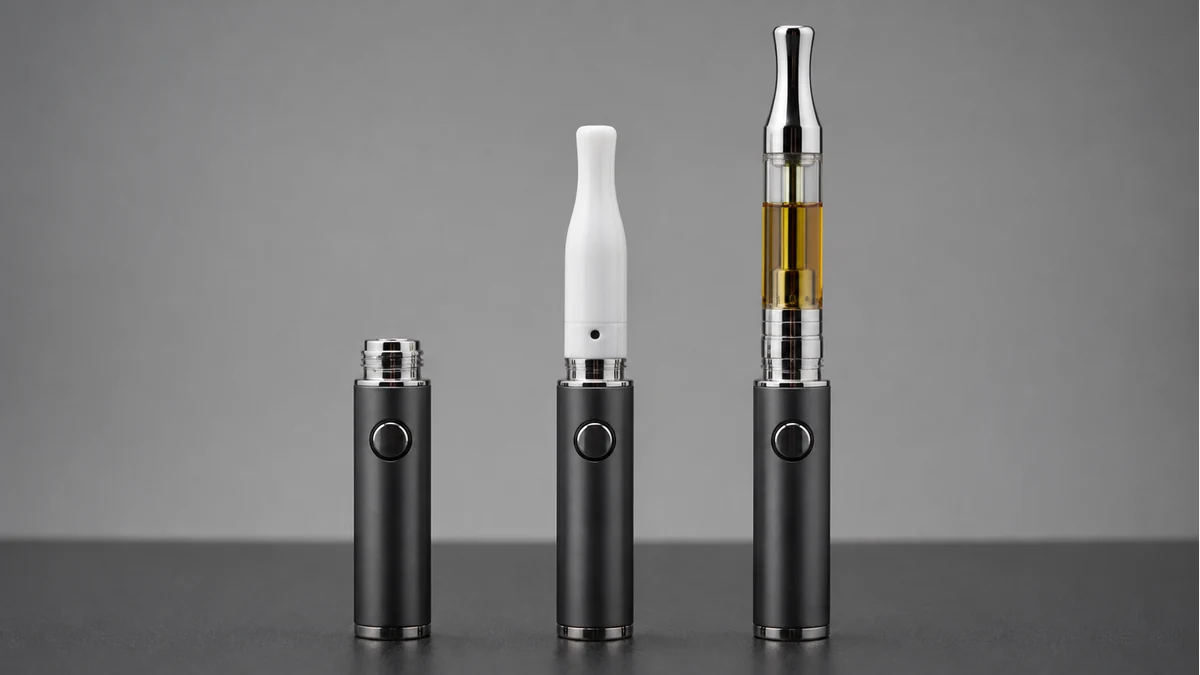
A mod’s advertised body size only tells part of the story, because almost no one runs a mod without a tank on top. Tank diameter is frequently the actual limiting factor in whether a “small” setup stays small. A slim mod paired with a wide-bore tank produces a visible overhang where the tank’s diameter exceeds the mod’s — and that overhang affects balance, pocket profile, and how naturally the whole assembly sits in your hand, regardless of how compact the mod itself is on paper.
This mismatch is one of the more common frustrations compact-mod buyers run into after purchase: they choose a small mod expecting a small overall setup, then pair it with a tank sized for a larger device and end up with a top-heavy, unbalanced combination. Matching tank diameter to mod width — or at minimu accepting a modest, intentional overhang — is part of actually achieving a compact daily setup, not just choosing a small mod in isolation.
Connector position matters too. Where the 510 connection sits relative to the mod’s center of gravity changes how the combined unit balances when held, and how much lateral stress is placed on the connection threads over time. A connector mounted flush with a narrow top plate behaves differently under the weight of a heavy tank than one recessed into a wider chassis designed to support it. Shoppers who care about a genuinely compact carry should treat the tank they intend to use as part of the buying decision, not an afterthought bolted on later.
⚙️ 4. Heat and controls feel different on a shorter body
Shrinking the distance between the coil, the battery compartment, and your hand changes the thermal experience of vaping even when the wattage is identical to a larger device. In a longer mod, there’s more physical material and airflow path between the heat-generating coil and the section you’re gripping. In a shorter body, that distance compresses, so heat has less room to dissipate before reaching the chassis surface you’re holding. This isn’t a defect — it’s a direct consequence of geometry — but it’s a real difference buyers should expect rather than be surprised by.
Control layout is the second thing that changes on a shorter body. Buttons, screens, and adjustment wheels have to be arranged within less vertical space, which often means a smaller screen, a button that sits closer to where your thumb naturally rests, or menu navigation that relies on fewer physical inputs. None of this makes the controls worse, but it does mean the ergonomics of a compact mod reward a different grip and interaction style than a larger device with more room to spread controls out. Reading how a specific device’s firing button, lock function, and adjustment sequence work — rather than assuming it mirrors a larger mod you’ve used before — avoids a lot of early confusion. Our controls and safety guide covers the universal patterns behind firing mechanisms and lockout features that apply across most regulated devices.
Tube-style mods and box-style mods handle this compression differently. A tube mod concentrates its entire cell and circuitry along a single cylindrical axis, which tends to distribute heat more evenly along the length you’re gripping. A box mod concentrates the same components into a flatter, wider shape, which can create a more localized warm spot near the coil and battery bay. Neither layout is universally cooler — it depends on internal component placement — but the difference in how heat is perceived is one of the more consistent distinctions between tube and box designs at a similar overall size.
🧼 5. Built-in and removable batteries age differently
The cell-format decision made at purchase has consequences years down the line, and it plays out differently depending on whether the battery is removable or built in. A removable-cell mod lets you replace a degraded cell on your own schedule, using a cell that matches the manufacturer’s specified discharge rating and chemistry. As the cell ages and its capacity or discharge capability declines, you can simply swap it rather than replacing the entire device.
A built-in battery ties the device’s usable life to the cell’s life. As the internal cell degrades — a normal process for any lithium cell over repeated charge cycles — the mod’s usable runtime and reliable power delivery decline along with it, and there’s no straightforward way to intervene without disassembly the manufacturer likely doesn’t intend for end users. This is a meaningful long-term cost of the compactness that built-in cells make possible: the smaller footprint comes with a serviceability tradeoff that only becomes apparent well after purchase.
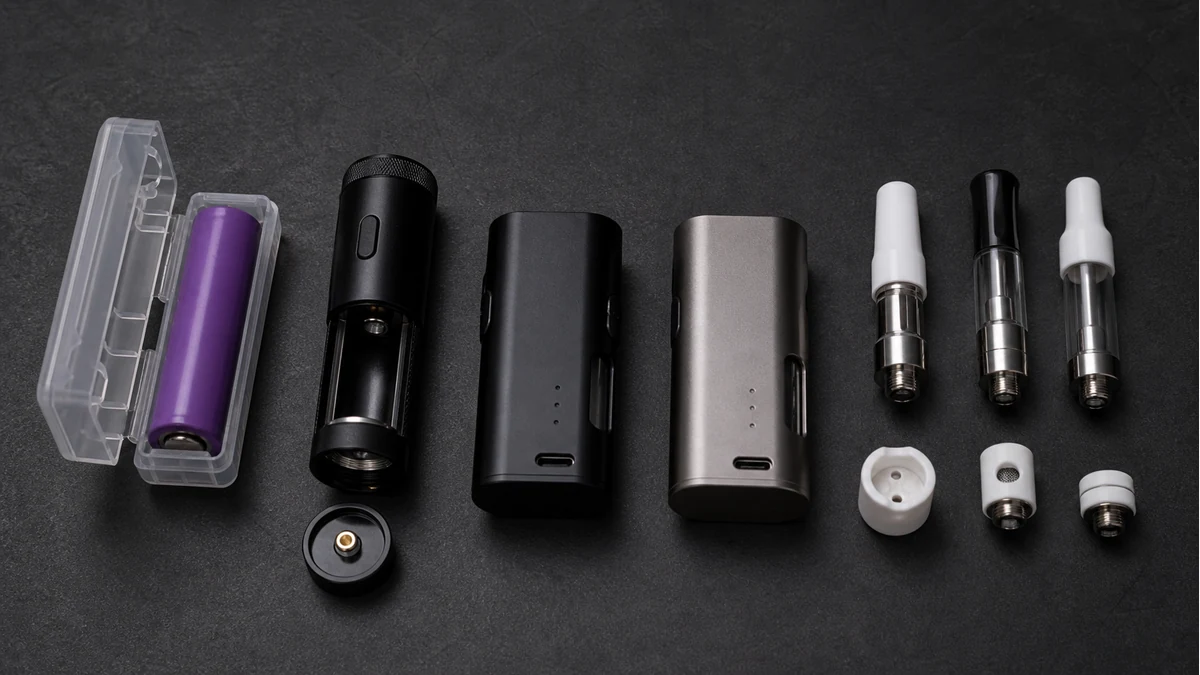
Charging behavior differs too. Built-in mods usually charge in place through a port on the device, which is convenient but means the whole mod is unusable while charging. Removable-cell mods let you charge spare cells externally and swap them, keeping the device itself available. Anyone who expects to use a mod as a genuine all-day device — rather than one that’s charged overnight and used until depleted — should weigh this difference alongside raw battery capacity. Our battery guide goes into more depth on cell aging, charging cycles, and how discharge ratings decline over a cell’s usable life.
🛠️ 6. Pocket size does not eliminate transport precautions
It’s tempting to assume that because a mod is small, it needs less care when carried — but pocket size and safe transport are separate questions. A compact mod with an exposed fire button can still be triggered accidentally against keys, coins, or fabric in a pocket, and a mod carried alongside loose cells needs the same short-circuit precautions as a full-size device: cells should be transported in a case or sleeve that prevents metal-to-metal contact with terminals, regardless of how small the mod that eventually houses them is.
Smaller mods sometimes have less room for a firing-button lock or a physical guard around the button, simply because there’s less surface area to work with in the design. That makes it worth checking, before purchase, whether a given compact device has a lockout feature and how it’s engaged, rather than assuming every mod includes one by default. This is a case where smaller size can shift a responsibility — checking for and using a lock function — more directly onto the user, rather than removing it.
Airflow control rings and adjustment dials on compact mods are also often smaller and more closely spaced, which raises the chance of an unintended adjustment during transport if the device isn’t secured. None of this means a small mod is less safe to own — it means the same transport habits that apply to any regulated mod, covered in general terms in our controls and safety guide, still apply, and a compact size doesn’t substitute for following them.
✅ 6.1 For concentrate hardware, small should describe the full assembly
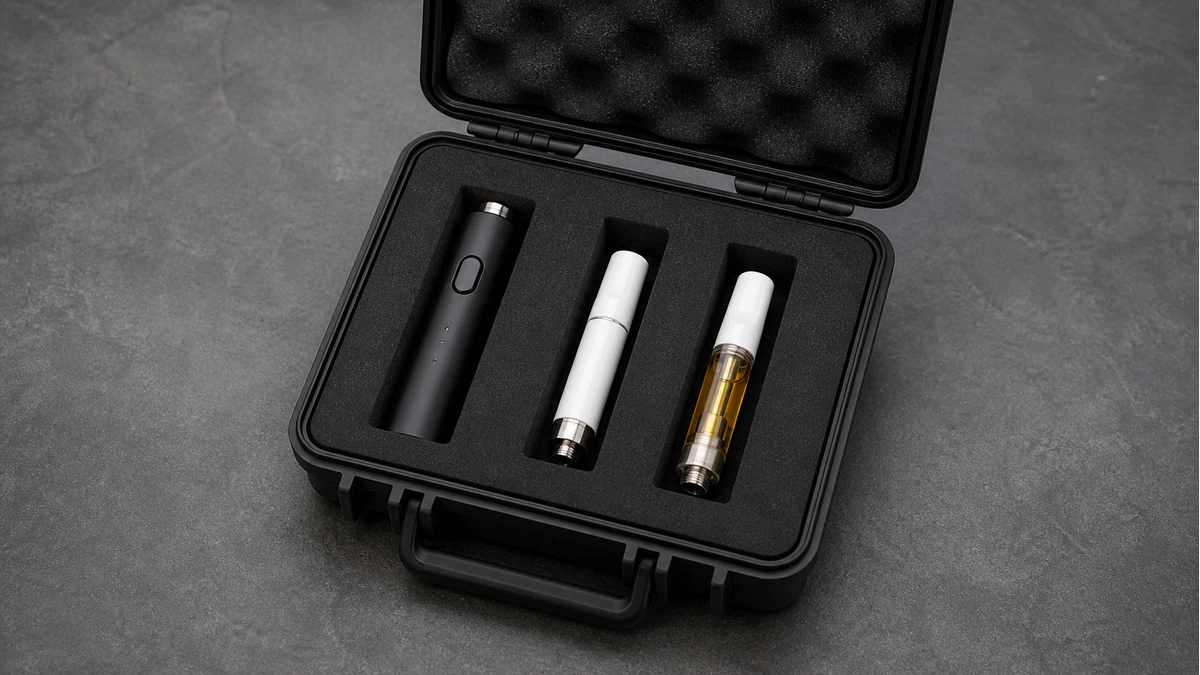
A compact regulated battery may look tiny by itself yet become top-heavy when paired with a tall wax atomizer or 510 cartridge adapter. Check the complete height, connector support, and whether the atomizer sits flush without covering air inlets. The goal is a stable concentrate device, not the smallest battery photograph on a listing.
This guide uses “mod” in the broad sense of a regulated power body. It does not require an e-liquid tank. For AOVAPE-style dab and wax hardware, compatibility with the intended ceramic atomizer or cartridge, sensible low-power adjustment, contact protection, and pocket-safe controls matter more than a high wattage ceiling.
📦 6.2 Compact controls still need deliberate operation
Short bodies often place the fire and adjustment buttons close together. Confirm that the device can be locked for transport and that settings are readable without firing it. Remove the atomizer or use the maker’s transport procedure before carrying it. A pocket is not a storage case for an assembled device with an exposed mouthpiece and active controls.
✅ 7. Choose the smallest mod that still fits the complete setup
The most useful way to shop for a compact mod is to stop evaluating the mod alone and start evaluating the assembled setup — mod, tank, and cell — as one unit. A mod that’s compact on the shelf but paired with a wide tank and a spare cell case in your pocket isn’t actually delivering the compact daily-carry experience that drew you to it in the first place. Measuring or comparing the combined footprint, not just the bare mod’s listed dimensions, gives a more honest picture of what you’ll actually be carrying.
It also helps to be explicit with yourself about which tradeoff you’re willing to accept, because every compact mod makes one. A single-cell mod trades power ceiling for size. A built-in-battery mod trades long-term serviceability for a slimmer chassis. A narrow-bore mod trades tank compatibility for a flush, balanced profile. There isn’t a configuration that avoids all three tradeoffs simultaneously — the question is which one matters least for how you actually intend to use the device day to day.