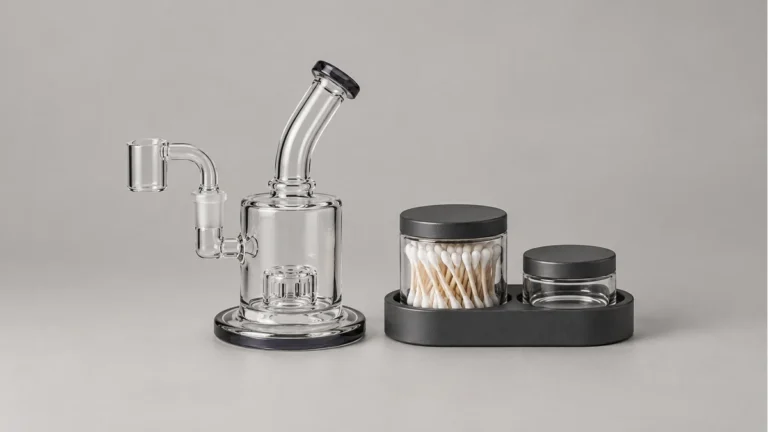
🚿 1. The Piece That Was Supposed to Clean Itself
You’ve probably had this moment: standing at the sink with a bong turned upside down, watching a thin brown film refuse to budge no matter how much hot water you run through it. Somewhere along the way, a friend or a product listing mentioned a “self-cleaning” design, and for a second you let yourself believe there was a piece out there that just wouldn’t need this. No isopropyl soak, no pipe cleaners jammed into a percolator slit at 11 p.m., no salt residue crusted in a joint. Just clean glass, indefinitely.
That hope isn’t unreasonable. Manufacturers have genuinely gotten better at designing pieces that resist buildup, shed ash automatically, and rinse out faster than older percolator styles ever did. But “self-cleaning bong” is a phrase that gets stretched to cover a lot of different engineering choices, some of which reduce your workload significantly and some of which barely touch it. The honest answer sits in the middle: no bong cleans itself completely, but several real design features do meaningfully less of the dirty work for you than a plain straight tube with a fixed downstem.
This is worth sorting out before you buy, because the gap between “easier to clean” and “doesn’t need cleaning” is exactly where buyer’s remorse tends to live.
🧽 2. What “Self-Cleaning” Actually Refers To
When a listing or a Reddit thread throws around the term, it’s almost always describing one of four distinct things. They get lumped together under one marketing phrase, but they solve different problems and none of them is residue removal in the literal sense.
🔥 2.1 Ash and Reclaim Capture
Some bowls and downstem designs are built with a small catch, ledge, or reverse-taper that stops loose ash and small debris from falling straight into the water chamber. This matters more than it sounds like it should. A percolator full of floating ash doesn’t just look unpleasant — that ash breaks down, clouds the water, and leaves a fine sediment that settles into every slit and hole once the water evaporates or gets dumped. A bowl that keeps most of that debris out of circulation means your water stays visibly cleaner for longer stretches between changes, and your percolator doesn’t accumulate that gray sludge as fast.
What it doesn’t do: stop resin from forming on glass that direct smoke and vapor pass through. Ash capture reduces particulate buildup. It has nothing to do with the sticky film that comes from combustion byproducts condensing on glass, which happens regardless of how tidy your bowl is.
♻️ 2.2 Removable and Modular Paths
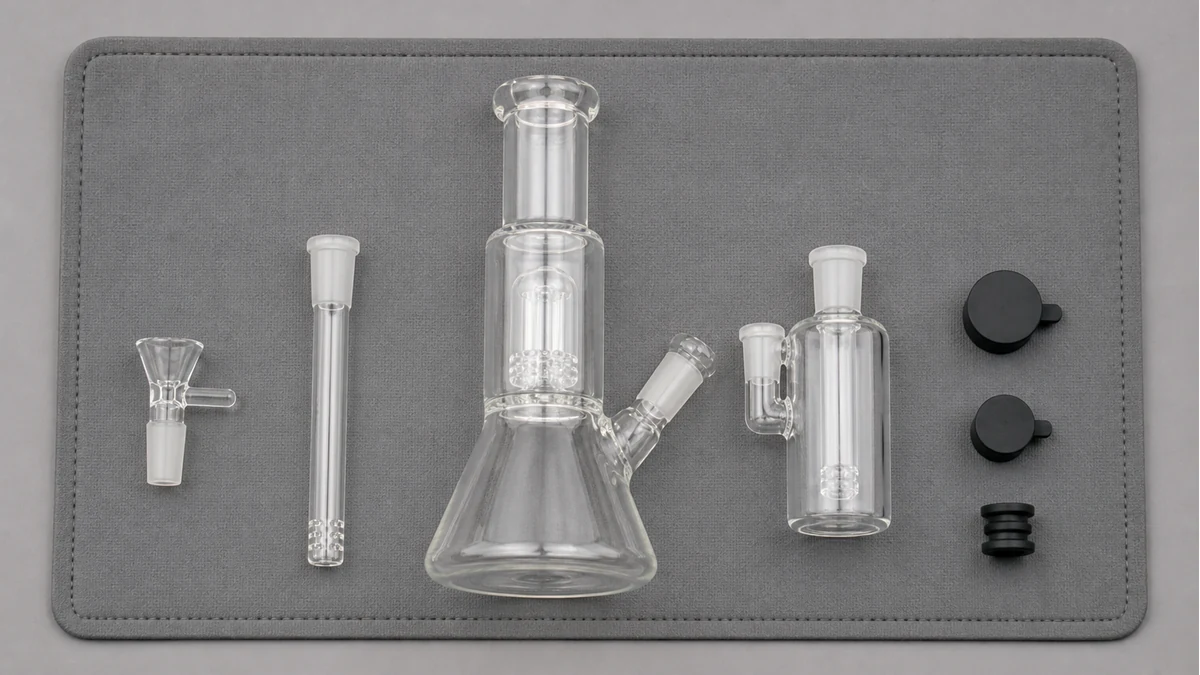
This is probably the single biggest real contributor to easier cleaning, and it’s mechanical, not chemical. A downstem that pulls straight out. A percolator chamber that detaches from the main tube. A bowl that comes apart from its stem. Every joint you can separate is a joint you can clean individually, at an angle, with proper agitation — instead of trying to force a brush or a shot of cleaner through a fixed, twisting internal path and hoping gravity and swirling do the rest.
Fixed, single-piece percolator tubes look elegant and they hit differently, but they are notoriously hard to fully clean once resin builds up inside a tree perc or a matrix perc with dozens of small holes. A modular piece where the percolator section detaches can replace blind agitation with more direct access. If cleaning ease is a real priority for you, modularity does more for that goal than almost any other single spec.
💧 2.3 Rinse-Friendly Geometry
Smooth interior curves, wider chamber openings, and the absence of tight interior angles all reduce the places where water — and whatever’s suspended in it — can get trapped instead of draining out. A beaker base with a wide mouth rinses out in a way that a narrow straight tube with a cramped ice pinch never will. This is a genuinely underrated factor, because it affects your day-to-day rinse routine, not just your deep-clean sessions. If you’re rinsing after most sessions, geometry that lets water move freely through the chamber means less residue has a chance to dry and set in the first place.
None of this removes resin that’s already bonded to glass. It just means less has a chance to accumulate, and what does accumulate is easier to flush out with plain water before it hardens.
⚡ 2.4 Powered or Accessory-Driven Cleaning
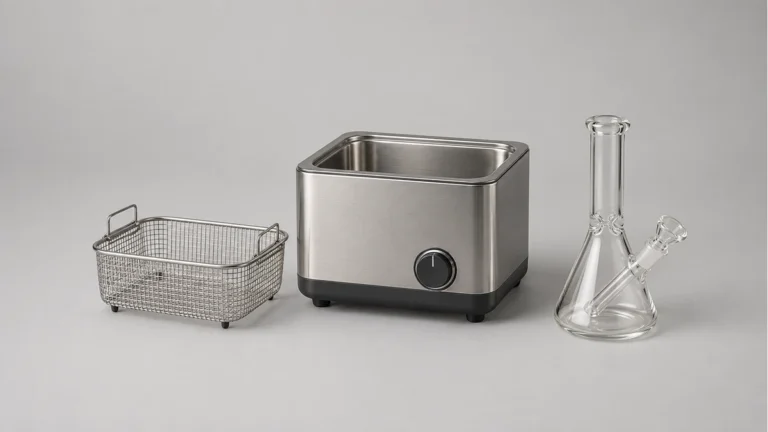
This is the category people usually picture when they hear “self-cleaning”: ultrasonic cleaners, motorized agitators, spinning brush attachments, or vacuum-style cleaning tools built to work alongside a piece rather than as part of it. These accessories genuinely automate agitation — the physical motion that loosens residue — which used to mean manual agitation while cleaning solution worked through it.
An ultrasonic bath, for example, uses high-frequency vibration to dislodge buildup from glass without you having to physically shake or brush anything. That’s real automation of effort. But it still requires you to submerge the piece, use an appropriate solution, and often follow up with a rinse and a check of stubborn spots. It’s a tool that does the agitating for you — not a piece that cleans on its own with no involvement from you at all. For anyone weighing whether to add one of these to a routine, a practical rundown of solution types and what they’re actually suited for is covered in AOVAPE’s bong cleaner guide.
🧴 3. What Still Needs Your Hands
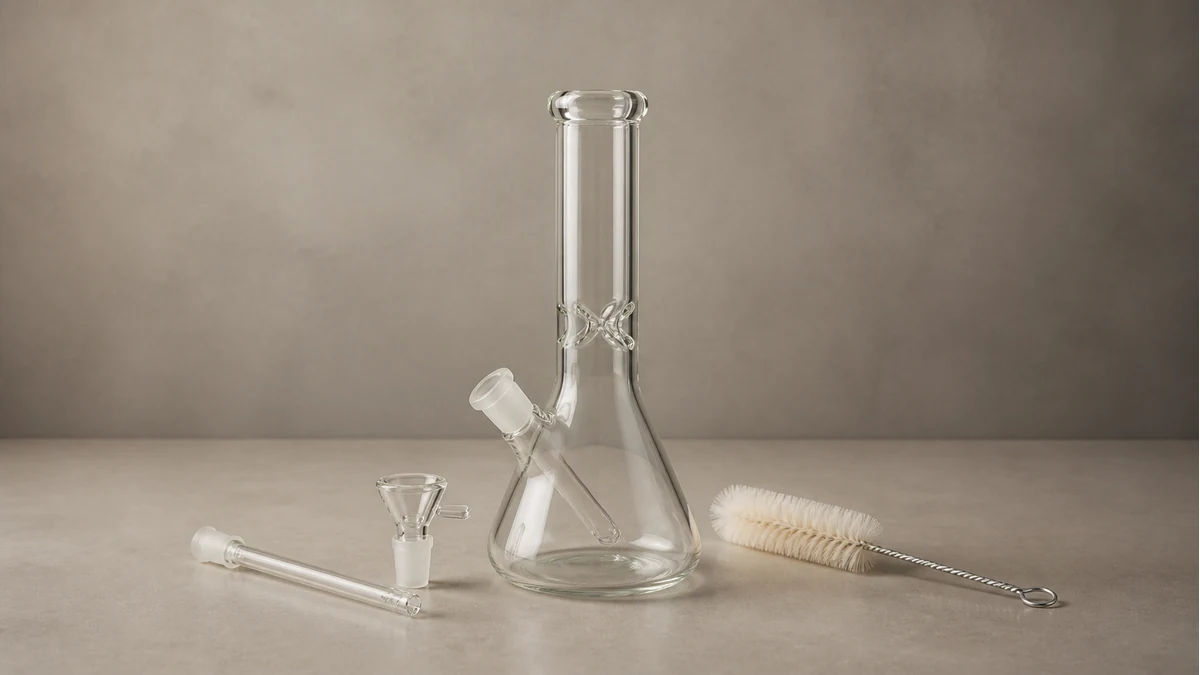
Here’s the part that gets skipped in a lot of marketing copy: every design feature above reduces effort or reduces buildup. None of them removes resin, calcification, or bacterial film that has already formed. That part still requires active cleaning, on a schedule that depends on how often you use the piece and what you’re running through it.
🟤 3.1 Resin Film in Percolator Slits and Chamber Walls
Resin is sticky by nature and it clings to glass regardless of how the piece is shaped. Percolator slits, diffuser holes, and any textured interior surface are where it concentrates fastest, because those areas have the most surface contact with smoke and the least direct water flow during a casual rinse. A piece with excellent ash capture and a fully removable percolator will still develop this film — it’ll just be easier to reach and treat once it does. This is where an actual cleaning solution and some agitation time are non-negotiable; water alone won’t cut through cured resin. If you don’t already have a routine down, a straightforward breakdown of brushes, picks, and solution pairings for different percolator styles is in the bong cleaning kit guide.
🔩 3.2 Joint and Downstem Buildup
Ground glass joints — where the bowl meets the downstem, or the downstem meets the tube — accumulate a specific kind of grime: a mix of resin and moisture that dries into a slightly gummy residue right at the connection point. Even self-cleaning-marketed pieces build this up, because it’s a function of where smoke and vapor pass through a joint, not a function of the chamber design downstream. Left long enough, it can make joints stick or make bowls harder to remove. This spot needs a wipe or a light brush pass on its own, separate from whatever you’re doing with the main chamber.
💦 3.3 Water Quality and Mineral Scale
This one surprises people because it has nothing to do with smoke residue at all. If you’re using hard tap water, mineral deposits — calcium and similar compounds — can build up along the waterline and inside percolator holes the same way they build up in a kettle. This looks like cloudy or chalky residue and it’s a completely separate problem from resin, requiring a different approach, usually something mildly acidic to dissolve mineral scale rather than a solvent-based resin cleaner. What you fill the piece with in the first place makes a real difference here, and it’s worth a look at the water for bongs guide if you’ve noticed a chalky film that plain cleaning solution doesn’t touch.
🔍 4. How to Evaluate a Self-Cleaning Claim
When you’re comparing pieces and one of them is marketed with “self-cleaning” language, the useful move is to ask which specific mechanism is doing the work, rather than taking the phrase at face value. A few direct questions cut through most of the ambiguity:
- Is the percolator or downstem removable, or is this a fixed single-piece tube being sold as easier to clean without any structural reason why?
- Does the bowl have an actual ash catch, or is “self-cleaning” describing the overall chamber shape instead?
- Is the claim about the glass itself, or about a bundled accessory — an ultrasonic cleaner or brush kit — that does the same job any standalone cleaning tool would do?
- Are there tight, textured, or narrow-holed areas in the design that photos don’t show clearly, which would still trap resin regardless of the marketing?
A piece that’s genuinely well-designed for easier cleaning usually has a visible, describable reason for it — a joint that comes apart, a wide-mouth chamber, an ash catch you can see in the bowl. Vague claims without a mechanical explanation are usually just describing standard glass with a favorable adjective attached.
🗓️ 5. A Realistic Maintenance Rhythm
Regardless of how the piece is built, most glass benefits from roughly the same cadence, just with less effort required at each step if the design features above are working in your favor.
| Frequency | What to do | Why |
|---|---|---|
| After each session | Dump and rinse water, wipe the joint | Prevents ash sediment and joint residue from setting |
| Weekly, with regular use | Cleaning solution soak with agitation, focused on percolator and chamber | Resin film builds up faster than casual rinsing removes it |
| Monthly, or as needed | Check for mineral scale along the waterline, treat separately if present | Mineral buildup doesn’t respond to resin-focused cleaners |
None of this changes dramatically based on whether the piece is marketed as self-cleaning. What changes is how long each step takes — a modular, wide-mouth piece with good ash capture might take a third of the time a fixed narrow tube takes for the same result.
❓ 6. Quick Answers
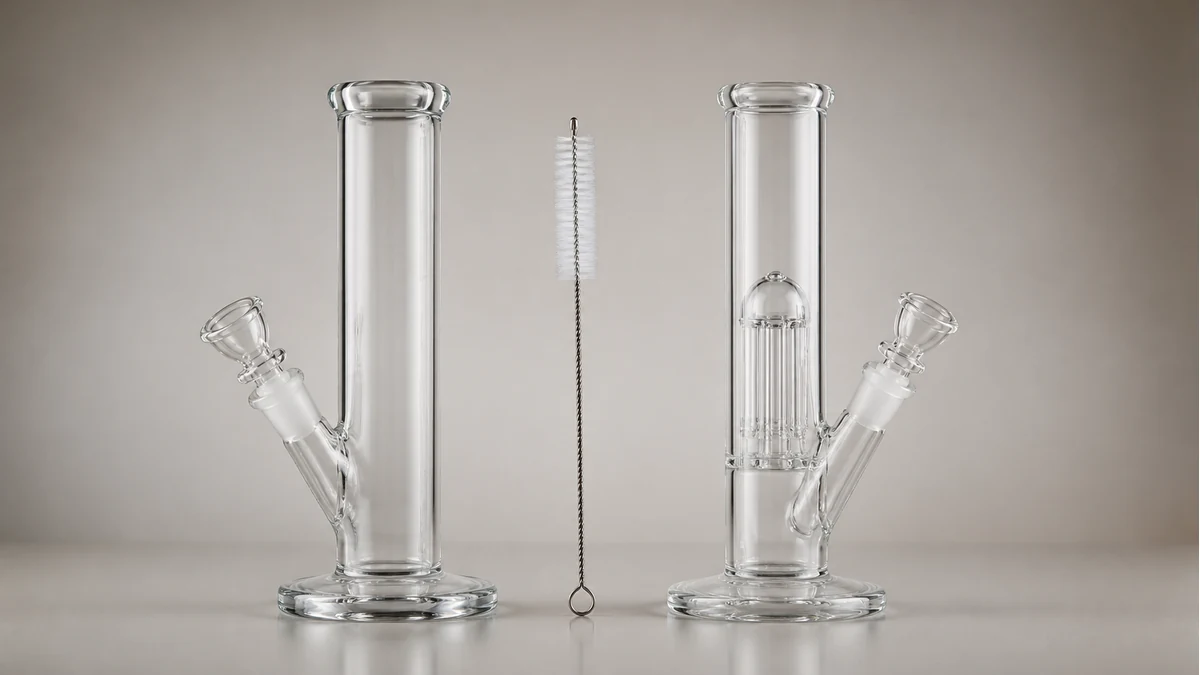
Can a bong truly clean itself? No. Design features reduce buildup and effort, and accessories can automate the physical agitation step, but active cleaning with a solution is still required to remove resin and mineral scale.
Which features actually help? Removable percolators and downstems, ash-catching bowls, and wide, smooth-walled chambers all measurably reduce cleaning time and buildup speed.
What still needs manual attention no matter what? Resin film in percolator slits, joint residue, and mineral scale from hard water all require direct treatment.
How do I judge a self-cleaning claim before buying? Ask what specific mechanism the phrase is describing — a joint, a catch, a bundled accessory — rather than trusting the label alone.
🧠 7. The Short Version
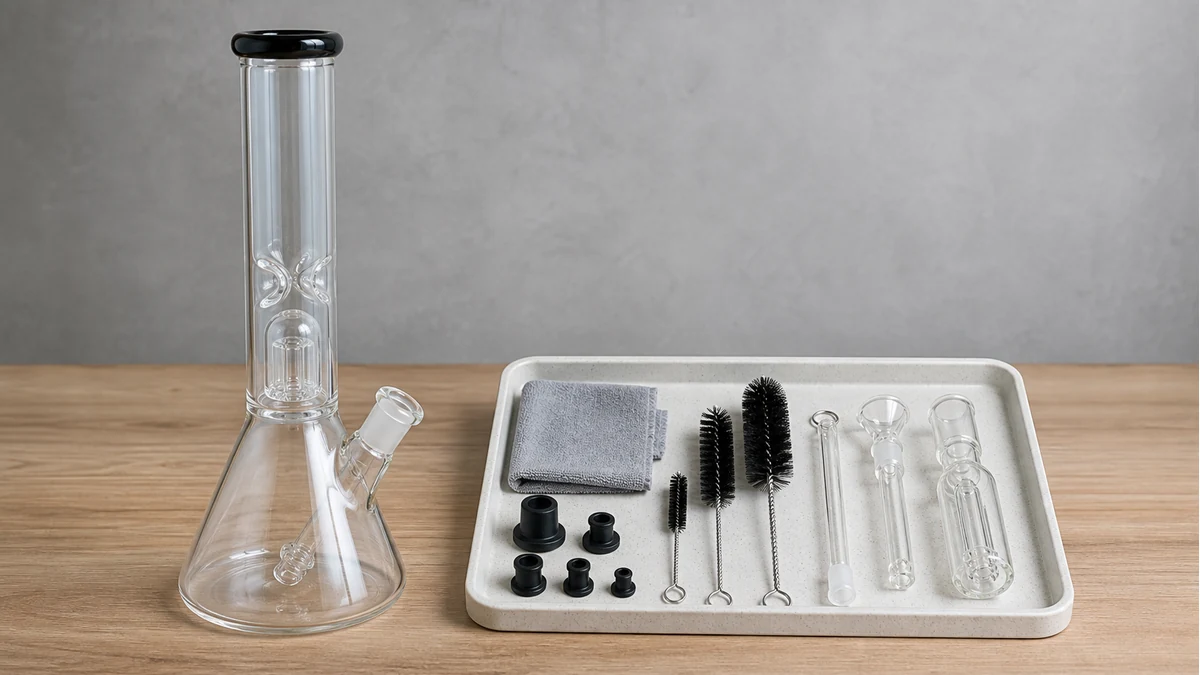
“Self-cleaning” is real as a description of reduced effort, not eliminated effort. The pieces that live up to it best are the ones with removable joints, visible ash capture, and chamber shapes that let water move freely — features you can actually see and evaluate before you buy, rather than take on faith. Everything else, from resin film to mineral scale, still comes down to you, a brush, the right solution, and a few minutes at the sink.
📚 8. Sources and Reader Questions Reviewed
Technical statements were checked against the sources below. Reddit discussions were used only to identify reader questions and language, not as proof of technical, health, safety or legal claims.