🔎 1. The Question Behind the Question
A buyer with a known metal sensitivity may look at the exposed screws, pins and mouthpiece on a vaporizer and ask a literal question: is there a version with no metal in it at all? The concern is understandable, but the useful answer starts by separating skin contact, air-path contact and the metal contained inside an electrical circuit. Those are different exposure questions, and product photos rarely make the distinction clear.
The honest answer is that a fully metal-free powered vape doesn’t exist, and understanding why is more useful than chasing a product that isn’t real. What does exist is meaningful variation in where metal sits inside the device, how much of it your skin or your airflow ever contacts, and whether the manufacturer will actually tell you what alloy they used. That’s the conversation worth having.
🧩 2. Why a Powered Vape Can’t Be Metal-Free
Any device that converts electrical current into heat needs a conductive path, and at consumer price points and consumer temperatures, that path is metal. Copper, nickel-chromium alloys, stainless steel, and various aluminum and zinc alloys show up because they’re predictable, manufacturable at scale, and behave consistently when heated and cooled thousands of times. Plastics, silicone, and glass can’t carry current or survive direct contact with a resistive heating element without degrading, melting, or simply failing to work as a circuit.
So the premise “zero metal” collides with basic electrical engineering the moment you introduce a battery, a heating element, and something to connect them. What buyers are actually asking for, whether they realize it or not, is a device where metal is present but controlled — kept out of direct skin contact, kept out of the airflow where possible, and disclosed clearly enough that someone with a sensitivity can make an informed choice.
🧩 2.1 The Heating Element
This is the part that generates temperatures high enough to vaporize material, and it’s almost always metal-based. Resistance wire — commonly a nickel-chromium or iron-chromium-aluminum alloy — is the traditional choice because it heats evenly and holds up under repeated cycling. Some designs wrap that wire around or embed it within a ceramic core, which changes how heat is distributed and how much of the wire is exposed to the air path, but it doesn’t remove the wire itself.
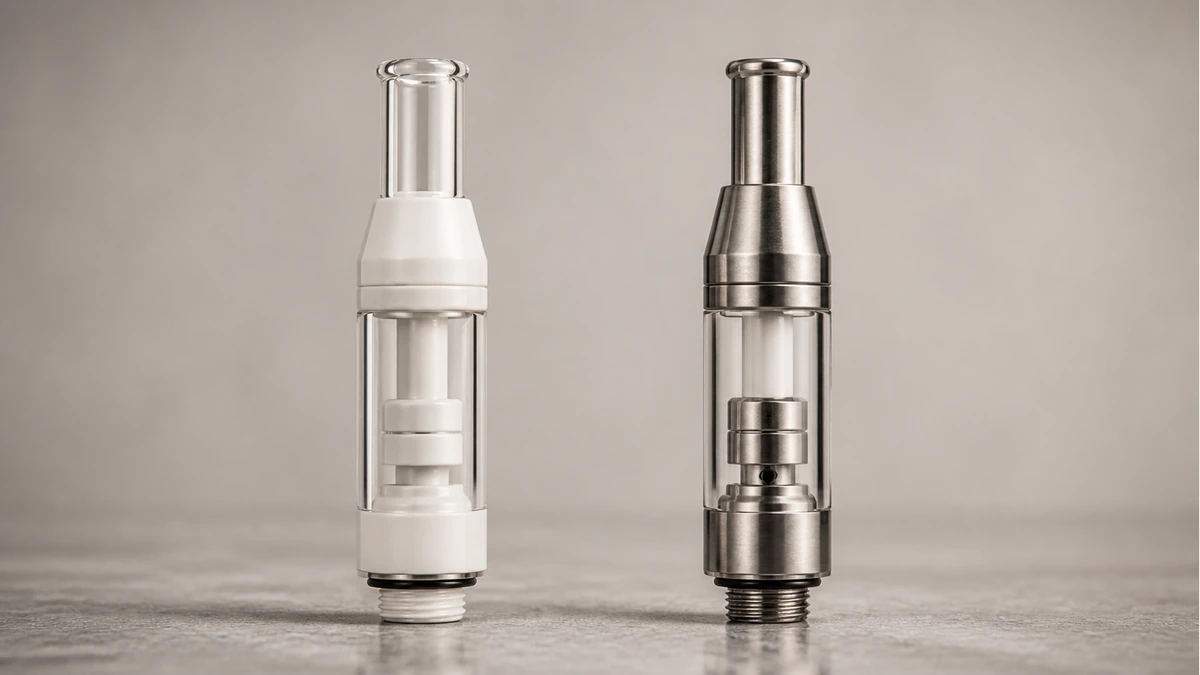
Ceramic-only heating surfaces exist in some product categories, and they genuinely reduce direct metal-to-vapor contact compared to an exposed coil. But the ceramic still needs a metal element behind it or embedded in it to actually produce heat — ceramic isn’t a heat source on its own, it’s an insulator and a heat-distribution medium. If you want a deeper technical comparison of how these two heating philosophies actually differ in practice, the breakdown at quartz coil vs. ceramic heating comparison covers the tradeoffs in more detail than most spec sheets bother to.
🧩 2.2 Contacts and Connectors
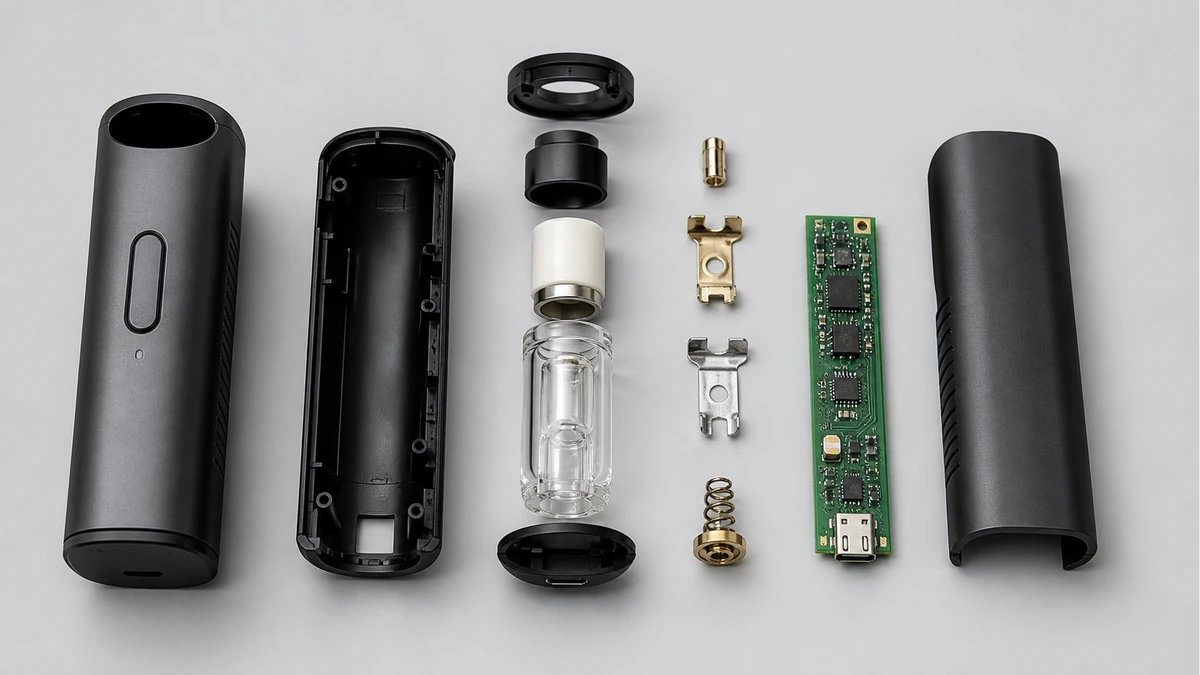
Every point where a battery meets a heating chamber, or where a cartridge meets a battery, needs a metal contact. These are usually small — spring-loaded pins, threaded connectors, flat contact plates — but they’re unavoidable. Gold plating shows up here occasionally, not for luxury reasons but because gold resists oxidation and keeps the electrical connection reliable over time. Beneath the plating, though, there’s typically a base metal, often brass or copper, and that base metal is what actually matters for anyone checking for nickel or other reactive alloys.
🧩 2.3 The Enclosure and Housing
This is where buyers have the most real choice, because housing material is a design decision, not a physical requirement. Aluminum and zinc-alloy housings are common for durability and a premium feel. Stainless steel shows up on higher-end designs. Plastic housings — ABS, polycarbonate — are lighter, cheaper, and genuinely metal-free at the point of skin contact, even though the internal circuitry underneath is not. This is the layer most relevant to someone worried about contact dermatitis: the part your hand actually touches for the entire time you’re using the device.
🧩 2.4 Battery Cells
Powered vapes rely on lithium-based cells — either a removable cylindrical cell or a sealed internal pouch — and both use a metal casing to contain the electrochemical layers inside. That casing is genuinely metal, but it’s also the component least likely to ever touch skin or vapor directly, since it sits behind the outer shell and a layer of internal wiring. The practical relevance for a buyer concerned about exposure is that battery metal belongs in the “contained” category alongside contacts and connectors, not the “exposed” category alongside housing and heating elements.
⚙️ 3. External Metal vs. Air-Path Metal
This distinction matters more than most marketing copy acknowledges, and it’s the one a buyer with a genuine sensitivity should actually be asking about. External metal is anything your skin touches — housing seams, buttons, a metal mouthpiece ring. Air-path metal is anything the vapor itself passes over or through before reaching your mouth, which is a separate exposure question entirely and one that involves inhalation rather than skin contact.
A device can score well on one axis and poorly on the other. A plastic-bodied unit with an exposed metal coil sitting directly in the airflow has minimal external metal but meaningful air-path metal. A stainless-steel-bodied unit with a fully ceramic-shielded heating chamber has the opposite profile. Neither is automatically “the metal-free option,” because neither is metal-free — they just distribute the metal differently.
| Component | Typical exposure type | Common materials |
|---|---|---|
| Housing / body | External (skin contact) | Aluminum, zinc alloy, stainless steel, ABS/polycarbonate |
| Mouthpiece | External and near-air-path | Plastic, glass, metal-rimmed plastic, stainless steel |
| Heating element | Air-path | Nickel-chromium wire, iron-chromium-aluminum wire, ceramic-shielded wire |
| Battery/cartridge contacts | Internal, not directly exposed | Brass, copper, gold-plated pins |
Wear matters here too. A coil run past its rated cycle count, or a ceramic chamber liner that’s cracked from repeated heating and cooling, can expose more raw metal to the air path than the same device did when new. This is less a materials question than a maintenance one, but it’s worth knowing that the metal-exposure profile of a given unit isn’t fixed forever at the point of purchase — it can shift with use and neglect.
Notice that the mouthpiece straddles both categories, which is why it’s often the first thing a materials-conscious buyer should ask about specifically. A glass or all-plastic mouthpiece removes direct lip contact with metal even if the chamber a few centimeters below it still relies on a metal heater.
🧰 4. What to Ask a Manufacturer For
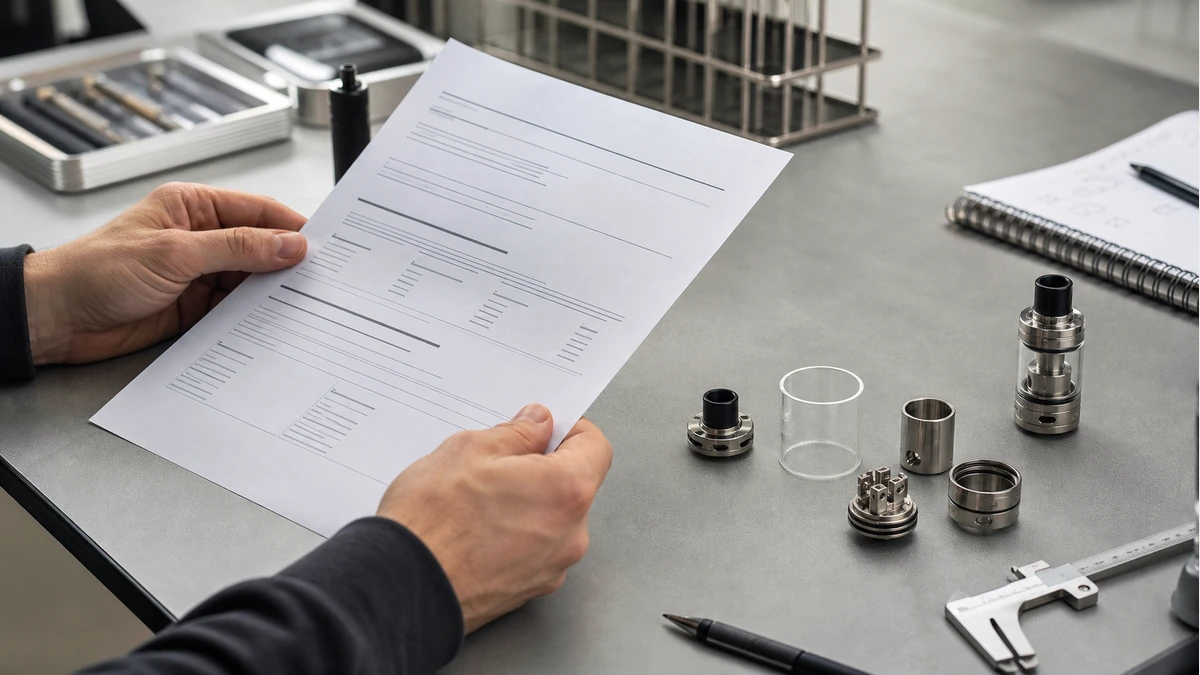
The useful question isn’t “is this metal-free,” because the honest answer will always be no. The useful question is “what metal, exactly, and where.” A manufacturer that takes materials seriously should be able to name the alloy grade used in the heating element, confirm whether the mouthpiece or chamber liner contacts vapor directly, and describe the housing material without vague language like “premium alloy” standing in for an actual specification.
This is also where it’s worth being precise about what documentation can and can’t tell you. A materials disclosure — alloy type, plating, whether a component is food-grade stainless versus a cheaper substitute — is a manufacturing fact. It is not a medical claim, and no responsible source should present it as one. Knowing that a contact pin is gold-plated brass tells you what’s physically there; it doesn’t tell you how your body will react to it, and that determination belongs with a physician or allergist, not a spec sheet.
For buyers sourcing at any scale, this kind of specificity is also the clearest signal of a factory that actually controls its own supply chain rather than reassembling whatever components are cheapest that quarter. The overview at how vape hardware manufacturers document their component sourcing walks through what that level of transparency looks like in practice and why so few suppliers offer it unprompted.
For distributors and private-label buyers specifically, this documentation does more than answer one customer’s question — it becomes part of the product file that gets forwarded downstream. A wholesaler fielding a materials question from a retail account, or a brand fielding one from an end consumer, needs an answer that traces back to an actual specification sheet rather than a verbal assurance from a sales contact. Building that documentation into the sourcing process up front, rather than requesting it reactively after a complaint, is the difference between a five-minute reply and a scramble through old order records.
- Ask for the specific alloy or grade of any metal component that touches skin or vapor, not just a category like “stainless steel.”
- Ask whether the mouthpiece and any chamber liner are metal, ceramic, glass, or plastic, since this is the part most likely to matter for skin contact.
- Ask whether plating (gold, chrome) sits over a base metal, and what that base metal is.
- Request this in writing rather than a verbal assurance, since verbal claims are the easiest thing for a supplier to walk back later.
- For private-label or bulk orders, request a bill of materials as part of the standard order documentation rather than as a special favor.
🔋 5. A Note on Dry Herb Devices
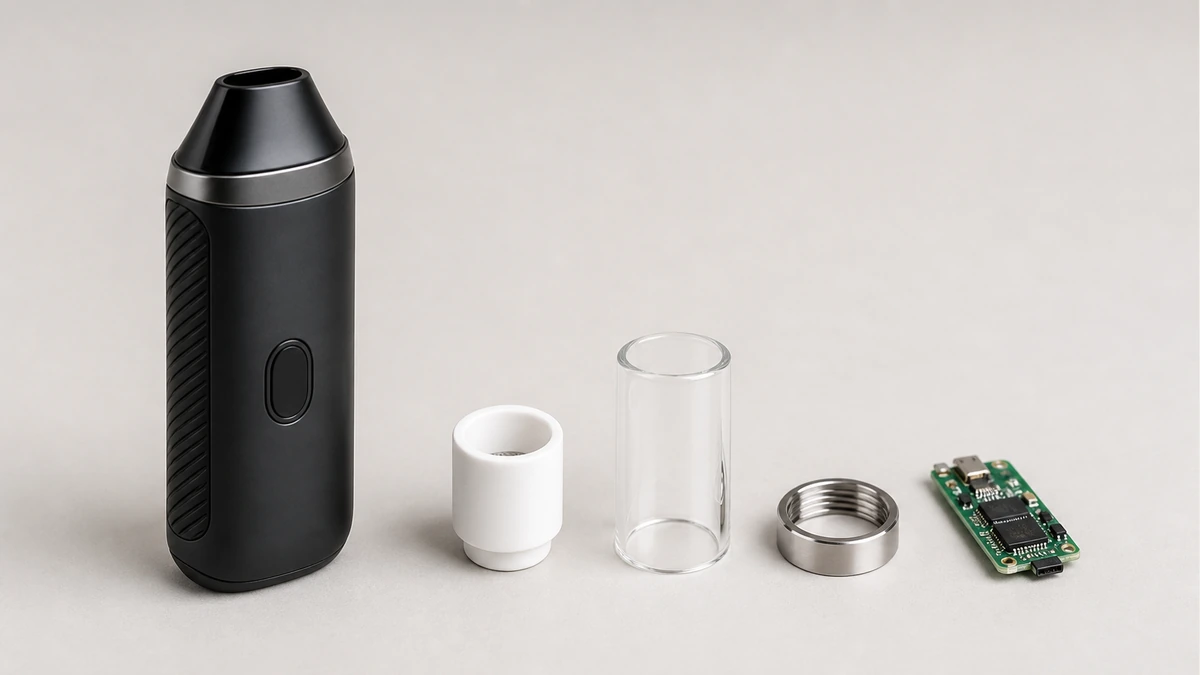
The materials conversation looks a little different for dry herb vaporizers, where the heating chamber sits in more direct and sustained contact with the material being vaporized than it does in most other formats. Ceramic chambers and ceramic-coated ovens are common here specifically because they reduce direct metal contact with the material during heating, though the heating element beneath the ceramic is still, as covered above, a metal circuit. Some units use a glass-lined chamber instead of or alongside ceramic, which changes the exposure profile again — glass doesn’t react with material the way some metals can, though it’s more fragile than a ceramic or metal liner and worth asking about specifically if durability matters as much as materials.
Anyone comparing options in this category should look at how the chamber itself is lined, not just what the outer shell is made of — the shell rarely touches the material at all. A broader look at how these devices differ in build and heating approach is available in this dry herb vaporizer comparison guide, which is worth reading before assuming all dry herb units handle materials the same way.
🧪 6. Frequently Asked Questions
Is there any vape with truly zero metal?
No powered vape avoids metal entirely, because the heating element and electrical contacts require it. What varies is how much of that metal is exposed to skin or vapor versus contained internally.
Does a plastic housing mean the device is safer for metal sensitivities?
It reduces external skin contact with metal, which is often the primary concern for contact reactions. It says nothing about the metal used inside the heating chamber, which is a separate exposure path.
Are ceramic heaters metal-free?
No. Ceramic heating elements still rely on an embedded or attached metal wire to generate heat. The ceramic reduces direct exposure in some designs but doesn’t eliminate the underlying metal circuit.
Should I trust a supplier’s verbal claim that a part is “hypoallergenic”?
Treat it as a starting point, not a conclusion. Ask for the specific alloy or grade in writing, and if skin reactions are a medical concern, confirm suitability with a physician rather than relying on marketing language.
Can I request a bill of materials before placing a bulk or private-label order?
Yes, and a manufacturer with real control over its supply chain should be able to provide one without treating it as an unusual request. If a supplier resists a written materials breakdown, that reluctance is itself useful information.
📐 7. The Practical Bottom Line
“No metal at all” isn’t a spec any powered vape can honestly claim, and a manufacturer who says otherwise is either misunderstanding their own hardware or hoping you won’t ask a follow-up question. The real work is figuring out where the metal in a specific device actually sits — housing, contacts, or heating element — and how much of it your skin or your airflow will ever meet. Ask for alloy specifics, ask what the mouthpiece is made of, and treat any materials answer as a manufacturing fact rather than a health guarantee. For buyers sourcing at scale, that same discipline — asking for specifics in writing rather than accepting a category label — is what turns a materials question into a documented answer you can hand to your own customers.