You order a replacement drip tip because the original one on your pen-style device cracked, or because you wanted something in a different color, or because a friend swore a wider bore “hits better.” It arrives, it threads on, it looks correct in photos, and for the first few pulls it seems fine. Then you notice the draw feels tighter than before, or looser, or there’s a faint whistle at the seam where the tip meets the chimney. A day later, condensation starts pooling at the base instead of staying up near the mouthpiece where it used to collect and get wiped away. Nothing is broken. The tip fits. But the device doesn’t feel like the same device anymore.
This is the part people underestimate about vape drip tips: they’re small, they’re cheap to replace, and they still change how a device performs. The mouthpiece is the one component you touch with your mouth on every single draw, so even a minor shift in bore size, wall thickness, or seating depth registers immediately, even if you can’t articulate why. Understanding what a drip tip is actually doing mechanically makes it much easier to pick a correct replacement instead of guessing from a photo.
🔌 1. What a Drip Tip Actually Changes
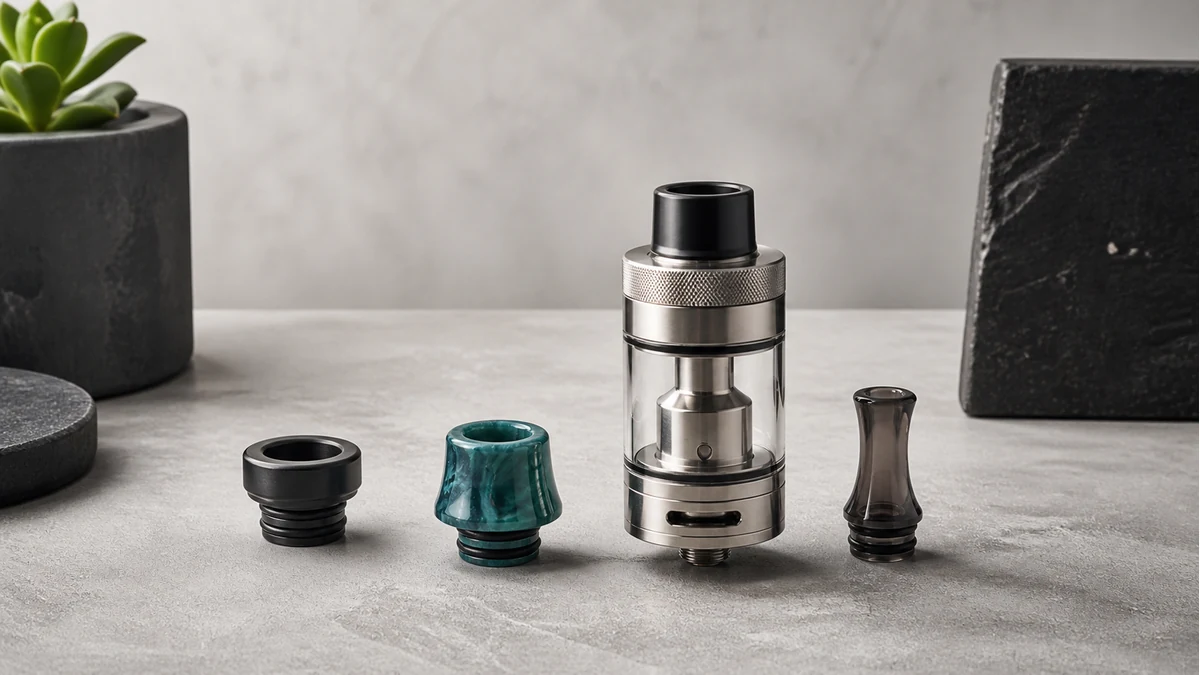
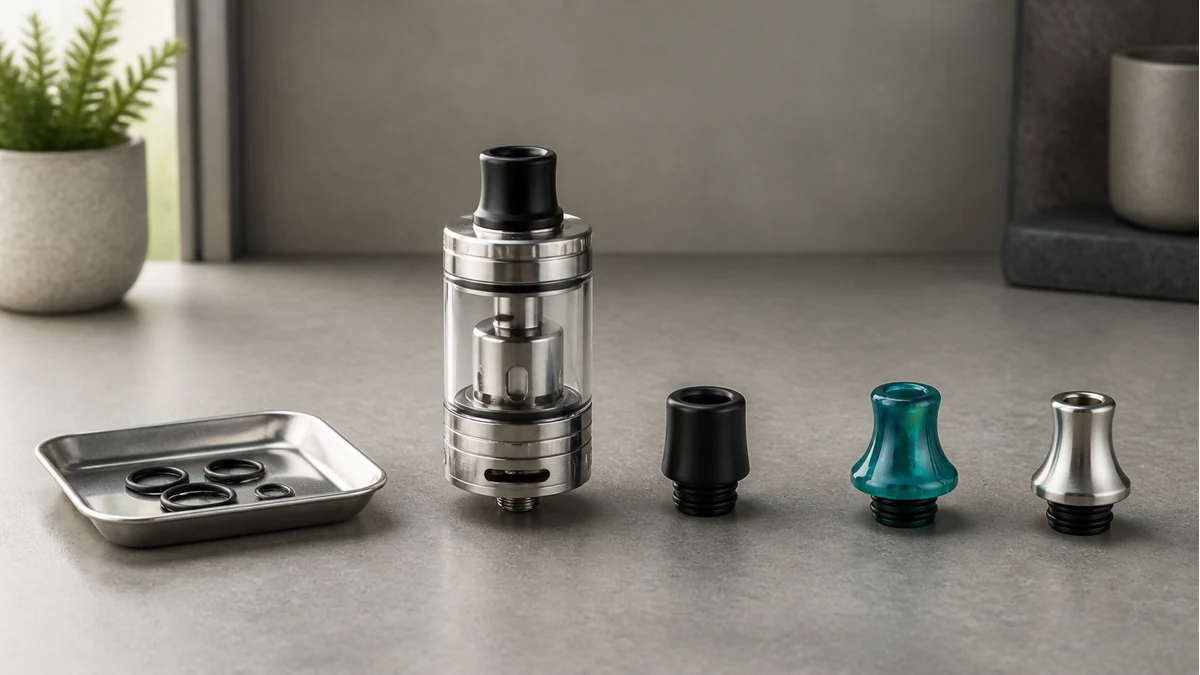
A drip tip is the removable mouthpiece that sits at the top of a vaporizer, tank, or pod, connecting to the chimney or airflow path below it. On most consumer devices it’s designed to be user-replaceable, either because it’s a wear part that eventually cracks or discolors, or because manufacturers offer it as a small customization option. Underneath the cosmetic layer, though, the drip tip is doing real mechanical work: it seals the airflow channel, it defines the diameter of the last stretch of air the vapor travels through before it reaches your mouth, and it’s the surface temperature you actually feel on your lips.
Swap the tip and you’re not just changing color. You’re changing the internal bore diameter, which affects how airy or restrictive the draw feels. You’re changing the height and internal shape, which affects how much vapor cools and condenses before it reaches you. And you’re changing the seal at the connection point, which affects whether air leaks in around the joint instead of pulling cleanly through the chamber. None of these are dramatic changes on their own, but stacked together they explain why a tip that “fits” can still feel wrong.
📐 2. Is a 510 Drip Tip the Same as an 810?
510 and 810 are the two connector families most people run into when shopping for a replacement tip, and they are not interchangeable in the way the similar-sounding names suggest. A 510 connection is the narrower, more traditional fit historically associated with pen-style devices and smaller mouthpieces. An 810 connection is wider, more commonly seen on tank-style and sub-ohm setups where manufacturers want a bigger bore for a more open draw. The numbers refer to established connector standards in the vaping hardware industry, not to any measurement specific to a single brand.
The practical issue is that a drip tip sized for one standard generally will not seat correctly on hardware built for the other. Force a narrower 510 tip into an 810-style opening and it may sit loosely, wobble, or fail to seal at all. Try to push an 810 tip onto 510-diameter hardware and it typically won’t seat down properly, if it fits at all. Some devices include an adapter that lets you step between the two standards, but that’s a feature of the device or a separate accessory, not something a drip tip does on its own. If your original mouthpiece has a removable adapter ring, that’s usually the piece enabling the crossover — losing or skipping that ring is a common reason people think they bought “the wrong size” when they actually just bought the right tip without the right adapter.
📐 2.1 O-Rings and the Seal You Don’t See
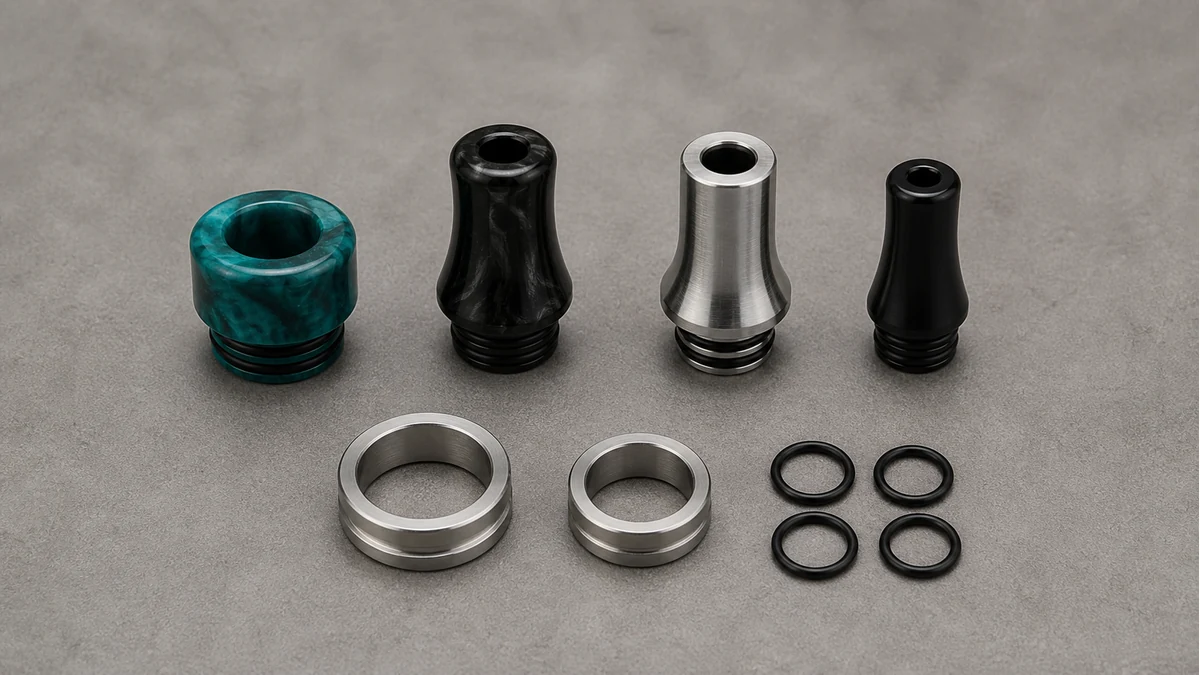
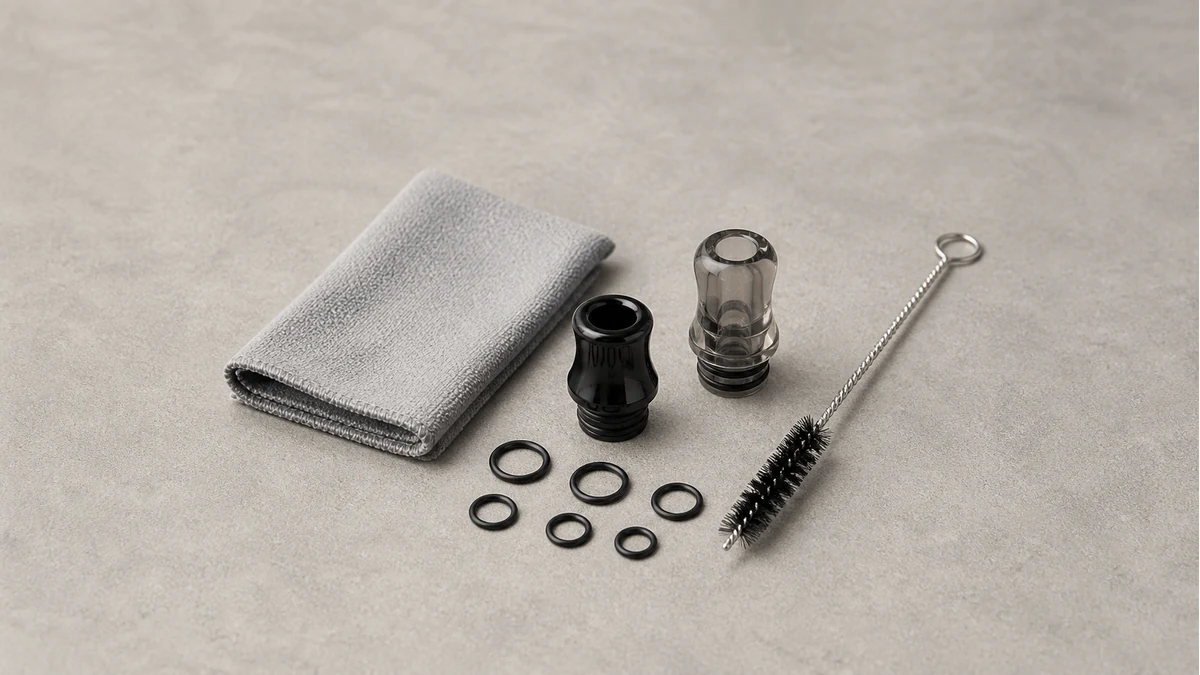
Even when the connector standard matches, the O-ring is doing quiet but essential work. This small rubber ring sits at the base of the drip tip or inside the chimney opening, and its job is to keep the joint airtight so you’re pulling vapor through the chamber rather than pulling in loose air around the seam. A missing, stretched, or perished O-ring is one of the most common reasons a correctly sized replacement tip still produces a whistling draw, an airy pull that doesn’t match the device’s usual resistance, or visible condensation creeping down the outside of the joint instead of staying contained.
O-rings degrade with normal use — heat cycling and repeated handling wear rubber down over time — and they’re easy to lose during cleaning if you’re not paying attention to which small ring goes where. If a new drip tip introduces a leak that wasn’t there with the original, checking the O-ring before assuming the tip itself is defective saves a lot of unnecessary troubleshooting.
🌬️ 3. Bore, Height, and the Feel of the Draw
Bore is the internal diameter of the tip’s airflow channel, and it’s the single biggest factor in how tight or open a draw feels. A narrower bore restricts airflow and tends to produce a firmer, more cigarette-like pull. A wider bore opens the draw up and lets more air move through per pull, which some users associate with a smoother or airier feel. Neither is objectively correct — it’s a matter of what the rest of the device was tuned for and what the user prefers — but a bore mismatch against the device’s designed airflow path is exactly why a replacement tip can feel noticeably different even when everything else checks out.
Height matters in a less obvious way. A taller drip tip moves your mouth farther from the heating chamber, which gives vapor more distance to travel and cool before it reaches you. A shorter tip does the opposite, shortening that path and often delivering warmer, denser vapor with less time to condense along the way. This is also why taller tips tend to collect more condensation inside the tip itself — there’s simply more surface area and more travel time for moisture to settle out before it exits.
🌬️ 3.1 Material and Heat Transfer
Drip tips commonly come in glass, resin, wood, and various metals, and material affects how the tip conducts heat to your mouth rather than how it performs the actual vapor pathway. Glass and metal transmit surface heat more readily, so warmth from the chamber is felt sooner at the mouthpiece. Resin and wood tend to insulate a bit more, keeping the exterior surface cooler to the touch over a longer session. This is purely a comfort and handling difference — it’s not a claim about vapor temperature, cooling performance, or output quality, since none of that can be verified from material alone without testing the specific device it’s paired with.
If you’re swapping components generally, it’s worth applying the same logic used for other replaceable parts. Our vape coil compatibility guide walks through matching connector type and thread spec rather than assuming visual similarity means a correct fit, and the same discipline applies to mouthpieces: match the connector standard first, then worry about bore and material preference second.
🧽 4. Cleaning and Replacement Timing
Condensation is normal. Every vaporizer produces some moisture as vapor cools on its way out, and the drip tip — being the coolest, most exposed part of the airflow path — is where a lot of that moisture ends up collecting. A tip that’s gathering visible residue at the base or feels sticky after a session isn’t malfunctioning; it just needs regular cleaning, the same way any mouthpiece does. Our guide on how to clean a vape pen mouthpiece covers the routine maintenance side of this in more detail, including how often to clean depending on how frequently the device is used.
Replacement is a separate question from cleaning, and it’s usually triggered by one of a few visible signs rather than a fixed schedule:
- Visible cracks, chips, or crazing in glass or resin tips, which can happen from drops or thermal stress over time
- An O-ring that’s lost its shape, feels brittle, or no longer holds a seal after cleaning
- A draw that stays noticeably looser or tighter than it used to, even after a thorough clean, suggesting wear at the connection point
- Discoloration or odor that persists after cleaning, particularly in porous materials like wood
None of these require guesswork about compatibility if you’re replacing with the same connector type and dimensions as the original. The complication only arises when switching to a different bore, height, or material for preference reasons, which is when the fit and feel differences discussed above actually come into play.
🔍 5. When the Original Tip Is Still the Safer Reference
If you’re unsure whether a replacement drip tip will seat correctly, the most reliable reference point is the tip that came with the device, not a generic size chart. Manufacturers pair specific connector dimensions, O-ring sizing, and chimney depth to their own hardware, and even devices that use the same broad standard — 510 or 810 — can have small variations in how deep the tip seats or how snug the fit is meant to be. Keeping the original tip, even a cracked one, gives you something physical to compare a replacement against: hold them side by side, check the base diameter, and confirm the O-ring sits in the same position before assuming a new tip is a drop-in match.
This is also where reusable, multi-tip setups earn their keep. Devices designed around a swappable mouthpiece system tend to document their connector standard more clearly precisely because the manufacturer expects users to experiment with different tips over the life of the device. Our reusable vape pen guide goes into how these swappable component systems are typically structured, which is useful context if you’re choosing a device partly because you want the flexibility to change tips later without second-guessing every purchase.
❓ 6. Common Questions
Does a wider bore automatically mean a better draw? No — it means an airier, more open draw, which some users prefer and others don’t. It’s a preference match to the device’s airflow design, not an upgrade in itself.
Why does my new drip tip whistle slightly when I pull? A whistle usually points to an incomplete seal, most often a missing, misaligned, or worn O-ring rather than a problem with the tip’s sizing.
Can I use an 810 tip on a device built for 510, or the reverse, without an adapter? Generally no. The two standards aren’t sized to interchange directly, and forcing a fit risks a poor seal or damage to the threading.
Is more condensation in a new tip a sign something’s wrong? Not necessarily. Taller tips and certain materials naturally collect more visible condensation simply due to the added travel distance, not because of a defect.
A drip tip is easy to treat as an afterthought because it’s inexpensive and simple to swap, but it’s also the one part of the device you interact with directly, every single pull. Matching connector standard, checking the O-ring, and paying attention to bore and height will get you a replacement that performs like the original instead of one that merely fits.
📚 7. Sources and Reader Questions Reviewed
Technical statements were checked against the sources below. Reddit discussions were used only to identify reader questions and language, not as proof of technical, health, safety or legal claims.