A vape that plays music is a real product category, not a rumor: manufacturers have built box mods with a small Bluetooth speaker, an amplifier chip, and sometimes an LED screen sharing the same enclosure as the vaping circuitry. Picture a squarish mod with a speaker grille cut into one side, a micro-USB or USB-C port for charging and audio pairing, and the usual fire button and screen on the front. It looks like a novelty gadget crossed with a car stereo, and functionally, that is close to what it is.
The interesting part is not whether the speaker works. It usually does, at least well enough to play a podcast or a playlist at modest volume. The interesting part is what happens when you stack an audio system on top of a vaping device that already has its own demands around battery health, coil compatibility, and moisture exposure. Adding a speaker does not remove any of those baseline requirements —it just adds a second set of components competing for the same power source and the same limited internal space.
This piece walks through what actually changes when a vape gains audio hardware: how the battery gets shared, why a working speaker says nothing about whether your favorite atomizer will fit or fire correctly, what the extra ports and buttons mean for cleaning, and why novelty devices like this tend to have a shorter useful life than standard mods once a manufacturer moves on. None of this is an argument against the concept —it is a checklist for judging one honestly before or after you own it.
🧭 1. Yes, speaker-equipped vape devices have existed
Hybrid mods that combine a vaporizer with a built-in Bluetooth speaker have appeared periodically as novelty or lifestyle items rather than mainstream hardware. The pitch is straightforward: instead of carrying a vape and a separate portable speaker, you carry one device that does both. Some versions add an LED display that shows track information or a simple visualizer alongside the usual battery and wattage readout. Others keep the screen minimal and focus the marketing on sound quality and pairing range.
Because this is a niche category, the exact feature set, speaker wattage, Bluetooth version, and companion app support vary a lot from one product to the next, and details change or disappear as manufacturers update or discontinue lines. If you are looking at a specific model, the maker’s own manual and current product page are the only reliable source for what that unit actually does —not general claims about the category. Treat any secondhand description of a named model, including older reviews or forum threads, as historical color rather than a current spec sheet.
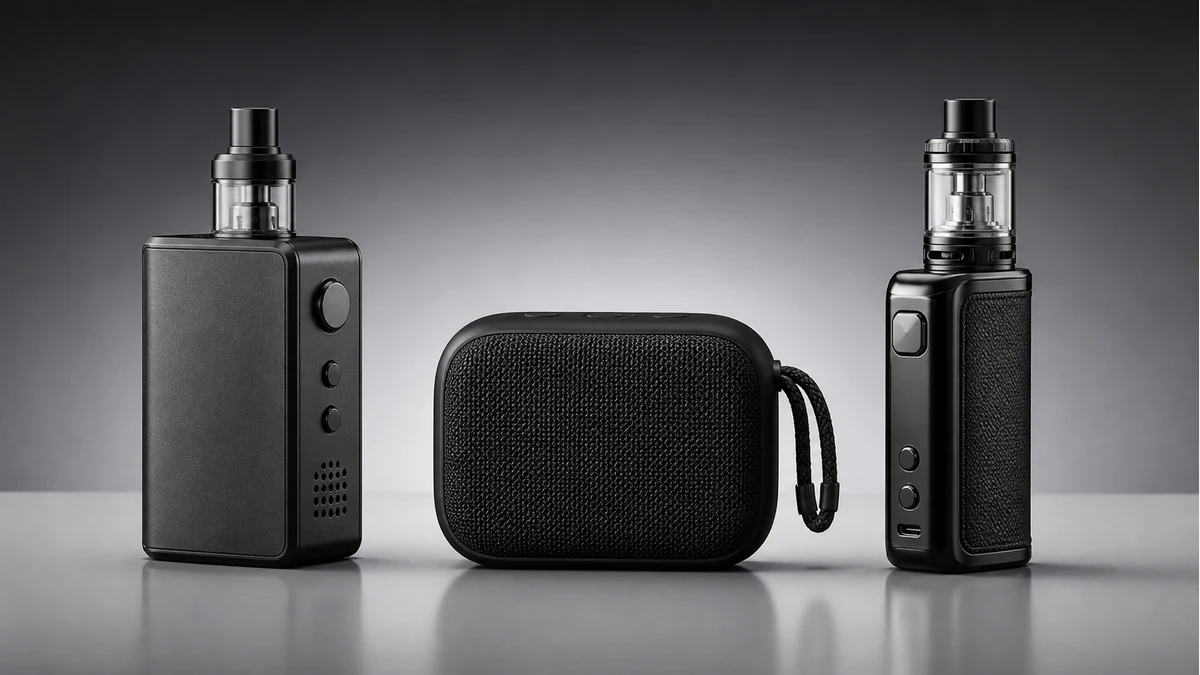
What stays consistent across these devices is the basic engineering problem: you are combining two separate small-electronics products —a personal audio speaker and a vaporizer —inside one housing, powered by one energy source. That combination is what the rest of this article is really about, not the novelty of hearing music come out of a mod.
In a standard box mod, the battery has one job: deliver current to the atomizer coil when you press the fire button. In a speaker-equipped mod, that same cell (or cell pair) also has to power an amplifier circuit, a Bluetooth radio, and often an LED screen. None of those subsystems care about each other’s needs —the amp draws power on its own schedule based on volume and playback, the vaping circuit draws power on its own schedule based on your puffs, and both pull from a shared reservoir with a finite capacity. This matters because lithium-ion cells behave differently under different discharge patterns, and asking one battery to handle a variable, sometimes-simultaneous load from two unrelated systems is a more demanding job than powering a coil alone. It does not automatically make the device unsafe, but it does mean the manufacturer’s engineering —how they size the battery, manage voltage sag, and protect against over-discharge —has to account for a wider range of draw scenarios than a plain vape design does. That is exactly the kind of detail a generic “it has a speaker—product description will not tell you, and it is worth understanding basic cell behavior before you rely on any mod, hybrid or not, for daily use. A general primer like this vape pen battery guide covers the fundamentals of how these cells discharge, age, and fail, which applies regardless of what else is sharing the circuit.
🔍 3. Audio features do not prove atomizer compatibility
A working speaker and a functioning vape are two independent claims, and one does not verify the other. The audio side of a hybrid mod —the amplifier, the Bluetooth chip, the speaker driver —is a completely separate circuit from the atomizer connection, which still needs the right thread type, the right resistance range, and firmware that reads the coil correctly and applies power the way it is supposed to. A device can play music flawlessly and still be a mediocre or poorly matched vape if its 510 connection, wattage curve, or coil support was an afterthought next to the audio feature. This is worth double-checking with any device you are considering, hybrid or not: does it list the resistance range it supports, the thread standard, and whether it is built around a specific tank or atomizer family? If the marketing spends more time on sound specs than on those details, that is itself useful information about where the engineering priority sat. Understanding how the coil and battery actually interact —regardless of what else is bolted onto the mod —makes it much easier to evaluate any device on its vaping merits first. A resource like this explainer on how an atomizer works is a good baseline for that evaluation, and a general vape parts overview is useful for understanding which components are standardized across devices and which are proprietary to one manufacturer’s design.
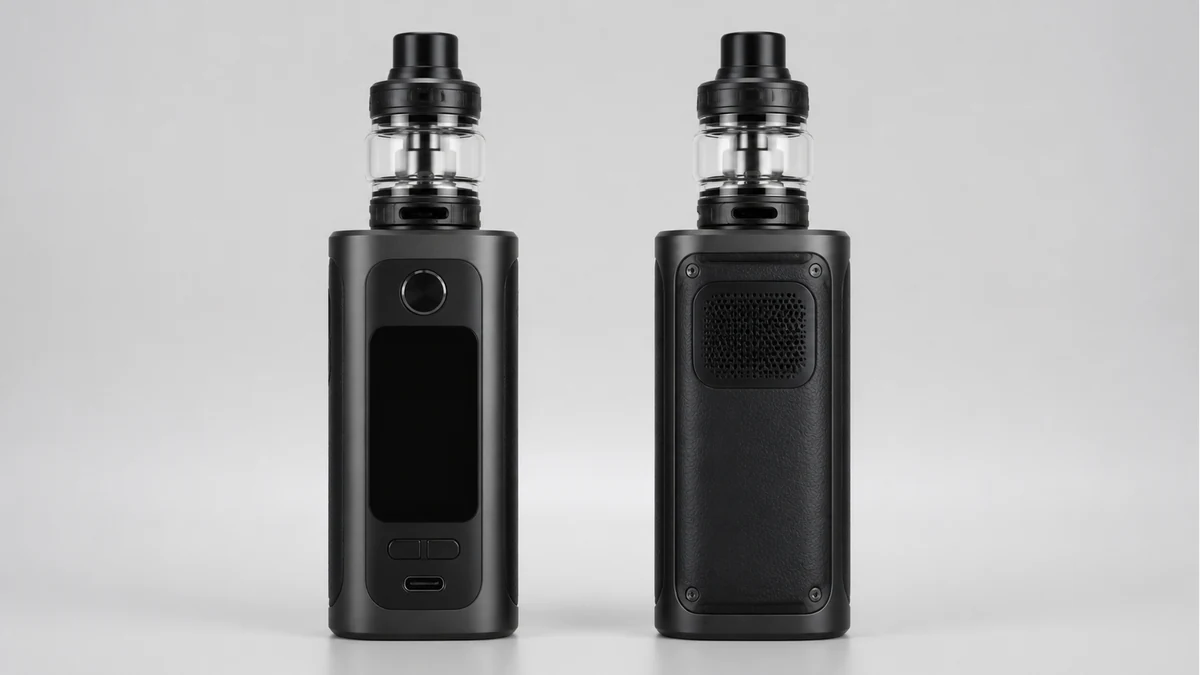
Every additional feature on a mod tends to mean an additional opening in the housing, and openings are where e-liquid residue, condensation, and dust cause the most trouble on any vaping device. A speaker-equipped mod typically adds a speaker grille with dozens of small perforations, sometimes a separate charging port from the one used for firmware updates, and extra buttons for volume or track control beyond the standard fire button and menu controls. Each of those openings is a place where a stray drip during a tank refill, a pocket full of lint, or ordinary daily condensation can work its way into the enclosure. A plain mod already asks you to keep its battery door, airflow ring, and 510 connection clean; a hybrid device adds a speaker grille and extra buttons to that same maintenance routine, with less internal space to route liquid away from sensitive components. Manufacturers do not typically make water-resistance or dust-resistance claims for these speaker-equipped mods, and you should not assume a rating that isn’t explicitly stated by the maker for your specific unit. Treat any speaker grille as a liability during refills, not a feature to test. Cleaning routines that work fine on a standard mod —wiping down the 510 threading, checking the battery contacts, occasionally clearing the airflow —still apply here, but they now have to be done more carefully around openings that were not on a simpler device. If the manual for your specific model gives cleaning instructions, follow those over generic advice, since the internal layout around ports and speaker components varies by design.
🧼 5. Battery runtime becomes harder to predict
On a standard vape, battery runtime is a function of one variable: how much you vape, at what wattage, on what schedule. On a speaker-equipped mod, runtime depends on that plus how much you are using the audio features —volume level, whether Bluetooth stays connected and searching for a paired device, and whether a screen or visualizer is lit while music plays. Two people with identical vaping habits could get noticeably different battery life out of the same hybrid device just based on how they use the speaker. This makes it harder to build the kind of intuitive sense of “how many days will this charge last” that regular vape users develop with a standard mod. It also means a battery that reads as low might be low because of a long playlist rather than a long vaping session, which can be confusing if you’re used to correlating battery drain directly with puff count. If you are relying on the device to get you through a workday or a trip, it’s worth treating the audio features as a real draw on capacity rather than a free bonus, and charging with that combined use in mind rather than basing habits on vaping alone.
🛠️ 6. Novelty devices can age badly when support disappears
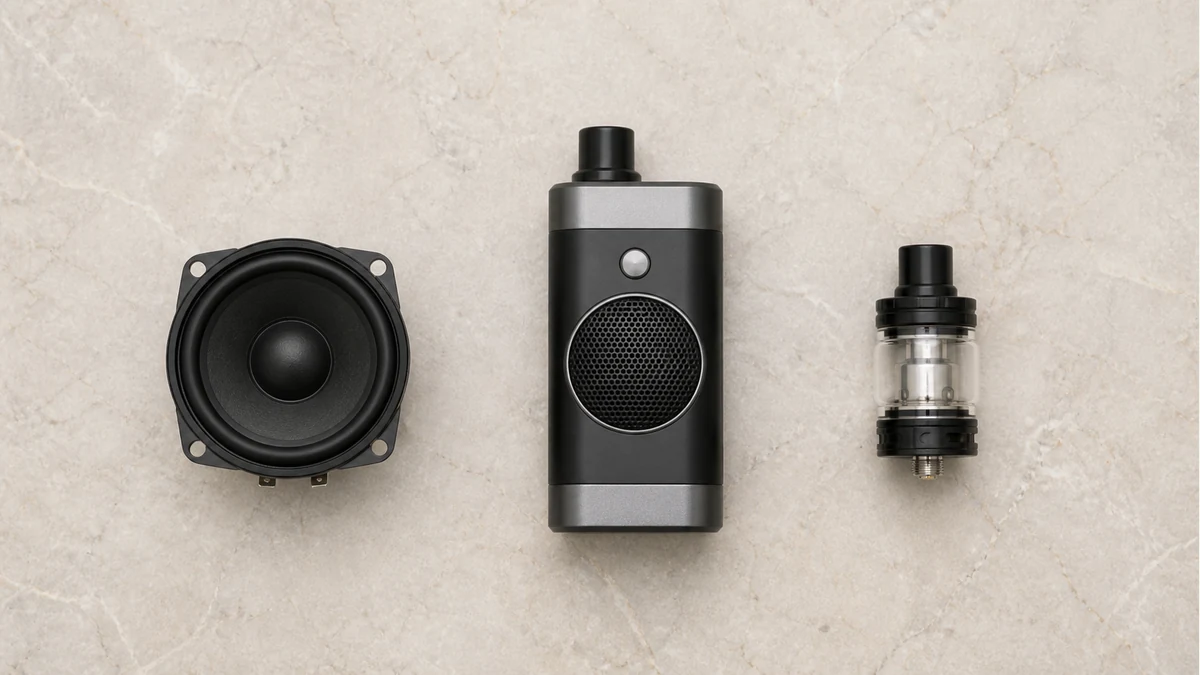
Niche hybrid products live and die by manufacturer support in a way that mainstream mods generally don’t have to worry about as much. A standard box mod built around common battery sizes and a universal 510 connection can often keep running for years on generic replacement parts even after the original manufacturer stops actively supporting that specific model. A speaker-equipped mod is more likely to depend on manufacturer-specific firmware for the Bluetooth pairing and amp behavior, and possibly a companion app for controls or updates —dependencies that a plain vape simply doesn’t have. When a novelty product line gets discontinued or a small manufacturer moves on, firmware updates stop, companion apps can be pulled from app stores, and replacement parts for the audio-specific components become difficult or impossible to source. The vaping side of the device might still technically function, but a broken speaker driver, a Bluetooth chip that no longer pairs, or a screen that stops responding can leave you with a device that feels like it’s failed even if the atomizer connection still fires. That is a different risk profile from a basic mod, where the worst case is usually “the battery wore out and I need a new device,” not “an entire feature category stopped being supported.” None of this means a hybrid device is a bad purchase —it means going in with realistic expectations about how long the audio features specifically are likely to remain useful, separate from how long the vaping hardware itself might last.
✅ 7. Judge it as a vape first and a speaker second
The honest way to evaluate a vape that plays music is to score the two halves separately rather than letting one impressive demo cover for the other. Ask the standard vaping questions first: what coil family does it support, what is the resistance range, how is the battery rated, and what does the manufacturer’s manual actually say about maintenance and safety for this specific unit. Only after those answers hold up on their own terms should the speaker, screen, or Bluetooth range factor into the decision.
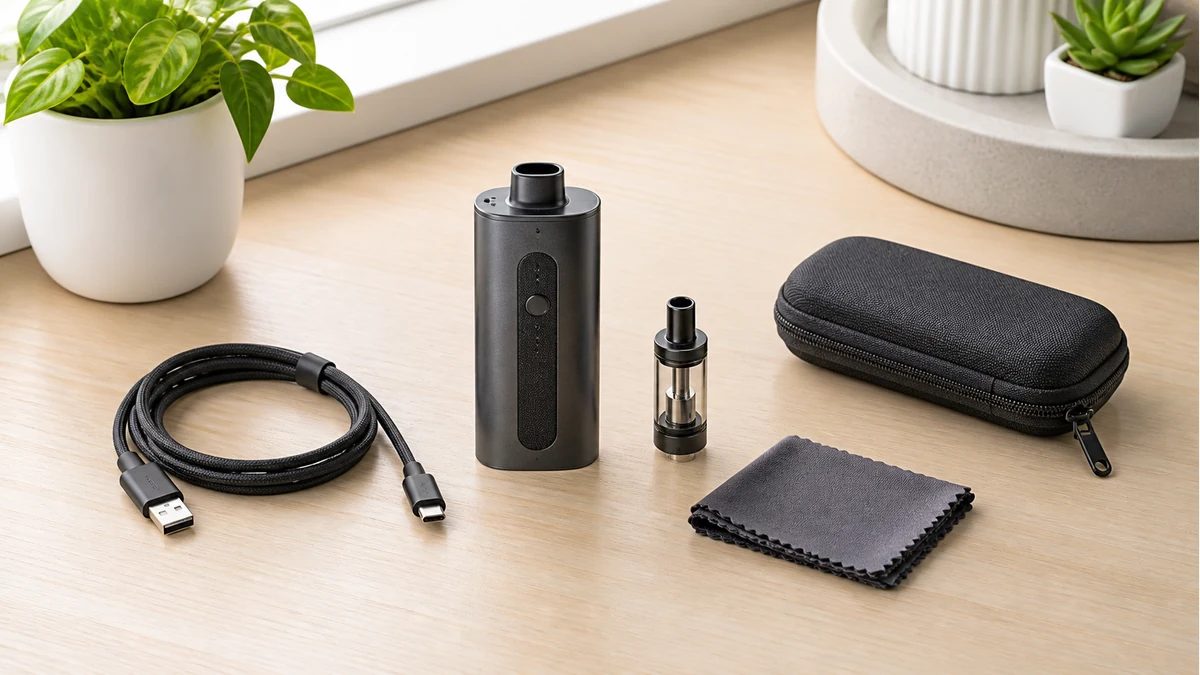
If the atomizer compatibility and battery fundamentals are solid, an added speaker is a genuine convenience —one less object to carry, and a reasonable trade for people who already listen to audio while they vape. If those fundamentals are vague, unclear, or take a back seat to marketing about sound quality, the speaker is doing a lot of work to distract from the part of the device that matters most for daily reliability and safety. A working audio system is a nice bonus. A predictable, well-documented vape is the requirement underneath it, hybrid or not.