How to Use a Dab Rig Without a Carb Cap—and Why Airflow Suffers
A dab rig will still produce vapor without a carb cap, but the session changes in a specific way: the concentrate meets more open air at once, so the banger has to run hotter to get the same visible cloud, and a larger share of the dose burns off instead of vaporizing cleanly. If you’ve misplaced your cap or are using a banger for the first time before a replacement arrives, you can still dab—just expect a rougher, less efficient hit than you’d get with the airflow restricted the way it’s designed to be.
This isn’t a workaround guide for skipping the cap on purpose. It’s an explanation of what the cap actually does mechanically, so you understand why the hit feels different without one, how to adjust your technique in the meantime, and why sourcing the correct replacement part—rather than improvising—is the fix that actually holds up over repeated use. For the full mechanics of a dab session from torch to inhale, see our how to use a dab rig guide.
🧭 1. A rig can work without a cap, but less efficiently
A dab rig is fundamentally simple: heat a banger, place concentrate on the heated surface, inhale through the joint and mouthpiece. None of that stops working if the carb cap is missing. The banger still gets hot, the concentrate still liquefies and vaporizes, and vapor still travels up through the rig’s water and neck to the mouthpiece. In that sense, “no cap, no dab” isn’t accurate—you can absolutely take a hit without one.
What changes is efficiency, not possibility. Without a cap, the banger’s opening stays fully exposed to ambient air. That open airpath cools the vaporization surface faster and lets more of the produced vapor escape or combust at the edges rather than being pulled cleanly into your airflow. The practical result is a session where you often need higher heat, smaller doses, and closer attention to timing to get a comparable hit—more effort for a result that’s still generally less controlled than a capped session.
It’s worth separating this from the idea that a cap is optional gear. It’s not decorative; it’s doing real airflow work. The next section breaks down what that work actually is.
🧩 2. What the carb cap changes in the airpath
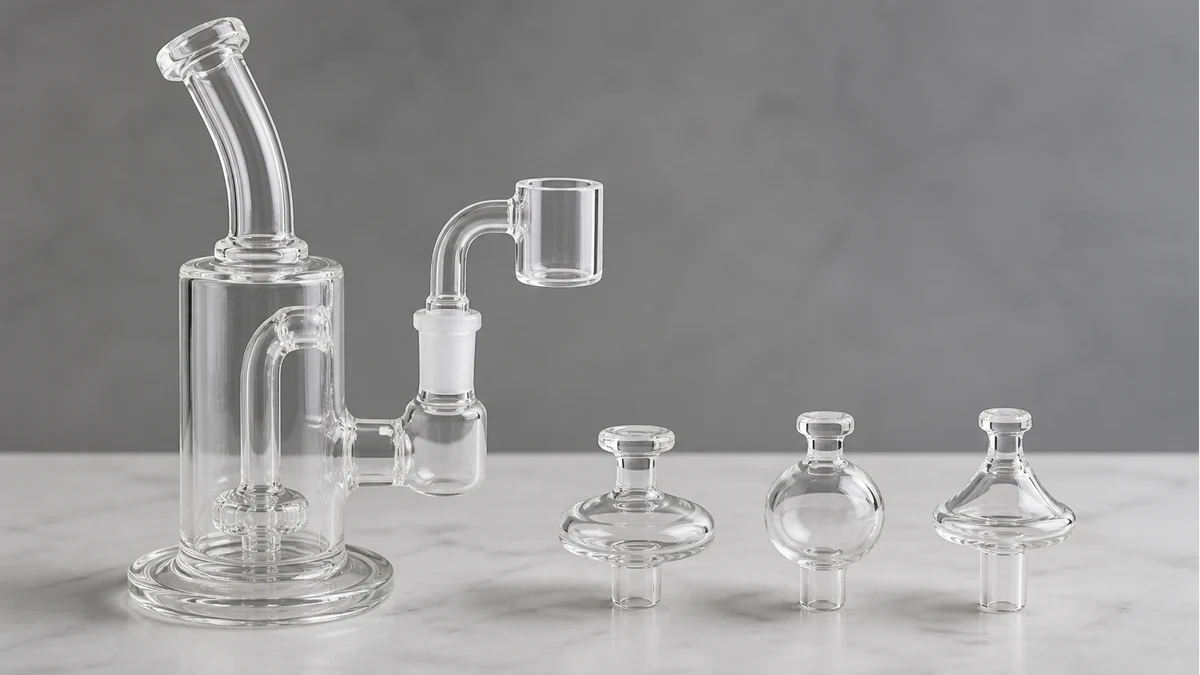
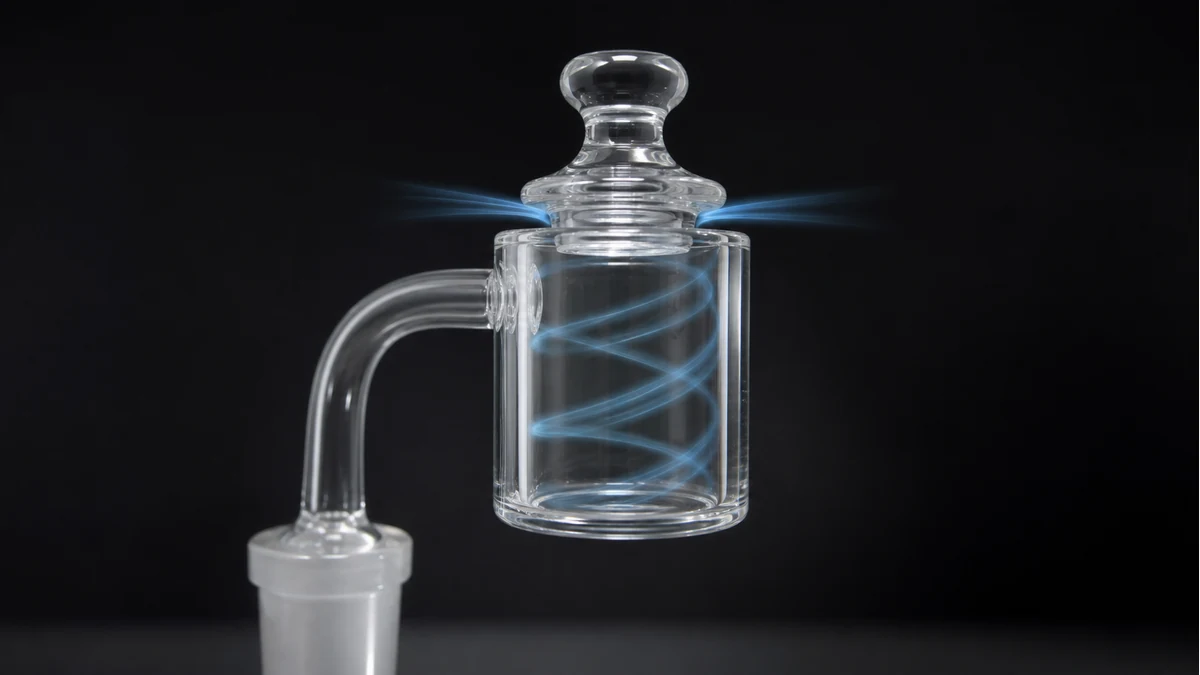
A carb cap sits over the banger’s opening and restricts how much outside air can enter alongside the vapor. That restriction does two connected things. First, it directs airflow: instead of air rushing straight down onto the concentrate from every angle, the cap forces it through a smaller channel—directional caps push a stream of air across the surface, while non-directional caps largely just seal the opening and let you control airflow through a separate hole or by lifting the cap slightly.
Second, and this is the part that matters most for dab quality, restricting airflow lets the banger continue vaporizing at a lower surface temperature. Convection carries heat away from a hot surface; more incoming air means more of that heat gets carried off, so the surface cools faster after you stop heating it. With a cap on, the reduced airflow slows that cooling, which is part of why capped dabs are associated with vaporizing concentrate more gently over a longer window rather than flash-vaporizing it at a very high initial temperature. Related airflow behavior also shows up with accessories like a dab straw or carb cap alternative, but the underlying principle—restricted air, slower cooling, more controlled vaporization—is the same one a proper cap is built around.
Without that restriction, you’re essentially dabbing on a surface that’s losing heat to the open air the entire time. That’s the mechanical reason a capless dab behaves differently, not a flaw in the concentrate or the banger itself.
🔍 3. Set expectations before heating the banger
Before you heat anything, it helps to reset what a capless session can realistically deliver. You’re not going to replicate a capped low-temperature dab’s slow, even vaporization curve. Instead, expect a shorter effective window where the surface is hot enough to vaporize efficiently, more visible vapor loss around the edges of the banger, and a real possibility of scorching if you use your normal heat-up routine for the banger’s material and thickness.
General temperature guidance is directional at best because banger material, wall thickness, torch type, and whether you’re timing by feel or with a sensor all change the actual surface temperature at any given moment—our guide to dab temperatures covers that variability in more detail. What’s consistent is the direction of the adjustment: without a cap slowing heat loss, a banger heated to your usual mark will likely have already cooled somewhat by the time you apply concentrate, so many people find they need to heat slightly longer, or start the dab a little sooner after heating, and accept more trial and error than a capped session requires.
The goal here isn’t a fixed number—there isn’t a universal one—but a mental adjustment: judge the surface, not the clock, and be ready for the hit to behave differently than what you’re used to.
⚙️ 4. Use less material and watch the surface response
The most direct adjustment for a capless dab is loading less concentrate. A smaller amount of material has less surface area exposed to the open air relative to its volume, and it vaporizes faster overall, which reduces the window during which uncontrolled airflow can degrade the hit. Loading your usual amount onto an uncapped banger tends to mean more of it either combusts at the hot edges or never fully vaporizes before the surface cools too much to finish the job.
Watch how the concentrate actually behaves on the surface rather than following a fixed routine. Concentrate that bubbles and moves smoothly is vaporizing as intended; concentrate that darkens, scorches at the edges, or produces harsh, dark smoke instead of vapor is a sign the surface is too hot for how quickly it’s cooling under open airflow, or that too much material was loaded for the exposed surface. Because you don’t have a cap directing airflow across the dab in a controlled way, you’ll likely need to reposition the dabber or gently move the concentrate across the surface yourself to get more even contact—work the cap would otherwise be doing passively.
None of this makes a capless dab equivalent to a capped one. It just narrows the gap by working with less material and closer attention instead of trying to force the same technique that works with a cap onto an open banger.
🧼 5. Why random household caps are not a sound substitute
It’s tempting to reach for something round and heat-resistant-looking to place over the banger, but household objects introduce problems a purpose-built cap doesn’t have. A carb cap is shaped and sized to match a banger’s specific joint and bucket geometry so it seats predictably and creates a consistent, repeatable airflow restriction. An improvised object sitting loosely or unevenly over the opening doesn’t create that same predictable seal—it either blocks airflow too much, too little, or unevenly, which makes the surface temperature harder to judge, not easier.
There’s also a materials and heat problem. A banger’s exposed surface and rim get genuinely hot during and after heating, and anything placed near or against that surface needs to tolerate that heat without releasing anything, cracking, or reacting with the concentrate. Household items generally aren’t rated or tested for that kind of direct contact with a heated quartz, glass, titanium, or ceramic surface, and there’s no way to verify from a kitchen drawer whether a given object is safe to use that way. This isn’t a case where “it’s just for one session” removes the uncertainty—the uncertainty is about what’s near your airway while you inhale.
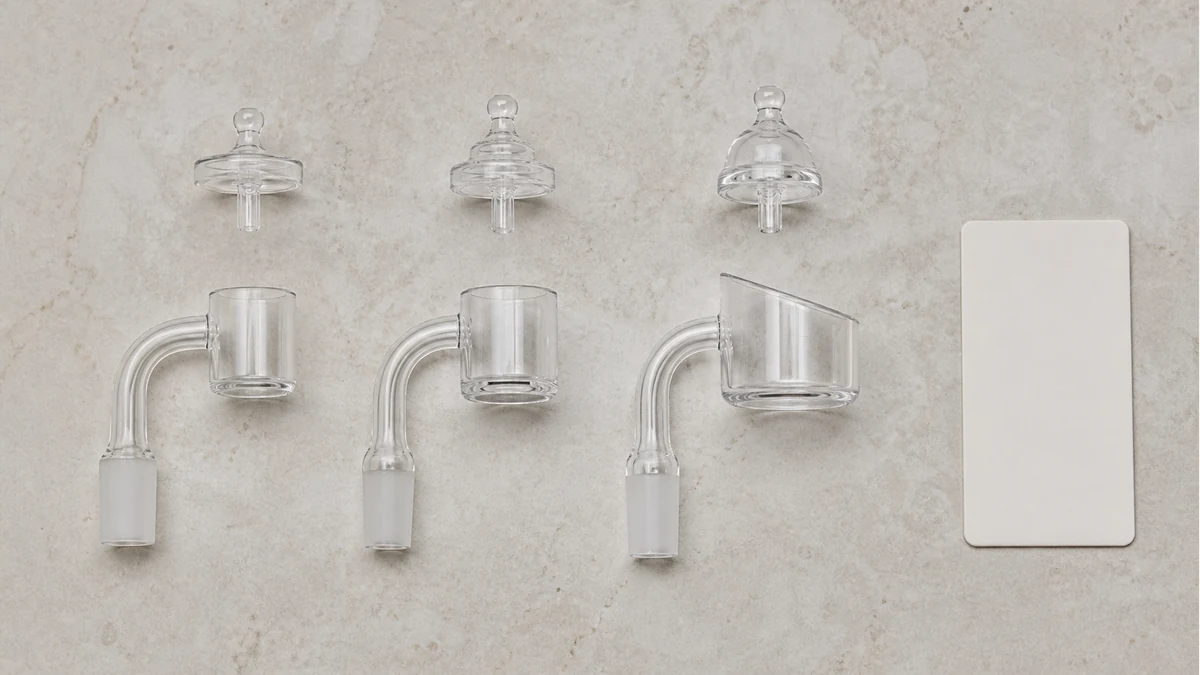
The practical takeaway is simple: dabbing without any cap, using smaller loads and closer attention as described above, is a known and manageable tradeoff. Substituting an unverified object for a cap trades a predictable efficiency loss for an unpredictable and unverifiable risk. It’s not a fair swap.
🛠️ 6. Match a replacement cap to the banger
The durable fix isn’t a workaround at all—it’s replacing the cap with one that actually fits your banger. Fit starts with joint size, typically 10mm, 14mm, or 18mm, matched to your banger’s joint. Beyond that, cap style matters: directional caps have an angled hole meant to aim incoming air across the concentrate and are generally used with a specific rotation technique, while bubble or non-directional caps seal more broadly over the opening and rely on you lifting or rotating them to control airflow instead of aiming a jet of air.
Bucket depth and rim shape are the other fit variables. A cap sized for a deep bucket won’t seat correctly on a shallow one, and mismatched rim shapes—flat versus beveled, for instance—can leave gaps that undermine the same airflow restriction a cap is supposed to provide. Because these details vary by manufacturer and even by product line, the manual or product listing that came with your banger and rig is the reliable source for which cap dimensions and styles are actually compatible, rather than assuming any cap marketed as “universal” will seat and seal the way a matched one does.
Buying a cap that fits your specific setup resolves the underlying issue this whole article is about: once airflow restriction is back in place and seated correctly, the lower-temperature, more controlled vaporization that a capless session can’t reliably produce comes back with it.
📦 6.1. A temporary limitation is better than an improvised cap
If the matching cap is unavailable, treat the session as a reduced-efficiency exception rather than redesigning the banger with a random object. Materials that look heat resistant may carry coatings, trap pressure, scratch the rim, or become difficult to remove. A properly sized replacement restores directed airflow without adding those unknowns.
When shopping for the replacement, photograph the banger from the side and top and measure only where the manufacturer recommends. Directional caps, bubble caps, and inserts depend on geometry, not just a broad diameter label. A cap that balances loosely on the rim may restrict air without directing it where the concentrate sits.
✅ 7. Clean the banger before the next attempt
Whether you dabbed with a cap or without one, residue left in the banger changes how the next session performs. A capless dab in particular tends to leave more uneven residue—some scorched, some only partially vaporized—simply because the surface temperature was harder to control. That leftover material can affect flavor and even how evenly the surface heats the next time, since buildup changes how heat is absorbed and distributed across the banger.
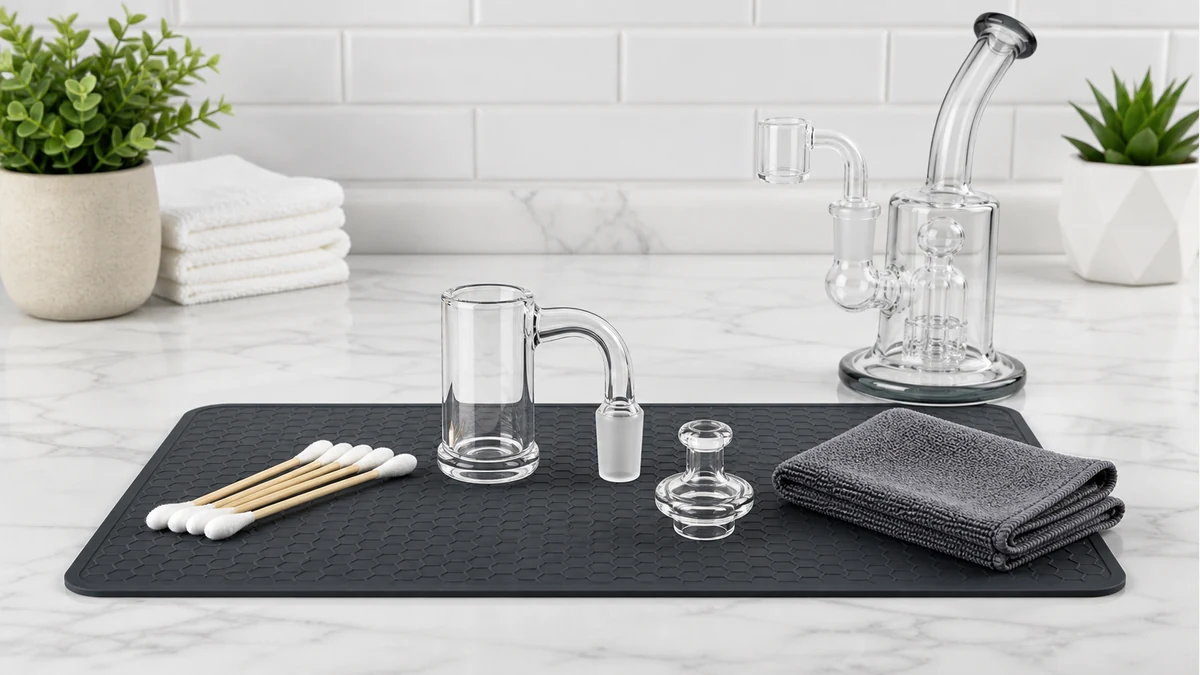
Cleaning between sessions, using the same fundamentals whether or not a cap was involved, keeps each dab starting from a consistent surface rather than compounding whatever went wrong in a rough, capless hit. Our dab Q-tip cleaning guide covers the specific technique for clearing residue from a banger without damaging the surface, which is worth doing as routine maintenance regardless of which cap—or lack of one—you were using.
Getting a replacement cap that matches your banger’s joint size, bucket depth, and style remains the actual solution here. Everything in this guide about smaller loads, closer attention, and avoiding improvised substitutes is meant to get you through until that part is back in your kit, not to replace it as a long-term approach.