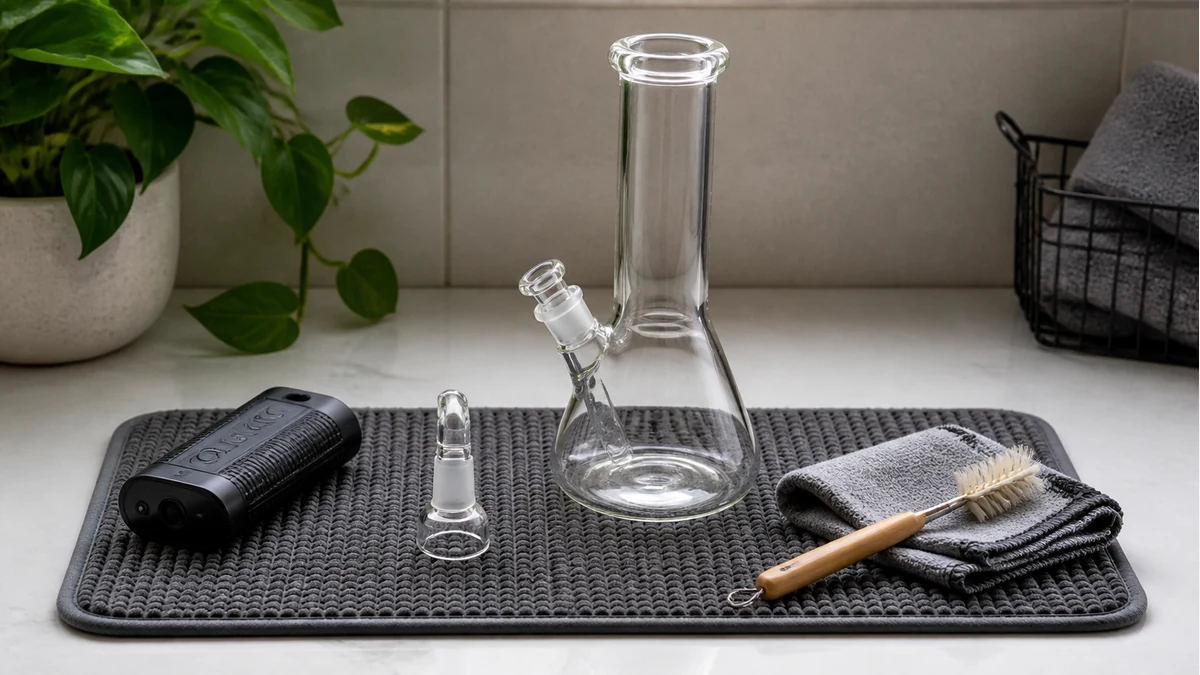
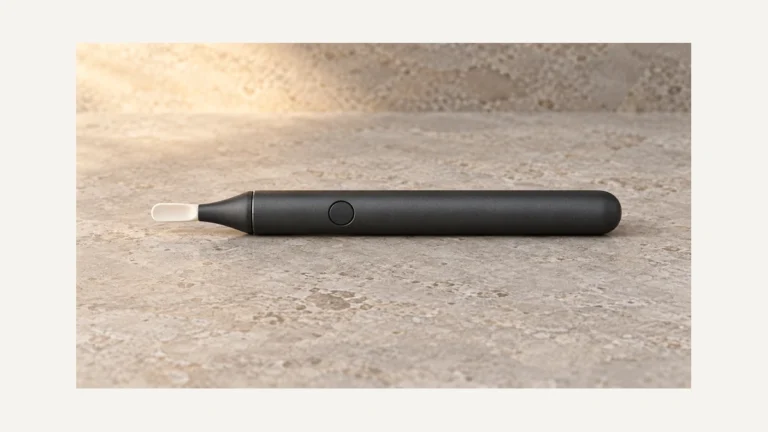
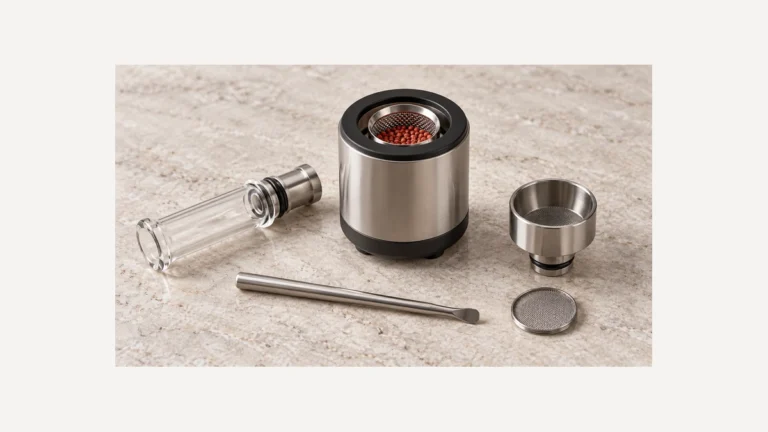
Attaching a weed vaporizer to a bong changes how the vapor travels, not how the herb gets heated. The oven still relies on conduction, convection, or a mix of both to pull cannabinoids out of the material, but now that vapor exits through a joint, sometimes an adapter, and a body of water before it reaches your mouth. That extra distance is why the same device can feel completely different in hand versus connected to glass — more resistance, more cooling, and more places where a loose fit or a rushed draw can undercut what the heater is actually producing.
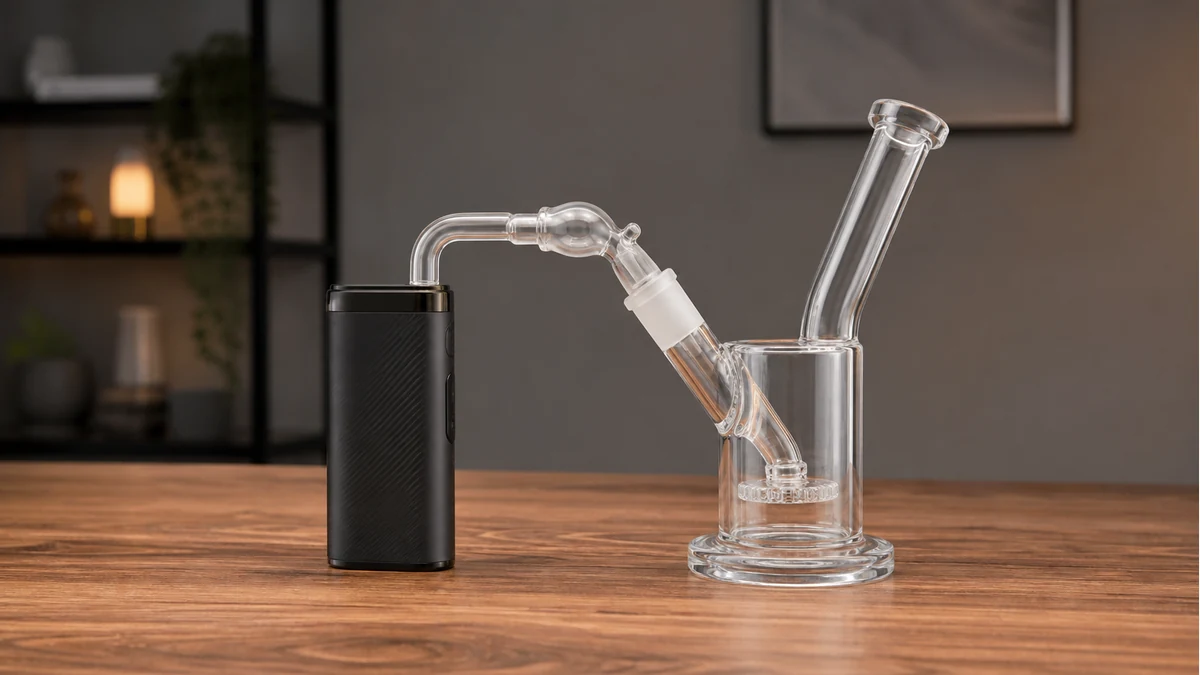
🧭 1. A bong changes the air path, not the vaporizer’s basic job
It helps to separate the two systems mentally. The vaporizer’s job — heating dry herb to a temperature that releases vapor without combustion — doesn’t change when you swap the stock mouthpiece for a water pipe. If you want a deeper look at how that heating actually works, the breakdown of conduction and convection heating in dry herb vaporizers covers the mechanics that stay constant no matter what you attach downstream.
What does change is everything after the oven. A bong adds a water chamber, a longer glass path, and often a diffuser, all of which cool and filter the vapor before it reaches you. None of that alters extraction inside the chamber, but it does change draw resistance and vapor temperature at the mouthpiece. Treating the bong as plumbing rather than part of the heating system keeps expectations realistic: a water pipe can smooth out a harsh draw, but it can’t compensate for a poor seal or an oven that isn’t hitting temperature.
🧩 2. Match joint diameter and gender before adding adapters
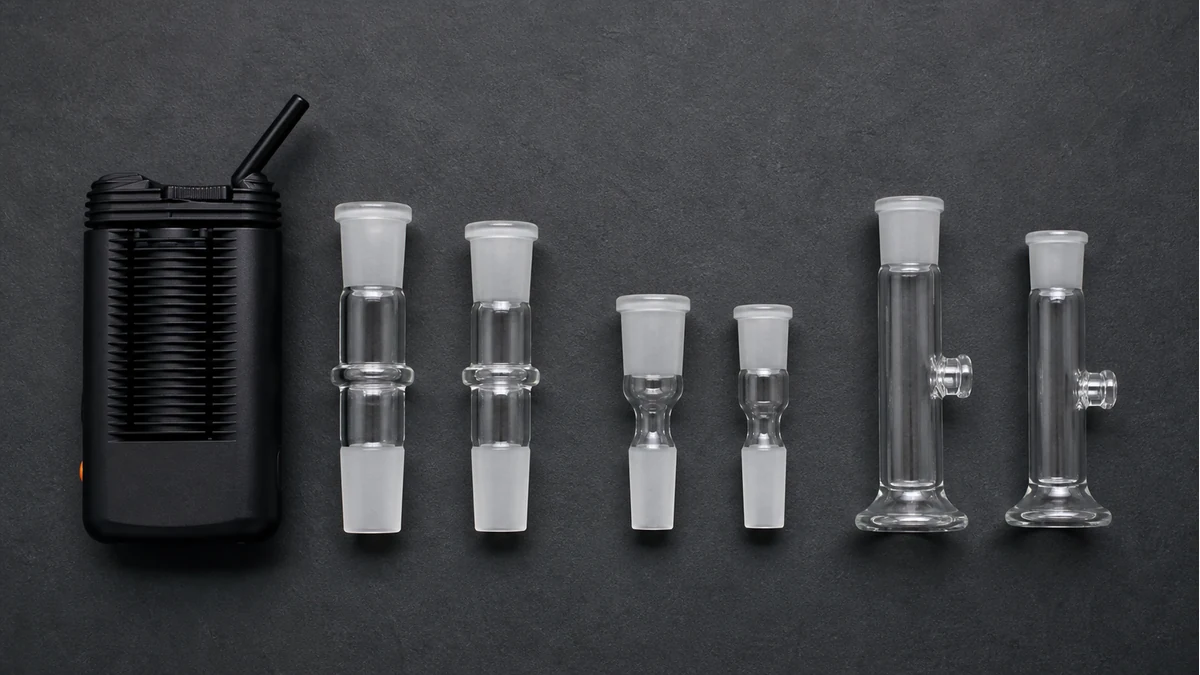
Most beginners hit the same wall early: a water-pipe adapter or whip fitting doesn’t slide onto the bong’s joint the way they expected. Glass joints come in a small number of standard sizes — commonly 14 mm and 18 mm — and each joint is either male (the tapered piece that inserts) or female (the piece that receives it). An adapter sized for a 14 mm joint simply won’t seat, seal, or sit flush on an 18 mm joint, and forcing it rarely ends well.
Before buying or using an adapter, check three things: the diameter and gender of the bong’s joint, the diameter and gender of the vaporizer’s adapter or whip attachment, and whether a step-down or step-up piece is needed to bridge a mismatch. Manufacturer specs for both the vaporizer and the water pipe usually list this, and it’s worth confirming rather than guessing from appearance — two joints can look similar in photos and still be incompatible in hand.
🔍 3. A clean seal matters more than a complicated glass stack
Once the sizes match, the seal is what actually determines whether the connection works. A proper ground-glass joint, a silicone adapter sleeve, or a rubber grommet made for the fitting all accomplish the same thing: they keep outside air from leaking into the draw path. A seal that isn’t snug lets ambient air mix in, diluting the vapor and making the hit feel thin even when the vaporizer is functioning normally.
This is also where it’s worth being direct about what to avoid: improvised seals like tape, plastic wrap, or gum have no place here. They can shift under heat, fail mid-session, or introduce material into an airflow you’re inhaling from. If an adapter doesn’t seat cleanly, the fix is a correctly sized adapter or grommet, not a workaround. A simpler glass stack with a tight seal will outperform an elaborate one that leaks.
⚙️ 4. Draw speed can outrun a portable heater’s recovery
Portable dry-herb vaporizers generally run on limited battery wattage, which caps how quickly the heater can recover between draws. Pulling through a bong adds volume and distance to the airflow, and a fast, hard draw can cool the air moving across the herb faster than the heater can reheat it. The result is a session that feels weak or airy, even though the same device produces normal vapor when used directly with its stock mouthpiece.
The practical fix isn’t a stronger draw — it’s a slower, steadier one, paced to whatever draw resistance the maker’s manual describes as normal for that unit. Some devices are simply not designed for the added resistance of a large water chamber, so checking the manufacturer’s guidance on compatible attachments before assuming the device is underperforming saves a lot of troubleshooting.
🧼 5. Upright and inverted use depend on the device design
Whether a portable vaporizer should sit upright or be tilted over a water pipe isn’t a universal rule — it depends on the internal layout of that specific unit. Some ovens and battery compartments are built to tolerate an angle without spilling material or straining internal components; others are explicitly designed for upright use only. This is one area where the device’s own manual should override general habit, since orientation tolerance varies by internal design rather than by brand or price point.
Desktop units complicate the comparison further, since many rely on a whip or bag system rather than a direct joint connection, and pairing one with a bong isn’t typically how they’re intended to be used. The desktop vaporizer guide walks through how those delivery methods differ from portable, joint-style setups, which is useful context if you’re deciding between a portable-to-bong connection and a desktop unit’s own airflow system.
🛠️ 6. Water level and glass volume change resistance and handling
How much water sits in the chamber directly affects draw resistance, and that effect compounds with a vaporizer’s already-limited airflow compared to combustion. Too much water makes the draw heavy and can pull liquid up toward the mouthpiece; too little reduces the cooling and filtration the water pipe is there to provide. The general principles in how much water to put in a bong apply here as well — the downstem should sit just below the surface without being submerged so deep that breathing through it becomes a chore.
Larger glass pieces with wide chambers or multiple percolators add even more resistance and more surface area for vapor to cool and condense against. That can be a plus for smoothness, but it also means a device with modest airflow may need a smaller, simpler piece to perform consistently, rather than the biggest or most elaborate setup available.
✅ 6.1 Dry-fit the glass path before adding water
Set the bong on a level surface and confirm its joint size and gender. Seat the correct water-pipe adapter without twisting or forcing it, support the vaporizer’s weight, and take a cold draw through the empty glass. This isolates joint fit and seal quality before water resistance or heater behavior enters the picture.
Then add only the water level the glass needs to function and repeat the cold draw. A large increase in resistance points downstream of the vaporizer. This two-step check prevents users from changing temperature, pack, and draw speed to compensate for a mechanical restriction.
📦 6.2 Protect the joint from leverage
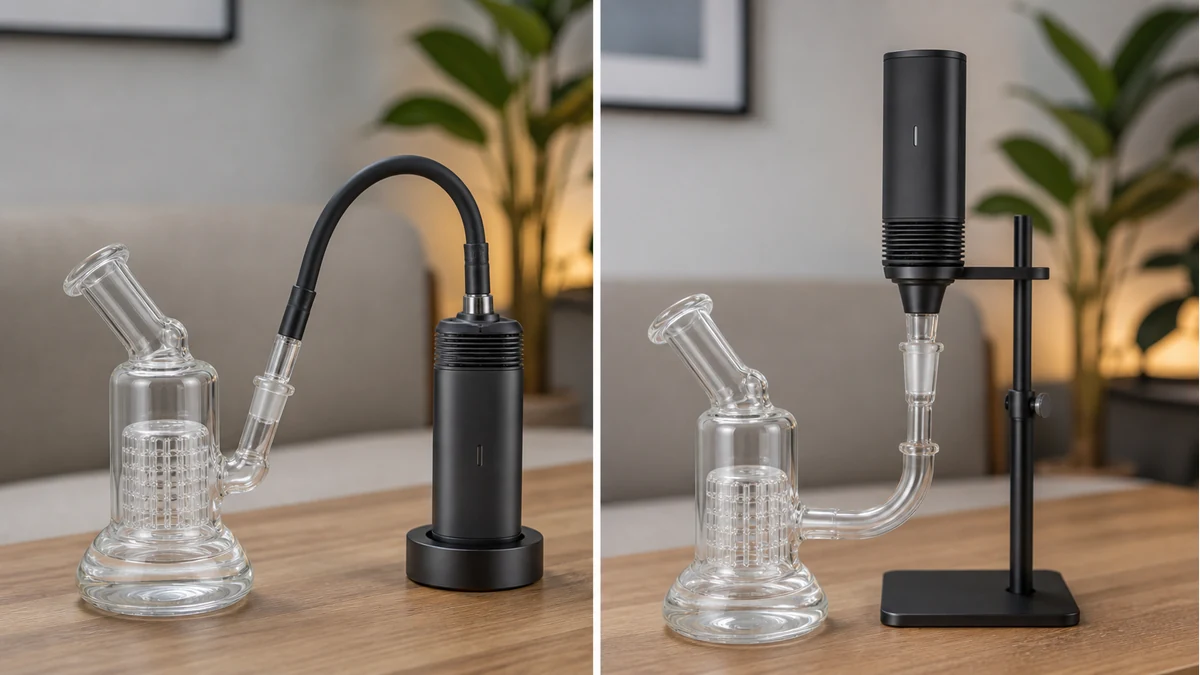
A portable vaporizer hanging from a short glass adapter can place side load on both the adapter and the bong joint. Keep the assembly supported and disconnect it before moving the glass. If the manufacturer’s adapter is designed for upright use with a whip, do not invert the device merely because another model can operate that way.
A reducer made for ground-glass joints is preferable to improvised seals. Foil, gum, tape, rubber bands, and soft household materials can loosen, contaminate the path, or let a heavy device fall. The connection should be stable, removable, and made from materials intended for the application.
🧭 6.3 Match the draw to heater recovery
A bong can encourage a faster, deeper draw than direct use. On a portable convection or hybrid heater, that extra airflow may cool the chamber faster than it recovers, producing weak vapor even though the same device works through its mouthpiece. Begin with the maker’s normal draw guidance, watch for a falling temperature indicator only as a clue, and change one variable at a time.
🧩 6.4 Keep water away from the vaporizer
Water conditioning adds a spill path that direct use does not have. Fill and empty the bong with the vaporizer disconnected. Avoid configurations that place an electronic device beneath a joint where water can drain toward it, and never blow back through the mouthpiece while the vaporizer is attached. If moisture reaches a battery, heater, or charging port, disconnect power and follow the manufacturer’s service guidance rather than testing it repeatedly.
Use only enough water for the piece’s intended percolation. Too much can raise resistance and increase splash, while too little can leave a percolator inactive. The correct level depends on the specific glass geometry, so verify it with a cold draw before attaching hot hardware.
🔍 6.5 Cleaning is a two-boundary job
The glass and removable glass adapter can usually be handled separately from the electronic vaporizer, but their cleaning methods are not interchangeable. Let every part cool, detach the device, and follow the glass maker’s method for the water piece. Clean the vaporizer chamber and adapter interface only as its own manual permits. Never soak a battery, cable, controller, or heater housing because the glass beside it can be soaked.
After cleaning, inspect the adapter for chips around both ground joints and allow it to dry fully. A tiny damaged edge can worsen when a heavy vaporizer is seated. Replace questionable glass rather than tightening it into a joint.
⚙️ 6.6 Decide whether water solves a real problem
A bong adds cooling volume, stability questions, water maintenance, and another set of seals. That can be worthwhile for a stationary setup, but it is not automatically an upgrade for every portable vaporizer. Direct use remains simpler when portability, fast cleanup, and the manufacturer’s intended handling matter most.
Choose the water setup when the adapter is documented, the glass remains stable, the draw stays within the heater’s capability, and cleaning fits the routine. If several reducers and improvised supports are needed, the system is telling you that the parts were not chosen as a set.
Before the first heated session, rehearse the removal path with everything cold. One hand should stabilize the bong while the other lifts the adapter or device in the direction the joint releases. Clear nearby tools and route charging or controller cables away from the glass. A system that cannot be detached smoothly when cold will be harder to manage when the adapter and bowl are hot.
✅ 7. Choose a stable serviceable connection over an improvised one
The common thread across joint sizing, sealing, draw pace, orientation, and water volume is that they all function as one system — a weak point in any single part shows up as a disappointing hit, even if every other piece is correct. The reliable path is a connection built from parts actually sized for each other: a matched joint, a proper grommet or ground-glass seal, and an adapter rated for the vaporizer in use, all of which can be taken apart and cleaned rather than pried loose.
Forcing a glass joint that doesn’t match, whether by size or by gender, risks cracking the glass and rarely produces a seal worth trusting. When in doubt, the manufacturer’s documentation for both the vaporizer and the water piece is the more reliable reference than trial and error, and a setup that can be disassembled for regular cleaning will hold its seal far longer than one that was wedged together once and left alone.