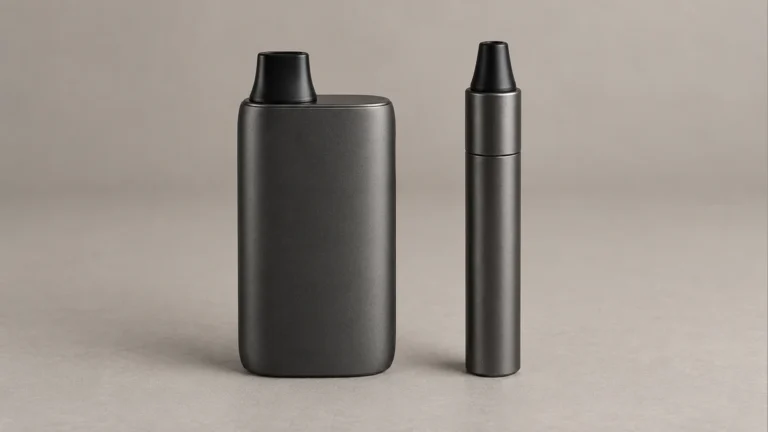
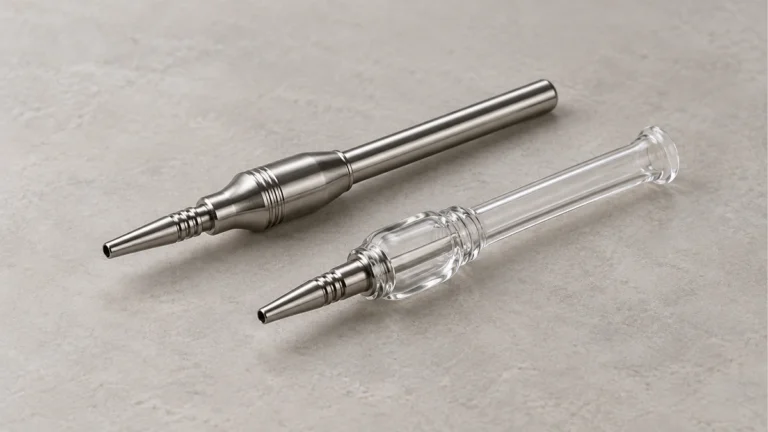
The portable vaporizer that got someone through the week outdoors, in the car, at a friend’s place, tends to feel different once it’s used exclusively at home. Nothing about the device changed. What changed is the environment: there’s no need to hide it in a pocket, no reason to ration battery life, and suddenly the limits that portability requires start to show. The draw feels thinner than expected. The bowl needs reloading more often than seems reasonable. Sharing it with someone else means passing around something that’s already cooling down. None of that makes the portable device bad. It means the device was built to solve a different problem than the one that shows up on a couch at 9 p.m.
That’s usually the moment someone starts looking at desktop vaporizers, and it’s worth being clear about what actually changes when a vaporizer plugs into a wall instead of running on a battery. It isn’t just size. It’s heater mass, sustained airflow, and a session style built around staying in one place. Whether that trade is worth it depends on how someone actually uses the device, not on which category is objectively “better.” Desktop and portable dry-herb vaporizers solve different problems, and the honest way to compare them is by walking through where each one wins and where each one asks for a compromise.
🔎 1. Heater Mass and Why Portables Hit a Ceiling
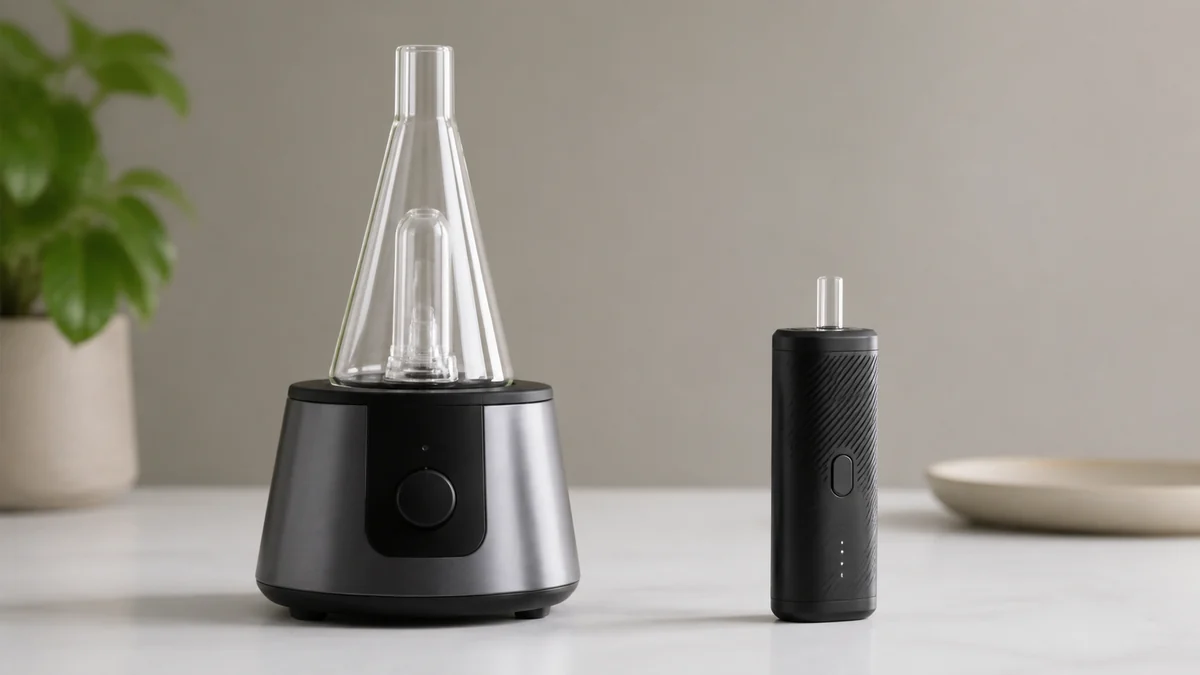
A portable vaporizer’s heating element has to be small enough to fit in a device that fits in a hand, and it has to run off a battery that also fits in that same device. Those two constraints work against raw heating power. A small heater loses temperature faster when air moves through it, which is exactly what happens on a deep, sustained pull. Manufacturers compensate with insulation, pulsed heating, and draw-activated sensors, and modern portables do this well. But there’s still a physical ceiling: a heater the size of a coin cannot store and deliver heat the way a heater the size of a fist can.
Desktop vaporizers don’t have that constraint. Plugged into household power, they can run a heating element with far more thermal mass, and that mass barely notices a single inhale. The practical effect isn’t about intensity claims — it’s about consistency. The fifth pull from a well-warmed desktop tends to feel a lot like the first, because the heater never had to work hard to keep up. On a portable, especially during a long back-to-back session, the heater is recovering after every draw, and that recovery lag is part of why portables are engineered around shorter, more deliberate sessions rather than continuous ones.
🔎 2. Airflow, Delivery Style, and How Desktops Change the Draw
Airflow is where the portable-versus-desktop difference is most obvious the moment someone tries both back to back. A portable is direct-draw: lungs provide the suction, air moves how a person’s own breath moves it, and the resistance is whatever the device’s internal path creates. That’s intuitive and it’s part of why portables feel natural. But it also means the pull is limited by the same lungs doing the pulling.
Desktop vaporizers separate airflow from breath in one of two ways, and the difference between them shapes the whole session.
🧩 2.1 Whip-Style Desktops
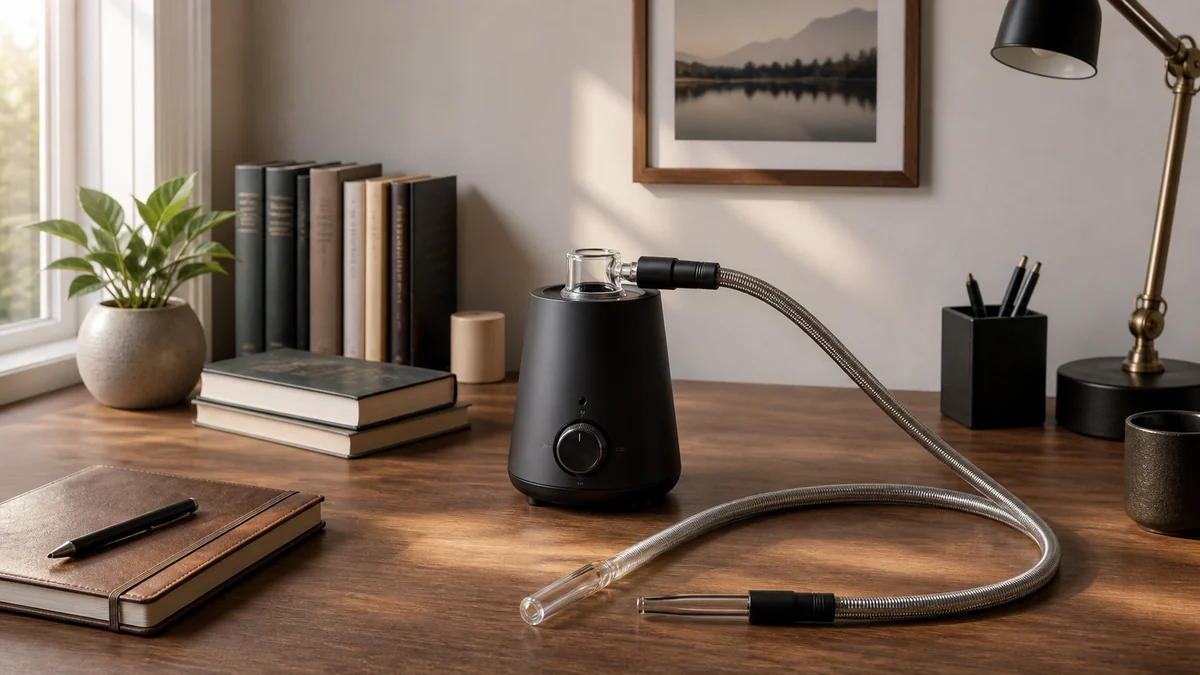
A whip-style desktop, the kind built around a flexible tube and mouthpiece connected directly to the heating chamber, still uses direct draw, but the heater behind it is desktop-grade. The result feels closer to a portable in mechanics — pull, inhale, release — but with steadier heat behind every pull because the chamber isn’t losing temperature the way a smaller device would. Some desktop units, like Arizer’s tower-style models, are built to run in whip mode specifically for people who want that familiar direct-draw feel without a portable’s power ceiling.
🧩 2.2 Bag-Style (Forced-Air) Desktops
Bag-style, or forced-air, systems use an internal fan to push vapor into a detachable bag, which is then handed off and drawn from independently of the heater. Storz & Bickel’s Volcano Classic works this way exclusively, and the Volcano Hybrid offers it alongside a whip option. Because the fan does the work of moving air through the material, the draw resistance a person feels comes from the bag and mouthpiece, not from how hard they can pull — which is part of why forced-air systems get mentioned so often in the context of sharing a session, since a filled bag can sit and wait for the next person without losing what’s inside it the way a whip does the moment nobody is pulling on it.
| Delivery style | How air moves | Feels most like | Good fit for |
|---|---|---|---|
| Whip (direct draw) | User’s own inhale pulls air through the chamber | A portable vaporizer, but steadier | People who want familiar mechanics with more consistent heat |
| Bag / balloon (forced air) | An internal fan fills a detachable bag | A shared, hands-off session | Group use, or anyone who prefers not to sustain a long pull |
Neither style is strictly better. Whip setups tend to feel more immediate and give a closer read on how the material is vaporizing pull to pull. Bag setups trade that immediacy for convenience and shareability, at the cost of an extra accessory (bags wear out and need replacing) and a session that’s a little more removed from the direct feel a portable user is used to.
🔎 3. Warm-Up Time and the Rhythm of a Session
Portable vaporizers are built to be ready fast, often in well under a minute, because the entire point of a portable is spontaneity. Desktop vaporizers generally ask for more patience. A larger heating element takes longer to reach a stable temperature, and rushing that process is exactly how a session ends up uneven, with the first few pulls underwhelming and the material past its point of good use before the vaporizer ever caught up. This is one of the real trade-offs desktop shoppers underestimate going in: the appliance-like warm-up is the cost of the appliance-like heater mass discussed earlier.
In practice, this reshapes when a desktop vaporizer gets used. It’s not the device someone reaches for on the way out the door. It’s the one that gets turned on a few minutes before a session actually starts — closer to starting a stovetop kettle than to flipping a light switch. For people whose routine already has that kind of lead time built in, a slower warm-up is a non-issue. For someone whose portable habit is built around immediacy, it’s worth sitting with before switching primary devices entirely rather than treating the desktop as a straight upgrade.
🔎 4. Cleaning, Upkeep, and the Parts That Wear
Desktop vaporizers generally have more removable parts than portables: whips or tubing, screens, bags, valves, sometimes a separate herb chamber or wand. That’s more surface area to clean, but it’s also more surface area that can be cleaned properly, since almost everything detaches. Portables often bury the heating chamber close to electronics that can’t get wet, which limits how thoroughly a person can clean without risking the device. Desktops, precisely because they don’t need to be pocket-sized, tend to isolate the airpath from anything sensitive, so components can usually be soaked, wiped, or run through isopropyl without worrying about a battery underneath.
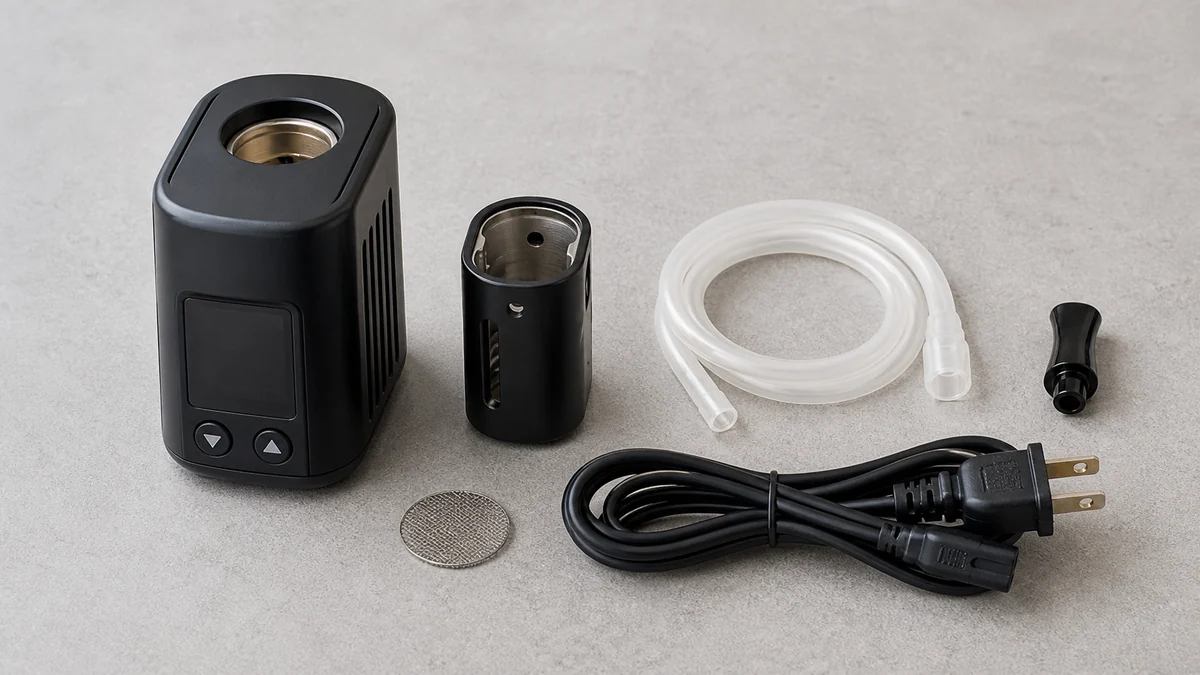
The trade is upkeep frequency and part count rather than difficulty. A whip and mouthpiece need regular attention or they’ll carry old residue into a fresh session. Bags wear with use and eventually need replacing. Screens in the heating chamber clog with fine material over time regardless of delivery style. None of this is complicated, but it is more to keep track of than a portable’s single sealed chamber and occasional pipe-cleaner pass. Anyone weighing the switch should look at their own tolerance for routine maintenance honestly — our guide to vape parts is a useful reference for what each of these components actually does and how they’re meant to be handled, since manufacturer manuals vary on cleaning solvents and frequency and should always take priority over general advice.
🔎 5. Noise, Footprint, and Sharing at Home
🧩 5.1 Noise
Whip-style desktops are generally quiet, since there’s no fan involved — the airflow is just a person’s own inhale. Forced-air, bag-style desktops introduce a fan, and that fan is audible, sometimes noticeably so depending on the model and setting. It’s not a dealbreaker for most home use, but it’s a real difference from a portable, which produces essentially no operating sound at all beyond a heater’s occasional click. Anyone using a desktop in a shared living space, an apartment with thin walls, or late at night should factor fan noise in before assuming a desktop is a drop-in replacement for a silent portable habit.
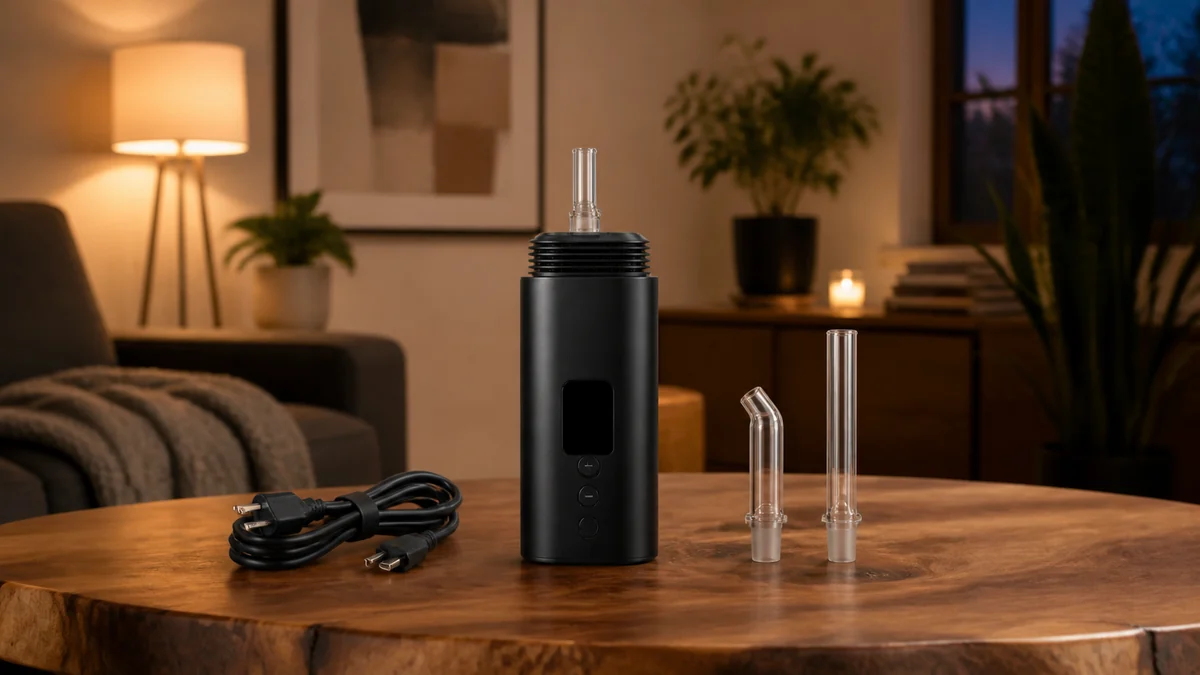
A desktop vaporizer occupies a fixed spot — a shelf, a side table, a stand near a couch — and stays there. That’s a real commitment compared to a portable that lives in a pocket or a drawer, and it’s worth thinking about before buying, especially in smaller homes. What that fixed footprint buys back is a genuinely better setup for group use. A bag or a passed whip mouthpiece scales to a few people sitting around the same table in a way a single portable, handed around and cooling between turns, doesn’t do as gracefully. If the appeal of a desktop is hosting occasional sessions rather than solo daily use, the footprint trade tends to be worth it; if it’s mostly a solo device that happens to live at home, that’s worth weighing against a simpler upgrade path within portables.
🔎 6. Matching the Device to the Moment, Not Declaring a Winner
It’s tempting to frame desktop and portable as an upgrade ladder, where the desktop is simply the “next level” once someone outgrows a portable. That framing doesn’t hold up well in practice. A desktop is a better fit for a person’s living room, longer at-home sessions, and hosting others. A portable stays the better fit for anywhere outside the house, for short unplanned sessions, and for anyone who values not having to plan a warm-up window. Plenty of people end up keeping both, using each one for what it actually does well rather than treating one as a replacement for the other.
For anyone still getting oriented in the category before deciding where to spend, it helps to start from the underlying heating method rather than the form factor — our explainer on conduction versus convection heating covers the mechanism that actually drives flavor and evenness in both desktop and portable devices, and the broader dry-herb vaporizer guide is a reasonable starting point for comparing the category as a whole before narrowing down to a specific model or delivery style.
🔎 7. Common Questions Before Switching
Does a desktop vaporizer replace a portable, or supplement it? For most people it supplements rather than replaces, since the two serve different situations — at-home sessions versus anywhere-else use.
Is a bag or a whip easier for a first desktop vaporizer? Neither is objectively easier; a whip feels closer to what a portable user already knows, while a bag suits sharing and hands-off sessions. Trying both mentally against how a person actually plans to use the device is more useful than picking based on popularity.
Do desktop vaporizers need more frequent cleaning than portables? They generally have more removable parts, which means more components to maintain, but those parts are also easier to access and clean thoroughly than a sealed portable chamber. Always follow the specific manufacturer’s manual for cleaning solvents and intervals.
The decision comes down to where and how someone actually vaporizes, not which device has more power on paper. If sessions mostly happen at home, in one spot, sometimes with other people around, and a few minutes of warm-up time isn’t a friction point, a desktop vaporizer addresses the exact limits a portable runs into indoors — heater recovery, draw-limited airflow, and a session that a group can’t easily share. If spontaneity, silence, and going anywhere still matter most, a portable remains the more honest fit, and no amount of desktop heater mass changes that. The two aren’t rungs on the same ladder; they’re tools for different rooms in the same routine, and for a lot of people the right answer ends up being both.
🧩 7.1 Sources
- Storz & Bickel, Volcano Hybrid product information — https://www.storz-bickel.com/en-us/volcanohybrid
- Storz & Bickel, Volcano Classic product information — https://www.storz-bickel.com/en-us/volcanoclassic
- Arizer, XQ2 product information — https://arizer.com/xq2/