The “14mm” label describes a joint family, not every dimension of the bucket or neck. Clearance, weight, cap fit, and how far the taper seats still have to work with the complete rig.
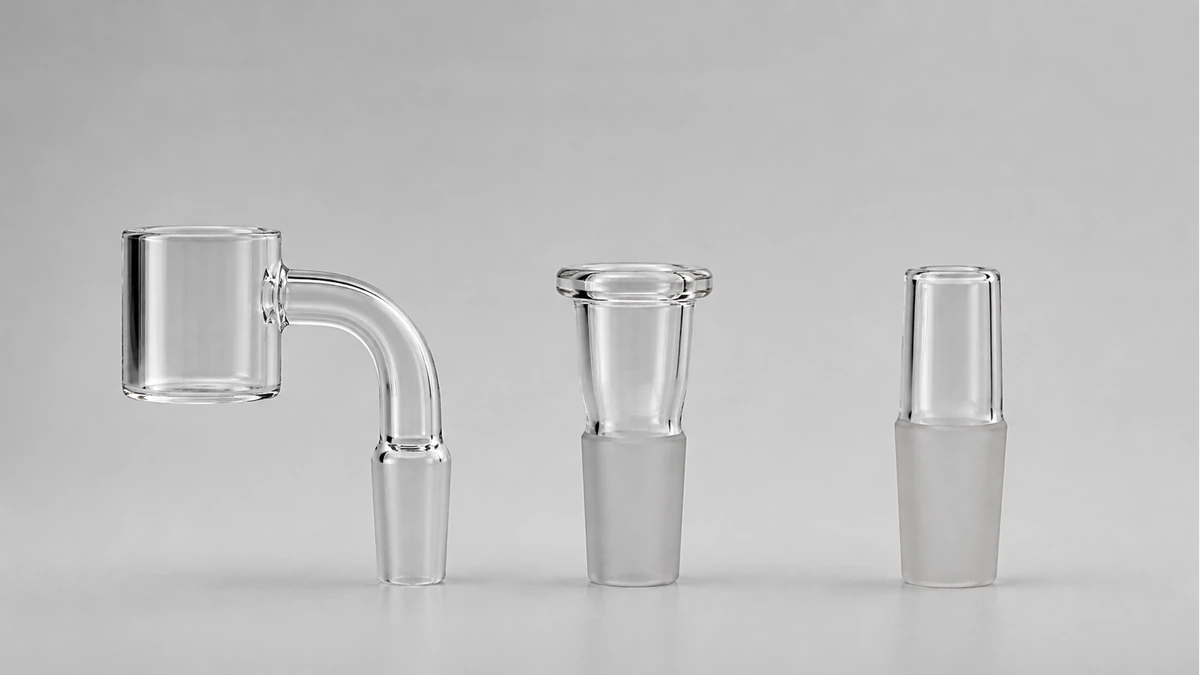
A 14mm male banger is the part with the ground-glass taper on the outside; it slides into a 14mm female joint. Confirm that gender, the nominal diameter, and the joint angle while every part is cold. If any one of those three is wrong, the banger is not a safe match.
🔩 1. A male banger enters a female joint
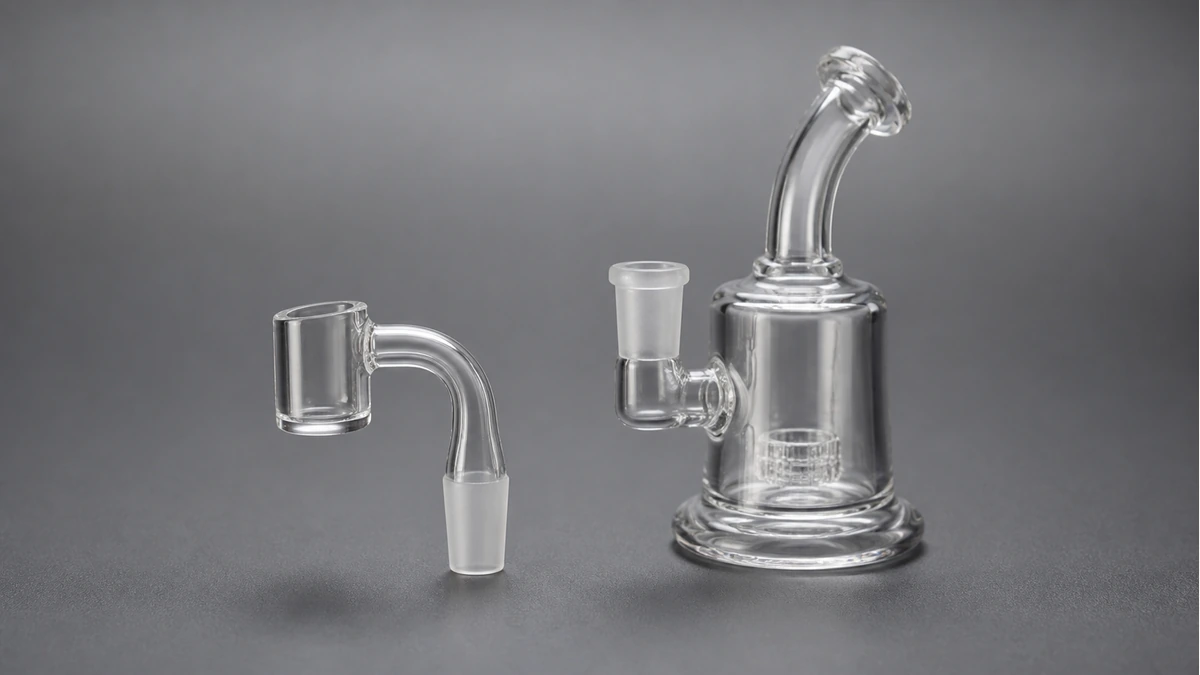
Every glass-on-glass connection has two halves: an outer taper (male) and an inner socket (female) that the taper slides into. A 14mm male banger’s neck is ground to fit snugly inside a female joint on the rig. If your rig’s joint sticks out from the body of the piece rather than recessing into it, your rig has a male joint, and you need a female banger instead, not the male version. This is the single most common mismatch reported by people shopping by keyword rather than by looking at the joint on the glass in front of them.
The mismatch usually happens because retail listings describe the accessory’s gender, not the rig’s. A shopper searching for “14mm banger” sees male listed first, assumes that’s the default, and orders one without checking whether their downstem or joint is already male. The fix is mechanical, not verbal: look at your rig’s joint, decide whether it’s a socket (female, needs a male banger) or a protruding taper (male, needs a female banger), and buy accordingly. For a broader walkthrough of how downstems, ash catchers, and joints combine on a full setup, the bong dab attachment guide covers how gender pairing works across an entire rig, not just at the banger.
📏 2. Fourteen millimeters is a nominal joint family
“14mm” is a nominal designation, not a precise measurement you’ll find if you put calipers on the glass. It groups a family of joints that are close enough in outer diameter to interchange, the way “half-inch pipe” refers to a plumbing standard rather than an exact half inch of material. The three common nominal families in dab and bong hardware are 10mm, 14mm, and 18mm, and pieces from different families will not seat correctly even though the difference in actual diameter can look small in a photo.
Because the nominal number isn’t exact, two 14mm joints from different manufacturers can still have slightly different actual diameters and still be considered compatible within the standard. That tolerance is why a dry fit matters more than reading a spec sheet: the number gets you to the right family, but the physical fit confirms the piece. If you’re unsure what size joint your rig actually has, the most reliable method is comparing it against a banger or downstem you already own and know the size of, rather than trying to identify it by eye against a ruler.
Buyers frequently run into this when replacing a lost or broken banger without the original packaging. Rigs marketed for beginners commonly ship with 14mm joints, while larger dab rigs and some bongs use 18mm at the main joint and step down to 14mm lower on the piece. Knowing which joint you’re replacing, not just what size sounds standard, prevents an accessory that looks close from arriving and not seating.
📐 3. Match angle and clearance after size and gender
Once gender and nominal size are confirmed, joint angle is the next variable, and it’s the one that’s hardest to check without physically holding both pieces. Joints are commonly cut at 90 degrees (straight up) or 45 degrees (angled), and a banger’s neck angle is matched to the rig’s joint angle during manufacturing. A 14mm male banger with a 90-degree neck will still physically enter a 45-degree female joint of the same nominal size and gender, but the dish will sit tilted rather than level.
A tilted dish changes how concentrate pools and how a carb cap seats over it, and it puts uneven pressure on the joint connection itself, since the banger’s weight is no longer settling straight down into the socket. This isn’t always obvious at a glance, especially with rigs where the joint is partially obscured by percolators or recycler arms. Sighting down the joint before buying, or checking the rig’s original listing for the joint angle, avoids ordering a banger that technically fits but sits crooked once it’s in.
Clearance around the joint matters too. Some rigs have tight percolator arms or recycler tubes close to the joint opening, and a banger with a wide collar or a bulky neck can bump into surrounding glass before it’s fully seated. This is worth checking before assuming a banger that fits a straightforward beaker will fit equally well on a recycler or a rig with a lot of glasswork near the joint.
🧪 4. Cold-fit the joint without forcing it
Before any heat is involved, dry-fitting the banger into the joint tells you almost everything you need to know about whether the match is correct. Slide the neck in with a light quarter turn, the way you’d seat any ground-glass joint, and stop as soon as you feel resistance. A correct nominal match seats with a smooth rotation and a slight friction fit near the end of travel, not a hard stop halfway in and not a loose wobble that lets the banger tip on its own.
Grinding, squeaking, or a joint that only goes in at an angle are signs of a size or gender mismatch, not something to work through with more force. Glass-on-glass joints aren’t designed to be forced; pushing past resistance is how joints crack or chip, and a chipped female joint on the rig itself is a much more expensive problem than a banger that needs to be exchanged. If the dry fit feels wrong, stop and re-check gender, nominal size, and angle before trying again.
A loose fit is a separate issue from a tight one, and it’s worth taking seriously even though it seems like the safer failure mode. A banger that rocks or spins freely in the joint isn’t seated on the ground-glass surfaces the way it should be, which affects both stability during use and how evenly the joint distributes weight once a cap or tool is resting on the dish.
🪣 5. Bucket geometry decides cap and tool clearance
The bucket is the interior chamber of the banger where concentrate sits, and its diameter and depth are what determine which carb caps and dab tools will actually clear the opening. Two 14mm male bangers can have identical joints and still have different bucket shapes, because bucket geometry is a design choice within the banger itself, not something dictated by the nominal joint size. A flat-bottom bucket, a bucket with a slope toward a drain hole, and a deep bucket all interact differently with the same carb cap.
If you’re switching carb caps or dab tools along with the banger, check bucket diameter against the cap’s skirt, not just against the joint size. A cap sized for a wide, shallow bucket can sit loosely over a narrow, deep one, letting air escape around the edge instead of directing airflow across the concentrate. This is a common surprise for people who assume any 14mm-labeled cap will match any 14mm-labeled banger, when the cap-to-bucket fit is really its own separate measurement.
Tool clearance matters during use as well, particularly for anyone using a temperature probe to check the surface before dropping concentrate. A narrow bucket or one with a pronounced dish angle can make it harder to get a flat, accurate reading near the center. If checking surface temperature is part of your routine, it’s worth reading the banger temp reader guide alongside your bucket dimensions, since probe placement and bucket shape affect each other.
⚖️ 6. Extra glass changes leverage on the rig
Adding a reclaim catcher, an adapter, or a drop-down between the banger and the rig’s joint changes the leverage acting on that joint, even when every individual piece is correctly sized and matched. Each additional piece of glass adds length and weight extending outward from the joint, and that weight is now acting as a lever arm every time the banger is touched, capped, or bumped during use.
Recyclers and rigs with narrow necks are more sensitive to this than straightforward beaker-style pieces, because there’s less surrounding glass mass to absorb the torque from an extended chain of adapters. A joint that comfortably supports a banger on its own can be under noticeably more stress once a reclaim catcher and drop-down are stacked in front of it, particularly if the added pieces aren’t well aligned and are putting the banger’s weight slightly off-center.
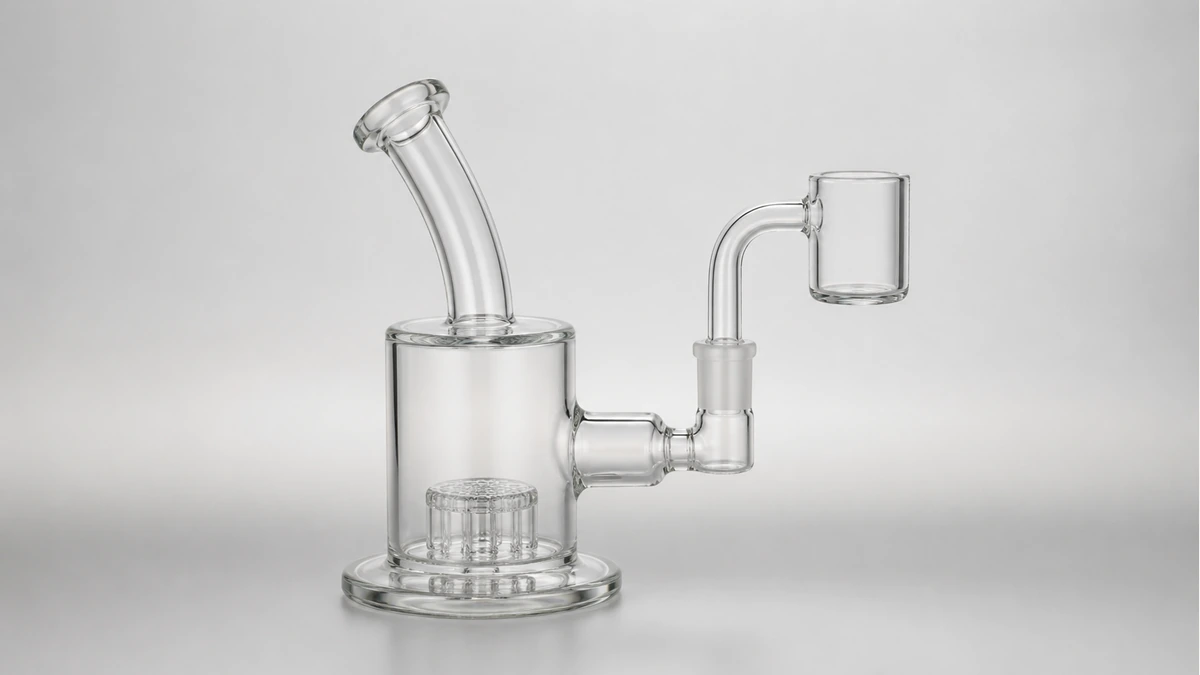
This isn’t a reason to avoid reclaim catchers or adapters, but it’s a reason to dry-fit the full stack, not just the banger alone, before assuming everything sits securely. If the banger wobbles once the adapter chain is in place, even though it seated fine on its own, the added leverage is the likely cause, and it’s worth checking each joint in the chain individually rather than assuming the problem is with the banger itself.
✅ 7. Confirm the whole connection before the first heat cycle
Before the first heat cycle on a new banger, it’s worth running through the full match one more time: gender confirmed against the rig’s joint, nominal size confirmed by dry fit rather than by listing description, angle confirmed by how level the dish sits, and the dry fit itself smooth with a light quarter turn and no grinding. If a reclaim catcher or adapter is part of the setup, confirm that the full stack seats securely, not just the banger against the rig.
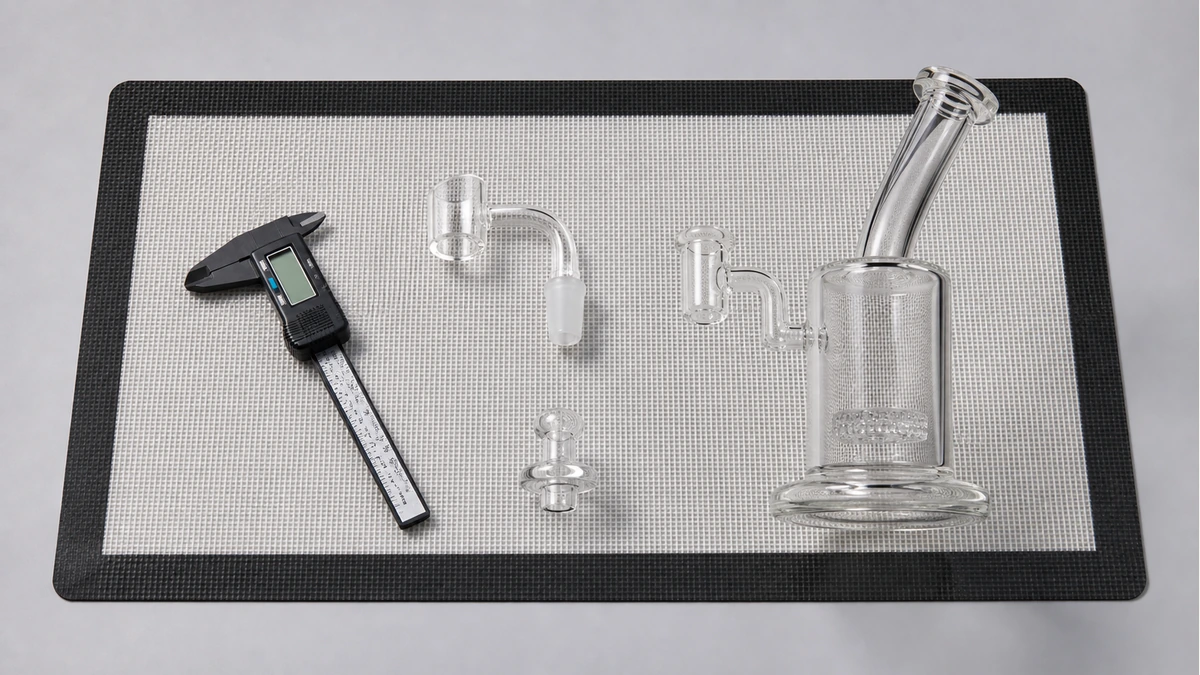
It’s also worth checking cap and tool clearance one last time with everything assembled, since bucket geometry and joint angle together determine how a carb cap will sit once the banger is heated and in use. A cap that seemed to fit during a cold check can behave differently once the dish is hot and thermal expansion is factored in, so a snug, centered cold fit gives more margin than a fit that was already loose at room temperature.
Heating method and banger design are related but separate decisions, and if you’re also deciding between a quartz banger, a titanium nail, or an electronic setup, the dab nail vs banger vs enail comparison covers how those choices interact with heat retention and control. But regardless of which heating approach you use, the mechanical fit between the banger and the joint is what has to be correct first. Getting gender, nominal size, angle, and bucket geometry right before the first heat cycle is what keeps the connection stable once the piece is in regular use.
🧾 8. Read a product listing in the right order
Start with the exact words “14mm male,” then confirm whether the neck is 45 or 90 degrees and compare that with the rig’s joint. Next check bucket diameter, neck length, and clearance from the rig body. Only after those fit questions are answered should cap style, wall design, or decorative details influence the choice.
One last detail belongs on the receipt or saved product page: the complete compatibility description. Record 14mm male, the joint angle, bucket dimensions, and the rig used with it. If the glass breaks months later, that note is much more useful than trying to identify a small transparent part from memory.