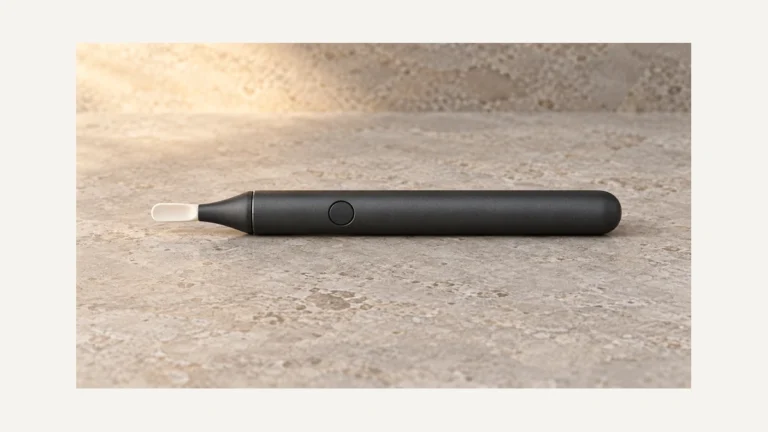
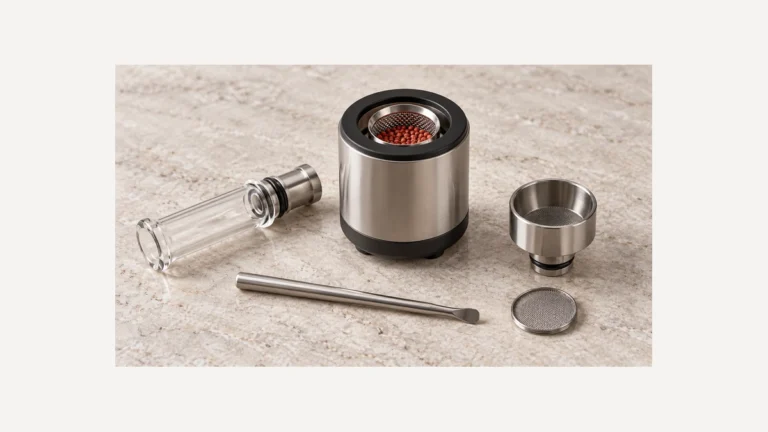
A bong dab attachment is the adapter-and-banger (or adapter-and-nail) combination that replaces a dry-herb bowl, letting an existing water pipe hold and heat concentrate instead of flower. The swap sounds simple — pull the bowl, drop in a quartz banger seated in a joint adapter — but every piece added changes the angle, the weight distribution, and the path smoke and reclaim travel before reaching the water. Get the joint size, gender, or angle wrong, and the same bong that sat rock-solid with a bowl can end up top-heavy, leaking at the seal, or awkward to clean.
This guide treats the attachment as one connected system rather than a single part to buy. That means checking joint diameter and gender before anything else, understanding what a dropdown does to the center of gravity, and building the shortest stack that still fits correctly — instead of stacking extra adapters to force parts that were never made for each other.
🧭 1. A dab attachment changes both the joint and the load on the glass
Every bong is built around a joint — the ground-glass connection point where the bowl normally sits — and that joint has a fixed diameter, a gender (male or female), and often an angle relative to the tube. A dab attachment doesn’t just occupy that joint the way a bowl does; it adds height, sometimes a bend, and almost always more mass sitting further from the base. A quartz banger alone is heavier and taller than a glass bowl, and once a carb cap or a sizing adapter is added, that extra weight sits even higher on the stem.
The practical effect is that a piece designed to be tipped over to load a bowl, or set down casually between hits, behaves differently once a banger is torched and balanced at the top. The base width, the tube’s overall height, and how far the joint sits off-center all matter more than they did with a lighter bowl.
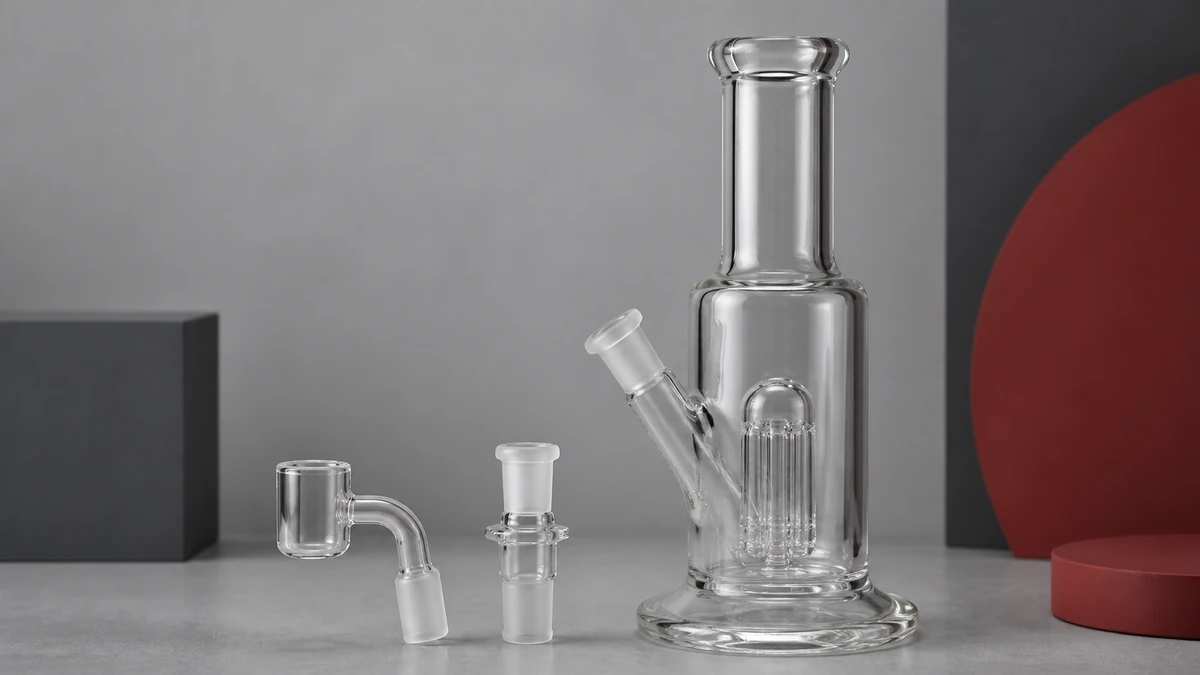
This is also where the joint itself starts doing more work. With a bowl, the connection mostly needs to hold weight and seal against air leaking around the sides. With a banger, that same joint has to survive repeated heating and cooling, hold a taller and heavier piece steady, and keep a tight enough seal that the vapor path stays intact instead of pulling room air in through a gap.
🧩 2. Match joint diameter, gender, and angle first
Before buying any adapter, confirm three things about the existing joint: the diameter (commonly 10mm, 14mm, or 18mm), whether the joint on the bong is male or female, and the angle it sits at (most commonly 90-degree or 45-degree). A banger or nail has to match, or be adapted to match, all three — not just the diameter. This is the same logic covered in our bong bowl guide: a bowl or attachment that’s close in size but wrong in gender or angle will never seat correctly, no matter how much grease or tape gets used to compensate.
Gender is one of the more common mix-ups glass users run into, partly because the naming feels backward at first: a male joint is the piece that inserts into the bong, and a female joint is the one that receives it. An adapter’s job is to convert one gender or diameter into another — for example, stepping a 14mm female joint down to accept a 10mm male banger. Each conversion adds one more ground-glass connection, and one more place where a poor fit can introduce a leak or an air gap.
Angle matters just as much as diameter. A joint at 90 degrees positions the attachment straight up; a 45-degree joint angles it forward. Fitting a banger built for one angle onto an adapter meant for the other changes how the piece balances and how accessible the joint is for loading and cleaning. When in doubt, measure the existing joint directly rather than estimating from a product photo, and treat diameter, gender, and angle as three separate specifications that all need to match before anything gets forced into place.
🔍 3. Dropdowns can move heat but also move the center of gravity
A dropdown is an adapter that redirects the joint downward or to the side, typically used to move a hot banger further from the mouthpiece or to convert a straight tube into an angled setup. Reddit threads from glass users show this trade-off comes up often: a dropdown can solve a real problem, like a banger sitting too close to eye level or too close to the drag path, but it also adds another joint connection and shifts where the weight sits relative to the base.
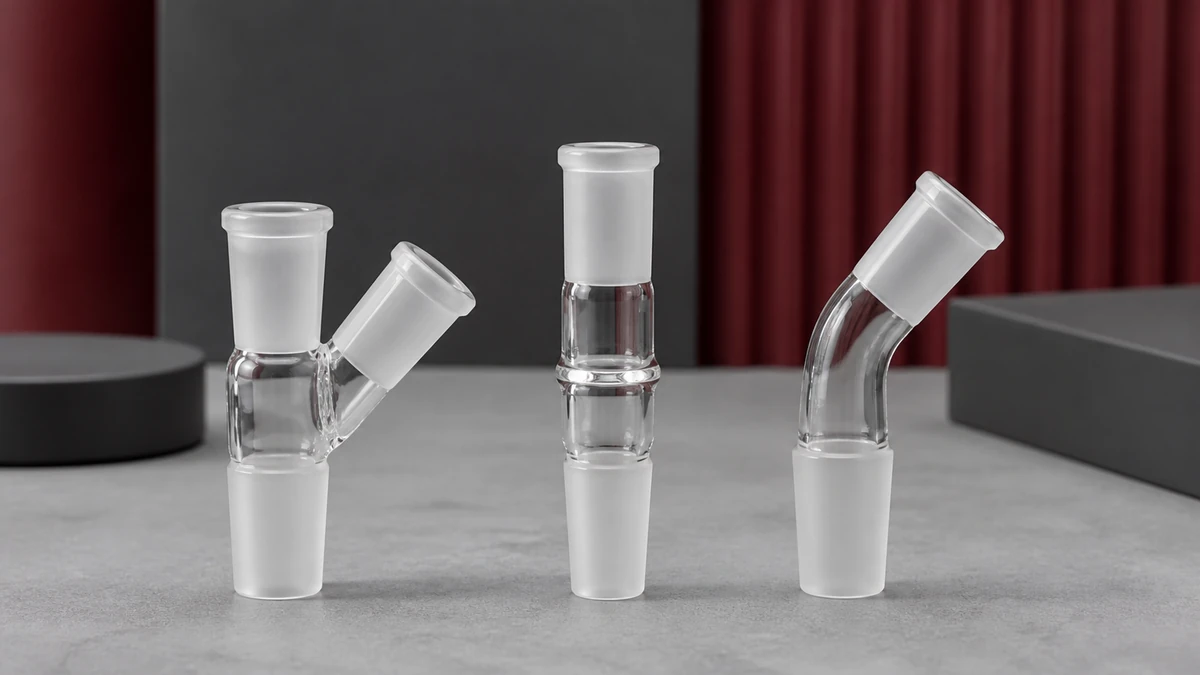
The higher and further off-axis the banger ends up, the more the piece wants to tip in that direction, especially once a carb cap and any additional adapter are factored in. A wide, heavy base can absorb some of that shift without issue; a smaller or narrower-based piece may not. This isn’t about any single dropdown being poorly made — it’s physics. Added height and added offset both move the center of gravity away from the base, and a bong that was stable with a bowl isn’t automatically stable once several inches of quartz and glass sit on top of a dropdown.
Before adding a dropdown, set the fully assembled stack — banger, cap, adapter, dropdown — into the joint dry, without water, and check how it sits. If the piece leans, wobbles, or feels top-heavy on a flat surface with no water in the base, adding water and heat won’t fix that; it usually makes the imbalance more noticeable.
⚙️ 4. The adapter stack changes reclaim and cleaning access
Reclaim is the leftover concentrate residue that collects at the lowest point of the vapor path as it cools. On a piece with a bowl, that path is short and direct. Once adapters and dropdowns are added, the path gets longer and gains extra joints, each of which is a spot where reclaim can pool, and each of which needs to come apart for a proper cleaning.
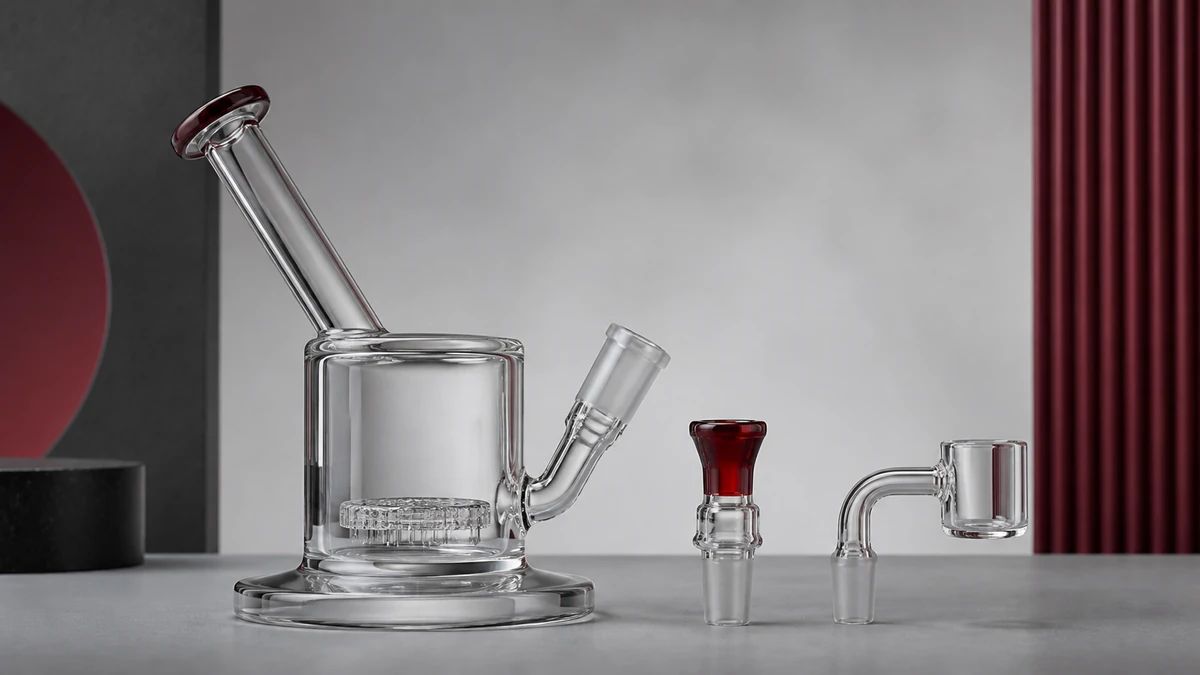
The tradeoff is straightforward: more adapters generally mean more surface area for reclaim to travel through, and more individual pieces to soak, brush, or clean separately. A single banger seated directly in the joint is simple to clean because there’s one connection point. A banger seated in an adapter, feeding into a dropdown, feeding into the main joint, has three connection points, each with its own ground-glass seal that needs to stay clear of buildup to keep fitting properly.
This is also a practical argument for keeping the stack as short as the joint size and angle allow. Every added piece solves a real fit or height problem, but it’s also one more part to remove, clean, and reseat correctly every time the piece is used. Reddit discussions about assembling a rig piece by piece, described in general terms, often mention people ending up with more adapters than expected simply because each accessory was bought to solve one problem in isolation rather than checked against the rest of the stack.
🧼 5. A stable seal should never require force
A correctly matched ground-glass joint should seat with light, even pressure and sit smoothly, not require pushing, twisting hard, or tapping to get it in place. If a banger or adapter needs force to seat, that’s a sign the diameter or angle doesn’t actually match — not a sign that more pressure will solve it. Forcing an ill-fitting joint risks cracking the glass, since ground-glass joints are precision-cut and a fit that requires force is being stressed at exactly the point that has to survive repeated heating.
The same logic applies to improvised sealing. Wrapping tape around a joint that doesn’t seal on its own, or adding excess grease to close a gap, treats a symptom rather than the underlying mismatch. A joint that needs a workaround to seal usually needs a different-sized or different-angle adapter, not a fix layered on top of the wrong part.
Heating times and torch technique also vary by banger material and thickness, so those specifics are worth checking against the manufacturer’s instructions for the exact piece in use rather than treating any single method as universal. A properly matched joint tells you something useful before a torch is ever involved: if the dry-fit sits flush and doesn’t wobble when nudged gently, the connection is sound. If it rocks, gaps, or needs pressure to stay together, that’s worth resolving first.
🛠️ 6. Decide when a dedicated rig is the simpler answer
Converting a bong with a dab attachment makes sense when the joint size, gender, and angle are a clean match and the resulting stack stays short and stable. It’s a reasonable way to use one piece of glass for both flower and concentrate. But as the guide on dab rigs vs. bongs lays out, dedicated dab rigs are generally built with the banger’s height, angle, and weight distribution factored in from the start, rather than added on afterward.
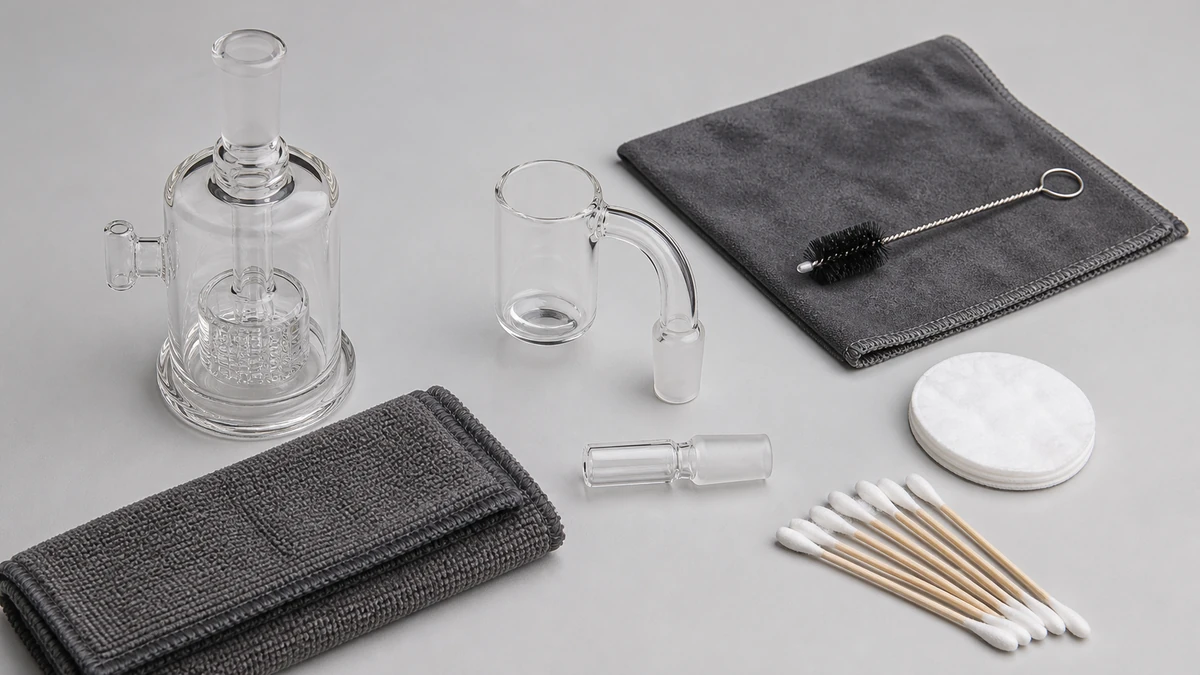
If matching an existing bong to a banger keeps requiring extra adapters, a dropdown to fix the height, and a second adapter to fix the angle that the dropdown introduced, that stack of workarounds is a signal worth listening to. At that point, a piece designed specifically for concentrates — with the joint, angle, and base already sized for a banger — usually solves in one part what an adapter chain is trying to solve in three or four. For anyone unfamiliar with the process of heating and using a banger once it’s set up correctly, our how to use a dab rig guide covers that separately from the hardware question.
✅ 6.1 Count every interface in the stack
A bong, reducer, dropdown, banger, and cap create several interfaces. Each one can rotate, leak air, collect residue, or add leverage. Write down the diameter, gender, and angle at every transition before ordering. If the chain needs several adapters merely to reach the correct direction, a dedicated rig may be the cleaner solution.
Dry-fit the cold pieces one at a time. The joint should seat under light hand pressure and release without twisting against the glass body. Support the attachment while testing; never let a heavy banger hang from a questionable adapter.
📦 6.2 Protect the original flower setup
Keep the original bowl and any dab attachment separate and clearly identified. Residue paths and cleaning routines differ, and forcing one accessory into both roles makes fit problems harder to diagnose. A conversion should remain reversible without changing or damaging the bong joint.
✅ 7. Build the shortest stable connection that fits correctly
The through-line across joint size, dropdowns, reclaim path, and seal quality is the same: fewer, correctly matched connections outperform a longer chain of adapters that happen to fit loosely enough to stay together. Start by confirming the existing joint’s diameter, gender, and angle. Choose a banger or nail — and only the adapters actually needed — to match those three specifications exactly. Dry-fit the full stack before adding water, and check that it sits flush without force and without wobbling on a level surface.
If the shortest version of that stack still leans, requires force to seat, or puts the banger somewhere awkward to reach for cleaning or loading, that’s useful information about whether this particular bong is a good candidate for a dab attachment at all, or whether a dedicated rig is the more direct route to a stable, easy-to-clean setup.