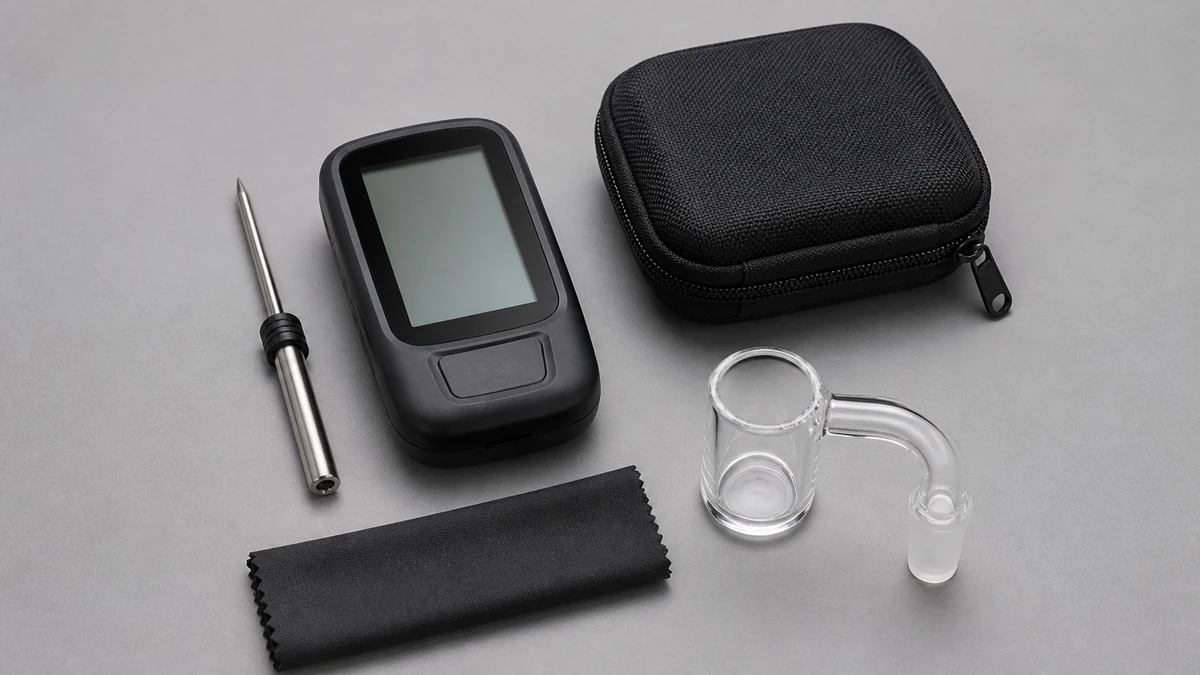
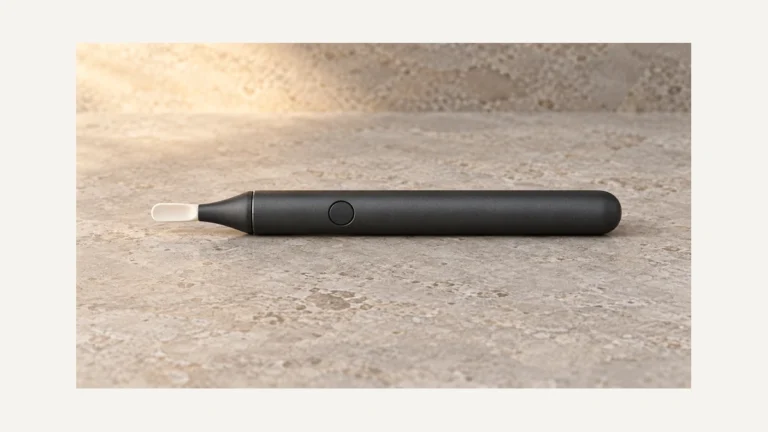
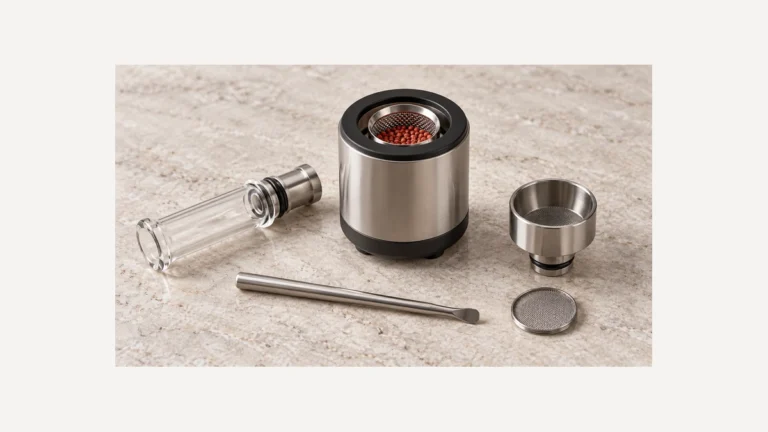
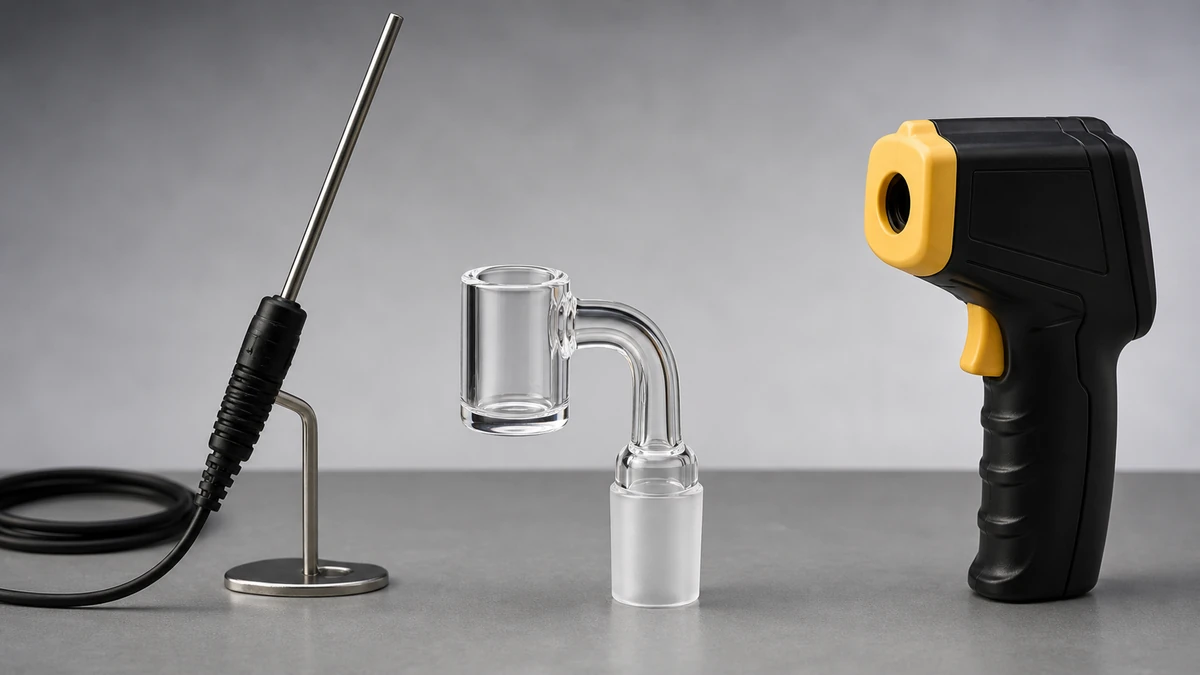
A banger temperature reader is any tool used to estimate the surface heat of a quartz, titanium, or ceramic banger before a dab — a handheld infrared (IR) thermometer, a contact probe, or a purpose-built dab thermometer sold for this exact task. The number that appears on the display describes one small spot on the banger at one instant, not the temperature of the whole bucket, so two readings taken a second apart, or from a slightly different angle, can land far apart even on the same nail. Understanding what the tool is actually measuring — and where it can mislead you — matters more than memorizing a single target number.
Reddit threads on dabbing gear return to the same tension again and again: some users compare cheap IR guns against contact probes and dedicated readers and get three different answers from the same banger, while others just want a reader that helps them repeat a dab they liked rather than chase a lab-grade figure. Both instincts are reasonable. A reader is most useful when you understand what it can and can’t tell you.
🧭 1. A temperature reader measures a spot, not the whole banger
Every banger has a temperature gradient. The area closest to where the torch flame lingers heats faster and holds more heat than the walls or the base of the bucket, and the inside surface (where the concentrate actually contacts the material) can differ from the outside surface a reader is usually aimed at. An infrared thermometer reports the temperature of whatever small circle of surface falls inside its sensing spot at the moment you pull the trigger — it has no way to average the whole banger or to see through the quartz to the inside wall.
This is why aiming at the bottom of the bucket versus the side wall, or the outside versus straight down into the inside, can produce readings that vary by a wide margin on the identical banger and the identical heat cycle. If you’re deciding how hot to run your setup in the first place, it helps to start from general guidance like this overview of dab temperature ranges, then use a reader to find a consistent, repeatable spot on your own piece rather than treating any single number as the whole story.
🧩 2. Infrared and contact tools answer the question differently
Infrared thermometers work without touching the banger. They read radiated heat from the surface and convert it to a temperature using an assumed emissivity value — a setting (fixed or adjustable, depending on the device) that estimates how efficiently a given material radiates heat compared to a theoretical perfect emitter. Quartz, titanium, and ceramic don’t radiate heat identically, so an IR reader calibrated with one emissivity assumption can under- or overstate the true surface temperature on a different material, especially quartz, which is partially transparent to infrared light and behaves less predictably for these sensors than an opaque material does.
Contact probes work differently: they touch the surface and rely on conduction to reach a stable reading, which usually takes longer to settle than an instant IR trigger-pull but sidesteps the emissivity guesswork. Purpose-built “dab thermometers” marketed specifically for this use are, in most cases, repackaged IR sensors with dabbing-oriented marketing rather than a fundamentally different measurement technology — the underlying physics and limitations are the same as a general-purpose IR gun. If you’re still deciding between a banger, a standard nail, or an e-nail setup with built-in temperature control, this comparison of bangers, nails, and e-nails explains how each style changes what a reader can realistically tell you.
🔍 3. Distance, angle, and surface condition change the reading
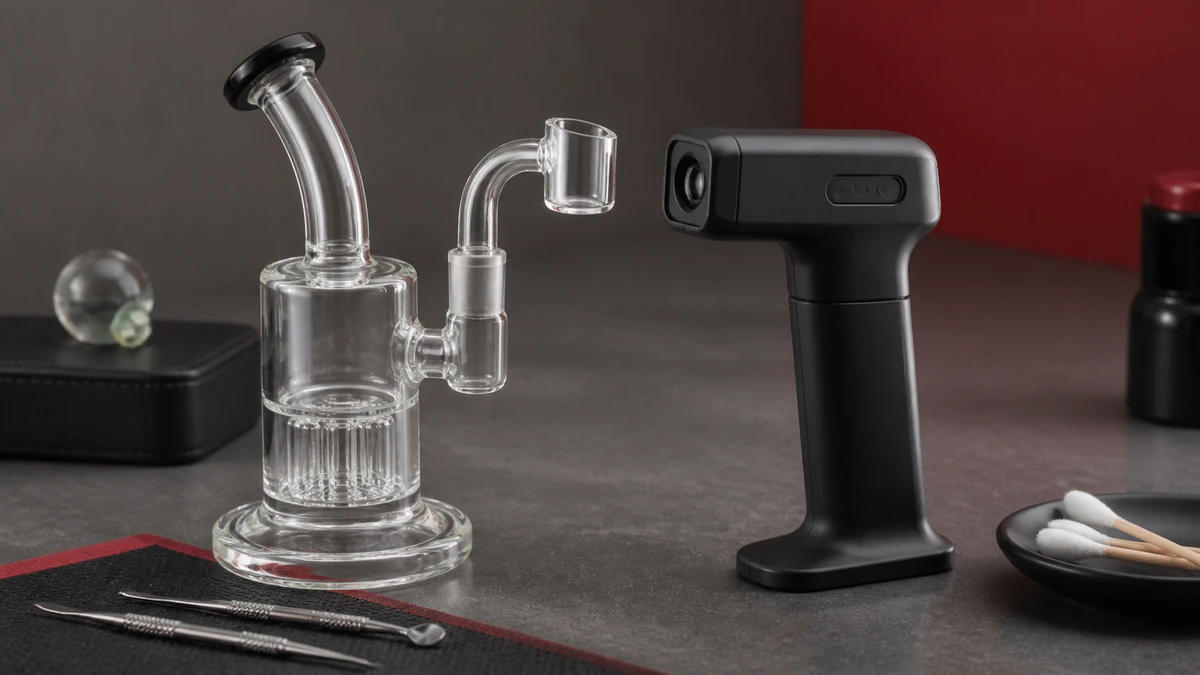
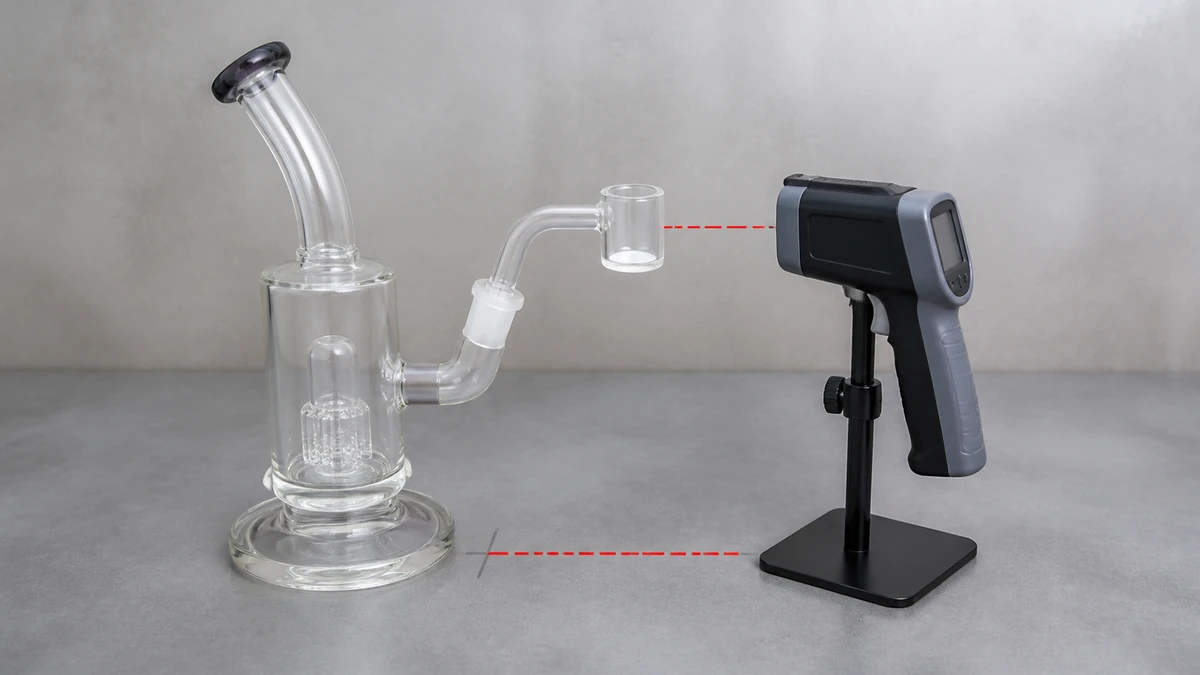
Infrared thermometers have a distance-to-spot ratio: the farther the device is held from the surface, the larger and less precise the sensing area becomes, which means a reading taken from a few inches away can capture a genuinely different average than one taken from up close. Angle matters too — aiming straight down into a bucket reads a different surface than aiming at a shallow angle across the rim, and the reader has no way to tell you which one it happened to catch. Even holding the device at a consistent distance and angle from one session to the next is a meaningful discipline if you want readings you can trust to be comparable over time.
Surface condition adds another variable. A banger with buildup, reclaim residue, or discoloration from repeated heat cycles doesn’t radiate or conduct heat the same way a clean surface does, so a reading taken on a dirty banger isn’t directly comparable to one taken on a freshly cleaned piece, even at the identical heat-up routine. None of this means a reader is unreliable — it means the reading is only meaningful relative to a consistent method of taking it.
⚙️ 4. Repeatability matters more than a borrowed target number
A number pulled from a forum post or a product listing was measured with a specific device, at a specific distance and angle, on a specific banger material, by someone whose routine you can’t fully replicate. Treating that number as a universal target — and expecting your own reader, on your own banger, to confirm it exactly — sets up a comparison that was never apples-to-apples in the first place. What actually transfers between sessions is your own routine: the same reader, the same distance, the same spot on the banger, checked at the same point in your cooldown after torching.
Once that routine is consistent, the reader becomes a tool for repeating a result you already liked rather than chasing an externally sourced figure. If you want a starting reference range to build that routine around, the temperature guidance linked above is a reasonable jumping-off point — the reader’s job from there is to help you land on the same spot on the gradient every time, not to validate a number in isolation.
🧼 5. Check units, probe condition, and obvious measurement errors
Some of the most confusing readings trace back to simple setup errors rather than any flaw in the tool itself. A device left on Celsius when you’re expecting Fahrenheit (or the reverse) will produce a number that looks internally consistent but is off by a wide margin from what you intended to measure. Contact probes with a loose connection, a worn tip, or a low battery can return a reading that looks plausible but doesn’t reflect the true surface temperature, and a laser-sighted IR gun with a battery running low can drift from its calibrated baseline without any obvious warning on the display.
A useful habit is to sanity-check a reading against context before acting on it: does the number match what you’d expect visually and by feel from the room, the torch cycle, and the material? A reading that seems implausibly low right after a long torch application, or implausibly high on a banger that’s been cooling for a while, is a signal to check the unit setting, the probe contact, or the battery before trusting the display over your own observation.
🛠️ 6. Match the reader to the banger and work surface
The right tool depends partly on what you’re measuring. Quartz’s partial transparency to infrared makes it a harder material for IR guns to read consistently than opaque titanium or ceramic, so some users lean toward a contact probe when precision on quartz specifically matters to them, accepting the slower settling time in exchange for a conduction-based reading rather than a radiated one. Titanium and ceramic, being fully opaque, tend to give IR sensors a more consistent surface to work with.
E-nails complicate the picture further, since many include their own internal temperature control and display, which measures the heating coil or the underlying probe rather than the exact surface a handheld reader would check — the two numbers aren’t necessarily reading the same thing, and comparing them directly can be misleading. How you heat the banger in the first place also shapes what a reader will show you: torch size, flame type, and heating technique all affect how evenly a banger heats and how quickly it cools, which is covered in more detail in this guide to dab torches. A reader is most useful when it’s paired with an understanding of how your specific torch and banger combination behaves, rather than treated as a standalone measurement in isolation from the heating method that produced it.
✅ 6.1 Map the measurement point before comparing devices
Sketch the spot each reader can reach. A contact probe may touch the inner base while an infrared reader sees the outer wall from above. A purpose-built stand may aim at a wider area but still depend on height and alignment. If two tools observe different surfaces, disagreement does not prove that either one is defective.
Repeat three cold-room checks and three readings during the same heating routine. Large jumps under identical placement reveal a consistency problem. The goal is a stable reference for one setup, not a number that can be carried unchanged to every banger.
📦 6.2 Recognize an impossible reading
A unit set to Celsius when the user expects Fahrenheit can look plausible at a glance. A loose probe, damaged sensor tip, reflective surface, wrong distance-to-spot ratio, or low battery can also create misleading values. Verify units and the maker’s basic function check before trusting the display near hot glass.
Never touch a hot banger with a probe unless the reader is specifically designed for contact at that surface and temperature. Keep hands, cables, and reader housings out of the torch path.
🧭 6.3 Record the routine, not just the peak number
Write down reader position, banger location, torch method, and the observation that followed. That short log makes a temperature reader useful across several sessions and exposes drift when a probe ages or the aiming distance changes.
Store the reader outside the hot zone and protect its lens or probe as directed. Residue on the sensing surface can change later readings, while an instrument dropped onto a hard station may remain powered yet lose consistency.
Before each comparison, let the reader and glass return to the same starting condition. That simple reset keeps leftover heat from being mistaken for better sensor performance.
✅ 7. Use the display to refine a routine, not replace observation
A temperature reader is one input among several, not a replacement for paying attention to the banger itself. Quartz visibly changes appearance as it cools from a red or orange glow through a dull, matte look, and many users learn to read that visual cue as a rough guide to where the surface sits on the heat curve, well before a numeric target is relevant. Sound and vapor behavior at the moment of the dab — a faint sizzle versus an audible crackle, a thick cloud versus a thin wisp — offer additional feedback that a spot reading taken beforehand can’t capture, since the dab itself happens after the number on the display was already recorded.
The most reliable approach treats the reader as a way to remove guesswork from the heat-up and cooldown timing, while still relying on direct observation of the banger and the dab itself to judge the result. Over a few sessions, that combination — a consistent reading method plus attention to what the banger and the vapor are actually doing — tends to produce a more repeatable outcome than leaning on the display number alone, no matter how precise the device claims to be.