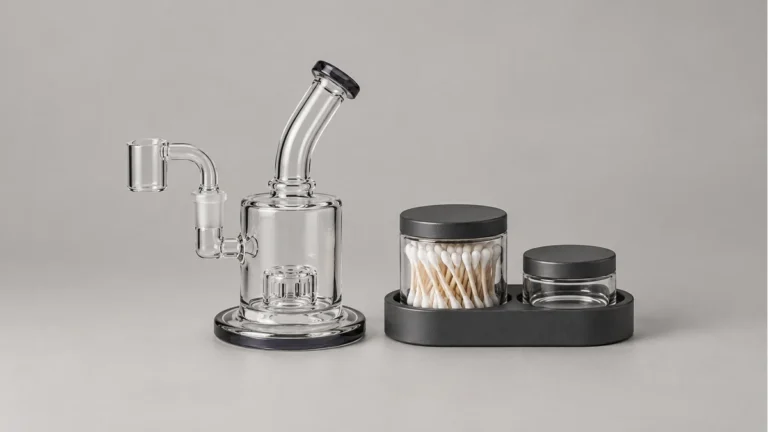
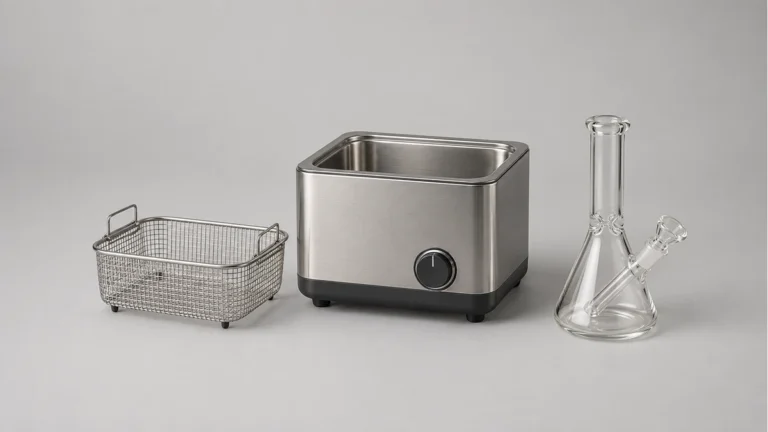
Reddit threads about dual-purpose rigs keep circling back to the same confused question: “I already own a bong, can I just drop a banger in it and call it a dab rig?” The honest answer is “sometimes, partially, and not without trade-offs,” and the reason has nothing to do with branding and everything to do with how the glass is actually built. A bong and a dab rig share a surprising amount of hardware DNA, but the parts that differ aren’t cosmetic — they change airflow, heat handling, and how easy the piece is to keep clean.
This guide walks through what genuinely carries over between flower and concentrate setups, what has to be swapped out, and why chamber size keeps showing up as the sticking point in every “can I use this for both” discussion.
🧭 1. The Mix-Up That Starts Every “Can I Use This as Both?” Question
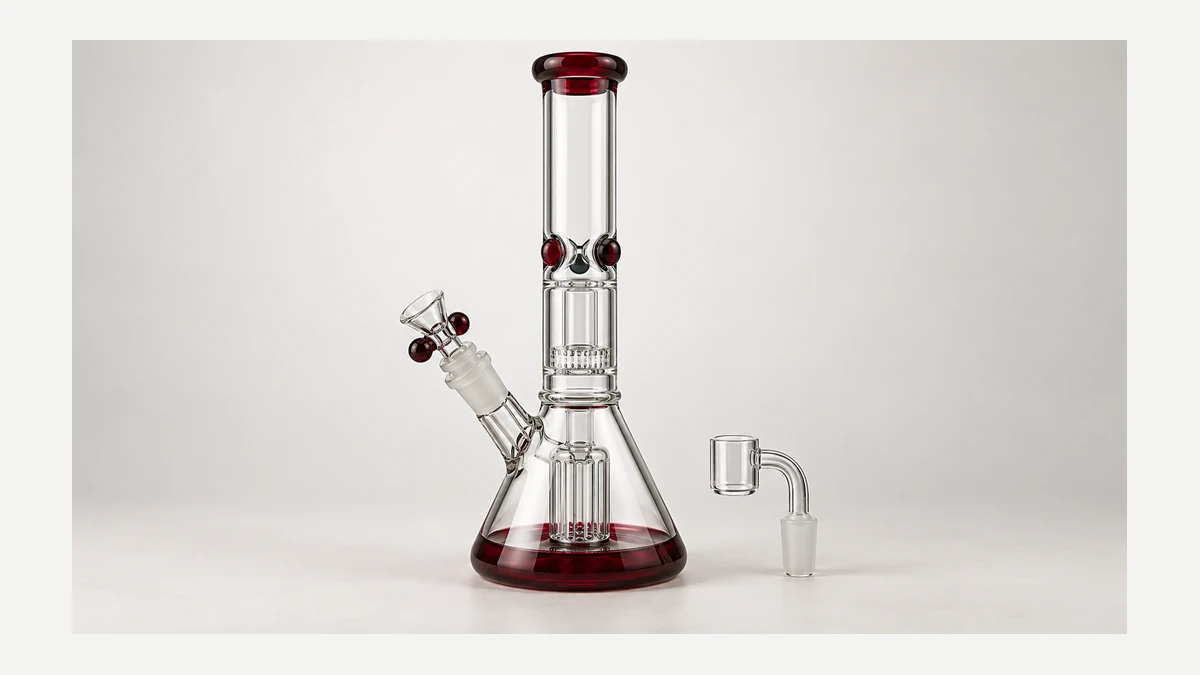
The confusion usually starts with vocabulary, not hardware. People use “bong” and “rig” almost interchangeably online, but in practice the words describe two different jobs for the same basic shape: a water-filled chamber that cools and filters vapor or smoke on its way to the mouthpiece. What sits on top of that chamber — a bowl packed with dry material, or a heated surface used with concentrate — is what actually determines whether a given session counts as “bong use” or “dab rig use.”
That distinction matters because a lot of pieces sold as general-purpose water pipes were never tested or designed around the heat a banger or nail puts out. Swapping the top piece is mechanically simple if the joint sizes match. Whether it’s a good idea for the glass underneath is a separate question, and it’s the one that gets skipped in most “can I use this as both” conversations.
Strip away the attachment on top, and a lot of the hardware underneath is genuinely interchangeable in design terms, even if not every individual piece is rated for both uses.
📏 2.1. Joint size and connection type
Both bongs and dab rigs almost always use the same standard ground-glass joint sizes — commonly 14mm or 18mm, in male or female fittings. If the joint size and gender match, a bowl and a banger are physically interchangeable on the same stem. This is the single biggest reason people assume full interchangeability: the connection point looks and fits identically, so it’s easy to assume the rest of the piece behaves the same way too.
🌬️ 2.2. Water chamber and percolator mechanics
The core cooling mechanism — pulling vapor or smoke through water before it reaches the mouthpiece — works the same way regardless of what’s being heated above it. Percolators, diffused downstems, and splash guards all function on the same physics whether the vapor source is combusted plant material or a heated nail. dab rig versus bong guide
⚖️ 2.3. Base glass and chamber shape
The base, neck, and mouthpiece are typically borosilicate glass regardless of intended use, and the shape of the chamber (beaker, straight tube, recycler) is a design choice independent of what attachment sits on top. None of that geometry inherently cares whether you’re using a bowl or a banger.
📏 3. What Has to Change Between Flower and Concentrate Use
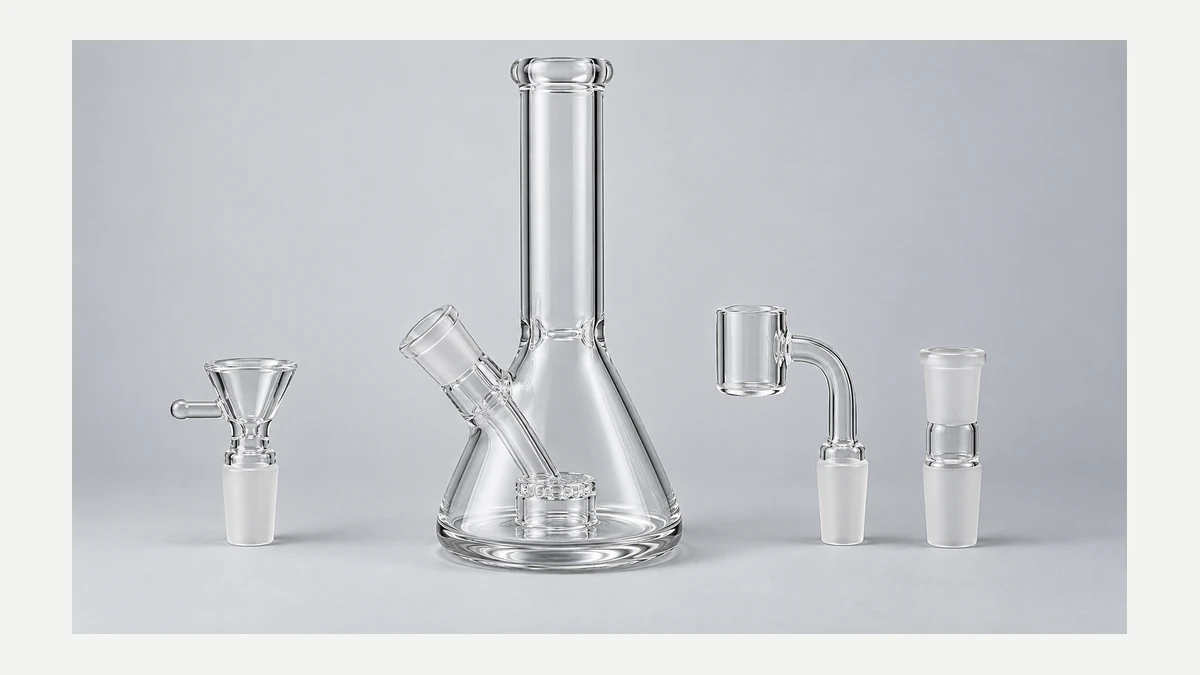
The shared joint size is where the similarities end. The top piece, the heat involved, and the airflow it needs are where flower and concentrate setups genuinely diverge.
🌬️ 3.1. Bowl vs. banger/nail
A bowl is a shallow, unheated piece that holds ground material and relies on a flame passed over it. A banger or nail is heated directly — often with a separate torch — to a temperature where concentrate vaporizes on contact. These are not interchangeable functions even when the stems that hold them are the same size. A banger brings direct, sustained, high heat to a joint that a standard glass bowl was never built to tolerate repeatedly.
⚖️ 3.2. Chamber volume and airflow
Flower sessions typically move a larger volume of air across a longer draw, which is part of why many bongs are built with wider chambers and bigger carb pathways. Dab rigs are generally built smaller and more restrictive on purpose, because a smaller air volume concentrates flavor and vapor density differently than a large chamber does. Using a large-chamber bong with a banger attachment often produces a thinner, less satisfying result than a rig sized for that purpose — not because anything is broken, just because the airflow math is different.
🧼 3.3. Heat exposure and material limits
This is the compromise that actually matters for hardware longevity. A banger reaches temperatures far beyond what a flame-over-a-bowl setup produces, and that heat transfers into whatever glass it’s seated in. Pieces not built with thicker glass near the joint, or without a style of joint designed to handle that thermal stress, are more prone to cracking or stress fractures over repeated dabbing sessions. This is the physical reason “can I use my bong as a dab rig” doesn’t have a universal yes — it depends on what that specific piece’s glass and joint were built to handle.
🌬️ 4. Why Chamber Size Is the Real Compromise
Chamber size is where the dual-use conversation gets concrete instead of theoretical. Here’s a general comparison of how the two categories typically differ in build, without pretending every piece on the market fits neatly into one column:
| Feature | Typical bong build | Typical dab rig build |
|---|---|---|
| Chamber volume | Larger, more open | Smaller, more compact |
| Top attachment | Bowl (unheated) | Banger or nail (heated) |
| Airflow design | Wider draw pathway | Tighter, more restrictive pathway |
| Heat exposure near joint | Minimal, indirect | Direct, sustained |
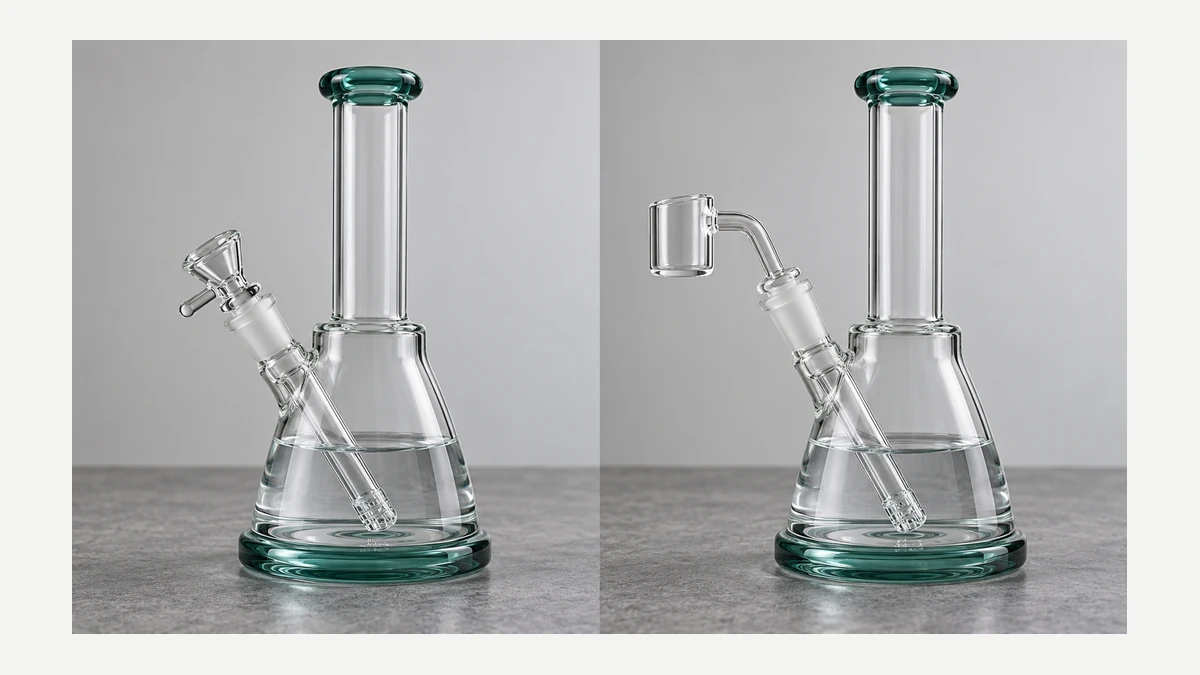
A piece marketed specifically as a “2-in-1” is usually trying to split the difference — a mid-sized chamber, a joint and glass thickness rated for banger heat, and interchangeable bowl/banger attachments sold together. That’s a legitimate design approach, but it is still a compromise: it won’t fully match the airflow of a large dedicated bong, and it won’t fully match the compact, heat-optimized build of a dedicated rig. It’s a middle setting, not a tie.
⚖️ 5. Residue, Cleaning, and Cross-Contamination
This is the part of dual-use ownership that shows up constantly in cleaning-related questions, and it’s a direct consequence of the hardware choices above.
🧼 5.1. Why residue behaves differently
Combusted plant material leaves behind a drier, more particulate residue along the chamber walls and downstem. Concentrate residue tends to be stickier and more oil-based, and it collects differently — often concentrated right at the joint and lower neck where vapor first passes through. Running both through the same chamber means dealing with two different residue types in the same glass, which is part of why dual-use pieces tend to need more frequent attention than single-purpose ones.
🔍 5.2. Cleaning cadence for dual-use pieces
Pieces that alternate between flower and concentrate sessions generally need cleaning more often than a dedicated single-use piece, simply because two residue types are building up in the same water and glass instead of one. dab rig adapter guide Rinsing and swapping water between distinct sessions, rather than letting both residue types sit and mix over multiple uses, keeps buildup from compounding in ways that are harder to fully clear later.
🧼 6. Terminology Confusion: “Bong,” “Rig,” and “2-in-1” Labels
Part of the “can I use this as both” question is really a labeling problem. A few clarifications that come up repeatedly in online discussions:
- “Bong” generally refers to the water pipe used with a bowl and dry material.
- “Dab rig” generally refers to a water pipe used with a banger or nail for concentrates, often but not always smaller than a bong.
- “2-in-1” is a marketing and design term for a piece sold with both a bowl and a banger/nail for the same base, built with joint and glass specs meant to tolerate both.
- A piece not labeled “2-in-1” can still physically accept both attachments if the joint size matches — the label just signals the manufacturer intended and rated it for that use, which an unlabeled piece may not have been.
None of these terms describe a strict size category — a “rig” isn’t always small, and a “bong” isn’t always large. The label describes intended attachment and use, not a fixed size class.
🔍 7. Hardware Checklist Before Converting a Piece
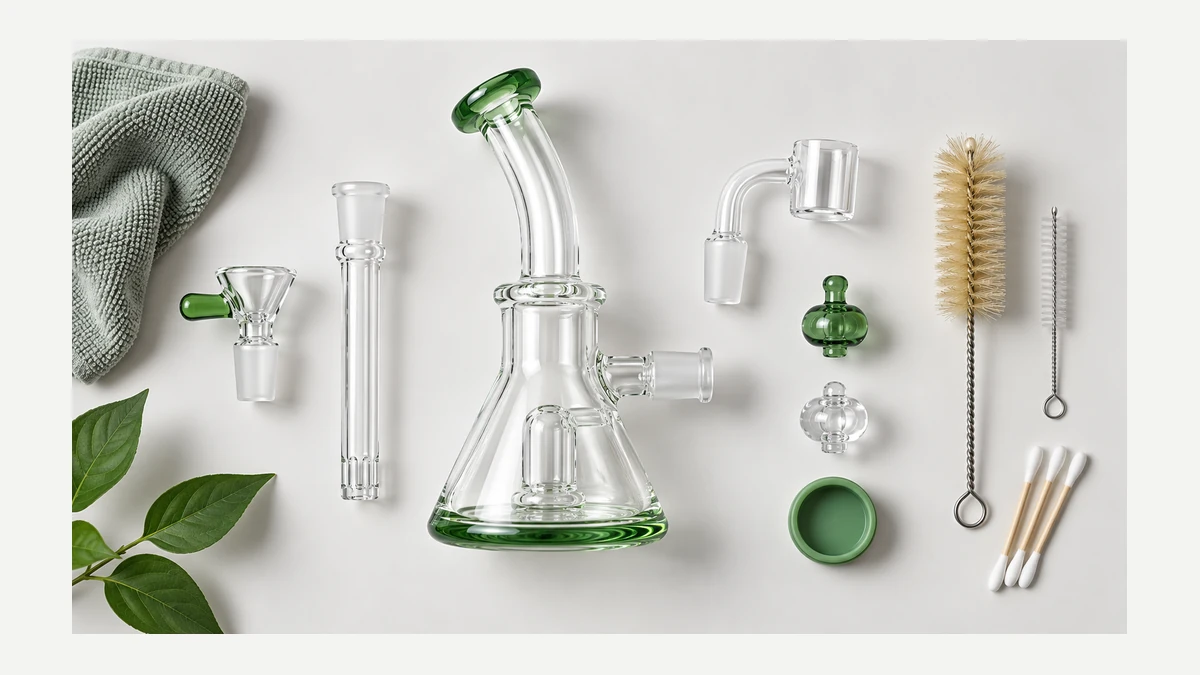
Before swapping a bowl for a banger on a piece not sold as dual-purpose, a few physical checks matter more than assumptions:
- Confirm the joint size and gender actually match between the stem and the new attachment.
- Check glass thickness near the joint — thin-walled glass is more prone to stress cracking under banger heat.
- Note the chamber size and expect a different draw and vapor density than a dedicated rig would produce.
- Plan for a separate or more frequent cleaning routine if alternating between flower and concentrate use.
- Inspect joints and attachment points regularly for heat-related wear if the piece is used with a banger repeatedly. dab rig cleaning guide
The takeaway for identifying hardware correctly: match the joint size first, then look at glass thickness near the joint and overall chamber volume — those two details, more than any label on the box, determine whether a piece is actually built to handle both a bowl and a banger, or whether it’s really just a bong that happens to accept one.
A convertible piece can reuse the same water chamber, neck, and base, but the inlet hardware changes jobs. A flower bowl is designed to hold dry material while air passes through an opening below it. A quartz bucket presents an exposed heated surface and usually remains attached while the chamber clears. Treating those top pieces as interchangeable simply because their joints fit skips the operating difference that matters most.
Start with the joint itself. Record its diameter and gender, then look at the insertion depth and angle. The replacement part must seat without bottoming out against the downstem or touching the body. An adapter can solve a diameter or gender mismatch, but it also adds height and leverage. Check the cold assembly on a level table before adding water.
🌊 8.1. 📐 Chamber Volume Changes the Compromise
Large flower-oriented tubes give smoke more distance and may contain several diffusion stages. A compact concentrate rig often uses a shorter path and less internal volume. A 2-in-1 body sits somewhere between those priorities. More volume is not automatically better: it changes the amount of air needed to clear the chamber and increases the glass surface where condensation can collect.
Trace the actual air route from the removable inlet through the diffuser, water, neck, and mouthpiece. Decorative height outside that route does not help the chamber clear. A dry pull with the intended water level reveals restriction and splash before the piece is used.
✅ 8.2. 🧼 Residue Is the Strongest Reason to Separate Configurations
The shared body collects different residue depending on the configuration. Even after the visible water is changed, films can remain on the downstem, percolator, and neck. If the purpose of the convertible design is occasional switching, a removable downstem and accessible chamber matter more than an extra decorative percolator.
Keep the flower bowl and heated accessory in separate protected compartments. Clean the water path before switching, rinse away loosened residue, and let every part dry. The body may be shared; the small components, storage positions, and cleaning tools should remain clearly separated.
🌊 9. ✅ A Useful 2-in-1 Listing Names Both Configurations
“2-in-1” is not a complete specification. A useful description identifies the included flower bowl, concentrate accessory, joint size and gender, downstem or diffuser, water capacity range, and any adapter. It should also show both cold assemblies from the side so clearance and balance can be judged.