Search for “cup dab rig” and the results split into three unrelated categories: novelty rigs shaped like drinking cups, e-nail coils described as “heated cups,” and quartz or titanium inserts called “buckets” that some sellers still label as cups. A shopper who wants one thing often ends up comparing listings that have nothing in common except a shared word. That mismatch is the starting point for this guide.
The confusion isn’t random. Glassblowers, coil manufacturers, and quartz fabricators all borrowed the same everyday word — cup — to describe very different parts of the same general system. Sorting out which “cup” is which requires looking at where each part sits in the rig, how it attaches, and what job it actually performs.
🧭 1. Why “Cup” Means Three Different Things in This Category
Before comparing hardware, it helps to separate the three uses of the word so they stop colliding in search results and in conversation.
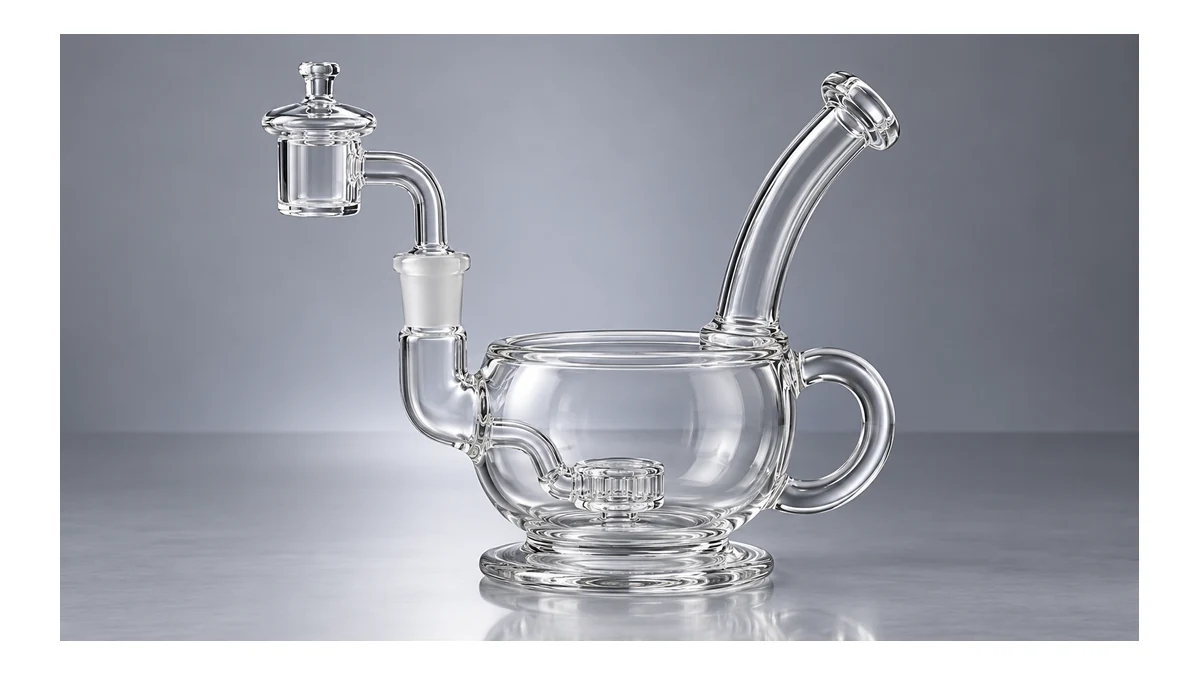
- Cup-shaped glass body — the main chamber of the rig is blown or built to resemble a cup, mug, or tumbler silhouette. This is a design choice, not a functional category.
- Heated cup — the metal coil on an electronic nail (e-nail) base that physically cradles a quartz or titanium banger. The “cup” here is the concave heating element, not the rig itself.
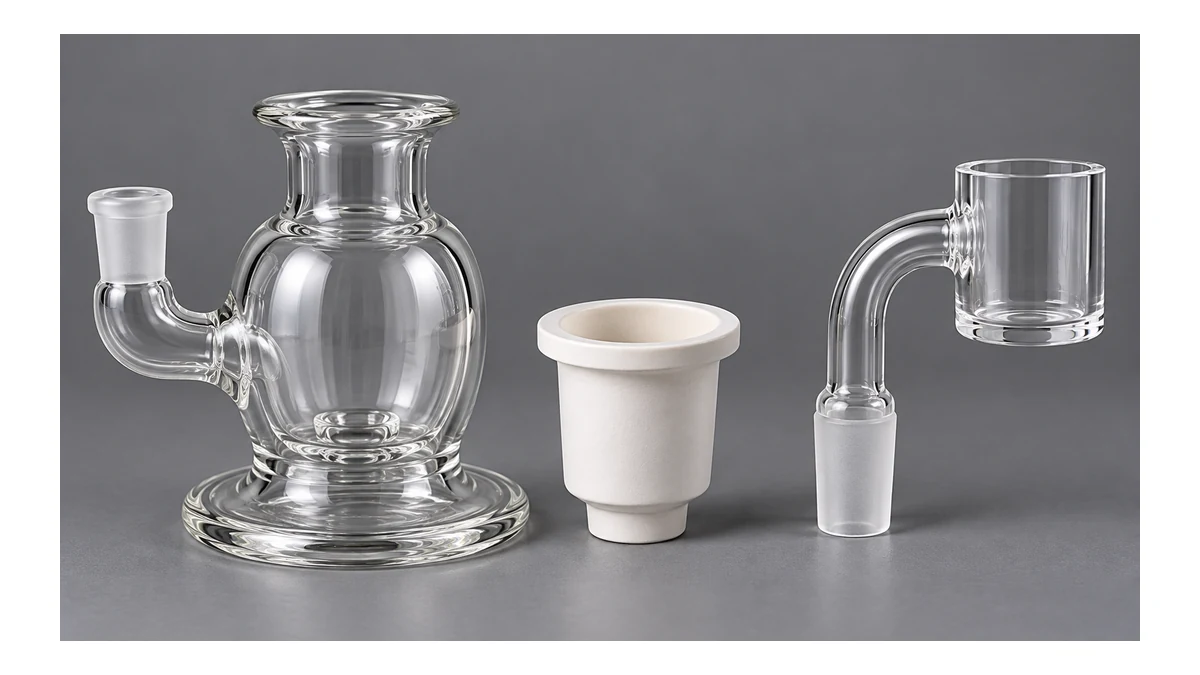
- Bucket or cup insert — a small quartz or titanium reservoir set inside a banger, most common on terp slurper style nails. Some listings still call this piece a “cup” out of older habit.
Each of these sits at a different stage of the rig: the body holds water and directs airflow, the coil supplies heat from outside, and the insert holds the concentrate itself. None of them substitute for one another.
🧩 2. The Cup-Shaped Glass Body
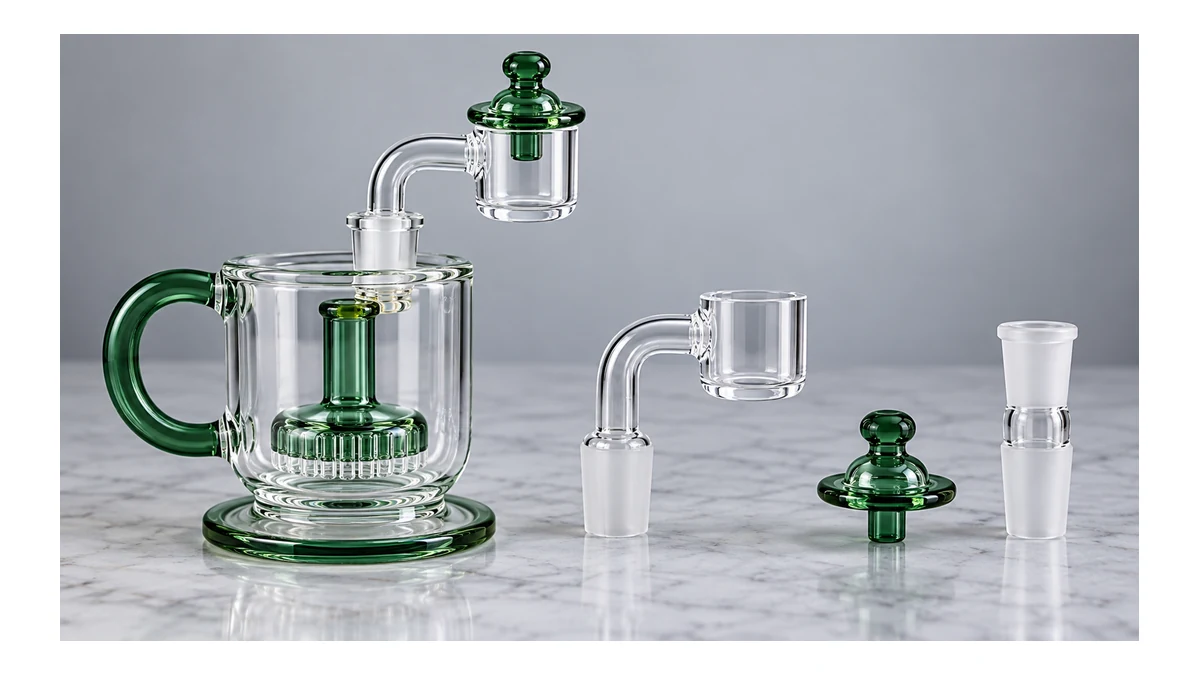
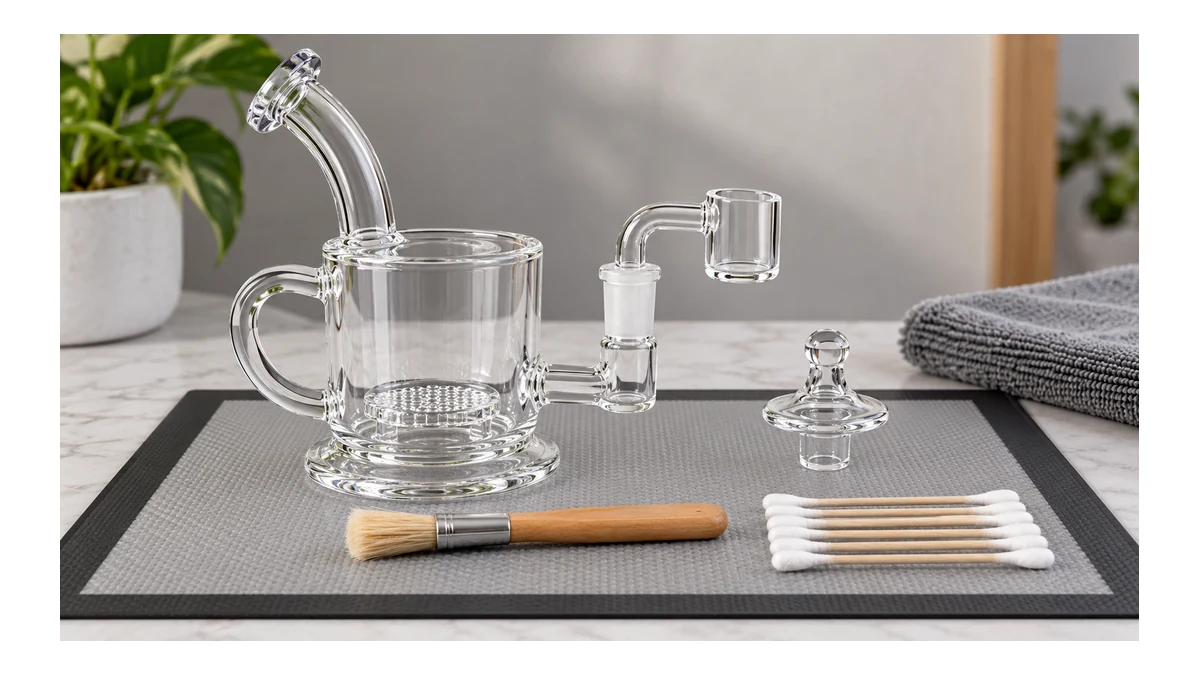
A cup-shaped body is a glass chamber blown into a rounded or tumbler-like outline instead of the more common beaker or straight-tube shape. Some pieces lean into the resemblance intentionally, mimicking a plastic party cup or coffee mug down to the rim taper. Others simply have a rounded lower chamber that gets described as “cup-like” because it’s wider at the base than a straight tube.
Functionally, this body is no different from any other water pipe chamber. It holds a water reservoir, connects to a downstem or built-in percolator, and routes vapor up through a neck to the mouthpiece. The cup shape changes the silhouette, not the mechanics.
📏 2.1. Balance and Base Width
Cup silhouettes often have a narrower base relative to their height than standard beaker rigs, because the widest point of the glass sits higher up, near the rim of the “cup,” rather than flaring out at the bottom. That shifts the center of gravity upward.
A few practical consequences follow from that shift:
- The rig tips more easily on uneven surfaces or thick rugs.
- A banger and dabber resting against the joint add leverage at the top, which can be enough to tip a lightweight piece.
- Thicker glass at the base partially compensates, but it also adds weight overall rather than lowering the center of mass the way a flared beaker foot does.
None of this makes a cup-shaped body unsafe to use — it just means base placement and joint angle matter more than they would on a wide-footed beaker.
🌬️ 2.2. Joint Placement on a Cup Silhouette
Because the body tapers inward toward the rim, the joint is usually mounted at an angle rather than straight up, so the banger clears the curved wall of the “cup” instead of resting against it. This is purely a geometry fix, not a performance feature. A 45-degree or 90-degree joint on a cup body serves the same purpose it does anywhere else: it positions the banger so a torch or e-nail coil can reach it without the flame licking the glass.
📏 3. The Heated Cup on an E-Nail Coil
On electronic nail setups, the word “cup” refers to the metal coil that wraps around the lower half of a banger. This coil is shaped like a shallow bowl or cup specifically so it can cradle the rounded or flat-bottomed base of a quartz or titanium nail and transfer heat evenly across its surface.
This component has no direct relationship to the glass body at all. It sits on a stand or clamp next to the rig, connected to a power box, and only touches the banger — never the water chamber, joint, or downstem.
🌬️ 3.1. How the Coil Cradles the Banger
The coil’s cup shape matters because heat transfer depends on surface contact. A banger that sits loosely inside an oversized coil heats unevenly, with hot spots where the metal touches glass or quartz and cooler zones where there’s a gap. A properly matched coil makes continuous contact around the lower dome or bucket of the banger, so temperature rises more uniformly across the whole surface.
⚖️ 3.2. Coil Cup Size vs Banger Fit
Coils are sized to match common banger diameters, typically in the 25mm to 30mm range for standard bangers. A mismatch shows up in a few predictable ways:
| Fit issue | What happens |
|---|---|
| Coil too large for banger | Banger wobbles inside the coil; contact is limited to a narrow ring, causing uneven heating |
| Coil too small for banger | Banger sits on top of the coil rather than inside it, reducing overall contact area |
| Correct match | Banger’s lower dome sits flush inside the coil cup with even wall contact |
Because the coil is sold separately from both the rig and the banger, matching it correctly is a buyer’s responsibility — it isn’t something the glass body or the banger manufacturer accounts for automatically.
🌬️ 4. The Quartz or Titanium Bucket Insert
The third “cup” is a small reservoir piece set inside certain bangers, most often terp slurper styles. This insert — usually called a bucket in current terminology, though older listings still use “cup” — is where concentrate actually sits and vaporizes. It’s a separate, often replaceable piece from the banger body itself.
⚖️ 4.1. Buckets vs Standard Bangers
A standard banger is a single piece: a bucket-shaped chamber with no separate insert, where concentrate is placed directly against the heated quartz or titanium wall. A terp slurper banger, by contrast, has small holes drilled around a recessed bucket, and that bucket can be a fixed part of the piece or a separate quartz insert that drops in and can be swapped out.
The distinction matters for maintenance and replacement. A one-piece banger is replaced as a whole. A banger with a removable bucket insert lets that specific piece be replaced on its own if it cracks or clouds, without discarding the entire banger.
🧼 4.2. Airflow Through a Bucket Chamber
The holes around a bucket insert exist to pull air and vapor through and around the pooled concentrate rather than straight up through a single open chamber. This changes how vapor exits the banger compared to a standard flat-bottom or bucket-style banger without holes, since the airflow path moves around the insert walls before reaching the joint. It’s a structural difference in how the two nail types route vapor, not a difference in the surrounding rig.
⚖️ 5. Chamber Shape and Airflow Interactions
Once vapor leaves the banger, it enters the glass body, and this is where the cup-shaped silhouette does start to matter functionally, separate from the banger or coil discussion above.
🧼 5.1. Percolation in Cup-Bodied Rigs
A rounded, cup-like chamber has more interior volume relative to its height than a narrow tube of the same water level. That extra volume gives vapor more room to diffuse before reaching a percolator or the neck, which can make the pull feel slightly airier on a cup body compared to a tight tube with the same percolator type. The percolator design itself — whether it’s a showerhead, tree, or honeycomb — still does the actual work of breaking vapor into smaller bubbles; the body shape only changes the space vapor travels through before and after. carb cap fit guide
🔍 5.2. Splash-Back Considerations
Because a cup-shaped chamber is often wider at the base, water levels need closer attention than on a straight tube. Overfilling a wide, shallow chamber raises the water line closer to the joint, increasing the chance of splash-back into the mouth during a hard pull. This is a straightforward volume-and-geometry issue: the same water amount that sits safely low in a narrow tube can sit uncomfortably high in a wide cup-shaped base.
🧼 6. Matching Joint Sizes Across Components
All three “cup” components connect through standardized joints, and mismatches here are the most common source of hardware that simply doesn’t fit together.
| Joint size | Where it’s used |
|---|---|
| 10mm | Compact rigs, including many novelty cup-shaped bodies |
| 14mm | Most common size for both glass bodies and bangers |
| 18mm | Larger rigs, less common on cup-shaped novelty bodies |
The glass body’s joint size has to match the banger’s joint size exactly — a male 14mm banger only fits a female 14mm joint. The e-nail coil, by contrast, doesn’t interact with joint size at all, since it clamps around the outside of the banger rather than connecting through the joint. Confirming joint size before buying a banger separately from a cup-shaped body avoids a mismatch that’s easy to miss when shopping by silhouette alone. small dab rig guide
🔍 7. Maintenance Boundaries Between Parts
Treating these three components as one unit during cleaning is a common mistake, since each has different care needs.
- Glass body: needs regular water changes and periodic soaking to clear resin buildup, especially in a wide cup-shaped chamber where residue collects along the curved walls.
- Banger with bucket insert: the insert should be cleaned separately from the banger body when it’s removable, since residue builds up differently inside the small bucket than on the banger’s outer surface.
- E-nail coil: only needs occasional wiping of the exterior contact surface; it should never be submerged, since it houses electrical components.
Keeping these boundaries in mind also clarifies replacement decisions — a scratched bucket insert doesn’t mean the banger or the glass body needs replacing, and a worn coil has no bearing on the condition of the rig it sits next to. dab rig adapter guide
🧲 8. Practical Takeaway: Identifying What You Actually Have
When a listing or a conversation uses the word “cup,” the fastest way to figure out which component is meant is to ask what it touches. If it touches water and connects through a joint, it’s the glass body. If it clamps around a banger from the outside and plugs into a power box, it’s the e-nail coil. If it sits inside a banger and holds concentrate directly, it’s the bucket insert.
Keeping those three roles separate — body, coil, insert — makes it far easier to buy replacement parts correctly, match joint sizes, and clean each piece the way it actually needs to be cleaned, instead of treating “cup” as a single catch-all part.
🌊 9. ☕ “Cup” Can Name Three Different Parts
The word may describe a cup-shaped glass body, a removable heated insert, or the quartz bucket attached at the joint. Those are different component boundaries. Before comparing designs, identify which cup holds water, which cup receives heat, and which parts detach for cleaning or replacement.
A cup-shaped rig body still follows ordinary glass rules: the diffuser must remain submerged, the joint must clear the wall, and the base must support the complete cold assembly. A heated cup or bucket instead belongs to the thermal system and must match the documented heater or joint. Shape alone does not establish compatibility.
✅ 9.1. 🧩 Name the Interface Before the Form
Record joint size and gender, bucket diameter, cap fit, chamber path, and included inserts. Those details resolve most confusion that the word “cup” creates and prevent a decorative silhouette from being mistaken for a heater specification.