Look at the entire path before admiring the count: every chamber must fill, drain, rinse, and dry without leaving stagnant water or unreachable residue.
A 3-chamber bong moves the draw through a sequence of water and air spaces. That can create more diffusion, but chamber count alone says nothing about balance. Perc placement, water level, tube diameter, and the route used to clear the piece decide whether the design feels controlled or simply restrictive.
🫧 1. Three chambers create a sequence, not a quality guarantee
Every chamber in a multi-chamber bong sits in a fixed order, and that order determines what each one is actually doing. Smoke enters the first chamber straight from the bowl, so that chamber handles the roughest, hottest, most particulate-heavy pull. By the time smoke reaches the second chamber, some of that has already been filtered out and cooled. The third chamber gets the most refined version of the smoke — its job is polish, not heavy lifting.
This sequencing means the three chambers are not interchangeable or additive in a simple sense. A piece with a strong first-chamber percolator and two weak downstream chambers can perform better than a piece with three mediocre percs, because the hardest filtration work happens early. When you’re comparing two 3-chamber bongs, look at what each chamber is doing individually rather than just counting diffusion points and assuming more equals better. A tree perc in chamber one paired with simple open chambers after it behaves very differently than three identical honeycomb discs stacked in a row.
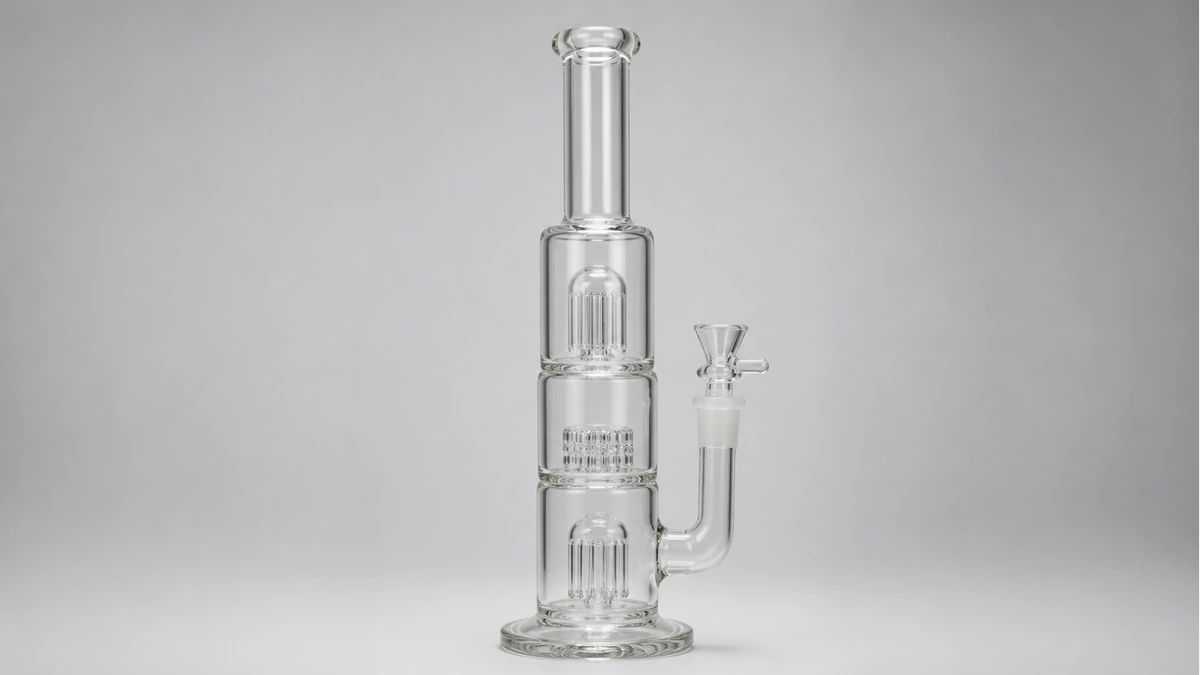
The practical result is that “3-chamber” describes a layout, not a performance tier. Two pieces with the same chamber count can diffuse smoke very differently depending on perc type, chamber volume, and how tightly the sections are connected. If you’re used to thinking of double chamber bongs as the middle ground between simple tubes and full multi-perc setups, a third chamber is best understood as one more variable to evaluate on its own merits, not an automatic upgrade over two.
💧 2. Every perc needs the right water level and airflow
Percolators only diffuse smoke when they’re submerged to the correct depth, and that requirement doesn’t change just because there are three of them stacked in one piece. Each chamber needs its own water fill, and each fill has to sit high enough to cover the perc’s slits or holes but not so high that it floods the chamber and creates splashback. With three separate chambers, you’re managing three of these fill lines instead of one, and they don’t always take water the same way.
Reddit threads from owners of multi-perc pieces describe filling from more than one opening and soaking longer to get water into every chamber — a sign that water doesn’t always flow evenly from a single fill point into a chamber several sections removed from where you’re pouring.
Airflow interacts with water level directly. If one chamber is underfilled, smoke passes through it with little resistance and almost no diffusion — you’re carrying the weight and fragility of an extra chamber without getting filtration benefit from it. If a chamber is overfilled, the perc chokes, drag spikes, and water can travel forward into the next chamber or back toward the mouthpiece. Because the three chambers are connected in sequence, a water level problem in the first chamber affects what the second and third chambers receive, so errors tend to carry forward rather than stay isolated.
This is one of the clearest places where general hardware principles apply regardless of brand: any percolator, in any bong, needs to be filled to the level the diffusion holes require, no more and no less. With three chambers, that principle just needs to be applied three separate times, and it’s worth checking all three fill lines before every session rather than assuming a level that worked yesterday still holds today, since water can settle unevenly or partially drain between uses.
🌬️ 3. More diffusion can also mean more drag
Every point where smoke has to pass through water, mesh, or a narrow slit adds resistance to the pull. A single-chamber straight tube with one perc has one point of resistance. A 3-chamber bong with three percolators has three, plus the resistance of moving air through the connecting tubes between chambers. That resistance is what people mean when they describe a piece as having heavy “drag” — it takes a harder, longer pull to move the same volume of smoke.
This is a direct tradeoff with diffusion: the same water and perc surface area that cools and filters smoke also slows it down. There’s no way to add filtration without adding some resistance; the question is whether the added smoothness is worth the added effort on each pull.
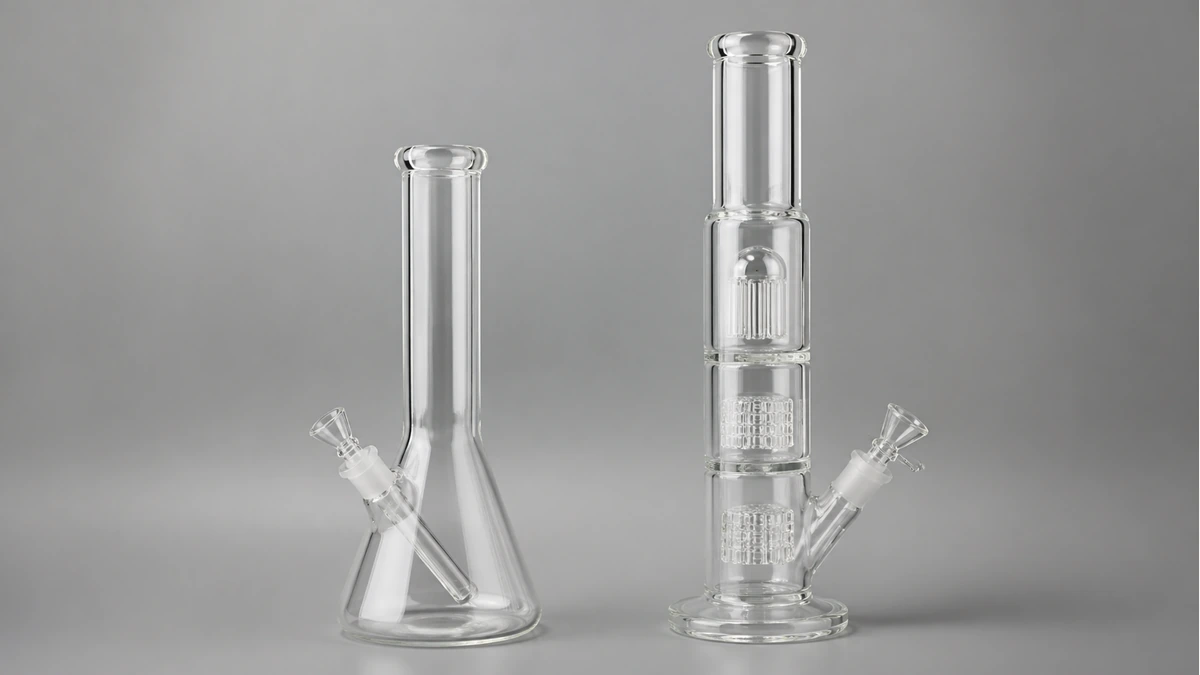
Drag becomes more noticeable in three-chamber pieces than in two-chamber ones because the effect compounds down the line. A slightly restrictive first perc might be barely noticeable on its own, but stacked behind a second and third restrictive perc, the combined resistance can require a noticeably harder pull than a comparably sized bubbler or single-chamber bong. This is one of the tradeoffs Reddit users flagged directly — enthusiasm about extra diffusion points is often tempered by the reality of trapped water and pull effort once the piece is actually in daily use, not just admired for its glasswork.
How much this matters depends on what you’re used to and what you’re comparing against. If you’ve mainly used a bubbler or a simple single-perc tube, the jump to three chambers is a bigger adjustment in required lung effort than moving from two chambers to three. It’s worth treating drag as its own evaluation criterion, separate from filtration quality, rather than assuming that whatever feels smoothest in the throat is automatically the better-performing piece.
💨 4. The clear matters as much as the initial pull
The moment you pull the bowl or carb and clear the chamber is when a 3-chamber piece is most likely to expose its own complexity. Smoke that’s been diffused through three sections and multiple percs has to travel back out through that same layered path, and any water that got carried forward into a chamber it doesn’t belong in shows up here — as a gurgle, a lung-cough-inducing rush, or standing water pulled straight up into your mouth.
A well-built three-chamber piece is designed so smoke has a clear, unobstructed path out once you’ve pulled the mechanism, with each chamber’s diffusion happening on the inhale and comparatively little resistance during the clear itself. A poorly proportioned one can trap smoke in the upper chambers, forcing you to pull harder just to fully clear it, or it can let splashback water ride along with the smoke into your mouth. This is worth testing specifically, not assumed from the fill and the first hit, because a piece can feel smooth going in and still clear roughly.
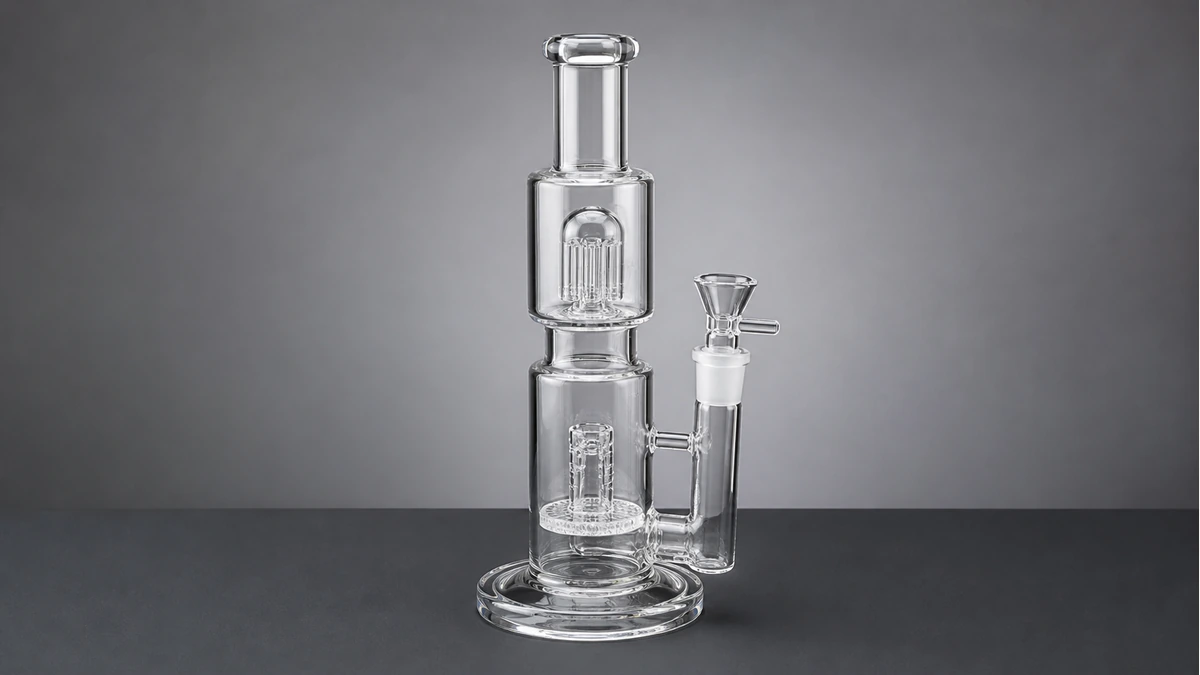
If you’re shopping and can only judge a piece from photos or a spec sheet, look at chamber proportions relative to each other. Chambers that get progressively larger toward the mouthpiece tend to give expanding smoke somewhere to go as it clears; chambers that stay uniform or shrink can bottleneck. This isn’t a universal rule for every maker’s design, but it’s a general principle worth checking against any specific piece you’re considering before assuming three chambers will clear as easily as one.
🧼 5. Internal complexity makes cleaning and drying slower
Each additional chamber is another interior surface where resin builds up, and unlike a single-chamber tube, you can’t always reach every section with a straight brush or a simple shake-and-rinse. Percolator slits, chamber joints, and narrow connecting tubes are the areas that resin collects in fastest, and a 3-chamber bong has three sets of these instead of one. Reddit threads on multi-perc glass echo this specifically — several experienced users describe eventually going back to simpler single-chamber pieces because the elaborate internal sections were harder to keep clean over time, not because the smoke quality was worse when the piece was new.
Cleaning a multi-chamber piece usually means soaking each section, working cleaning solution and coarse salt or rice through narrow joints that don’t drain quickly, and rinsing repeatedly to get solution out of chambers that don’t have a direct opening. Drying takes longer for the same reason: water and rinse solution sitting in a lower chamber can take much longer to fully evaporate or drain than water in an open tube, and residual moisture in an unreachable chamber is easy to miss.
None of this means three-chamber pieces are impractical to maintain, but it does mean cleaning frequency and technique matter more than they do with simpler glass. A general cleaning approach — proper solution, patience with soak time, and thorough rinsing of every chamber rather than just the ones you can see into — applies across brands and designs. For a fuller walkthrough of what that process looks like in practice, see this bong cleaning kit guide, which covers the tools and steps involved regardless of how many chambers your piece has.
⚠️ 6. More welds and height create more breakable points
Stacking three chambers into one piece means stacking three sets of glass joints, and each weld between sections is a potential stress point. Glass is strongest as a single continuous piece and weakest at the seams where separate sections were fused together. A 3-chamber bong necessarily has more of these seams than a single-chamber tube, and it’s also usually taller, which raises the center of gravity and increases the leverage a bump or tip-over applies to the lowest joints.
This is a structural tradeoff that comes with the added filtration, not a defect specific to any one maker — more internal sections inherently mean more places where the glass has been joined rather than blown as one continuous form.
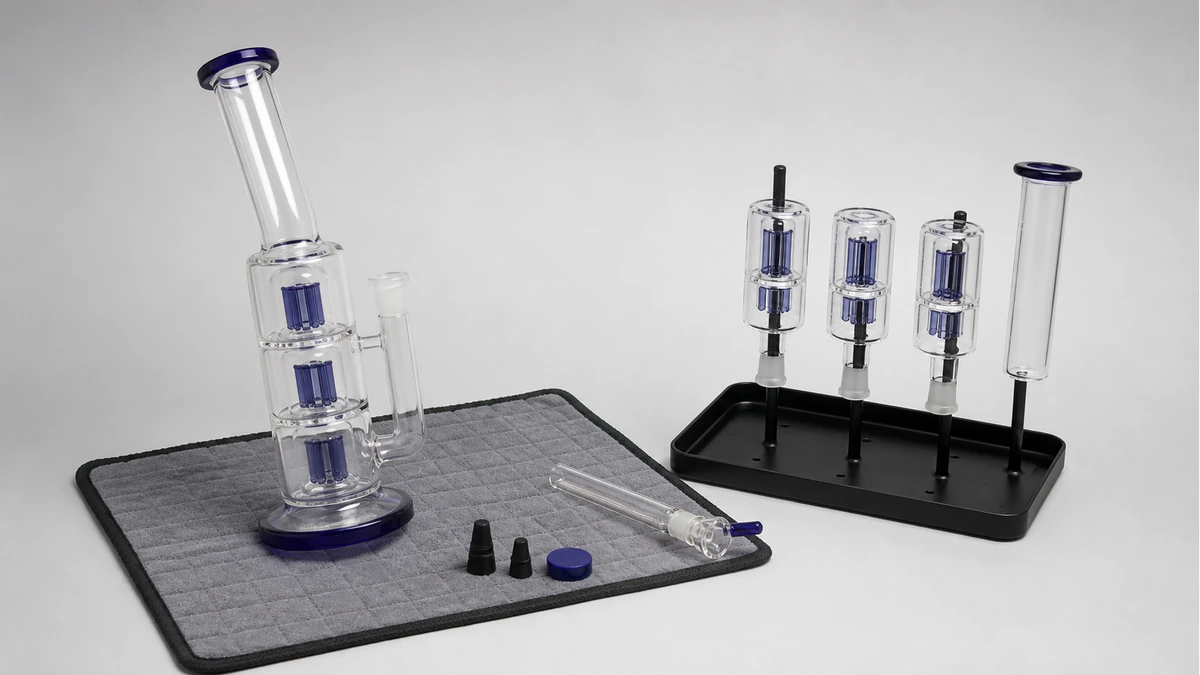
Reddit discussions of elaborate multi-perc setups mention this directly alongside the drag complaints — welded internal sections are frequently cited as the more fragile parts of a piece, more likely to crack or separate from the surrounding glass than the base or the tube itself. That doesn’t make three-chamber pieces unusably delicate, but it’s a reason to handle them with more care during setup, transport, and cleaning than you would a simpler single-chamber piece, and to inspect the joints periodically for hairline stress cracks rather than only checking the base or the mouthpiece rim.
⚖️ 7. Choose chamber count after function and maintenance
A 3-chamber bong isn’t a strictly better version of a single or double chamber piece — it’s a different set of tradeoffs. You gain more diffusion points and, when the chambers are proportioned well, a cooler and more filtered pull. You take on more water levels to manage, more drag to pull through, a clear that has to move smoke back out through the same layered path, more interior surface to clean, and more joints that can fail under stress. Whether that trade is worth it depends on how you actually use the piece, not on the chamber count printed in a listing title.
If you mostly want a smoother, cooler hit without much extra upkeep, a well-built double chamber piece or a strong single-perc tube often delivers most of the smoothness gain with a fraction of the cleaning time and fragility.
If you specifically want maximum diffusion and are prepared to fill three water levels correctly, clean three chambers thoroughly, and handle a taller, more joint-heavy piece with more care, a three-chamber bong can deliver on that. The decision comes down to matching the piece’s maintenance demands to how often you’re realistically willing to meet them — a three-chamber bong that gets cleaned properly and filled correctly every time will consistently outperform a two-chamber piece that’s neglected, but the reverse is just as true. Evaluate chamber count as one variable among several — perc type, chamber proportions, joint quality, and your own cleaning habits — rather than as a standalone measure of how good a piece will be.