The practical trade is simple: the coil can make the draw feel cooler, while its narrow path, extra joints, condensation, and cleaning routine add resistance and maintenance. Cooling is a comfort feature, not a health claim.
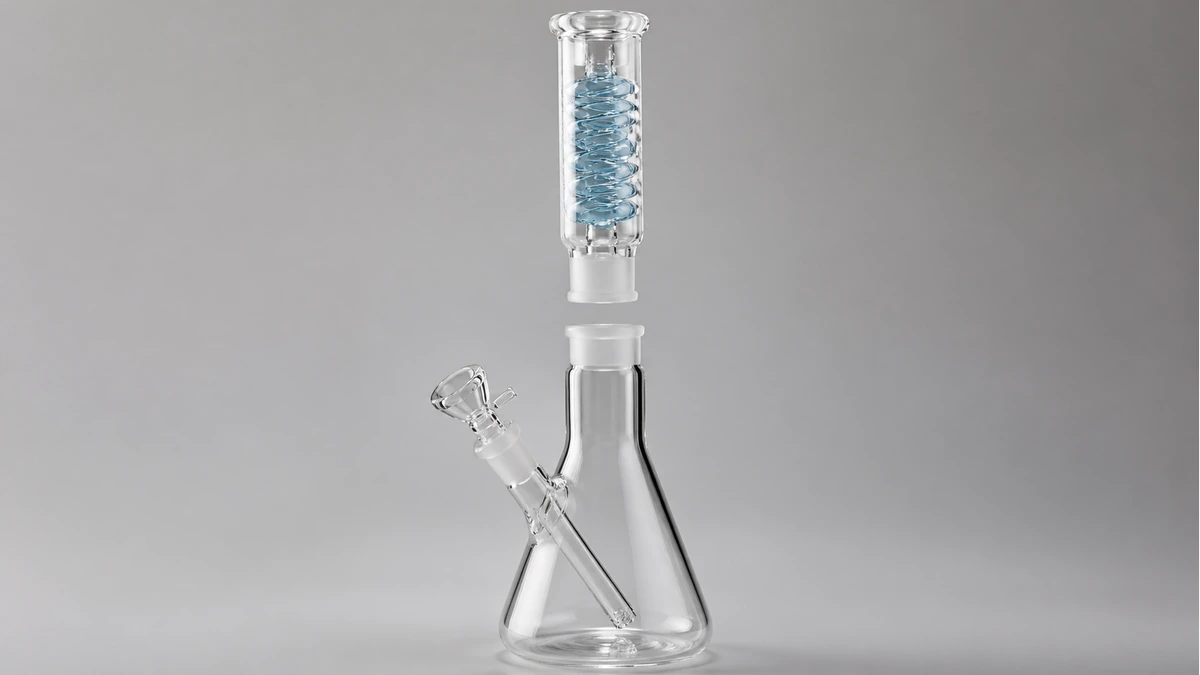
A glycerin coil bong routes the air path through or around a sealed cooling section filled with glycerin. The glycerin should remain inside that factory-sealed section; it is not bong water and should never enter the air path. Follow the maker’s freezing, thawing, and inspection directions for that exact part.
❄️ 1. The glycerin stays sealed inside a cooling section
The glycerin itself never touches the smoke path. It’s enclosed in a double-walled section of borosilicate glass, similar in concept to how a chilled drink glass has an outer wall you touch and an inner wall the liquid sits behind. Smoke moves through the inner tube or coil, and the glycerin sits in the sealed cavity around or beside it, acting purely as a thermal mass. Because the chamber is sealed during manufacturing, there’s no maintenance step where a user adds or replaces glycerin under normal use.
This sealed design is also why a cracked coil is a bigger problem than a cracked plain tube. If the outer wall of the glycerin chamber fails, the seal is broken and the liquid can migrate into the airpath or leak out entirely, and at that point the coil section is no longer functioning as designed. Basic ice-pinch or straight-tube water pipes don’t have this failure mode because there’s no sealed liquid chamber to breach in the first place.
🌬️ 2. Cooling changes sensation, not what the device produces
A colder coil lowers the temperature of the smoke passing through it, which changes how the draw feels in the throat and lungs. It does not change the combustion or vaporization happening at the bowl, and it doesn’t filter or alter anything about what’s being produced there. The coil is downstream hardware, functionally similar to how a longer neck or a diffused downstem changes the path smoke travels before it reaches the mouthpiece.
This is a point worth separating from any assumption that colder automatically means “smoother” in a way that changes the substance itself. Temperature affects perceived harshness and comfort during the draw, which is a real physical effect of moving heated gas through chilled glass, but it’s a sensation change, not a compositional one. Pieces that combine multiple cooling stages, like a double chamber bong, work on the same principle of adding surface area and travel distance, just through water and chamber geometry instead of a frozen liquid.
🌀 3. Coil geometry can add draw resistance
Coils are narrower than the open tube they replace, and depending on how many turns the smoke has to pass through, that narrowing can noticeably increase how hard someone has to pull to move air through the piece. A single wide loop adds modest resistance. A tightly wound coil with several turns forces smoke through a longer, tighter path, and the added length and narrower diameter both work against easy airflow.
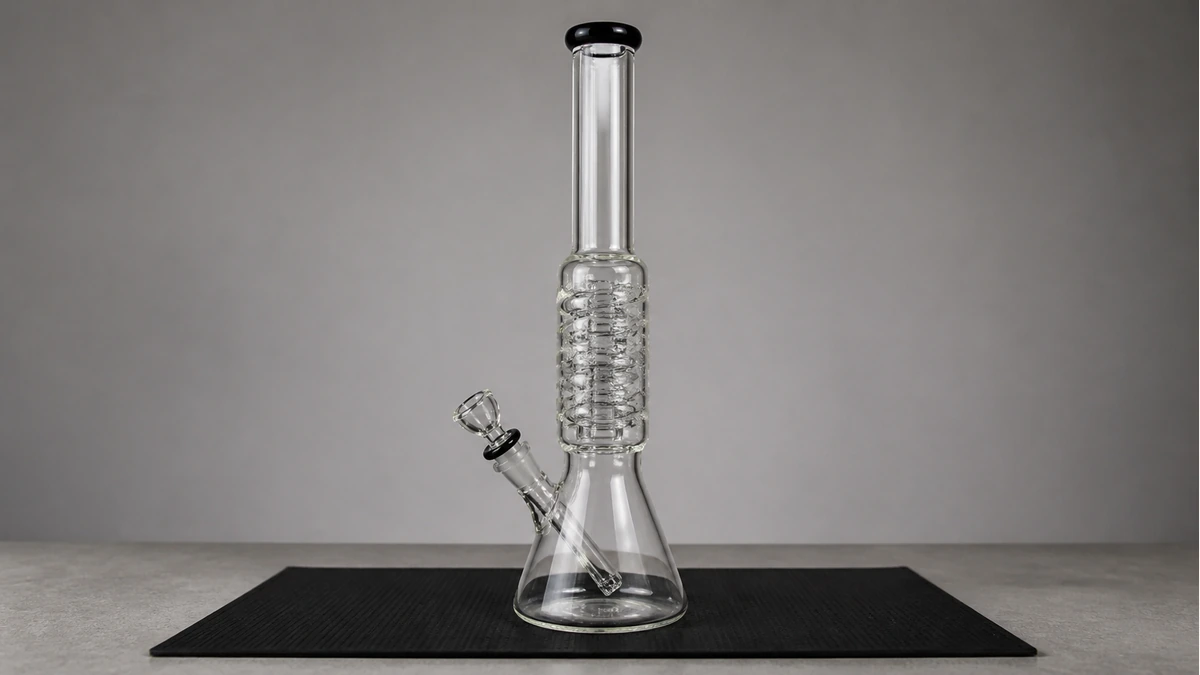
This is a straightforward physics tradeoff: more glass surface in contact with the smoke means more cooling, but the same geometry that creates that surface area also restricts the opening the smoke moves through. Someone used to a wide-open straight tube may find a multi-coil piece noticeably harder to draw through, independent of how cold the glycerin is. It’s worth handling a piece in person or checking coil turn count before assuming a colder-sounding design will also feel easy to use.
🔗 4. Removable joints make freezing practical but add seals
Because the coil section has to go into a freezer separately from the rest of the piece in most designs, glycerin coil bongs are typically built with a removable ground-glass joint connecting the coil to the base. That joint is what makes freezing practical at all — without it, the whole piece would need to fit in a freezer, water chamber and all. The tradeoff is that a removable joint is another point of contact that has to seal properly, and a joint that’s slightly out of round or missing a grommet can introduce a leak or a whistle that a fused, one-piece tube wouldn’t have.
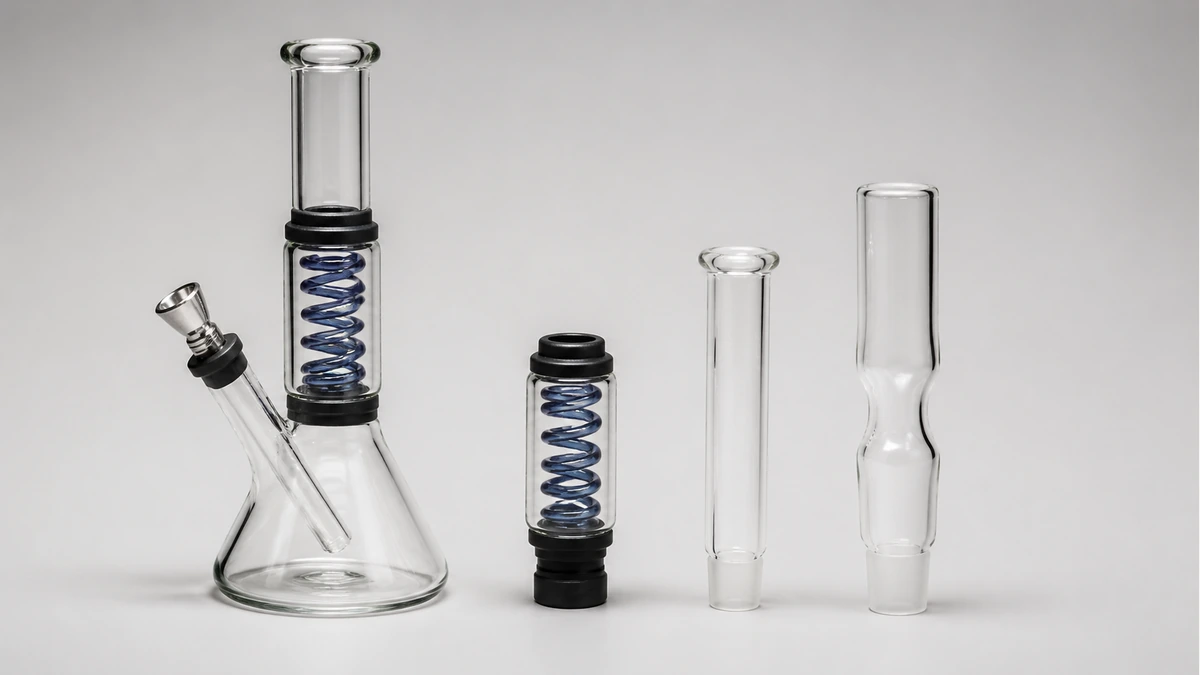
Ground-glass joints on frozen coils face a specific stress that stationary joints don’t: repeated temperature swings between freezer cold and room temperature. Glass expands and contracts slightly with temperature, and a joint that fit snugly at room temperature can feel different immediately after the coil comes out of the freezer. This isn’t unique to glycerin coils — any removable joint is a wear point — but the freeze cycle adds a variable that a fixed joint never has to deal with.
⏱️ 5. Follow the maker’s freeze and thaw instructions
General cooling principles are consistent across glycerin coil designs, but freeze duration, orientation, and thaw handling are not — they depend on the specific piece, the glass thickness around the glycerin chamber, and how the manufacturer built the seal. Some coils are meant to lay flat in a freezer, others are designed to stand upright, and rushing the thaw by running warm water over cold glass is a common way to stress glass regardless of what’s inside it. None of these details are safe to guess from general principles; they need to come from the instructions that shipped with that specific piece.
Readers building a broader mental model of frozen-glass cooling accessories, including how freeze duration interacts with piece size and glass thickness, can compare general handling patterns in the freeze pipe bong guide. That guide covers a related but separate product category, so it’s a reference point for freezing behavior in general, not a substitute for maker-specific instructions on any particular glycerin coil.
🧼 6. Condensation and narrow coils complicate cleanup
A coil straight out of the freezer is colder than the surrounding air, and that temperature difference means condensation forms on the outside of the glass as soon as it’s out. That moisture can drip, and if the piece sits on a surface that doesn’t tolerate condensation well, it’s worth having something underneath to catch it during the first few minutes after freezing.
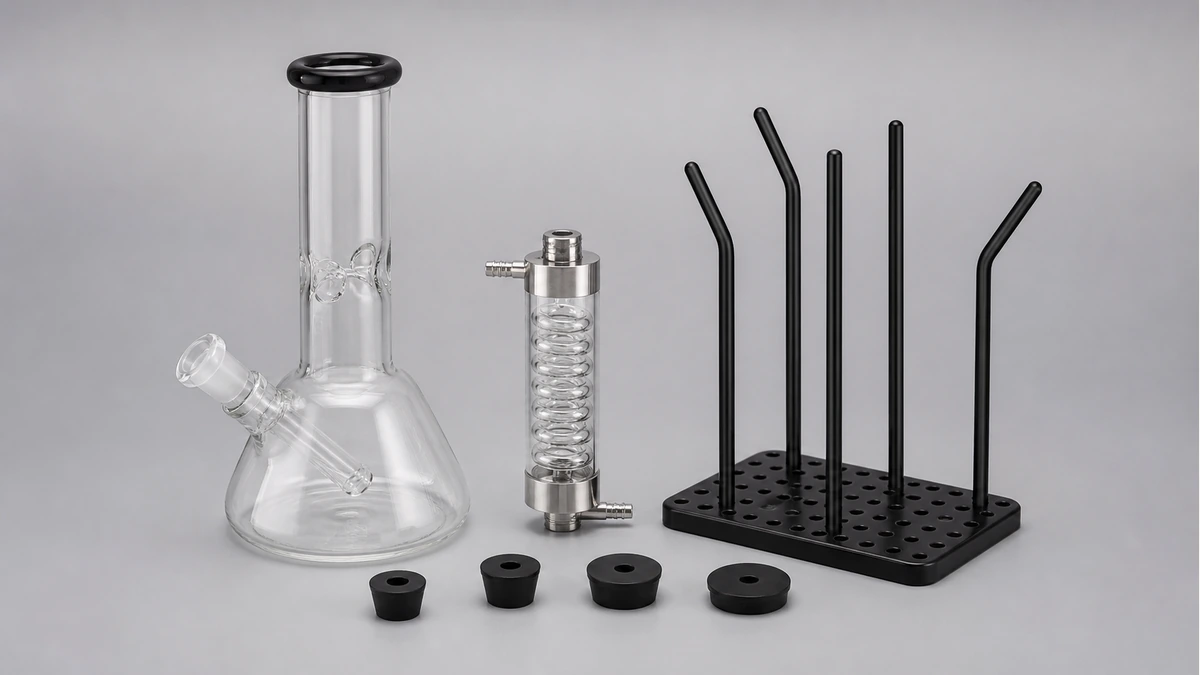
The bigger cleanup challenge is inside the coil itself. Resin builds up along the same narrow, curved path that creates the cooling effect, and a standard pipe cleaner or brush often can’t bend through multiple tight turns the way it can move through a straight tube. Coils with several loops can trap residue in sections that are hard to see and harder to reach, which means soaking time and the right brush size matter more here than on an open-tube piece. The glass pipe cleaning kit guide covers brush sizing and soak approaches that are useful background for narrow, curved passages like a coil, though the coil’s sealed glycerin chamber itself is never something to clean or open.
Because the coil is a separate removable piece in most designs, it also has to be fully dry before it goes back in the freezer. Trapped moisture inside a joint or fitting can expand when frozen, which is the same reason any wet glass fitting is worth drying before a cold cycle, not just glycerin coils specifically.
⚖️ 7. Choose the coil only if its routine fits yours
A glycerin coil is a genuine upgrade in cooling capacity for someone willing to plan a freeze cycle ahead of a session and handle a narrower, harder-to-clean airpath in exchange. For someone who wants to pick up a piece and use it immediately, with the fewest parts to keep track of, a plain ice-pinch or straight tube removes both the freeze-ahead requirement and the tight-coil cleaning problem entirely. Neither approach is more capable in every respect; they’re different answers to the same question of how much routine someone is willing to build around a cooling feature.
The most useful way to decide is to think about actual use patterns rather than the feature in isolation: whether there’s reliable freezer space, whether the extra draw resistance of a coil is noticeable and tolerable, and whether cleaning a narrow curved chamber on a regular basis is something that fits into an existing routine or becomes a piece that gets set aside because it’s inconvenient to maintain.
🔍 8. Inspect the cooling section as its own component
Before placing a removable coil into storage or a freezer, examine the sealed body, welds, joint, and mouthpiece path in bright light. A crack, unexplained cloud line, leak, loose cap, or exposed seal is a stop-use condition. Do not test a questionable coil by freezing it again.
Leave the part in the orientation and environment specified by its maker. Household freezers cycle in temperature, and not every sealed cooling component is designed for identical time or temperature conditions. Avoid the common shortcut of moving cold glass directly into hot water; abrupt temperature change can stress glass even when the glycerin itself remains liquid.
💧 8.1 Condensation changes handling
A chilled section collects moisture from the room. That makes the outside slippery and can drip onto the joint, table, or nearby electronics. Dry your hands, use a stable mat, and support the body rather than lifting the assembled bong by the cold coil.
Condensation can also make two clean ground-glass parts feel temporarily stuck. Do not twist them aggressively. Set the piece safely, allow it to move toward room temperature according to the maker’s directions, and try again only with the base fully supported.
🧼 8.2 Narrow paths need prompt, gentle maintenance
The coil often cannot accept a brush, which makes prompt rinsing and maker-approved soaking more important. Let every section return to the appropriate cleaning temperature first. Clean removable water chambers separately so residue from one part is not pushed into the narrow cooling path.
Rinse until no cleaning material remains, then let the internal path drain and dry completely. Reassemble only when the joint surfaces are clean and dry. A coil that still smells, contains visible residue you cannot reach, or shows damage is not improved by another freeze cycle; it needs manufacturer guidance or replacement.
⚖️ 8.3 Compare the routine with ordinary cooling options
Before paying for the coil, compare what you are actually trying to change. A smaller draw, fresh water, a different mouthpiece length, or a basic ice pinch may alter the feel without adding a sealed module. None is universally equivalent, but each has a simpler inspection and cleaning path.
The coil earns its place when you consistently prefer its feel and are willing to freeze, handle, dry, and store the removable section correctly. If it remains in a cabinet because thawing and cleanup interrupt the routine, the simpler bong was the better functional choice.
Also plan where the warm and cold components will rest. A padded, dry area keeps the coil from rolling, while a separate place for the base prevents condensation from wetting the table. That small workflow detail matters more than another decorative feature.
Store the coil where other freezer items cannot strike it and where it cannot roll when the door moves. Use a clean protective container only if the manufacturer permits it, and never stack weight on a glass mouthpiece or joint. Mark its storage spot so another person does not move the fragile part casually. Reinspect the seal after every accidental impact, even when the outer glass still looks intact.
A written freeze, thaw, rinse, and dry routine helps prevent rushed temperature changes and forgotten moisture between sessions.