An electric weed grinder answers a narrow question: does a motor turning the blades or teeth solve a problem you actually have, or does it just add a battery and a switch to a job a hand crank already does well? The honest answer depends on feed control—how much material enters the cutting chamber per second and how evenly it moves through—because a motor that can’t be metered will over-process soft material into powder just as easily as it saves a stiff wrist from turning a lid.
That trade-off is the throughline for every design decision that follows: chamber shape, blade type, pulse control, and how easily the unit opens for cleaning. None of it matters if the motor runs at one fixed speed with no way to stop it mid-grind.
🧭 1. An electric grinder trades hand force for feed control
A manual multi-piece grinder relies on downward pressure and twisting motion, both supplied by the user’s hand and wrist. An electric grinder replaces that physical input with a motor, but the person still has to control something—usually a button, a pulse trigger, or a timed cycle. The question isn’t whether effort disappears; it’s what kind of control replaces it.
Reddit threads about automatic grinding options consistently point to hand pain and limited dexterity as the reason people look at powered alternatives in the first place—less about speed and more about not wanting to grip and twist a lid repeatedly. That’s a legitimate reason to consider a motor. But a grinder that only runs at full speed until you release a button gives you less real-time control than a hand crank does, because you can’t feel resistance building the way you can when turning a lid yourself. The tactile feedback of manual grinding—sensing when material has broken down enough—gets removed, and nothing necessarily replaces it except trial and error with pulse timing.
🧩 2. Blade, burr, and toothed chambers do not produce the same cut
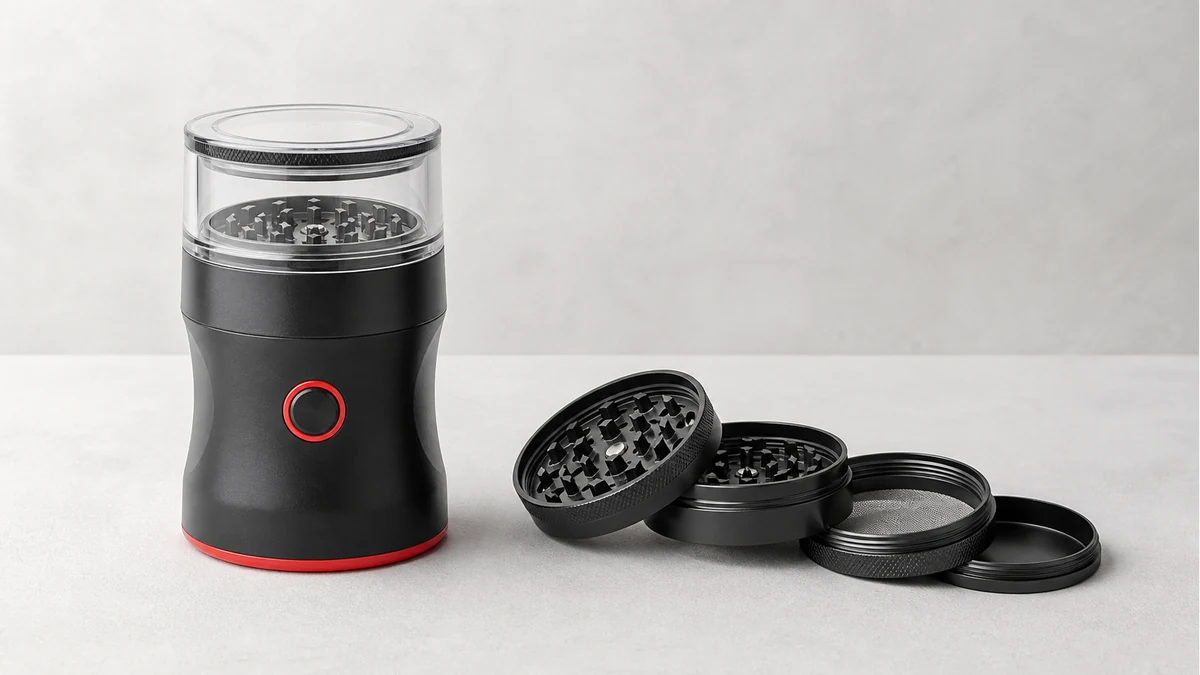
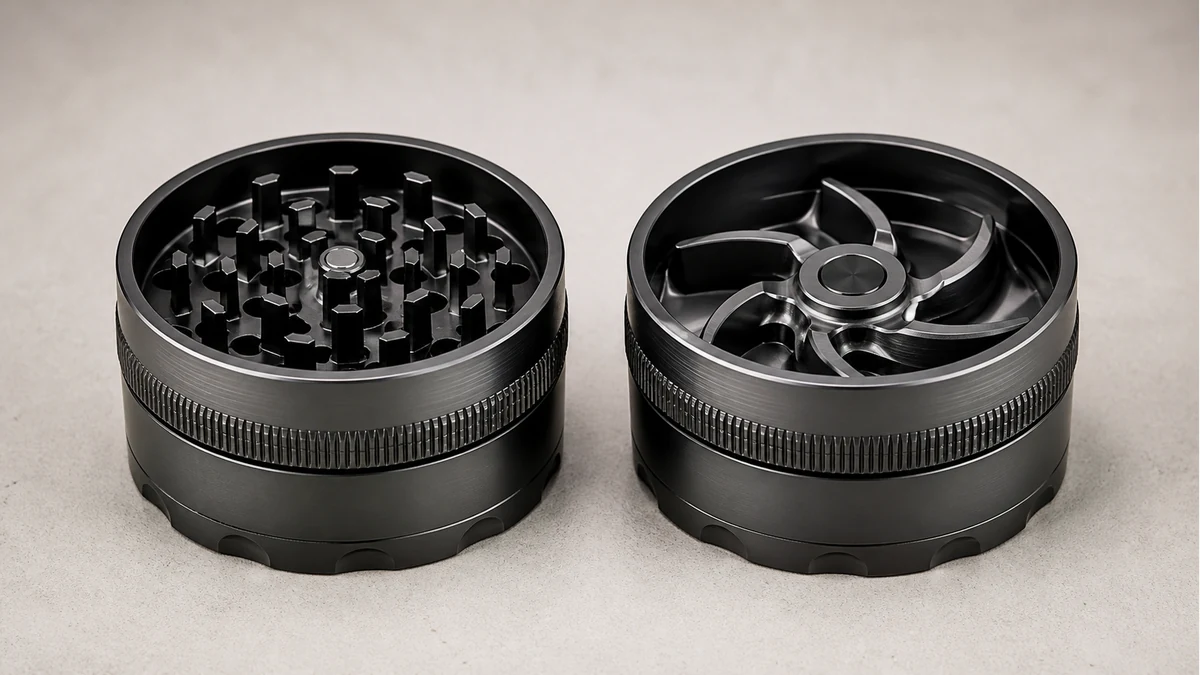
Electric grinders on the market use a few different cutting mechanisms, and they are not interchangeable in outcome. Rotating blade designs—similar in concept to a small coffee or spice grinder—cut by spinning fast enough that material is sliced repeatedly as it’s tossed around the chamber. Toothed-chamber designs, closer to what manual multi-piece grinders use, rely on interlocking teeth that shear material as two plates rotate relative to each other, just powered by a motor instead of a hand.
These two approaches behave differently. A blade spinning at a fixed high speed doesn’t discriminate between material that’s already broken down and material that hasn’t been touched yet—it keeps cutting everything in the chamber until you stop it, which is why one Reddit discussion about using coffee-style electric grinders for speed also raised concern about ending up with dust instead of a usable grind. A toothed chamber modeled on manual grinder teeth tends to produce more consistent piece size because the geometry limits how small material can get before it falls through to a lower chamber, similar in principle to what’s discussed in our guide to 2-piece grinder design, even though that guide covers manual units specifically.
Neither mechanism is universally better—it depends on what result you want and whether the unit gives you any way to interrupt the cycle before it goes further than intended.
🔍 3. The motor is useful only if the chamber can be controlled
A motor by itself doesn’t grind better; it grinds faster and with less physical input. Whether that’s an improvement depends entirely on whether the person operating it can control the outcome. Controllable design elements include a pulse button instead of a constant-on switch, chamber size that limits how much material processes per cycle, and any window or indicator letting the user see progress without opening the unit.
Without pulse control, the only way to manage a motorized grind is to guess at timing and hope the result lands somewhere reasonable. That guesswork is exactly what shows up in Reddit posts describing electric grinders throwing material around or making a mess—not because the motor itself is flawed, but because the person had no way to meter how much cutting happened before opening the lid to check. A grinder that can be started and stopped in short bursts gives the user something closer to the tactile feedback loop of manual grinding, just translated into button presses instead of wrist rotation.
⚙️ 3.1 Chamber size shapes the outcome as much as the motor does
A small chamber processed by a fast motor for even a few seconds behaves very differently than a large chamber given the same motor and the same few seconds. Material has less room to move and gets hit by the blade or teeth more often per second in a small chamber, which speeds up over-processing. This is a design variable independent of motor speed, and it’s worth checking chamber volume relative to how much material a person actually intends to process per session, rather than assuming any motorized unit scales the same way.
⚙️ 4. Fine dust, uneven pieces, and jams reveal the weak designs
Three failure modes come up repeatedly when powered grinders don’t fit the job: material turns to fine dust instead of a usable grind, pieces come out wildly uneven with some fully pulverized and some barely touched, or the chamber jams and stops mid-cycle. Each points to a different design or usage mismatch.
Dust results from a motor that runs longer or faster than the material calls for, especially with brittle or dry material that breaks down faster than expected. Uneven pieces often trace back to a chamber that doesn’t circulate material evenly—some of it stays near the blade the whole cycle while some sits in a corner untouched. Jams happen when material clumps and blocks the blade or teeth from moving at all, which draws load on the motor and can stall it.
Reddit users troubleshooting powered grinders ask specifically how to avoid jams and how to clear residue that builds up after repeated cycles, which suggests jamming and buildup are common enough to be a recurring pain point rather than an occasional fluke. None of these are motor problems exactly—they’re chamber-design and usage-pattern problems that a stronger or faster motor won’t fix and might make worse.
🧼 5. Cleaning access matters more than headline speed
A grinder that’s fast but difficult to open and clean will accumulate residue in ways that affect the next grind’s consistency and eventually make the unit harder to run at all. This applies to manual and electric grinders alike, but it’s a bigger factor with electric units because the motor housing, wiring, and battery compartment usually can’t be submerged or scrubbed the way a simple manual chamber can.
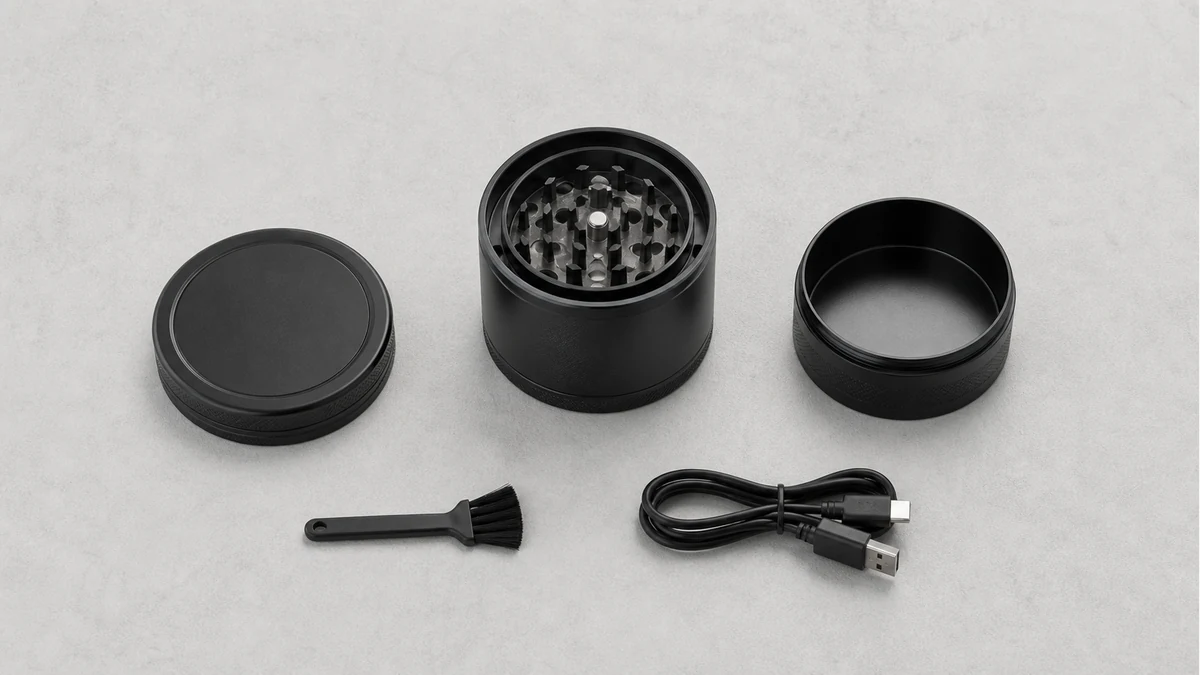
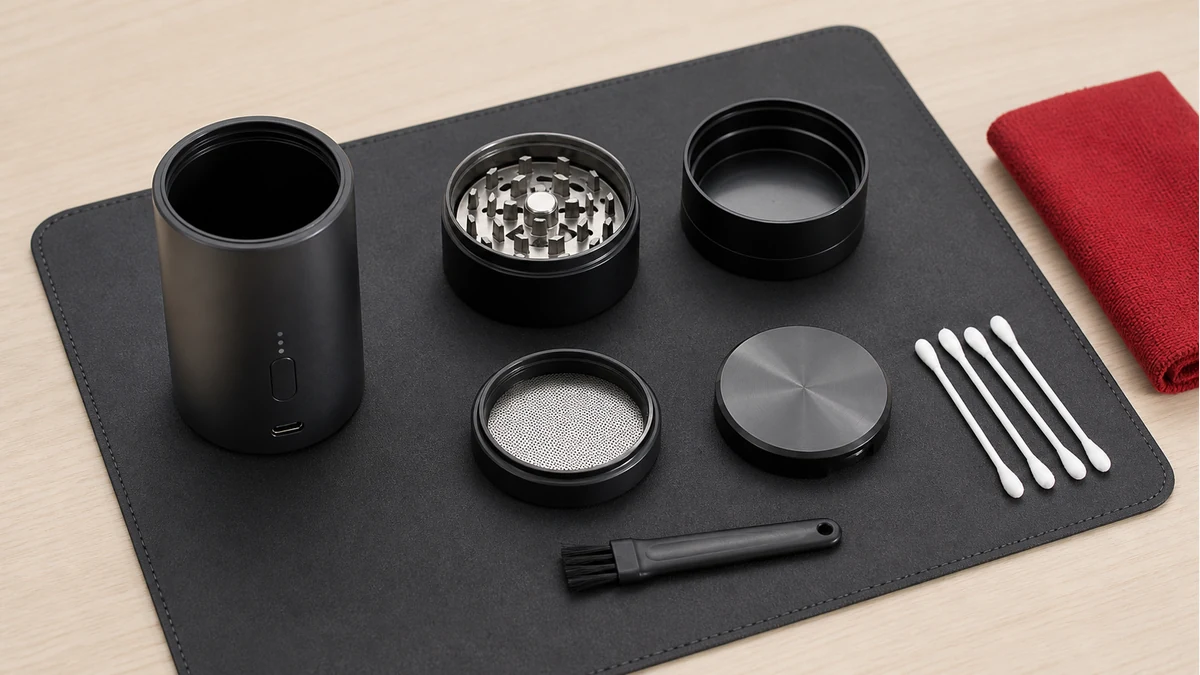
Look for a chamber that separates fully from the motor base, teeth or blades that are reachable without tools, and a design that doesn’t trap material in seams around the motor shaft. A unit marketed primarily on grinding speed but designed with a sealed, hard-to-access chamber will be harder to maintain long-term regardless of how fast that first cycle looked. This is the same logic that applies when evaluating chamber design in manual multi-piece units, covered in more detail in our guide to 2-piece grinder design—accessibility for cleaning is a design property, not a manual-versus-electric property.
🛠️ 6. Match the grinder to dexterity, volume, and the material routine
The decision to go electric should be driven by an actual constraint, not by the assumption that powered automatically means better. Three factors are worth weighing honestly before choosing a motorized unit over a manual one.
✅ 6.1 Dexterity and hand strength
If gripping and twisting a manual grinder is physically difficult or painful, a motor genuinely removes that barrier. This is the clearest case for going electric, and it lines up with what Reddit users cite most often when explaining why they looked into automatic options in the first place.
📦 6.2 Volume per session
Someone processing a small amount at a time may find that a motor’s speed advantage barely matters, since a manual grind of a small quantity takes only a few twists anyway. The time saved by a motor scales with volume—it matters more when processing larger quantities repeatedly than when doing a single small batch, which is the same volume-based logic that shapes decisions in bulk or wholesale grinder sourcing, where consistency and processing speed across many units becomes a bigger factor than it is for a single personal-use grinder.
🧭 6.3 Material variety and routine
People who grind more than one type of material—for instance, alternating between herb and other plant matter—may find that a single-mechanism electric grinder doesn’t handle every material the same way, since blade speed and chamber geometry that suit one texture can over-process another. This is worth thinking through the same way it’s addressed for custom tobacco grinder builds, where chamber and tooth design are chosen specifically around the material being processed rather than assumed to be universal.
🧩 6.4 Control the feed before judging the motor
An electric grinder can only produce an even result when material reaches the cutting area at a controlled rate. Packing a chamber to its lid removes the empty space pieces need to circulate, so the motor may stall while the top layer barely moves. At the opposite extreme, a high-speed blade in a nearly empty cup can chase a few pieces around and turn their edges to powder. Start with the maker’s stated capacity, then use shorter pulses if that control is provided rather than holding the switch until the sound changes.
Listen for a steady load. A sudden slowdown, clicking, or repeated stop-start behavior means the chamber needs to be powered off and inspected according to the manual. It is not a reason to push material toward moving teeth. The useful advantage of a motor is reduced hand force; that advantage disappears if the design requires fingers or improvised tools near the cutter.
🔍 6.5 Check whether cleanup is part of the design
Residue gathers where the chamber wall, shaft, and underside of the lid meet. A removable cup is easier to brush over a tray than a fixed cup attached to a battery housing. Confirm which parts may be removed, whether the cutter can be accessed without tools, and which surfaces the maker permits you to clean. Keep liquid away from motors, switches, charging ports, and bearings unless the instructions explicitly say a component is washable.
✅ 7. Choose the simplest machine that solves the actual problem
The clearest way to evaluate an electric weed grinder is to name the specific problem it needs to solve—hand pain, high volume, or a specific material texture—and then check whether the unit’s feed control, chamber design, and cleaning access actually address that problem, rather than judging it on motor speed alone. A powered grinder with no pulse control and a sealed chamber can create more mess and maintenance work than the manual grinder it was meant to replace, even if it technically finishes a cycle faster.
If dexterity is the driving concern, prioritize pulse control and an easy grip over raw speed. If volume is the concern, prioritize chamber size and consistent cut over novelty features. If material variety is the concern, look at whether the chamber geometry is suited to more than one texture, or accept that a dedicated manual grinder for each material may outperform a single electric unit trying to do all of it. In every case, the maker’s manual for the specific unit should be the final word on operating limits, cleaning method, and safe handling, since chamber tolerances and motor specifications vary by manufacturer and model.