Loading a wide chamber to the rim can make grinding less consistent, not more efficient. Material bridges above the teeth, the lid demands more torque, and large threads collect debris across a longer circumference. Capacity is useful when the complete routine—loading, turning, emptying, and cleaning—remains controlled.
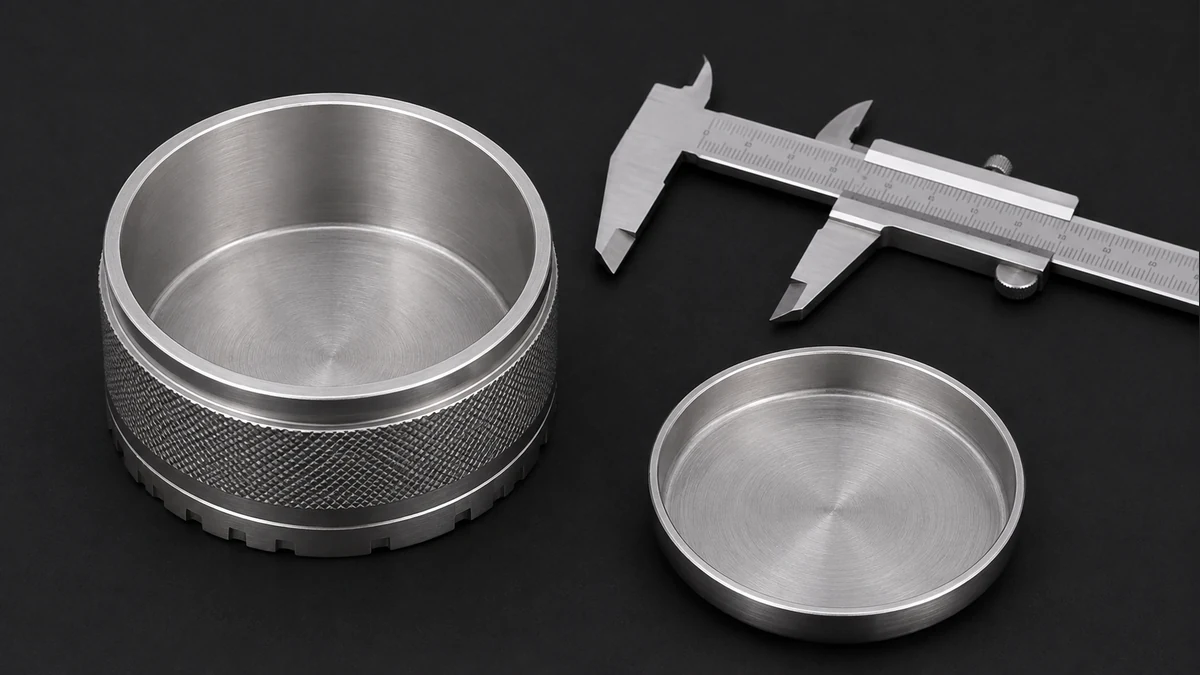
An extra-large herb grinder earns its footprint only when its usable chamber matches the amount you normally prepare. Outside diameter is an incomplete measure: tooth height, center magnets, wall thickness, and the clearance needed for material all reduce the space that actually works.
📏 1. Diameter and usable chamber volume are different
Manufacturers advertise outer diameter because it’s the easiest number to put on packaging. A 4-inch grinder sounds meaningfully bigger than a 2.5-inch one, and in terms of shelf footprint, it is. But the outer diameter includes wall thickness, the lip that seats the lid, and the magnet ring that holds everything closed. None of that space holds material.
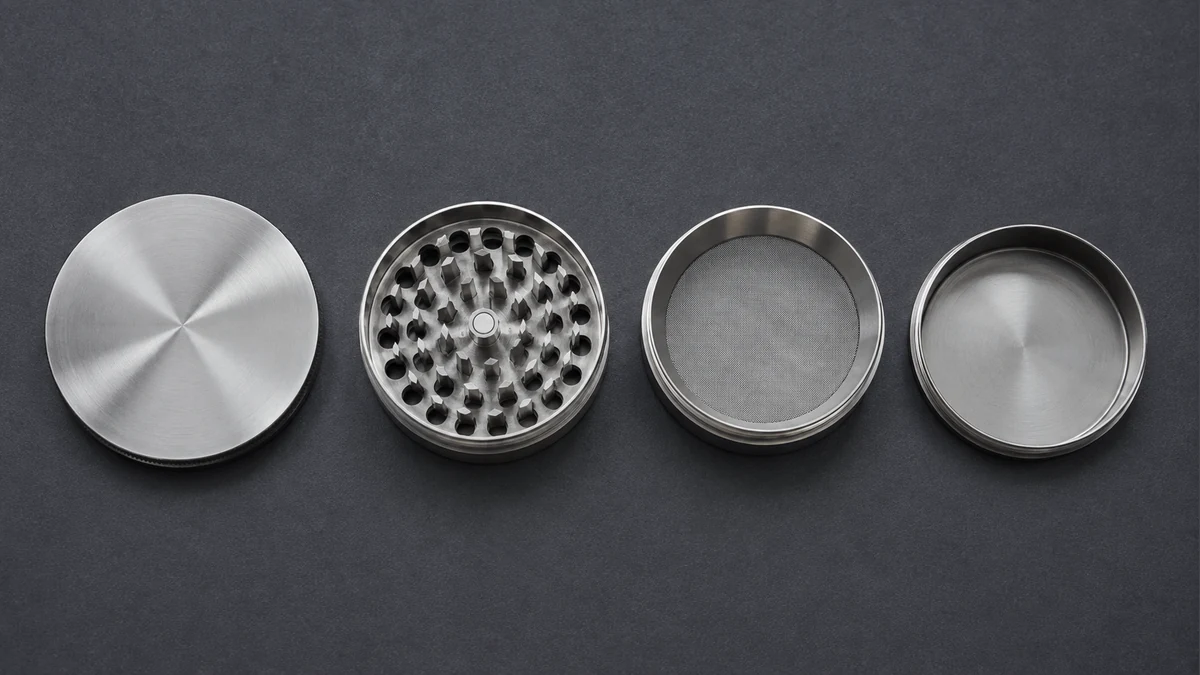
What actually determines how much you can process in one pass is the depth and width of the grinding chamber itself, plus how much of that space sits below the teeth versus above them. Two grinders with the same outer diameter can have noticeably different usable volume depending on how the teeth are arranged and how deep the top chamber is cut. A shallow chamber with widely spaced teeth might hold less material than a narrower grinder with a deeper cut, even though the wider one looks like it should win.
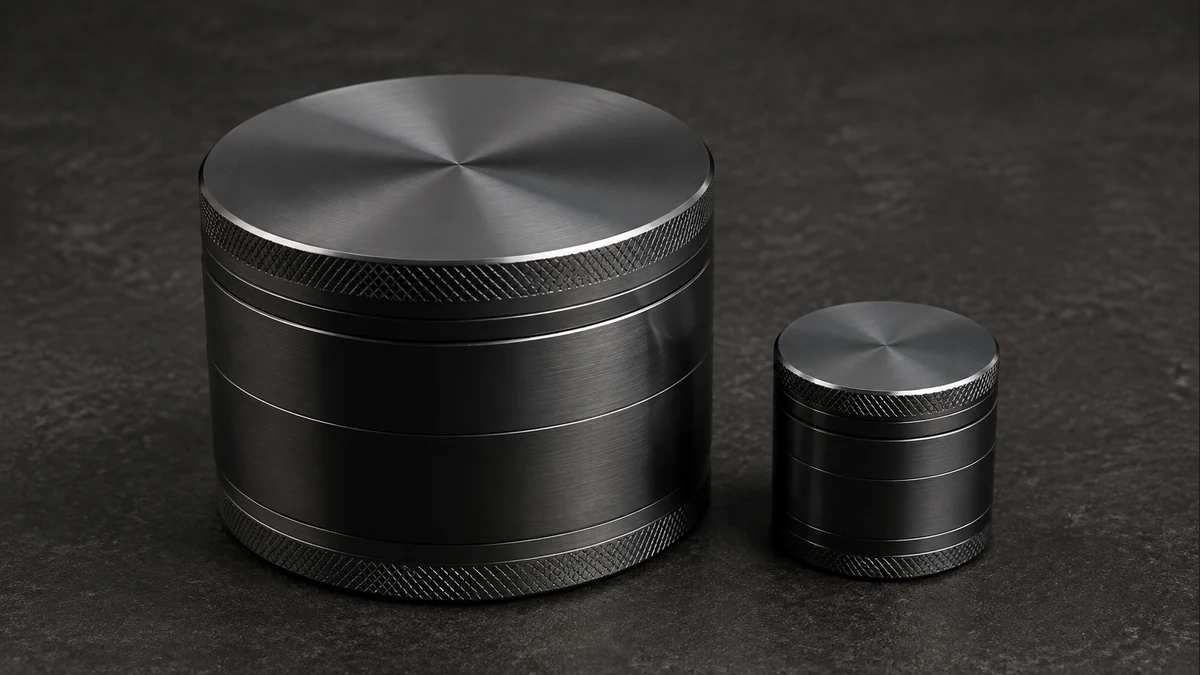
If capacity is the reason you’re upgrading, look past the diameter spec and think about chamber depth relative to tooth height. A grinder marketed as extra-large that only has a shallow top compartment isn’t actually solving the problem you’re trying to fix.
✋ 2. A wider lid changes grip and required torque
Every extra half-inch of diameter changes how the grinder sits in your hand. A standard 2-inch grinder fits inside a closed fist, and you can twist it using mostly your wrist. Once you get into 3.5- to 4-inch territory, your fingers wrap around the outside instead of the top, and the twisting motion shifts from a wrist action to a full forearm rotation.
This matters because torque requirements scale with both material volume and diameter. A larger grinder loaded to capacity needs more rotational force to turn the top against the bottom, and that force has to travel through a wider lever arm. If your hand span is on the smaller side, a 4-inch grinder loaded full can feel harder to turn than a 2.5-inch grinder loaded full, even though the mechanism itself isn’t more resistant — you’re just applying force less efficiently because your grip geometry has changed.
This is also where magnet strength and lid fit start to matter more than they do on smaller units. A loose-fitting lid on a small grinder is a minor annoyance. A loose-fitting lid on a large grinder, under more torque, is more likely to pop off mid-twist or shift off-center, which throws the teeth out of alignment for that rotation.
📏 3. Overfilling creates bridging instead of capacity
The instinct with any large-capacity grinder is to fill it once and be done. That’s the whole appeal — fewer reloads, fewer sessions spent grinding. But there’s a practical ceiling to how full you can pack a chamber before the material stops moving freely between the teeth.
When a chamber is overfilled, material at the center of the load has nowhere to go as the teeth rotate. Instead of falling into the cutting path, it gets compressed against material around it and forms a dome or plug — bridging — that the teeth can’t reach. You end up cranking the grinder while a core of untouched material just sits there, rotating as a solid mass instead of breaking apart.
The fix isn’t a bigger grinder — it’s a lower fill line. Most chambers grind most efficiently somewhere around two-thirds full, leaving enough open space for material to tumble and redistribute between rotations. An extra-large grinder filled to two-thirds capacity will usually outperform the same grinder packed to the rim, because the material actually has room to move.
If you’re grinding for a group or prepping ahead, it’s often more consistent to run two moderate loads through a large-capacity grinder than to force one maximum load through it. That defeats some of the one-pass convenience, but it avoids the half-ground core that bridging leaves behind.
⚠️ 3.1 Signs a chamber is overfilled
- The top twists with resistance from the very first rotation, not just partway through
- You can hear or feel material shifting as a single mass rather than individual pieces tumbling
- Grind time increases noticeably compared to a half-full load, with no proportional increase in output texture
- Material near the center of the chamber looks unbroken when you open the lid, while material near the teeth is fully processed
⚙️ 4. More screen area changes collection behavior
Larger grinders generally come with a wider kief screen in the bottom compartment, and it’s tempting to assume more screen area just means more collection, faster. In practice, screen area changes collection behavior more than it changes collection speed.
A wider screen spreads ground material across more surface, which means any single point on the screen sees less repeated contact and less repeated pressure from the compartment above it. On a small grinder, sifted material tends to concentrate in a smaller area and gets tamped down by the compartment lid sitting closer to the screen. On a large grinder, that same material spreads thinner, and if the top compartment isn’t proportionally larger too, there’s more air gap between the ground material and the screen, which slows how much actually falls through per session.
Screen mesh size still matters more than screen diameter for what actually collects. A wide screen with coarse mesh will let more plant matter through with the kief, while a smaller screen with fine mesh filters more selectively even though it covers less area. If collection quality is the priority, mesh size is worth checking independently of overall grinder size — a point covered in more detail in AOVAPE’s herb grinder with dispenser guide, which walks through how bottom-compartment design affects what ends up in the collection chamber.
🔩 5. Large threads need even alignment
The threading that holds an extra-large grinder’s compartments together carries more surface area than threading on a compact unit, and that means small misalignments are more noticeable when you first thread the pieces together. On a small grinder, you can start the threads at a slight angle and usually correct it within a quarter turn. On a wider grinder, that same slight angle can cause the threads to catch, cross, or feel gritty for several rotations before they seat properly.
This isn’t a defect — it’s a consequence of the larger circumference. The threads themselves cover more distance around the piece, so any angular offset at the start translates into a longer stretch of misalignment before the pieces settle into place. Forcing a cross-threaded connection on a large grinder is also more likely to damage the threading than on a small one, because there’s more leverage behind the force you’re applying.
The habit worth building is starting every large grinder by hand, turning slowly and evenly with light downward pressure until you feel the threads catch cleanly, rather than pressing down hard and twisting fast. It adds a few seconds to assembly but avoids the wear that comes from repeated cross-threading over months of use.
🔄 6. Batch size affects grind consistency
One of the less obvious tradeoffs with a large-capacity grinder is that batch size and grind consistency are connected. A small load in a large chamber has more room to move around loosely, which means individual pieces can slide past the teeth without full contact on every rotation. That produces a less even grind — some pieces fully processed, others barely touched — compared to the same small load in a chamber sized closer to that volume.
Conversely, a large load in a large chamber, kept below the bridging threshold, tends to grind more evenly because there’s enough material present to keep contact consistent across the teeth on every turn. This is part of why an extra-large grinder is a poor substitute for a standard grinder when you’re only processing a small amount at a time — you lose consistency in both directions if the batch size doesn’t roughly match the chamber it’s moving through.
If your grinding habits vary — sometimes a small amount, sometimes a much larger batch — it may make more sense to keep two grinders sized for those two use cases rather than trying to make one large unit cover both. This is the same logic that applies in wholesale herb grinder buying, where matching grinder size to typical batch volume, rather than buying uniformly large units, tends to produce more predictable results across repeated use.
🔄 6.1 Matching chamber size to typical batch
| Typical batch | Better-matched chamber | What happens if mismatched |
|---|---|---|
| Small, single-session amount | Compact chamber | Material rattles loosely in a large chamber, uneven contact with teeth |
| Moderate, shared or multi-session amount | Mid-size chamber, filled to roughly two-thirds | Fine in either size if fill level is managed |
| Large, prep-ahead amount | Extra-large chamber, run in stages if needed | Small chamber requires multiple full reloads; large chamber overfilled bridges instead of grinding |
📏 7. Buy extra capacity only for a repeatable use case
None of this means extra-large grinders are a bad choice. For someone who consistently processes a larger volume in one sitting — prepping for several sessions at once, or sharing across a group where reloading a small grinder repeatedly is genuinely inconvenient — the larger chamber solves a real, recurring problem. The size matches the habit.
Where it stops making sense is buying capacity for a use case that doesn’t actually repeat. If most sessions involve a small amount processed alone, an extra-large grinder just means more empty chamber space, more torque required per twist, and a wider footprint to store, without a matching benefit on most days. The times it does get filled to capacity, it’s more likely to bridge than to save meaningful time, since the fill level rarely hits the range where a large chamber performs at its best.
It’s also worth thinking about how a larger grinder fits into daily storage and handling, especially if part of the appeal is convenience on the go. A four-inch grinder doesn’t fit the same pockets or bags a two-inch one does, and if portability matters as much as capacity, that tradeoff deserves as much weight as chamber volume. For anyone leaning toward capacity but still wanting to reduce hand fatigue from repeated twisting, it’s also worth comparing manual large-capacity designs against motorized options, which is covered separately in AOVAPE’s electric weed grinder guide.
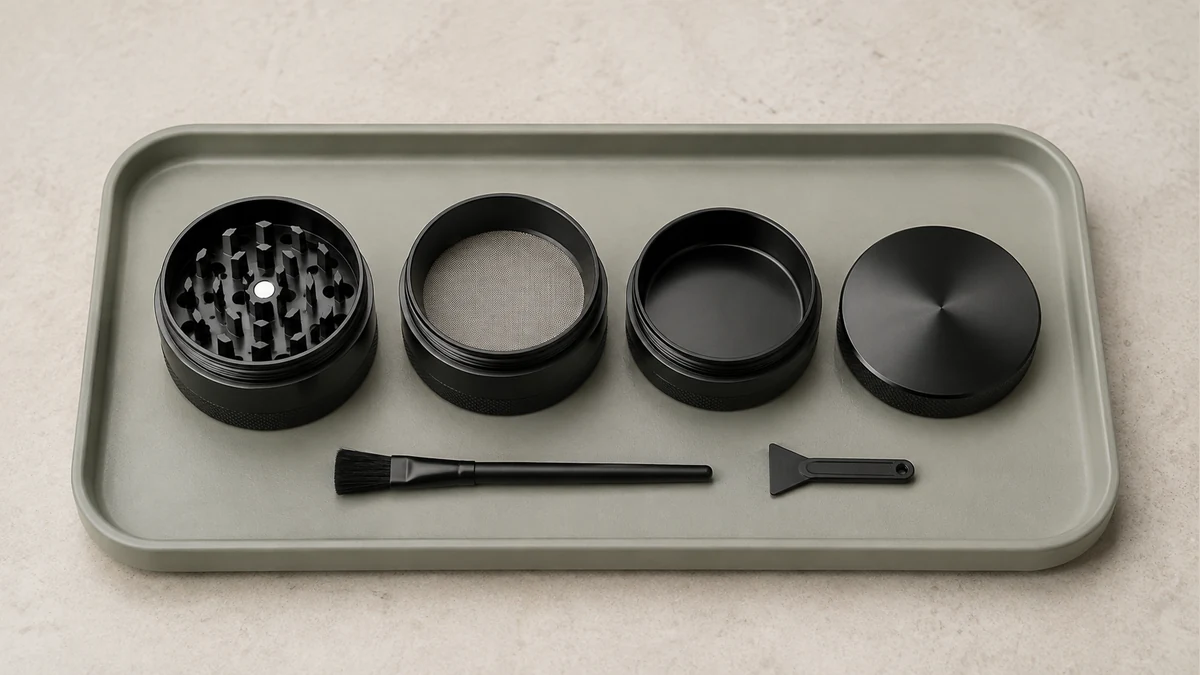
The honest way to size a grinder is to work backward from how much material you actually process per session, on average, not on your biggest occasional session. If that average genuinely calls for a larger chamber, the tradeoffs in grip, torque, and threading are worth managing. If it doesn’t, a smaller grinder filled properly will usually grind more evenly, thread more easily, and take up less space than a large one that’s rarely filled to where it performs best.
📏 8. Measure the workflow footprint as well as the grinder
A large grinder needs room for two hands, a clean place for the lid, and a tray wide enough to catch material when the chamber is opened. Check cabinet height and travel-case dimensions too. A grinder that cannot be stored level or packed without pressing on its teeth will be used less often than its capacity suggests.
For shared preparation areas, label ownership and cleaning responsibility rather than leaving a large batch in the chamber. The extra volume should shorten a repeatable task, not turn the grinder into long-term storage.