The best lighter for a bong is whichever one lets you hold a small, steady flame right at the edge of the bowl without your hand cramping or the flame guttering out mid-pull. Picture holding a lighter at an angle over a packed bowl while drawing water through the tube —a flame that’s too wide chars the whole surface at once, a flame that’s too weak dies before the bowl lights evenly, and a flame that’s too far away just heats air. Most of what separates a “good” lighter from an “annoying” one comes down to how precisely you can place that flame and hold it there.
That’s a narrower question than “which lighter is best,” and it’s also why there isn’t one universal winner. A soft-flame disposable, a refillable soft-flame lighter, a long-reach utility lighter, a torch, and hemp wick each control flame differently, and each one interacts with bowl shape, wind, and your own grip in different ways. This guide walks through those tradeoffs so you can match a flame type to how you actually smoke, rather than defaulting to whatever’s sitting on the counter.
🧭 1. The best lighter gives you a small controllable flame
A bowl doesn’t need a wall of fire —it needs consistent heat delivered to a small area, usually the top layer of ground material near one edge, so the flame draws down through the bowl as you inhale. That’s a fundamentally different job than lighting a candle or a grill. The flame has to be small enough to sit inside or just above the bowl’s rim, steady enough to survive being tilted sideways, and controllable enough that you can pull it back the instant the material catches.
Flame width matters more than flame intensity here. A wide flame licks the outer edges of the bowl and the surrounding glass or metal at the same time it’s trying to light the herb, which wastes heat and can scorch material unevenly. A narrow flame, even a modest one, concentrates its heat on a smaller target and gives you a clearer sense of exactly where the fire is going. That precision is really what people mean when they say a lighter is “good for bongs” —it’s not about raw flame size, it’s about how easily you can aim it and back off.
🧩 2. Compare soft flame, long reach, torch, and hemp wick
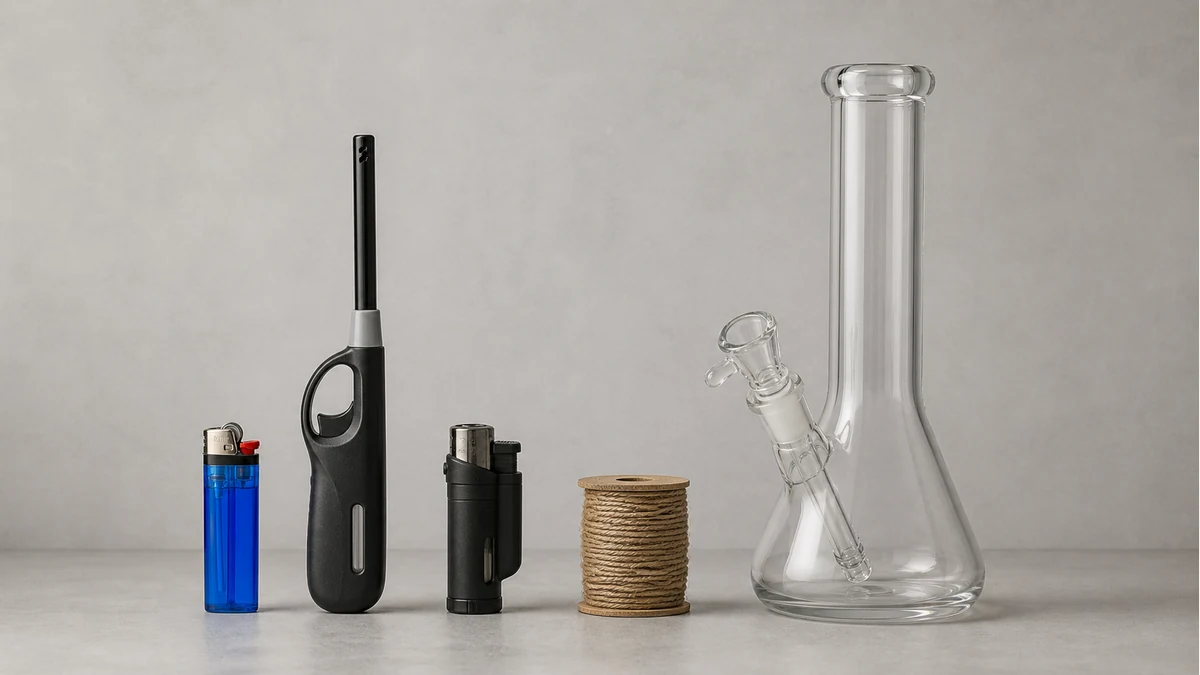
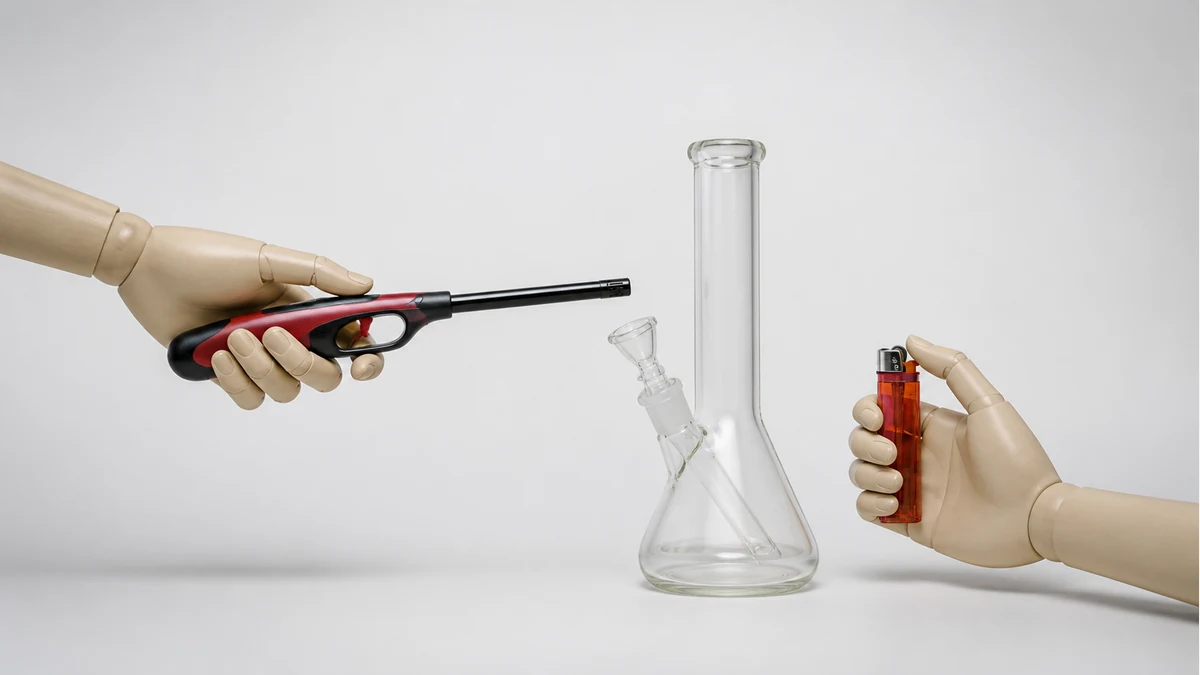
Standard soft-flame lighters —the classic disposable style and their refillable equivalents —produce a flexible, low-pressure flame that responds to how hard you flick the wheel and how far open the gas valve is. That responsiveness is their main advantage: you can feather the flame smaller or hold it steady with practice, and it naturally wraps around a bowl’s rim rather than blasting straight through it. The tradeoff is reach. Standard soft-flame lighters are short, so lighting a bowl set deep into a bong, or one angled at an awkward tilt, can mean getting your fingers uncomfortably close to hot glass or metal.
Long-reach lighters —sometimes sold as utility or barbecue-style lighters with an extended nozzle —solve the reach problem directly. The extra length keeps your hand farther from the bowl and makes it easier to angle the flame into a recessed or side-mounted bowl without contorting your grip. Some produce a soft flame at the tip, others use a narrow jet; check which type you’re buying, since the two behave differently once the flame reaches the bowl.
Torch lighters produce a small, high-velocity, high-temperature jet flame, originally designed for tasks like brazing or lighting cigars in wind. That intensity is exactly the problem for bong bowls: a torch heats a very small point extremely fast, which makes it easy to overheat the top layer of material or scorch a bowl’s rim before you’ve even finished your inhale. Torches also tend to have less feel for exactly how hot the flame is at any given moment compared to a soft flame you can visually gauge, so they reward a light touch and short bursts rather than a sustained hold.
Hemp wick is a length of hemp fiber coated in beeswax that you light with another flame source and then touch to the bowl. Its appeal is a lower, more controllable flame once it’s burning, and some people prefer not drawing a lighter’s flame directly over the bowl. But hemp wick isn’t a lighter by itself —you still need something to ignite it, it adds a second lit object to manage while you’re also holding the bong, and it leaves a small ash and wax residue that needs occasional cleanup. It’s a reasonable option for people who specifically want that flame character, not an automatic upgrade over a soft-flame lighter.
🔍 3. Match flame shape to the bowl opening
Bowl shape is the other half of this equation, and it’s worth checking against your own piece before assuming any one lighter type is “the” answer. A wide, shallow bowl gives a soft flame room to move in a small arc, lighting a broader surface gradually —which suits the gentler, spreadable heat of a soft flame well. A narrow, deep bowl concentrates material in a tighter column, and a pinpoint flame like a torch’s jet can reach the center more directly, though at the cost of that same overheating risk if you linger too long.
Recessed bowls, common on bongs designed to sit at an angle or tuck the bowl below the rim of a table, change the geometry again: you need either a long-reach lighter or a hand position that lets a standard lighter’s flame still reach the material without your knuckles hitting the glass. If you’re not sure what shape and depth your bowl is working with, our bong bowl guide breaks down common bowl styles and how their depth and opening size affect airflow and lighting.
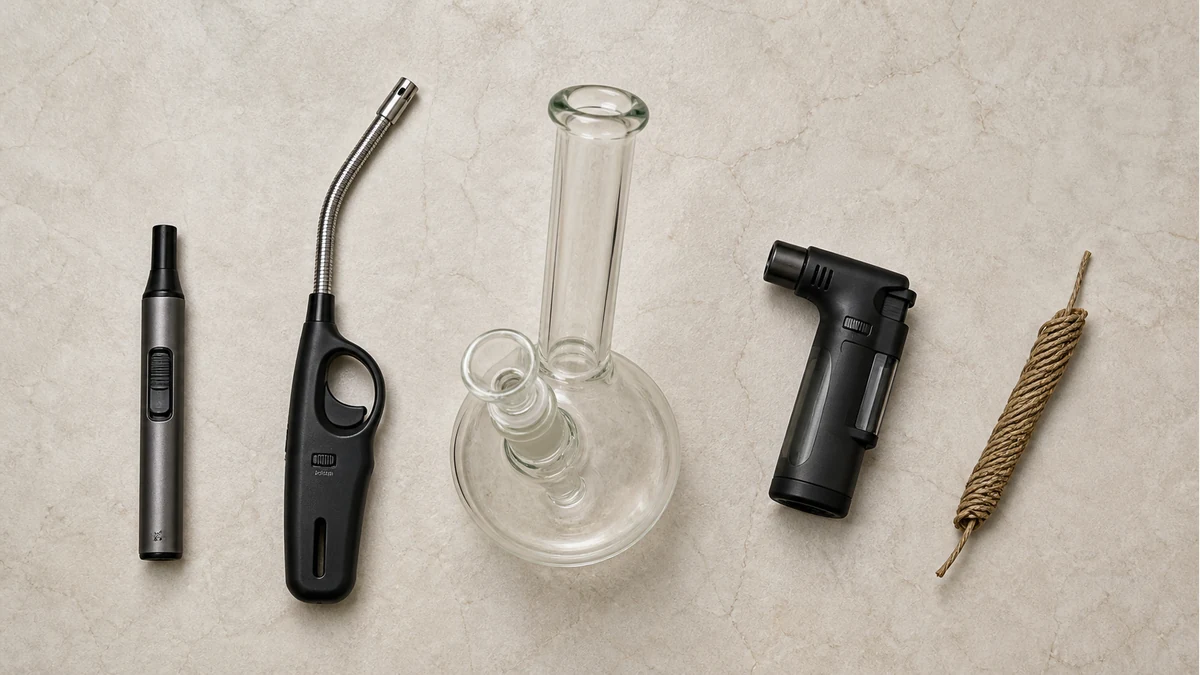
The general principle holds across styles: match the flame’s footprint to the bowl’s footprint. A flame noticeably wider than the bowl opening wastes heat on the rim and surrounding material; a flame noticeably narrower than the bowl leaves you sweeping it back and forth to cover the surface, which is harder to do smoothly while also drawing on the mouthpiece.
⚙️ 4. Wind and posture change what feels practical
Almost every lighter comparison assumes still air and a comfortable, upright seated position, and almost nobody smokes exclusively under those conditions. Outdoors or near an open window, even a light breeze can bend a soft flame sideways or blow it out entirely, which is where a torch’s wind resistance becomes a genuine practical advantage rather than just extra intensity. If you regularly light up outside or in a drafty spot, that resistance to gusts may matter more than the finer control a soft flame offers indoors.
Posture matters too. Leaning back, holding the bong at an angle, or lighting a bowl positioned above your normal eye level all change how steady your hand is and how easily you can see exactly where the flame is landing. A lighter that feels perfectly controllable when you’re sitting upright and looking straight down into the bowl can feel clumsy when you’re reclined and working at an angle —which is part of why long-reach lighters are popular for bongs used casually on a couch or low table, where the extra length compensates for an awkward wrist angle rather than for bowl depth alone.
🧼 5. Refillability only helps if the lighter stays reliable
Refillable soft-flame lighters offer an obvious practical benefit: instead of replacing a lighter once it runs dry, you top up the fuel reservoir, which cuts down on the small pile of empty disposables that tends to accumulate near any bong. But that benefit only materializes if the lighter actually stays reliable between refills. A flint wheel that’s worn smooth, a fuel valve that’s inconsistent, or a flame adjustment that’s drifted too high or too low will frustrate you regardless of whether the lighter is refillable or disposable.
Follow the maker’s manual for how a specific refillable lighter should be filled, bled of air, and adjusted —fuel types, valve designs, and adjustment mechanisms vary enough between brands that general advice can steer you wrong on a specific model. What’s universal is the habit worth building regardless of lighter type: check the flame before you need it, not mid-session, so you’re not troubleshooting a sputtering lighter while also trying to keep a bowl lit.
🛠️ 6. Common ways people scorch the rim or lose control
A few habits show up repeatedly when a lighter and a bowl aren’t working well together. Holding any flame too close and too long is the most common one —the instinct to keep the flame on the material until you’re sure it’s caught often means it’s already caught and starting to char before you pull back, especially with a torch’s concentrated heat. A lighter that’s held at too flat an angle relative to the bowl also tends to walk flame onto the rim itself rather than staying centered on the material, which is how rims end up with visible scorch marks over time.
Switching lighter types mid-routine without adjusting technique causes its own problems. The light touch and short bursts that work well with a torch will underheat a bowl if applied the same way with a soft flame, and the sweeping motion that works well with a soft flame across a wide bowl can overheat a narrow one if used with a torch’s more concentrated jet. Treat a new lighter as needing a short adjustment period rather than assuming your old habits transfer directly.
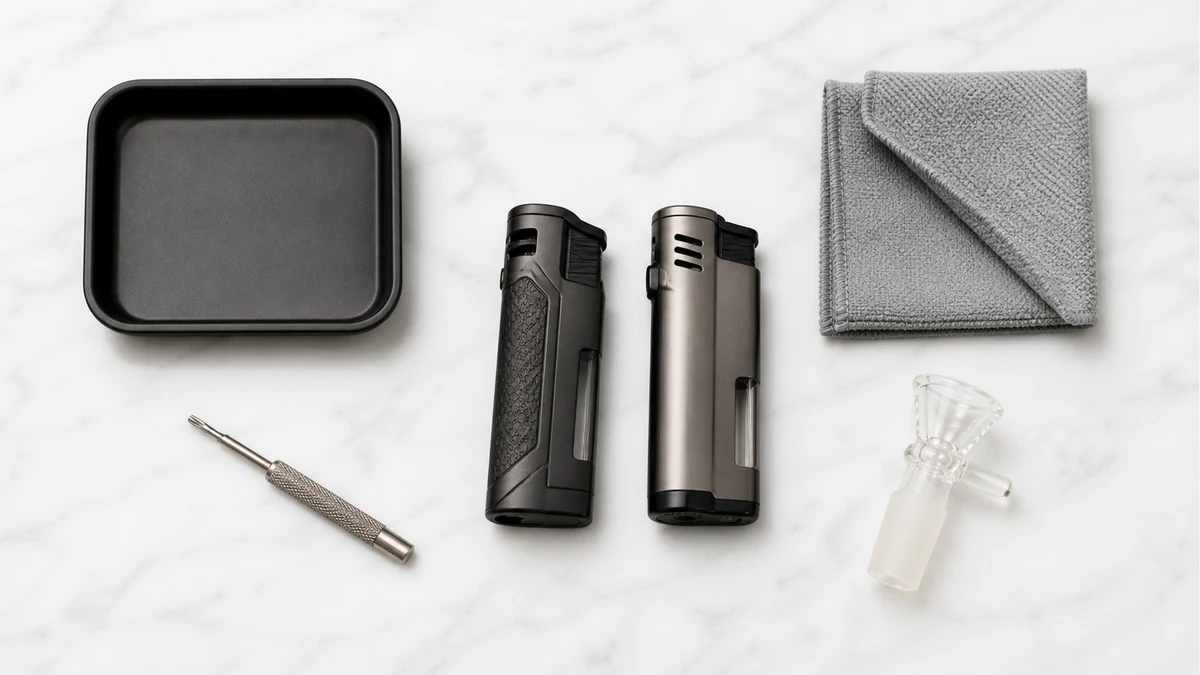
Buildup on the bowl itself compounds all of this. A bowl caked with old residue lights unevenly no matter how good your flame control is, since the residue itself can catch and smolder separately from fresh material. Keeping bowls and the rest of your piece reasonably clean makes any lighter perform more predictably —our bong cleaning kit guide covers the basics of keeping bowls and glass clear of that kind of buildup, and since water level and freshness also affect how a session feels overall, the water for bongs guide is a useful companion piece if you’re troubleshooting harshness that isn’t actually about the lighter at all.
✅ 7. Choose the simplest flame you can place precisely
There’s no single best lighter for every bong, but there is a simple filter that cuts through most of the comparison: pick the flame type you can place precisely and hold steady under the conditions you actually smoke in, then confirm it fits your bowl’s shape and depth. For most people using a bong indoors with a standard bowl, that points toward a soft-flame lighter —refillable if you want to avoid replacing disposables, long-reach if your bowl sits deep or at an awkward angle. For anyone regularly fighting wind outdoors, a torch’s resistance to gusts is worth the tradeoff of a hotter, less forgiving flame, provided you use short bursts rather than a sustained hold. Hemp wick is worth trying if the flame character genuinely appeals to you, but it’s an addition to consider rather than a default upgrade.
Whichever lighter you land on, the habits that make it work well are consistent: keep the flame small relative to the bowl opening, watch how the material responds rather than lighting on a fixed count, and give a new lighter type a session or two before judging it against whatever you used before. Flame control is a skill as much as it’s a hardware choice, and a mid-tier lighter used with a light, attentive hand will usually outperform a premium one used carelessly.