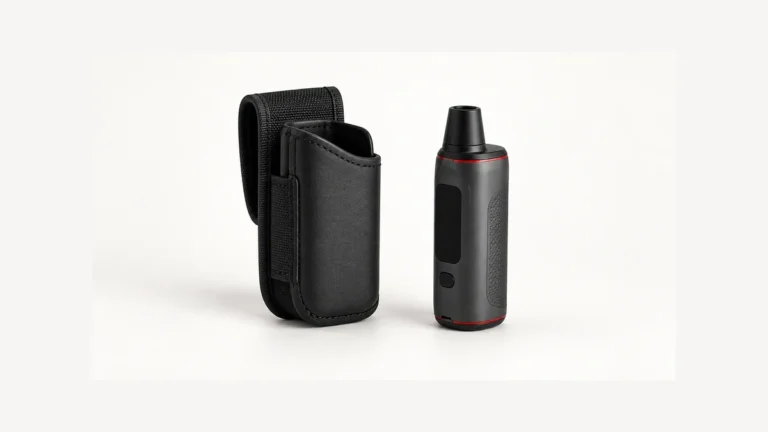
Yes, other people in the same room can usually smell indoor vaping while it’s happening, and often for a while after. Picture a closed bedroom where someone exhales a large cloud near a doorway: within seconds, a sweet or fruity note reaches the hallway, and it doesn’t vanish the moment the visible cloud does. The vapor you see and the smell you notice are two different things on two different timelines, which is why a room can look clear and still carry a scent.
That gap between “the cloud is gone” and “the smell is gone” is the core of this article. Below, we separate what’s actually happening in the air, on surfaces, and inside the device itself, so the question “can you smell vapes indoors” gets a grounded answer instead of a guess.
🧭 1. Yes—indoor vape odor can be noticeable
Vaping produces an aerosol, not plain water vapor. According to general CDC descriptions of e-cigarette aerosol, it’s a mix of ultrafine particles, flavoring chemicals, and other compounds suspended in the air after a device heats liquid. Those flavoring compounds are the primary source of what people notice as “vape smell.” A dessert, menthol, or fruit flavor carries its own aroma profile, and that aroma travels through a room the same way any airborne scent does—cooking smells, candles, or perfume. For a closer look at what’s actually in that cloud, see is vape water vapor.
Whether someone notices depends on their sense of smell, how close they are to the source, and how sensitive they are to that particular flavor family. Someone standing in a small bathroom next to an open door will likely smell it immediately. Someone two rooms away with a door closed may not notice anything at all. Both experiences are normal—odor perception is not uniform, and “I couldn’t smell it” from one person doesn’t mean the room is scent-free for everyone who enters it.
🧩 2. The visible cloud and the smell do not follow the same clock
A vapor cloud is visible because it’s dense with condensed particles that scatter light—similar to how steam from a hot shower is visible right after it forms. As that cloud disperses and cools, the particles spread out and become harder to see, often within seconds. That visual disappearance is what leads many people to assume the smell has disappeared too. It hasn’t necessarily.

Flavoring compounds and residual particles can remain suspended in the air, drifting into corners, closets, or adjoining rooms well after the cloud itself is no longer visible to the eye. A room can look completely clear while a faint flavor note still lingers near the ceiling, in curtains, or in a corner with limited airflow. This is why someone walking into a room minutes after vaping stopped might still catch a scent, even though the person who was vaping saw the cloud clear and assumed the smell went with it. The takeaway isn’t that odor lasts forever—it’s that visual clearing and scent clearing are separate processes, and one doesn’t confirm the other.
🔍 3. Liquid aroma, device power, and room volume change perception
Not every session smells the same, because three variables shift independently of each other. The first is the liquid itself: a strongly flavored dessert or menthol blend produces a more distinct aroma than an unflavored or lightly flavored liquid, simply because there’s more aromatic compound to detect. The second is device output. Higher-power devices tend to vaporize more liquid per puff and produce denser aerosol, which generally means more flavor compound released into the air at once compared to a lower-power setup vaporizing the same liquid.
The third variable is the room itself. A small, closed bathroom concentrates aerosol quickly because there’s less air volume to dilute it into. A large open living room or a space with airflow between rooms spreads that same aerosol over more air, which can make it seem fainter without the actual amount of aerosol changing. None of these factors guarantee a smell will or won’t be noticeable—they just explain why identical vaping behavior can produce very different impressions depending on where and how it happens. Cartridge-based devices in particular can behave differently here; see do carts smell for more on that specific format.
⚙️ 4. Repeated use leaves film on nearby surfaces
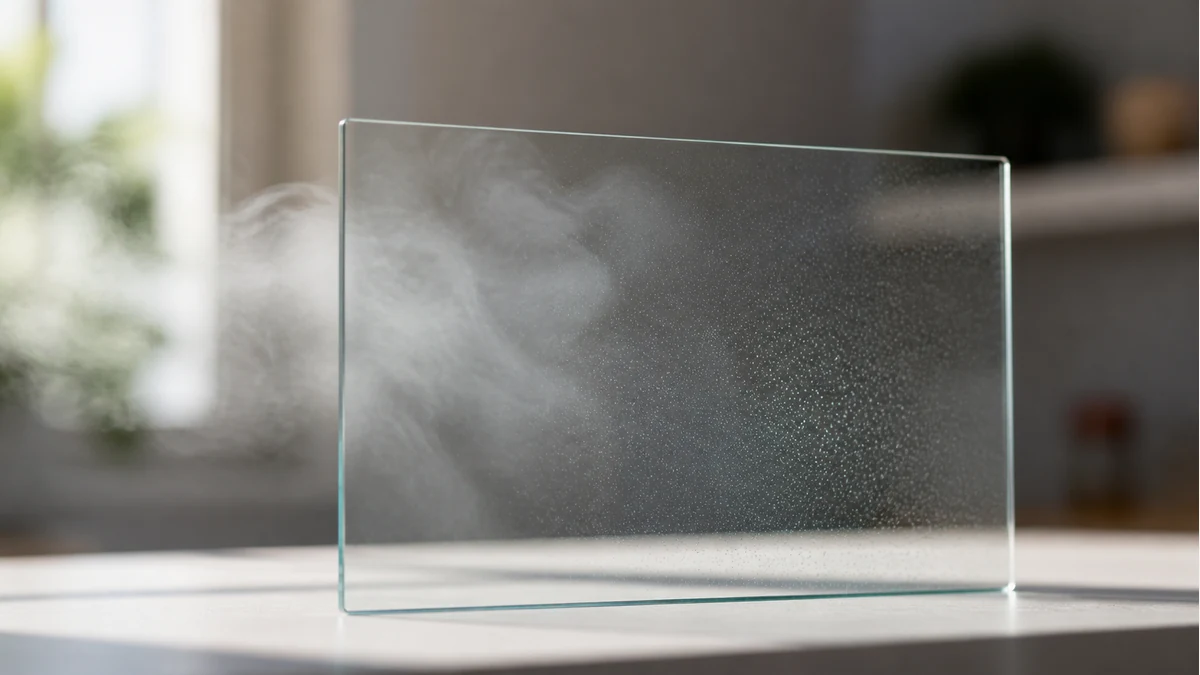
A single exhale in an open room is one thing. Repeated vaping in the same enclosed space over hours, days, or weeks is another, because aerosol doesn’t just disperse into air—some of it settles. Fine particles and flavoring compounds can deposit as a thin film on nearby surfaces: walls, curtains, upholstery, and even electronics near a regular vaping spot. This is a gradual, cumulative process rather than something that happens from a single puff.
That deposited film is part of why a room used regularly for indoor vaping can carry a background scent even when no one is actively vaping in it. The smell isn’t coming from fresh aerosol at that point—it’s coming from residue that built up on fabric and surfaces over repeated sessions. Fabric in particular holds onto flavor compounds longer than hard surfaces do, which is why curtains, couch cushions, or a bedspread near a regular vaping spot can smell noticeably stronger than the open air in the same room. This is a general pattern across e-cigarette use and isn’t unique to any one device type or liquid brand.
🧼 5. The device and storage can smell between sessions
The vaping session itself isn’t the only source of odor. The device and the liquid inside it can carry a scent even when nothing is being exhaled. A pod or tank holding flavored liquid has aroma sitting right at the mouthpiece and any vents, and a warm device—one that’s just been used—tends to release more of that scent than one that’s been sitting cold for hours, simply because heat helps volatile compounds evaporate faster.

Storage matters too. A device or spare pods kept in a drawer, bag, or pocket can leave a faint trace of scent in that enclosed space, particularly if there’s ever a small leak at a seal or fill port. This is a general characteristic of storing any flavored liquid in a semi-sealed container, not a sign of malfunction. Concentrate-based devices raise a related but distinct question, since the material itself often has a stronger inherent smell—that’s covered separately in do dab pens smell. Between sessions, the honest expectation is that a device holding flavored liquid is rarely completely scent-neutral, even sitting idle on a shelf.
🛠️ 6. Why another person’s nose is the better reality check
It’s common for someone who vapes regularly to underestimate how noticeable the smell is to others. Constant exposure to a scent leads to a real phenomenon called olfactory fatigue, where a person’s sense of smell temporarily dulls to an odor they’re repeatedly exposed to. Someone who has been vaping in the same room for an hour may genuinely not notice the smell anymore, while a person who just walked in from a scent-free hallway picks it up immediately.
This is exactly the gap that shows up in casual conversations among people who vape indoors—one person insists a room is clear, while someone else walking in disagrees, and both are reporting their honest experience. Neither person is wrong; they’re just working from different starting points. Because of this, self-assessment (“I can’t smell it, so it must be fine”) is one of the least reliable ways to judge whether a space carries odor. A neutral third party, or simply stepping outside and walking back in after a few minutes, gives a far more accurate read than trusting a nose that’s been in the room the whole time.
📦 6.1. Why two rooms can produce opposite answers
A single draw in a high-ceiling room does not behave like repeated use in a small bedroom. Room volume changes dilution, while upholstery, curtains, carpet, and unfinished wood add surfaces where aerosol droplets and aromatic compounds can settle. Air movement may carry the fresh smell into a hallway before it lowers the concentration near the device. That is why someone entering from another room can notice an odor the person inside has stopped registering.
Liquid character also matters to perception. Sweet, cooling, tobacco-style, and strongly flavored liquids can be recognizable at different distances, but there is no universal ranking that applies to every formulation or nose. Device power, coil condition, and a flooded or overheated atomizer can change the character from a brief aroma to a stale or scorched smell.
💡 6.2. Check the hardware between sessions
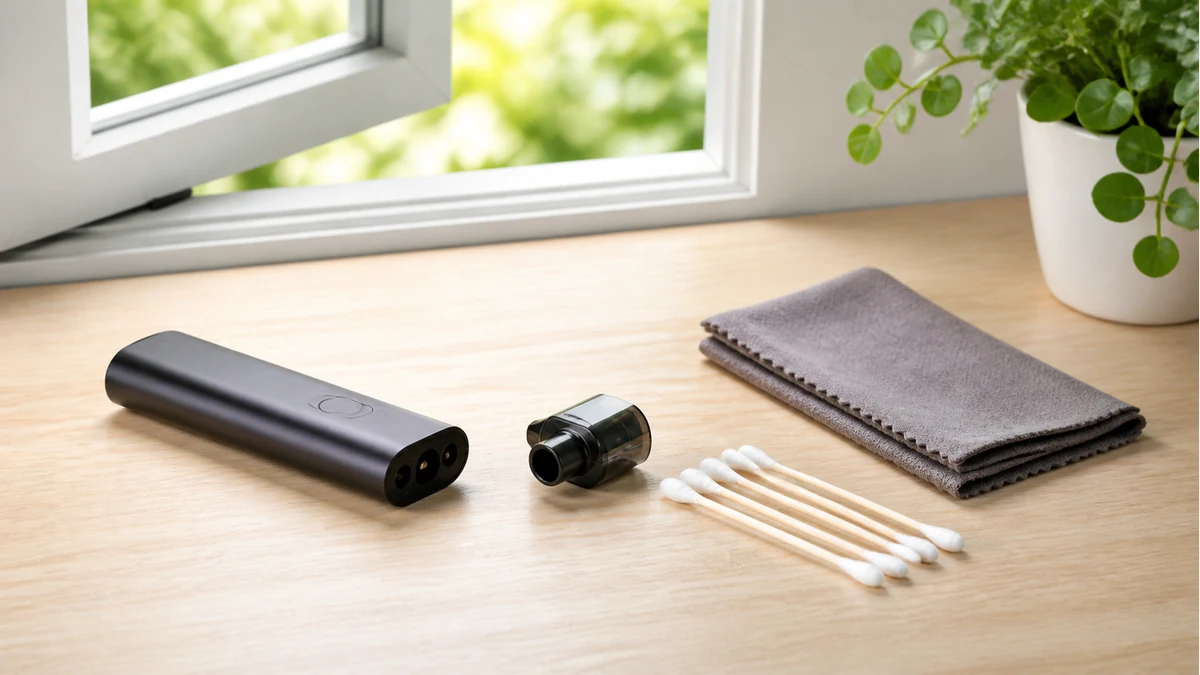
Remove the device from the room and smell the storage tray, mouthpiece area, and any used cloth separately. A leaking pod, condensed liquid under a cartridge, or saturated cotton can keep producing odor when no aerosol is visible. Cleaning the correct removable surface and replacing a failed seal addresses that source more directly than spraying fragrance into the room.
Do not use disappearance of the visible cloud as a timer or a permission rule. Building policies and household boundaries apply whether another person notices the smell immediately or not. The honest answer to “can you smell it?” belongs to the other occupants, not to a promise printed on a device package.
🧭 6.3. Odor control is not exposure control
It is important not to turn a smell discussion into a safety shortcut. A room can smell mild while aerosol is still present, and a strong flavor can be noticeable without telling you the concentration of every component. The nose is useful for answering the social question—whether another person can notice the session—but it is not an instrument for declaring the air clean.
That distinction also explains why covering the aroma with candles or spray does not solve the underlying issue. Added fragrance changes perception while leaving the device leak, residue, or repeated indoor use unaddressed. Clean the source, follow property rules, and respect people who do not want aerosol in a shared room.
If the question comes from a disagreement at home, skip the experiment of asking how much use becomes noticeable. Agree on a clear room rule instead. Perception varies, and repeated tests merely add more aerosol and residue to the space being debated. A straightforward boundary is easier to follow, easier to verify, and more respectful than relying on a changing scent.
✅ 7. Respect indoor rules instead of relying on discretion claims
Given everything above—airborne compounds that outlast the visible cloud, residue that builds up on surfaces, a device that can carry scent even when idle, and a sense of smell that dulls with repeated exposure—it’s not realistic to assume indoor vaping goes unnoticed just because no cloud is visible at a given moment. Landlords, employers, hotels, and shared households set indoor vaping policies for a range of reasons, and odor is only one part of that picture.
The practical approach is straightforward: follow whatever rules apply to the space, whether that’s a lease, a workplace policy, or a house agreement, rather than relying on assumptions about discretion or timing. Rules set by a property owner or shared living situation account for factors beyond just what one person can smell in the moment, and they’re the standard that actually matters when there’s any doubt about whether indoor vaping is permitted in a given space.