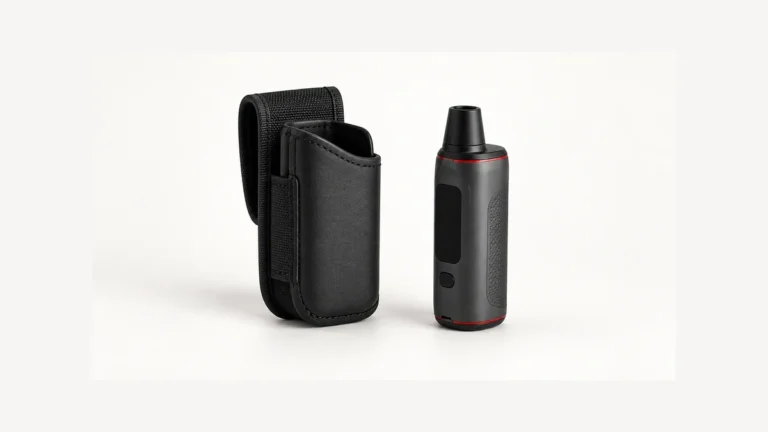
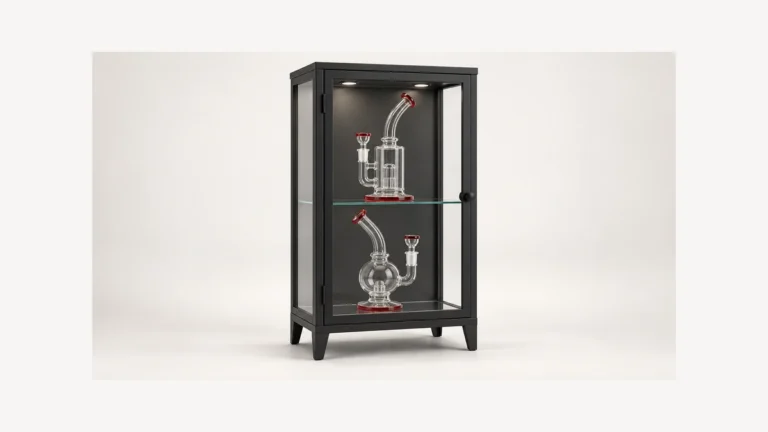
You touch the heated tip to your concentrate, draw, and the vapor comes up through the straw—no torch, no loading a chamber, no waiting for a nail to reach temperature. That’s the entire appeal of an electric dab straw in one motion. But the same design that skips chamber-loading also means the tip and airway pick up reclaim on every single pull, so the tradeoff isn’t “less work”—it’s a different kind of maintenance, moved to a different part of the device.
🧭 1. How an electric dab straw works
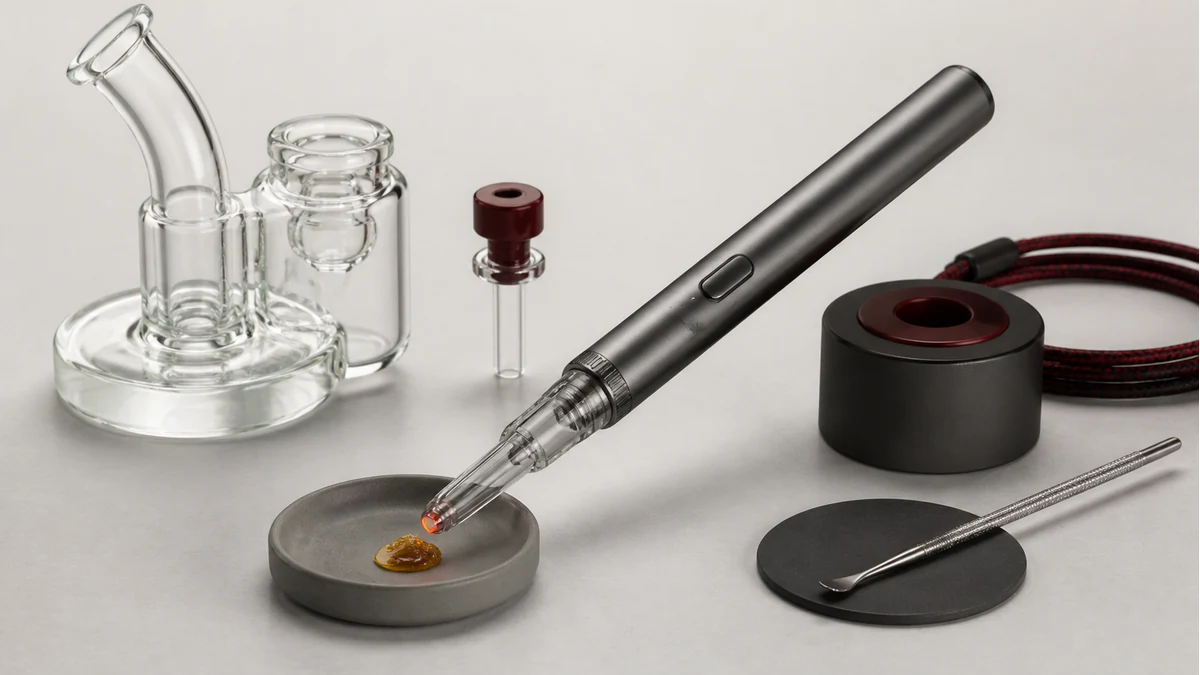
An electric dab straw—sometimes called an electric nectar collector—is built around three core parts: a battery, a heating element, and a straw-style mouthpiece with a tip on the working end. Instead of loading concentrate into an enclosed chamber the way you would with a wax pen cartridge or a dab rig’s banger, you press a button to heat the tip, then touch that heated tip directly to your concentrate. The vapor is pulled up through the straw and into your mouth in essentially one continuous motion.
This direct-contact heating is the defining trait of the category. There’s no coil buried inside a sealed chamber that you load ahead of time—the tip itself is the contact point, and it’s exposed to air, to your concentrate, and to whatever residue is left behind after each session. That exposure is part of why cleaning and clog prevention come up so often in user discussions comparing this format to enclosed alternatives. The tip material and heating method vary by model, and manufacturer manuals typically specify safe heat-up times and touch protocols for that particular design—these aren’t universal across brands.
🧩 2. Why direct pickup feels simpler than loading a chamber
The appeal that draws people to this format usually comes down to two things: no torch and no chamber loading. With a torch-and-nail dab rig, you’re managing an open flame, waiting for the nail to reach the right heat range, and then timing your dab against a cooldown period. With a wax pen, you’re typically loading concentrate into an atomizer chamber, closing it up, and then activating the battery to heat from the outside in.
An electric dab straw removes both of those steps. You heat the tip, touch it to the concentrate, and draw—there’s no chamber to pack and no flame to manage. For someone who dabs occasionally, or who wants something they can use without extra gear on hand, that simplicity is genuinely attractive. But “simpler to use” isn’t the same as “simpler to own.” The direct-contact tip means residue builds up right where you’re heating and drawing, and that’s a maintenance path that a sealed atomizer chamber doesn’t create in quite the same way. The convenience is real; it just shows up at the start of the session rather than at the end.
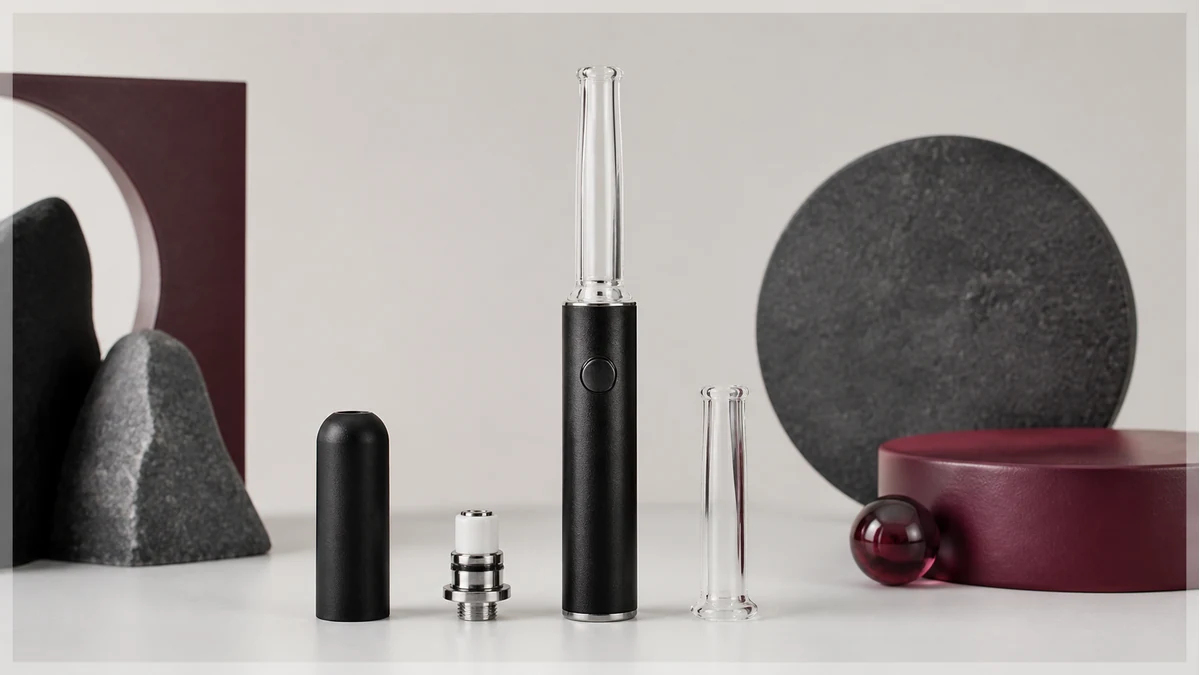
🛠️ 3. Tip type, airflow, and draw technique
Electric dab straw tips come in a few common materials—quartz, ceramic, and titanium are the ones you’ll see most often—and each has its own heat-up characteristics and touch behavior, which is why manufacturer instructions matter more here than general assumptions. Quartz tips are popular for flavor retention, ceramic tips are often chosen for heat retention, and titanium tips are typically durable but can behave differently at the same power setting. None of these are universal claims about performance; they vary by the specific tip design and how the device’s heating element interacts with it.
Draw technique also differs from what wax pen users are used to. With a wax pen, you generally press the button and inhale in one step, and the coil inside the sealed chamber does the vaporizing regardless of how you’re holding the device. With an electric dab straw, you’re actively touching the heated tip to the concentrate while drawing, which means your angle, contact pressure, and pacing all affect how much material you pick up per pull and how much residue ends up coating the tip and the airway just past it. This is closer to the technique used with a traditional dab rig or a nectar collector than to the “press and inhale” motion of a cartridge-based pen. If you’re deciding between formats, our comparison of electric nectar collectors and wax pens goes deeper into how draw technique and vapor production differ between the two.
🌡️ 4. Battery, heat modes, and model-specific controls
Batteries and heat controls vary widely across electric dab straw models. Some use a simple single-button interface with one heat setting; others offer multiple temperature presets, click-count patterns to cycle through modes, or even variable-voltage dials similar to what you’d find on some wax pen batteries. Charging specifications—voltage, port type, charge time—are also model-specific, and mixing components across brands or ignoring the manufacturer’s charging guidance isn’t something we’d recommend.
Heat-up time before the tip is ready to use is another area where manuals differ meaningfully. Some devices are built for a quick few-second heat-up before each touch, while others recommend a longer warm-up window or a specific button-hold pattern. Because these controls and timing windows are tied to the specific heating element and battery in each device, we’re not going to state a universal heat-up time or button sequence here—that’s exactly the kind of detail you’ll want to confirm against your device’s actual manual rather than a general guide. If you’re new to variable heat settings on battery-powered concentrate devices generally, our wax pen battery guide covers how voltage and preset modes typically work, though the specific numbers for an electric dab straw will still come from that model’s documentation.
💨 5. Clogs, reclaim paths, and cleaning access
This is the area where Reddit threads comparing electric dab straws to wax pens keep landing on the same concern: does direct pickup actually reduce work, or does it just move the mess into the airway and tip? Because the tip touches concentrate directly and the straw pulls vapor up through a relatively narrow path, reclaim—the leftover residue from vaporized concentrate—tends to collect right at the tip junction and along the first section of airway. Over repeated sessions, that buildup can start to restrict airflow or affect flavor if it isn’t addressed.
How accessible that airway is for cleaning depends heavily on the model. Some electric dab straws are designed with a removable or unscrewable tip section that gives you direct access to the part where reclaim collects most; others have a more fixed design where you’re relying on pipe cleaners, cotton swabs, or a cleaning solvent run through the straw to clear buildup. Cleaning solvents, soak times, and how often a manufacturer recommends cleaning are all model-specific—some manuals suggest isopropyl alcohol soaks at defined intervals, others have different guidance depending on the tip material—so this isn’t a step to standardize across brands. What’s consistent across the category is that direct-contact tips generate reclaim closer to the draw path than a sealed atomizer chamber does, which is part of why cleaning access is worth checking before you buy, not after residue has already built up.
🧼 6. Replaceable tips and ownership cost
Tips wear out or crack over time, and replacement availability varies by brand and even by specific model line—some manufacturers sell matching replacement tips, others don’t offer a direct match, which can leave you shopping for a compatible third-party part or replacing the whole device. This is worth factoring into ownership cost beyond the sticker price of the device itself. A wax pen’s atomizer coil is a comparable recurring expense, but the two aren’t identical: coils inside a sealed chamber typically degrade from heating cycles, while an exposed dab straw tip is also subject to physical contact wear from repeatedly touching concentrate and any cleaning tools used on it.
Battery longevity is another ownership variable, and like heat settings, it’s tied to the specific battery capacity and charging habits for that model rather than something you can generalize across the category. If you’re trying to estimate total cost of ownership before buying, it’s worth checking whether the manufacturer sells replacement tips directly, what they cost relative to the device, and whether the battery is described as user-replaceable or built in. Our nectar collector kit guide walks through what typically comes bundled with these devices and what tends to be sold separately, which can help frame what you’re actually paying for upfront versus over time.
🧩 6.1 Check the maintenance path before the feature list
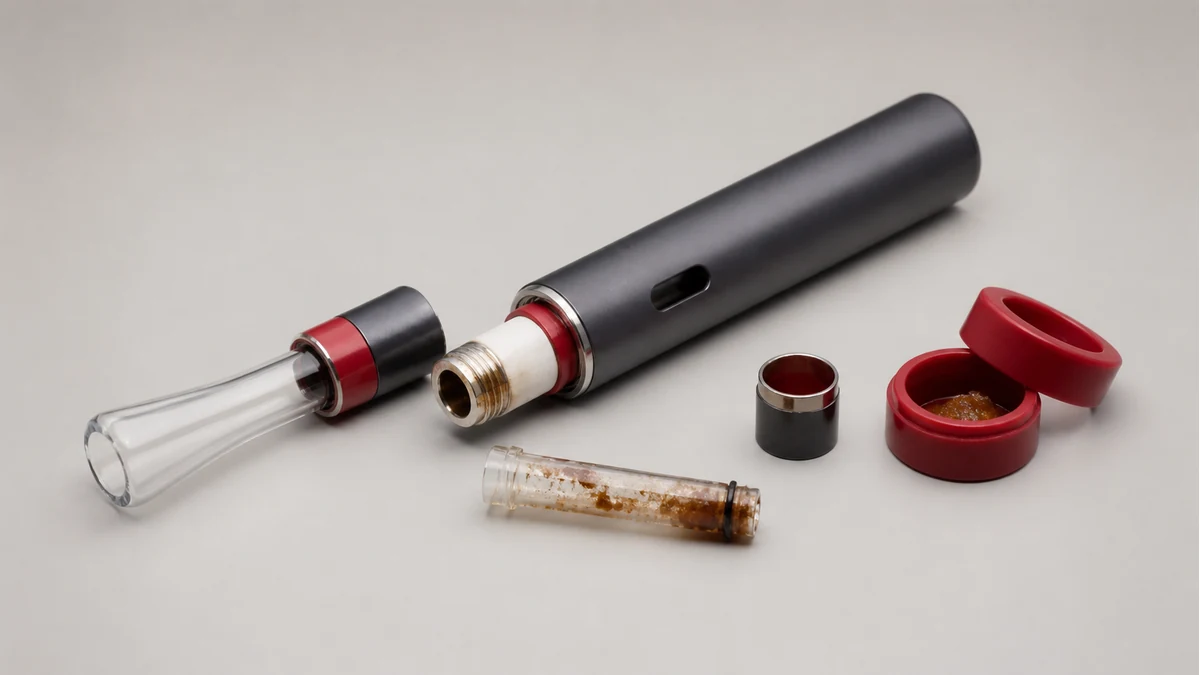
A useful pre-purchase test is to trace the residue path on an exploded view or manual. Can the heated tip be removed without opening the battery body? Is the airway a straight passage that accepts the supplied brush, or does it turn behind a fixed section? Can a water attachment drain completely? Those questions predict ownership friction better than a long list of modes. A device can be simple to activate and still be frustrating to maintain if the reclaim path is hidden.
Replacement availability belongs in the same check. A heated tip is both a working surface and, on many designs, a consumable component. Confirm the exact compatible tip family and whether protective caps, seals, glass sections, and cleaning tools are replaceable. Do not assume a shared thread diameter makes two electrically heated tips interchangeable; resistance, airflow, contact length, and control logic can differ even when the connection appears to fit.
🧩 6.2 Separate daily cleanup from a deep clean
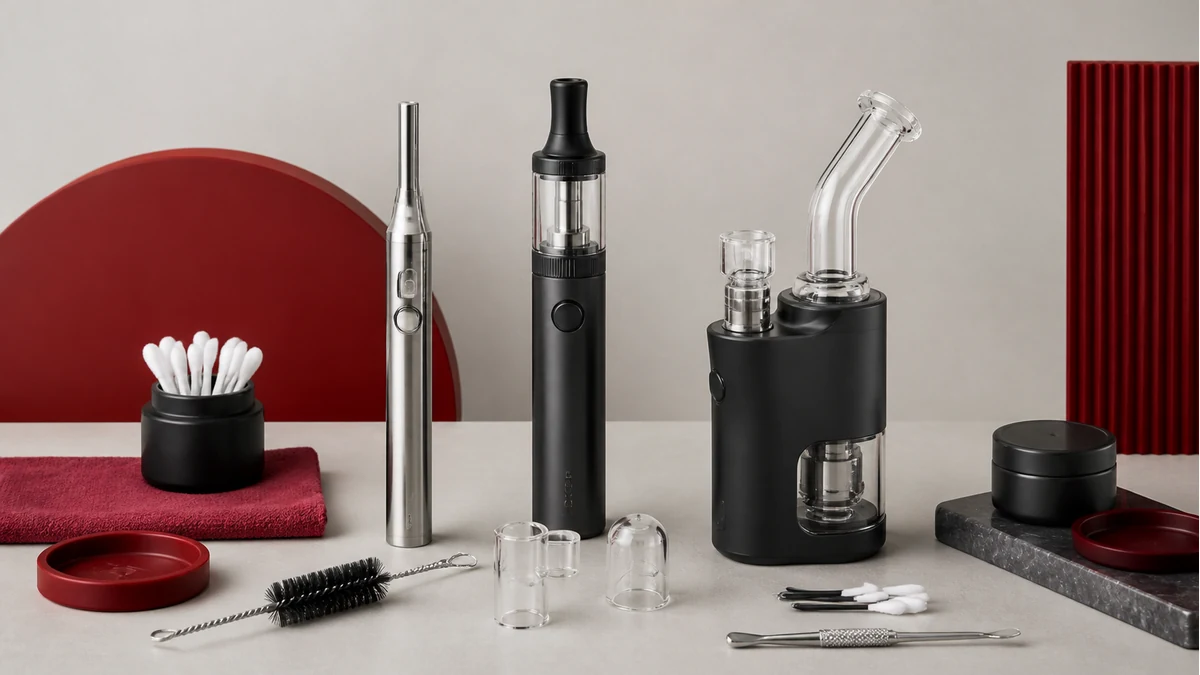
Daily cleanup is the light work that prevents the airway from becoming a repair project: let the device cool, power it off, remove only the parts the manual identifies, and clear accessible residue with the specified tool. A deep clean is different. It may involve removing glass, soaking a particular tip for a limited time, or brushing a path from a specific direction. The King Palm BURJ instructions, for example, explicitly separate its heating element and bubbler from the battery and warn against submerging the battery. That is a model-specific procedure, not permission to treat every electric straw the same way.
Drying is part of the clean, not an optional pause after it. Reassemble only after the removable parts are fully dry and the battery connections remain free of liquid. If airflow is still restricted after the approved process, stop forcing tools deeper into the body. A replaceable tip or manufacturer service path is often the correct next step when the inaccessible section is the problem.
⚖️ 7. Electric straw vs wax pen vs small rig
Placing these three formats side by side comes down to where the tradeoffs land rather than one being categorically better. A wax pen with a sealed atomizer chamber trades direct-pickup convenience for enclosed heating—you load the chamber ahead of time, and the coil is somewhat shielded from the mess of direct concentrate contact, though it still needs periodic cleaning and eventual coil replacement. A small electric rig, often built around a coil-heated banger or a similar enclosed heating surface, tends to sit closer to a traditional dab rig experience with electronic temperature control replacing the torch, but it usually requires more countertop space and setup than a straw-style device you can use with one hand.
An electric dab straw sits in between: it skips both the torch and the chamber-loading step that the other two formats each require in different ways, but it takes on direct-contact cleaning that neither a sealed wax pen chamber nor an enclosed rig banger deals with in quite the same way. Some electric dab straws are also designed to work with water attachments or bubbler accessories, which can add filtration similar to a small rig, though compatibility and setup for water attachments are specific to each device and aren’t universal across the category. If portability and a torch-free pickup motion matter more to you than minimizing cleaning steps, the straw format tends to fit. If you’d rather load once and draw without touching concentrate directly during the session, a wax pen’s enclosed chamber is the closer match. And if repeatable controls and a larger setup matter more than pocketability, a small rig with a coil-heated banger is worth comparing against both.
📚 8. Sources and Reader Questions Reviewed
Technical guidance was checked against the manufacturer material below where applicable. Reddit discussions were used only to identify reader questions and failure scenarios, not as proof of technical, health, safety, or legal claims.