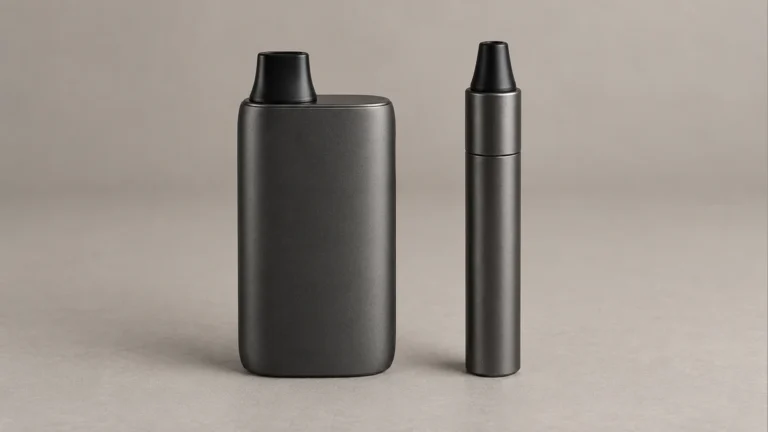
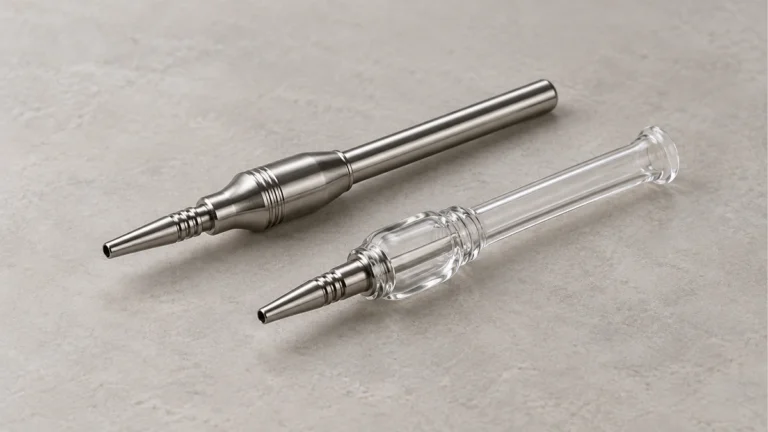
💡 1. The Moment the Light Starts Flashing
It usually happens at the tail end of the draw, right when the pull feels longest and most satisfying. The vapor is still curling off your lips, the flavor hasn’t faded yet, and then the battery light interrupts everything with a fast, clipped flash. The pull goes flat. Reflex says something broke. In most cases, nothing did.
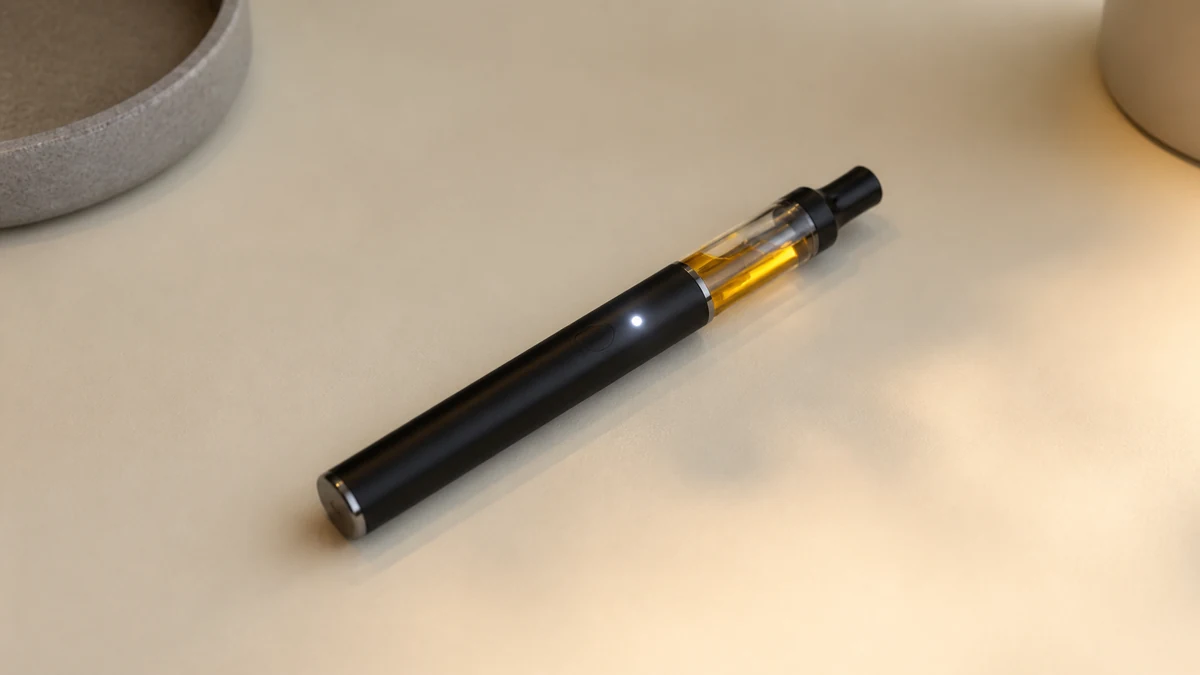
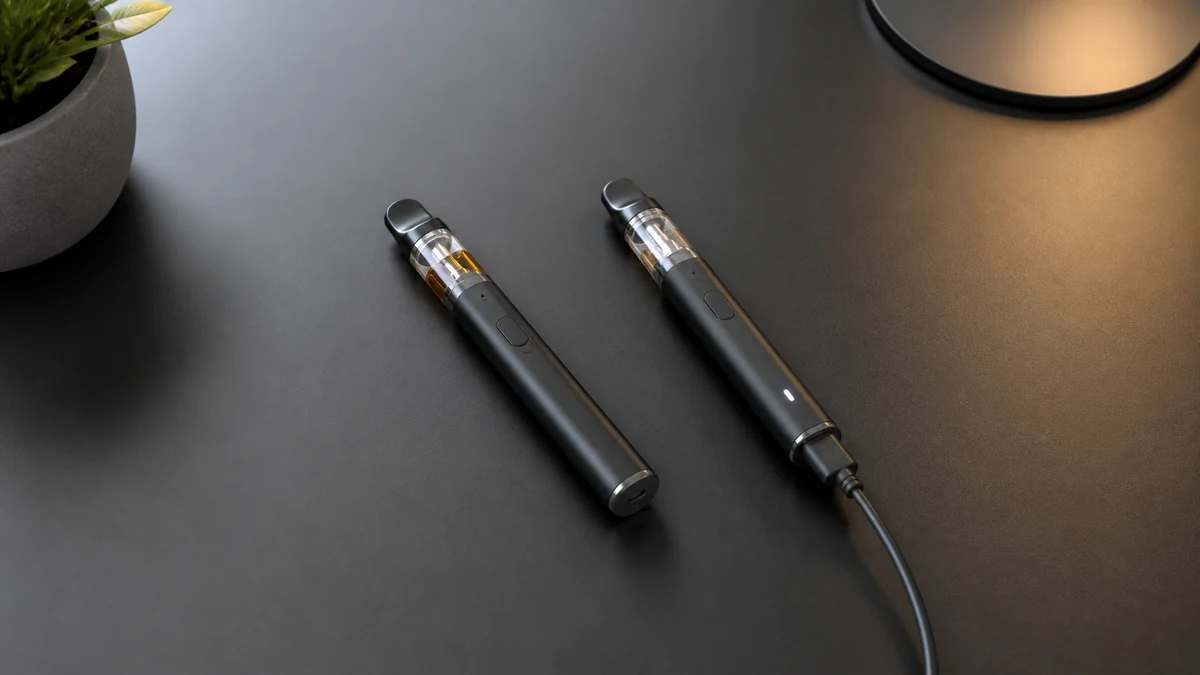
Cartridge and pen users have a shorthand for this moment: they call the device a “blinker,” as in, the light started blinking and shut the hit down early. It’s become a catch-all term online, used for everything from a genuine low-battery warning to a short-circuit fault to what is actually just a built-in timer doing its job. That looseness is the real problem. Not the flashing light itself, but the habit of treating every flash as the same event with the same cause and the same fix.
This piece separates the slang from the mechanism. A timed cutoff, the kind that ends a long draw with a blink, is a deliberate safety and performance feature, not a defect. Understanding why it exists, and why a single long pull behaves differently inside the device than several shorter ones, makes the blinking light far less mysterious the next time it interrupts a draw.
⚙️ 2. “Blinker” Is Slang, Not a Diagnosis
🧩 2.1 Where the Term Comes From
“Blinker” is community shorthand, not a manufacturer term, and it doesn’t appear in any device manual because it doesn’t describe one specific behavior. It gets applied to a timed draw cutoff, to a low-charge warning, to a firmware fault, and sometimes to a loose or improperly seated cartridge, all under the same word. That’s convenient in conversation and unhelpful for actually figuring out what a device is telling you.
The label flattens several distinct signals into one. A device that cuts a draw off after several seconds because that’s how long the timer is set is doing something completely different from a device that’s flashing because it can’t detect a load at all, or one that’s flashing because the cell is nearly depleted. Treating all three as “the blinker acting up” is exactly the kind of guesswork that leads people to redraw repeatedly, assume the hardware is failing, or start looking for ways around a safety feature that was never malfunctioning in the first place.
🧩 2.2 Cutoff Flash vs. Fault Codes
A timed cutoff is a predictable, repeatable event. It happens at roughly the same point in a long draw, every time, on that specific device, because a timer inside the battery is counting elapsed seconds and ending the session once it hits a preset limit. That’s not an error. It’s the device enforcing a ceiling on how long any single activation can run.
A fault code is a different animal. It signals a condition the device wasn’t expecting, such as a circuit that isn’t seeing the resistance it should, a cartridge that isn’t making proper contact, or a cell that’s dropped below a usable voltage. These often use distinct blink counts or patterns specific to that manufacturer and that model, and they’re not something a long-draw cutoff should be confused with. If a device is flashing in a pattern that doesn’t correspond to a normal draw-length cutoff, especially right after connecting a new cartridge, it’s worth ruling out a connection issue before assuming the battery itself is at fault. Our guide on what “no atomizer” actually means walks through that specific case, where the device isn’t cutting a draw short so much as refusing to start one because it isn’t detecting a load at all.
🔍 3. Why Timed Cutoffs Exist
A timed cutoff exists because a heating circuit is not designed to run indefinitely. Somewhere in the firmware, a maximum activation window is set, and once a draw crosses that threshold, the device ends the session automatically rather than waiting for the user to release the button or sensor. This is a deliberate ceiling, not an oversight, and it applies whether the draw is triggered manually or by inhale sensor.
The reasoning is straightforward once you think about what’s happening on the other end of that circuit. A lithium battery cell delivering current to a heating element generates heat as a byproduct, not just at the heating element itself but within the cell and the surrounding circuitry. The longer current flows continuously, the more that heat has a chance to build before anything gets a chance to dissipate. Consumer safety guidance on high-energy batteries, including material published by the U.S. Consumer Product Safety Commission, treats sustained heat buildup in small lithium cells as a real factor in overall battery safety and longevity, which is part of why manufacturers design in hard limits rather than leaving draw length entirely open-ended.
A timed cutoff also protects the heating element from being asked to do something it wasn’t built for. Extending a single activation well past its intended window doesn’t just draw more current, it holds the element at operating temperature for longer than the design anticipated, which is a stress the shorter, intended activation window was specifically set up to avoid. The cutoff isn’t there to shorten your enjoyment of the draw. It’s there because uninterrupted current flow, past a certain point, stops being a performance issue and starts being a safety and durability one.
🧭 4. One Long Draw Isn’t the Same as Several Short Draws
🧩 4.1 How Heat Builds Inside the Chamber
It’s tempting to think of draw time as simply additive, that ten seconds of pulling is ten seconds of heating no matter how it’s divided up. It doesn’t work that way inside the device. Heat that builds during an activation doesn’t vanish the instant you stop; it lingers in the heating element and the surrounding chamber material for a stretch of time afterward, gradually dissipating rather than resetting to baseline the moment the draw ends.
That lingering heat is exactly why a single uninterrupted long draw behaves so differently from the same total time split into several shorter pulls. Between short draws, there’s a gap, however brief, during which the element sheds some of that accumulated heat before the next activation begins. A continuous long draw skips that recovery window entirely. Heat keeps accumulating for the full length of the pull with nothing to interrupt the buildup, so the internal temperature at the end of a fifteen-second continuous draw can run well ahead of what you’d see from three separate five-second draws with pauses in between, even though the total activation time on paper looks identical. For more on how the heating element and chamber interact with airflow and current in the first place, see our explainer on how an atomizer actually works.
🧩 4.2 Why Draw Length, Not Draw Count, Matters
This is the core reason a timed cutoff is measured in continuous seconds rather than in number of draws taken. A device counting draws couldn’t distinguish between someone taking frequent, short, well-spaced pulls and someone holding the button down for one long uninterrupted activation, even though those two patterns put very different thermal loads on the hardware. Measuring elapsed time within a single activation is the only way to catch the second case, the one where heat has no chance to shed before the draw ends.
It also explains why the cutoff can feel inconsistent to someone comparing notes with a friend on a different device, or even a different unit of the same model. Cutoff timing, sensitivity, and behavior are set in firmware by the manufacturer for that specific hardware, and they’re calibrated around that device’s particular heating element, cell, and chamber design. There’s no universal number of seconds that applies across brands or models, which is exactly why guessing at a threshold based on someone else’s device is unreliable.
🧩 5. Why the Manual—Not a Universal Blink Chart—Controls Diagnosis
Search around for “blinker vape” long enough and you’ll find charts claiming to translate blink counts into universal meanings: three blinks means this, five blinks means that. Treat these with real skepticism. Blink patterns are set by the manufacturer for a specific device, and the same three-blink pattern that signals a normal draw-length cutoff on one model can mean something else entirely, including a genuine fault, on a different one. A chart built for one product line simply doesn’t transfer.
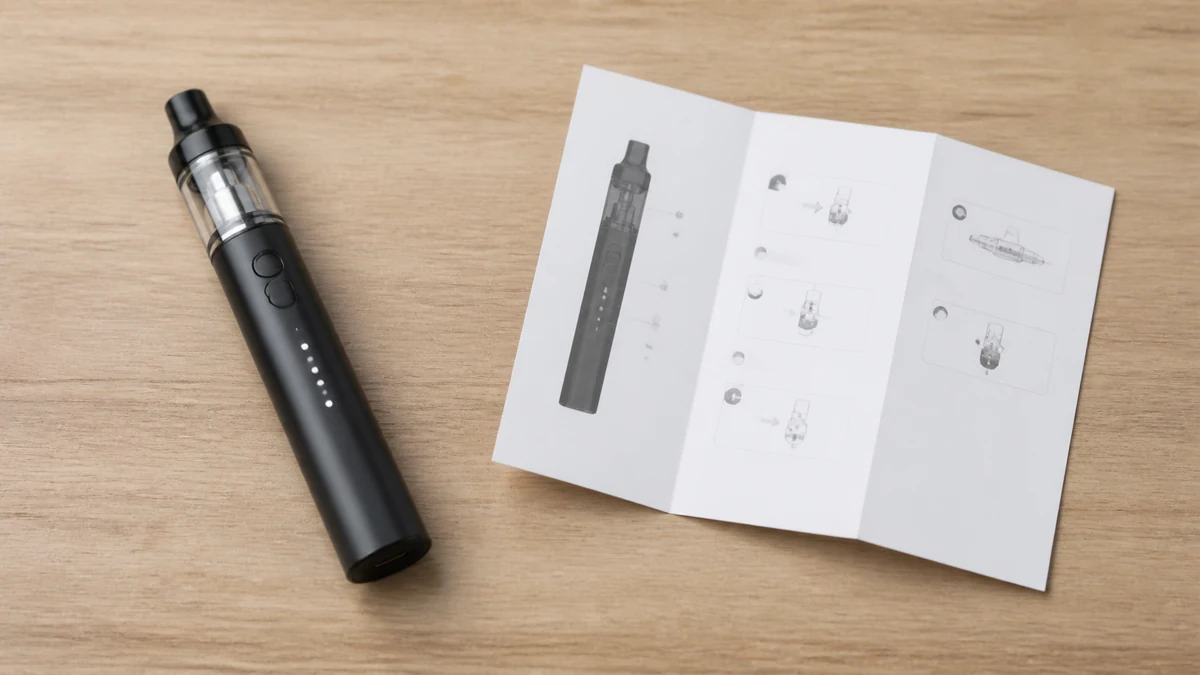
The manual for your specific device is the only reliable source for what its blink patterns mean, because it’s written against the actual firmware running on that hardware. That’s true for the draw-timeout cutoff covered in this article, and it’s just as true for low-charge warnings, which can present as their own distinct flash pattern that’s easy to mistake for a draw cutoff if you’re only going on general online advice rather than what the device itself is documented to do. Charging behavior and battery-health signals are a related but separate topic worth understanding on their own terms; our vape battery charger guide covers how charge cycles and battery condition affect performance, which can indirectly influence how quickly a device reaches a low-charge state during use.
Where the manual and general online advice conflict, the manual wins, every time, because it’s the only document written specifically for the hardware in your hand.
🛠️ 6. What Not to Do When the Cutoff Hits
The most common reaction to a cutoff is to immediately draw again, and then again, treating the flashing light as an obstacle to push through rather than a signal to respect. Chasing the cutoff this way, drawing repeatedly right up against the timer or right after it trips, keeps the heating element cycling near its thermal ceiling with minimal recovery time between activations. It works against the exact purpose the cutoff was built to serve.
It’s also not worth looking for ways to disable or bypass the cutoff, whether through firmware tricks, hardware modifications, or third-party claims about how to “unlock” longer draws. The timer isn’t an arbitrary restriction standing between you and a better experience; it’s a limit set by the people who understand the specific tolerances of that battery, that circuit, and that heating element. Overriding it removes a safeguard without adding any real benefit, and general safety guidance on high-energy lithium cells is consistent on the point that circumventing built-in battery protections increases risk rather than performance. If a device is cutting off sooner than it used to, or in a pattern that doesn’t match a normal draw-length limit, that’s a signal to check the manual and, if the behavior still looks abnormal, consider the hardware itself rather than the workaround.
🧼 7. Quick Answers
🧩 7.1 Does a longer draw give more vapor before the cutoff?
Not proportionally. Because heat accumulates through the draw rather than resetting, the later portion of a long, uninterrupted pull is happening on a heating element that’s already running hotter than it was at the start, which is part of why the cutoff exists to end the activation before that trend continues unchecked.
🧩 7.2 How do I tell a cutoff flash from a low-battery flash?
By pattern and by consistency, both of which are documented in the manual for your specific device rather than in general online charts. A cutoff triggers at a predictable point in a long draw regardless of remaining charge, while a low-battery signal is tied to the cell’s charge state and will typically persist or recur across shorter draws as well.
🧩 7.3 What should I actually check if the blinking seems abnormal?
Start with the manual’s specific blink-pattern reference for that model, then check the cartridge connection and the battery’s charge state before assuming a fault. If the pattern still doesn’t match anything documented for that device, that’s a hardware question rather than a settings one.
📌 8. The Bottom Line
A blinking light at the end of a long draw is, in most cases, a device doing exactly what it was built to do: enforcing a time limit before continuous current flow turns into unnecessary heat buildup. The slang term “blinker” lumps that normal behavior in with genuine fault codes and low-battery warnings, which is exactly why it’s not a useful diagnostic tool on its own. What actually explains the flash is a combination of how heat accumulates during a continuous activation, why that’s different from the same total time split into shorter draws, and what the manufacturer’s own manual says about that specific device’s timing and patterns. When in doubt, the manual settles it. No universal blink chart does.
✅ 9. 📚 Sources
- U.S. Consumer Product Safety Commission, “High-Energy Batteries” — Safety Education Center: https://www.cpsc.gov/Safety-Education/Safety-Education-Centers/High-Energy-Batteries