Light a match to dried plant material and the reaction is immediate: a flame consumes the leaf surface, the room fills with a sharp, unmistakable smell, and a visible plume rises and lingers on clothing and furniture. Set the same material inside a dry-herb vaporizer and the outcome looks and smells different — a thinner, lighter-colored cloud, a smell that fades faster, and none of the crackle or ash that combustion produces. The visual difference is obvious. The reason behind it is chemical, not cosmetic, and it starts with a single variable: temperature.
🔥 1. Combustion vs. Heat: Where the Difference Actually Starts
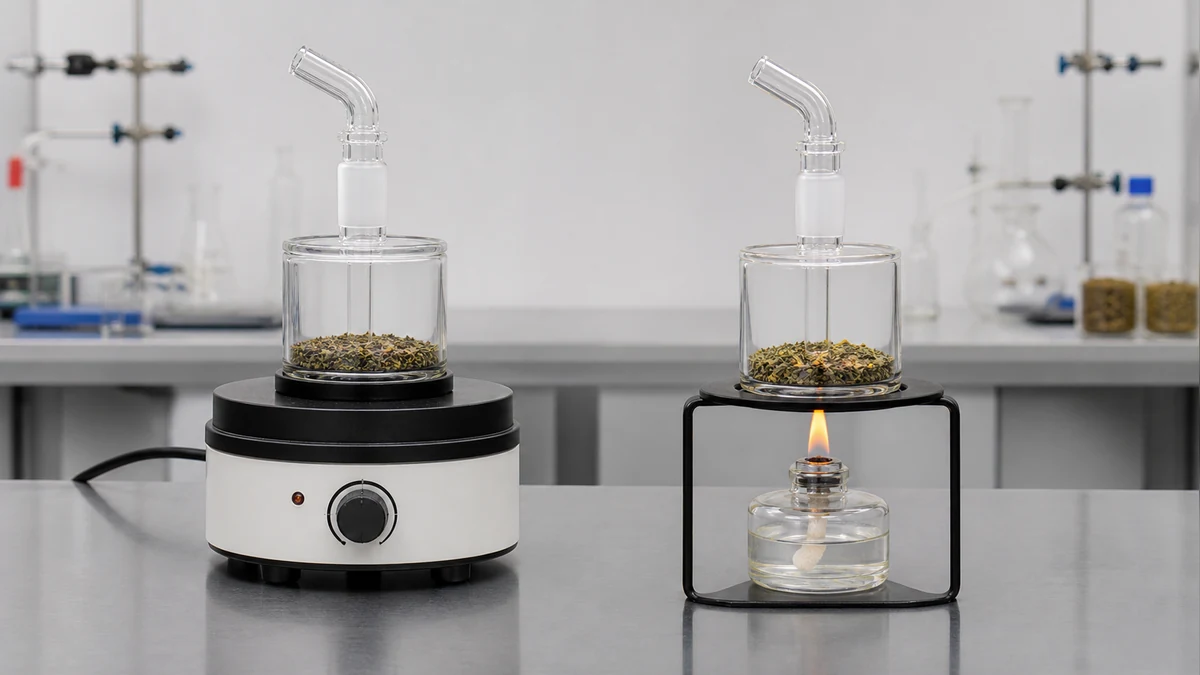
Smoke is what you get when plant material is heated past its combustion point. At that point the material doesn’t just release its stored compounds — it burns. Combustion is an oxidation reaction: plant fiber, chlorophyll, and other organic matter break down and recombine into new substances, including particulate matter, tars, and combustion gases. Smoke is fundamentally a mixture created by that burning process, not a concentrated version of what was in the plant to begin with. Much of what a person inhales from smoke didn’t exist in the original material at all; it was formed in the fire.
A vaporizer is built around a different intention. Instead of igniting the material, it heats it to a temperature high enough to release volatile compounds from the plant into the air as an aerosol, while deliberately staying below the point where the material would catch fire or char. That’s a narrower target than it sounds, and it’s the entire engineering premise behind dry-herb vaporizers: hold a controlled temperature long enough to liberate the compounds a user wants, without crossing into combustion and its byproducts.
🌡️ 1.1. Two Ways to Deliver That Heat
Manufacturers generally reach that controlled-heat target through conduction, convection, or a hybrid of the two. Conduction heats the material through direct contact with a hot surface. Convection passes heated air through the material instead, which can produce more even heating across a chamber but depends heavily on airflow design. Neither approach is inherently better for every user, and how evenly a given device heats its chamber — and how close it stays to the line between vaporization and combustion — depends on the specific hardware and how it’s operated. For a deeper look at how these two heating paths compare in practice, see this conduction vs. convection breakdown.
🔥 1.2. Why “Just Under the Burning Point” Matters
The gap between “hot enough to vaporize” and “hot enough to burn” isn’t a fixed number that applies to all plant material or all devices — it varies by moisture content, grind, chamber design, and session length. What stays constant is the principle: a vaporizer is designed to operate below the material’s combustion threshold, and smoke only exists once that threshold is crossed. Exact temperature figures depend on manufacturer specifications and should be confirmed against the documentation for a specific device rather than assumed.
👃 2. Cloud, Odor, and Residue: The Signals You Can Notice
Most people don’t evaluate smoke versus vapor with instruments — they notice it. Three signals tend to stand out immediately: the density and color of the cloud, how long the smell hangs in a room, and what’s left behind afterward.
👃 2.1. Cloud and Odor
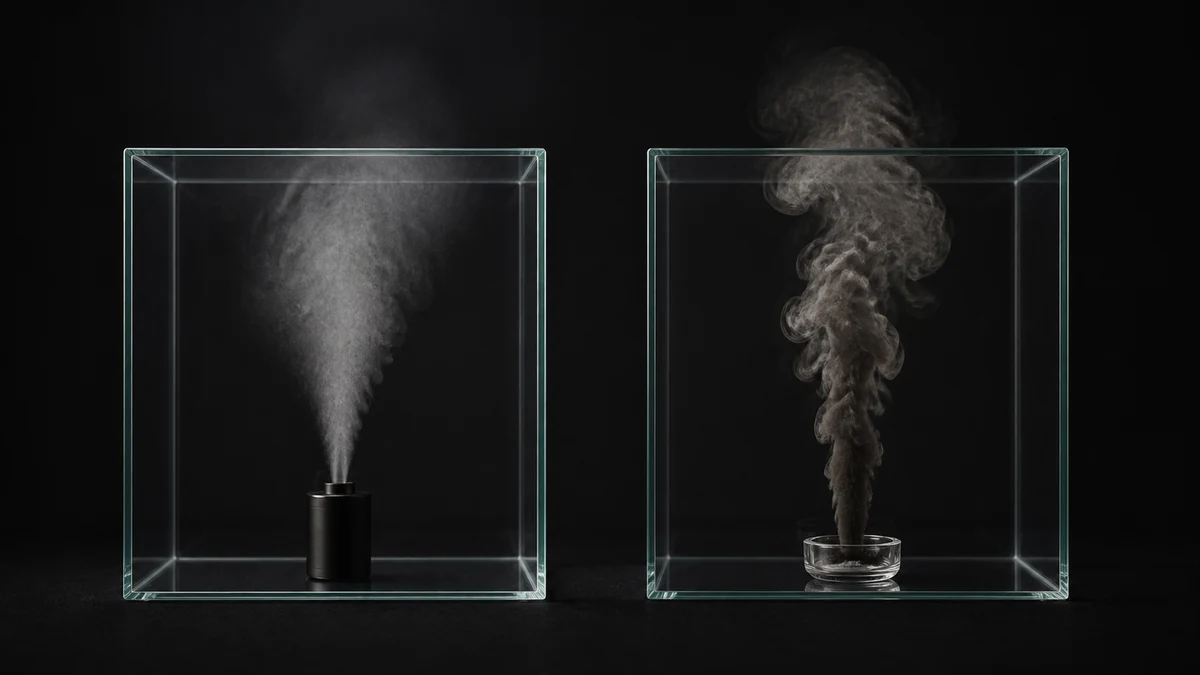
Combustion smoke tends to be denser and darker because it carries more solid particulate matter and unburned carbon from the fire itself. Vapor produced below the combustion point typically appears lighter and dissipates faster, and the smell associated with it tends to fade more quickly from a room or from fabric. This doesn’t mean vapor is odorless — it carries its own recognizable smell from the volatile compounds released — but the persistence is generally shorter than smoke’s, which clings to surfaces partly because of the tar and soot combustion leaves behind.
🧹 2.2. Residue Tells the Same Story
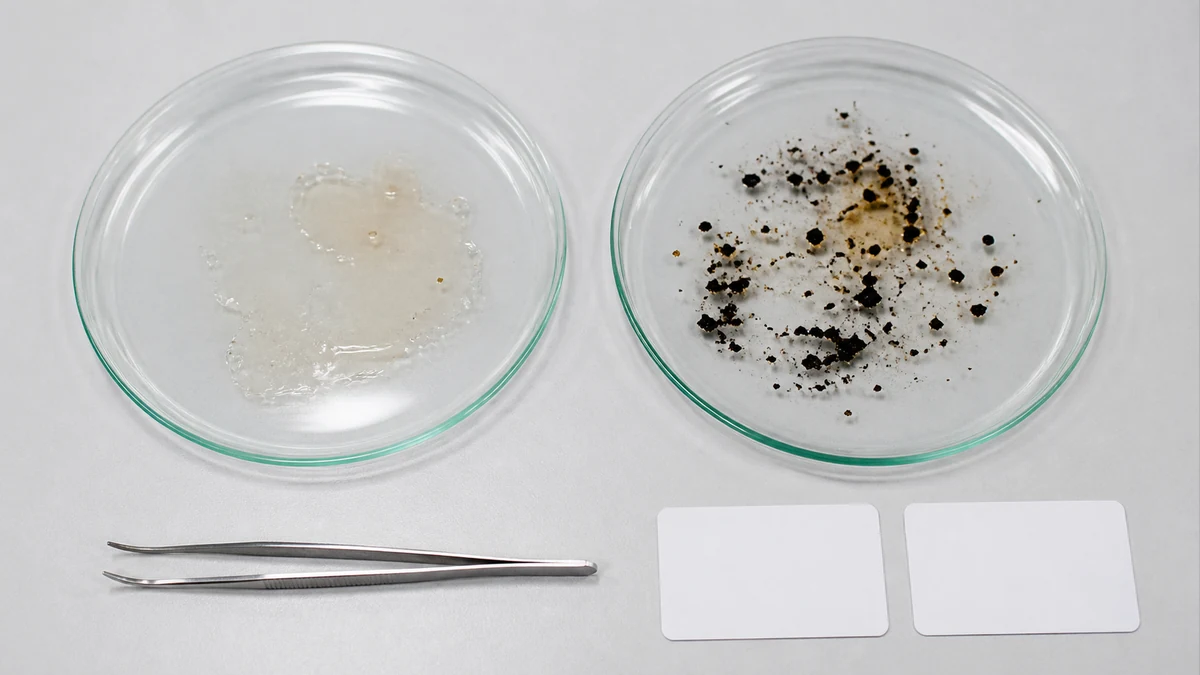
Anyone who has cleaned a pipe or a bowl after smoking knows the sticky, dark tar buildup that combustion leaves on glass and metal. That residue is largely a combustion byproduct. Vaporizer chambers accumulate residue too, but it’s generally lighter and different in composition, since the material is being heated rather than burned. Regular cleaning still matters for consistent performance and flavor in either case — for guidance on keeping oil or concentrate hardware clear of buildup, see this dab rig cleaning guide.
🧪 3. Aerosol Is Not Water Vapor
One point worth being precise about: the cloud coming off a vaporizer is not simply water vapor, even though it’s often called “vapor” in casual conversation. It’s an aerosol — a suspension of fine liquid and solid particles in air, carrying the volatile compounds released from the heated material along with other byproducts of the heating process. Calling it “just vapor” undersells what’s actually being inhaled.
🫁 3.1. What Public Health Sources Say About Aerosol
The CDC’s overview of e-cigarette health effects makes a similar distinction for vaping devices generally: the aerosol users inhale and exhale is not harmless water vapor, and it can contain a range of substances beyond the primary compound the device is designed to deliver. The same logic applies conceptually to dry-herb vaporization — heating a plant material produces an aerosol with its own composition, not a clean puff of water. NIDA’s research summary on vaping marijuana echoes that caution specifically for cannabis vaporization, noting that researchers still don’t have a complete picture of what’s in the aerosol produced by different devices and temperatures, or what inhaling it over the long term means for health.
🔬 3.2. What This Doesn’t Mean
None of this should be read as a claim that vaporizing is “clean” or risk-free, and it isn’t a substitute for a medical or regulatory opinion. Lower particulate output and less tar than combustion smoke are real chemical differences, but they don’t add up to a harmlessness claim, and no credible source frames it that way. Anyone weighing health considerations should treat manufacturer marketing — including AOVAPE’s own materials — as secondary to public-health guidance and, where relevant, a physician’s assessment of individual circumstances.
⚙️ 4. Hardware That Shapes the Outcome
The combustion-versus-vaporization distinction is a chemistry question, but the hardware determines how consistently a device stays on the right side of that line. A handful of components do most of the work.
🔧 4.1. Heating Chamber and Airflow
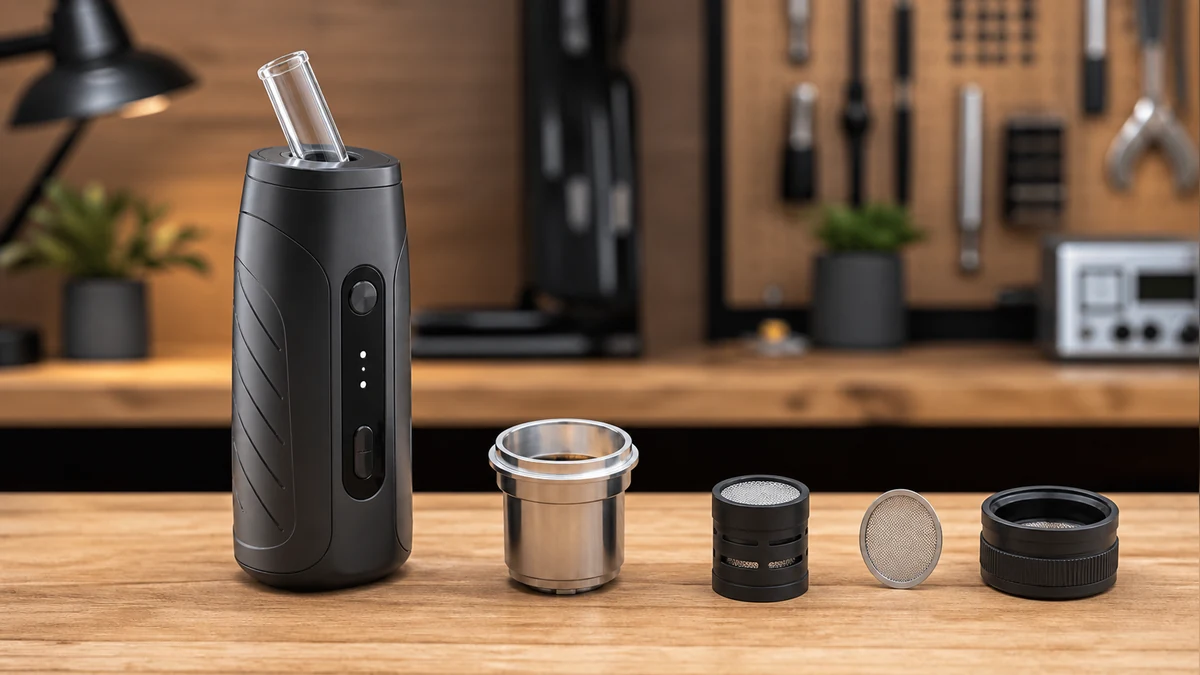
The chamber design — how the material sits relative to the heating element, how air moves through or around it, and how tightly temperature is regulated — determines how evenly material is heated and how much of it is exposed to hot spots that can tip into light combustion at the surface even while the bulk of the material stays below that point. This is also where interface and control quality matters: a device with responsive, precise temperature control gives a user more consistent results than one with coarse or unreliable settings. Related hardware in the broader vaporizer and atomizer category is covered in this atomizer function guide, and general part identification is available in this vape parts reference.
🔋 4.2. Battery and Session Consistency
Heating elements need stable power to hold a set temperature through a session, and battery condition affects that stability directly. A battery losing charge or degrading with age can cause a device to undershoot its target temperature — reducing vapor output — or, in poorly regulated hardware, to behave inconsistently in ways that make combustion more likely at the material’s surface. Charging habits and battery care are covered in more detail in this battery and charger guide, which is worth reviewing for any team specifying or sourcing hardware for resale.
🧭 5. What This Means for Buyers and Brands
For distributors, wholesalers, and private-label brands evaluating dry-herb hardware, the smoke-versus-vapor distinction isn’t just consumer education — it’s a sourcing and marketing consideration. Devices that hold temperature accurately and heat material evenly are the ones best positioned to deliver a consistent aerosol experience rather than an inconsistent mix of vaporization and light combustion. That consistency is also what separates defensible marketing language from overstatement: claims about “smoke-free” or “combustion-free” performance only hold up if the underlying hardware actually maintains sub-combustion temperatures reliably across a full session, not just at the start.
🏷️ 5.1. Sourcing Considerations
Brands building a private-label or OEM/ODM line around dry-herb hardware should request manufacturer documentation on temperature regulation and chamber design rather than relying on general category assumptions, since heating consistency varies meaningfully between devices. Exact compatibility, temperature ranges, and performance specifications should always be confirmed against the manufacturer’s own documentation for the specific unit under consideration.
📋 6. Smoke vs. Vapor at a Glance
| Factor | Combustion Smoke | Vaporizer Aerosol |
|---|---|---|
| Trigger | Material ignited and burned | Material heated below its burning point |
| Byproducts | New compounds formed by burning, including tar and particulate matter | Volatile compounds released from the material, plus aerosol particles |
| Cloud density | Generally denser and darker | Generally lighter and thinner |
| Odor persistence | Tends to linger longer on fabric and surfaces | Tends to dissipate faster |
| Residue | Sticky tar buildup on glass and metal | Lighter residue, different composition |
| Is it “just water vapor”? | No | No — it’s an aerosol with its own composition |
❓ 7. Frequently Asked Questions
❓ 7.1. Is vaporizer aerosol the same as water vapor?
No. It’s an aerosol containing volatile compounds released from the heated material along with fine particles, not plain water vapor, according to public-health sources including the CDC’s e-cigarette overview and NIDA’s research on vaping marijuana.
❓ 7.2. Does heating below combustion mean no smoke is produced at all?
In principle, staying below the material’s combustion point avoids the byproducts specific to burning. In practice, hot spots, worn hardware, or a degraded battery can push part of a chamber into light combustion even while a device is nominally operating in vaporization range, which is why heating consistency and manufacturer documentation matter.
❓ 7.3. Does less smoke mean a device is safer overall?
Lower particulate output than combustion smoke is a measurable chemical difference, but public-health sources are clear that vaporizer aerosol is not established as harmless, and long-term data specific to dry-herb vaporization remains limited. That’s a question for medical and regulatory sources, not device marketing.
One useful reality check comes from a 2023 controlled animal study indexed by PubMed: marijuana-leaf vaporizer aerosol impaired endothelial function in rats under the tested exposure conditions. That result cannot be converted into a human risk percentage, and it does not make smoke and aerosol chemically identical. It does reinforce the narrower point that “no combustion” is a description of the heating process, not proof that the resulting aerosol is harmless.
✅ 8. The Decision Point
The line between smoke and vapor comes down to one variable — whether the material is burned or deliberately kept below its burning point — and everything else, from cloud density to odor to residue, follows from that. For buyers and brands, the practical takeaway is to evaluate dry-herb hardware on how reliably it holds that sub-combustion temperature through a full session, not on cloud size or marketing language alone, and to lean on manufacturer documentation and public-health sources rather than assumptions when making sourcing or messaging decisions. For a broader look at the category before narrowing to a specific device, the full vaporizer lineup overview is a useful starting point.